Florida is full of surprises, but this one feels different.
No beaches.
No palm-lined paths.
So what’s hiding here instead?
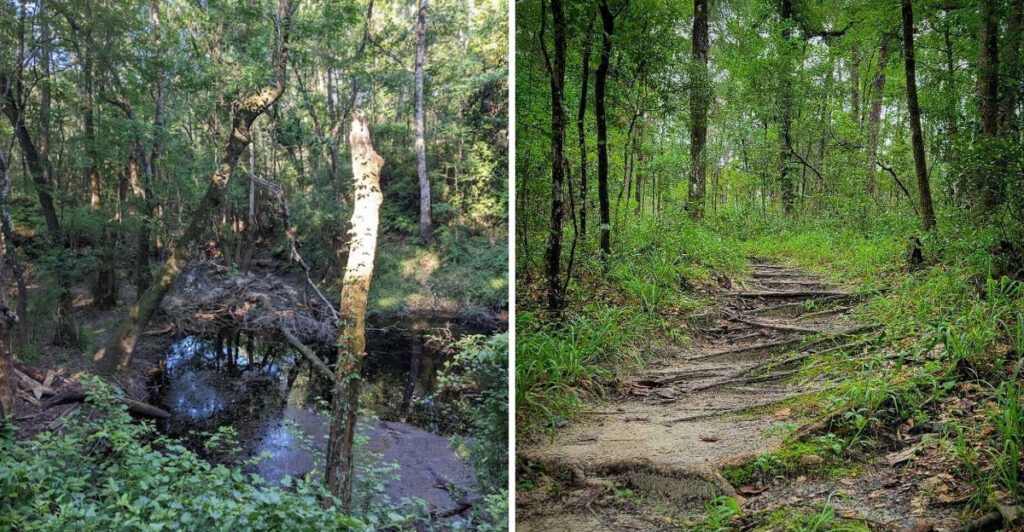
A 3.6-mile trail winds through a landscape most people never expect to find in the Sunshine State.
Deep sinkholes drop into the earth, a quiet cave waits just off the path, and pools of clear blue water glow beneath the trees.
Boardwalks stretch through swampy forest, pulling you deeper into a place shaped over thousands of years.
It feels a little wild.
A little unexpected.
Maybe even a bit unreal.
How often do you come across a hike like this in Florida?
Every turn reveals something new, making it clear this is not your typical trail.
It is one that keeps you curious from start to finish.
The Sinkhole Trail Is Florida’s Most Unexpected Hike
Most people picture flat, sandy paths when they think of hiking in Florida, but the Sinkhole Trail at Leon Sinks Geological Area flips that expectation completely.
The main loop stretches roughly 3.6 miles, though hikers who want more can extend their adventure to around five miles by adding side trails and detours.
The terrain is mostly flat and easy to navigate, making it a solid choice for families, beginners, and older hikers.
A few sections feature exposed roots and gentle rolling hills that keep things interesting without becoming difficult.
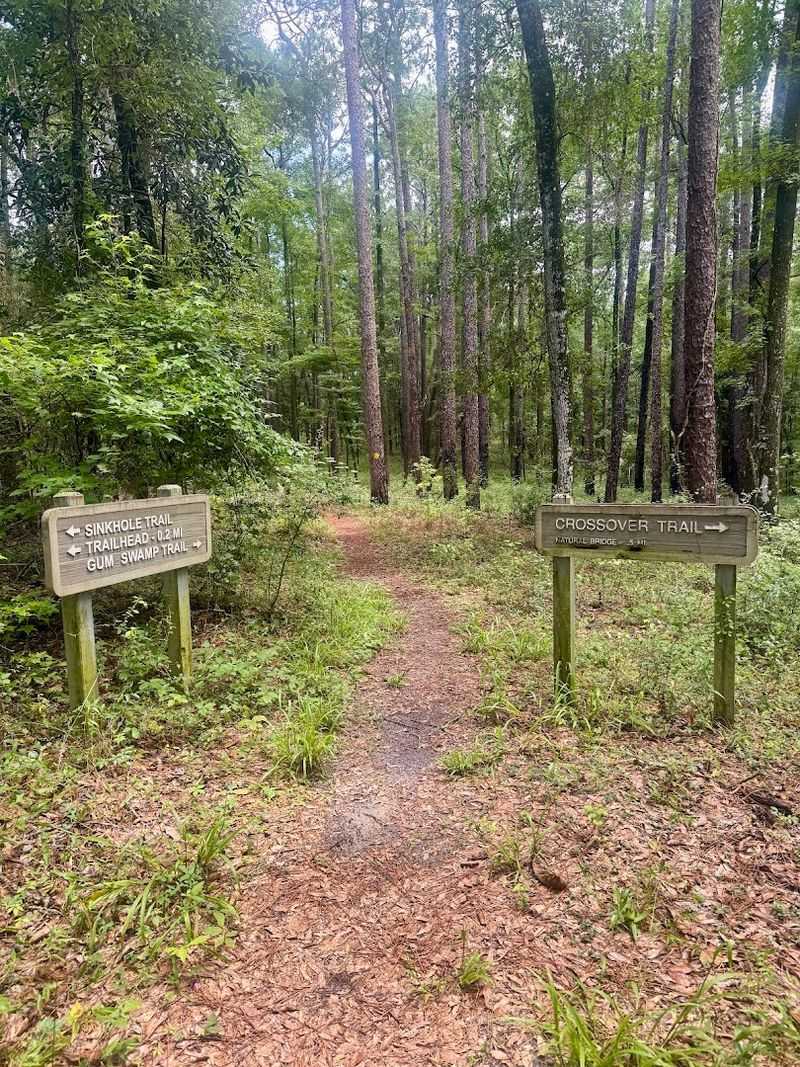
The trail is clearly marked throughout, with informative plaques posted along the route that explain the geology behind each feature you encounter.
Benches are scattered at regular intervals, giving hikers a chance to pause, breathe, and really soak in the surroundings.
Restrooms and a water fountain are available at the trailhead, and a helpful bulletin board near the parking area gives visitors a solid overview of what lies ahead.
The whole experience feels remarkably well-organized for a natural area, and that thoughtfulness makes the hike enjoyable from start to finish.
What Makes Sinkholes Form Here
Underneath much of northern Florida lies a thick layer of limestone, and that rock is the reason this entire park exists.
Over thousands of years, slightly acidic rainwater seeps through the soil and slowly dissolves the limestone below the surface.
When enough rock erodes away, the ground above collapses inward, creating the bowl-shaped depressions known as sinkholes.
Leon Sinks Geological Area sits directly above this active karst landscape, which is why so many sinkholes have formed here in such a concentrated area.
Some of the sinkholes are completely dry, showing off jagged limestone walls and exposed tree roots clinging to the edges.
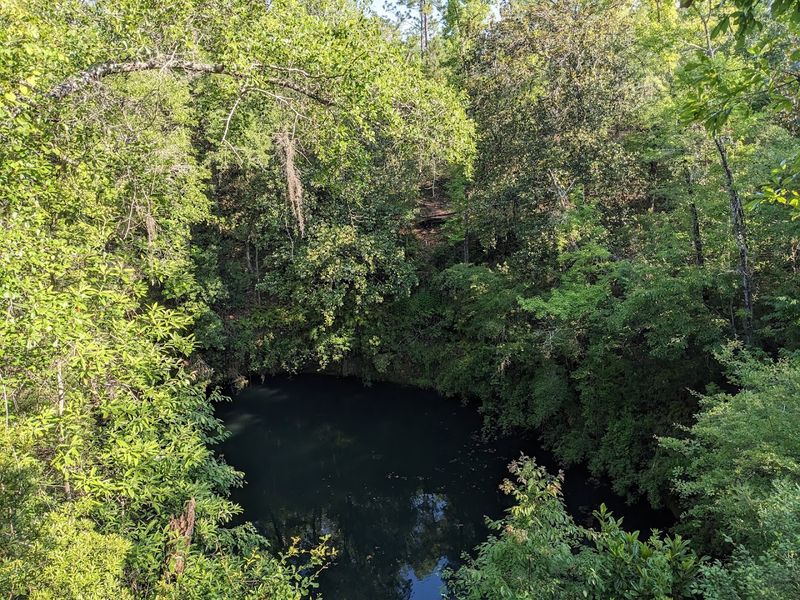
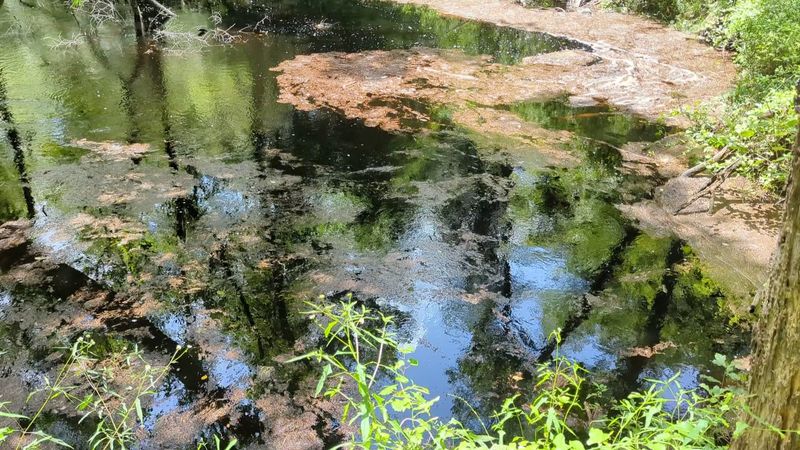
Others have dropped far enough to reach the underground water table, filling with strikingly clear blue water that seems almost too vivid to be real.
Interpretive signs along the trail explain this process in plain language, making the science accessible even for younger visitors.
Florida’s karst geology is one of the most active in the entire country, and this park offers a front-row seat to its ongoing work.
Wet Sinkholes And Their Brilliant Blue Water
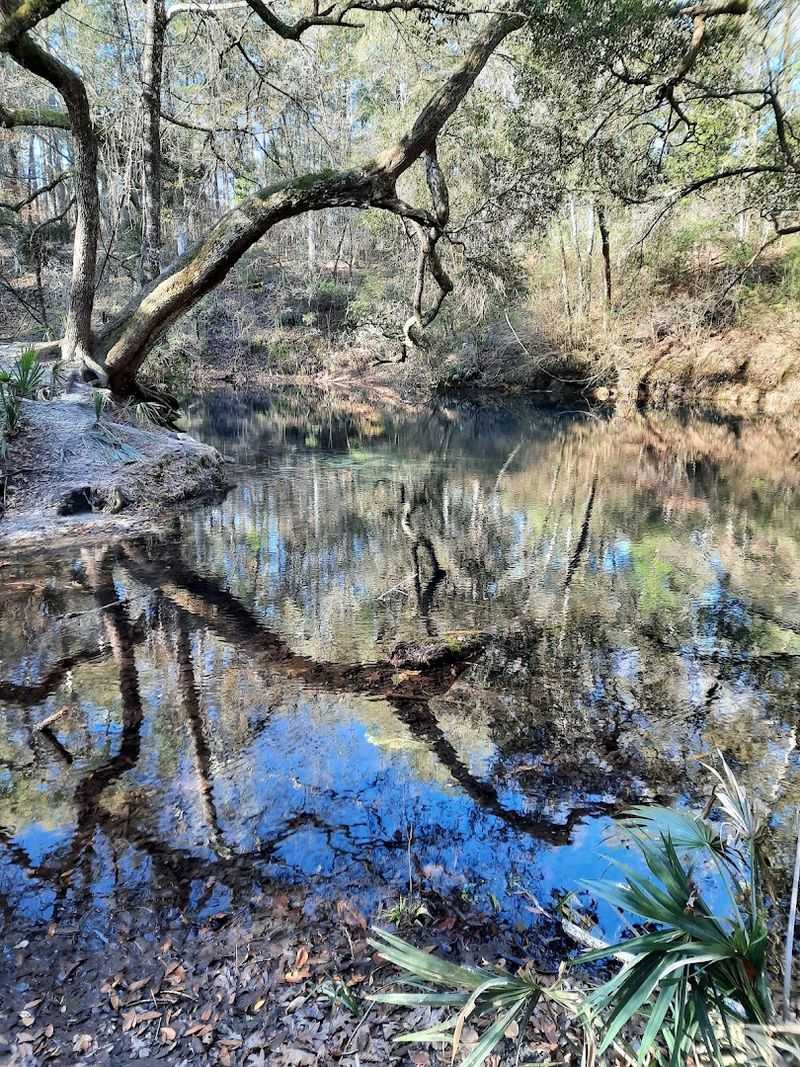
Hammock Sink is one of the first wet sinkholes visitors encounter on the trail, and it stops nearly everyone in their tracks.
Just half a mile from the trailhead, this water-filled depression glows with a deep blue-green color that feels almost surreal in the middle of a quiet Florida forest.
The water is incredibly clear because it connects directly to the underground aquifer, which filters it naturally through layers of limestone and sand.
Several other wet sinkholes appear further along the route, each with its own personality, depth, and shade of blue.
Wooden overlooks and boardwalks have been built near many of these features so visitors can get close safely without disturbing the edges.
Swimming is not permitted at any of the sinkholes, which helps preserve the water quality and protects the fragile ecosystem living below the surface.
These pools are also important recharge zones for Florida’s famous springs system, quietly replenishing the aquifer with every rainfall.
Standing at the edge of one of these glowing pools is a genuinely memorable moment that few visitors forget.
The Star Of The Show
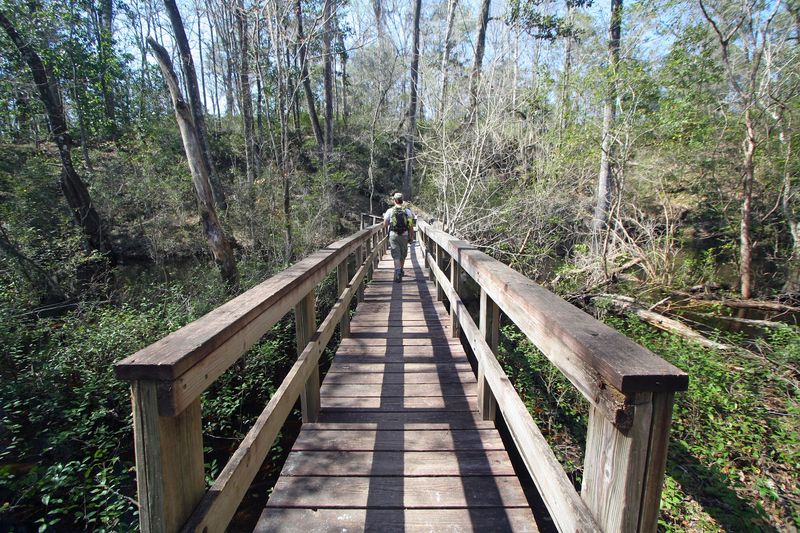
Despite its rather gloomy name, Big Dismal Sinkhole is hands-down the most dramatic geological feature on the entire trail system.
This massive depression plunges deep into the earth, with steep limestone walls draped in ferns, mosses, and tangled roots that give it an almost prehistoric atmosphere.
The sheer scale of it is hard to grasp until you are standing right at the rim, looking down into the shadowy interior below.
Big Dismal is a dry sinkhole, meaning no water sits at the bottom, but that only makes the walls and rock formations more visible and striking.
The surrounding vegetation has adapted to the cooler, shadier microclimate inside the sinkhole, creating a pocket of plant life that looks different from anything else on the trail.
A viewing platform allows hikers to observe the feature safely from above without risking a tumble down the steep sides.
Even seasoned hikers who have explored trails across Florida often name this sinkhole as one of the most visually impressive natural features they have encountered in the state.
It is the kind of sight that earns a long, quiet pause.
Gopher Hole Cave And A Peek Into The Underground
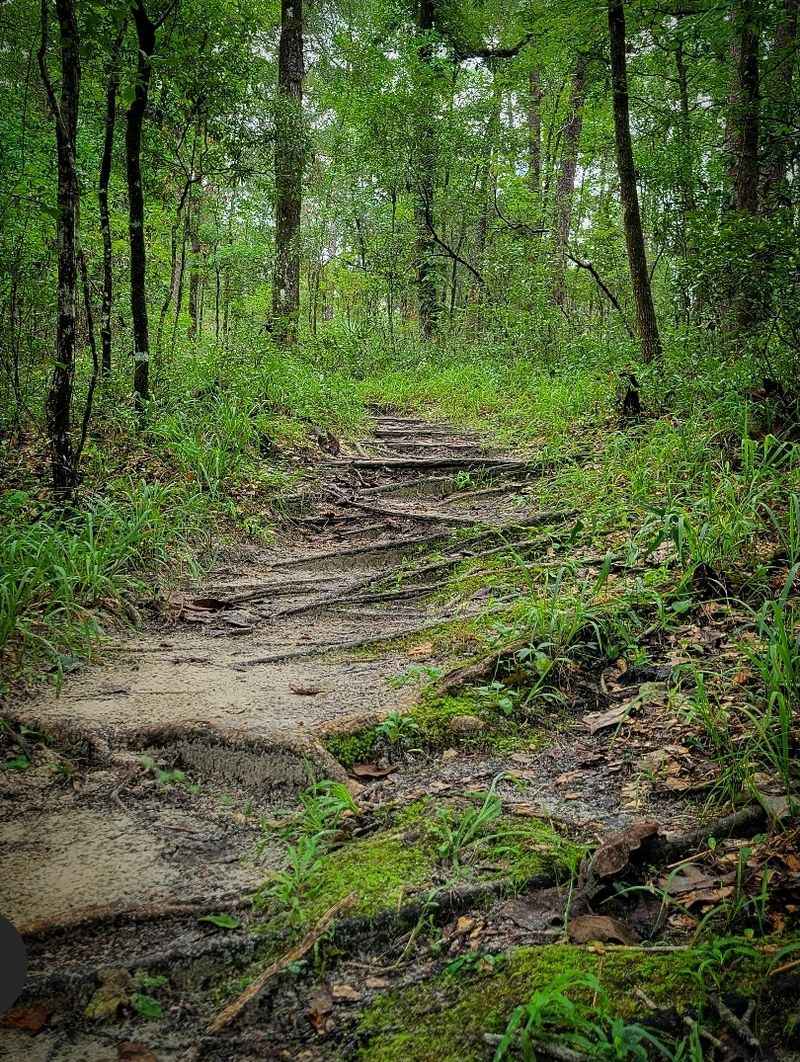
Caves and Florida do not always go together in the popular imagination, but Leon Sinks Geological Area has one worth seeking out.
The Gopher Hole is a compact cave located just 0.2 miles from the parking area, making it one of the quickest rewards on the entire trail.
Hikers can walk right up to the entrance and peer inside, where the cool, dark interior offers a fascinating contrast to the warm, sunlit forest outside.
The cave formed through the same limestone dissolution process that created all the sinkholes in the area, essentially an underground void where water once carved its way through solid rock.
One of the most surprising residents of this cave is a white crayfish, an albino species adapted to life in the pitch-dark underground environment.
Spotting one of these pale creatures clinging to the cave walls is a genuine thrill and a reminder of how unique Florida’s underground ecosystems truly are.
The cave is not open for entry, but the viewing area is close enough to give a real sense of what lies beneath the forest floor.
Short, fascinating, and totally unexpected.
The Disappearing Stream: Nature’s Magic Trick
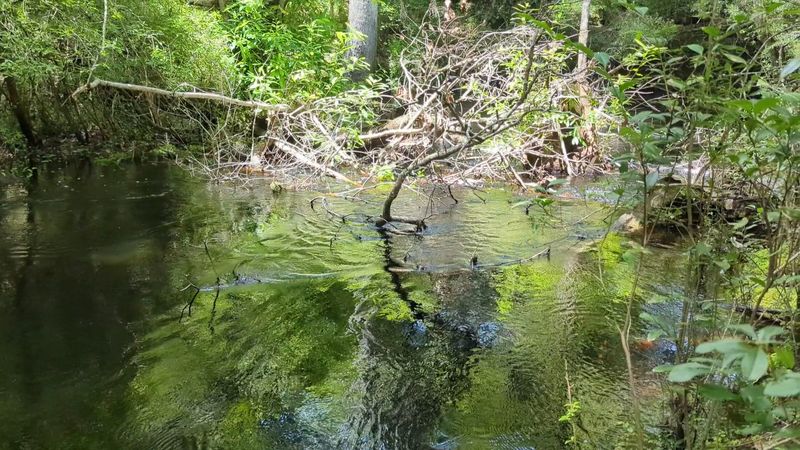
One of the quirkiest features along the trail system is a stream that simply vanishes into the earth right before your eyes.
The disappearing stream is a short side trail detour that takes about five to fifteen extra minutes to explore, and it is absolutely worth the added steps.
What visitors witness here is a small surface stream flowing along normally before it reaches a point where the limestone beneath has opened up and swallowed it whole.
The water drops into the underground karst system, where it joins the network of aquifer channels running beneath northern Florida.
This kind of feature is called a swallet or a sinkhole input, and it is a live demonstration of how surface water and groundwater interact in karst landscapes.
Standing at the spot where the stream disappears gives a vivid sense of just how active and dynamic the geology underfoot really is.
It is one of those moments that makes the science feel tangible rather than abstract.
Kids especially tend to find this feature endlessly fascinating, and adults are rarely far behind in their amazement.
Gum Swamp Trail
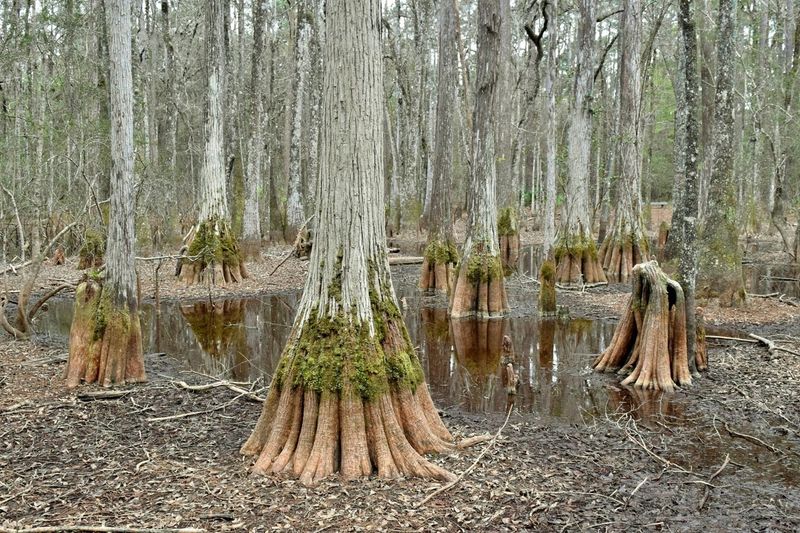
For hikers who want to push a little further into wild territory, the Gum Swamp Trail offers a noticeably different experience from the main sinkhole loop.
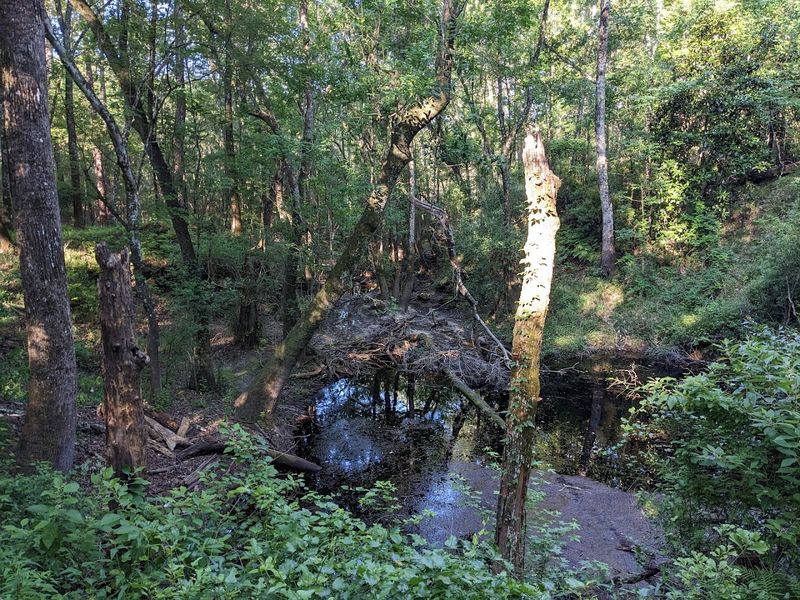
This branch of the trail system winds through low-lying wetland forest, where the ground gets soft and the air takes on that thick, green, earthy smell that defines Florida swampland.
During the rainy season, parts of this trail can flood, with water covering sections of the path for stretches of around fifty meters or more.
That wet factor adds a sense of adventure, but hikers should wear sturdy, water-resistant footwear and expect to get their feet damp if visiting during or after heavy rain.
The swamp environment supports a completely different set of plants and wildlife compared to the drier upland sections of the trail.
Tall cypress trees, ferns, and dense undergrowth crowd in on both sides, creating a moody, atmospheric corridor that feels genuinely remote.
The trail loops back to connect with the main path, so hikers do not need to retrace their steps.
It is the more rugged, less polished side of Leon Sinks, and some visitors prefer it for exactly that reason.
Best Time To Visit And What To Expect
Timing a visit to Leon Sinks Geological Area can make a meaningful difference in how comfortable and enjoyable the experience turns out to be.
Florida’s summer months bring intense heat and humidity, along with frequent afternoon thunderstorms that can roll in with very little warning.
Visiting in the cooler months between October and March is generally considered the most pleasant window, with lower temperatures and far fewer insects on the trail.
Morning visits tend to be quieter and cooler, and the park’s opening time gives early risers a chance to explore before the midday heat sets in.
After rainfall, the wet sinkholes take on a deeper, more dramatic color, and the forest feels especially lush and alive.
However, the trail surfaces can become slippery in spots, so careful footing is necessary on those days.
The park is rarely crowded, and many visitors report having entire sections of the trail to themselves even on weekday afternoons.
That kind of peaceful solitude is increasingly rare in Florida’s popular natural areas, and it makes Leon Sinks feel like a genuine escape from the busier world outside.
Practical Tips Before You Hit The Trail
A few straightforward preparations can turn a good visit to Leon Sinks Geological Area into a great one.
There is a five-dollar parking fee per vehicle, and payment is made by placing cash or a check into an envelope at the entrance drop box, so bringing exact cash is essential since there is no card reader or ATM on site.
Annual federal recreation passes are accepted and can save regular visitors the per-day fee.
Water and a water fountain are available at the trailhead, but carrying a personal water bottle is still a smart move, especially during warmer months when dehydration can sneak up quickly.
Bug repellent is not optional in this environment; it is a necessity that makes the difference between an enjoyable hike and a frustrating one.
Dogs are welcome on the trails as long as they remain on a leash at all times.
Solid, closed-toe shoes with good grip are recommended over sandals, particularly for anyone planning to tackle the swamp sections.
The park is located in Crawfordville, just south of Tallahassee in northern Florida, making it an easy day trip from the state capital.
The Views And Overlooks That Make It Memorable
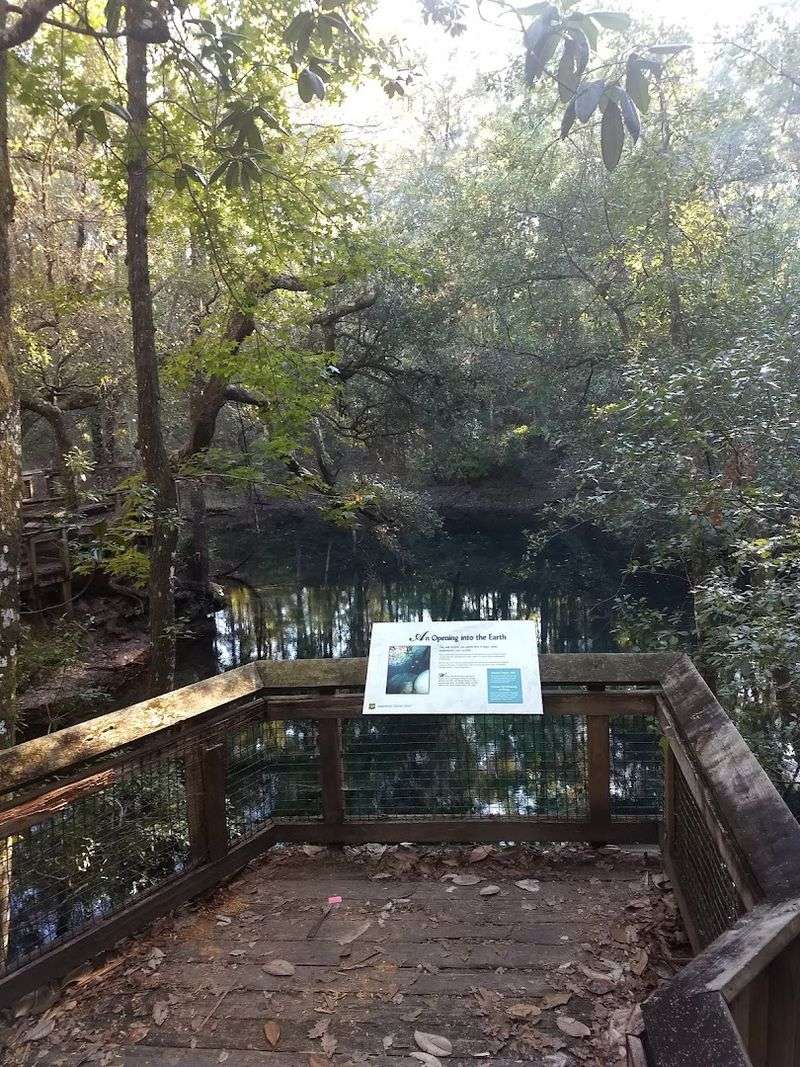
Scenic overlooks are scattered throughout the trail system at Leon Sinks, giving hikers elevated vantage points to appreciate the scale of the sinkholes below.
These platforms are built from wood and positioned at the edges of the larger sinkholes, offering safe viewing without requiring hikers to approach unstable ground.
From these overlooks, the contrast between the dark forest floor and the vivid blue water of the wet sinkholes is especially striking.
On clear days, the light filters through the tree canopy in shafts that illuminate the water and make the whole scene look almost staged.
Photography enthusiasts tend to linger at these spots, working to capture the depth and color of the sinkholes in a way that does the real thing justice.
The overlooks also offer a moment of stillness in the middle of the hike, a natural pause point where the surroundings can be appreciated without rushing forward.
Florida is not often associated with dramatic vertical landscapes, but the views from these platforms genuinely challenge that assumption.
The combination of geology, water, and forest creates a visual experience that feels surprisingly grand for a trail in the flatlands of the American South.
Why Leon Sinks Deserves A Spot On Your Florida Bucket List
Florida has no shortage of beautiful natural areas, but Leon Sinks Geological Area occupies a genuinely unique corner of the state’s outdoor landscape.
There is simply nothing else quite like it in terms of how geology, hydrology, and forest ecology come together in one accessible, well-maintained trail system.
The combination of dry sinkholes, wet sinkholes, a cave, a disappearing stream, and swamp forest means that every section of the trail offers something different from the last.
Families with young children find it educational and engaging, while solo hikers and couples enjoy the quiet, contemplative atmosphere the park naturally creates.
The proximity to Tallahassee makes it an easy addition to any visit to northern Florida, and the low cost of entry means there is very little reason to skip it.
The park sits within the Apalachicola National Forest, one of the largest national forests in the eastern United States, adding further context to its ecological importance.
Leon Sinks is the kind of place that tends to convert casual visitors into repeat hikers who come back with friends just to share the experience.
Florida keeps surprising people, and this trail is one of its best-kept secrets.