History feels different when it is not locked behind glass. In this Kansas town, the American West comes through with grit, heart, and a story many travelers never learned in school.
It is the kind of place that makes a quiet stop feel important, where old streets, preserved landmarks, and deep roots turn the past into something you can actually stand inside.
There is no need for flashy attractions when the story itself carries that much weight.
This is a destination for anyone who likes their road trips with meaning, character, and a few “how did I not know this?” moments.
Kansas has plenty of wide-open scenery, but places like this prove its history can be just as powerful. I always appreciate stops that make me rethink what I thought I knew, especially when they leave me with a story worth carrying home.
The Founding Of Nicodemus In 1877
In 1877, groups of formerly enslaved African Americans made a bold decision to leave Kentucky and head west.
They were drawn by town promoters and homestead opportunities, which allowed qualified settlers to claim 160 acres after modest fees, residence, and years of working it.
Nicodemus was founded by W.R. Hill, a white land developer, along with six Black leaders who believed the Kansas plains could offer freedom that the South never had.
The name Nicodemus is believed to reference a legendary enslaved African American who bought his own freedom, making it a powerful symbol for the new settlers.
The first winters were brutal. Many families lived in dugout homes carved into the earth just to survive the harsh Kansas wind and cold.
Yet they stayed, planted crops, and built something lasting out of sheer willpower and community solidarity on the plains together.
The Only Remaining Black Frontier Town
Most frontier towns built by African Americans during the post-Civil War era did not survive into the modern age. Nicodemus is the exception, which is exactly what makes it so extraordinary.
It stands today as the only remaining western town established by Black settlers during the Reconstruction period.
That distinction earned it National Historic Landmark status and eventually designation as a unit of the National Park Service, giving it the same federal protection as places like Yellowstone and the Grand Canyon.
The town itself is remarkably small, with just a handful of original structures still standing across the flat Kansas landscape.
But its size has nothing to do with its significance. Nicodemus carries a cultural and historical weight far beyond what its geography suggests, serving as a living reminder that the American frontier story belongs to people of all backgrounds.
The Role Of The Homestead Act
The Homestead Act of 1862 was one of the most significant land laws in American history.
It allowed any citizen, including formerly enslaved people after the Civil War, to claim 160 acres of federal land by agreeing to live on it and improve it for five years.
For Black Americans living under the oppressive conditions of the post-war South, this law represented a genuine path to landownership and independence.
Word spread quickly through Black communities in Kentucky and Tennessee that Kansas had land available, and Nicodemus became a destination for those willing to make the journey.
The Homestead Act was far from perfect, and many settlers at Nicodemus faced enormous hardships claiming and keeping their land.
Still, it gave a generation of Black families the legal foundation to own property, build homes, and establish a community on their own terms for the very first time.
The Historic Buildings Still Standing Today
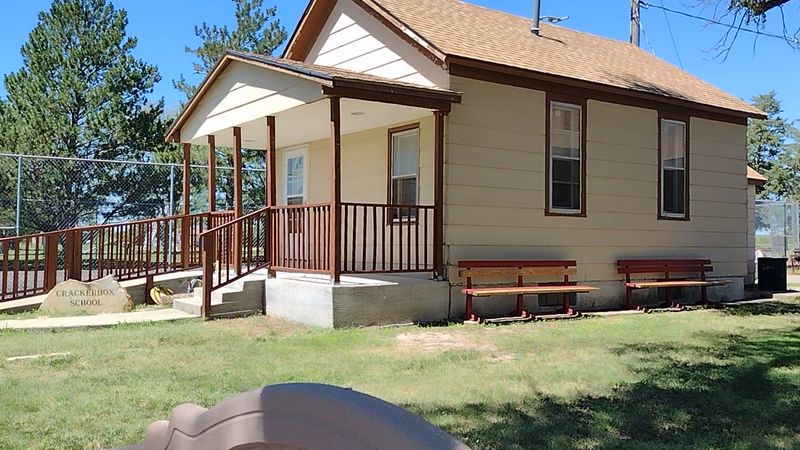
Walking through Nicodemus today, you can still see several historic structures tied to the town’s long story.
The National Park Service protects five key historic buildings as part of the site, each one telling a different chapter of the community’s story.
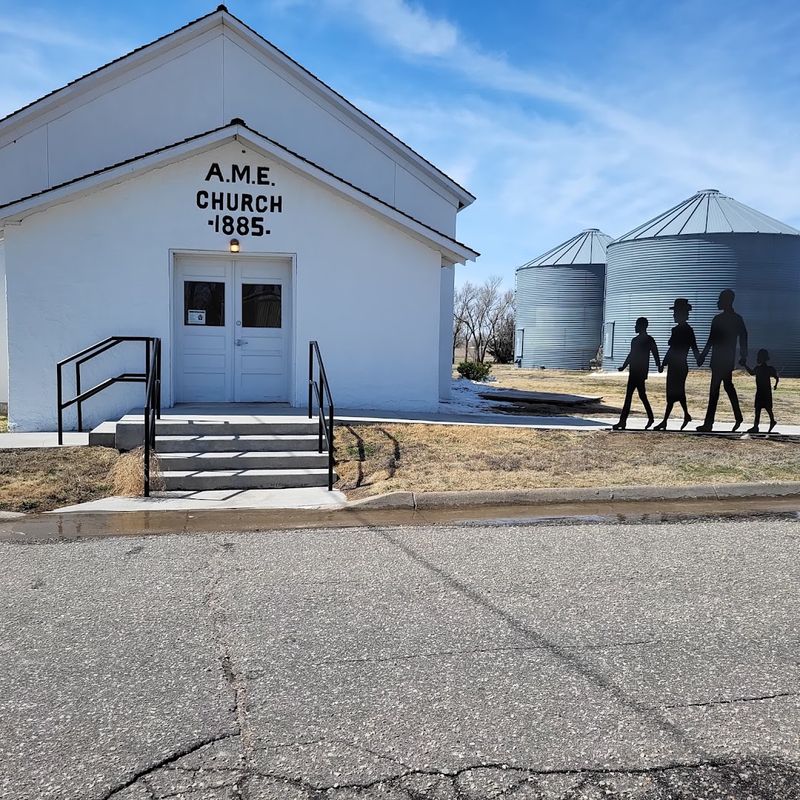
These include the First Baptist Church, the St. Francis Hotel, the Township Hall, the District Number 1 School, and the AME Church.
Several were rebuilt, restored, or adapted over time, reflecting the community’s evolving life rather than only the earliest settlers’ original handiwork on the open Kansas plains.
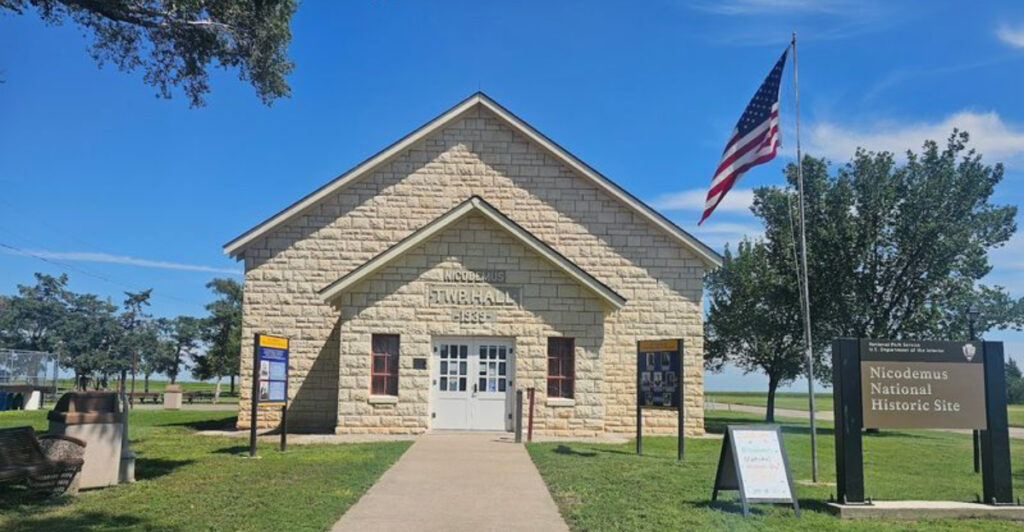
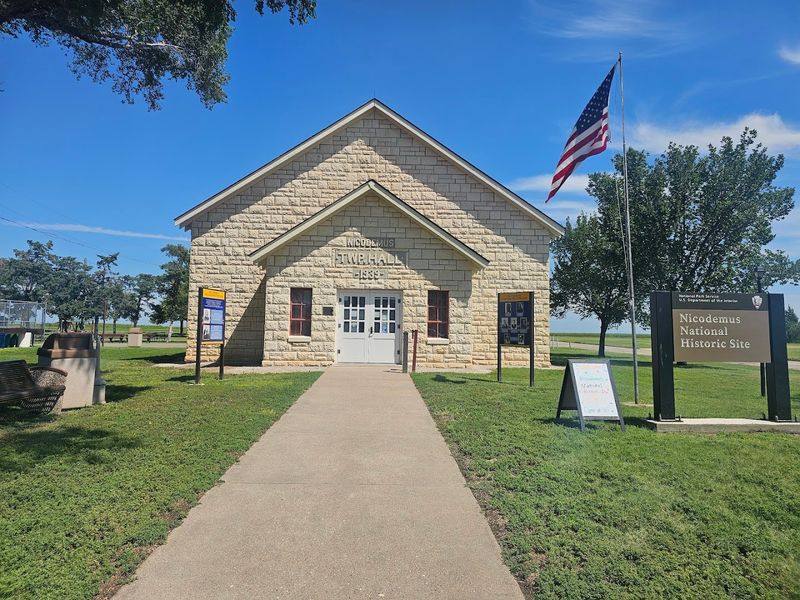
The Township Hall is particularly striking because it served as a civic heart of the community, a place where residents gathered for local government, celebrations, performances, and support through hard times.
Seeing these structures still standing on the same land where the community endured for generations is genuinely moving, humbling, and historically powerful for anyone who visits today in person.
The Visitor Center And Its Exhibits
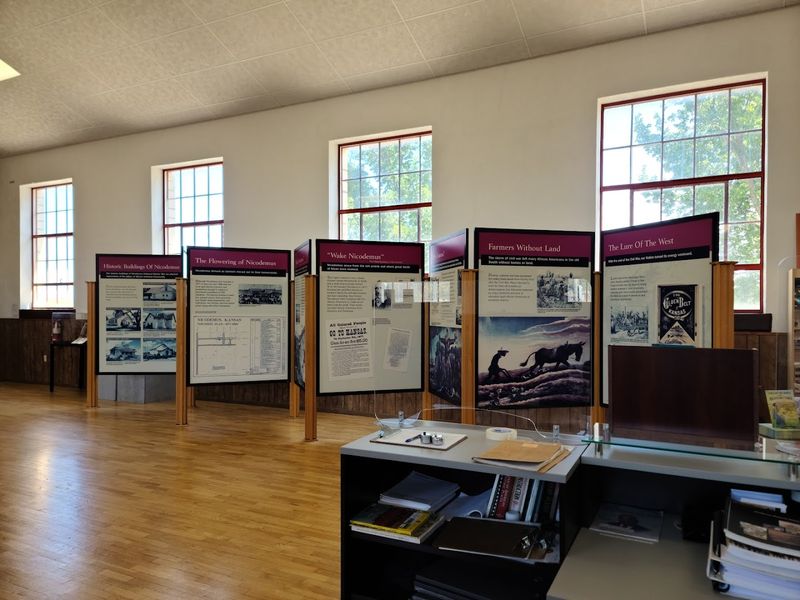
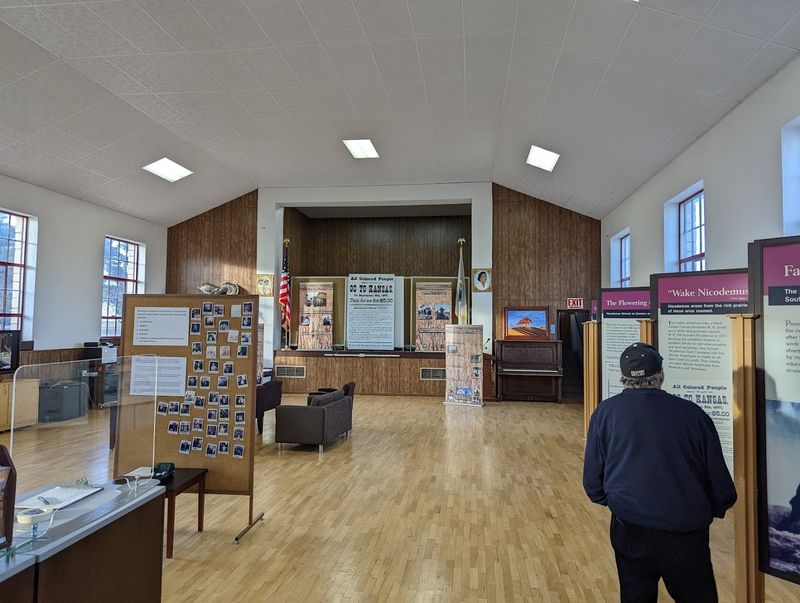
The visitor center at Nicodemus National Historic Site is a compact but richly informative space that sets the tone for everything you will experience on the grounds.
It features photographs, artifacts, and detailed panels that walk you through the community’s founding, growth, and survival across more than a century.
Films and exhibits inside Township Hall bring the history to life in a personal and engaging way.
The National Park Service rangers stationed here are known for their deep knowledge and genuine enthusiasm for the site’s story, always ready to answer questions or point out details you might otherwise miss.
The visitor center is open Thursday through Monday from 9 AM to 5 PM, and admission is completely free.
For families, there is also a Junior Ranger program available, and Roadside Park nearby has picnic tables and a playground, making it an easy and enjoyable stop for all ages right here year-round overall.
The Annual Homecoming Celebration
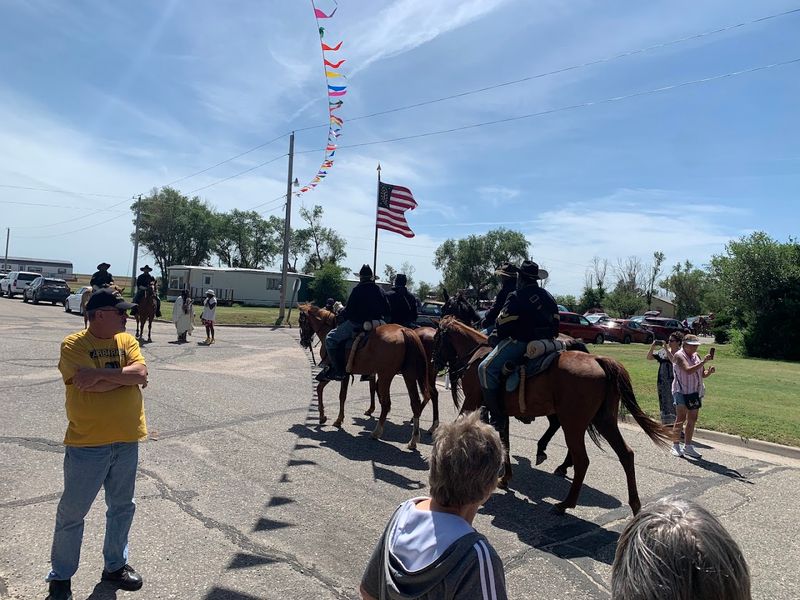
Every year, Nicodemus comes alive with one of the most meaningful traditions in all of Kansas.
The Annual Homecoming, held each summer, draws descendants of the original settlers back to the land their ancestors built, creating a reunion that blends family pride with living history.
The event has been running for well over 140 years, making it one of the longest-running homecoming celebrations in the United States.
Attendees gather for music, food, storytelling, and ceremonies that honor the founders and the generations who kept the community alive against serious odds.
The homecoming is open to the public and draws visitors from across the country who come to witness something rare: a community actively celebrating and preserving its own heritage rather than simply displaying it behind glass.
For a small town on the Kansas plains, the energy and pride on display during homecoming is nothing short of extraordinary.
The Harsh Realities Of Pioneer Life
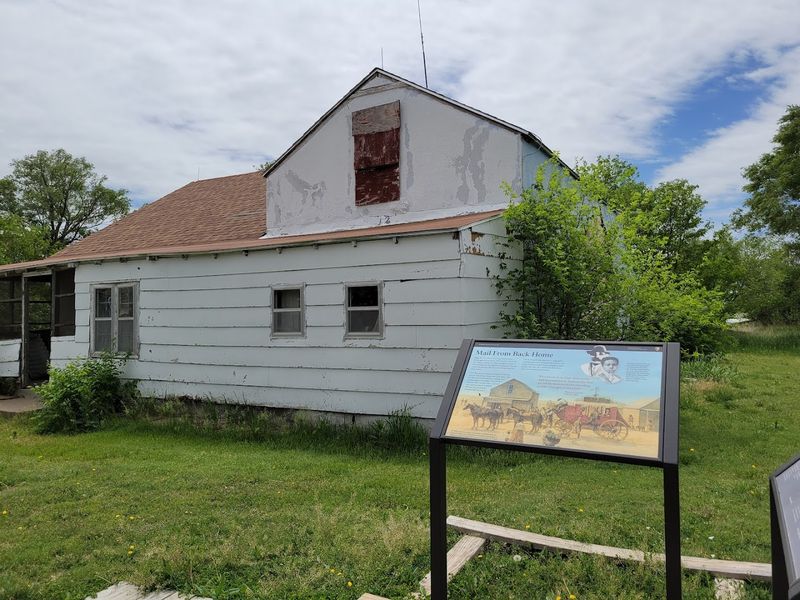
The settlers who arrived in Nicodemus in 1877 faced conditions that would have broken many people. The Kansas plains offered no forests for timber, no ready-made shelter, and no established supply chains.
The first families had to dig into the earth itself to create homes, living in dugouts that were dark, cramped, and cold during the brutal winters.
Food was scarce in those early years, and some accounts describe settlers surviving on roots and whatever game they could find.
The local Osage Nation reportedly brought food to the struggling community during one particularly difficult winter, an act of generosity that helped Nicodemus survive its earliest days.
Despite these hardships, the community persisted. By the early 1880s, Nicodemus had a post office, churches, a hotel, a school, and even a baseball team.
The speed of that growth, given what the settlers started with, speaks to an almost unbelievable level of collective determination.
How The Railroad Changed Everything
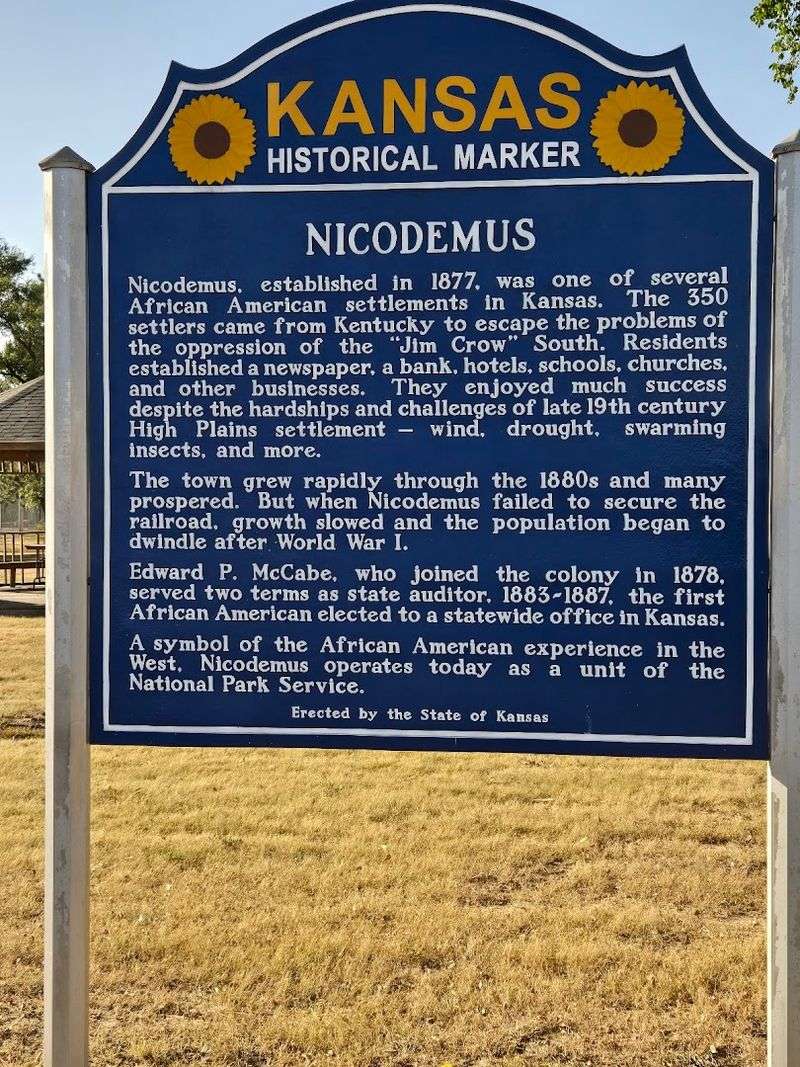
In the 1880s, Nicodemus was growing steadily and had real momentum as a frontier town.
Residents expected the railroad to come through, which would have connected them to regional markets, brought new settlers, and secured the town’s long-term economic future.
Several railroad hopes developed around the area, but the tracks ultimately went elsewhere.
The Missouri Pacific and Union Pacific routes bypassed Nicodemus, a decision that proved devastating for the community’s growth and helped shift commerce away from town almost overnight locally.
Many businesses and families relocated to nearby railroad towns like Bogue and Hill City, taking economic energy with them.
The population dropped sharply, and Nicodemus never grew into the larger town it might have become.
In a bittersweet twist of history, that very loss of growth is part of why historic buildings survived intact, preserved partly because the town stopped changing at a certain point in time there.
A Living Community, Not Just A Museum
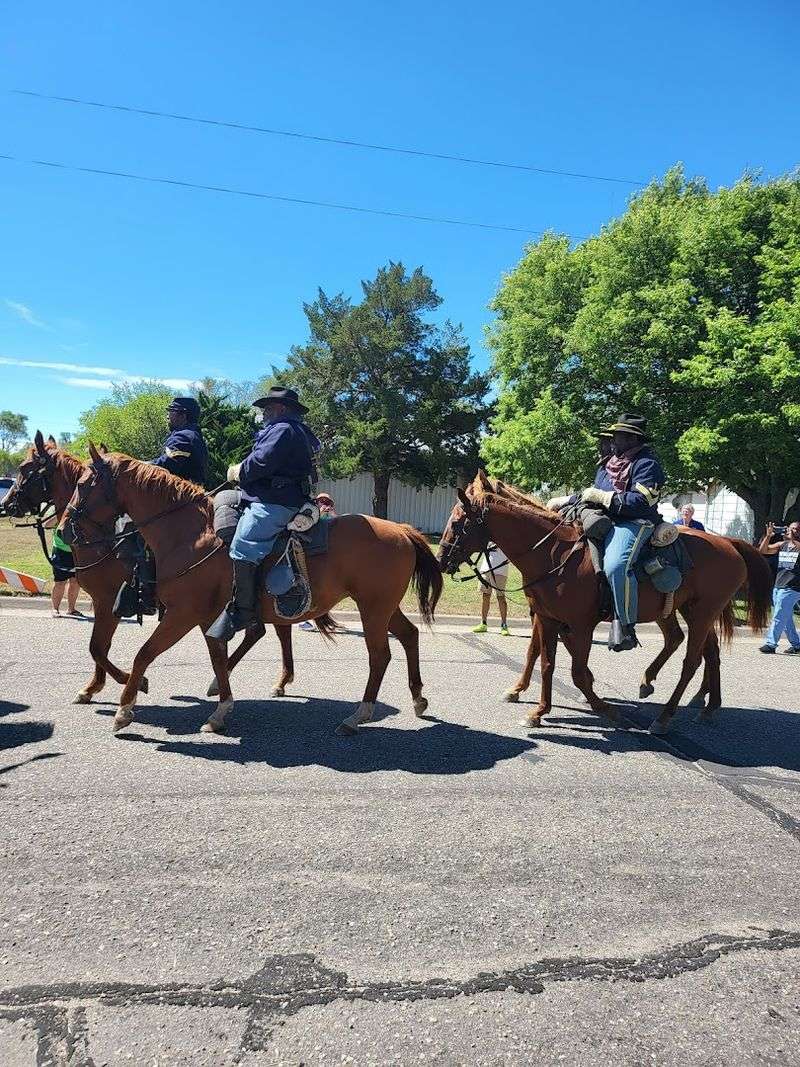
One of the most remarkable things about Nicodemus National Historic Site is that it is not a ghost town. People still live here.
Descendants of the original settlers remain in the community, maintaining a connection to the land that stretches back nearly 150 years.
This makes Nicodemus fundamentally different from many other historic preservation sites, where history is frozen in place and separated from everyday life.
Here, the past and present exist side by side. You might walk past a protected 19th-century church and then see a resident tending their garden just a few feet away.
The Kansas Black Farmers Association has also been active in the area, showing that the agricultural spirit that first brought settlers to this land is still alive in the region.
That continuity between generations adds a layer of meaning to every exhibit and every historic building that no museum display could ever fully replicate on its own.
Tips For Planning Your Visit
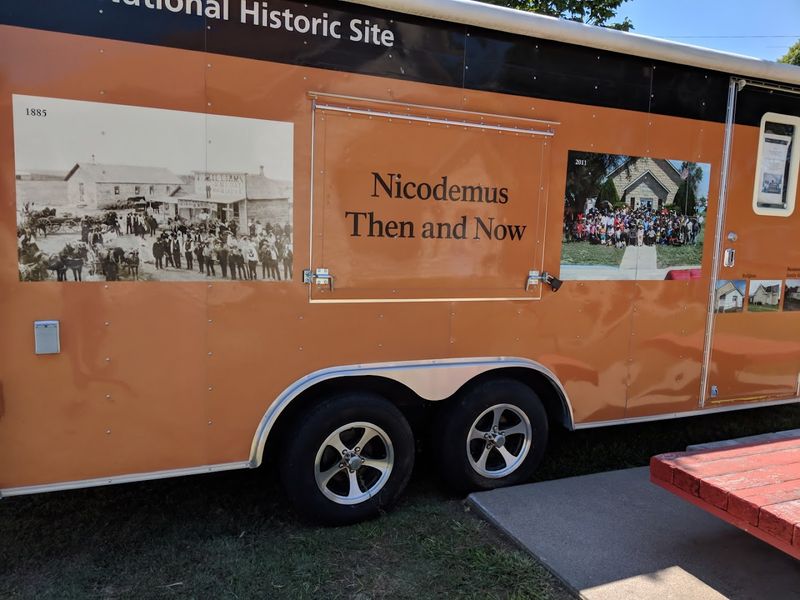
Nicodemus National Historic Site is located at 304 Washington Avenue in Nicodemus, Kansas, and sits in a remote part of the state.
The nearest larger towns are Stockton and Hill City, so plan your fuel and food stops before heading out, as services in the immediate area are very limited.
The site is open Thursday through Monday from 9 AM to 5 PM and is closed on Tuesdays and Wednesdays. Entry is completely free, which makes it one of the most accessible National Park Service sites in Kansas.
The NPS app offers townsite walking and township driving audio tours that add real depth to the experience, especially for first-time visitors.
Late spring through early fall tends to be the best time to visit, both for weather and for the chance to catch special programming or the annual homecoming event.
Bring water, comfortable walking shoes, and plenty of curiosity, because there is far more to absorb here than the modest size of the town might suggest.