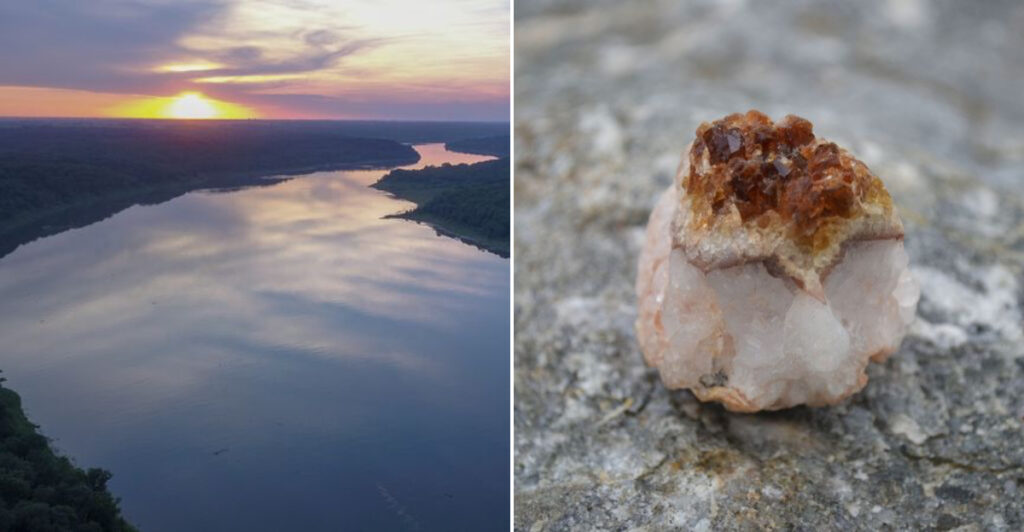
A plain rock with a magical secret inside. You just have to love geodes.
Iowa turns geology into a treasure hunt where patience gets rewarded with sparkle.
The fun comes from never knowing which lumpy little candidate is hiding quartz, calcite, or a crystal surprise worth bragging about later.
That uncertainty gives the search its wonderfully addictive pull.
One promising find leads to another, and suddenly your pockets are heavier while your standards for ordinary rocks have become completely unreasonable.
Iowa has always known how to keep its best surprises understated.
Here, the outside stays humble while the inside does all the showing off.
A curious afternoon could easily become a new obsession, especially once that first geode opens and proves the riverbed was keeping secrets all along.
Quick note, though: The Iowa Geological Survey says most collecting sites are private and permission is required.
Start In Iowa’s Famous Geode Country
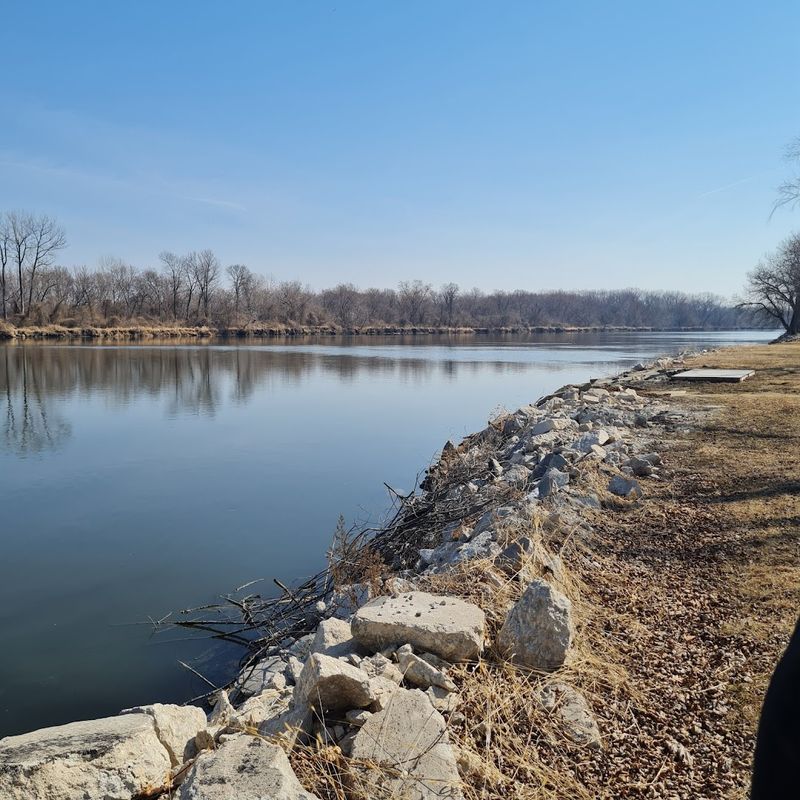
Southeastern Iowa is where this particular treasure hunt earns its reputation.
The area around Keokuk, along with portions of Lee, Henry, and Van Buren counties contains stream drainages that cut through geode-bearing rock layers.
That distinction matters because geodes are not scattered evenly across every Iowa riverbed.
The famous Keokuk geodes are associated with Mississippian-age formations exposed near the Mississippi River bluffs and their tributaries in this part of the state.
Streams have helped loosen the rounded nodules from softer surrounding rock.
Over time, water carries and concentrates them in creek bottoms, gravel deposits, and other places where a patient search can become surprisingly productive.
The landscape does not advertise the treasure with glittering signs.
It offers mud, pebbles, limestone, and just enough suspicious-looking lumps to keep a collector crouched over for far longer than planned.
Southeastern Iowa turns geology into a scavenger hunt where the prize may have spent hundreds of millions of years waiting under a layer of creek dust.
Why Keokuk Geodes Are So Special
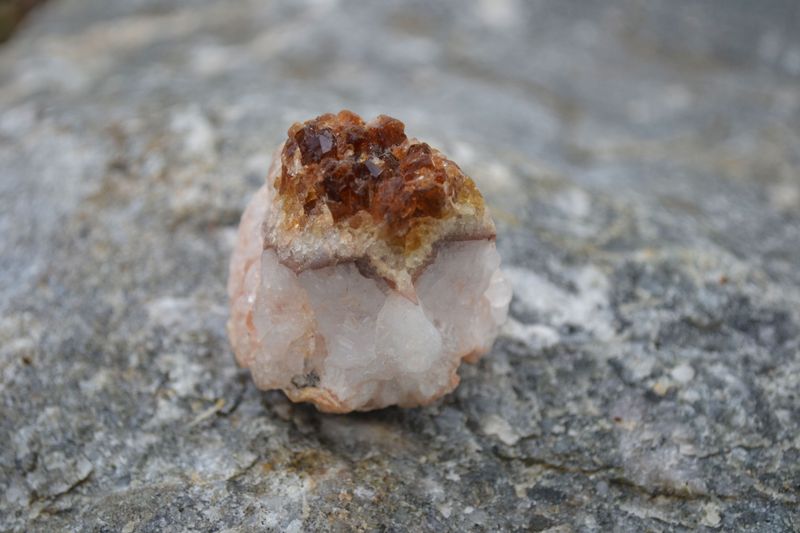
Keokuk geodes have become well known because of their abundance, variety, and the range of minerals that may appear inside them.
Quartz is the dominant mineral in many examples, while calcite is also common and can form striking crystal shapes.
The Iowa Geological Survey notes that numerous additional minerals have been identified in Keokuk geodes.
Dolomite and pyrite may occur among them, giving collectors more reasons to inspect each opened specimen carefully.
Their formation is a slow geological performance with no interest in sticking to a human schedule.
Mineral-rich water entered cavities in ancient sedimentary rock, and crystals gradually grew along the inner walls.
The durable outer shell helped some geodes survive after the softer host rock weathered away.
That is why complete nodules can accumulate in stream bottoms instead of disappearing with the surrounding material.
Collectors care because no two interiors are guaranteed to match. One may contain bright points of quartz, another may hold cloudy mineral layers, and the next may open to reveal an empty cavity with only a modest sparkle.
Every geode keeps its résumé on the inside.
What A Geode Looks Like Before It Opens
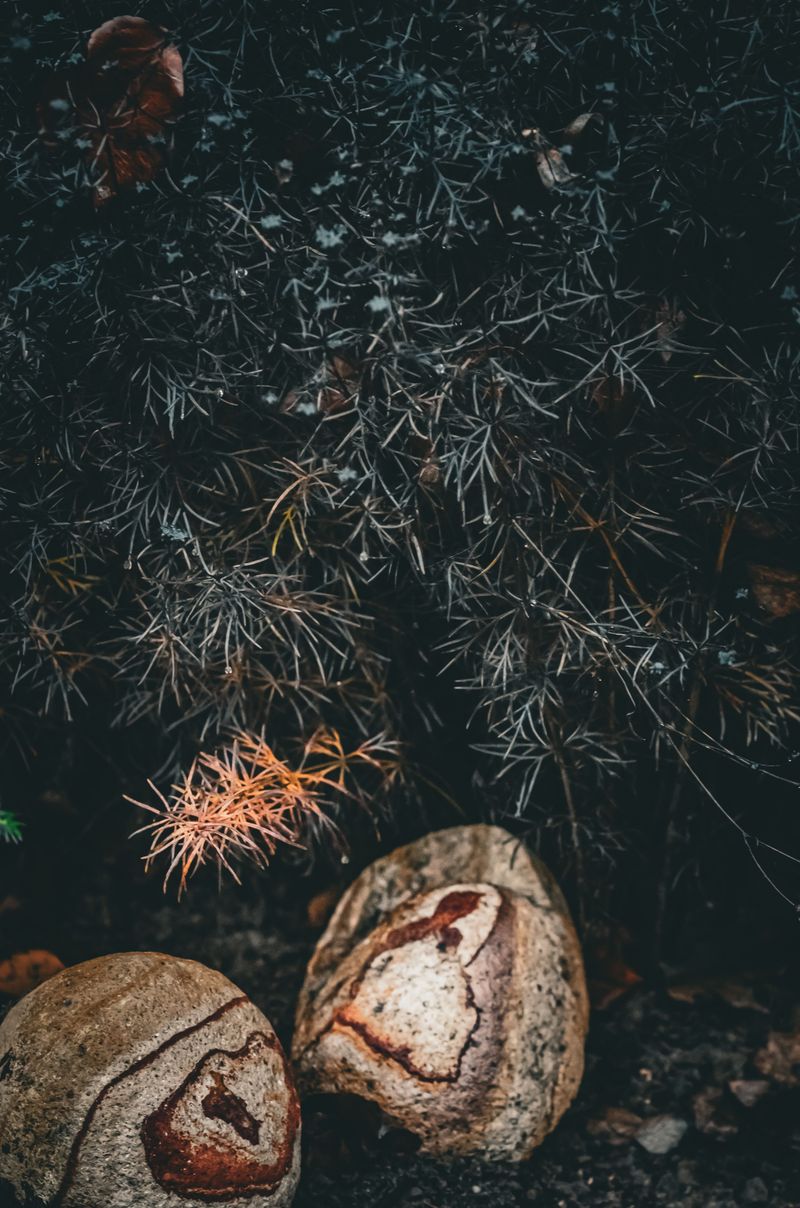
A closed geode rarely looks impressed with itself. The outside is usually dull, rough, and rounded, with none of the sparkle that makes the finished specimen display-worthy.
Many Iowa examples have a lumpy or knobby surface that people compare to cauliflower. Others look more like worn, irregular balls with a hard rind and patches of gray, tan, brown, or chalky white.
Shape offers clues, but it does not issue guarantees. Roundness, a bumpy texture, and a tougher outer shell may suggest a geode, yet ordinary rocks are perfectly capable of dressing for the part.
Weight can also be misleading. Some specimens feel surprisingly substantial because the shell and mineral growth are dense, while a more hollow geode may seem lighter than a similarly sized solid rock.
A gentle shake may occasionally reveal loose material inside, though silence does not mean the search is over.
The most useful habit is to compare several candidates, notice repeated textures, and resist adopting every round stone in the creek.
Soon enough, the bucket begins to look like a very serious cauliflower collection.
Where Collecting Is Actually Allowed
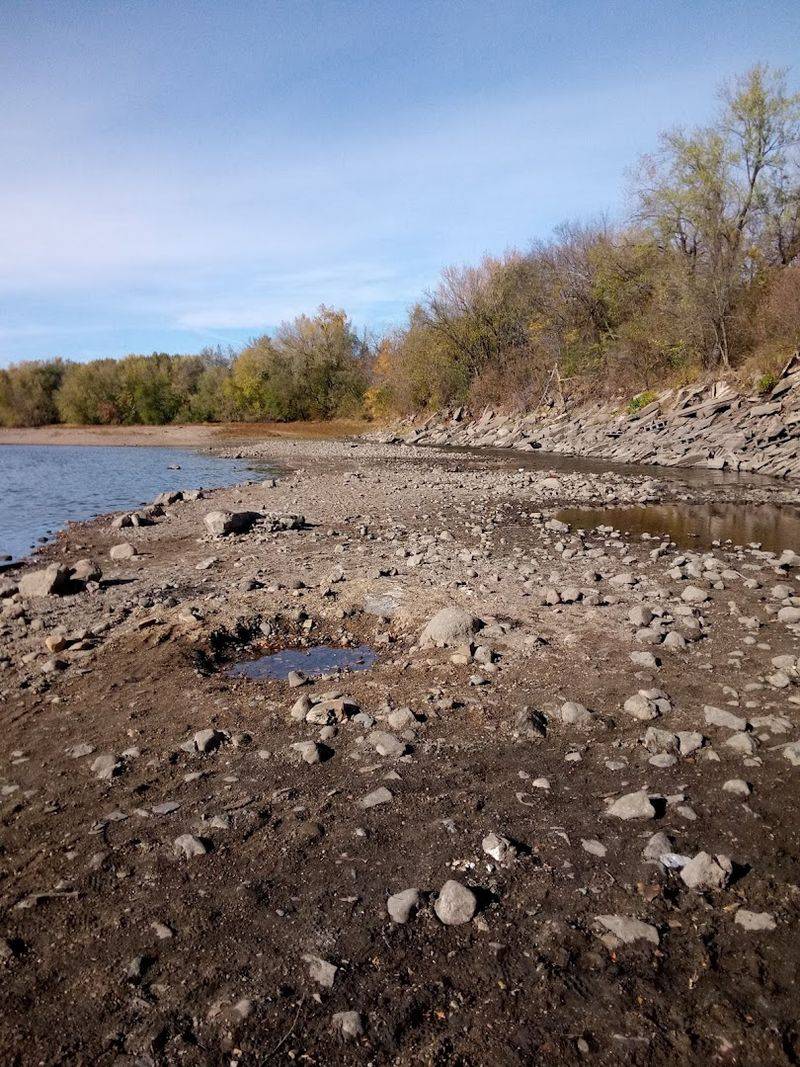
Finding a geode does not automatically mean it can go home with you. Ownership and land-management rules matter before the first rock enters the bucket.
Private property requires clear permission from the landowner.
A creek crossing, roadside exposure, or unfenced bank should never be treated as an open invitation, even when the rocks appear to be doing absolutely nothing useful.
Public land also comes with its own rules. Regulations can vary according to the agency managing the site, so collectors should contact the relevant park, county, city, or state office before removing natural material.
Geode State Park is especially important to understand.
The park celebrates Iowa’s state rock and displays geodes, but the Iowa Department of Natural Resources explicitly prohibits removing geodes from the park.
That makes it a place to enjoy trails, lake scenery, and the region’s geological identity rather than a collecting shortcut.
The safest plan is simple: verify access, ask permission, follow posted restrictions, and leave doubtful stones exactly where they are.
A geode is a fine souvenir. A conversation with an enforcement officer is considerably less sparkly.
The Best Conditions For Finding Geodes
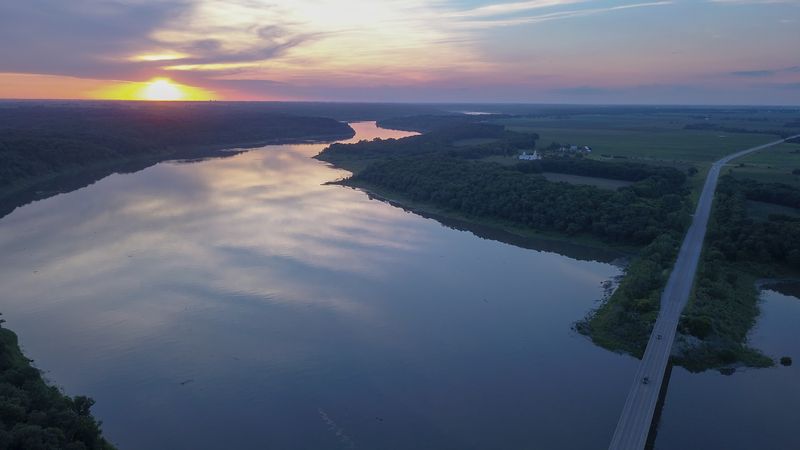
Water does much of the sorting work in southeastern Iowa. Creek beds, gravel bars, eroded banks, and places where geode-bearing layers are exposed can all deserve a careful look when access is legal.
Lower water may reveal gravel that was previously covered. Rain and periods of stronger flow can also shift sediment and uncover fresh material, though recently flooded banks may remain unstable and dangerous.
That means “after the water moves” is not the same as “step into the creek immediately.”
Conditions should be calm, levels should be safe, and slippery edges should receive the respect they have clearly been demanding.
Freshly exposed surfaces can be promising because they may contain material that has not been searched as heavily.
Even then, finding a geode is never guaranteed, and an empty bucket does not mean the geology has packed up and left town.
Slow scanning usually works better than charging through the creek like a contestant in a timed rock emergency.
Look between ordinary stones, check rounded nodules, and pay attention to material collected along bends or low gravel patches.
Complete geodes often weather out of surrounding formations and gather in stream bottoms, which is why moving water plays such a large role in the search.
Patience remains the only tool that improves every outing.
What To Bring For A Safe Search
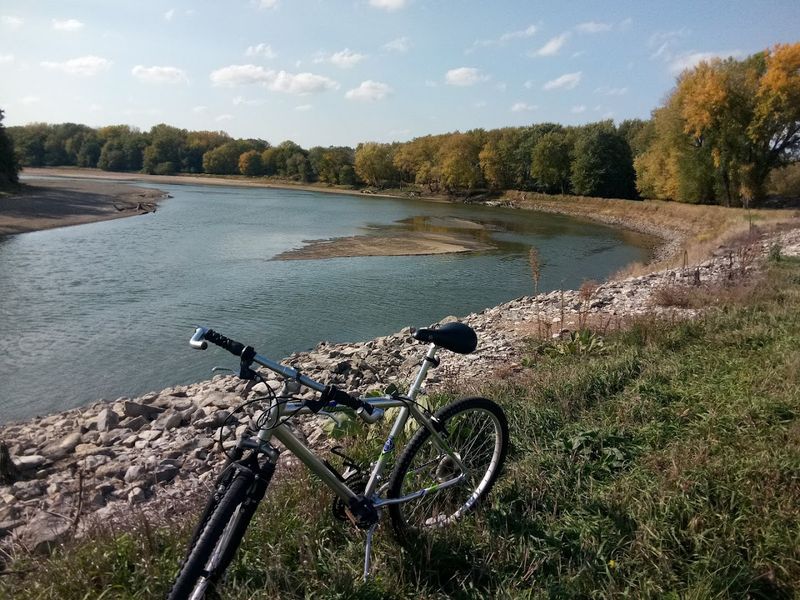
Good footwear belongs at the top of the list. Creek rocks can be slick, mud can be deeper than it looks, and flimsy shoes tend to discover their limitations at the least convenient moment.
Gloves protect hands from sharp edges, while a sturdy bucket or canvas bag keeps finds from turning pockets into sagging geology exhibits.
Water, sunscreen, a hat, and weather-appropriate clothing are equally important on exposed banks.
A small rock hammer can be useful, but it should be carried responsibly and used only where striking rocks is permitted.
Eye protection is essential whenever a specimen is opened because chips can travel farther and faster than expected.
A hand lens can help inspect textures and tiny crystals.
A towel or thick cloth is useful for wrapping specimens, cleaning muddy hands, or giving one especially handsome rock the first-class treatment it apparently deserves.
A phone, map, and basic first-aid supplies add another layer of preparation. Tell someone where the search is taking place, watch changing weather, and avoid entering swift or rising water.
Do not forget a practical way to carry everything back. A bucket that seems perfectly reasonable at the beginning can turn into a portable boulder collection by the end.
The goal is to return with an interesting haul, not a dramatic rescue story.
How To Open A Geode Without Ruining It
Opening day is where excitement and impatience begin wrestling for control. A hard strike may split the geode quickly, but it can also crush crystals or send fragments in several unhelpful directions.
Safety glasses should be worn, and anyone nearby should stand well back.
Work outdoors on a stable surface, use gloves, and keep the specimen wrapped in a thick cloth or placed inside a sturdy container to help contain flying chips.
A rock hammer and chisel can provide more control than random pounding. Light, repeated taps around the geode’s middle may encourage a cleaner break, although natural fractures still get the final vote.
Collectors who want neat display halves often use a lapidary saw.
A chain-style geode cracker is another specialized option because it applies pressure around the stone rather than concentrating one sharp blow in a single spot.
Not every geode will separate into two perfect, matching bowls of crystals. Some crumble, some split unevenly, and some reveal a solid interior that politely ignores all expectations.
Keep faces and fingers away from the striking area, and never skip eye protection. Even a small geode can launch sharp fragments when the shell finally gives way.
Open slowly. The rock waited this long, and it is not going anywhere.
What You Might Find Inside
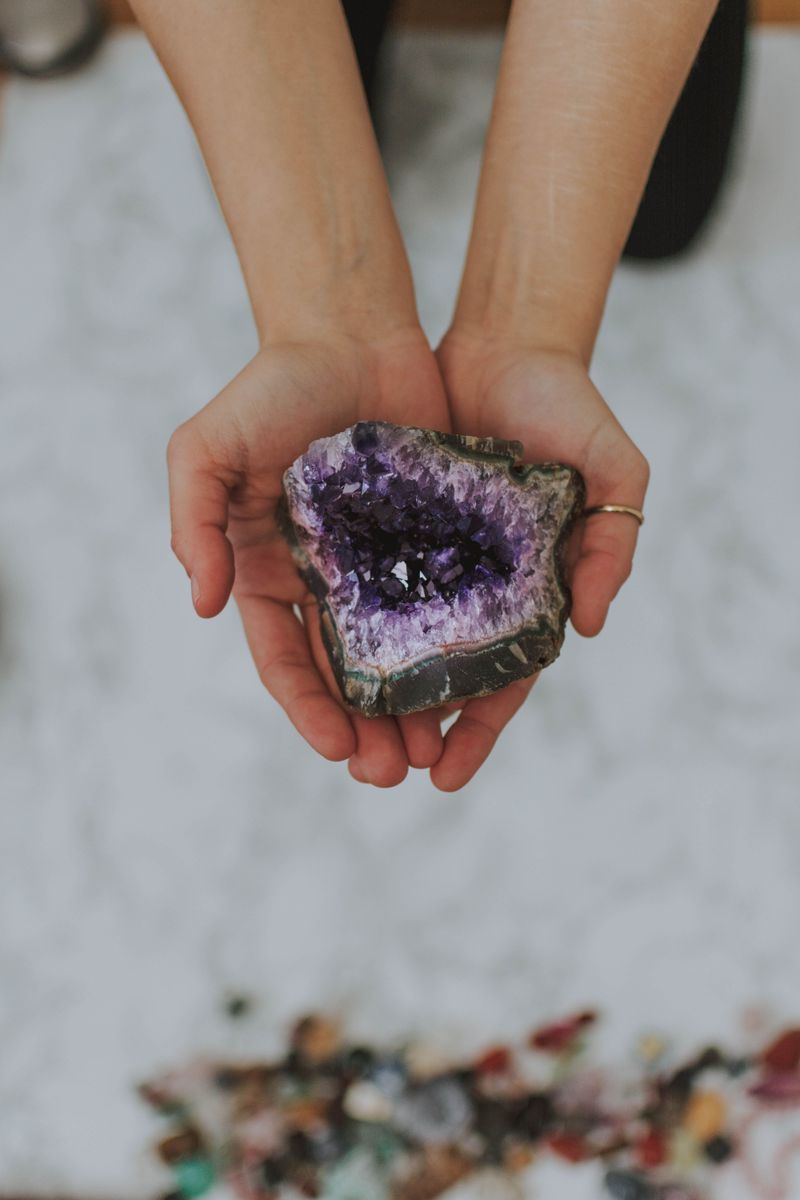
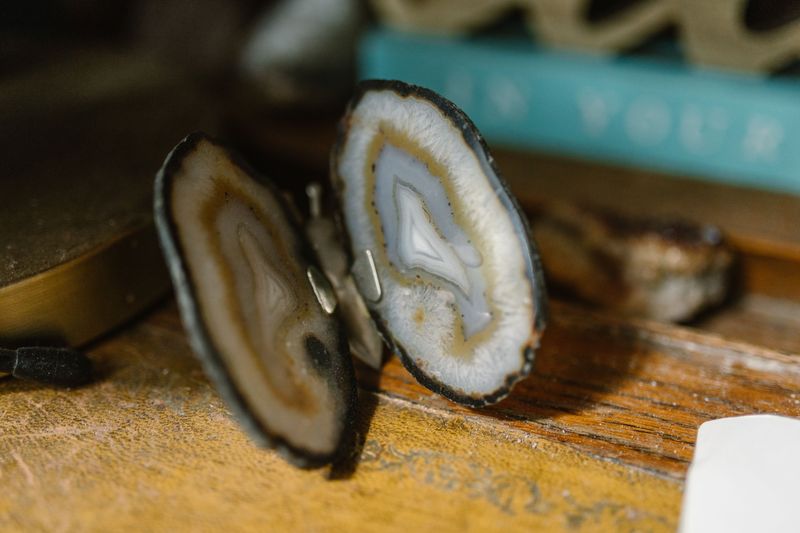
Quartz is the familiar star of many Keokuk geodes. It may appear as tiny sparkling points, clearer crystal clusters, or a pale lining that catches the light without turning the inside into a miniature chandelier.
Calcite is another common possibility and can produce larger, more distinct crystal forms.
Dolomite and occasional pyrite may also occur, while the broader mineral variety is one reason these geodes remain so interesting to collectors.
Color is not limited to bright white. Gray, pink, blue, yellow, and orange tones have been documented, although many interiors are softer, cloudier, or more muted than polished display specimens suggest.
Some geodes contain generous open cavities. Others are partly filled with minerals, lined with crystals too small to identify easily, or nearly solid from continued mineral growth.
A plain interior is still part of the story. It records the same slow movement of water and dissolved minerals, even when the finished result chooses scientific interest over dramatic sparkle.
That unpredictability keeps the cracking process honest. Every stone gets a reveal, but nature remains firmly in charge of the special effects.
Make It A Full Southeastern Iowa Day Trip
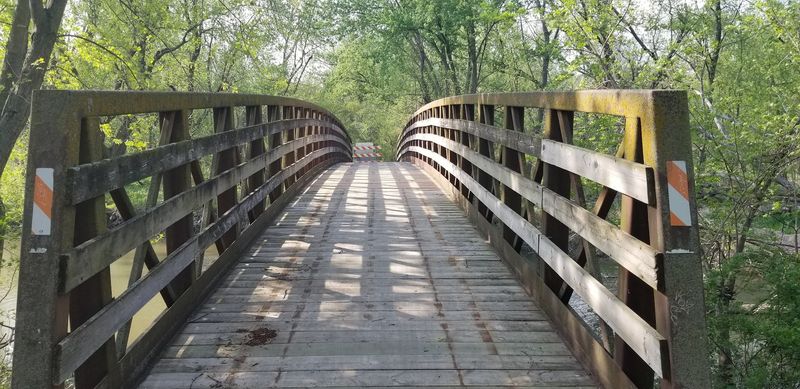
A geode search can anchor a broader day around Keokuk and the southeastern corner of Iowa.
River views, wooded roads, small communities, and quiet stretches of countryside give the region plenty to offer once everyone’s knees request a break from inspecting gravel.
Keokuk makes a practical stop for exploring the area and enjoying views near the Mississippi River. The setting gives the day more variety than a single muddy creek bank can reasonably provide.
Geode State Park can also be included as a visit-only nature stop. Lake Geode covers more than 150 acres, and the park offers trails, fishing, boating, paddling, picnic areas, and other outdoor recreation.
The geodes displayed there help connect the scenery to the state’s geological identity. Just remember that specimens inside the park must remain where they are, no matter how convincingly one appears to beg for a ride.
A relaxed schedule works best. Leave room for a trail, a river view, and the traditional moment when everyone opens the car door and discovers how much mud one afternoon can produce.
The search may be the reason for the trip, but southeastern Iowa has enough scenery to keep an unsuccessful rock hunt from feeling like a wasted day.
Plan Before You Pick Up A Rock
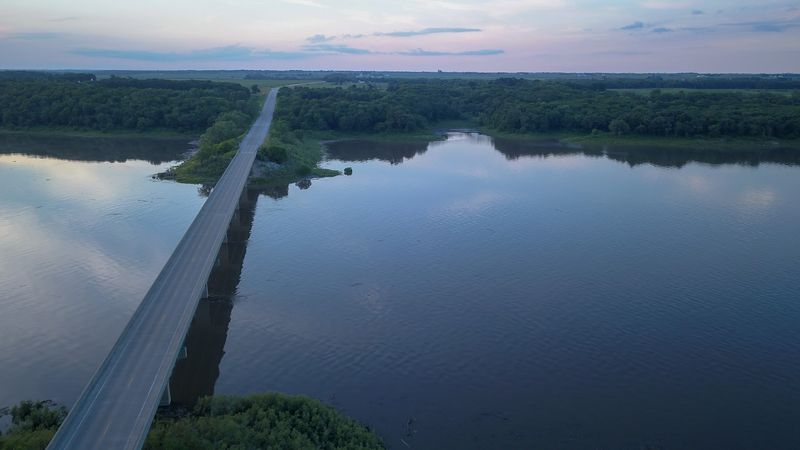
The best geode trip begins before anyone reaches the creek. Confirm who owns the land, ask for permission when needed, and check current collection rules with the agency responsible for any public site.
Weather and water levels deserve the same attention. Avoid flooded creeks, unstable banks, storms, and conditions that turn a pleasant search into an argument with moving water.
Collect lightly and leave the area looking undisturbed. Do not dig aggressively into banks, damage vegetation, scatter broken rock, or leave rubbish behind.
Take only specimens that rules allow, and consider leaving plenty for the next curious person. Southeastern Iowa’s geode country stays special when visitors treat it like a landscape rather than an unlimited rock bin.
The final reward may be a crystal-lined keeper, a cloudy little mystery, or one magnificently ordinary stone that fooled everyone. Even that last option earns a laugh and a place in the day’s story.
After all, geode hunting is built on possibility. The outside stays humble, the inside keeps the secret, and patience gets one more chance to strike something sparkling.