I have always liked the idea of seeing how ordinary things become the objects we use without a second thought.
That curiosity gets much harder to ignore once you discover how many working factories are willing to open their doors and explain what happens behind the scenes.
In Iowa, you can trade a predictable day out for something more hands-on, surprising, and refreshingly different.
You start by watching a process you barely understood, then suddenly find yourself paying attention to every tool and carefully timed step.
The best part is how quickly a simple tour can change the way you look at something familiar.
You leave with new facts, a few unexpected stories, and a stronger appreciation for the work behind the finished product.
Iowa makes this kind of adventure especially tempting. It gives you plenty of reasons to take the longer road, ask questions, and finally find out how everyday things are actually made.
1. Winnebago Visitor Center
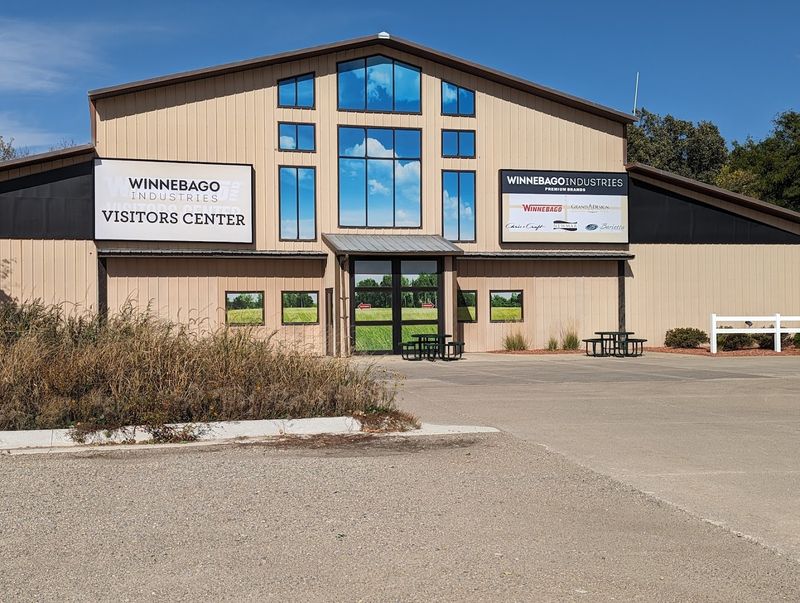
A full-size motorhome feels substantial on the highway. Inside Winnebago’s Forest City operation, where one is assembled in stages, it becomes enormous.
The tour begins at the Visitors Center, 1045 South 4th Street in Forest City, before moving into active Class A and Class C production areas. Frames, walls, wiring, cabinetry, flooring, and exterior panels appear along the route.
Visitors see motorhomes while they are still open and unfinished, with their internal systems fully visible. Separate crews handle each stage before the vehicles reach final inspection.
Regular weekday tours run from April through October and last about two hours. The route includes considerable walking, factory noise, and stair climbing.
Closed-toe shoes are required, while safety glasses and high-visibility vests are provided. Visitors younger than 18 must be at least 16 and accompanied by a parent or guardian.
Photography and video recording are not allowed inside the factory. Admission is free, although reservations are strongly recommended.
Manufacturing changes, company events, and holiday schedules may affect availability. Once the factory doors open, walls, cabinets, wiring, and flooring gradually come together into a finished motorhome.
2. Kendrick Forest Products
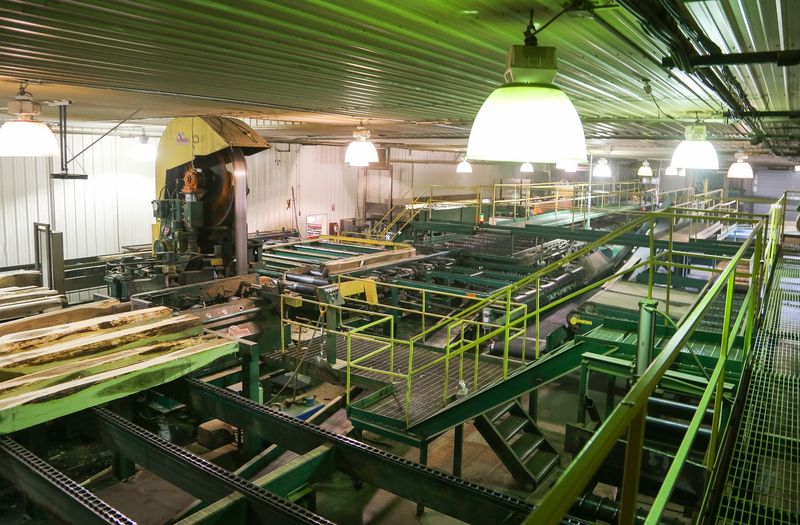
Fresh-cut lumber sets the tone at Kendrick Forest Products. Inside the Edgewood operation, logs move through several stages before becoming kiln-dried boards, cabinets, mulch, and printed wood products.
The family business began in 1983 and now operates several connected wood-production companies. Tours enter the working sawmill rather than stopping at a showroom display.
Visitors follow the process from raw logs through cutting, drying, and further manufacturing. The route also includes the mulch operation, cabinet production, and printed wood products.
Guided headset tours are scheduled for 11:30 a.m. on Tuesdays and Thursdays by appointment. The full visit usually lasts between 90 minutes and two hours.
The facility stands at 601 South Washington Street in Edgewood. Reservations are required.
Closed-toe shoes are mandatory throughout the tour. Eye and hearing protection are provided before visitors enter the active production areas.
Children younger than nine cannot participate. Other young visitors must remain with an accompanying adult during the walkthrough.
The tour ends at The Markket, where finished products show what happens after the saws, kilns, and production equipment have completed their work.
Stacks of lumber, moving machinery, and the scent of freshly cut wood keep the visit firmly rooted in the working side of the business. By the final stop, the path from log to finished product is visible in every shelf and cabinet.
3. RVP~1875
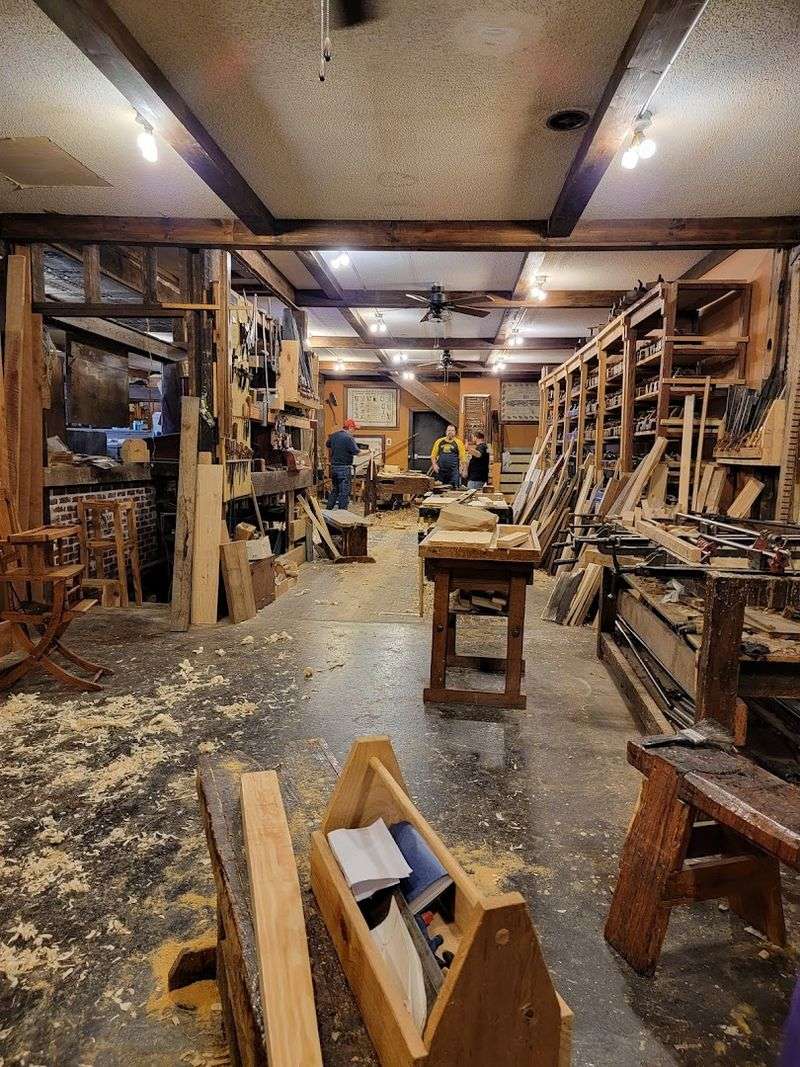
The building comes first at RVP~1875. Its old commercial bones now hold a working furniture shop where nineteenth-century tools still earn their place at the bench.
Master furniture maker Robby Pedersen produces historically accurate pieces using joinery methods, tools, and finishes associated with Iowa furniture making in 1875. More than 1,300 pieces have come out of the operation.
Modern production shortcuts remain outside the process. Hand planes, saws, braces, chisels, and other tools shape the furniture through measured cuts and patient fitting.
The large working collection of nineteenth-century woodworking equipment is not arranged as a silent display. These tools remain part of the shop’s daily work.
Tours enter the functioning space at 115 South Wilson Avenue in Jefferson. Both small parties and larger tour groups can be accommodated by prior arrangement.
RVP~1875 also offers demonstrations, classes, and apprenticeships for visitors who want a deeper look at the craft. A standard tour still brings the benches, tools, wood shavings, and joinery methods close enough to study.
The pace is quieter than an industrial assembly line, but it is never inactive. Every careful pass across the wood moves the piece forward.
A sharp hand plane may create the most memorable sound in the room. One clean stroke, one thin ribbon of wood, and suddenly 1875 does not feel very far away.
4. John Deere Davenport Works
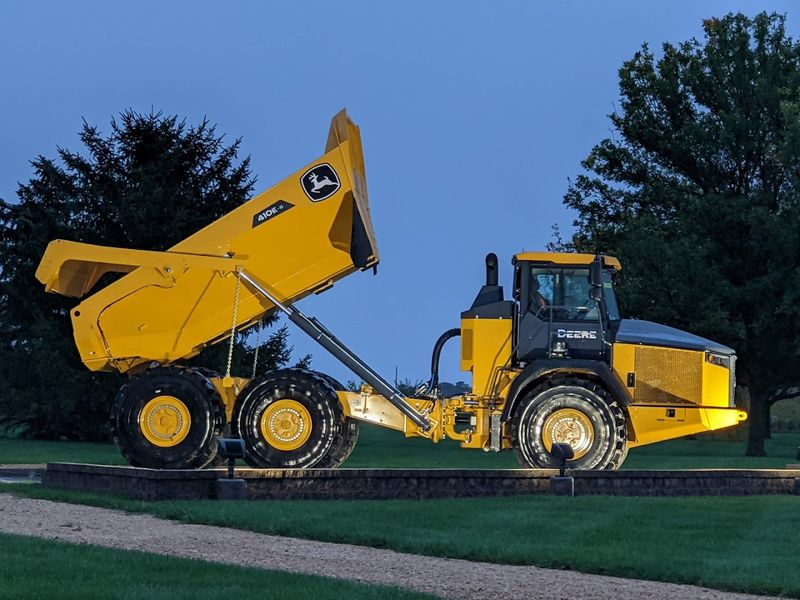
Earthmoving machinery has been assembled at John Deere Davenport Works since 1974. That history still plays out every day in steel, sparks, painted components, and tires that barely seem designed for ordinary roads.
At 1175 East 90th Street in Davenport, the plant manufactures four-wheel-drive loaders, motor graders, articulated dump trucks, and other heavy construction equipment.
A typical production day processes roughly 195 tons of plate steel and moves about 75,000 individual parts through the system.
On the factory floor, that volume appears in moving frames, cabs, buckets, and wheel assemblies. Separate stages bring each machine closer to its finished form.
Painted sections arrive from different parts of the plant, and the machine gradually becomes recognizable as the major components meet.
Public riding tours are offered by advance request and usually last between one hour and one and a half hours. The riding format keeps the group moving while opening views into several production areas.
Every guest must be pre-registered using a full legal name. Adults need valid government-issued identification when they arrive.
Participants must be at least 13, and minors need an accompanying adult. Long pants and shoes with closed toes and closed heels are mandatory.
The plant marked its 50th anniversary in 2024. That same year, Davenport Works completed its 250,000th machine.
Milestones of that size can sound distant until another loader moves along the line. Then the number begins to resemble a very long parade of enormous tires.
The riding tour keeps those proportions visible from several angles. Even a bucket or wheel assembly can seem oversized before the completed machine appears.
5. Isabel Bloom
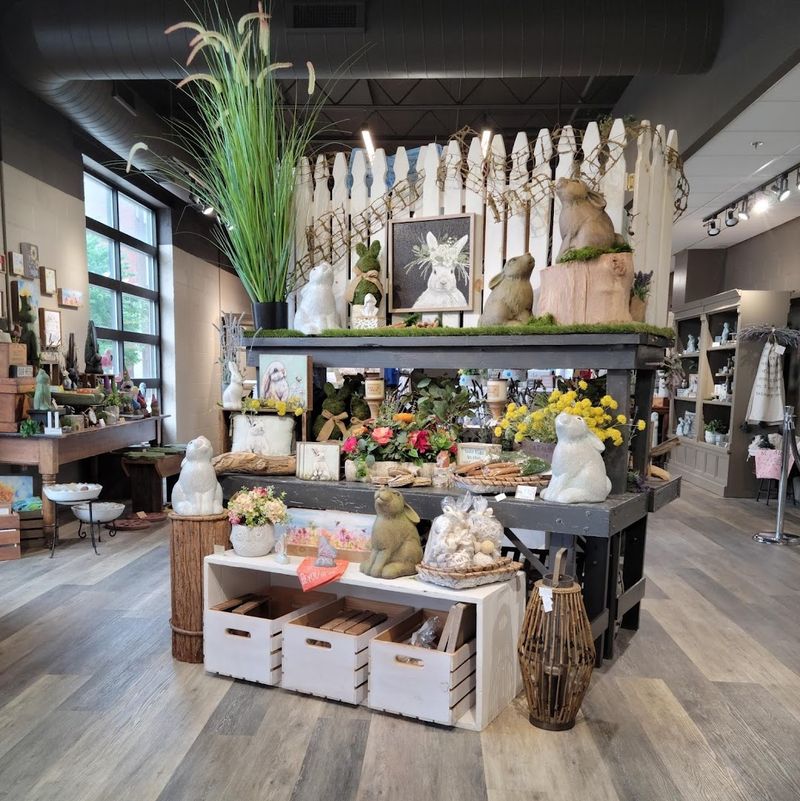
Quiet handwork carries the production rhythm at Isabel Bloom. A sculpture advances through small, careful stages rather than one dramatic industrial moment.
The Production Studio and Tour Center at 736 Federal Street in Davenport bring casting, finishing, coating, packaging, and shipping under the same roof. Visitors follow those stages rather than seeing only completed pieces in a showroom.
The guided tour lasts about 45 minutes and moves through the working production areas. Each stage appears in the order used by the studio.
Tours are free and generally scheduled at 10 a.m. on Tuesdays and Thursdays. Reservations are required, while larger groups may request alternate arrangements.
Original artwork and photographs connected with Isabel Bloom appear alongside the production displays. Her designs and working methods remain visible throughout the studio.
Visitors may also preview developing sculpture designs and ask questions during the walkthrough. Small changes in shape, texture, or finish reveal how much attention can sit inside a compact object.
Packaging and shipping complete the practical side of the process. By that point, the sculpture has already passed through several pairs of practiced hands.
The showroom provides the final contrast. After rough castings, active worktables, and unfinished surfaces, the completed pieces look smoother, but no longer simple.
The shift from workshop to display area happens quickly. Once the process is fresh in mind, every finished edge carries more weight.
6. Indian Motorcycle Factory And Visitor Center
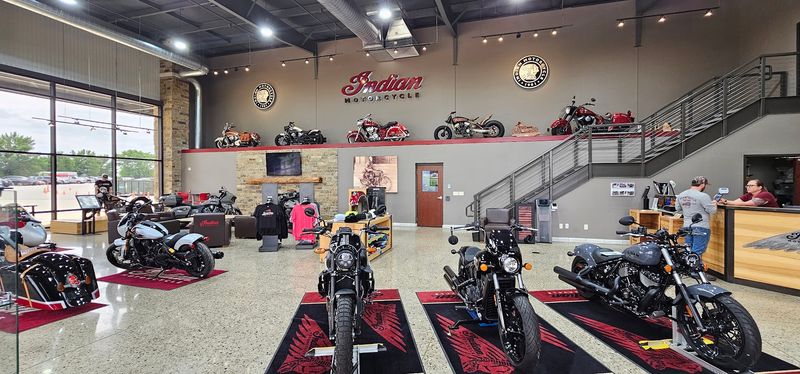
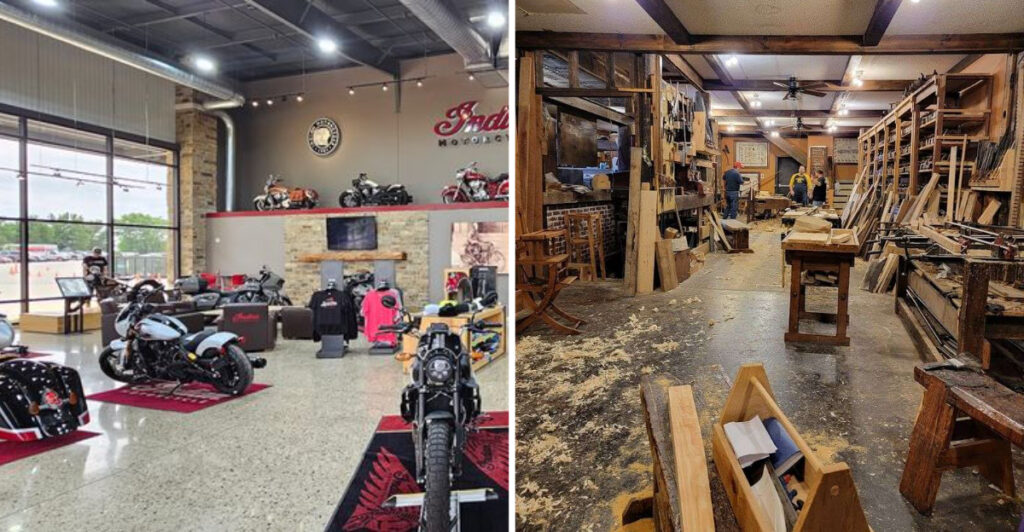
Chrome has a way of getting attention before any history lesson begins. At this motorcycle experience center, older machines and current models make that history visible without requiring much explanation.
The center shares the manufacturing site at 1900 US-71 in Spirit Lake. Historic, vintage, and current Indian Motorcycle models are displayed within the visitor space.
Changes in tanks, seats, finishes, and silhouettes reveal how the brand’s visual identity developed over time. A short manufacturing presentation adds another view of how the motorcycles are produced.
Factory-tour availability can change with production schedules and facility access. Anyone planning a trip around a guided walkthrough should contact the Spirit Lake facility directly before traveling.
The Experience Center and production floor may follow different visitor schedules. Special events may also operate under separate dates and registration requirements.
Historic and current motorcycles give visitors plenty to compare. Earlier designs carry the weight of the brand’s past, while newer models bring the story into the present.
Paint, leather, chrome, and the curve of a fuel tank provide plenty to examine.
A row of Indian motorcycles does not need much decoration. The changing profiles make the brand’s long timeline easy to read at a glance.
7. Hansen’s Farm Fresh Dairy
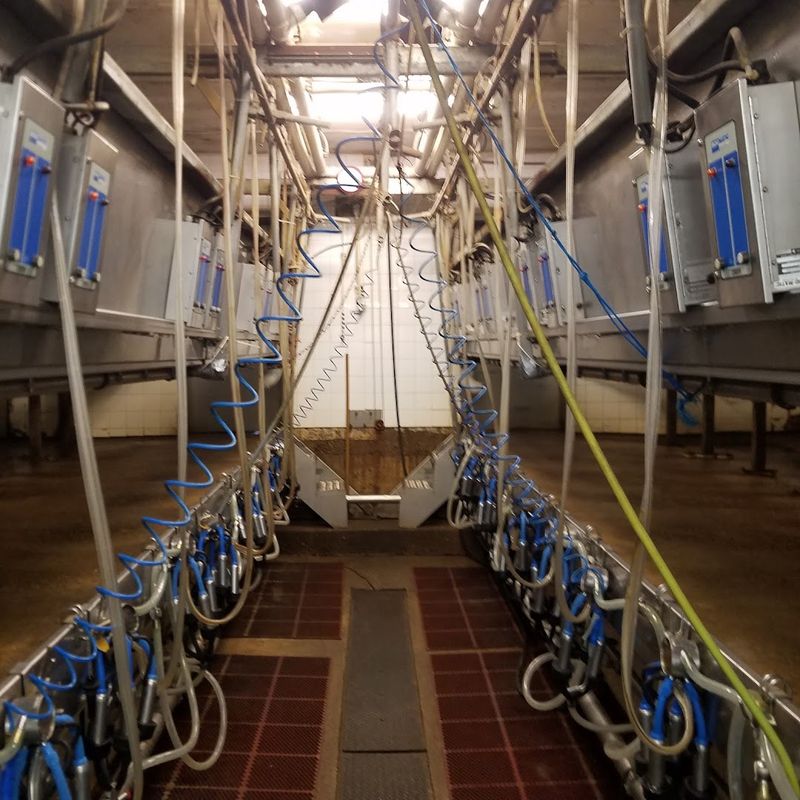
Kangaroos are not the expected ending to an Iowa dairy tour. Hansen’s Dairy includes them anyway, along with calves, cows, butter making, milk processing, and a trolley ride.
The farm raises cows and processes milk in an on-site creamery that produced its first gallon in February 2004. Guided visits connect the animal side of the operation with the dairy products made there.
The Hands-On Tour includes bottle-feeding a calf, trying hand milking, making butter, and sampling fresh dairy products. Each activity is folded into the two-hour route.
A trolley ride carries the group between parts of the property. Short walks, gravel paths, and several stops are also part of the route.
Tours depart from 8461 Lincoln Road in Hudson at 3:30 p.m. Monday through Saturday. The regular season runs from April 15 through October 15.
Reservations are mandatory, and walk-in visitors are not accepted. Closed-toe shoes are recommended for the farm route.
After the farm portion, visitors sample products made from milk processed on-site. The creamery remains part of the same working operation.
By the time the kangaroos appear, the afternoon has already covered animals, processing, butter, and fresh dairy. They still manage to steal the final scene.
8. Council Oak Supply
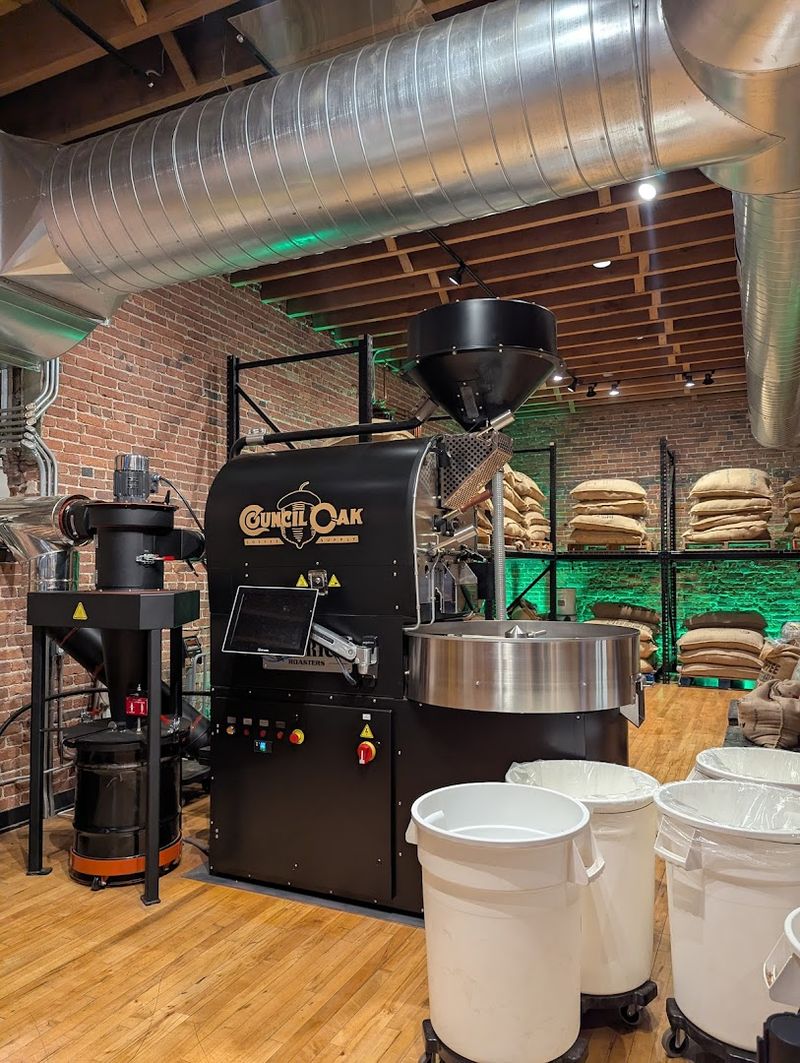
Freshly roasting coffee announces this stop before the equipment does. The aroma moves through the room while beans darken inside a commercial roaster.
Council Oak’s roasting operation developed into a broader production and distribution business. Coffee is roasted at the facility Monday through Friday.
The public can watch the process on Mondays, Wednesdays, and Fridays. There is no long guided route or formal group presentation.
Instead, the active roaster works as part of the regular business. Heat, movement, timing, and sound carry each batch from green coffee toward its finished roast.
The attached Coffee Parlor operates from 7 a.m. until noon Monday through Saturday at 101 West 3rd Street in Sioux City. Whole-bean and ground coffee roasted on-site can be purchased there.
Council Oak also supplies roasted coffee, café equipment, and operating products to commercial clients across the region. The production floor remains part of a working wholesale operation rather than a staged demonstration.
The morning hours make the stop easy to fit between larger attractions. A visitor can watch a batch, order a cup, and continue the drive without giving up the whole day.
Bags of finished coffee line the retail area while another batch turns nearby. Most factory souvenirs sit on a shelf. This one waits for the grinder, fills the kitchen with the same aroma, and disappears one cup at a time.