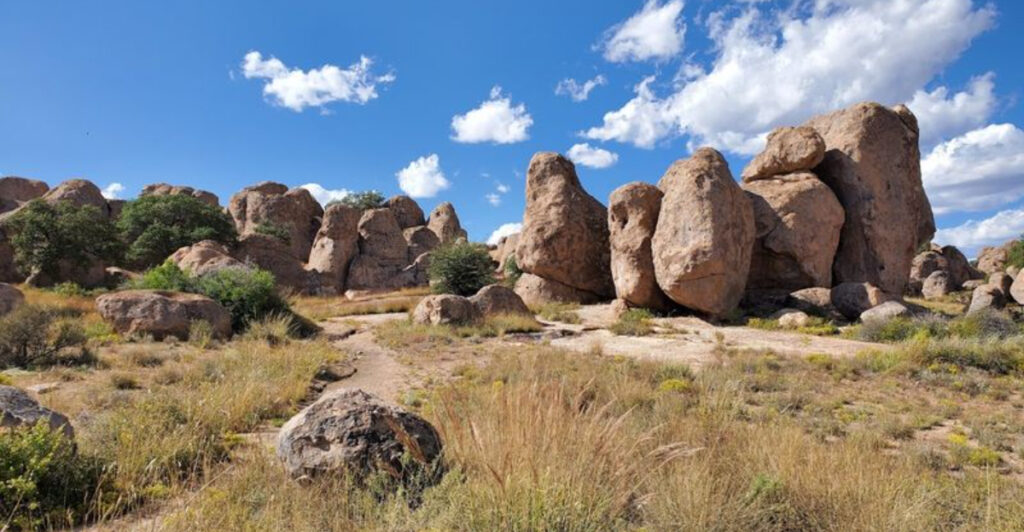
A road trip can change mood fast when the landscape suddenly looks like another planet. One minute, the desert stretches quietly ahead.
The next, volcanic towers rise beside pathways that resemble streets built for giants. That is the strange appeal of this corner of New Mexico.
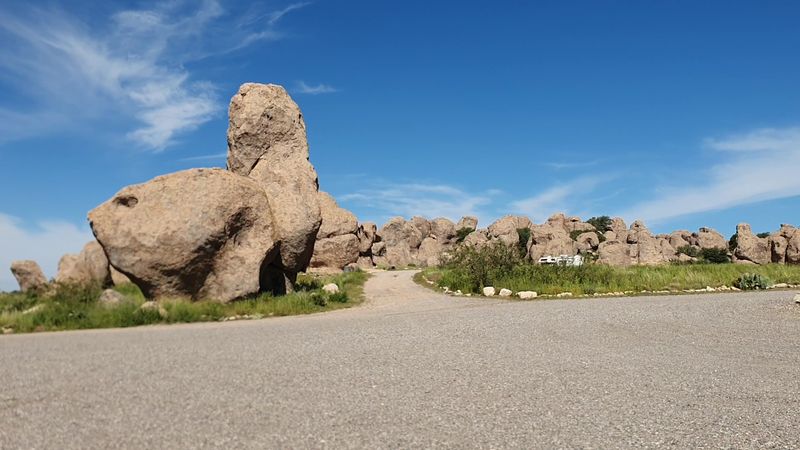
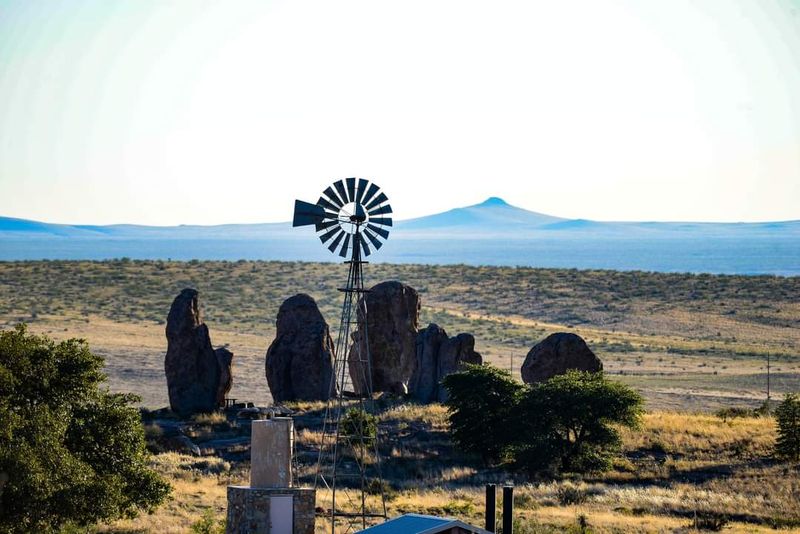
There are no buildings here, yet the formations create the illusion of a stone city shaped by time. You can wander between narrow corridors, look up at pinnacles reaching about 40 feet, and watch the colors shift as afternoon light moves across the rock.
Camping among the formations makes it even more unusual, after darkness reveals a sky crowded with stars. This is not a place you simply glance at through a windshield.
It pulls you out of the car, slows your pace, and keeps tempting you around one more bend. Keep reading, because every part of this park adds another reason to visit.
Wander Through A Maze Of Volcanic Stone
Few places on Earth stop you mid-step and make you question whether you accidentally walked onto a movie set, but this one does exactly that.
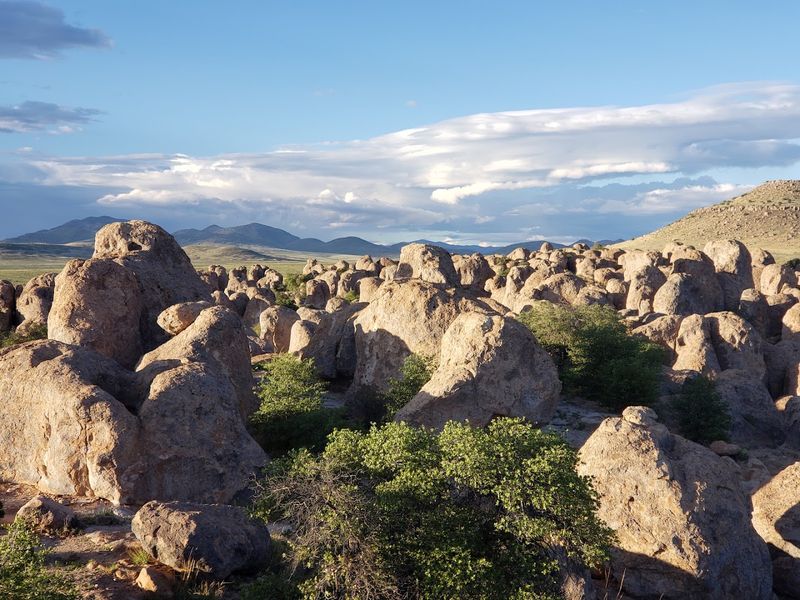
The rock formations here are not random boulders scattered by chance.
They are the result of violent volcanic eruptions that sent pumice, ash, and gas surging across the landscape roughly 30 to 34.9 million years ago.
That superheated material, known as ash-flow tuff or ignimbrite, eventually cooled and hardened into a solid mass.
Wind and water then spent millions of years carving it into rows of monolithic blocks that create natural streets and alleyways.
Walking through those passages feels genuinely disorienting in the best possible way, because every turn reveals a new angle, a new shadow, and a new shape you did not expect.
The park covers a one-square-mile area within the Chihuahuan Desert of southwestern New Mexico, which gives the whole experience a remote, untouched quality.
I kept stopping to run my hand along the rough stone walls and remind myself that what I was touching was once liquid fire.
City of Rocks State Park at 327 NM-61, Faywood, NM 88034 is the kind of place that earns its name completely.
Giant Rock Towers Rise From The Desert
Standing at the base of one of these pinnacles and craning your neck upward is a genuinely humbling moment.
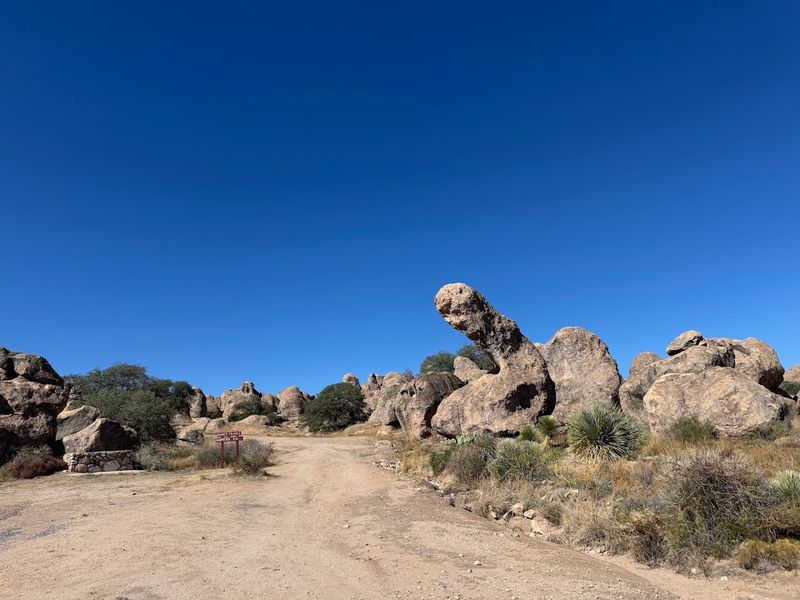
The rock columns here can reach heights of up to 40 feet, which is roughly the size of a four-story building.
What makes them so visually striking is the contrast between their sheer vertical mass and the flat, open desert floor surrounding them.
They do not gradually build up from gentle slopes.
They simply rise, abruptly and dramatically, as if the ground decided to stand up straight.
The erosion process that shaped them worked differently on various sections of the original volcanic deposit, which is why no two towers look exactly alike.
Some are broad and blocky, others are narrow and tapered, and a few lean at angles that make you wonder briefly about gravity.
Visitors often discover shapes in the stone that spark the imagination, and I personally spent a solid ten minutes debating whether one particular formation looked more like a thumb or a boot.
The sheer scale of these towers only fully registers once you stand next to them, and that first impression never really fades.
Hidden Passages Twist Between The Boulders
Part of what makes exploring this park feel like a real adventure is the sense that you never quite know what is around the next corner.
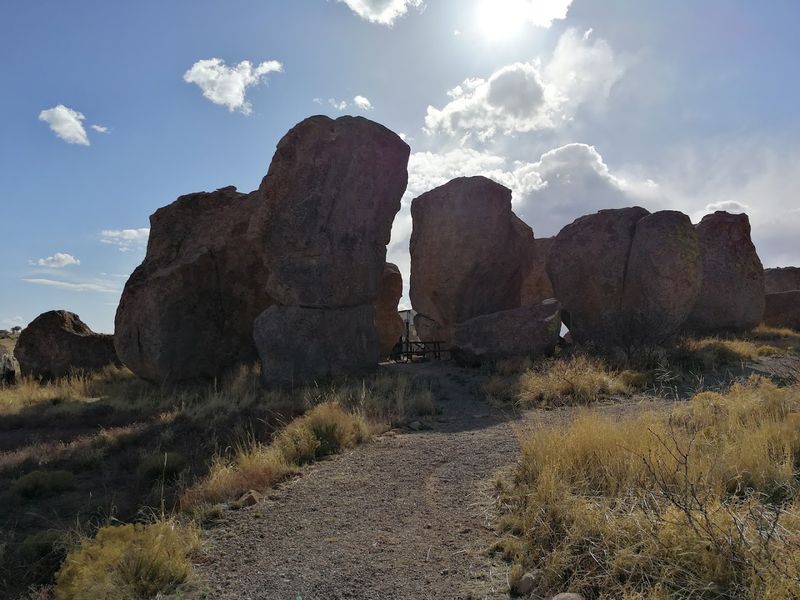
The formations create a network of winding paths that genuinely resemble city streets, complete with wider open plazas and tight alleyways where you have to turn sideways to squeeze through.
Some passages stay in cool shadow even during the middle of the day, offering a welcome break from the desert sun.
Others open suddenly into small clearing spaces where the light pours down and the silence feels almost physical.
I found myself doubling back several times not because I was lost, but because I wanted to see the same passage from the opposite direction.
The light changes the whole character of each corridor depending on the angle and time of day.
Kids absolutely love this part of the park because the scrambling and squeezing through gaps feels less like a nature walk and more like a puzzle you solve with your whole body.
Every crevice seems to hide something worth noticing, from unusual rock textures to tiny desert plants wedged into cracks.
The passages reward slow, curious exploration more than a fast-paced walk.
Campsites Tucked Into Otherworldly Formations
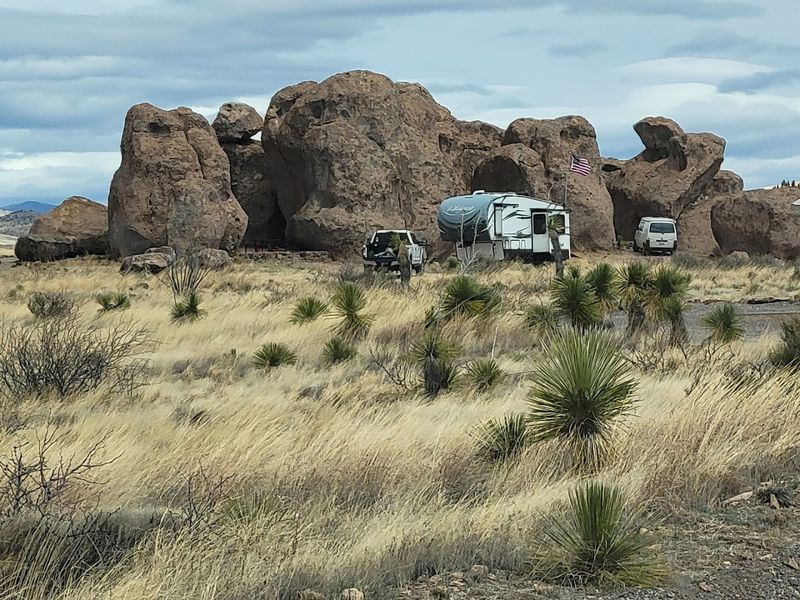
Camping here is a completely different experience from any standard campground, and that difference starts the moment you pull into your site.
Many of the non-electric campsites are positioned directly among the rock formations, with massive boulders serving as natural walls on multiple sides.
The result is a level of privacy that feels almost architectural, as if the rocks themselves were arranged specifically to give each camper their own enclosed outdoor room.
Fire grills and picnic tables are standard at the developed sites, so the practical basics are covered even when the setting feels prehistoric.
The upper loop sites in particular are tucked into nooks and crannies that completely hide one campsite from the next.
Falling asleep with stone walls rising around your tent and a sky full of stars overhead is the kind of night you describe to people for years afterward.
The electric sites are located in a more open area outside the formations, which suits RV campers who need hookups but prefer a flatter setup.
Sites fill up quickly on weekends, so reserving early is genuinely important rather than just a polite suggestion.
Waking up inside the rocks as the morning light begins to color the stone walls is something you simply have to experience firsthand.
Desert Trails Open To Sweeping Mountain Views
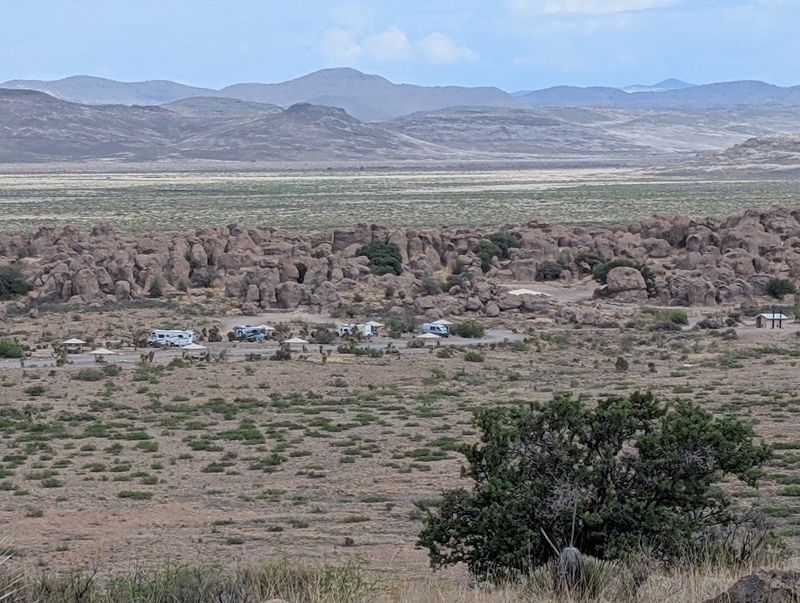
Beyond the rock formations themselves, the park offers a trail system that pushes out into the surrounding desert and rewards hikers with views that stretch for miles.
The Hydra Trail is a loop of roughly 3.25 to 3.5 miles that circles the park and moves through open grasslands, giving a broader sense of the landscape that surrounds the stone city.
The Table Mountain trail runs 1.6 miles one way and climbs to a vantage point with panoramic views of the Mimbres Valley below.
I took that trail on a clear morning and stood at the top feeling like I could see halfway across New Mexico.
A newer addition to the trail network is the Cienega Trail, a 2-mile loop that offers yet another perspective on the terrain.
Mountain bikers also use these trails, and the mix of open desert and rocky terrain makes for a satisfying ride.
The Solar System Walk is a unique feature that scales the distances between planets into steps you can actually count, which turns a short walk into a genuinely mind-bending lesson in space.
Each trail here feels distinct enough that spending multiple days exploring them never gets repetitive.
Good hiking shoes and plenty of water are the two things I would never leave the car without.
Golden Hour Transforms The Entire Landscape
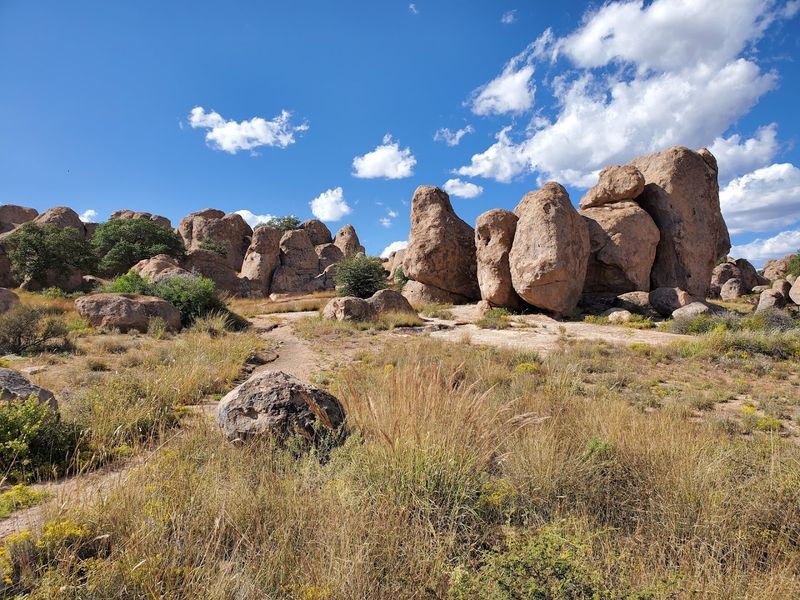
Late afternoon at this park operates on a completely different visual frequency than any other time of day.
As the sun drops toward the horizon, the volcanic stone shifts from its daytime gray-brown tone into deep shades of orange, amber, and red that seem almost too saturated to be real.
The long shadows cast by the tall formations stretch across the ground and create a texture and depth that photographs cannot fully capture, though they certainly try.
I set up near one of the western-facing formations about an hour before sunset and just waited, which turned out to be one of the better decisions I made on that whole trip.
The light moved across the rock faces in slow waves, and every few minutes the scene looked entirely different from the one before it.
Photographers tend to cluster near the more dramatic formations during this window, and for good reason.
Even visitors who are not particularly interested in photography find themselves reaching for their phones when the golden light hits the stone at just the right angle.
The atmosphere during those final thirty minutes before dark has a stillness and warmth that turns a simple walk into something genuinely memorable.
Sunset here is not just a backdrop; it is the main event.
A Botanical Garden Among The Rocks
Tucked within the park is a desert botanical garden that manages to be both educational and genuinely beautiful at the same time.
The garden showcases a curated selection of southwestern plant life, including cow’s tongue cacti, bunny ear cacti, yucca, and tall century plants that can grow to impressive heights over their long lifespans.
More than ten species of cacti are represented throughout the park, and the botanical garden helps visitors put names and context to plants they might otherwise walk right past.
Walking through it felt like flipping through a field guide that had somehow come to life around me.
The vegetation is not just decorative either, as it provides real habitat for local wildlife including birds, lizards, and other desert creatures that use the plants for cover and food.
Golden Eagles have been spotted in the area, which makes scanning the sky above the formations a worthwhile habit.
The garden path is accessible and well-maintained, making it a good option for visitors who want to engage with the natural environment without taking on a longer trail.
Dogs on leashes are welcome, and the low, spreading cacti and towering yuccas create a visual contrast that keeps the whole walk interesting from start to finish.
Dark Skies Bring The Desert To Life
Night at this park is not just darker than most places; it is a completely different world that opens up once the last light fades from the western sky.
The park holds a Bortle Class 2 dark sky designation, which places it among the least light-polluted locations in the country.
On a clear night, the Milky Way appears as a dense, luminous band stretching from one horizon to the other, and the sheer number of visible stars can feel genuinely overwhelming at first.
The Gene and Elizabeth Simon Observatory sits within the park and houses a 14-inch telescope available for public use during hosted astronomy programs.
The Stars-n-Parks program brings structured stargazing events to the park, giving visitors the chance to learn what they are looking at rather than just staring in pleasant confusion.
I spent two hours outside on my last night there, lying on a sleeping pad with my neck bent back and my brain slowly adjusting to the scale of what I was seeing.
The silhouettes of the rock formations against the star-filled sky create a composition that feels both ancient and quietly spectacular.
This is one of those rare New Mexico experiences where putting down your phone and simply looking up is absolutely the right call.