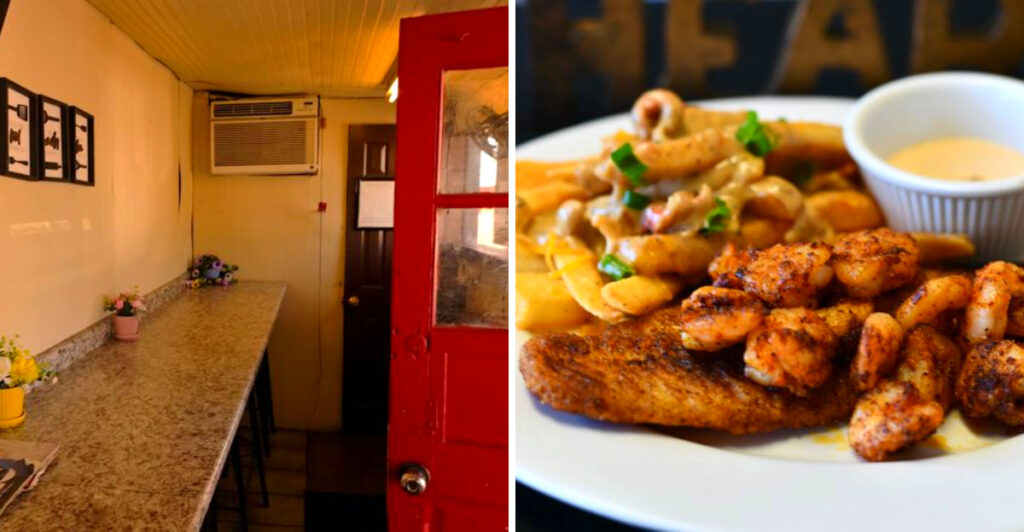
A restaurant that opens in a converted soap factory on a residential street in Central City has two choices: earn every customer through the food or fade into the neighborhood background.
Chef Jeffery Heard chose the first option when he founded his kitchen, turning the corner of Felicity plus Terpsichore into a destination that Yelp named one of the best hole-in-the-wall restaurants in America.
The menu runs deep on New Orleans staples: fried catfish with crunch that holds up under hot sauce, gumbo that tastes like it simmered all morning, plus a seafood extravaganza plate that justifies every dollar on the price.
His wife made the red beans plus rice on opening day plus the recipe has not changed, the walls carry local pride that cannot be manufactured, plus turning a soap factory into one of the most talked-about spots in the state proves that the food does the talking.
Dat Superdome
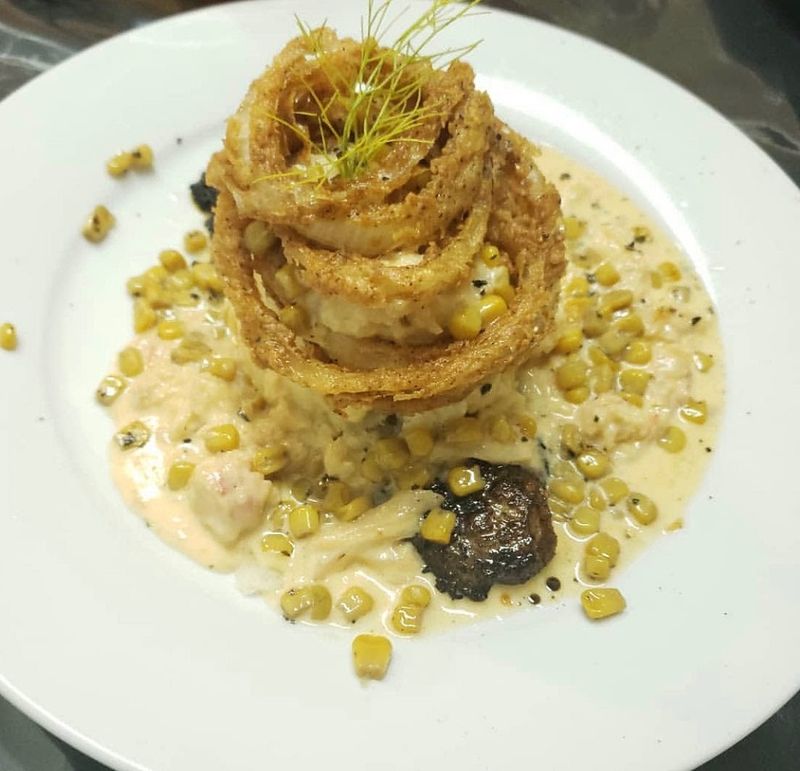
A plate this dramatic should probably come with its own entrance music. Dat Superdome is one of Heard Dat Kitchen’s most memorable signatures, built around blackened fish resting over creamy mashed potatoes, then covered with lobster cream, corn, and a crisp onion ring crown.
It looks playful at first, almost like a joke about New Orleans appetite, but the first forkful makes the dish feel much more carefully balanced than its size suggests.
The blackened fish gives the plate smoke, spice, and structure, while the mashed potatoes soften everything into comfort. The lobster cream brings richness, but the corn adds little pops of sweetness that keep the sauce from feeling flat.
Then the onion ring cuts through with crunch, giving the whole dish the texture contrast it needs. This is the kind of order that makes sense when you want the restaurant’s personality in one plate. It is generous, bold, slightly over-the-top, and still rooted in the logic of good comfort food.
Felicity Street Finds The Kitchen At Clayton
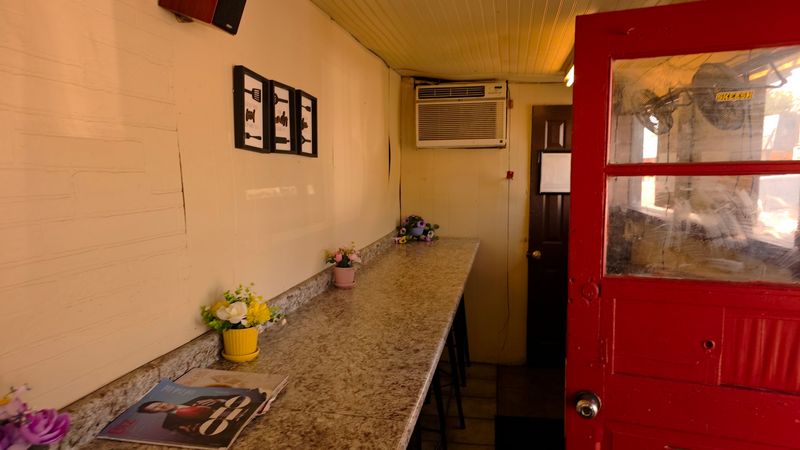
The final approach tells you that this is not a polished restaurant district built for tourists. Heard Dat Kitchen is located at 2520 Felicity Street in New Orleans, Louisiana, in Central City, near Clayton Avenue.
The route moves through a mostly residential part of town, which makes the restaurant feel discovered rather than staged. It sits in a former industrial building, and that converted-soap-factory history gives the place a little extra grit before the food even enters the conversation.
From South Claiborne Avenue, turn onto Felicity Street and continue toward Clayton Avenue, slowing as the blocks become more neighborhood-focused. The building is low and practical rather than flashy, so watch for the storefront instead of expecting a grand restaurant entrance.
Parking is available behind the restaurant along Clayton Avenue, with legal street parking nearby when the rear area fills.
That slightly tucked-away feeling is part of the appeal. You are not stumbling into a place that survives on foot traffic from the French Quarter. You are going to a kitchen people seek out on purpose.
Dat Red Bean Plate
A spoonful of red beans can say more about a New Orleans kitchen than a complicated signature dish ever could. Dat Red Bean Plate feels like the soul-check order at Heard Dat Kitchen, because it depends on patience, seasoning, and texture rather than spectacle alone.
The beans are cooked until creamy and deep, with that slow-simmered body that makes rice feel like more than a base. Every bite has the comforting weight of a recipe that knows exactly how far it should go.
The choice of blackened fish or fried chicken turns the plate into a full meal with personality. Blackened fish gives the beans a smoky, peppery edge, while fried chicken adds crunch and a more classic comfort-food contrast.
Either way, the red beans remain the center, holding the plate together with soft richness and steady seasoning.
This is not the loudest order on the menu, but it may be the most revealing. A kitchen can hide behind sauces and toppings on some dishes; it cannot fake good red beans.
Bourbon Street Love
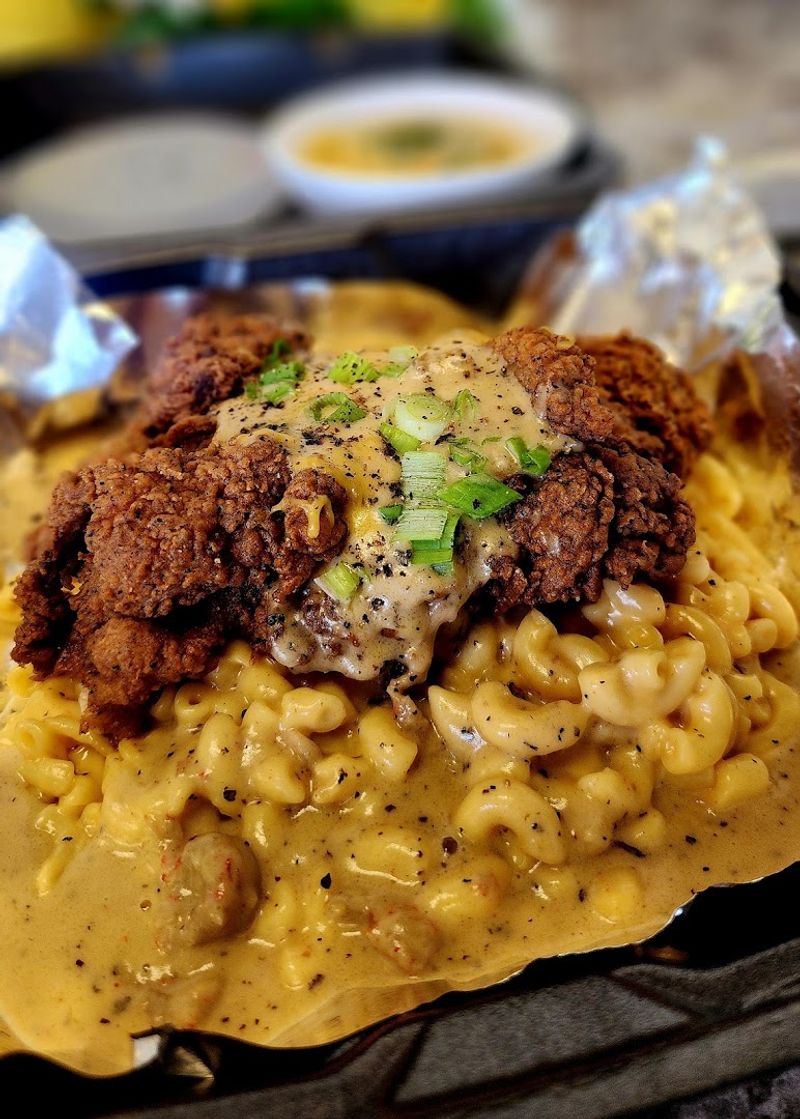
The name sounds festive, but the real pleasure is how directly the plate commits to comfort. Bourbon Street Love brings together Southern fried chicken, macaroni and cheese, cheddar, Crawdat cream, and green onion in a dish that feels built for people who believe richness should not apologize for itself.
The fried chicken gives the first impression: crisp outside, juicy inside, and sturdy enough to hold its own against all that cream and cheese.
The macaroni and cheese underneath is not just a side. It becomes the foundation, soft and heavy in the best way, catching sauce and turning each forkful into something layered.
Crawdat cream adds the restaurant’s seafood-leaning signature, bringing a Louisiana accent to a plate that could otherwise read as simple chicken and mac. Green onion cuts through with a little freshness, keeping the whole thing from collapsing into one-note indulgence.
This is a smart order when you want the kitchen at its most unapologetic. It is not designed for a light lunch before a long walk.
It is designed for satisfaction.
Heard Dat Pasta
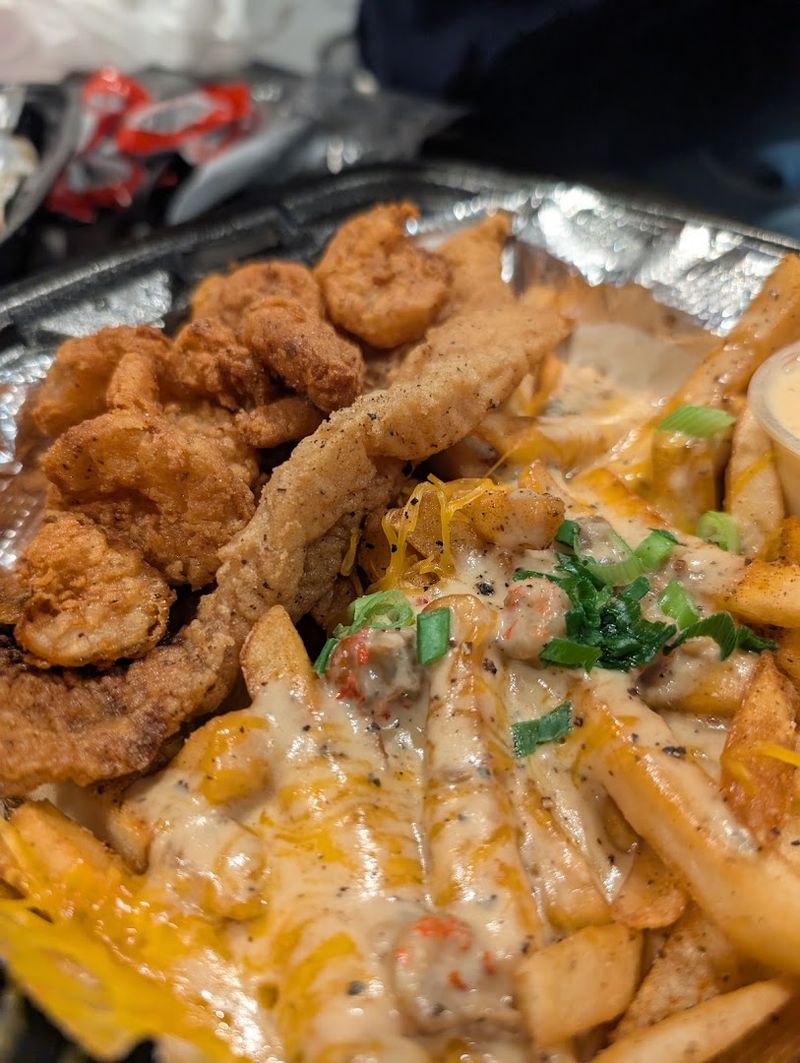
A good seafood pasta has to balance richness with enough brightness to keep you coming back for the next forkful. Heard Dat Pasta understands that assignment, folding crawfish sauce through pasta and finishing the plate with fried shrimp, green onion, French bread, and potato salad.
It sounds like several comfort foods at once, but the combination works because each part has a clear role.
The pasta carries the creamy crawfish flavor, giving the dish its main body. Fried shrimp adds crunch and a cleaner seafood bite on top, keeping the texture from becoming too soft.
Green onion gives the plate a small lift, while the French bread becomes useful for chasing sauce. The potato salad may seem like an old-school extra, but it grounds the whole meal in Louisiana plate-lunch logic, where sides are never just decoration.
This is a strong choice for anyone who wants something comforting but still specific to New Orleans.
Seafood Extravaganza
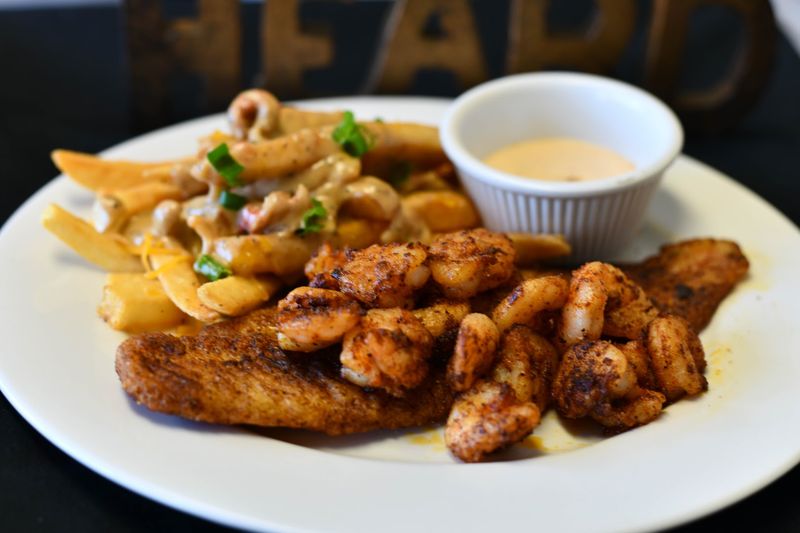
A name like Seafood Extravaganza creates expectations, and this plate does not try to act modest about meeting them. The dish gathers Gulf fish and shrimp into a generous order that can be served fried or blackened, then adds Crawdat fries and the kitchen’s signature angel sauce for dipping.
It is the kind of plate that makes sense when you want variety but do not want to negotiate with the menu for twenty minutes.
The fried version brings crunch and immediate satisfaction, especially when the coating stays crisp against the seafood inside. The blackened version shifts the experience toward smoke, spice, and a more direct seasoning profile.
Either way, the seafood remains the main event, with the fries and sauce turning the plate into a full, messy, shareable spread.
Angel sauce is especially important because it pulls the different pieces together. It works with fish, shrimp, and fries, and the plate becomes more fun when everyone at the table starts dipping and comparing bites.
Mardi Gras Mambo
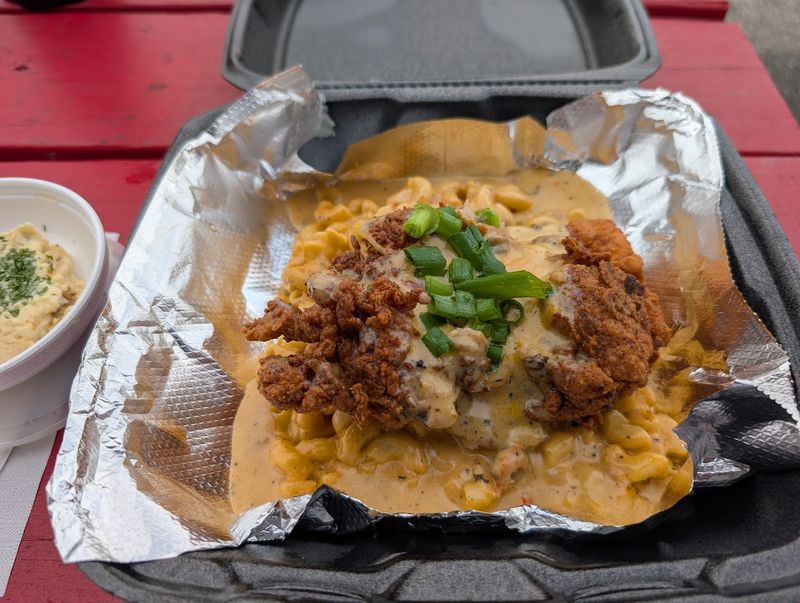
A plate does not have to involve beads or brass bands to feel like Mardi Gras food. Mardi Gras Mambo captures that spirit through fried fish, macaroni and cheese, shredded cheddar, Crawdat cream, green onion, sweet peas, and potato salad.
It is colorful, heavy, playful, and deeply uninterested in being minimalist. That is exactly why it works. The fried fish gives the dish its main structure, with crunch and flaky seafood at the center.
Macaroni and cheese turns the plate into pure comfort, while Crawdat cream adds a rich, local signature that pushes it beyond a basic fried-fish dinner. The green onion and sweet peas bring small flashes of color and freshness, and the potato salad rounds everything out with old-school New Orleans practicality.
This is one of those dishes that feels almost like a neighborhood celebration translated onto a plate. It is not polished in a fine-dining sense, but it is carefully assembled to hit pleasure points: crisp, creamy, cheesy, saucy, soft, and savory.
Order it when you want something that tastes festive without needing an actual parade outside.
Gumbo Combo
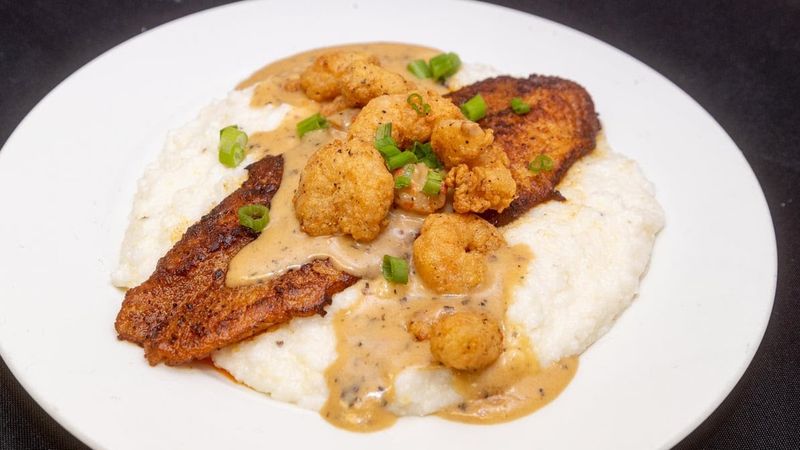
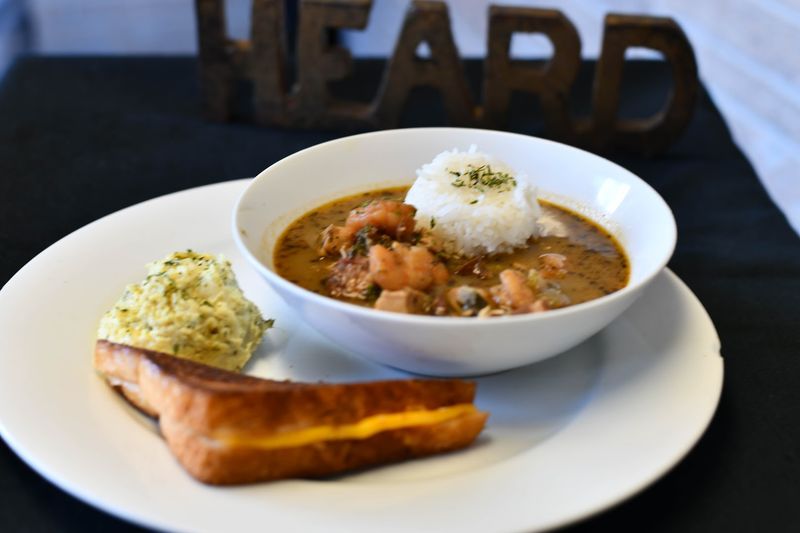
A bowl of gumbo can tell you whether a kitchen understands depth, and this combo makes that test feel especially satisfying. The Gumbo Combo pairs filé gumbo with grilled cheese and potato salad, turning a classic Louisiana bowl into a fuller, more textured meal.
The gumbo itself is the center, with a careful roux, layered seasoning, and enough body to feel slow-built rather than rushed.
The grilled cheese is the clever move. Its buttery crunch and melted interior give you something to dip, bite, and return to between spoonfuls of gumbo.
Instead of serving bread as an afterthought, the combo gives the soup a partner that can actually stand up to it. Potato salad adds the familiar cool, creamy side note many Louisiana diners expect with gumbo, making the plate feel complete rather than improvised.
This is a good order when you want range without going into the menu’s heaviest territory. It gives you broth, crunch, creaminess, spice, and comfort in a manageable format.
Audrey Mae’s Bread Pudding
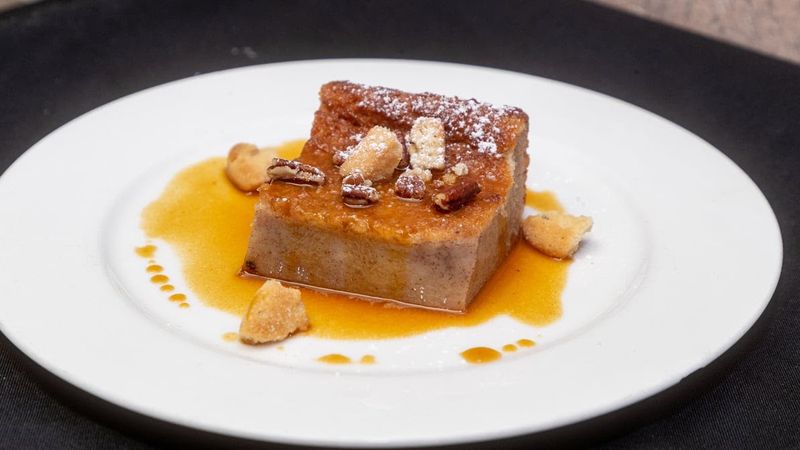
Dessert arrives with family memory baked into it, which is probably why Audrey Mae’s Bread Pudding feels more personal than decorative. Warm bread pudding, house caramel, pecans, and crumbled shortbread create a dish that leans fully into softness, sweetness, and texture.
It tastes like the kind of dessert that belongs after a plate of gumbo, fried seafood, or red beans, because it does not try to reset the meal. It continues the same comfort-food conversation.
The caramel is the first thing that pulls everything together, soaking into the bread base and turning each bite glossy and rich. Pecans add a nutty crunch, while shortbread brings a playful crumble that keeps the pudding from becoming too uniform.
The sweetness is unapologetic but not empty; it has warmth, butter, and the kind of holiday-kitchen feeling that makes people compare it to somebody’s grandmother’s version.
This is the dessert to order even if you think you are full. Share it if you must, but do not pretend one bite will be enough.
Skeesh Strips And Wings
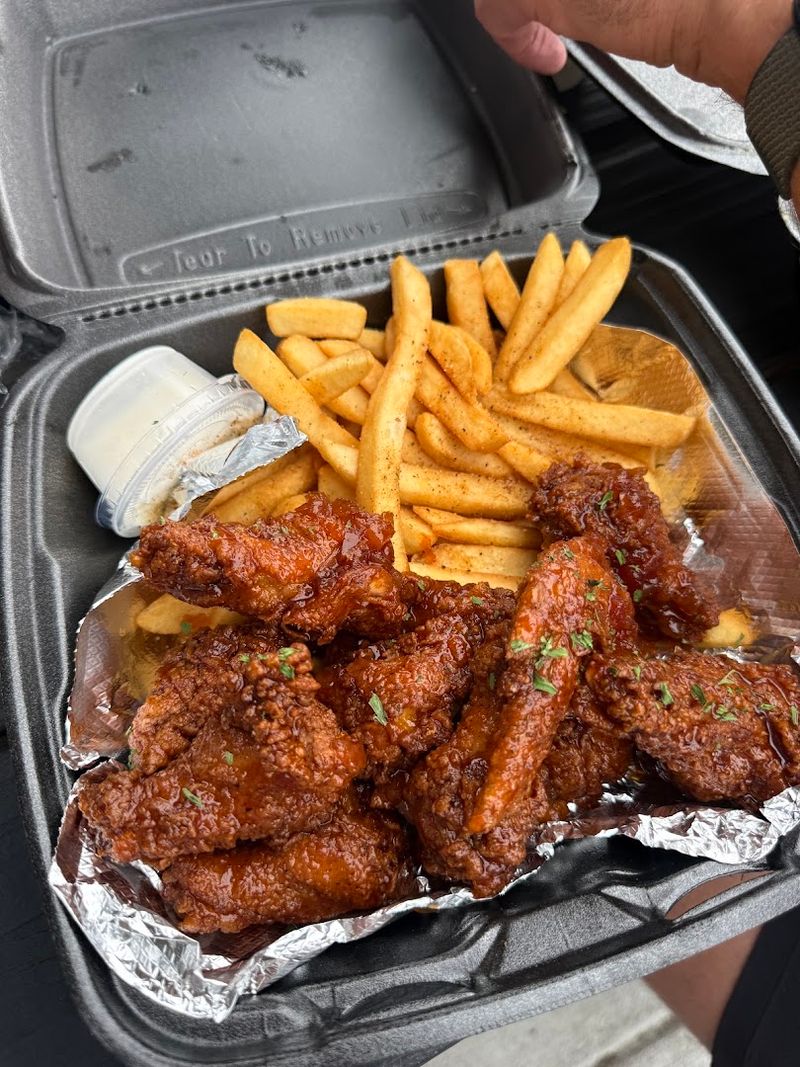
Sauce does the talking here, but the crunch makes sure you keep listening. Skeesh Strips and Wings bring a finger-friendly side of Heard Dat Kitchen’s menu into focus, with chicken coated, fried, and finished in a glossy sauce that balances sweet, savory, and a little heat.
The result is easy to understand but hard to stop eating, which is exactly what a good wing or strip order should be.
The best part is that the coating holds up better than expected. Even under sauce, the chicken keeps enough crispness to make each bite satisfying, while the meat underneath stays juicy.
That contrast is what separates a strong order from a soggy one. The sauce clings without drowning everything, giving you flavor without erasing the work of the fryer.
These can work as an appetizer, a shareable side, or a full meal if you add something simple. Potato salad is a smart partner because it cools the sauce and lets the chicken stay central.
Jambalaya Balls
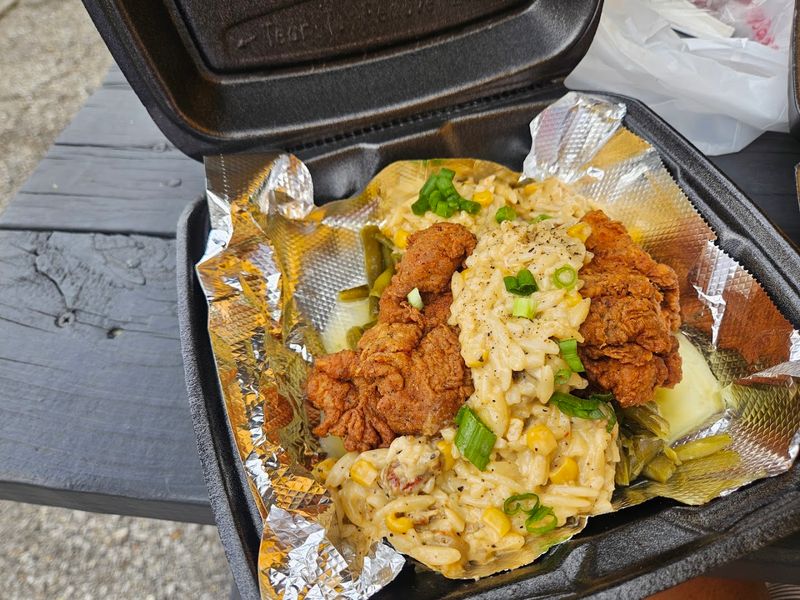
Turning jambalaya into a handheld bite sounds almost too obvious once you taste how well it works. Jambalaya Balls condense rice, seasoning, sausage, seafood, and comfort into a crisp, portable form that makes an ideal starter while you decide how ambitious the rest of the meal should be.
They bring the familiarity of jambalaya, but the fried exterior gives the dish a new rhythm.
The first bite is mostly texture: crisp outside, moist and seasoned inside, with bits of meat and seafood giving the center more depth than plain rice could manage. The seasoning stays present without overwhelming the palate, which matters because these are meant to be eaten before heavier plates.
A splash of angel sauce adds contrast, making the balls richer, creamier, and a little brighter. They are especially useful for groups because they give everyone an easy first taste of the kitchen’s style. Instead of committing immediately to a large entree, you can start here and let the table settle in.
Takeout Tips And Seating
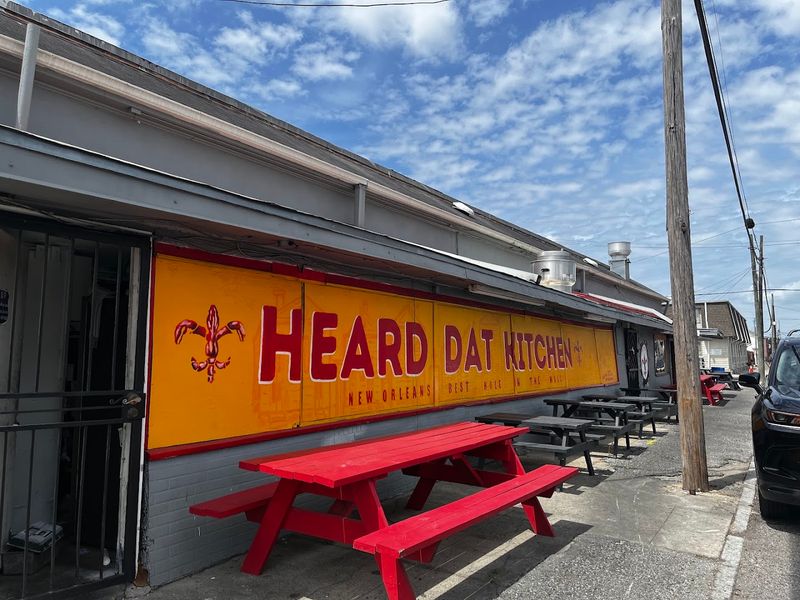
The setup matters because Heard Dat Kitchen is not a sprawling dining room built around long, leisurely indoor meals. It is a compact neighborhood kitchen with limited indoor seating, outdoor picnic-table options, and a strong takeout rhythm.
That means the smartest visit depends on timing, weather, and how patient you are when the kitchen is busy.
Peak lunch and dinner periods can bring a wait, especially when visitors and regulars are chasing the same signature plates. Calling ahead or ordering with a little buffer is wise if your schedule is tight.
The food usually travels well because so many dishes are built around sturdy components: fried seafood, mashed potatoes, mac and cheese, red beans, pasta, wings, sauces, and sides. Still, if you are taking food to go, asking for sauces on the side can help preserve texture.
Outdoor seating is pleasant when the weather cooperates, especially if you want to eat immediately rather than carry everything elsewhere. Bring a practical mindset: napkins, patience, and a plan for leftovers if the portions outrun your appetite.