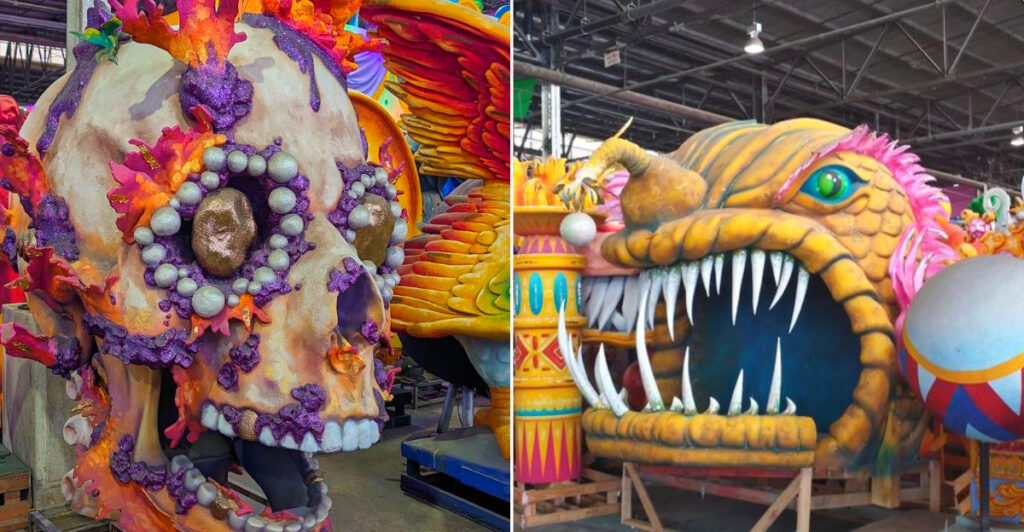
Long before the beads start flying and the brass bands strike up, the real work of Carnival happens inside a sprawling warehouse near the river.
Artists bend over giant foam sculptures, painters touch up larger-than-life faces, and massive floats in various stages of completion fill every corner of the building, each one representing months of planning and hands-on craftsmanship.
Walking through feels less like a museum tour and more like stepping into an artist’s studio at its busiest moment, with creators happy to explain what they are building and why.
You can try on a Mardi Gras mask, watch a video about the history of the krewes, and grab a complimentary piece of king cake before you leave.
The only place in Louisiana where you can watch Mardi Gras being made from scratch is this working float den, open every single day of the year, and that behind-the-scenes access makes the whole experience feel genuinely special.
The Roots Of Grandeur
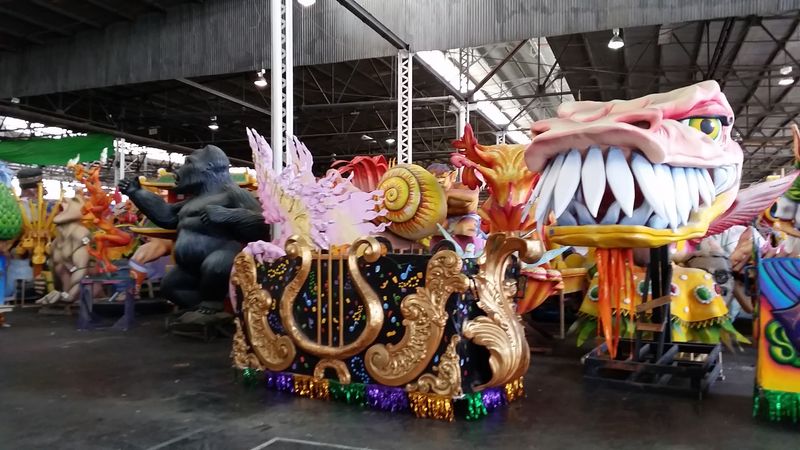
The story starts with scale. Mardi Gras World is tied to Kern Studios, the float-building operation associated with Blaine Kern, often remembered as “Mr. Mardi Gras.” His work helped push New Orleans floats toward the huge, theatrical, highly ornamented style that visitors now expect from the city’s biggest parades.
That background matters because the warehouse is not just showing old props for nostalgia. It is showing the continuation of a working Carnival industry.
The tour helps visitors understand how Mardi Gras floats became so monumental.
Earlier parade traditions already had pageantry, but modern float design depends on a large team of artists, welders, sculptors, painters, carpenters, engineers, and designers working long before the public sees the finished result.
The warehouse makes that hidden timeline visible. What feels impressive is not only the finished color. It is the idea that each enormous face, flower, monster, crown, and comedy figure began as a plan, a frame, a carved form, and layers of paint.
Henderson Street Runs Out At The Float Warehouse
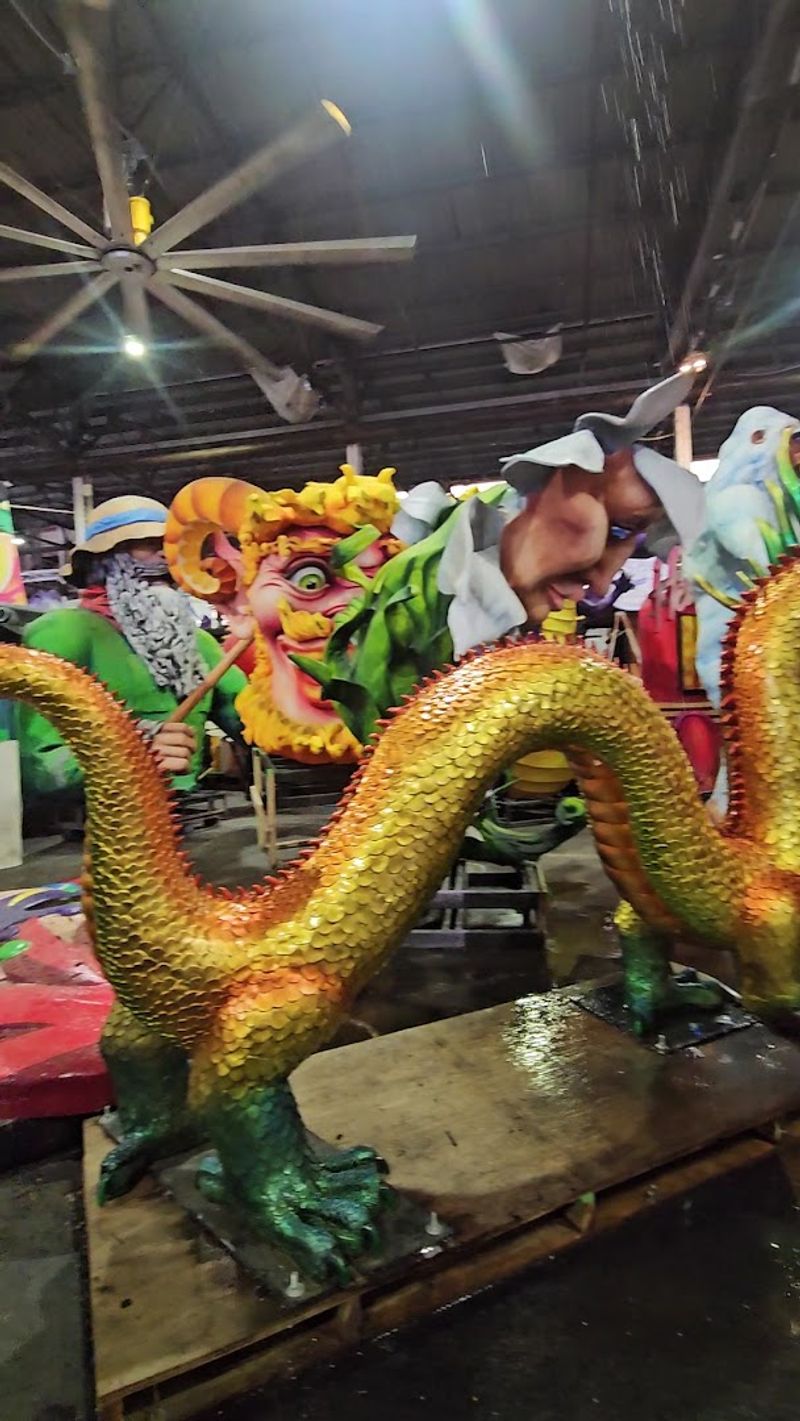
Getting there feels like following the edge of the city toward its backstage. Mardi Gras World is located at 1380 Port of New Orleans Place in New Orleans, Louisiana, near the south end of the Ernest N.
Morial Convention Center and close to the Mississippi River.
The approach is practical rather than mysterious, but the destination still feels different from a standard tourist stop.
From the Central Business District, follow Convention Center Boulevard toward Henderson Street. The final stretch pulls you away from the densest hotel and restaurant traffic toward a larger riverfront warehouse complex.
As the convention-center blocks thin out, the float studio begins to feel less like an attraction inserted into the city and more like part of its working infrastructure.
Drivers can use the nearby paid convention center lot when available, though event schedules can affect access. Day-tour guests without a car can also look into the complimentary shuttle from designated central pickup points.
Unveiling The Craft
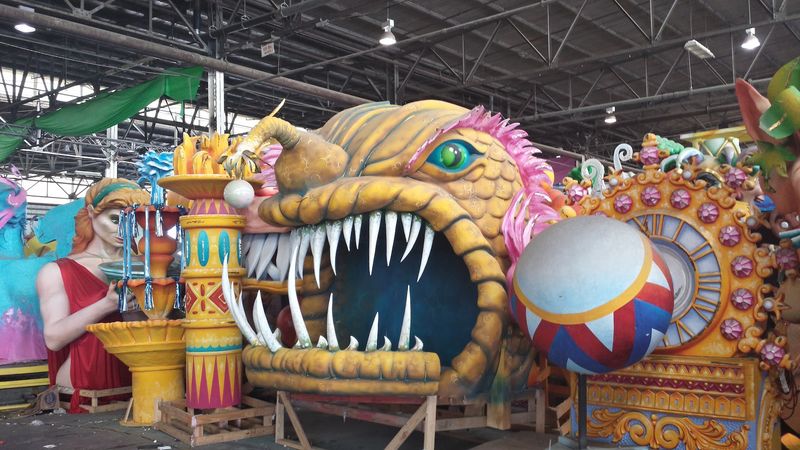
The best part of the tour is realizing how many different skills hide inside a parade float. From the street, a float can look like one giant finished object, but inside the warehouse, the process breaks apart into sculpture, framing, foam carving, painting, lighting, fabrication, repair, and design.
Each stage has its own logic, and the tour helps visitors see the float as a built thing rather than just a rolling spectacle.
Foam figures are especially revealing. Before paint gives them personality, they can look ghostly and unfinished, with rough shapes waiting to become jesters, animals, kings, monsters, celebrities, flowers, or fantasy creatures.
Painters then add dimension through shadow, highlights, eyes, texture, and exaggerated expression. That is when the figure starts to shift from material into character.
The craft also involves practical engineering. A float has to move safely, survive parade conditions, support riders, display a theme clearly from a distance, and still look dazzling under streetlights.
A Glimpse Into The Creative Cycle
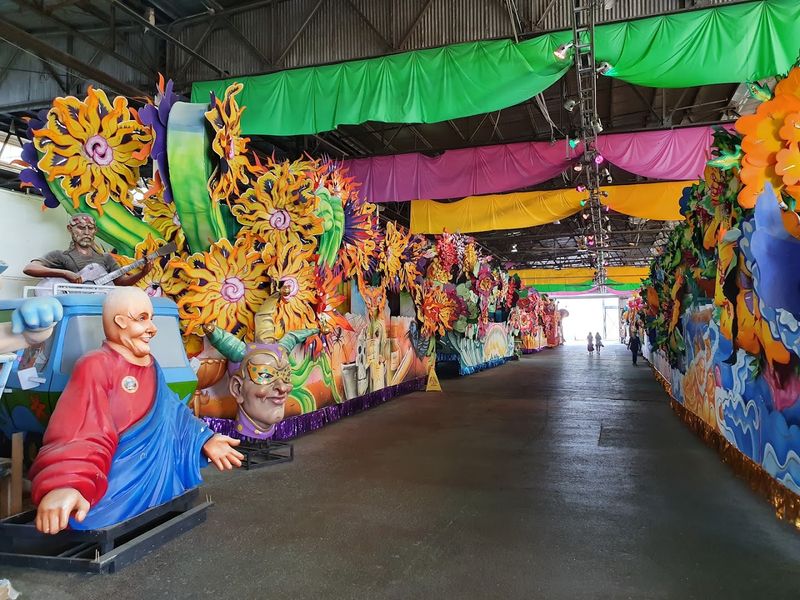
Carnival does not begin when the parade route fills. Inside a working float den, the next season is already taking shape while older props wait for repair, reuse, or transformation.
That cycle is one of the most interesting parts of Mardi Gras World because it shows that the celebration is not a single annual burst. It is a year-round production rhythm.
Some pieces are freshly painted and nearly ready. Others are only rough forms, still waiting for detail.
Retired props may stand nearby, no longer attached to the float or theme they once served.
A figure that appeared in one context can be modified, repainted, or reimagined for another year, which gives the warehouse a layered quality. Nothing feels completely finished or completely discarded.
That constant reuse and reinvention makes the place feel alive. Mardi Gras is famous for excess, but behind the excess is a practical studio culture where materials, labor, and deadlines matter.
Beyond The Glitter
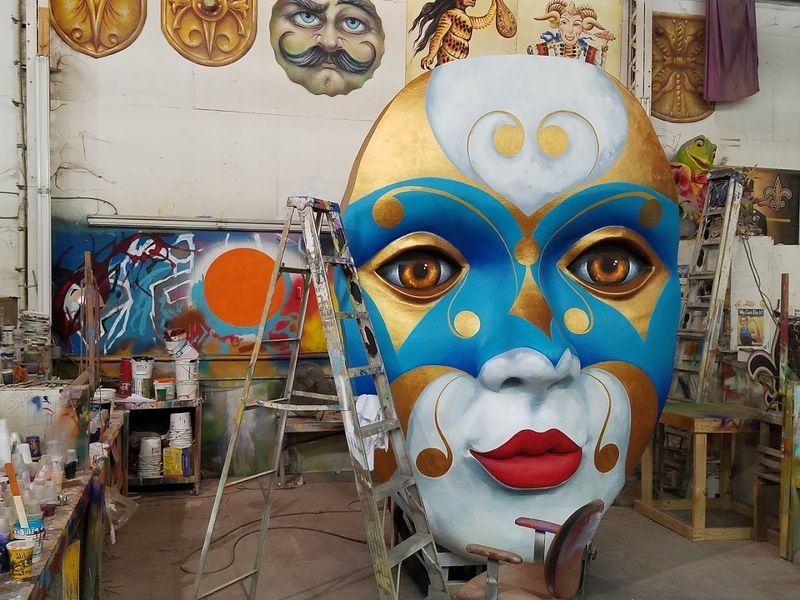
The glitter is real, but it is not the whole story. Mardi Gras World is most interesting when you look past the shine and notice the unglamorous parts that make the shine possible.
Foam dust, paint layers, support structures, storage racks, tools, worktables, and half-finished surfaces all reveal the less polished side of Carnival.
That contrast gives the tour depth. A finished parade float looks effortless because it is designed to communicate joy at a glance.
The warehouse shows the opposite: the hours of labor, the mess, the planning, the lifting, the repairs, and the compromises that happen before anything becomes parade-ready. Even a comical oversized face requires design decisions about proportion, color, expression, durability, and visibility.
This is why the experience works for people who are not automatically obsessed with Mardi Gras. It is also a look at theatrical production, public art, and local industry.
The floats are temporary in one sense, because each parade passes quickly, but the system behind them is permanent and highly skilled.
Practicalities For Your Visit
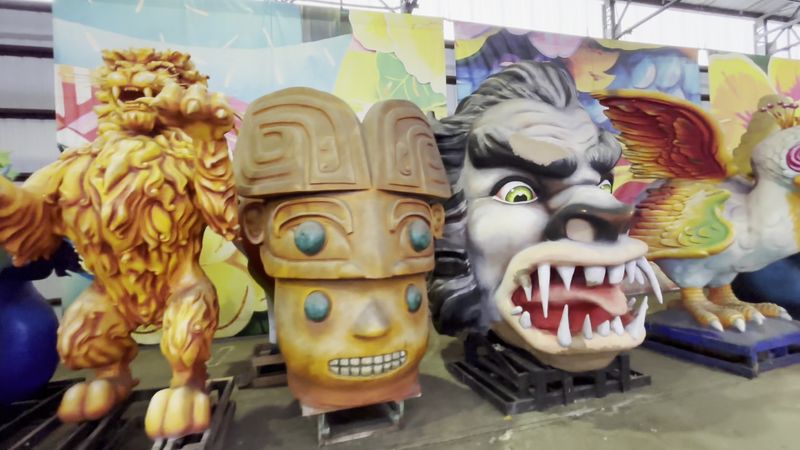
This is an easy attraction to enjoy if you understand the format before arriving. Mardi Gras World offers guided tours through a working warehouse, so visitors should expect a mix of introduction, history, float viewing, and behind-the-scenes production space rather than a traditional museum with silent galleries.
The building is large, and comfortable shoes are a good idea.
Current public hours are generally listed from morning through late afternoon, with the last admission before closing, but checking the official schedule before you go is still smart. The attraction closes on some major holidays and Mardi Gras Day, which makes sense for a place connected to the city’s busiest season.
Tickets can be purchased online, and planning ahead is useful during popular travel periods.
The location near the Convention Center also affects the visit. Parking availability can change when major events are happening nearby, so build in a little extra time if you are driving.
If you are using the shuttle, confirm the pickup process before you stand around waiting.
Storage And Preservation
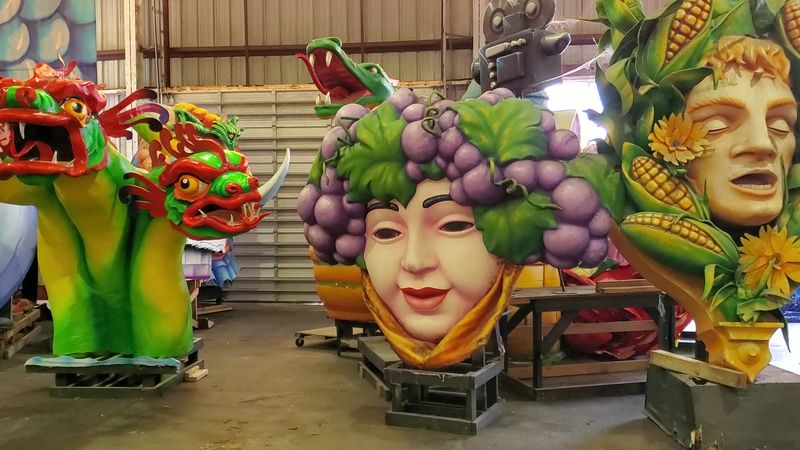
A float studio is also a storage universe. One of the strangest pleasures inside Mardi Gras World is seeing so many retired or waiting pieces gathered together outside their parade context.
Huge props that once rolled through cheering crowds now sit quietly in warehouse rows, leaning against walls or waiting to be repainted for another future.
That storage tells you a lot about how Mardi Gras survives. Not every piece is made from scratch every time, and not every old figure disappears after one season.
Props can be repaired, re-themed, repainted, or adapted. A giant face, flower, animal, or decorative element may have more than one life if the studio can find a new use for it.
That practical reuse gives the warehouse a backstage logic that visitors would never see from the parade route.
Preservation here is not the same as museum preservation. These objects are working materials, not untouchable relics.
They may be scuffed, patched, moved, or transformed as needed.
Artists In Action
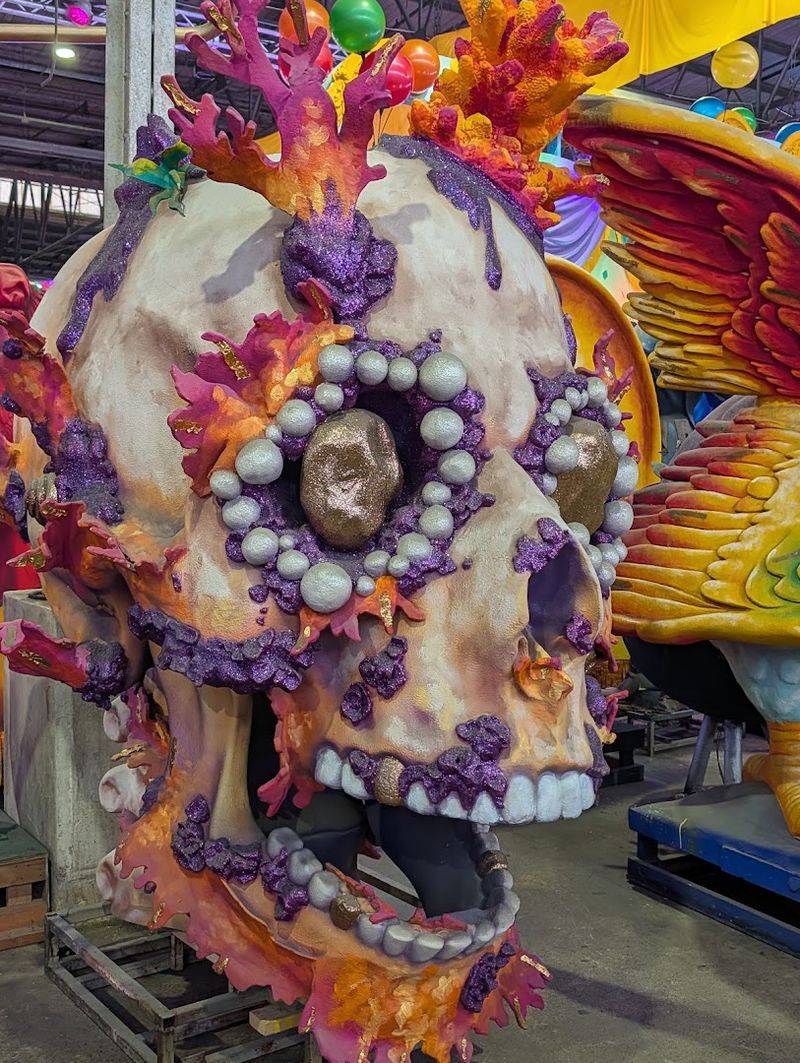
Seeing artists at work changes the entire experience. A finished float can impress you with size, but watching someone paint, carve, shape, or repair a figure gives the spectacle a human scale again.
The warehouse becomes less about anonymous Mardi Gras magic and more about specific people doing skilled, physical work.
The best moments often happen at the edges of the tour. A painter might be adding shadow to a giant eye.
A sculpted creature may still show the marks of carving before its final coat. A half-finished figure might reveal how much expression depends on color, line, and proportion.
These small observations make the final parade feel more personal because you can imagine the hands behind the fantasy.
The working-studio aspect also means no two visits are exactly alike. What you see depends on timing, current projects, parade schedules, and what stage the artists are in that day.
Sensory Surprises Inside
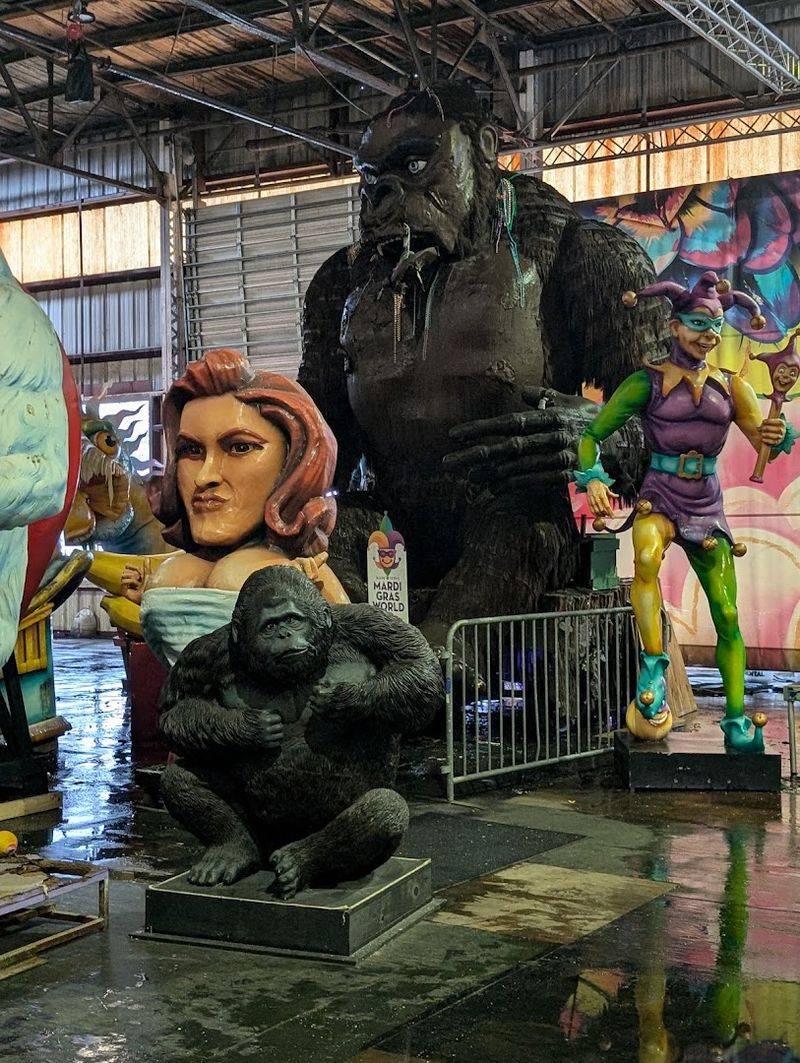
The first surprise is usually the smell. Paint, sawdust, foam, warehouse air, and sometimes the sweetness of king cake create a sensory mix that feels completely different from parade day.
Mardi Gras on the street is loud, outdoor, crowded, and moving. Mardi Gras inside the warehouse is still, echoing, colorful, and strangely industrial.
The scale also plays tricks on your senses. A giant head that would sit high above a parade crowd suddenly stands close enough to study.
Painted eyes look slightly uncanny at warehouse distance. A huge flower or mask becomes less decorative and more architectural when you can stand beside it.
The colors are loud, but the room itself can feel oddly calm between tour groups and work sounds.
Texture becomes important too. Smooth painted surfaces sit beside rough foam edges.
Finished props glow next to raw materials. Glitter, matte paint, carved lines, and structural supports all share the same space.
Guide And Shuttle Details
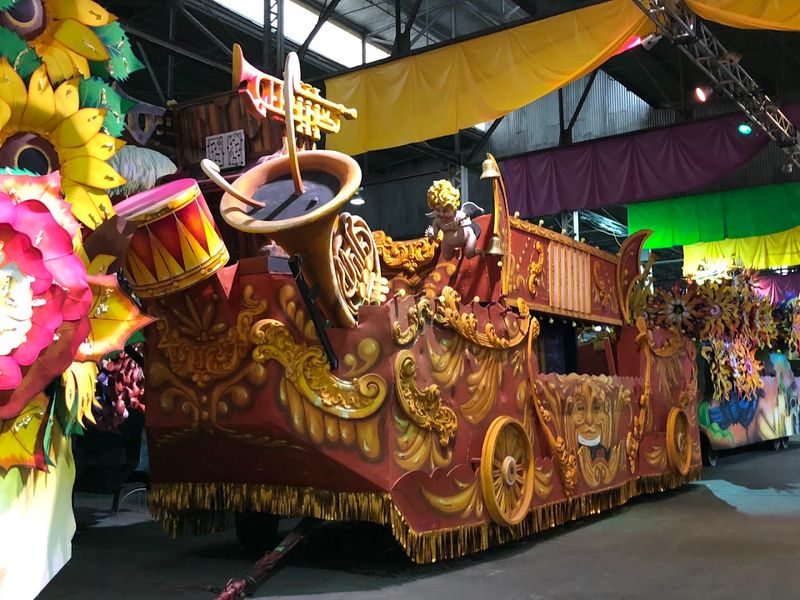
The guided format helps make sense of a space that could otherwise feel overwhelming. Mardi Gras World is full of large objects, active work areas, stored pieces, and production details, so a guide gives the visit structure.
Without that context, it would be easy to see the color and miss the process.
The tour typically introduces visitors to Mardi Gras history, float building, and the way the warehouse operates. Guides help connect the objects around you to the larger world of krewes, parade themes, construction timelines, and Carnival traditions.
That explanation is useful because the warehouse is visually loud. A little interpretation keeps the experience from turning into one long blur of oversized props.
The shuttle can also make the visit simpler for travelers staying in central areas. Mardi Gras World’s official information describes a complimentary shuttle for day-tour guests from designated pickup points, with guests calling when they are at one of the stops.
Planning Your Visit
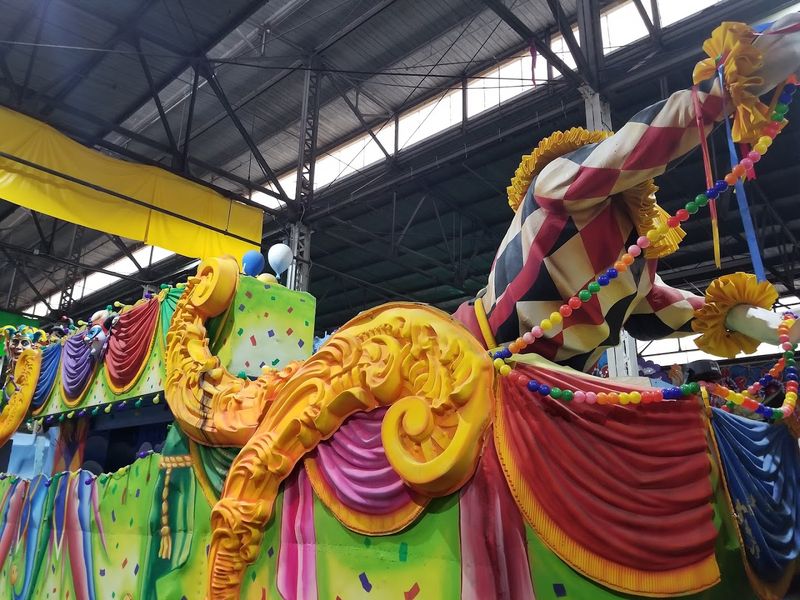
The smartest way to visit is to give the attraction enough time without overcomplicating the day. Mardi Gras World is not an all-day museum, but it also should not be squeezed into a tiny gap between meals.
Plan for the tour, a little browsing, transportation time, and a few extra minutes to look around after the main explanation ends.
Families should think about attention span and timing. The huge props and colors can hold children’s interest, but the historical and production details are easier to enjoy when nobody is exhausted or hungry.
Morning or earlier afternoon visits often work well, especially if you want to combine the tour with nearby Convention Center, Warehouse District, or riverfront plans.
Adults should come ready to look closely, not just take quick photos. The best details are often in unfinished surfaces, repainted figures, storage corners, and the difference between what a float looks like up close versus what it becomes on the parade route.
Check current hours, ticketing, parking, and shuttle information before heading out.