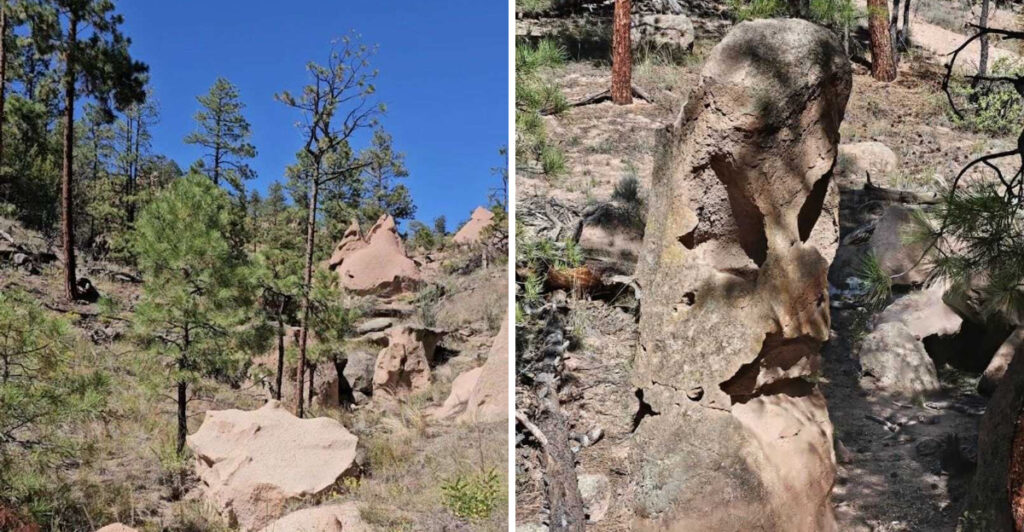
The forest seems normal at first. Then the rocks start showing off.
Deep in the Jemez Mountains, volcanic columns rise between ponderosa pines in shapes that resemble faces and stone figures caught mid-conversation. The area’s unusual nickname starts making sense almost immediately.
Each turn gives your imagination something new to argue about. Is that a giant head or just a weathered spire?
The landscape owes its strange appearance to ancient volcanic activity followed by a very long campaign of erosion. Reaching the formations requires more care than the word easy suggests, especially once the route leaves comfortable road walking behind.
Navigation can also be tricky because this is not a polished attraction with signs everywhere. That only adds to the wild feeling.
This New Mexico hike turns into a rocky guessing game, and the goblins always seem to get the last look.
Stone Goblins Rise From The Forest
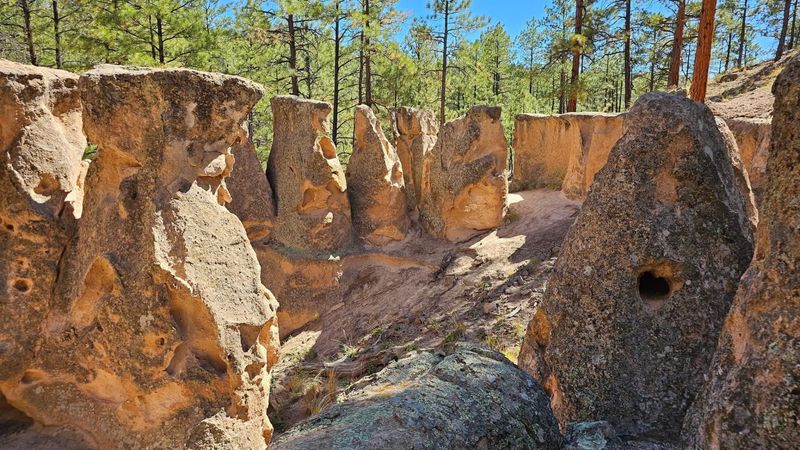
Nothing quite prepares you for the moment the trees thin out and the goblins appear.
Deep inside the Santa Fe National Forest, volcanic rock columns collectively called the Goblin Colony begin to push up through the Ponderosa pines in clusters that grow denser the further you walk.
Each column is a product of ancient eruptions followed by slow, patient erosion, meaning wind and water did the sculpting over thousands of years without any help from human hands.
Some formations stand narrow and tall, balancing cap rocks on slender necks with what feels like impossible confidence.
Others spread wide and low, their surfaces pocked with hollows and ridges that catch shadow in ways that shift as the sun moves.
I kept stopping mid-stride just to take in the sheer density of the colony, because every angle revealed a formation I had somehow missed from the previous spot.
The overall effect is genuinely disorienting in the best possible way, as if the forest floor decided to grow stone instead of grass.
You can find this extraordinary natural spectacle at Paliza Canyon, Ponderosa, NM 87044, deep in the Jemez Mountains.
A Canyon Shaped Like A Fantasy World
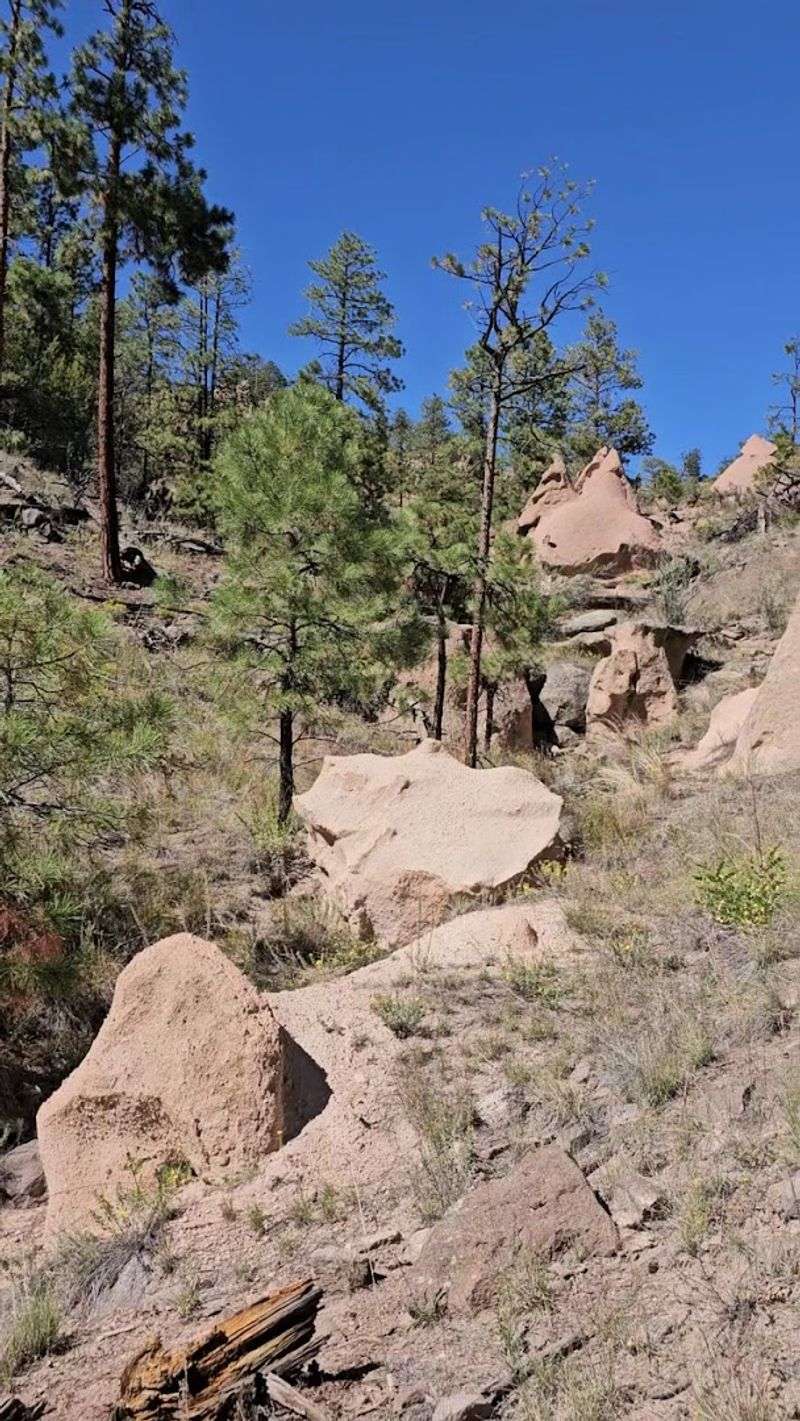
Paliza Canyon does not look like a place that belongs on a standard trail map.
The canyon walls rise on both sides in warm layers of red, tan, and dark volcanic rock, creating a color palette that shifts noticeably depending on the time of day and the angle of light hitting the stone.
What makes the setting feel so unusual is how the soft, rounded forms of the canyon walls contrast sharply with the jagged, vertical hoodoos clustered on the slopes above.
Standing at the base and looking upward, I genuinely had to remind myself I was still in New Mexico and not somewhere far more remote and mythical.
The canyon also holds a seasonal creek that winds along its floor, and on my visit the water was moving steadily, adding a quiet sound to an otherwise deeply silent landscape.
Wildlife moves through this terrain with regularity, and I spotted deer tracks pressed into the sandy creek bank without ever seeing the animals themselves.
Every bend in the canyon introduces a slightly different composition of rock, tree, and sky that keeps your eyes busy and your feet moving forward.
Weathered Faces Hide Among The Cliffs
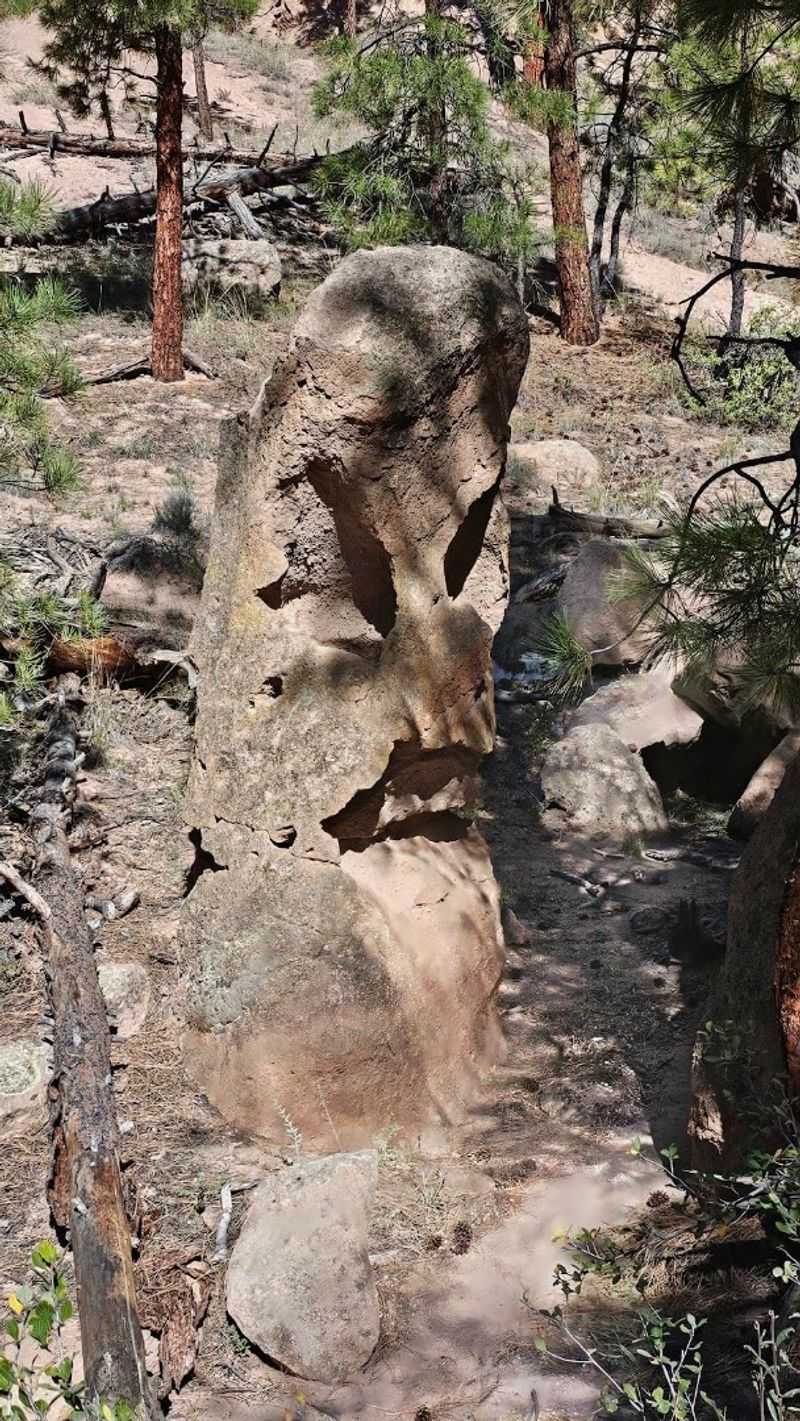
Spend enough time among the goblins and the rocks start looking back at you.
Wind and water erosion has drilled holes, carved ridges, and smoothed curves into the volcanic stone in ways that produce unmistakable facial features, hollow eye sockets, broad foreheads, and open mouths frozen mid-expression.
Visitors frequently describe the experience as a slow-moving game of recognition, where a formation that looked abstract from twenty feet away suddenly resolves into something face-like once you step closer.
Some of the larger cliff faces hold what appear to be enormous heads staring outward from the rock, reminiscent of the massive carved figures found on Easter Island, though these were shaped entirely by natural forces.
I spent a good half hour at one particular cluster of boulders just identifying shapes, and the list grew longer the more I looked: a frowning figure here, a wide-eyed creature there, and one formation that seemed to be mid-yawn.
Children especially tend to go wild with this part of the hike, turning the trail into an impromptu scavenger hunt for the strangest stone face they can find.
The cliffs reward patience and a willingness to slow down and really look.
Volcanic Spires Create An Unusual Skyline
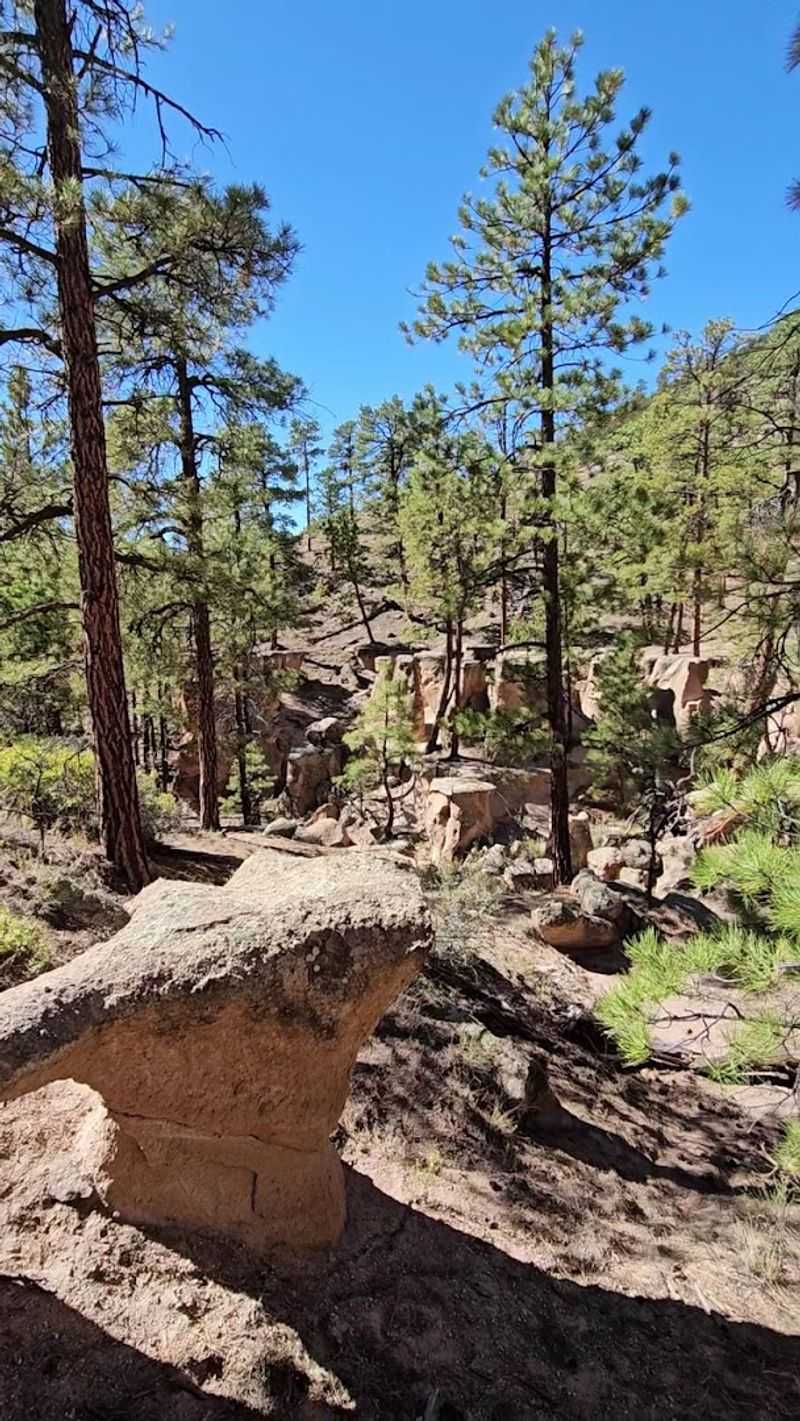
The Jemez Mountains carry a volcanic history that is written plainly across every ridge and spire you see from the trail.
Paliza Canyon sits within a geological formation made up of ancient basaltic, andesitic, and dacitic flows, tuffs, and breccias, all of which erupted and cooled over millions of years to create the raw material for what you see today.
The result is a skyline bristling with vertical spires and sharp fins that jut upward at angles no softer sedimentary rock could manage.
From certain vantage points along the trail, the spires stack behind one another in overlapping rows, creating a layered silhouette that looks almost architectural.
At sunset, the orange and red tones in the volcanic rock intensify dramatically, and I watched one evening as the spires seemed to glow from within as the light dropped lower on the horizon.
The contrast between the dark, hard spire rock and the lighter canyon walls behind them gives the landscape a graphic quality that photographs beautifully but feels even more striking in person.
Few easy hikes in the region deliver this kind of raw geological drama without demanding serious effort from the legs.
Quiet Forest Trails Lead Into Strange Terrain
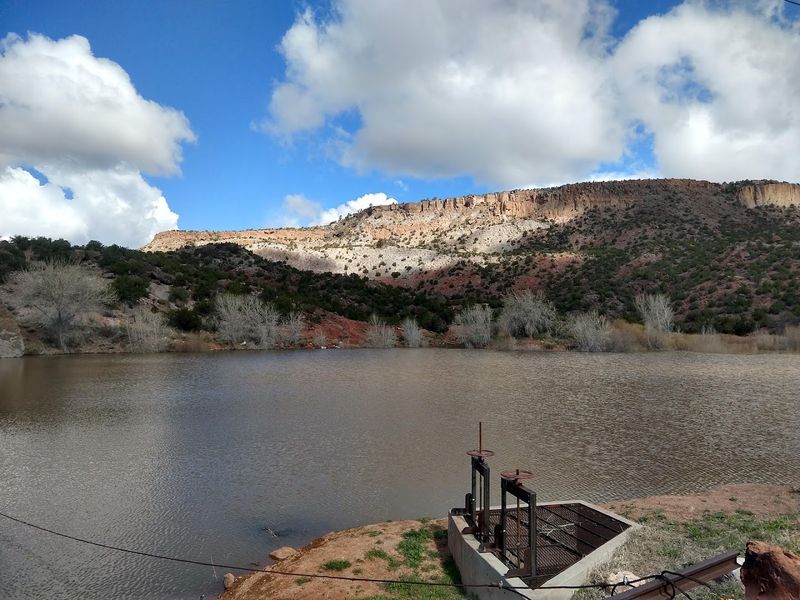
The trailhead gives almost no hint of what waits further along.
One common approach begins near the Paliza Family Campground and follows a gated forest road that feels more like a woodland stroll than the route toward an unusual rock colony.
Ponderosa pines line both sides of the road, their bark carrying a distinctive vanilla-like scent in warm sunlight, while packed dirt and sandy patches generally make the early walking comfortable.
The exact distance and route depend on where you park and which approach you follow, so hikers should not expect one clearly defined maintained trail.
As the route nears the colony, the terrain becomes steeper, rougher, and considerably less obvious than the forest-road portion of the outing.
The transition into rocky ground makes the first clear views of the goblin formations feel more dramatic, but it also requires careful route-finding.
Signs and marked paths are limited, and published hiking descriptions recommend carrying reliable navigation rather than depending on cell service.
The forest-road approach may feel easy, but exploring the formations can involve off-trail travel and substantial climbing.
The route rewards attention, preparation, and a willingness to turn around when the safest way forward is unclear.
Ancient Ruins Rest Beyond The Rock Colony
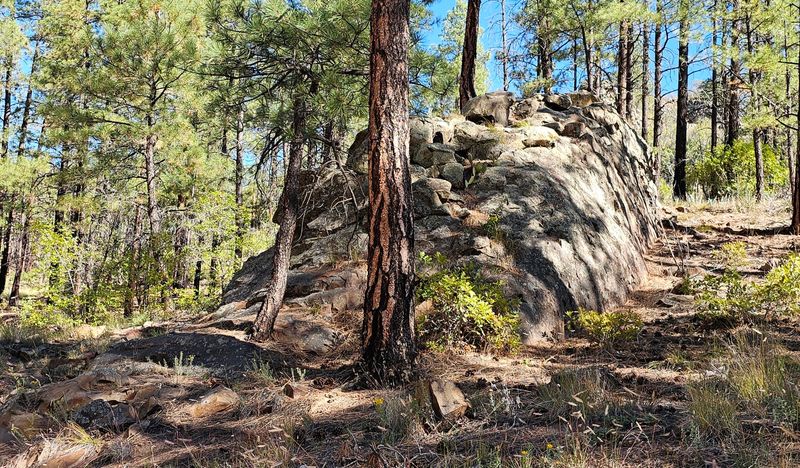
Past the goblins, the surrounding area holds a quieter kind of wonder.
Informal hiking accounts describe archaeological locations sometimes called Ruins 1 and Ruins 2 along longer routes through the Paliza Canyon area.
One account describes the Kiatsukwa site as nearly 200 yards long and at least 50 yards wide, although those figures should be treated as a hiker’s approximate observations rather than formal archaeological measurements.
Mounds of rock and compacted earth may reveal the general outlines of former pueblo structures, including places where the shapes of individual rooms can still be recognized.
These sites add a layer of human history to a landscape that might otherwise appear purely geological.
Visitors should remember that archaeological resources are culturally significant and protected, even where signs, barriers, or interpretive displays are absent.
Do not move rocks, remove artifacts, climb on structural remains, or publicize precise coordinates for sensitive locations.
Researching the region’s Indigenous history before the hike can provide useful context without turning the ruins into a casual tourist attraction.
History and geology share this landscape, but the archaeological sites deserve particular care, distance, and respect from everyone traveling through the canyon.
Alligator Junipers Add Sculptural Beauty
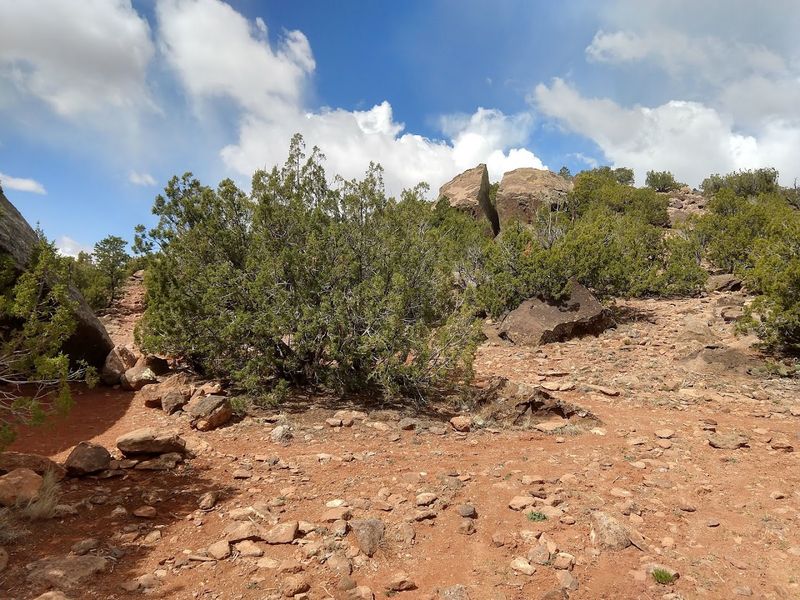
Not every sculpture in Paliza Canyon is made of stone.
Alligator junipers grow among the volcanic formations, their bark divided into thick, square-edged plates that resemble reptile scales and explain the tree’s memorable common name.
Some hiking descriptions refer to the junipers around the Goblin Colony as ancient, although the ages of individual trees in this specific canyon have not been reliably documented.
That makes it impossible to say with confidence that particular specimens here are 800 to 1,000 years old or were already mature during a specific period of Pueblo history.
The contrast between the rough, dark bark of the junipers and the pale volcanic rock surrounding them makes both elements stand out more strongly.
Their broad trunks and irregular branches add another layer of shape to a landscape already filled with unusual formations.
The trees can also provide patches of welcome shade near exposed sections, especially when midday sunlight reaches the slopes.
Visitors should admire the bark without carving, stripping, or otherwise damaging it.
Their twisted, weather-shaped forms add character to the canyon, even without assigning them unverified ages or historical timelines.
High Desert Views Stretch Past The Hoodoos
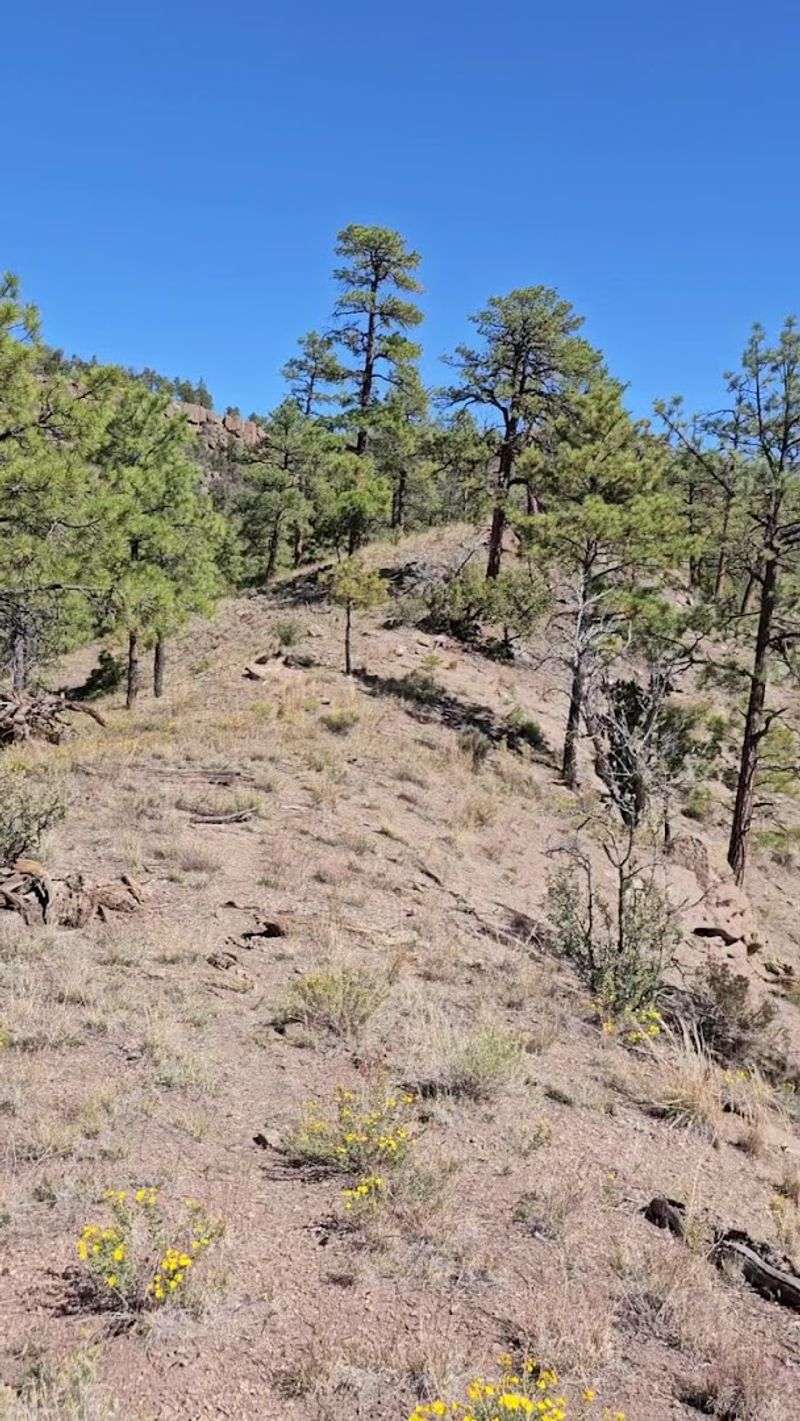
Altitude changes how this landscape feels, and the Goblin Colony occupies slopes around 7,000 feet above sea level, with some estimates placing portions of the formations closer to 7,400 feet.
The wider canyon and documented hiking routes cover a range of elevations, so one figure should not be treated as the exact height of the entire area.
From higher ground near the formations, views open beyond the hoodoos toward forested ridges in the Jemez Mountains.
Reaching those viewpoints may involve steep, unmarked travel rather than a simple climb on a maintained trail.
Ponderosa pines dominate much of the surrounding forest, while exposed slopes and rocky openings create noticeable changes in vegetation and scenery.
On clear days, the deep sky can make the warmer tones of the volcanic rock appear especially vivid.
The hoodoos also look different when viewed from higher angles, revealing irregular tops and narrow forms that may not be visible from below.
The visual payoff is substantial, but it should not be described as requiring very little physical effort.
Hikers should expect rough footing, carry navigation, and choose viewpoints that match their ability and comfort with off-trail terrain.