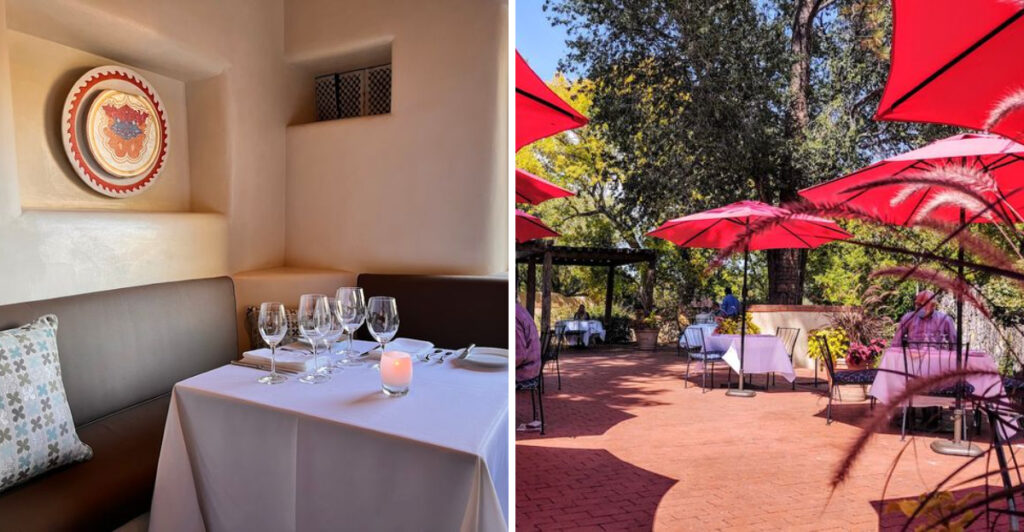
This New Mexico dining room does not need flash to get your attention. The first clue is the adobe exterior, calm and confident before you even reach the table.
Then the design starts talking. Color appears overhead.
Details pull your eyes around the room. The courtyard feels like the kind of place people remember before they remember what they ordered.
That is the real trick here. Fine dining can sometimes feel stiff, but this place has warmth built into the walls.
It has been part of the state’s restaurant conversation for decades, and the staying power makes sense fast. I came in expecting a polished meal.
I left thinking about the mood of the room just as much as the food. Some restaurants serve dinner.
This one builds an atmosphere around it, and that is why people still make a point of going.
Adobe Walls Set The Tone Before You Sit Down
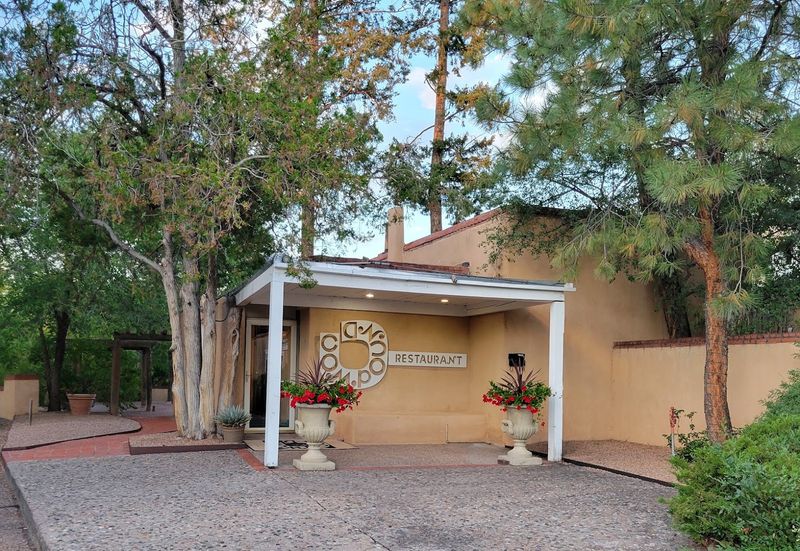
Before a single plate arrives, the building itself makes a statement worth paying attention to.
The main structure at The Compound is a historic adobe, and its thick earthen walls carry a presence that newer construction simply cannot manufacture.
At the entrance, the sculpted lines of the facade seem to absorb the Santa Fe light rather than reflect it, giving the whole property a grounded, unhurried quality.
Adobe construction is practical in this climate, keeping interiors cool when the high desert sun is doing its best work outside.
Those walls, often two feet deep, also do something less measurable: they signal that patience and craft went into this place long before any menu was printed.
The exterior sets a clear expectation of care and intention, which the interior then meets without hesitation.
Most restaurants ask you to adjust to them the moment you walk in, but this one welcomes you at the threshold. That welcome begins with the architecture itself at The Compound at 653 Canyon Rd, Santa Fe, NM 87501.
Alexander Girard’s Bold Touches Still Steal The Scene
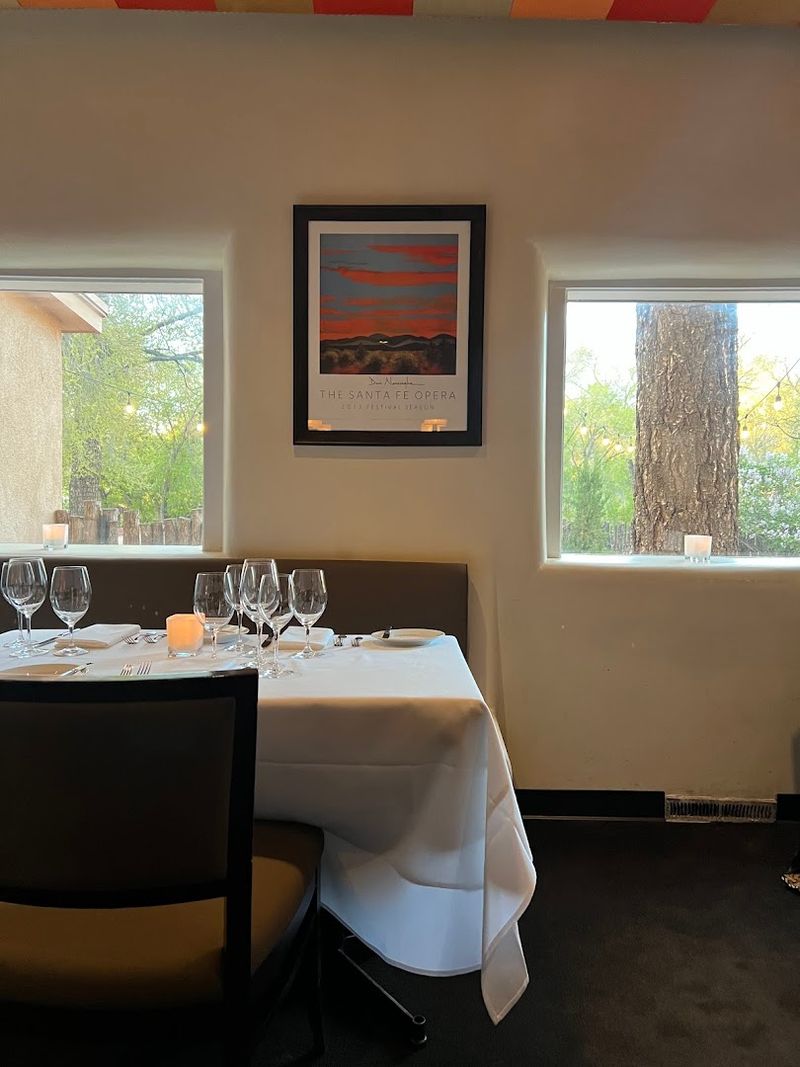
Mid-century design has had countless revivals, but few spaces make the case for it as convincingly as the interior of The Compound.
The late Alexander Girard, a celebrated designer known for his love of color and folk art, shaped the restaurant’s interiors with a vision that still feels alive and specific rather than dated.
Mexican cotton fabrics line portions of the ceiling in a way that turns an overhead glance into a small event, while the lowered service alcove functions as both a design feature and an invitation to slow down before the meal begins.
A painted plaster rainbow arcs across one of the main dining walls, and Navajo ceiling tiles add a cultural texture that feels earned rather than decorative.
What strikes me most about Girard’s influence is how personal it feels, as though each choice came from real enthusiasm rather than a design brief.
The colors are bold without being aggressive, the patterns are layered without becoming chaotic, and the overall effect is a room that rewards a second look at every turn.
Few restaurant interiors from that era have aged this well, and fewer still feel this intentional.
Seasonal Menus Keep Every Visit Fresh
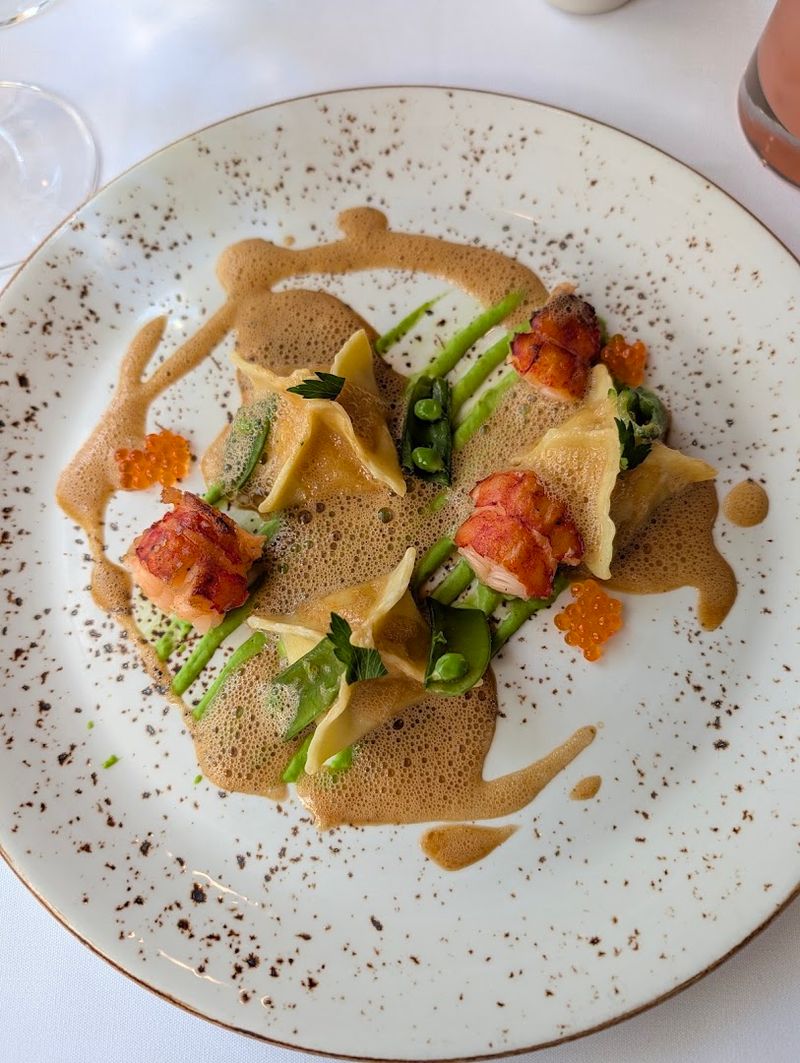
A menu that changes with the seasons sounds like a marketing phrase until the plate shows what that really means.
At The Compound, the kitchen builds its offerings around what is available and at its best, which means lobster salad might share a menu with roasted salmon or a slow-braised preparation that only makes sense when the temperature drops.
That kind of flexibility requires real skill, because the team has to be technically consistent while the ingredients beneath them are always shifting.
Dishes like bay scallops with wild mushrooms and organic stone-ground polenta reflect the Mediterranean influence that runs through the contemporary American framework here, giving familiar techniques a sun-warmed brightness.
The butternut squash risotto that diners mention with particular fondness is the sort of dish that showcases exactly why seasonal sourcing matters: the flavor is specific, not generic.
I appreciate that the menu does not try to do everything at once, but instead focuses on doing a smaller number of things with real conviction.
Returning visitors consistently find something new to order, which is one of the best arguments for a restaurant’s ongoing relevance.
The Courtyard Turns Dinner Into A Candlelit Escape
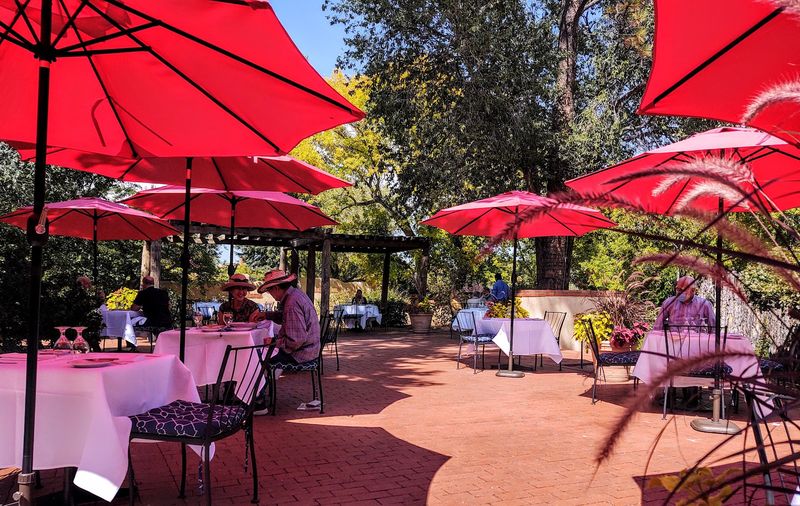
Not every restaurant earns its outdoor space, but The Compound has cultivated its courtyard patios into something worth planning an evening around.
As the light shifts over the high desert and the air cools just enough to make sitting outside feel like a reward, the garden areas take on a quality that is hard to replicate indoors.
Mature trees shade the space during lunch, and as evening arrives, candlelight fills the gaps left by the fading sun in a way that feels atmospheric without being theatrical.
The Allan Houser Sculpture Garden adds an artistic dimension to the outdoor experience, placing striking works among plantings that soften the transition between art and nature.
A gentle fountain provides the kind of ambient sound that encourages conversation to slow down and take its time, which is exactly the right pace for a multi-course dinner.
I found the courtyard setting particularly effective for the kind of meal where the space itself becomes part of the memory.
New Mexico evenings have a particular quality of stillness that this courtyard seems designed to honor, and dining here under an open sky feels like a privilege.
Colorful Textiles Give Each Dining Room Its Own Character
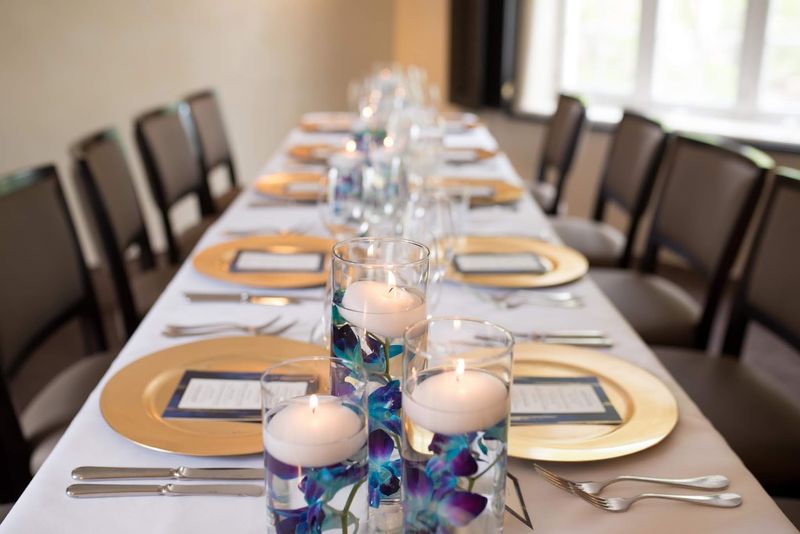
The dining rooms at The Compound feel a little like a curated exhibition where each space has its own mood and visual logic.
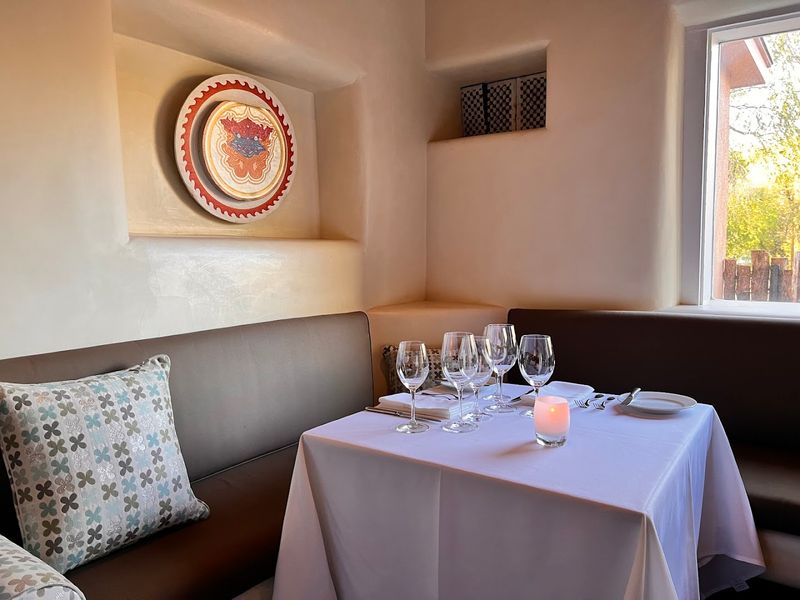
The predominantly whitewashed walls serve as a clean backdrop that lets the textiles and artistic details command full attention without competition.
Woven fabric panels overhead create an effect that is closer to mosaic than decoration, drawing the eye upward and making the ceiling part of the dining experience rather than an afterthought.
Navajo ceiling tiles appear in certain areas, adding a richly cultural layer that connects the interior to the broader artistic tradition of the region.
A painted snake winding across one room’s ceiling is the kind of detail that catches you off guard and then makes you smile, which is exactly what good design should do.
Girard’s passion for folk art is the connective thread running through all of these choices, ensuring that the rooms feel collected rather than decorated.
Each space retains a distinct character while still belonging to the same building and the same story, which is a balance that most multi-room restaurants never quite manage to achieve.
French Technique Adds Polish To Every Course
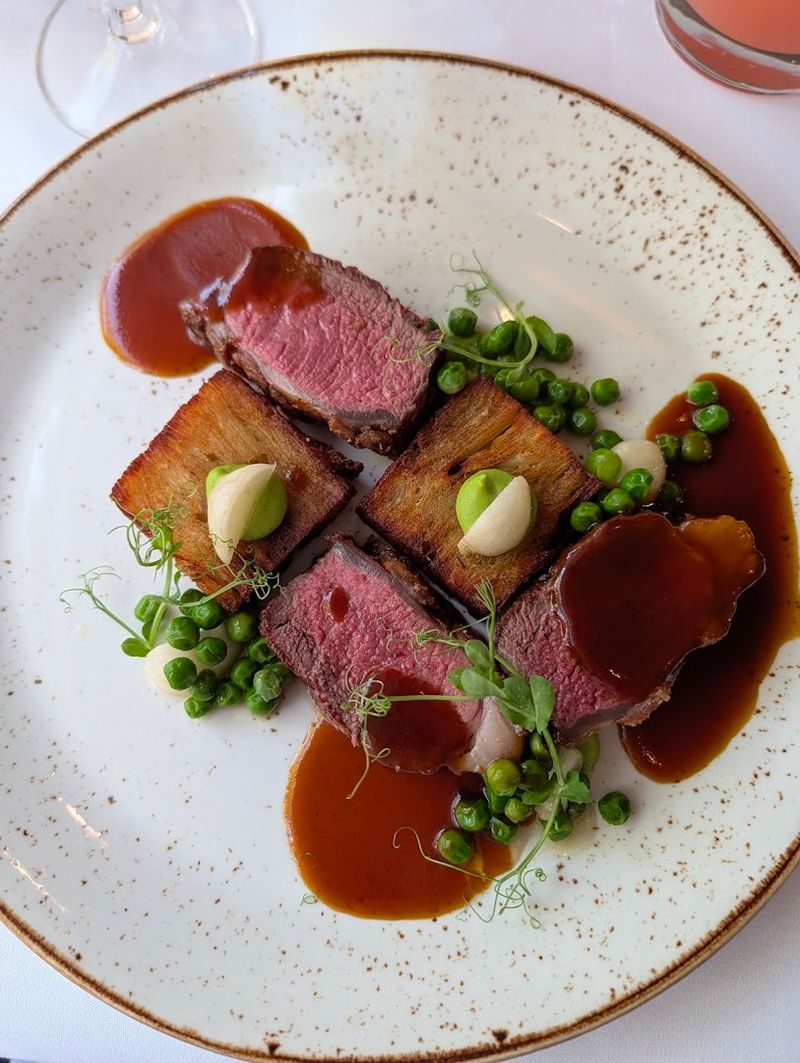
Classical French technique is the kind of foundation that reveals itself in the details rather than announcing itself on the menu.
At The Compound, that influence shows up in the precision of a sauce, the timing of a protein, and the way a dish is composed so that every element has a purpose rather than simply filling the plate.
The kitchen works within a contemporary American framework with Mediterranean brightness, but the underlying discipline is French, and that discipline is what keeps the cooking from feeling casual even when the ingredients are regional and familiar.
Dishes like the rack of lamb and beef tenderloin carry the kind of textural and flavor confidence that comes from a team that understands classical method deeply enough to apply it without making it feel stiff.
The Opera Cake that appears on the dessert menu is a particularly clear expression of this influence, requiring patience and precision that shortcuts cannot replicate.
I noticed that even the house-made sourdough focaccia, which multiple visitors describe as dangerously addictive, reflects the same attention to process that defines the savory courses.
Good technique is ultimately about respect for ingredients, and that respect is evident in every course that leaves this kitchen.
Pueblo Revival Details Make The Setting Feel Timeless
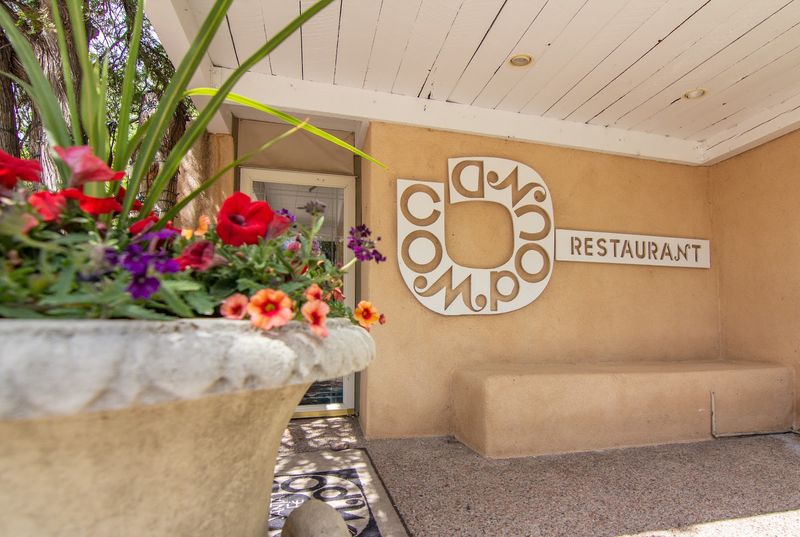
Pueblo Revival architecture has a way of making a building feel as though it grew from the ground rather than being constructed on top of it.
The Compound occupies a historic adobe that embodies this quality fully, with organic lines, earthen materials, and a structural honesty that contemporary buildings rarely achieve.
Inside, rustic wooden beams cross the ceilings in a way that feels structural and decorative at once, grounding the more artistic elements of the interior in something solid and regional.
Warm, natural hues in the walls and floors create a continuity between the building’s exterior and its interior, so the transition from outside to inside feels gradual rather than abrupt.
This architectural language is not nostalgic in a sentimental way but rather deeply practical, suited to the New Mexico climate and deeply connected to the cultural history of the place.
The result is a dining environment that feels simultaneously ancient and current, as though the building has always known exactly what it wanted to be.
For visitors arriving from elsewhere, the Pueblo Revival setting provides an immediate sense of place that no amount of imported decor could manufacture, making the location itself an essential part of the meal.
Polished Service Completes The Evening
A kitchen can produce extraordinary food, but without the right service surrounding it, the experience rarely lands the way it should.
At The Compound, the service operates at a level that matches the ambition of the menu, which is not a small thing to sustain across a full dining room.
Servers here carry real knowledge of the menu rather than rehearsed descriptions, and that knowledge translates into recommendations that feel personal rather than prompted.
The pacing of a meal is one of the clearest indicators of a kitchen and front-of-house working in sync, and the timing between courses at The Compound reflects exactly that kind of coordination.
Staff anticipate needs before they become requests, which is the kind of attentiveness that requires both training and actual engagement with the guest at the table.
I noticed that even small interactions, like the adjustment of a place setting or the quiet refill of a water glass, were handled with the same care as the larger moments of the meal.
New Mexico has no shortage of memorable restaurants, but the combination of setting, food, and service at this level remains something that The Compound delivers with consistent and quiet confidence.