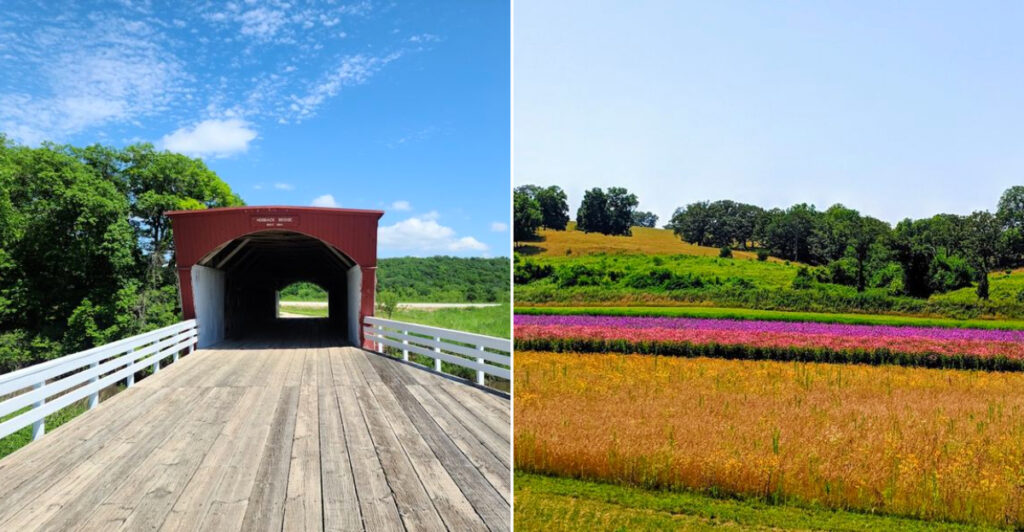
Country roads in Iowa are good at keeping a surprise around the next bend. Near Winterset, one of those bends leads to a weathered covered bridge standing over the North River as if the modern world simply forgot to hurry it along.
The drive is quiet, the setting is even quieter, and that is exactly why Hogback makes such an impression.
You arrive expecting a quick photo stop, then find yourself studying the timberwork, listening to the water, and wondering how a simple bridge managed to give the whole road so much character.
Could a free roadside stop really carry this much presence? This one does, and the story behind it makes the dusty drive through Madison County feel even more worthwhile.
Hogback Covered Bridge
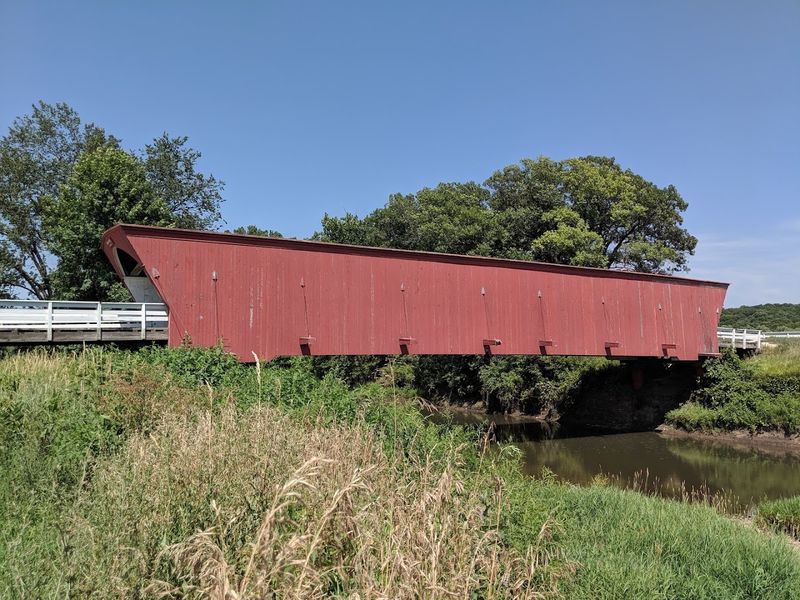
A lot of people drive past the sign for Hogback Covered Bridge thinking it is just a photo op for history buffs.
The reality is a 98-foot timber Town lattice truss with queenpost overlay built in 1884 by Harvey P. Jones and George K.
Foster, spanning the North River in Madison County with the kind of craftsmanship that modern construction rarely attempts.
The bridge was added to the National Register of Historic Places in 1976 and renovated in 1992, which explains why it looks so well-kept despite being over 140 years old.
Its name comes from a nearby limestone ridge, not the shape of the bridge itself, which surprises a lot of first-timers.
You can find it at 1879 Hogback Bridge Rd, Winterset, Iowa 50273, a few miles outside of town on a gravel road that feels genuinely off the grid. The drive in sets the tone perfectly.
By the time the bridge comes into view through the tree line, you already feel like you earned the sight.
The Road That Gets You There
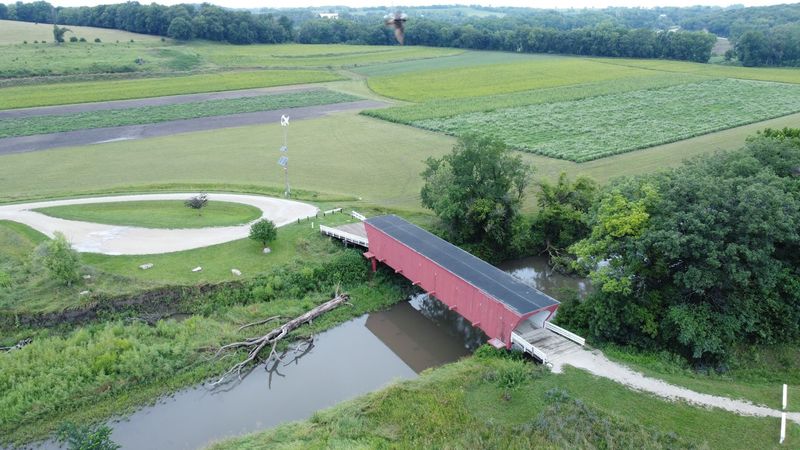
Getting to Hogback is part of the whole story. The approach involves several miles of gravel road that cuts through open farmland and past stands of old trees.
It is not a drive you would want to attempt in a low-clearance sports car, especially after heavy rain, but for most standard vehicles it is perfectly manageable.
Two separate entrances lead to the bridge, both unpaved. The northern entrance is the one to use on the way out if you want to catch a bonus stop: a stone schoolhouse with an old well and a tiny outhouse that looks like it has not changed since the 1890s.
That little detour adds maybe ten minutes and is absolutely worth it.
The gravel roads also mean the area stays quieter than most roadside landmarks. You are unlikely to arrive and find a crowd.
On a weekday morning, there is a real chance you will have the whole place to yourself, which makes the stillness feel even more deliberate. Dust on the windshield is a small price to pay for that kind of quiet.
The Bridges of Madison County Connection
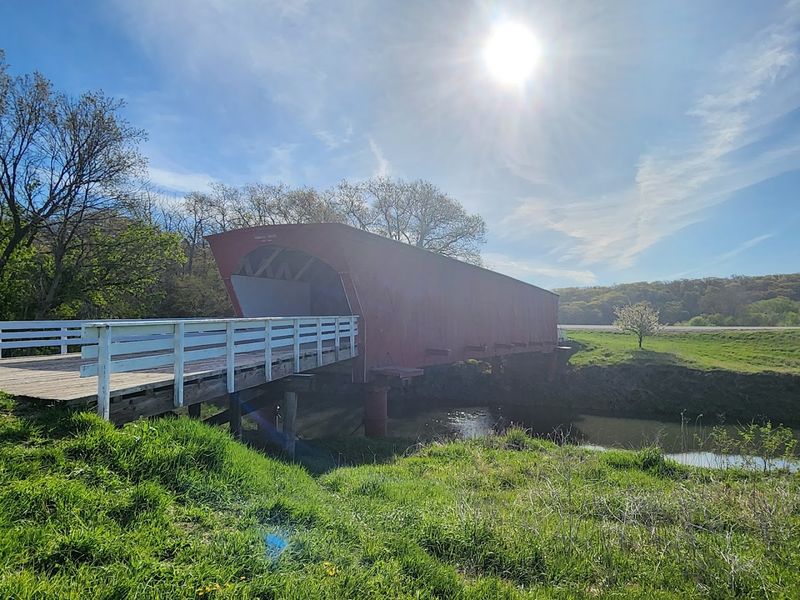
Robert James Waller’s novel and the 1995 film adaptation put Madison County on the cultural map in a way that few small Iowa counties ever get.
The Hogback Covered Bridge is one of six surviving covered bridges on the Madison County Covered Bridge Tour, and it carries that cinematic legacy with a certain quiet confidence.
The movie brought a wave of curious travelers to central Iowa, and that interest never fully faded. Plenty of people still make the drive specifically because they watched the film years ago and finally decided to see the real thing.
The former Northside Cafe space made famous by the movie is still in Winterset, though the cafe business itself closed in 2020. Official tourism materials note that visitors can still sit at the counter associated with Robert Kincaid’s coffee scene.
Hogback tends to get slightly less foot traffic than some of the other bridges on the tour, which actually makes it feel more authentic. The older handwritten messages still visible inside the bridge add a layer of human history that no film set could replicate.
Each bridge on the tour offers something a little different, but Hogback has a rawness that many people find most memorable.
What You Actually See When You Arrive
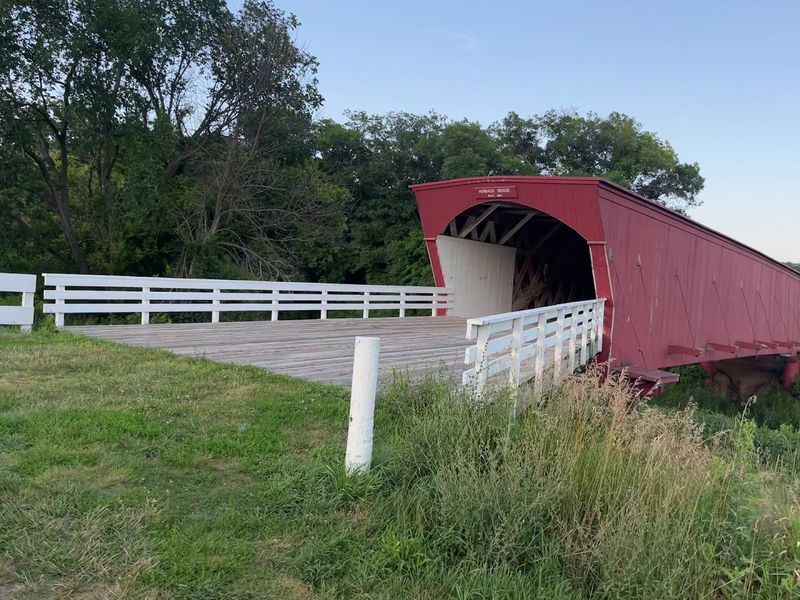
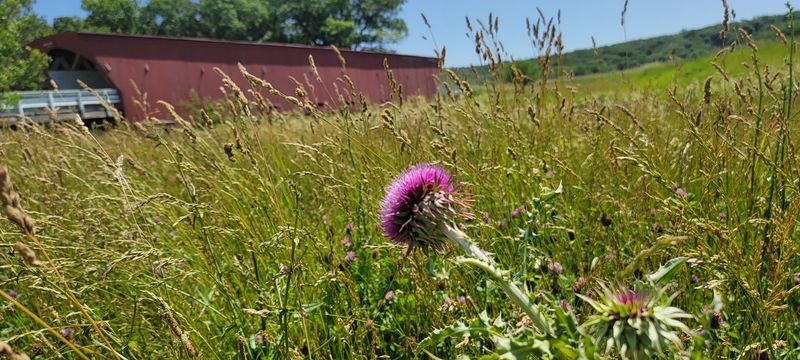
The bridge sits low over the North River with wildflower fields visible behind it and a tree canopy that frames the whole scene like a postcard nobody designed on purpose.
The exterior is dark weathered wood with white painted portals at each end, and the structure looks solid without looking restored to the point of feeling fake.
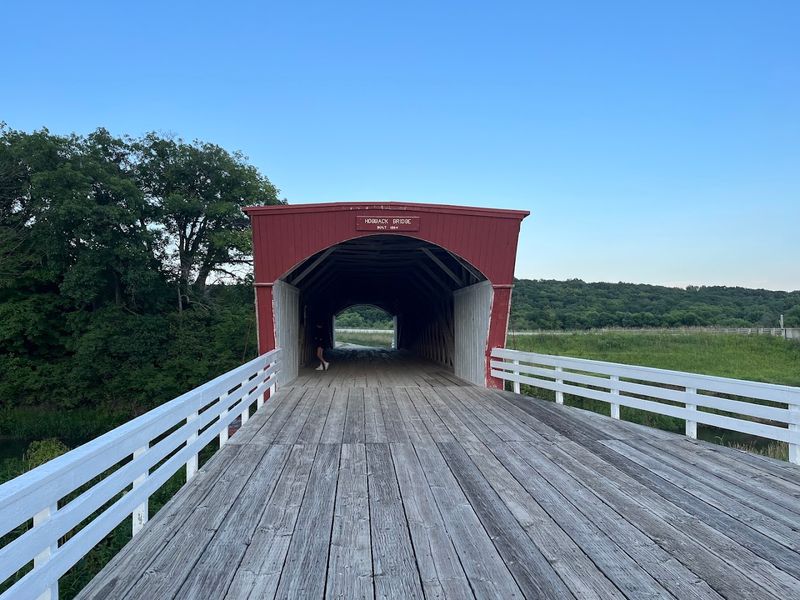
Inside, the timber lattice work is the main attraction. The pattern of crossed wooden beams creates a geometric tunnel effect that photographers absolutely love, especially in the late afternoon when light angles through the openings and casts long shadows across the planks.
Old messages written on the interior walls by past visitors give it a scrapbook quality that adds personality.
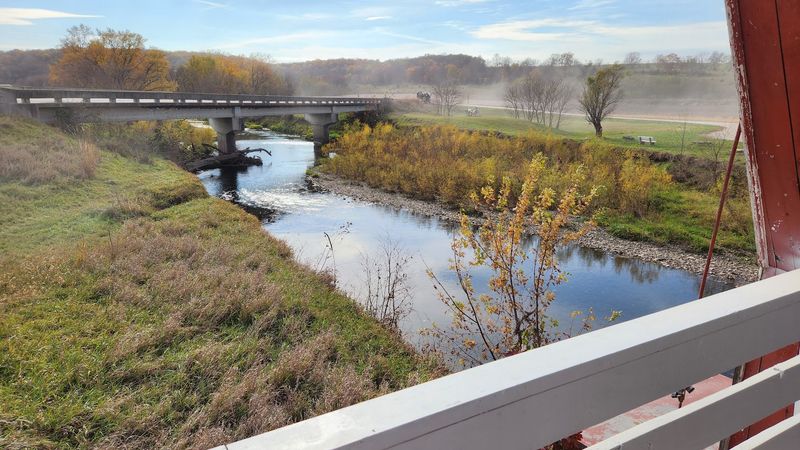
A spot just beside the bridge lets you look straight down the creek, and wildlife sightings are common.
Deer, birds, and the general soundtrack of a healthy rural waterway make the whole stop feel more like a nature break than a history lesson.
On a day when the river is running well after recent rain, the water below moves with enough energy to actually hear from the bank.
Wildlife and Nature Along the North River
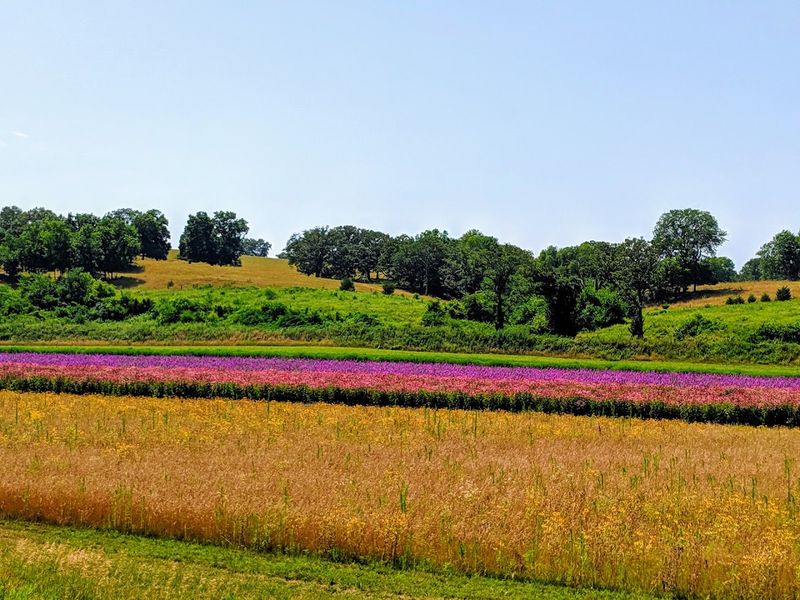
The North River corridor around Hogback is one of those places where nature does not need any help being interesting. Deer are common sightings, especially in the early morning and evening hours.
A doe spotted near the riverbank is the kind of quiet moment that can turn a quick bridge stop into something more memorable.
The wildflower fields behind the bridge bloom seasonally and add color to an already textured landscape. Bird activity is consistent throughout the warmer months, and the river itself supports enough wildlife to keep the soundscape lively.
If the North River has received recent rainfall, the water below may run with enough movement to add sound and energy to the scene.
The combination of flowing water, open fields, and mature tree cover creates a habitat that feels genuinely layered. You can spend a surprising amount of time simply standing near the bank and watching the water move.
It is the kind of stop that stretches from five minutes to forty without you noticing the difference. A good pair of walking shoes and a camera make this a much fuller outing.
The History Behind the Name
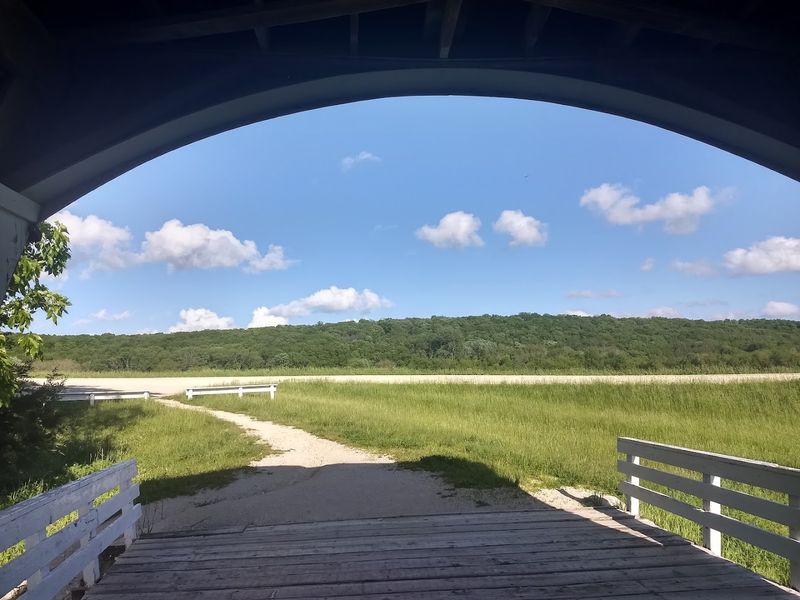
Most people assume the bridge got its name from its shape or some quirky local legend.
The actual answer is more geological than dramatic: Hogback refers to a limestone ridge near the bridge that has the long, narrow profile of a hog’s back when seen from a distance.
That kind of practical, no-nonsense naming is very Iowa.
The ridge itself is a natural feature of the Madison County landscape, shaped over thousands of years by the same glacial and erosional forces that carved out the river valley below.
Standing near the bridge and looking toward the ridge, you can understand exactly why early settlers chose that name without needing a history book to explain it.
The builders, Harvey P. Jones and George K.
Foster, completed the structure in 1884, making Hogback one of the youngest surviving original covered bridges in Madison County.
That timeline matters because it means the bridge represents a later chapter of covered bridge construction in the region.
The 1992 renovation helped preserve the historic structure, so what you see today still carries the character of the bridge Foster and Jones finished in the nineteenth century.
Why You Cannot Drive Through It
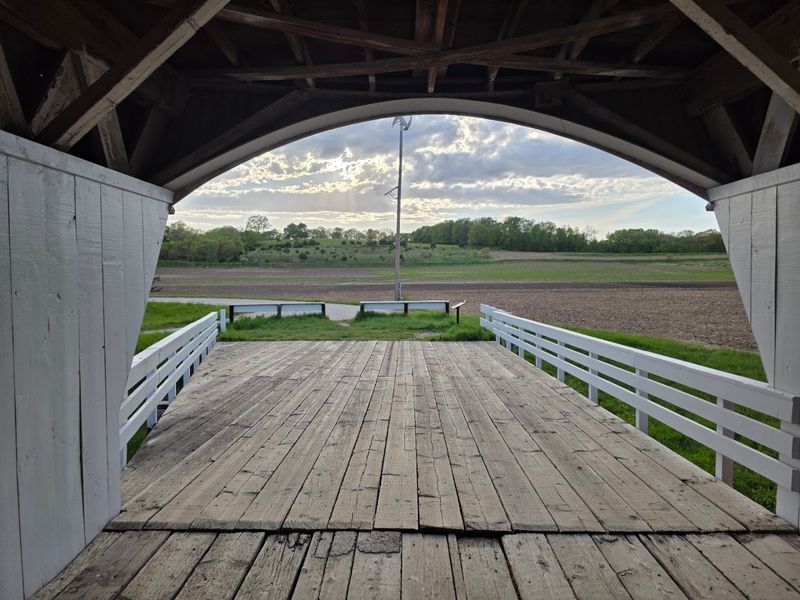
One thing that catches first-time visitors off guard: you cannot drive through Hogback the way you might expect.
The bridge is closed to vehicle traffic, which is actually a preservation decision that makes a lot of sense when you are standing next to 140-year-old timber framing.
What you can do is drive around to the opposite side of the bridge to see it from both ends. That layout is genuinely useful for photographers who want multiple angles without backtracking, and it means the bridge gets examined more carefully than if everyone just rolled through and kept going.
The walk across on foot is short but gives you a completely different sense of the structure’s scale and craftsmanship.
The no-drive rule also keeps the immediate area quieter and slower, which fits the whole mood of the place. Nobody is revving an engine or trying to squeeze a wide truck through a 19th-century portal.
The bridge just sits there, solid and unbothered, doing exactly what a well-preserved landmark should do: letting people look at it carefully without rushing.
That patience is built into the visit whether you planned for it or not.
Photography Tips for Getting the Best Shots
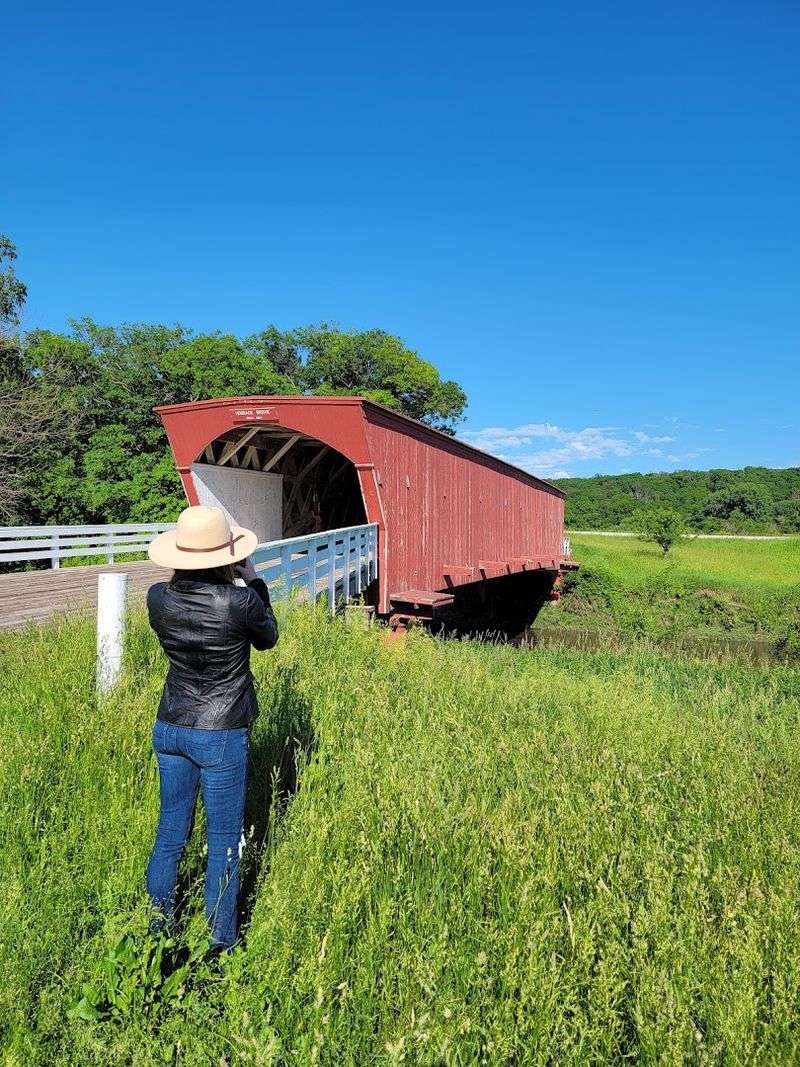
Golden hour at Hogback is genuinely something to plan around.
The late afternoon light hits the western portal of the bridge at an angle that turns the weathered wood from brown to amber, and the wildflower fields behind the structure pick up the warm tones in a way that makes even a phone camera look capable.
The interior lattice pattern creates natural framing opportunities. Position yourself at one end and shoot through the tunnel toward the opposite portal, and the geometric lines do most of the compositional work for you.
Early morning visits add a layer of mist over the river on cool days, which gives wide shots a soft atmospheric quality without any editing required.
The creek-side angle just beside the bridge is the shot most people miss. Get low near the bank and include both the bridge and its reflection in the water for a composition that shows the full structure in context.
Bring a wide lens if you have one, because the surrounding landscape rewards wider framing more than tight close-ups.
Arrive before 9 a.m. or after 5 p.m. to avoid flat midday light and enjoy the place with fewer other people around.
Practical Tips Before You Make the Drive
A few logistics are worth knowing before you load up the car. There are no public restrooms at the bridge, so plan accordingly before leaving Winterset.
The parking area is gravel and informal, but there is enough space for several vehicles without any real congestion issues on a normal day.
The roads leading in are unpaved, so after significant rainfall they can get muddy and rutted. A call to the Madison County tourism office before visiting during wet spring months is not a bad idea.
In dry summer and fall conditions, the gravel roads are easy to navigate in any standard vehicle, though the dust can be significant on windy days.
Admission is free, and there are no gates, fences, or timed entry requirements. The area is open year-round, though winter visits require appropriate footwear for icy gravel.
Deer are most active at dawn and dusk, so those are the best windows if wildlife sightings are on your list. Cell service can be spotty on the approach roads, so download your directions before you leave town rather than relying on a live GPS signal to get you there.
The Broader Madison County Covered Bridge Tour
Hogback is one of six covered bridges still standing in Madison County, and doing the full tour in a single day is absolutely achievable with a little planning.
The bridges are spread across the county’s rural roads, each one sitting in a slightly different landscape setting, which keeps the tour from feeling repetitive even after the third or fourth stop.
The Madison County Chamber & Welcome Center in Winterset is a logical starting point. It provides maps, visitor information, and helpful context so you are not improvising on unfamiliar gravel roads.
Winterset itself is worth a slow walk-through: the town square has a certain small-town Iowa character that pairs well with a day of countryside exploring.
John Wayne was born in Winterset, and his birthplace museum is open to the public nearby, which gives the day a second distinct thread beyond the bridges. Combining the bridge tour with a stop at the birthplace and a meal in town turns a half-day outing into a full one.
Each of the six bridges has its own personality, but most people who complete the whole circuit tend to name Hogback as the one that stayed with them longest.
Why Hogback Stands Out Among the Six
Ask a dozen people which of the Madison County bridges is their favorite and a notable share of them will say Hogback without much hesitation.
Part of that loyalty comes from its relative remoteness. The gravel road approach filters out casual passers-by and leaves the place for people who actually sought it out.
The setting also helps. The combination of the wildflower fields, the freely flowing North River, the limestone ridge visible in the distance, and the mature tree canopy gives Hogback a more layered environment than some of the other bridges, which sit in more open or developed surroundings.
The wildlife soundtrack alone sets it apart on a calm morning.
The interior messages written by past visitors add a human archive that feels organic rather than managed. These are not official plaques or interpretive panels.
They are ordinary people leaving small marks on a structure that has outlasted almost everything else from their era. Hogback holds its history lightly, without making a performance of it.
That combination of natural setting, solid craftsmanship, and unforced character is exactly what makes a country road stop worth the dusty drive out and the slow walk back.