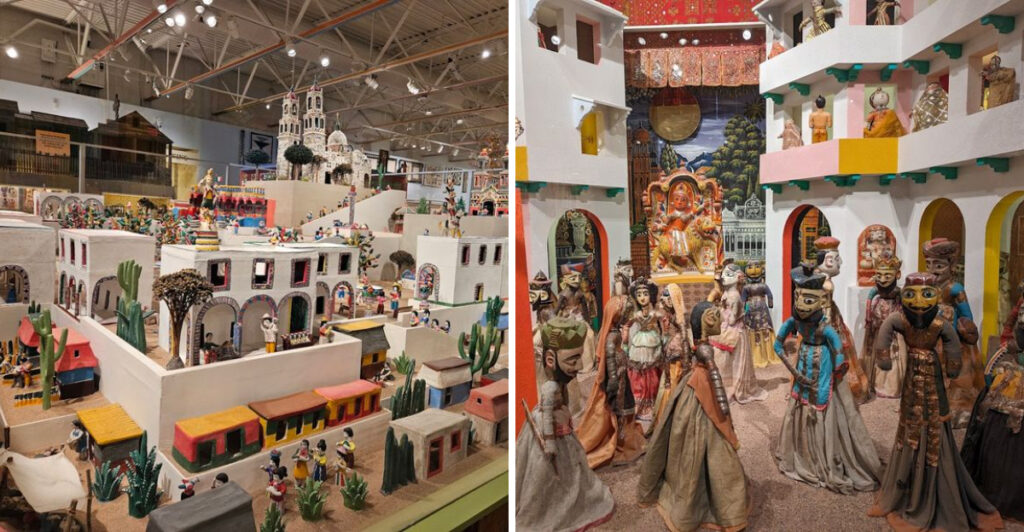
You could spend an hour here and still feel as though you only saw the beginning. That is what happens when one building holds thousands of handmade objects connected to cultures around the world.
This New Mexico museum fills its galleries with miniature villages, carved figures, bright textiles, masks, toys, and scenes so detailed that they seem to move. The effect is immediate.
You stop walking quickly. You lean closer.
You begin noticing tiny gestures and patterns that would be easy to miss anywhere else. Founded in 1953, the institution now houses the world’s largest collection of international folk art, representing more than 100 countries.
Even with that enormous scale, the visit never feels cold or overwhelming. Each object brings the focus back to a maker, a community, and a tradition.
It is less like checking displays off a list and more like following one fascinating story into the next.
A Kaleidoscope Of Color Fills The Galleries
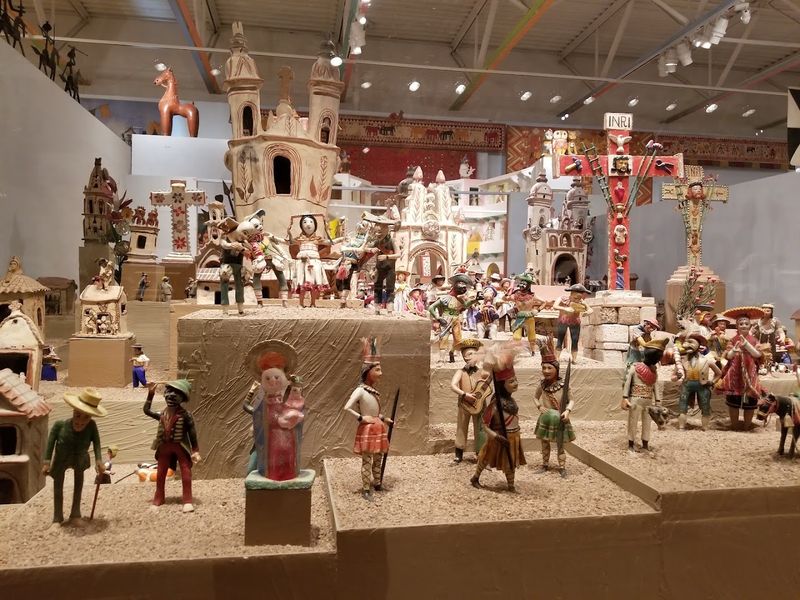
Some places earn their reputation with quiet dignity. This museum earns its with an absolute riot of color that hits you the moment you walk through the door.
Every gallery feels like someone turned the saturation dial all the way up and forgot to turn it back down, and honestly, that is a wonderful thing.
The exhibitions pull from cultures around the globe, so the colors never become monotonous. You might move past vividly painted Mexican ceramics before stopping at intricately embroidered Central Asian textiles, each display competing cheerfully for your attention.
The Girard Wing, in particular, is frequently described as brightly colored, and that description barely scratches the surface of what you actually see there.
What strikes me most is how intentional all of it feels. None of this vibrancy is accidental.
Artists from over 100 countries poured their cultural identities into every brushstroke, dye, and carved detail. New Mexico is home to many extraordinary places, but few pack this much visual energy under one roof.
Every direction you look, another burst of color pulls your eye somewhere new and surprising at the Museum of International Folk Art at On Museum Hill, 706 Camino Lejo, Santa Fe, NM 87505.
Miniature Worlds Stretch Across Enormous Displays
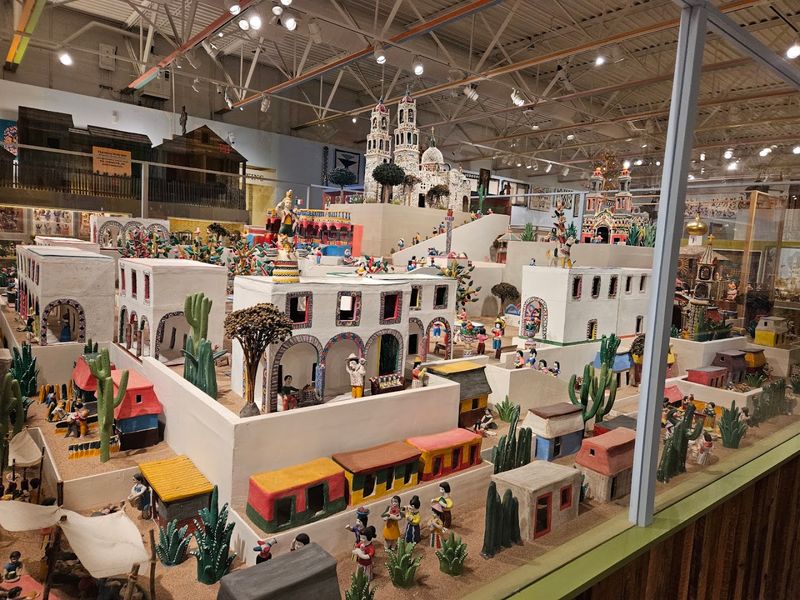
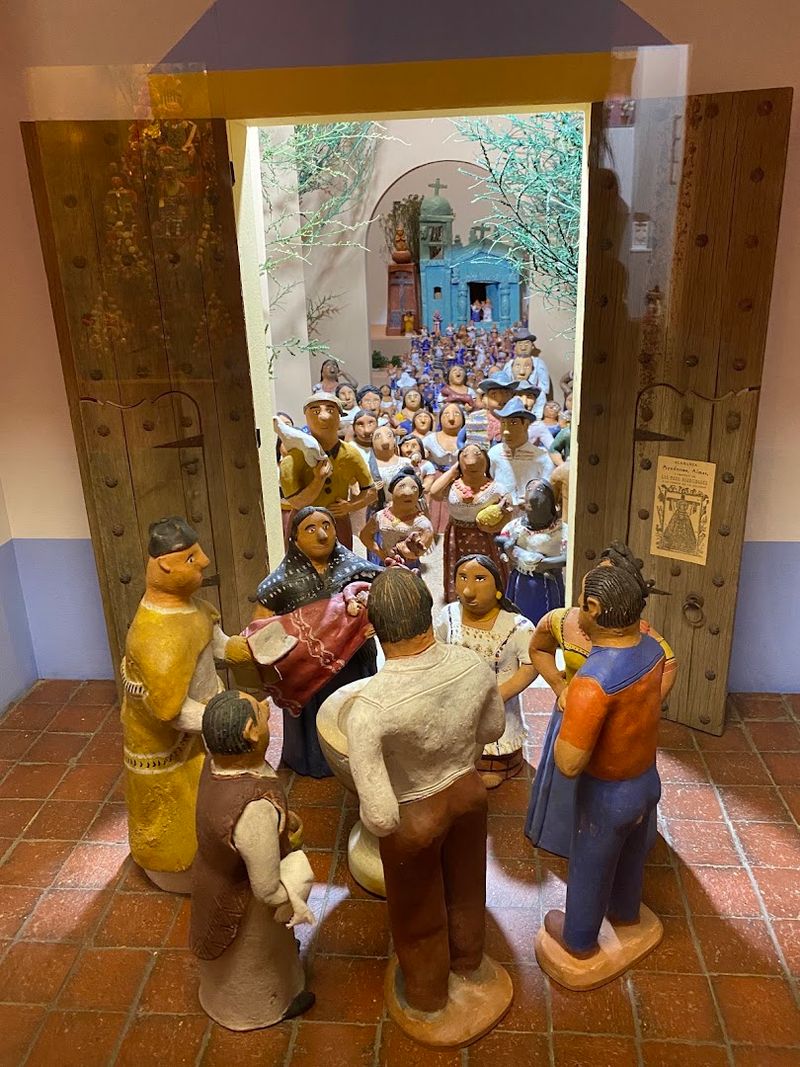
Not everything spectacular needs to be large. Some of the most jaw-dropping moments in this museum happen when you press your face close to a display case and realize you are looking at an entire village, rendered in painstaking miniature detail, with figures the size of your thumb going about their daily lives.
The “Multiple Visions: A Common Bond” exhibit inside the Girard Wing is where this magic really concentrates. The space itself is warehouse-sized, which creates a wonderfully strange contrast with the tiny objects filling it.
Miniature villages, masks, puppets, and dolls are arranged into elaborate scenes that use figures of varying sizes to create the illusion of depth and distance, making each display feel genuinely three-dimensional.
Here is a detail that always surprises visitors: what you see on display represents only about ten percent of the full Alexander Girard collection. The sheer scale of what is hidden away is almost impossible to wrap your head around.
I spent nearly an hour in just one section of this exhibit, and I still felt like I had only scratched the surface of what was tucked inside those magnificent cases.
Handcrafted Figures Bring Global Traditions To Life
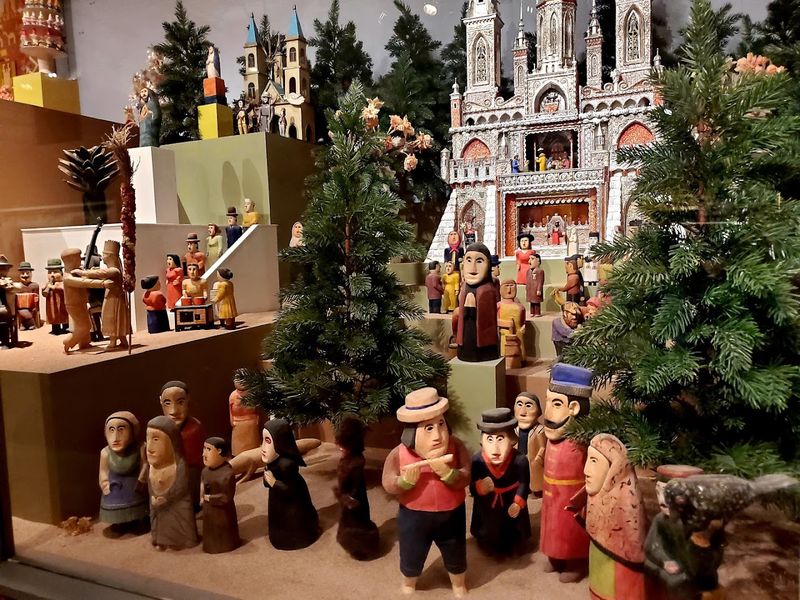
Folk art is, at its core, a conversation between a maker and their community. Every carved toy, painted mask, and hand-formed ceramic figure in this museum carries the fingerprints of that conversation, literally and figuratively.
The craftsmanship on display here redefines what most people think of when they hear the phrase “folk art.”
Current exhibitions spotlight several unexpected traditions during a visit right now. The Art Underground: Fantasy Coffins of Ghana challenges familiar assumptions about funerary art.
Alebrijes: A Linares Family Tradition presents fantastical hand-painted creatures that blend animal forms into wild hybrid sculptures. I Am Clay: Acoma Life in Figures brings the rich culture of New Mexico’s own Pueblo communities into vivid, tangible focus.
What ties all of these wildly different objects together is the human hand behind each one. No two pieces are identical, because no two makers are identical.
The museum celebrates that truth with every display it builds. You walk away not just having looked at objects, but having connected with the people and traditions that created them.
That feeling of human connection is what separates this collection from anything else I have encountered.
The Girard Wing Feels Like A World In Miniature
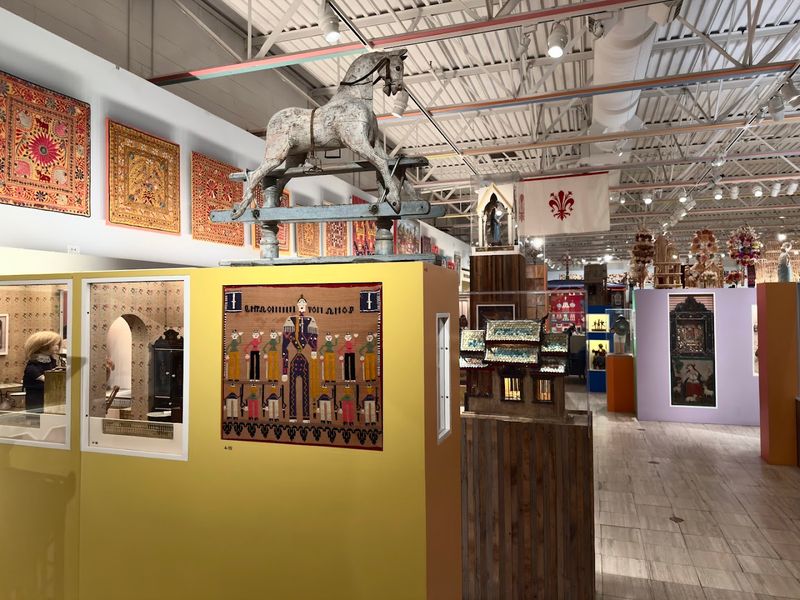
Alexander Girard was a designer with a collector’s obsession and a storyteller’s instinct. Over decades of travel to more than 100 countries, he gathered approximately 106,000 folk art objects, from toys and dolls to costumes, masks, textiles, religious folk art, paintings, and beadwork.
Then he donated them all and personally designed the exhibition layout himself.
The result is unlike any wing in any museum I have visited. The layout is deliberately maze-like and labyrinthine, full of nooks and unexpected corners that reward slow, curious exploration.
Objects from wildly different cultures and time periods sit side by side, not carelessly, but thematically, grouped to tell stories that transcend geography.
Small numbered labels correspond to a printed guidebook you pick up at the entrance, which means you are essentially navigating a massive, colorful puzzle where every piece has a story. I found myself doubling back repeatedly because I kept spotting something new tucked behind something I thought I had already seen.
The Girard Wing is the kind of place that genuinely changes how you think about the relationship between objects, culture, and human creativity, all within a single, brilliantly conceived room.
Floor-To-Ceiling Exhibits Reward A Closer Look
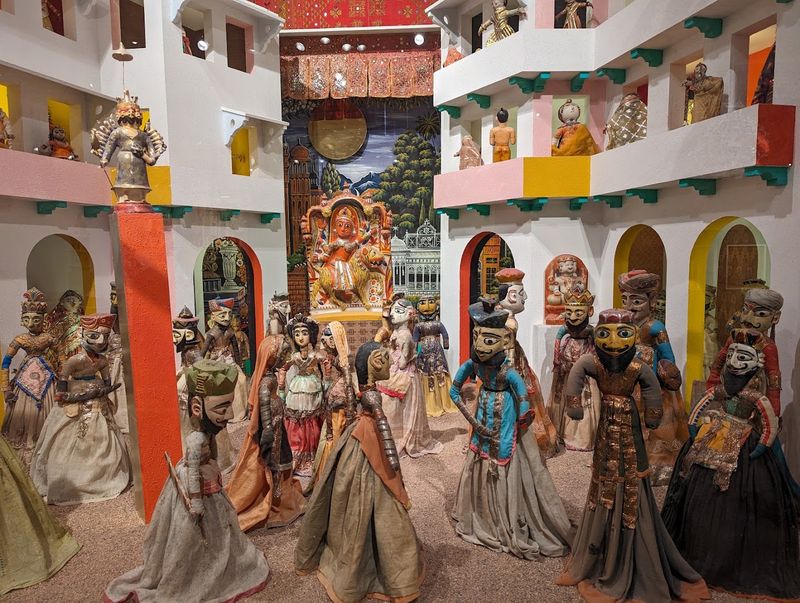
Most museums give each object breathing room, a pedestal, a placard, some empty wall space around it. This place operates on a different philosophy entirely, and the effect is genuinely thrilling.
Objects are stacked, layered, and arranged at every elevation from ankle height to well above your head, creating a visual density that demands your full attention.
Textiles hang suspended from the rafters, catching the light and adding movement to what might otherwise feel static. Religious statues perch above display cases, looking down at the chaos below with serene expressions that feel almost comic given the surrounding energy.
The meticulously assembled window-box displays at eye level reward the closest scrutiny, with tiny details revealing themselves only when you lean in.
What I appreciate most about this approach is how it mimics the way culture actually works: layered, overlapping, never quite contained by clean boundaries. You cannot absorb everything in one pass, and the museum seems to know that.
Return visitors consistently report spotting things they completely missed on previous trips. That sense of endless discovery, the feeling that there is always one more detail hiding just out of sight, is what keeps people coming back to this extraordinary place.
Bold Textiles Add Texture To Every Room
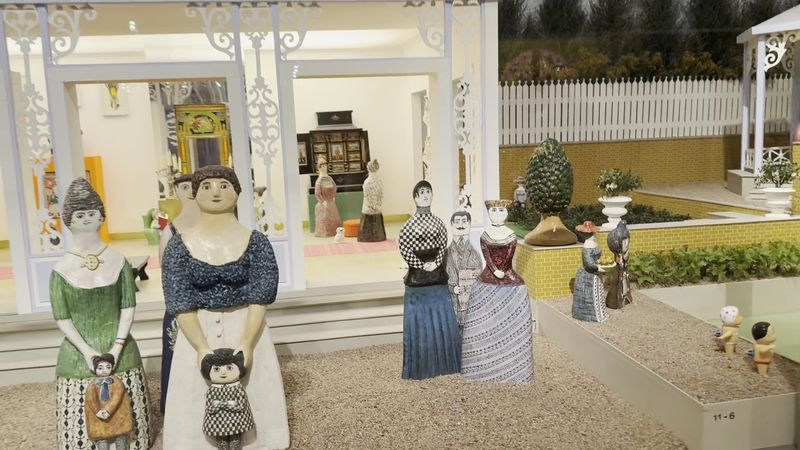
Fabric holds memory in ways that stone and metal cannot quite match. A woven pattern can carry the history of a community, a region, or a generation, and the textile collection here makes that point with stunning clarity.
The Neutrogena Collection alone, donated by Lloyd Cotsen, contains 2,600 exceptional textiles and other objects from cultures spanning the globe and reflecting many centuries of creativity and exchange.
The range is genuinely breathtaking. The museum’s broader textile holdings include clothing, dress, beadwork, weaving, and other fiber traditions from many regions, each representing a distinct tradition of craft and meaning.
Objects connected to communities across Africa, Asia, Europe, Latin America, North America, and Oceania are represented throughout the collection.
New Mexico has long been a crossroads of textile traditions, and this museum honors that legacy by placing local weaving traditions in conversation with global ones. Its Textiles and Dress collecting area explores not just the visual beauty of these pieces but the cultural significance embedded in every thread and knot.
Spending time with these textiles feels less like looking at objects and more like reading letters written in a language made entirely of color and pattern.
Unexpected Details Appear Around Every Corner
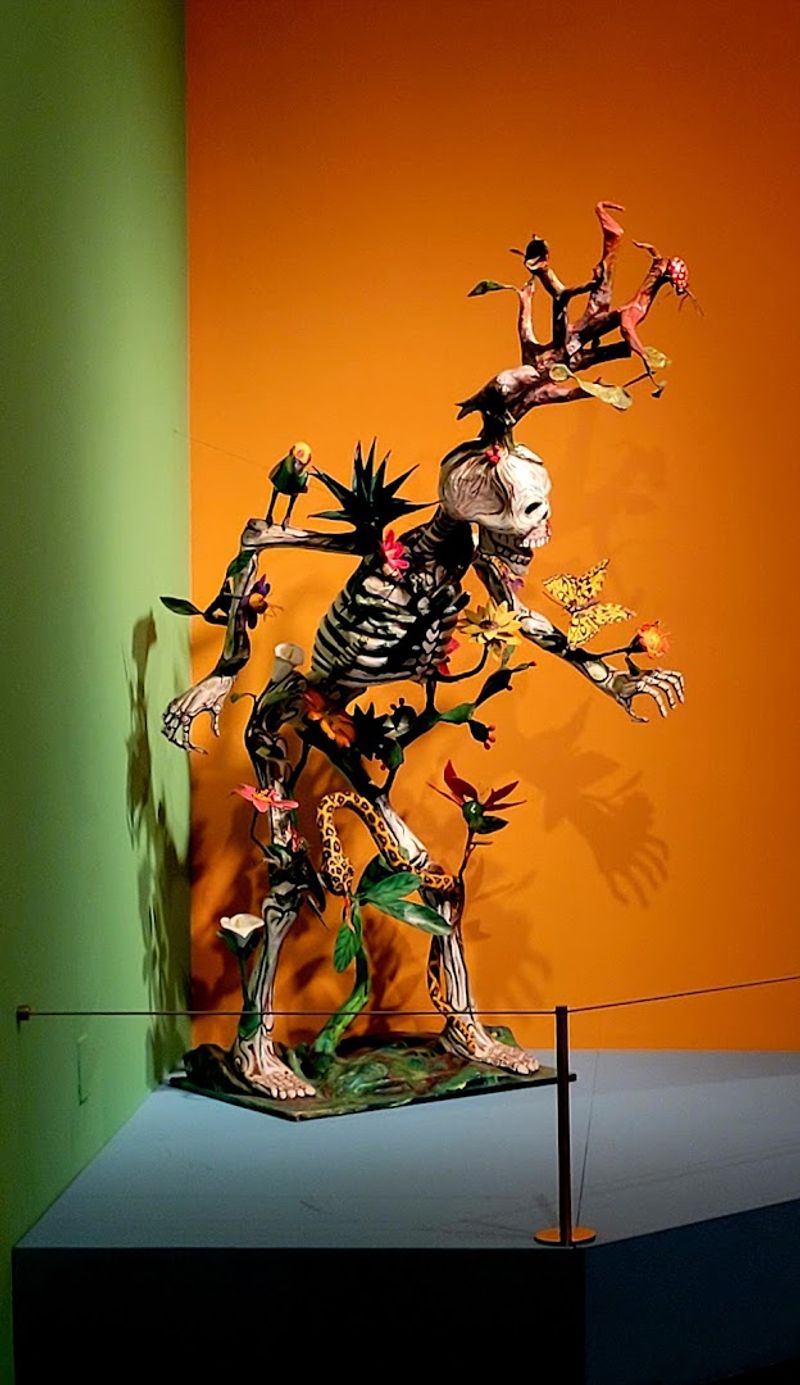
Part of what makes this museum genuinely addictive is the way it hides things in plain sight. The sheer volume of objects on display means that your eye can never take in everything at once, and the arrangement is deliberately designed to reward the curious visitor who slows down and really looks.
Alexander Girard had a gift for grouping objects in ways that feel playful and purposeful at the same time. Dioramas and retablos throughout the collection are built with exceptional narrative detail, tiny scenes that tell stories if you are willing to spend a few minutes decoding them.
Whimsical elements pop up unexpectedly, a miniature figure doing something absurd tucked behind a row of more serious objects, a tiny scene that makes you laugh out loud before you even fully process what you are seeing.
Repeat visitors consistently describe the experience of returning and finding entirely new things they had overlooked before. That is not a quirk of memory.
The collection is simply too rich and too layered for any single visit to exhaust. Every corner turned feels like a small reward, a detail crafted by human hands somewhere in the world that somehow ended up here, waiting specifically for you to notice it.
Museum Hill Views Extend Beyond The Galleries
A great museum earns its reputation from what is inside, but the setting of this one adds a whole extra layer to the experience. Perched on Museum Hill in Santa Fe, the building sits at an elevation that opens up sweeping views of the Sangre de Cristo Mountains, the kind of scenery that makes you stop mid-thought and just stare for a moment.
Museum Hill is a genuine cultural campus. Three other major institutions share the hill: the Museum of Indian Arts and Culture, the Nuevo Mexicano Heritage Arts Museum, and the Wheelwright Museum of the American Indian.
The Santa Fe Botanical Garden offers a peaceful outdoor counterpoint to the richly packed interiors, with local flora and walking paths that invite a slower pace. The Milner Plaza Labyrinth adds another quiet, contemplative spot to the mix.
After hours inside surrounded by the art and craft of over 100 countries, stepping outside and looking out over that mountain landscape puts everything in perspective. New Mexico has a way of making the grand feel intimate and the intimate feel grand, and Museum Hill captures both qualities perfectly.
You can find all of this waiting at the Museum of International Folk Art.