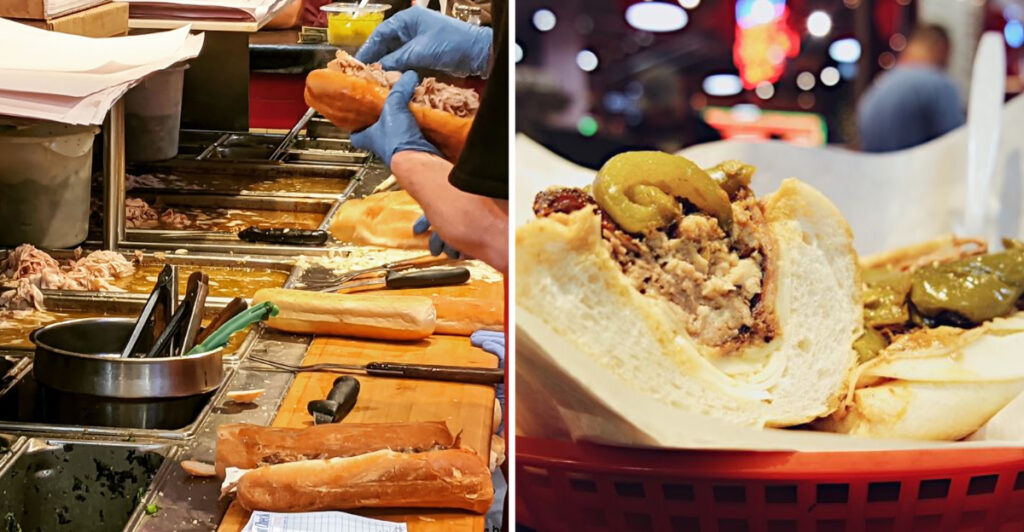
Your napkin is about to get promoted to safety equipment. Inside Philadelphia’s busiest market, one roast pork sandwich arrives stacked and uninterested in your table manners.
Grab it with two hands, and lean forward.
Pennsylvania already has a sandwich celebrity problem, but this one skips the costume and wins with muscle.
No cheese waterfall. No stunt topping. Just pork, greens, and a wrapper doing overtime.
The line lets you rehearse confidence, and the first bite cancels rehearsal.
Soon you are chasing runaway juices, guarding the last corner, and wondering why lunch has become a contact sport.
Pennsylvania brought the evidence, and your appetite is the jury. Are you ready to risk the shirt for the sandwich that keeps winning the case?
A South Philadelphia Butcher Shop Started The Story
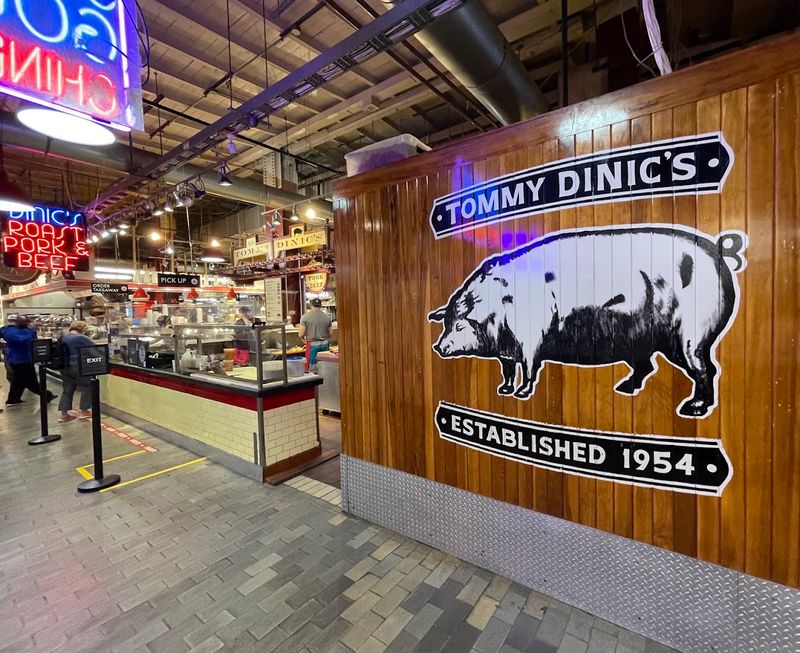
Long before anyone lined up inside Reading Terminal Market, Gaetano Nicolosi was cutting meat in South Philadelphia.
He opened Nicolosi’s butcher shop in 1918 and raised his sons above the business.
A large oven in a garage behind the shop handled specialty roasts for customers, giving the family an early lesson in what time, seasoning, and careful cooking could do to a substantial cut of meat.
By 1954, the next generation began selling roast pork and roast beef sandwiches from that garage. The idea was practical, delicious, and apparently impossible for the neighborhood to ignore. A butcher shop side offering had found enough fans to become its own destination.
In 1977, Tommy Nicolosi and his cousin Franky DiClaudio combined parts of their names and opened DiNic’s at 10th and Oregon. The sandwich business had officially stepped out from behind the butcher counter, although the family approach to meat never left it.
The roast pork did not begin as a food trend. It began as a family answering the neighborhood with something hot, generous, and worth coming back for.
Reading Terminal Market Keeps The Counter In Constant Motion
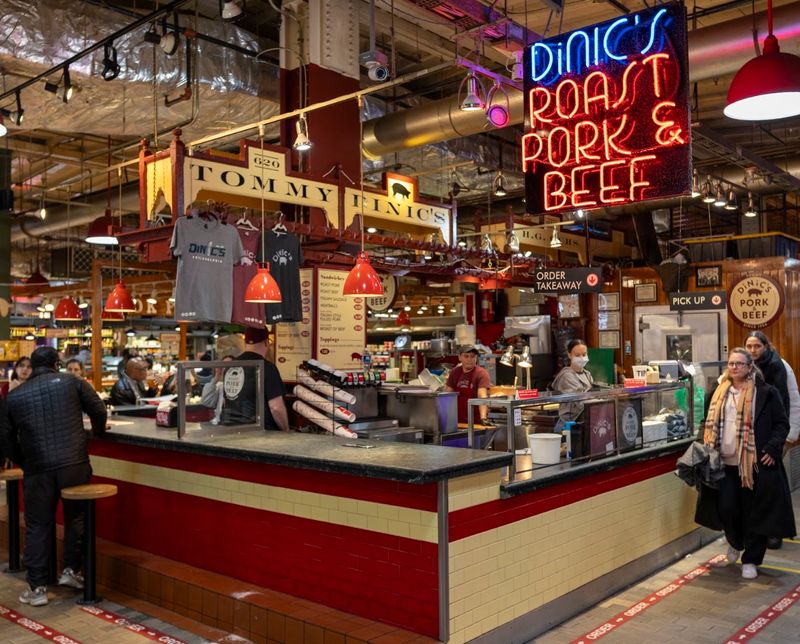
The market does not ease you gently into lunch. It surrounds you with bakery cases, produce stalls, sizzling grills, and several excellent reasons to change your mind.
Tommy moved DiNic’s into Reading Terminal Market in 1980, and the counter now operates at map location B5. The setting suits a sandwich built for momentum.
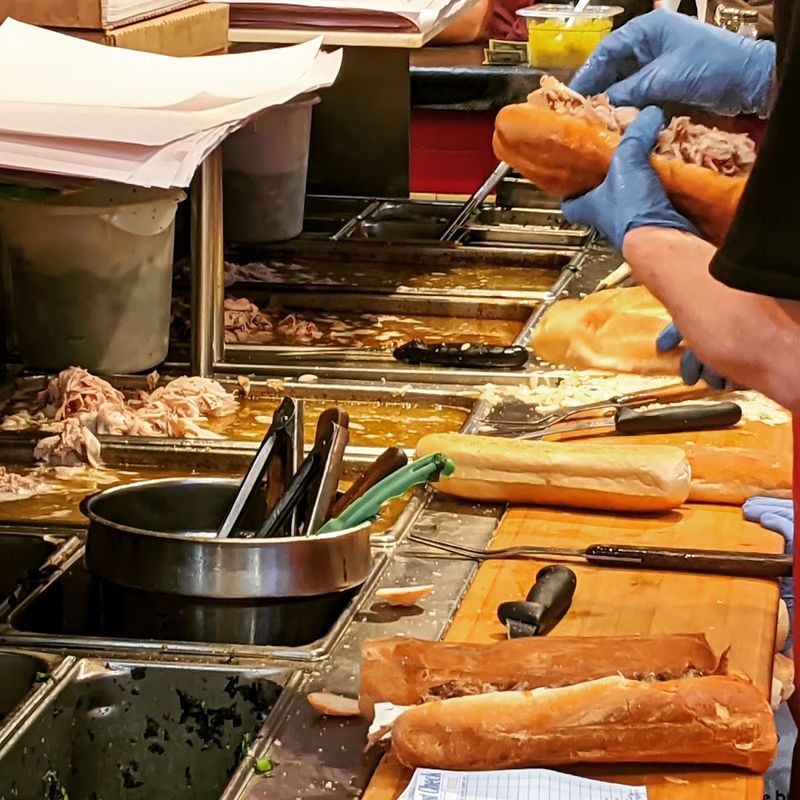
Orders move across the counter, trays disappear toward shared tables, and new customers arrive before the previous group has finished unwrapping lunch.
You can find DiNic’s at 51 North 12th Street, Philadelphia, Pennsylvania. Once inside the market, let the line guide you toward the roast pork.
Decide on toppings before reaching the register. Sharp provolone and broccoli rabe create the signature combination, but the pork can also stand on its own when you want to taste the seasoning and juices without a louder supporting cast.
The market also makes comparison tempting, but resist filling up before the main event. Browse first, eat the roast pork while it is hot, and return to the surrounding counters afterward if your appetite still has opinions.
Reading Terminal gives the sandwich a lively stage, but DiNic’s has no trouble keeping the crowd’s attention.
Slow-Roasted Pork Makes Every Layer Earn Its Place
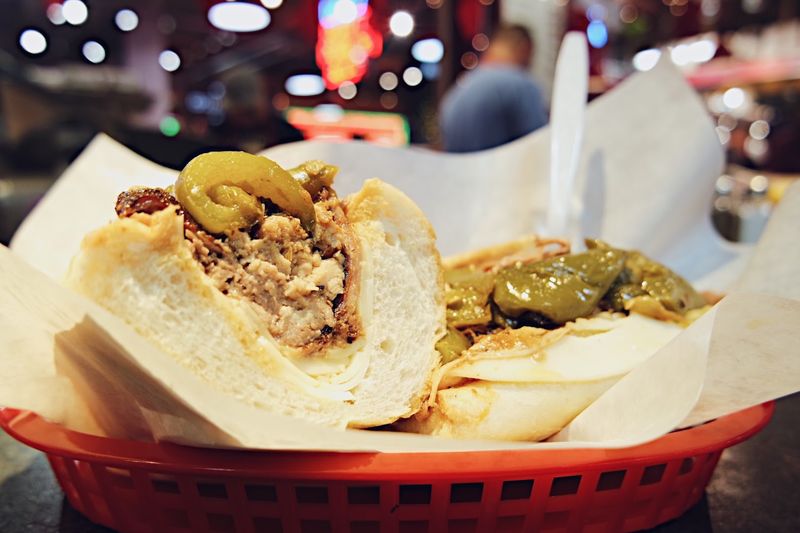
What turns roasted pork into a sandwich people remember years later? Time does most of the heavy lifting, but seasoning knows how to make the result count.
DiNic’s uses Italian-seasoned pork that is slow-roasted, sliced thin, and warmed in rich juices before it reaches the roll. The meat carries garlic, herbs, pepper, and the concentrated flavor of the roast without needing a thick coating or complicated garnish.
Take the first bite before adding anything extra. Let the pork, gravy, bread, cheese, and greens introduce themselves in the order the sandwich intended. A rushed bite may taste good, but a slower one explains why this counter has stayed busy for decades.
The Travel Channel featured DiNic’s on Man v. Food and Best Sandwich in America. In 2012, its roast pork sandwich won the network’s Best Sandwich in America competition, bringing even more travelers to counter B5 inside Reading Terminal Market.
The recognition added fame, but the sandwich still succeeds for the oldest reason in food. The pork tastes as if somebody gave it enough time.
Sharp Provolone And Broccoli Rabe Keep Richness In Check
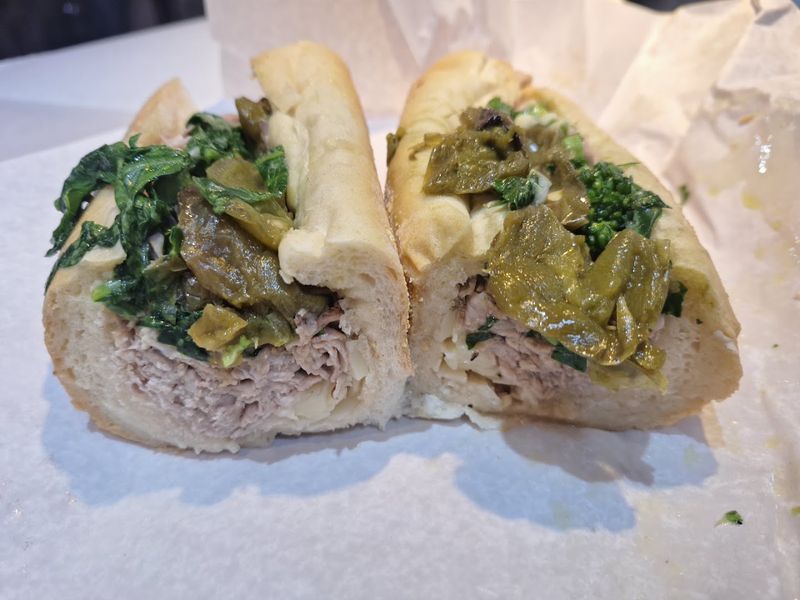
Pork and bread could carry lunch alone, but Philadelphia prefers a sharper finish.
Sharp provolone brings a salty, assertive bite that refuses to disappear beneath the meat. Instead of melting into a mild blanket, it pushes back against the roasted richness and makes each mouthful taste brighter.
Broccoli rabe works from another direction. Its garlicky bitterness cuts through the pork and cheese, adding enough green bite to prevent the sandwich from becoming one long, heavy note.
First-timers may notice the bitterness immediately, then miss it the moment the next bite contains less.
Order the classic combination when you want to understand the sandwich that earned national attention. Put the cheese beneath the hot pork so it softens, then let the broccoli rabe sit on top where its texture and flavor remain clear.
The result is not neat, delicate, or interested in behaving like a polite little lunch. It is balanced precisely because every ingredient arrives with an opinion.
Sarcone’s Rolls Handle The Juices Without Surrendering
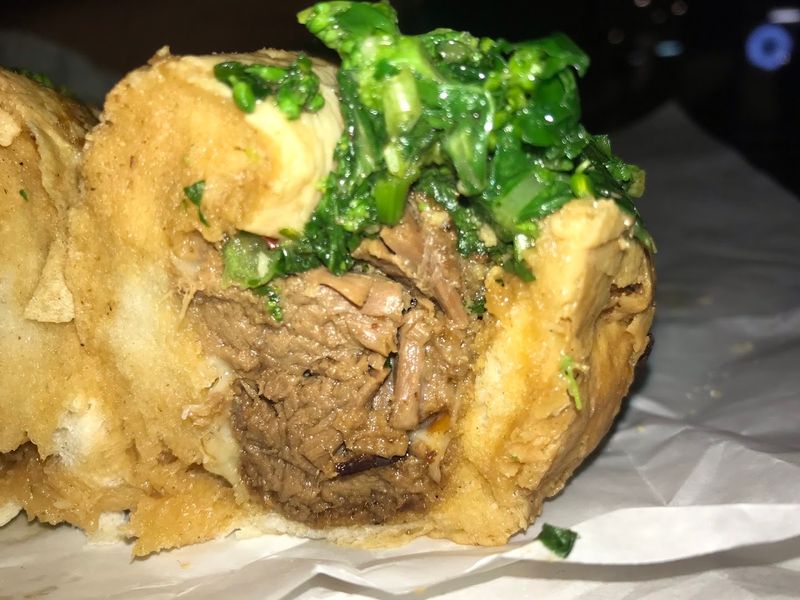
Bread receives little applause until it fails, and this sandwich gives a weak roll every opportunity to collapse.
DiNic’s uses Italian rolls from Philadelphia’s Sarcone’s Bakery. The crust brings enough structure to contain pork, gravy, cheese, and greens, while the interior absorbs flavor without instantly turning into paste.
That balance matters because the pork is warmed in its juices. A roll that resisted everything would taste dry and disconnected, while one that softened too quickly would send lunch onto the wrapper before you reached the middle.
Eat the sandwich soon after ordering. The juices will continue working into the bread, which is excellent for flavor and less helpful for anyone planning a long photo session. Take the picture, put the phone away, and give the roll a fair chance to complete its assignment.
Sarcone’s does not steal the scene. It performs the harder job of keeping the entire production on the table.
Roast Beef Meatballs And Sausage Reward A Return Visit
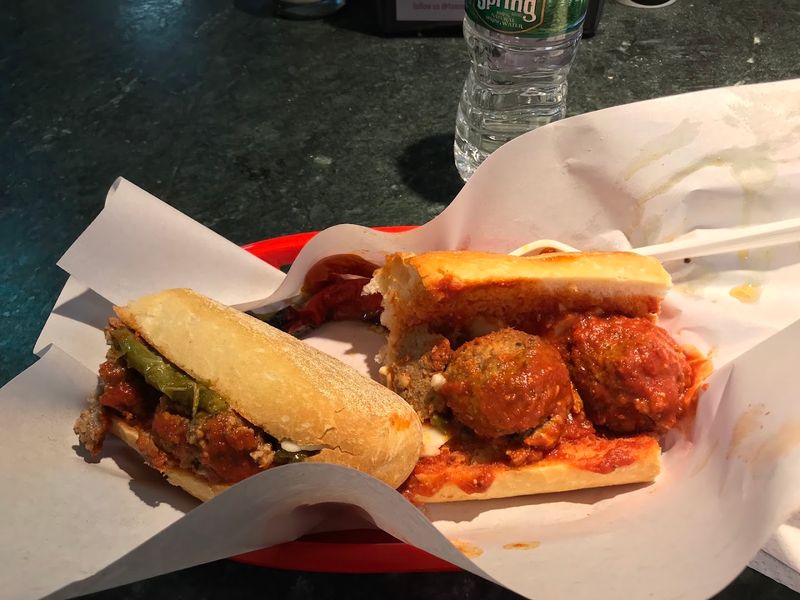
The roast pork may dominate the first order, but the traditional menu has several ways to complicate the second one.
Roast beef follows the same family connection to slow-cooked meat that shaped the original business. House-made meatballs bring red-sauce comfort, while Italian sausage gives the counter another direct link to the Nicolosi family’s butcher-shop roots.
Bring a companion and split two sandwiches when choosing only one seems unreasonable. Half a roast pork beside half a roast beef lets you compare the meats without giving up the classic, while a meatball sandwich changes the table from roast juices to sauce and cheese.
The focused menu helps every option make sense. DiNic’s does not chase unrelated dishes or bury its identity beneath endless categories. The counter stays centered on Italian sandwiches made with meat that receives serious attention.
If your table orders several sandwiches, label the wrappers before opening them. Roast pork juice has a talent for making every package look equally promising once the paper begins to soften.
The first visit may belong to pork, but the traditional lineup makes sure the next one already has a purpose.
Brisket And Italian Pulled Pork Carry The Family Forward
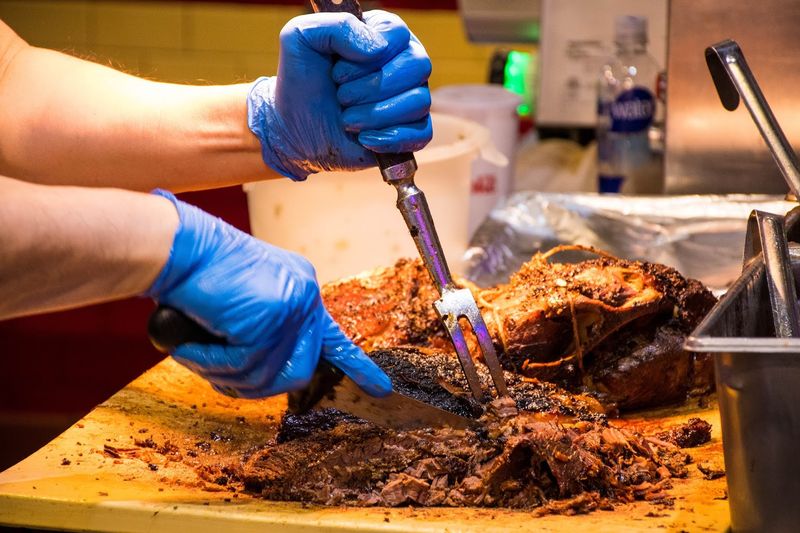
Tradition stays stronger when the next generation gives it something useful to do.
Tommy Nicolosi now runs the Reading Terminal counter with his son Joey, making DiNic’s a fourth-generation family business.
Joey expanded the sandwich lineup with slow-roasted brisket of beef and Italian-style pulled pork while keeping the old-world, from-scratch approach at the center.
Brisket brings a deeper beef character and hand-carved texture. Italian pulled pork moves away from the signature sandwich’s thin slices, giving you softer strands and another expression of the same patient roasting philosophy.
These additions do not turn the menu into a reinvention project. They show how a family business can keep moving without treating its history like clutter that needs clearing away. The new sandwiches speak the same language, only with different cuts and textures.
Joey did not replace the counter’s memory. He gave regulars another reason to make one.
One Sandwich Still Holds More Than A Century Of Momentum
A famous sandwich can become a checklist item, but DiNic’s feels far more alive than a meal eaten only for bragging rights.
The counter carries a story that began with a South Philadelphia butcher in 1918, moved into a garage sandwich operation in 1954, gained the DiNic’s name in 1977, and reached Reading Terminal Market in 1980.
Four generations later, the family is still carving, roasting, serving, and finding room for the next idea.
Go for the roast pork with sharp provolone and broccoli rabe on your first visit. Let the juices soften the roll, accept that one napkin will not be enough, and take a moment to notice how bitter greens, tangy cheese, seasoned meat, and sturdy bread keep correcting one another.
Then look around. The market is moving, the line is rebuilding, and another customer is about to discover why Philadelphia remembers this sandwich so clearly.
Tommy DiNic’s turns lunch into the kind of city memory that returns every time someone says roast pork, sharp provolone, and one more sandwich for the road.