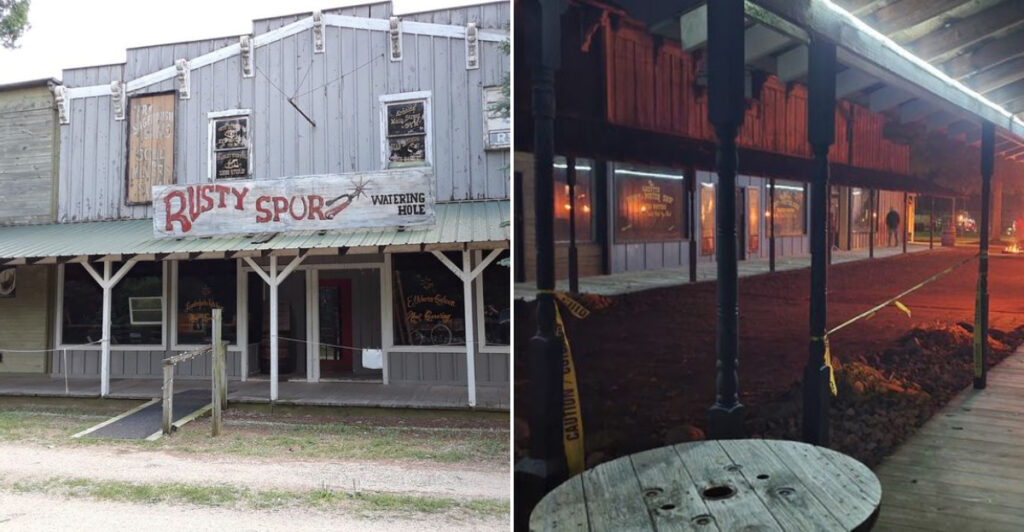
This unlikely comeback is riding into town with more plot twists than a crooked card game.
Once left gathering dust, this old frontier playground has kicked open the saloon doors again. The cowboys may have clocked out, but the property clearly refused to stay buried.
Michigan rarely gets mistaken for the Wild West, which makes this resurrection even more entertaining. Here, abandoned buildings found new jobs, ghosts joined the payroll, and nostalgia strapped on fresh boots.
You need no ten-gallon hat to appreciate a place that survived its own final curtain.
It traded the long history for fun overnight stays and seasonal scares. And we are so happy about it.
Call it a proper comeback with true grit. Call it the ultimate re-horse-al.
Either way, this former amusement park escaped the ghost-town sentence without asking anyone’s permission.
It returned with enough frontier spirit to make any outlaw jealous and history reconsider the verdict.
The Wild West Origin Story Behind It All
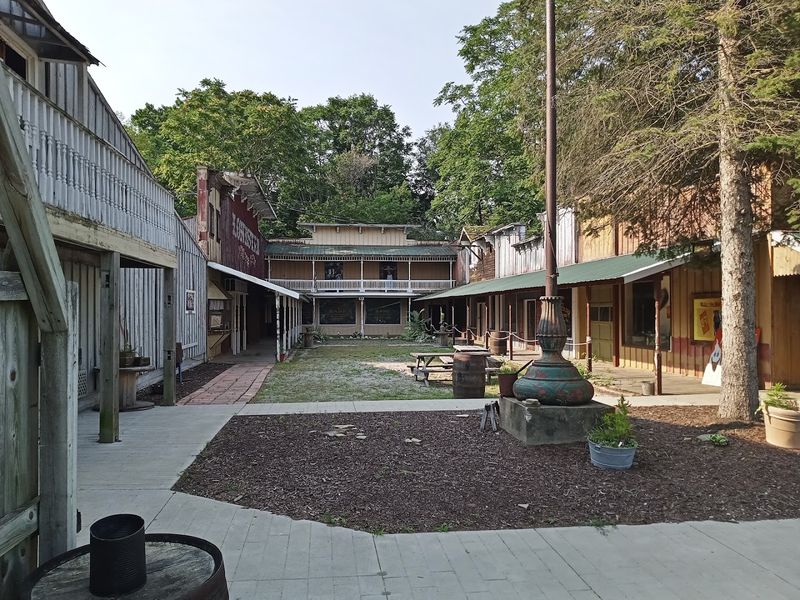
I’m not joking when I say Stagecoach Stop USA rode into town during the 1970s.
It was when western entertainment still had audiences shouting yeehaw. Built as a family frontier attraction, it quickly saddled up for its own Wild West adventure.
The property recreated a small frontier town with wooden storefronts, costumed characters, and staged entertainment. Families could spend hours moving between activities rather than watching everything from one seat.
Gold panning gave visitors a hands-on role in the experience. Cowboy skits and staged gunfights added noise, humor, and enough action to keep younger guests interested.
This was never a standard amusement park packed with towering rides. Its strength came from storytelling, themed buildings, and the chance to briefly play along.
Changing tastes and ownership shifts eventually slowed the operation. Parts of the property fell quiet, and the once-busy western town began looking like a forgotten movie set.
The buildings never completely disappeared, though. Their survival gave later owners something unusual to preserve, reuse, and introduce to a new generation.
That history now provides the strongest part of the comeback. The old town still has plenty of stories left in its boots.
Where Exactly This Place Calls Home
Onsted sits in southern Michigan, within Lenawee County and close to several small communities. It is not a crowded tourist center, which helps the property keep its unusual character.
US-12 runs directly through the area. The historic highway provides a simple route for travelers approaching from elsewhere in the state.
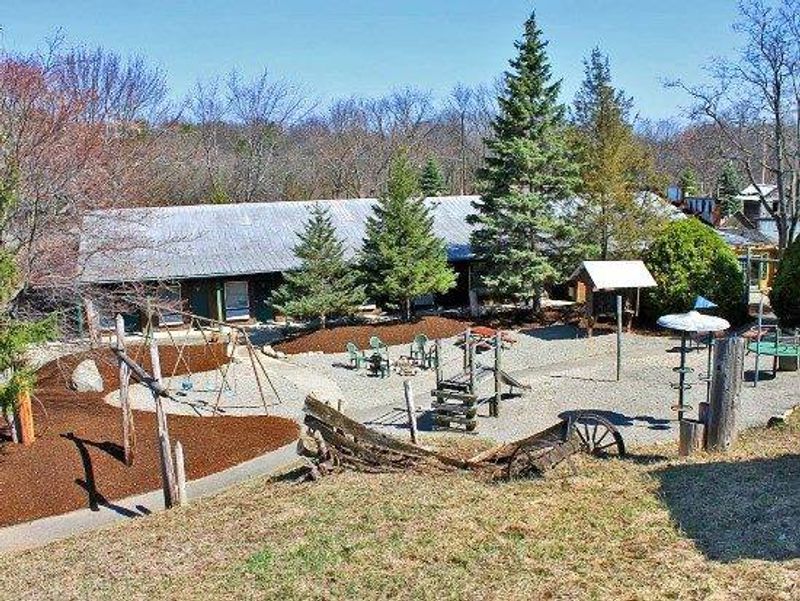
The property covers roughly 20 acres, giving the western buildings room to spread out. Open grounds, walking paths, a pond, and outdoor gathering areas fill the spaces between them.
That rural setting supports the old frontier theme without requiring much imagination. Modern storefronts and busy roads do not crowd the wooden town structures.
Nearby restaurants and shops keep practical necessities within a short drive. Visitors can enjoy the quieter location without becoming completely separated from town.
Stagecoach Stop USA and Cowboy Creek Lodge operate at 7203 US-12 in Onsted, Michigan.
Once the western buildings appear beside the highway, the destination becomes difficult to confuse with anything else. Subtlety was never part of the cowboy plan.
The Haunted Attractions That Put It Back On The Map
Seasonal Halloween programming helped draw fresh attention to the old amusement park property. The western town already provided a remarkably useful backdrop.
Haunting in the Hills has included several attractions rather than relying on one haunted room. Visitors move through indoor and outdoor sections built around different settings.
The haunted house uses themed spaces, lighting effects, fog, and performers to keep guests alert. Maze-like passages can also make the route less predictable.
A haunted train car adds a shorter attraction with its own enclosed setting. The narrow interior gives actors and effects very little distance to cover.
The forest walk takes the experience outdoors. Trees, darkness, and natural sounds handle part of the work before performers even enter the equation.
These attractions helped the property find a new audience, especially among teenagers and adults who enjoy seasonal Halloween events.
The park may have started with cowboy skits, but ghosts eventually discovered the available real estate. Apparently, even the afterlife appreciates western architecture.
Rustic Lodging With A Cowboy Theme
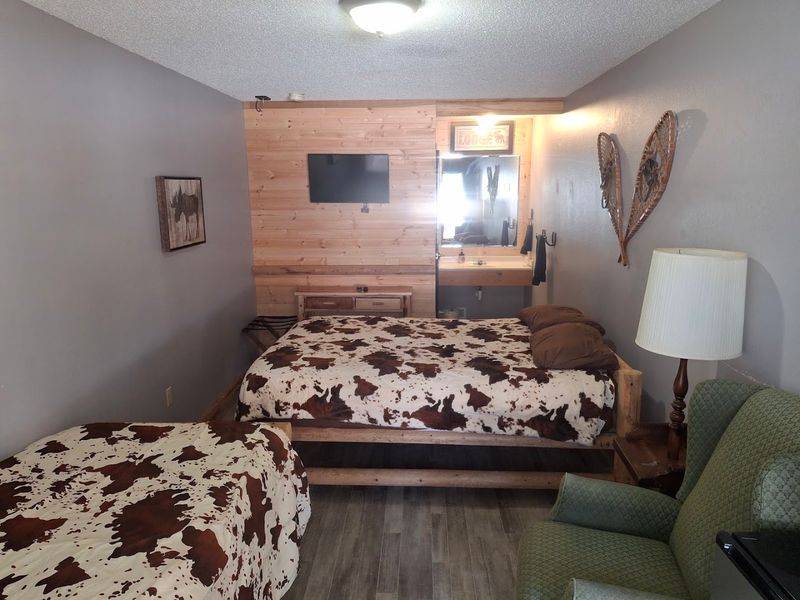
Cowboy Creek Lodge allows guests to stay directly on the former amusement park grounds. The rooms continue the western theme without requiring anyone to sleep in an actual stable.
Decor reflects the property’s frontier identity through rustic details and cowboy-inspired touches. The rooms still include the practical comforts expected from an overnight stay.
Some accommodations offer additional features suited to couples or longer visits. The broader setup also supports families and groups booking several rooms together.
Stepping outside places guests among the western-style buildings rather than beside an ordinary parking lot. That immediate connection gives the lodging more personality than a standard roadside stop.
The rooms also make seasonal events easier to attend. Guests can stay nearby rather than driving home after an evening of Halloween attractions.
Large gatherings benefit from having private rooms and shared spaces within the same property. Everyone can join the group without spending every hour together.
The overnight experience does not pretend to be luxurious or overly modern. Its appeal comes from sleeping inside a destination that looks completely different after dark.
Group Events And Family Reunions Done Differently
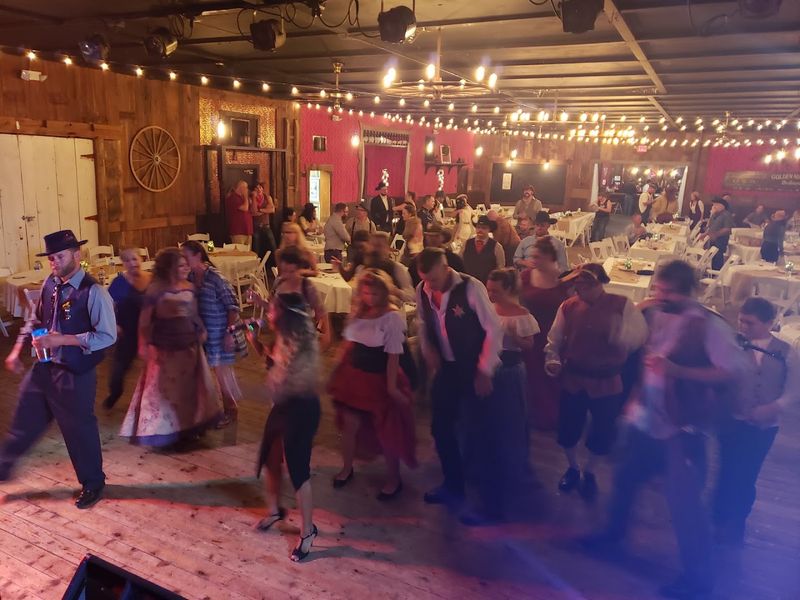
Large families often struggle to find gathering spaces that provide both privacy and room to socialize. This property offers a much less predictable alternative.
Multiple guest rooms allow people to stay close without sharing one enormous rental house. The arrangement gives each household somewhere to retreat when the group energy becomes ambitious.
A community room provides indoor space for meals, conversations, or scheduled activities. Larger groups can gather without squeezing into someone’s bedroom or hallway.
The pavilion handles events that need more open space. Past uses have included shared dinners, dancing, and movie nights.
Outdoor areas give children and adults room to spread out. Fire pits, walking paths, and seating areas help guests form smaller groups throughout the day.
The western setting also gives reunions an automatic theme. Nobody needs to decorate much when an entire frontier town is already waiting outside.
Family gatherings usually produce enough drama without staged gunfights. Still, the old cowboy backdrop gives everyone something safer to discuss.
The Old-West Atmosphere You Can Actually Explore
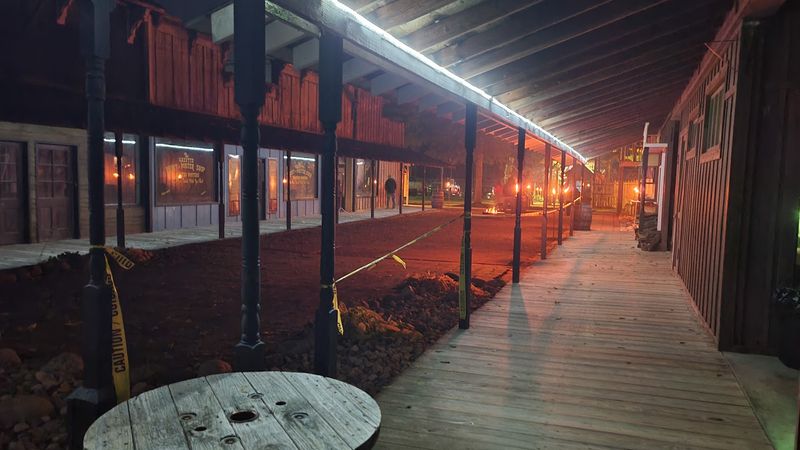
The western town is more than decoration around the guest rooms. Visitors can walk among the buildings and examine the details that survived from the original attraction.
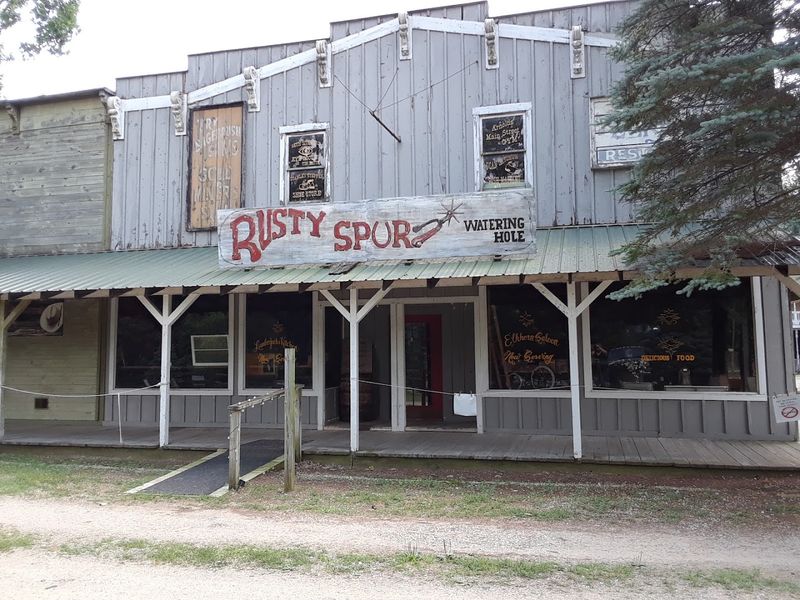
Storefronts line the property with wooden facades and period-inspired signs. Windows reveal displays that continue the illusion of a frontier settlement.
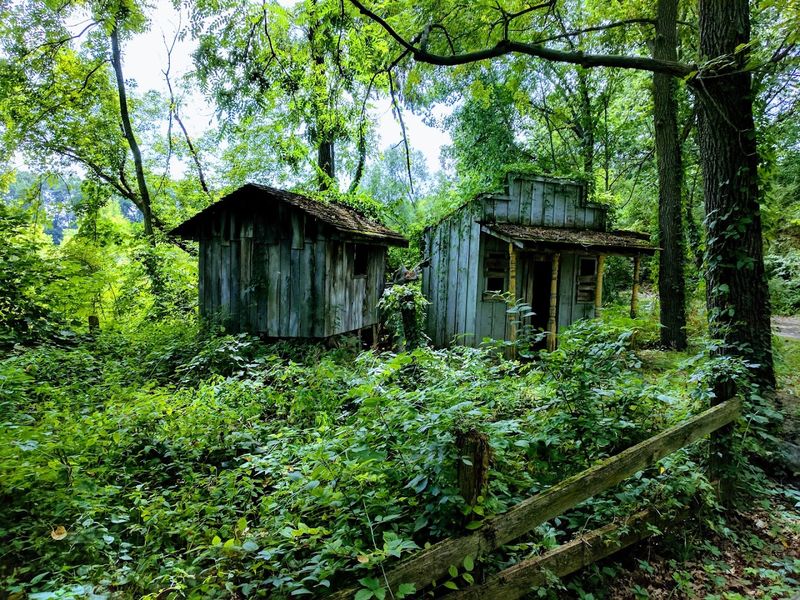
Some structures show their age more clearly than others. That weathered appearance supports the history rather than making the property look newly manufactured.
A small museum adds another layer to the visit. Vintage objects and pieces of Americana connect the themed town to broader stories about the past.
Walking paths link the buildings across the grounds. The property’s size gives visitors enough space to explore without completing the route in several minutes.
The pond introduces a quieter section away from the main western structures. It also gives the grounds a natural stopping point during a longer walk.
Nothing here looks like a freshly painted theme park created last season. The age is visible, and the property wears it like a well-used pair of cowboy boots.
Gold Panning And Western Skits
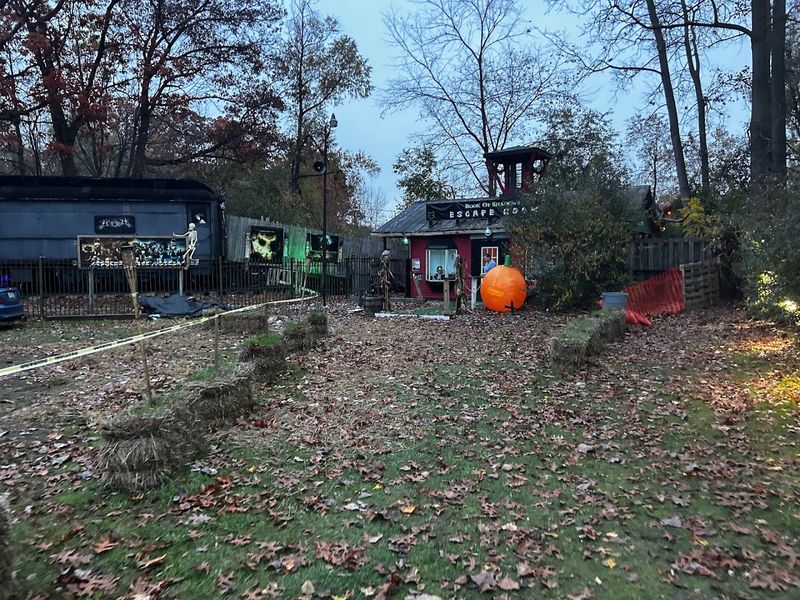
The original attraction depended heavily on audience participation and live entertainment. Visitors did more than photograph western buildings from a distance.
Gold panning became one of the most memorable hands-on activities. Staff helped guests work the pans and search through water for small discoveries.
Children could join the activity without needing to understand the history behind it. Adults often became equally invested once the searching began.
Costumed performers brought the town to life through western skits. Staged confrontations, jokes, and dramatic entrances turned the walkways into performance spaces.
Gunfight scenes added the loudest part of the program. The action followed a theatrical format rather than asking visitors to take anything too seriously.
That full schedule has changed as the property found new uses. Seasonal events and lodging now receive more attention than daily frontier performances.
Still, the original identity is visible across the grounds. The buildings, props, and town layout continue telling the story even when no cowboy is scheduled to lose an argument.
The Pool, Fire Pits, And Outdoor Amenities
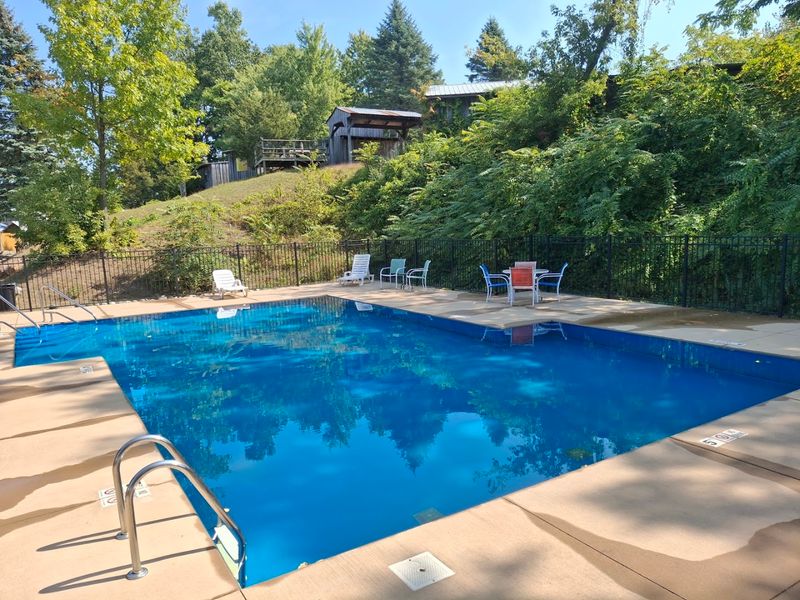
The property includes practical outdoor features alongside its themed attractions. These amenities help overnight guests enjoy longer visits without leaving the grounds.
An in-ground pool gives families a straightforward summer activity. It also provides a useful break when exploring western buildings loses the battle against warmer weather.
Fire pits create natural gathering places after sunset. Groups can sit together without needing a formal event or complicated schedule.
The surrounding grounds provide room for walking, games, and casual conversations. Guests are not confined to their rooms between planned activities.
A playground gives younger visitors another outlet. That feature becomes especially useful during family reunions with children across several age groups.
The pond adds a quieter element near the back of the property. It gives guests somewhere to slow down after the more social parts of the day.
Cowboys may have preferred horses and campfires, but modern visitors generally appreciate a pool. Historical accuracy has reasonable limits.
What Makes The Seasonal Halloween Event Special
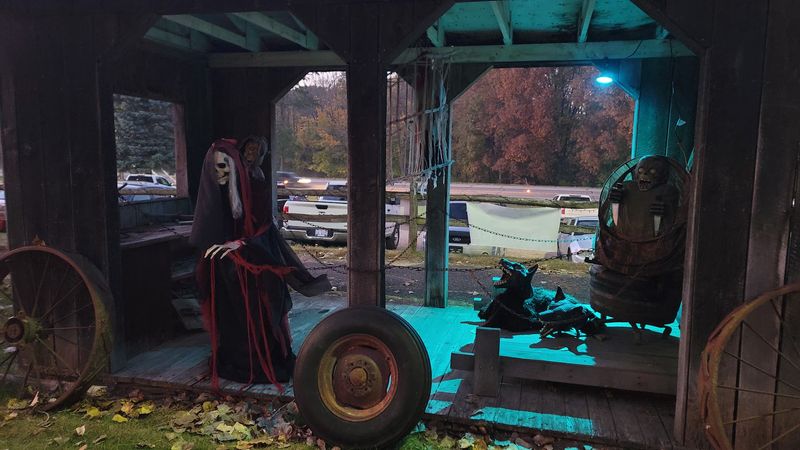
Haunting in the Hills uses the existing property rather than building a temporary attraction in an empty field. The western town already carries the right amount of age and mystery.
Several attractions can operate during the same evening. That variety gives visitors more to explore than a single walk through one haunted house.
The indoor sections rely on performers, lighting, fog, and sudden movement. Outdoor areas use the darkness and surrounding landscape to create a different kind of tension.
The train car provides a particularly enclosed setting. Tight spaces make even simple effects seem closer and more immediate.
Crowds can grow during popular evenings, so arriving earlier may reduce waiting. Extra time also allows visitors to explore more of the event without rushing.
The stronger effects may suit older children and adults better than very young guests. Flashing lights, smoke, and surprise scares can become intense for sensitive visitors.
Halloween gave the former amusement park another reason to open its gates. The cowboys may be quieter now, but the ghosts have clearly studied crowd management.
Why This Place Deserves A Spot On Your Michigan Road Trip
Michigan road trips often focus on lakeshores, larger cities, or familiar vacation towns. This Onsted property offers a completely different type of stop.
Day visitors can explore the western setting and learn about its earlier life. Overnight guests receive more time to wander the grounds and use the shared amenities.
Autumn brings the seasonal Halloween attractions into the equation. Summer trips provide better access to the pool and outdoor gathering spaces.
The property does not present itself like a spotless corporate amusement park. Its age, unusual layout, and reused buildings provide most of the character.
Travelers interested in vintage Americana may appreciate the old storefronts and frontier-town design. Families may see practical value in the lodging and group spaces.
Nostalgia also plays a role for people who remember visiting during the original amusement park years. Returning allows them to compare childhood memories with the property’s newer chapter.
Stagecoach Stop USA never returned as the exact attraction it once was. Instead, the old western town found another purpose without erasing its past.
That may be the strongest reason to stop. Plenty of amusement parks disappear, but very few get to rewrite their ending.