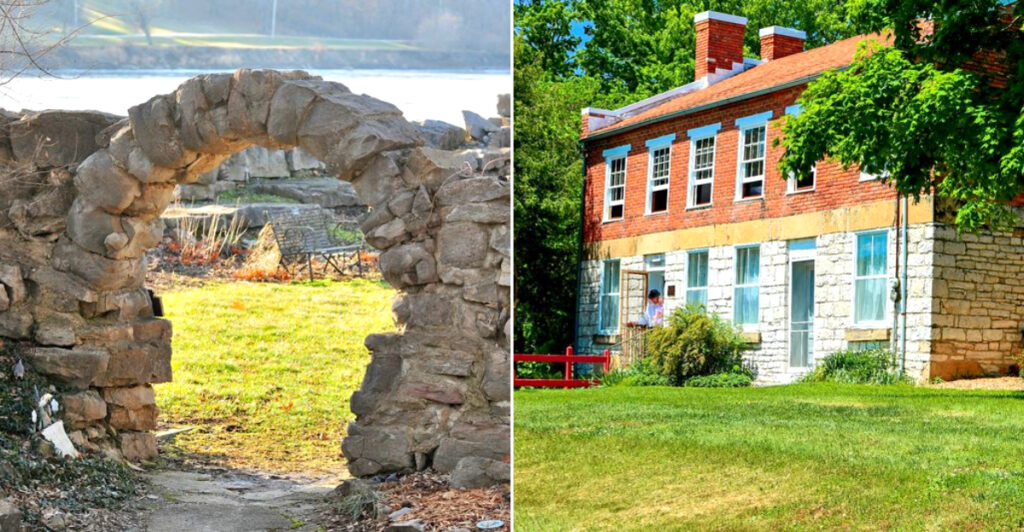
I knew this Iowa village would be quiet, but the stillness caught me before anything else did. The river moved beside the road, old brick buildings stood almost exactly where time had left them, and for a moment I forgot to check my phone.
Nothing here feels arranged for attention. The charm comes slowly, through worn stone, narrow streets, and the feeling that the modern world simply passed by without changing much.
I came expecting a brief stop and left wondering how many places like this are still hiding in plain sight.
A Village Frozen in the Right Century
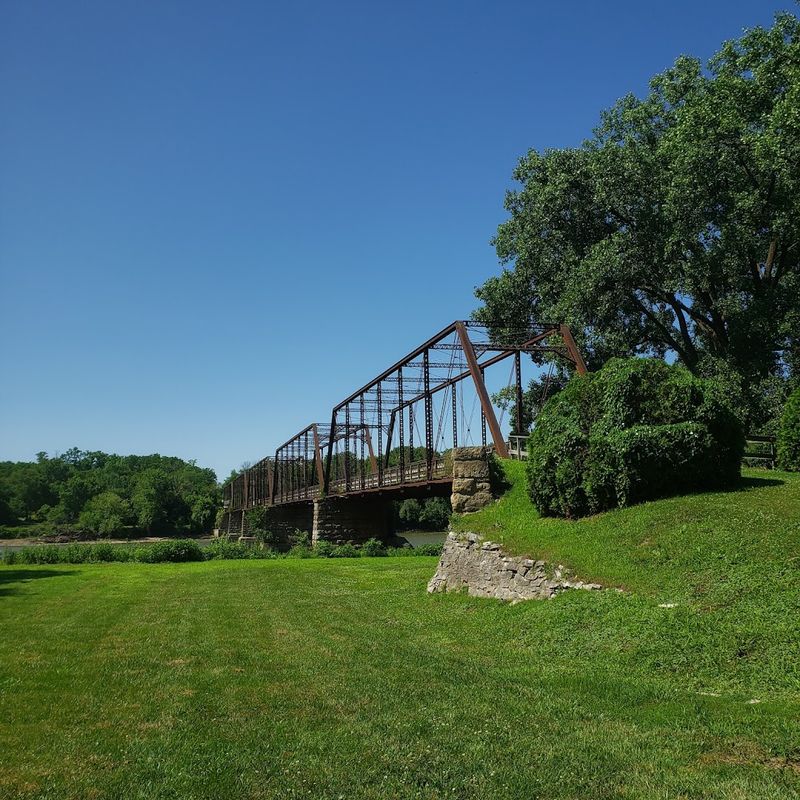
Most places that claim to be historic have at least a few glaring modern interruptions, a chain coffee shop wedged between old storefronts, or a parking lot where a landmark used to stand. Bentonsport largely skipped that problem.
The Bentonsport Historic District was listed on the National Register of Historic Places in 1972. Bentonsport sits quietly in Van Buren County, Iowa, along the Des Moines River near Keosauqua.
Because the historic district covers a village rather than one attraction, its practical location is Bentonsport, IA 52565, but the atmosphere feels like a coordinate outside of normal time.
The village became a commercial hub when river trade was booming. Goods moved through here on steamboats, and local businesses thrived on that energy.
The railroad reached Bentonsport in 1857, but construction temporarily stopped during the financial panic that year. Bentonsport’s heyday as a steamboat port ended after the railroad was completed to Des Moines in 1866 and river navigation declined.
Fires, floods, neglect, and the loss of the village’s mills removed a significant part of early Bentonsport over the years.
Even so, an important cluster of 19th-century structures remains, and ongoing preservation work has kept much of the village’s historic character clearly visible.
What the Steamboat Era Left Behind
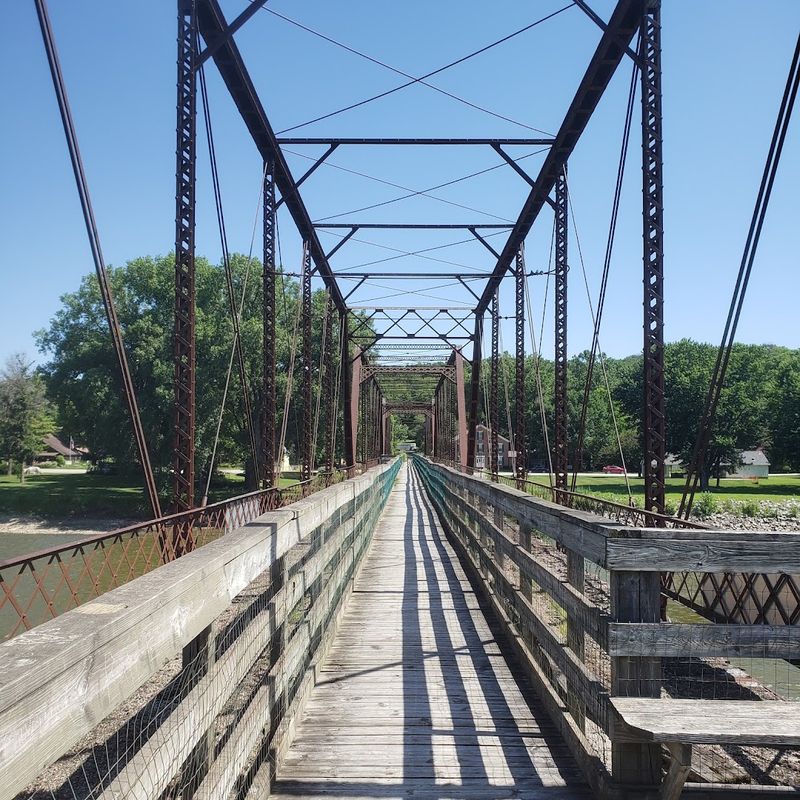
At its peak, Bentonsport was a real working port. Steamboats pulled up to the river’s edge, and the town hummed with the activity of loading, unloading, trading, and all the commerce that follows a busy waterway.
Wool, grain, and other goods moved through here regularly. Local craftsmen, merchants, and skilled tradespeople set up shop to serve both the river traffic and the surrounding farming community.
The buildings they constructed were solid, made from local limestone and brick, and built to last decades, not just a season.
That durability is exactly why so much survives today. You can still see the old general store, a historic inn, a pottery, and other structures that date back to that era of river commerce.
The scale of the buildings gives you a real sense of what a working 19th-century village actually looked like at street level.
It was not grand or polished. It was practical and purposeful, and that honestly makes it more interesting than a restored showpiece.
The wear and the texture tell the real story far better than any museum placard could.
The Mason House Inn and Its Long Memory
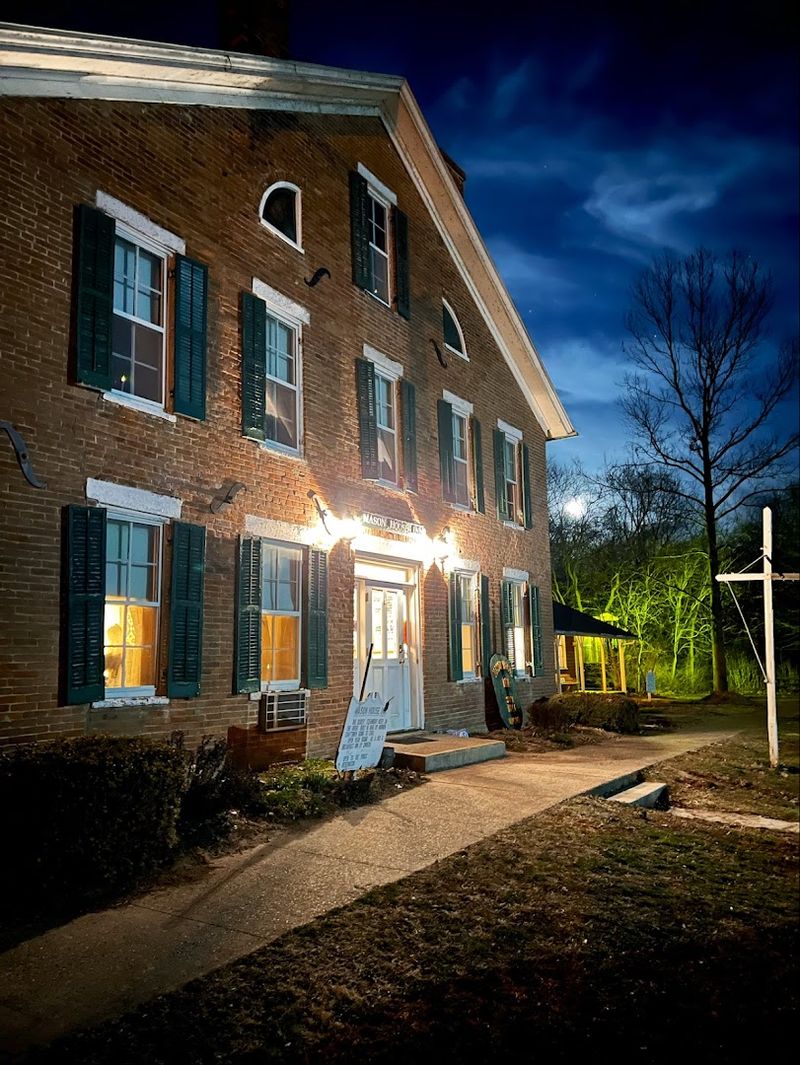
Few buildings in Bentonsport carry as much layered history as the Mason House Inn.
Built in 1846, it originally served as a hotel for steamboat travelers passing through Van Buren County, and it continues to welcome overnight guests today.
The inn is one of Iowa’s notable surviving early hotel buildings, although it has not operated continuously as a hotel throughout its entire history.
After periods of closure and other uses, the same structure that hosted river merchants and travelers in the mid-1800s now operates as a bed and breakfast.
Staying here means sleeping in a building where the floors creak in the most satisfying, old-house way, where the rooms are furnished with period pieces, and where the building’s historic character remains visible throughout the property.
It is run as a bed and breakfast, and the hospitality is personal in a way that no chain hotel can replicate.
Booking a night here rather than driving in and out on a day trip changes the entire pace of the visit. The village reveals itself differently when you are not watching the clock.
Walking the Streets Without a Map
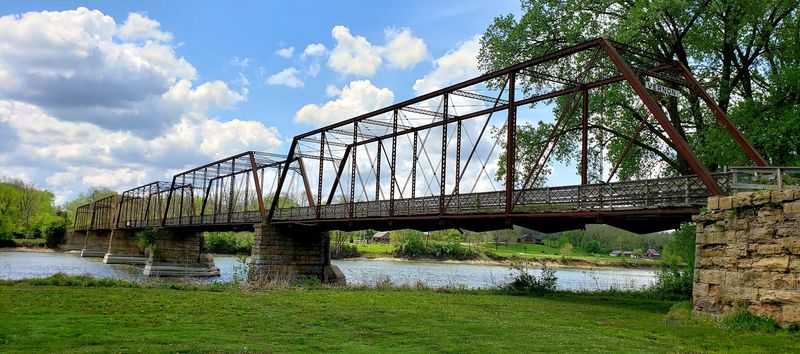
Bentonsport is small enough that you do not need a map, a guide, or a schedule.
The village is essentially a single stretch along the river, and you can cover the main area comfortably on foot in under an hour, though most people end up lingering much longer than they planned.
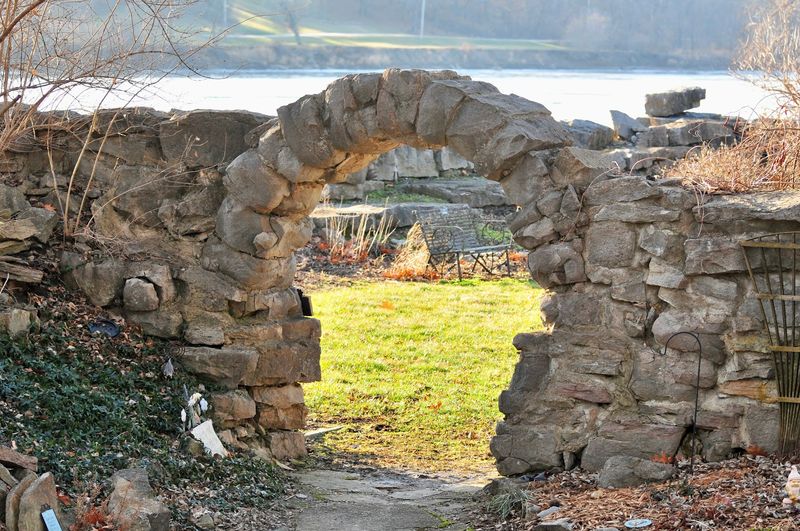
The layout itself is part of the appeal. Old stone walls border the road in places.
Mature trees shade the path. The river is always nearby, visible between buildings or audible when things go quiet enough.
Every few steps, there is something worth stopping to look at more closely.
A carved wooden post. A faded sign.
A stone foundation that predates the Civil War. These details accumulate as you walk, and after a while, you start noticing things that are easy to miss when you are moving too fast or too distracted.
I found myself stopping more than I expected, not because there were formal attractions demanding attention, but because the environment itself kept pulling focus. A slow walk through Bentonsport is less of a tour and more of a conversation with a place that has been quietly waiting to be noticed.
Pottery, Art, and the Craft Tradition Still Alive Here
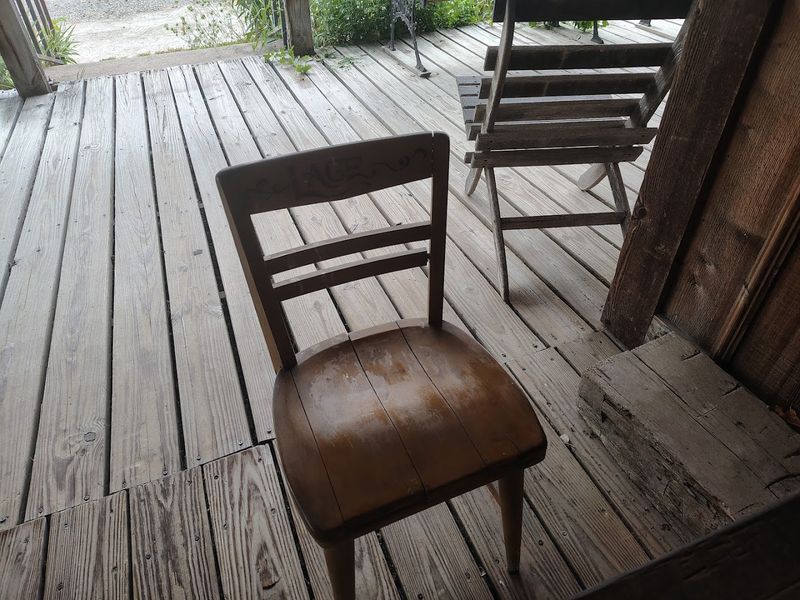
One of the things that keeps Bentonsport from feeling like a pure relic is the presence of working artists and craftspeople who have chosen to set up shop in the historic buildings.
The village has attracted potters, painters, and other makers who find something useful in the quiet and the old walls.
The pottery tradition here has roots that go back to the village’s earlier years, and contemporary artists have kept that thread alive. You can find handmade ceramics, woodwork, and other crafts produced locally, and buying something from one of these small studios means taking home an object with a genuine connection to the place.
The studios are modest and unpretentious, which is part of what makes them worth visiting. Nobody is trying to perform artistry for tourists.
The work just sits there, made by hand in a building that has seen a century and a half of Iowa weather, and you can pick it up, turn it over, and decide if it belongs in your kitchen.
On the day I visited, a potter was working at the wheel, and watching someone make something from a lump of clay in a 19th-century building felt like a genuinely good use of an afternoon.
Van Buren County and the Larger Region Worth Exploring
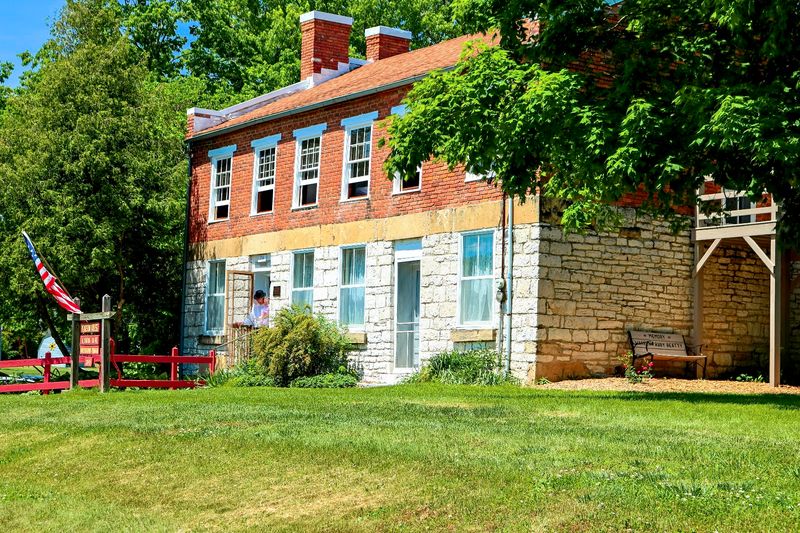
Bentonsport does not exist in isolation. Van Buren County surrounds it with a landscape of rolling hills, wooded river valleys, and small towns that each carry their own piece of regional history.
If you are making the trip, it is worth building in time to explore a bit beyond the village itself.
Keosauqua, the county seat, is just a few miles away and has its own collection of 19th-century architecture, including a historic courthouse that is one of the oldest in Iowa. The town sits along the Des Moines River as well, and the two communities make a natural pairing for a half-day or full-day drive.
Lacey-Keosauqua State Park is also nearby, offering wooded trails, river access, and camping for anyone who wants to extend the visit into something more outdoor-focused. The park covers a large stretch of river bottomland and upland forest, and the trails range from easy walks to longer hikes.
Van Buren County markets itself as a destination for those who want to experience what rural Iowa looked like before mass development changed the landscape, and after spending time in Bentonsport, that framing starts to make a lot of sense.
When to Visit and What the Seasons Do to This Place
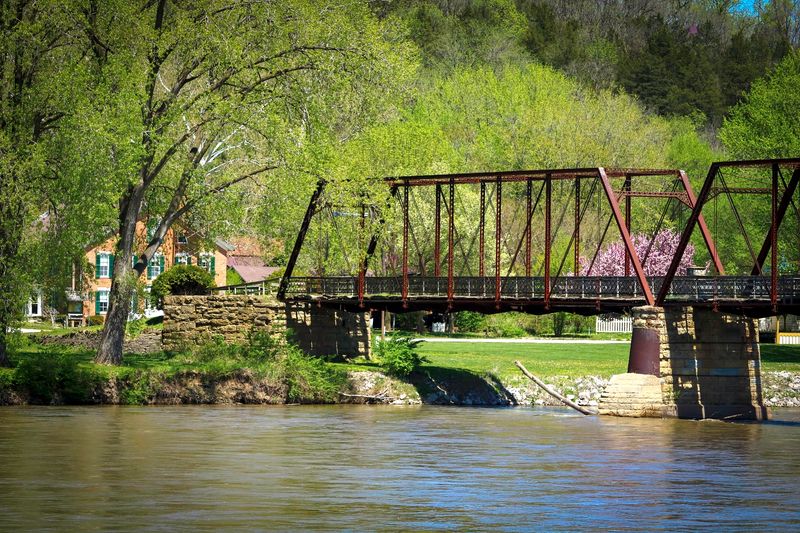
Bentonsport rewards a visit in almost any season, but the experience shifts considerably depending on when you go.
Summer brings greenery, river activity, and the occasional festival or community event that draws more people to the village.
Fall is arguably the strongest season for a visit. The trees along the Des Moines River and throughout Van Buren County turn in dramatic fashion, and the combination of autumn color against the old brick and stone buildings is the kind of thing that makes people stop mid-sentence to look.
Spring brings the river up and the landscape back to life after winter, and there is something appealing about seeing the village emerge from the grey months looking exactly as it always has. Winter visits are quieter, sometimes very quiet, but the bare trees and the cold light give the historic structures a starkness that is genuinely compelling in its own way.
My visit fell in early October, and the timing was good. The crowds were light, the air was cool, and the light had that low-angle quality that makes everything look like it belongs in a photograph you did not have to try hard to take.
The Practical Side of Planning a Trip Here
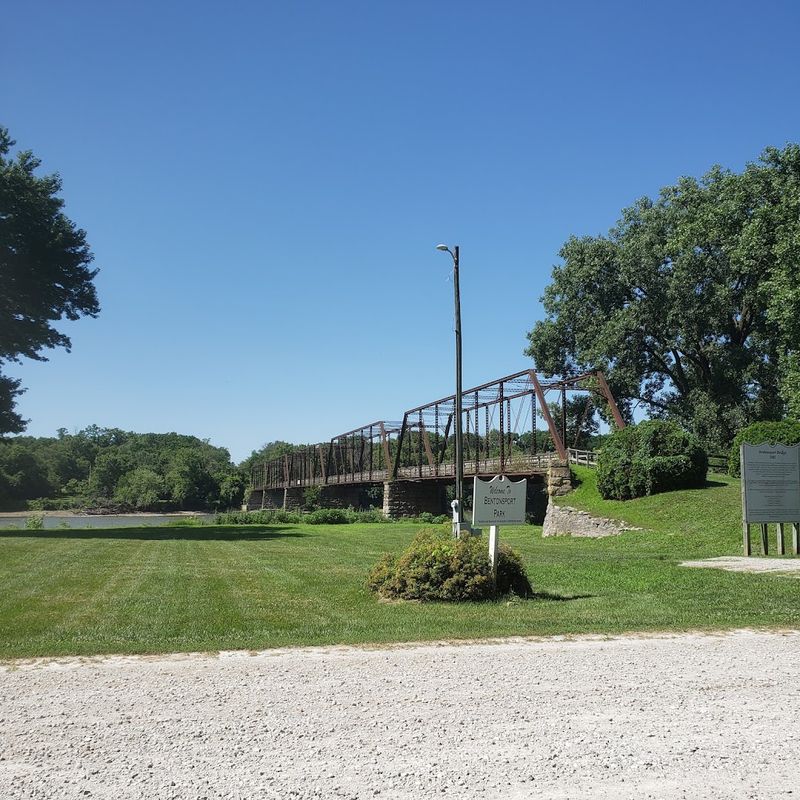
Getting to Bentonsport requires a bit of intention. The village sits in a rural corner of southeastern Iowa, and it is not the kind of place you stumble onto during a highway drive.
Most routes involve county roads and a landscape that gradually gets quieter and more rural the closer you get.
The nearest larger town is Keosauqua, and from there, Bentonsport is only a few miles down the road. GPS works fine for navigating the area, though cell service can be spotty in parts of Van Buren County, so downloading an offline map before you leave is a practical step worth taking.
Parking is easy and free. The village is small, and there is no fee to walk around and explore.
If you plan to stay at the Mason House Inn, booking in advance is recommended, especially during fall weekends when the region draws more visitors for the foliage.
Restroom access is limited, so plan accordingly. There are no large commercial services in Bentonsport itself, so bringing snacks, water, and anything else you might need before arriving makes the visit more comfortable and keeps the focus on the place rather than logistics.
Who Comes Here and Why It Works for Different Kinds of Travelers
Bentonsport draws a specific kind of traveler, and that is not a limitation so much as a clarity. People who like fast-paced, activity-heavy trips with a full itinerary of ticketed attractions are probably going to feel under-stimulated here.
But for everyone else, the appeal is real and accessible.
History enthusiasts find the village fascinating because it is not a reconstruction or a theme park version of the past.
Many of the surviving historic buildings are original, and the district retains enough of its historic street pattern and scale to show how the community developed during the 19th century.
You are actually standing in spaces where river merchants, craftspeople, residents, and travelers once conducted business and went about their daily lives.
Photographers, both serious and casual, tend to do very well here. The light, the textures, and the limited modern visual clutter make it easy to find compelling images without working too hard.
Couples looking for a quiet weekend away from city noise consistently find Bentonsport useful for that purpose. The pace enforces relaxation in a way that feels earned rather than manufactured.
Families with older children who have some patience for slow exploration also tend to get a lot from the visit, especially if the trip includes time at the state park or along the river.
The Quiet That Makes Bentonsport Different
There is a particular quality to the quiet in Bentonsport that takes a few minutes to adjust to if you are coming from anywhere with consistent background noise.
No traffic hum. No construction.
No ambient commercial sound. Just wind, birds, and the occasional creak of a building settling into its age.
That quiet is not accidental or incidental. It is a direct result of the village’s situation: small population, no major commercial development, no through-traffic to speak of.
The same conditions that kept Bentonsport economically modest also kept it acoustically honest.
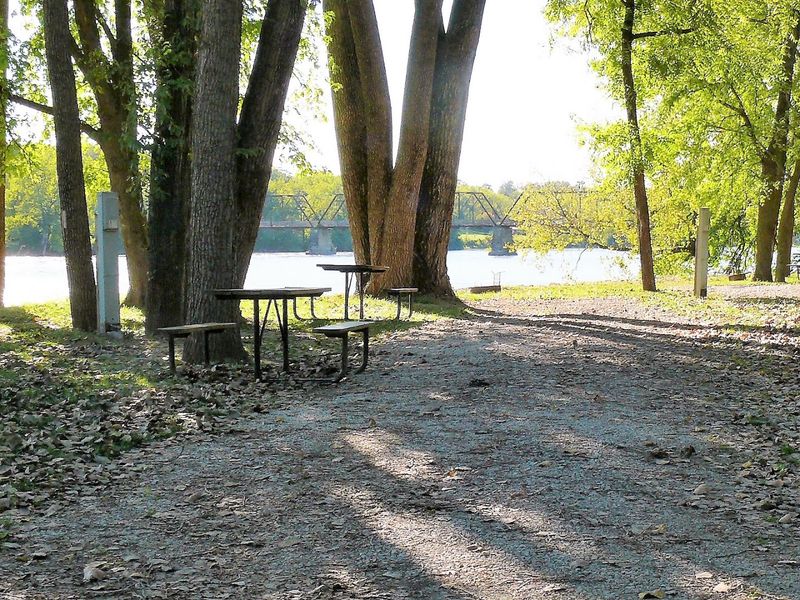
I noticed it most when I was standing near the river in the early afternoon. The water moved without any urgency, a bird called from somewhere in the tree line, and nothing else competed for attention.
It is the kind of quiet that people pay significant money to access at retreat centers, and here it just exists as the default setting.
For anyone who has been running at full speed for too long, Bentonsport offers something that does not require a program or a booking: just the straightforward relief of a place where nothing is asking anything of you at all.
A Final Word on Why This Village Holds Up
After spending time in Bentonsport, the thing that stays with me is not any single building or view. It is the coherence of the place.
Everything fits together in a way that feels unmanaged and unforced, which is rare enough that it is worth noting plainly.
Most preserved historic places have a quality of performance to them. Someone decided what to keep, what to restore, and how to present it.
Bentonsport has required that kind of preservation work as well. Fires, floods, neglect, and changing transportation patterns removed parts of the original village, while local organizations have protected, repaired, and rehabilitated many of the significant properties that remain.
Iowa has a number of small towns worth visiting, but Bentonsport occupies a different category because so much of its historic character remains visible without the entire village having been recreated from scratch.
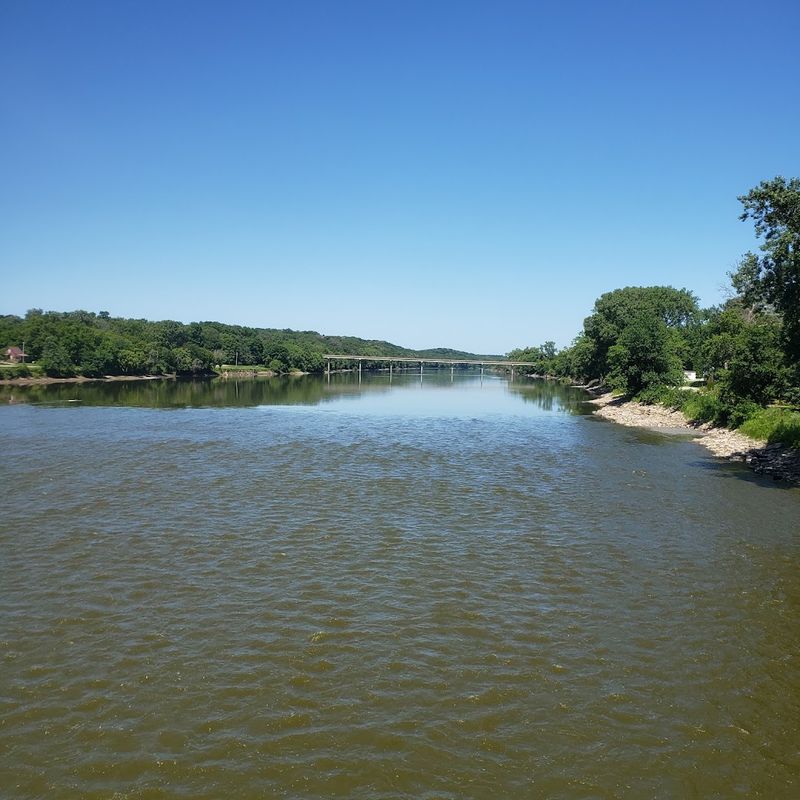
The river is still there. Many of the historic buildings are still there.
The scale of a mid-19th-century working village remains legible if you take the time to read it.
If you make the drive to Van Buren County and walk the main street at a pace slow enough to actually see what is in front of you, Bentonsport will give you a clear, specific, and surprisingly satisfying picture of how this part of the country developed during the 19th century.