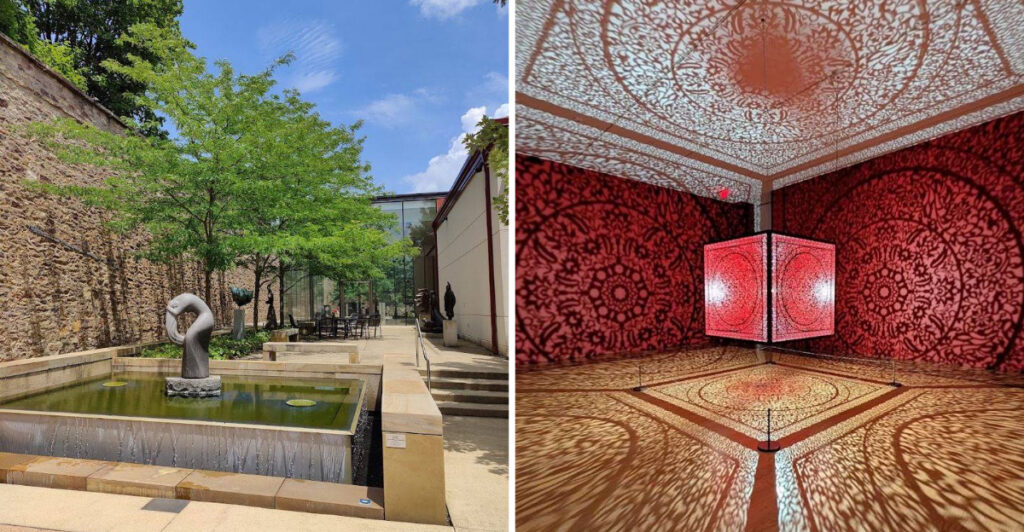
Art rarely arrives with this much character.
In downtown Doylestown, Pennsylvania, a historic stone building has been transformed into a striking home for paintings and contemporary work.
Completed in 1884, it served the community for more than a century before beginning a new chapter as a museum in 1988.
Today, the collection highlights Pennsylvania Impressionism, studio craft, and artists connected to Bucks County.
Outside, the sculpture garden offers another shift in mood, turning a once-enclosed courtyard into a peaceful place beneath the open sky.
Follow the stone walls, explore the galleries, and see how Pennsylvania gave a historic landmark an entirely new creative purpose.
Old Prison Walls Frame The First Impression
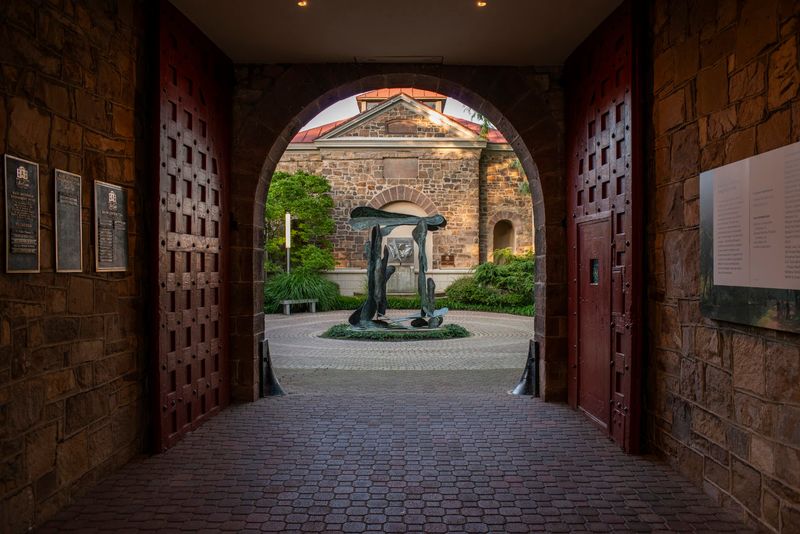
The building announces its history before you see a single painting.
Tall stone walls from the former Bucks County Jail remain around the museum grounds. Architect Addison Hutton designed the jail, which was completed in 1884 and modeled in part on Eastern State Penitentiary in Philadelphia.
After the prison closed, new museum spaces were integrated with surviving structures that included the former warden’s house, guardhouse, sally port, and perimeter walls.
You can still read that earlier purpose in the architecture. The stone is thick, the openings are controlled, and the walls form a clear boundary between the museum and the surrounding town.
Yet the building no longer asks you to stay out. Its entrance now leads toward paintings, sculpture, woodwork, and changing exhibitions.
How many art museums let you cross a former prison threshold before introducing you to a canvas?
That contrast gives the visit its first creative spark. The past has not been erased, but its setting has been given an entirely different role.
You Will Find The Museum On South Pine Street
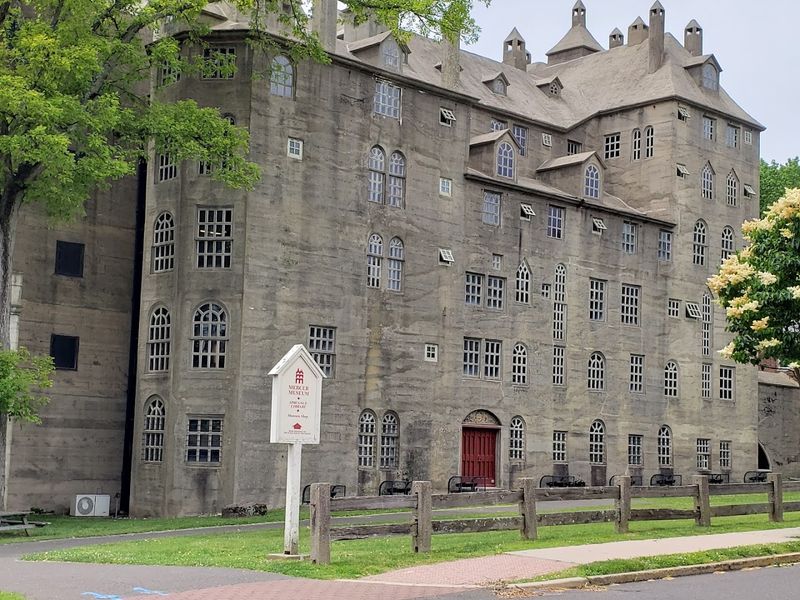
The James A. Michener Art Museum is located at 138 South Pine Street, Doylestown, Pennsylvania.
A free parking lot sits beside the museum and is shared with the Doylestown Public Library. Limited street parking is also available nearby.
The main entrance has automatic doors, and all public galleries and museum spaces are wheelchair accessible. Elevators connect the floors, while manual wheelchairs are available at the front desk on a first-come, first-served basis.
The museum is compact enough to explore without facing the scale of a large metropolitan institution. Even so, its permanent collection, outdoor art, special exhibitions, reading room, cafe, and programs give you several directions to follow.
Current exhibitions change throughout the year, so the walls may present a different arrangement each time you return.
That shifting display suits the building. A structure once designed around control now makes room for artistic change.
Pennsylvania Impressionism Fills The Galleries With Light
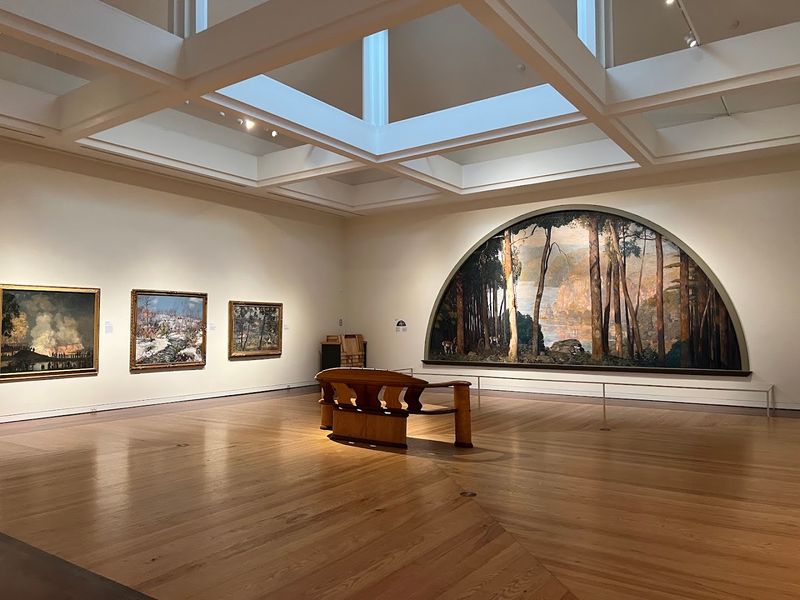
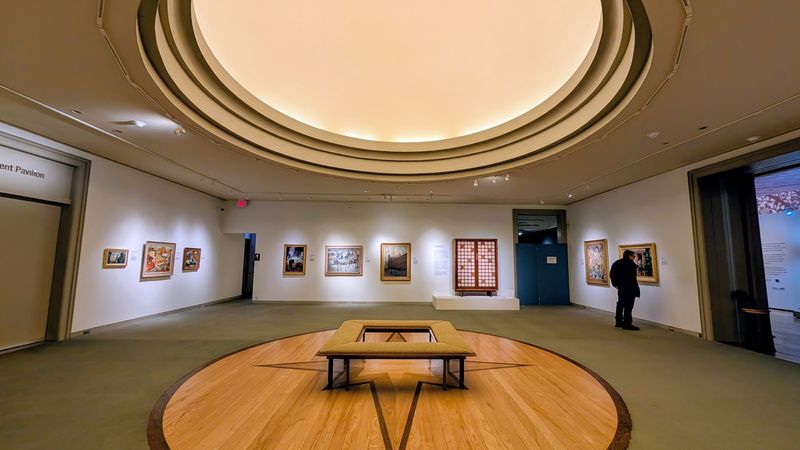
The museum is home to the largest public collection of Pennsylvania Impressionist paintings.
This regional movement developed around Bucks County and the Delaware River Valley during the late nineteenth and early twentieth centuries. Its artists studied local rivers, farms, quarries, villages, winter fields, and changing light.
Their paintings connect closely to the landscape beyond the museum walls. Snow gathers across rural roads, sunlight cuts through trees, and riverbanks stretch toward distant hills.
You do not need to know every painter before arriving. The landscapes provide an immediate entry point because they show recognizable places transformed through color, texture, and brushwork.
The collection also explains why Doylestown became a natural home for the museum. These works were shaped by the surrounding region rather than imported into it later.
Stand before one long enough, and the paint begins to behave like weather. A pale section becomes winter haze. A dark stroke turns into a tree line.
A bright patch starts reflecting sunlight from water. The countryside becomes both subject and palette.
Modern Art Keeps The Story Moving Forward
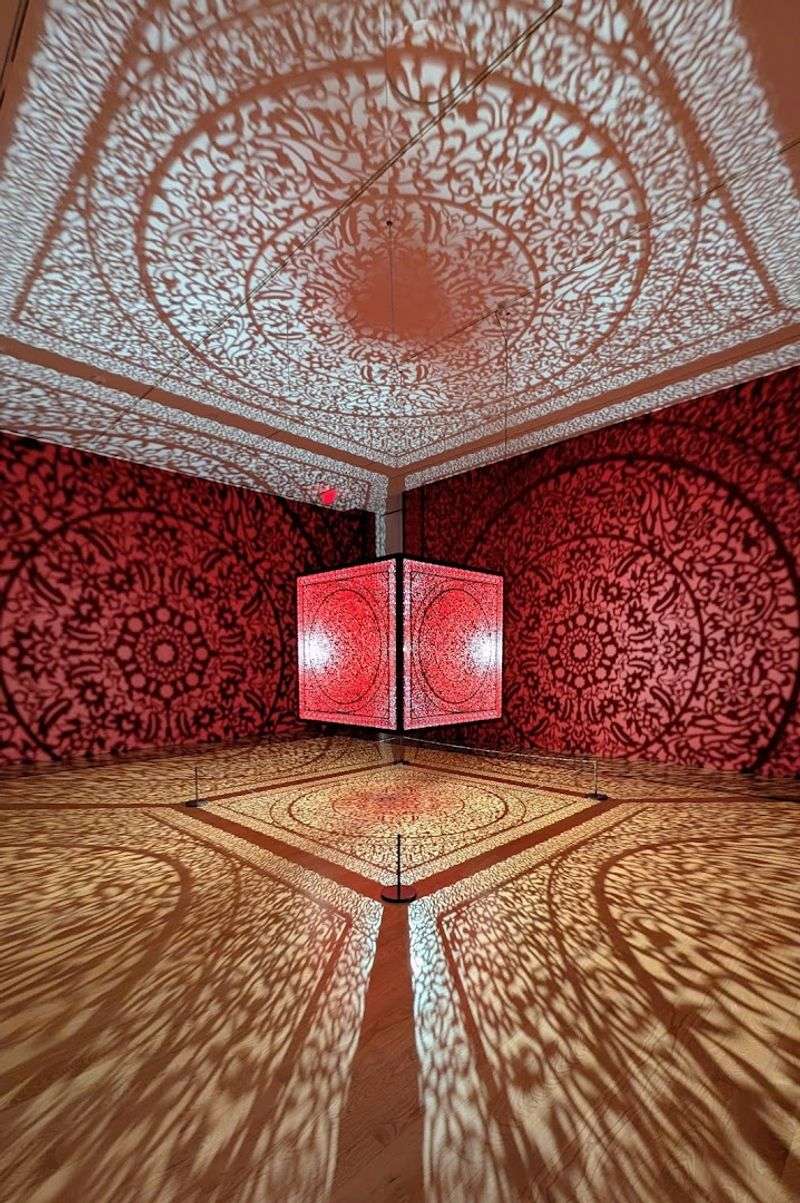
Pennsylvania Impressionism may anchor the collection, but the museum does not stop there.
Its modern and contemporary holdings include representational, abstract, and nonrepresentational work created through different techniques and visual languages.
Changing exhibitions add nationally touring shows and presentations focused on regional artists.
This range prevents the galleries from becoming a single historical chapter. One room may invite you into a recognizable Bucks County landscape, while another replaces familiar scenery with shape, material, movement, or pure color.
That shift changes the way you look. A detailed painting may encourage you to search for figures and buildings. An abstract work may ask you to follow rhythm, contrast, and surface instead.
What catches your attention first: the subject, the color, or the mark left by the artist’s hand?
There is no required answer. The museum gives each work enough room to make its own argument.
The former jail setting adds another layer. Art built around experimentation now occupies a place once governed by strict physical limits.
Glass And Stone Meet Inside The Pavilion
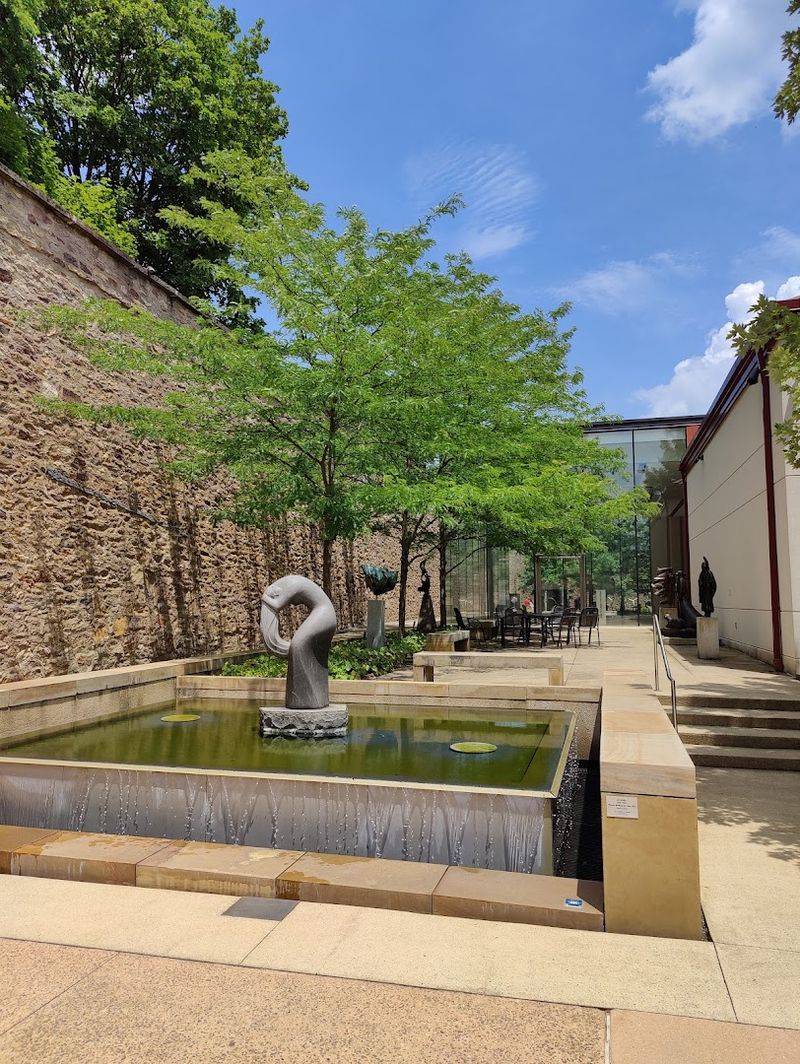
The Edgar N. Putman Event Pavilion brings the museum’s architectural contrast into sharp focus.
The pavilion is a 2,500-square-foot glass structure positioned beside the old jail wall. Its transparent surfaces admit natural light and keep the surrounding stone visible from inside.
One material appears heavy and guarded. The other appears open and nearly weightless.
Together, they create one of the museum’s clearest design statements. Preservation does not have to mean freezing a building in its original form. New architecture can acknowledge the past while speaking in an entirely different voice.
The pavilion connects with the galleries and also opens toward a 4,500-square-foot outdoor courtyard. It hosts museum programs, performances, private events, and other gatherings.
Its appearance changes throughout the day. Bright sun sharpens reflections across the glass, while softer light allows the stone beyond it to take visual control.
You are never looking at only one period of architecture. The old wall and modern pavilion remain in the same frame, each making the other more noticeable.
Sculpture Moves Beyond The Gallery Walls
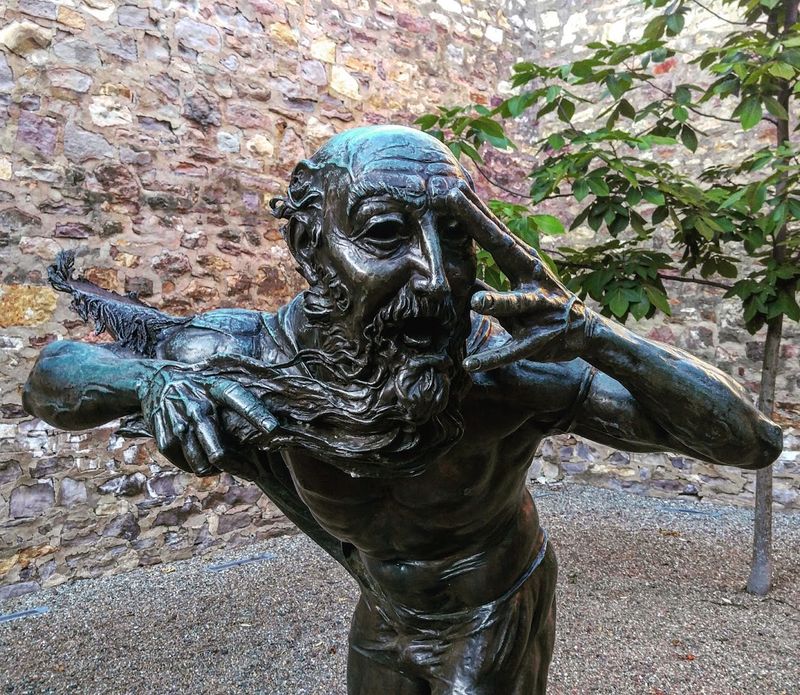
Art continues outside in the Patricia D. Pfundt Sculpture Garden.
The garden occupies space beside the surviving jail walls and the glass pavilion. Sculptures appear across the landscaped grounds, allowing you to encounter them from several angles rather than from one fixed position.
A painting controls your viewpoint through its frame. Sculpture asks you to move.
You can circle a piece, watch its silhouette change, and notice how stone, metal, plants, and architecture overlap. Sunlight may reveal one surface while placing another in shadow.
The prison wall gives the garden a powerful border, but the area is no longer defined by confinement. Tables, outdoor seating, artwork, and planted spaces now occupy the courtyard.
Mama Hawk’s Cafe offers indoor seating near the gift shop and patio seating in the sculpture garden. Museum admission is not required to enter the cafe or outdoor garden.
That access gives the courtyard a life beyond formal gallery visits. You can stop for coffee, study the sculptures, and watch the glass pavilion reflect a wall built more than a century earlier.
Nakashima Furniture Creates A Quiet Interlude
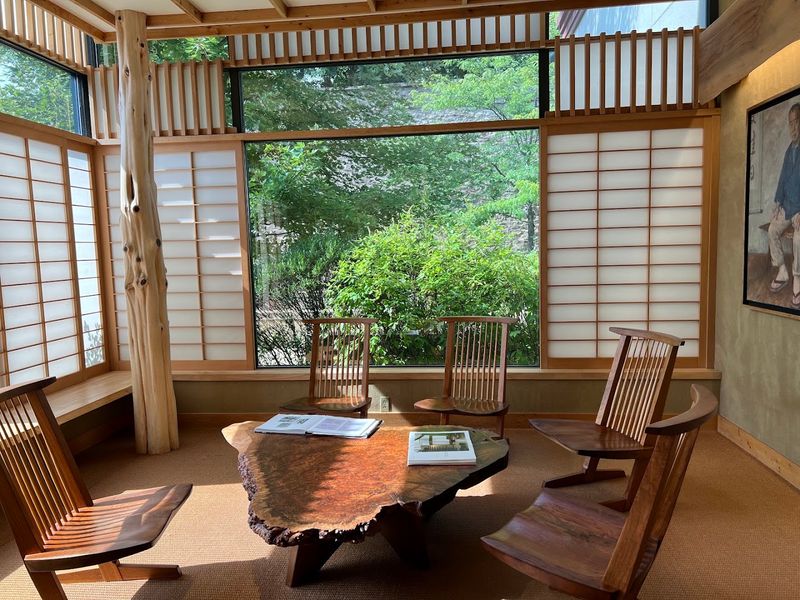
The Nakashima Reading Room changes the tempo of the visit.
The museum commissioned architect and furniture maker Mira Nakashima to design the memorial room in 1992 in honor of her father, George Nakashima.
The permanent installation presents his furniture within a setting inspired by a Japanese tearoom. Solid wood, visible grain, and restrained forms replace the brighter movement found in many painting galleries.
George Nakashima became known for furniture that respected the natural character of each piece of wood. Instead of forcing every board into perfect uniformity, his designs often preserved irregular edges, grain patterns, and the individual shape of the tree.
The reading room gives you space to examine that philosophy at close range.
A chair, table, or bench may be functional, but it also records decisions about proportion, joinery, surface, and material. Here, furniture enters the museum without surrendering its practical identity.
The room invites a slower kind of attention. You begin noticing lines in the wood as carefully as brushstrokes on a canvas.
History And Creativity Share The Same Walls
The museum is named for James A. Michener, the Doylestown-born author whose novel Tales of the South Pacific received the Pulitzer Prize for fiction in 1948.
Its mission centers on the art and cultural heritage of Bucks County while leaving room for wider conversations through traveling exhibitions and contemporary work.
That combination mirrors the building itself. Regional history provides the foundation, but the museum keeps adding new voices, materials, and ideas.
You may arrive for the Pennsylvania Impressionists and spend the longest time among Nakashima’s woodwork. You may come for the architecture and discover an outdoor sculpture that changes as you circle it.
The old jail walls remain impossible to overlook. They carry the weight of the site’s earlier history and prevent the museum from becoming architecturally anonymous.
Inside those walls, however, color, glass, wood, stone, and imagination now move freely.
The building once controlled where people could go. Today, art gives you every reason to keep exploring.