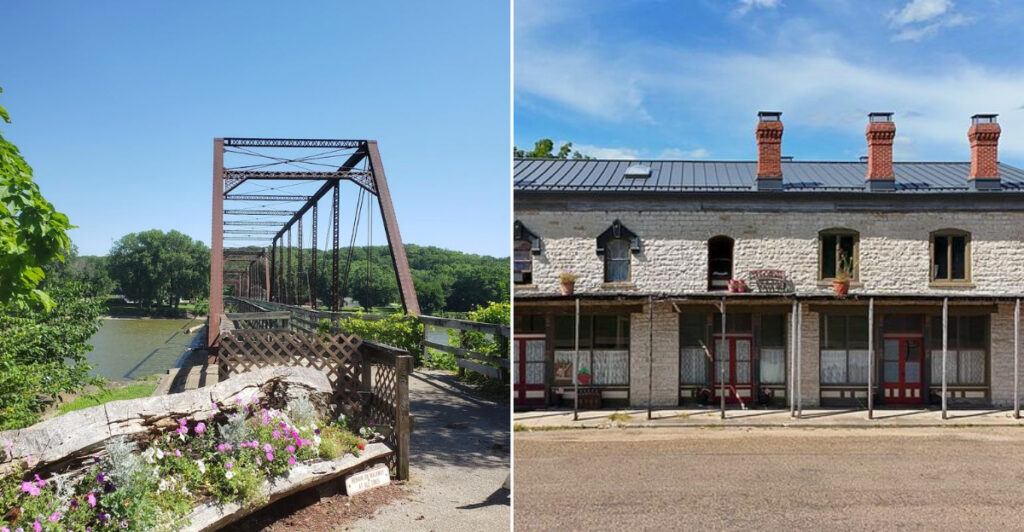
Some road trips feel better when you stop trying to get somewhere fast.
This quiet Iowa route is exactly that kind of drive. The towns are small, the roads feel slower, and every bend seems to offer another old building, river view, or place that makes you reach for the camera.
It does not feel frozen in time in a fake, polished way.
It feels lived in. Weathered.
Proud of what it still holds onto.
These nine villages make the kind of trip where muddy shoes, a full memory card, and one unplanned stop after another are basically part of the deal.
1. Keosauqua, Iowa
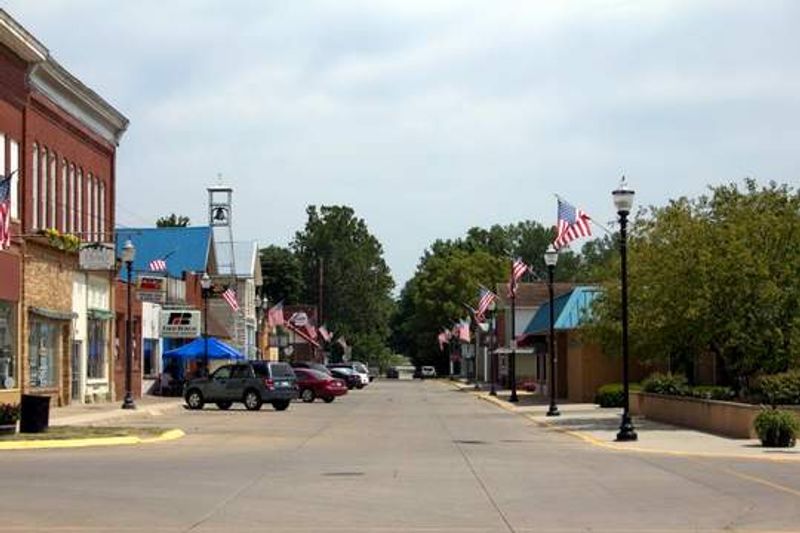
The largest town on this route still feels like a place the modern world forgot to update, and that is entirely the point.
Keosauqua sits at a wide bend in the Des Moines River in Van Buren County, Iowa, and its crown jewel is the Hotel Manning, a grand old structure built in 1899 that still welcomes overnight guests.
Standing on the hotel’s front porch and watching the river drift by is the kind of quiet that recharges something deep inside you.
The town also has one of the oldest courthouses still in use in Iowa, a stately building that anchors the small downtown square.
Keosauqua was a major steamboat stop in the 1800s, and you can still feel that river-town energy in the layout of the streets.
Plan to walk the riverbank trail in the morning when the mist is still sitting on the water.
The local park offers picnic spots, fishing access, and a real sense of calm that is hard to manufacture anywhere else. Bring your walking shoes and a good book.
2. Bentonsport, Iowa
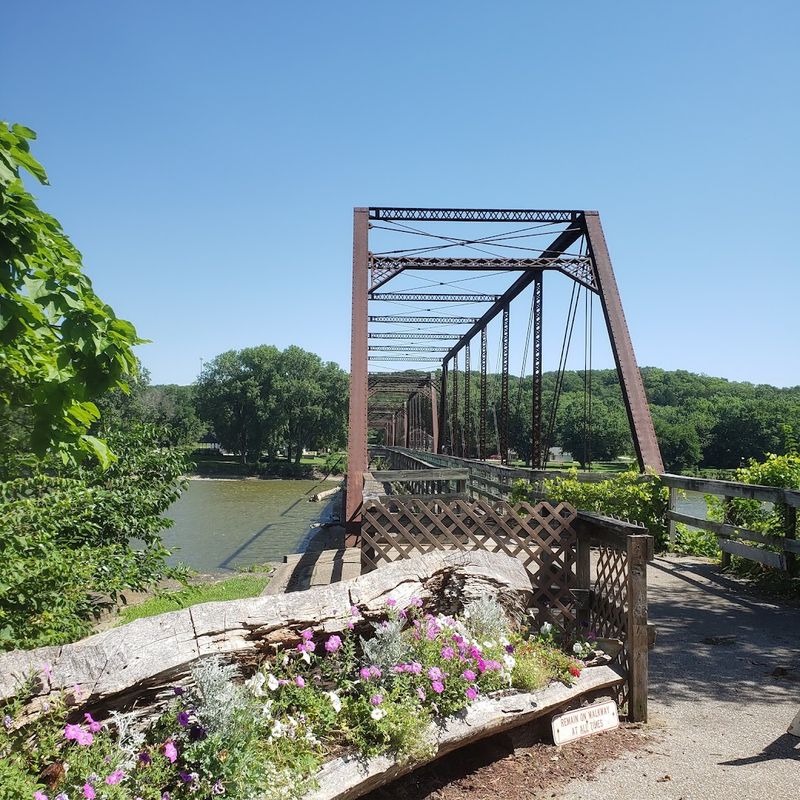
A handful of stone buildings, a lazy river, and almost no traffic at all. That is the entire pitch for Bentonsport, and it is more than enough.
This tiny village in Van Buren County, Iowa, is a National Historic District, meaning most of its original 19th-century structures are still standing and still in use.
Artists have moved into several of the old storefronts, turning them into studios and galleries where you can watch pottery being thrown or browse hand-painted canvases.
The old iron bridge over the Des Moines River is a favorite spot for photographers, especially in the golden light of late afternoon.
Bentonsport has a warm, unhurried energy that makes you want to slow your pace to match the town’s rhythm.
The Mason House Inn, a beautifully preserved historic bed and breakfast, is one of the most charming places to spend a night anywhere on this route.
Mornings here are especially peaceful, with river sounds replacing alarm clocks. It is a small town that leaves a surprisingly large impression on everyone who visits.
3. Bonaparte, Iowa
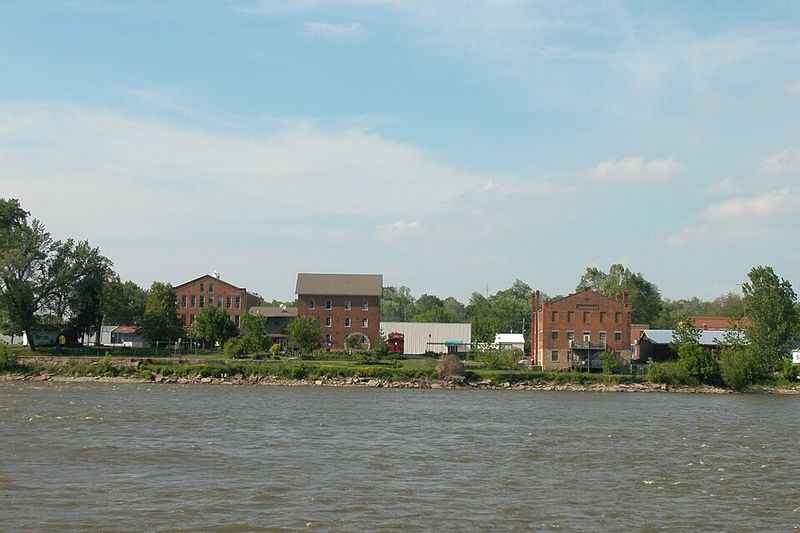
Named after Napoleon Bonaparte, this little river town carries a surprisingly grand title for such a modest, peaceful place.
Bonaparte sits along the Des Moines River in Van Buren County, Iowa, and its most iconic landmark is Meek’s Flour Mill, a restored brick structure with a limestone basement that was built in 1878.
The mill has been converted into the Bonaparte Retreat restaurant, making it one of the most atmospheric places to grab a meal on this entire route.
Sitting inside the historic mill while eating a home-cooked meal feels like dining inside a piece of living history.
The town itself is small enough to walk in twenty minutes, but there is plenty to see, including historic lock walls, a riverside park, and several well-preserved commercial buildings along the main street.
Bonaparte is a favorite stop for travelers exploring the river valley roads, and you will often spot visitors wandering through the Historic Riverfront District on weekends.
The combination of good food, strong history, and easy river access makes Bonaparte one of the most well-rounded stops on the journey. Do not skip the pie.
4. Farmington, Iowa
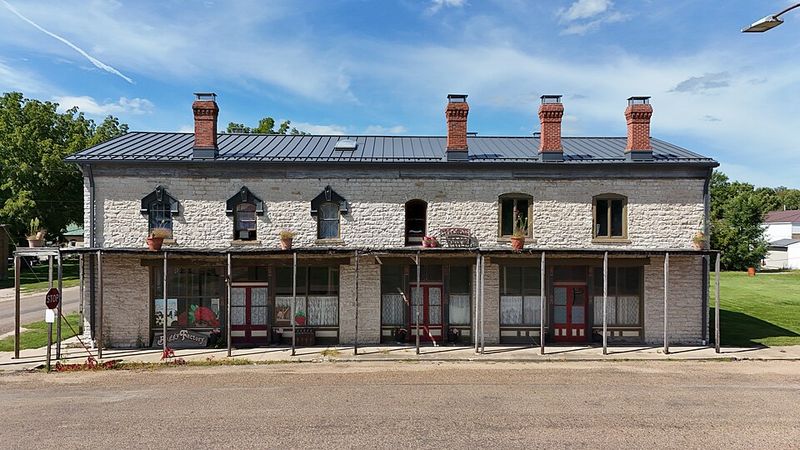
Some towns announce themselves with big signs and busy parking lots. Farmington does neither, and that restraint is part of its charm.
Located along the Des Moines River in Van Buren County, Iowa, Farmington was platted in 1839 and is recognized as the oldest of the 11 Villages of Van Buren.
The town has a quiet, lived-in quality that feels different from a carefully staged historic district. People actually live and work here, and the community still hosts its long-running Strawberry Festival each June.
Indian Lake Park is one of the strongest reasons to stop, with a no-wake lake, swimming area, campsites, cabins, picnic facilities, and a trail circling the water.
Nearby Shimek State Forest adds miles of woodland scenery, hiking opportunities, and outdoor space to the visit.
The Pioneer Historical Museum and surviving historic buildings offer a closer look at the area’s early settlement and community history.
Farmington rewards the kind of traveler who is happy to wander without an agenda and simply take in the atmosphere at their own pace.
5. Cantril, Iowa
Quiet is not a strong enough word for Cantril. This tiny village in Van Buren County, Iowa, operates at a frequency that most of the modern world has completely forgotten.
With a population that hovers around 200 people, Cantril is one of the smallest stops on this route, but it has a surprisingly strong identity rooted in its connections to the surrounding Amish and Mennonite communities.
The countryside around town is dotted with working farms, and visitors may occasionally see horse-drawn buggies traveling along the rural roads.
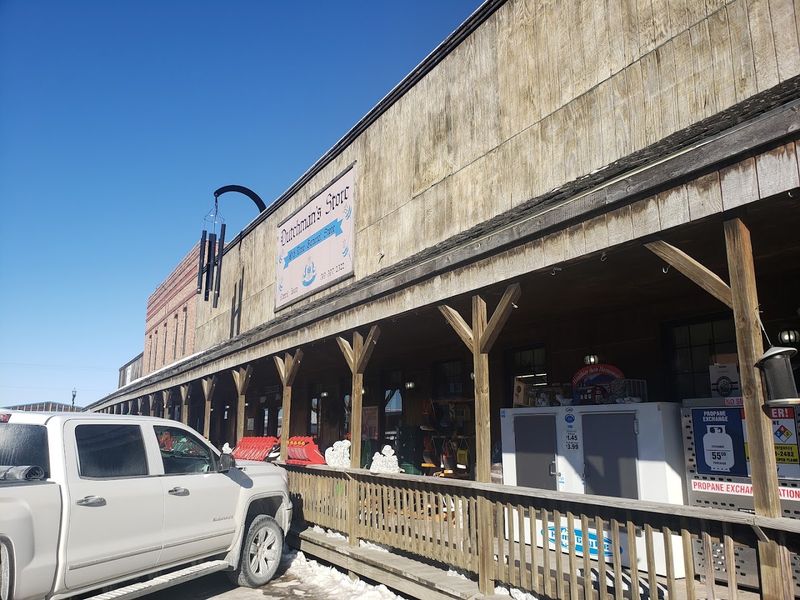
Cantril is also home to Dutchman’s Store, a beloved regional institution located along Highway 2.
The enormous store carries bulk foods, produce, deli items, groceries, fabrics, crafts, kitchenware, footwear, sporting goods, homemade products, and an ever-changing mix of gifts.
The store is a real draw for visitors from across the region, and it is easy to spend more time browsing than you planned.
Pick up some fresh bread or jelly before you leave. Both travel well and taste even better once you are back home.
6. Iowaville-Selma, Iowa
Few places on this route carry as much historical weight as Iowaville, a site with deep roots in Báxoje, or Ioway, history and later Euro-American settlement.
Located near the Des Moines River in Van Buren County, the Iowaville archaeological site represents a Báxoje village occupied from approximately 1765 into the 1820s.
Euro-American settlers established a town called Iowaville nearby during the 1830s, though little of that later settlement remains today beyond the cemetery and traces of the former community.
Selma adds the clearest public visitor stop through Log Cabin Park, where a cabin believed to date to around 1846 was moved and preserved.
The broader area contains culturally and archaeologically sensitive places, and visitors should remain in public areas rather than wandering onto private land or disturbing the landscape.
Visiting Iowaville-Selma is less about checking off conventional attractions and more about approaching the layered history of the river valley with patience and respect.
Take your time at the public park, read the available signs, and let the documented history guide the visit.
7. Mount Sterling, Iowa
The name promises elevation, and while Mount Sterling in Van Buren County, Iowa, is not exactly mountainous, its position along the southern hills near the Missouri border gives the surrounding countryside plenty of visual character.
This is one of the smallest communities on the route, with 33 residents recorded in the 2020 Census.
Mount Sterling is now unincorporated and was once affectionately known as Dog Town.
The surrounding area is better known for its extensive wetlands, woods, native grasses, and wildlife habitat than for a traditional collection of tourist landmarks.
Thousands of acres of public and private land around the community are enrolled in wetland programs, supporting birds and other wildlife throughout the year.
There is a peacefulness here that is hard to describe but easy to feel the moment you step out of the car.
Mount Sterling is the kind of stop that reminds you why slow travel beats rushing from one highlight to the next. Some places reward patience over speed every single time.
8. Stockport, Iowa
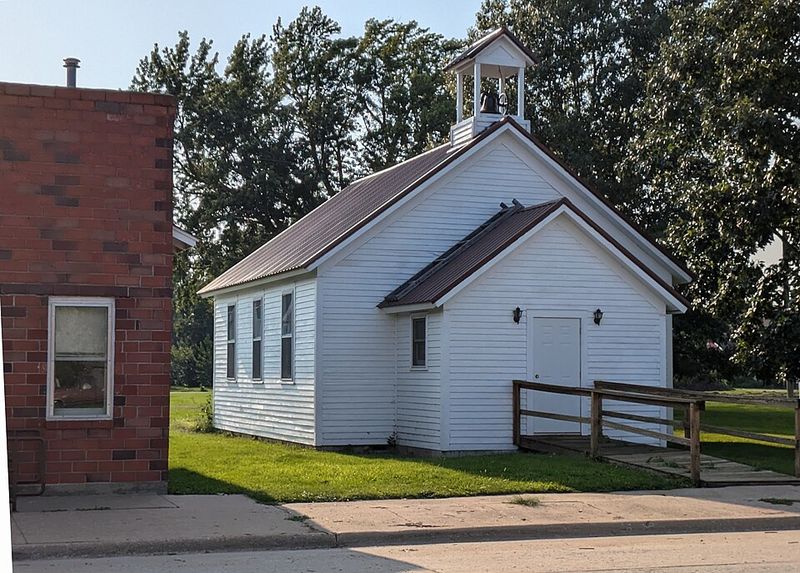
Stockport has the kind of low-key appeal that travel writers love but crowds have not yet discovered, which makes it one of the quietest stops on this route.
Situated in the northeast corner of Van Buren County, Iowa, Stockport is the youngest of the 11 villages and developed around the arrival of the railroad in the late 1800s.
The town’s best-known tradition is its Avenue of Flags, when hundreds of American flags line the community on selected patriotic holidays when weather allows.
The Peavine Line Museum preserves the story of the railroad that once connected Stockport with other small communities and regional markets.
Van Buren County’s Freedom Rock can also be found at the local American Legion.
Nearby Morris Park offers camping, a stocked pond, historic buildings, and a quiet rural setting away from busier recreation areas.
Pack a camera with extra storage. Between the flags, railroad history, and countryside, you will find more to photograph than this small village initially suggests.
9. Birmingham, Iowa
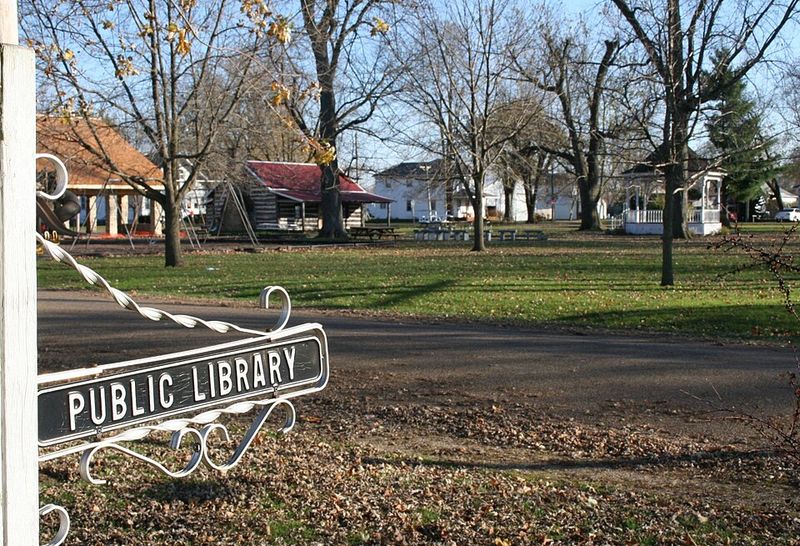
Last on the list but far from least, Birmingham wraps up this remarkable Iowa route with the same understated grace that defines every village along the way.
Located in Van Buren County, Iowa, Birmingham was laid out in 1839 and remains a small agricultural community surrounded by open farmland.
The city park gives the town one of its clearest visitor landmarks, with a restored gazebo, park shelter, and historic log cabin.
Birmingham Homecoming brings the community together each June with meals, a parade, vehicle and tractor displays, contests, and family activities.
The surrounding farmland provides the kind of broad, uncluttered views that remind you how beautiful the Midwest can be when you take the time to look.
Birmingham works well as a final stop because it has a quiet, conclusive feeling, like the last page of a good book that ends exactly as it should.
Roads leading out of Birmingham take you back into the wider world gradually, giving you time to hold onto the mood of this remarkable journey just a little bit longer.