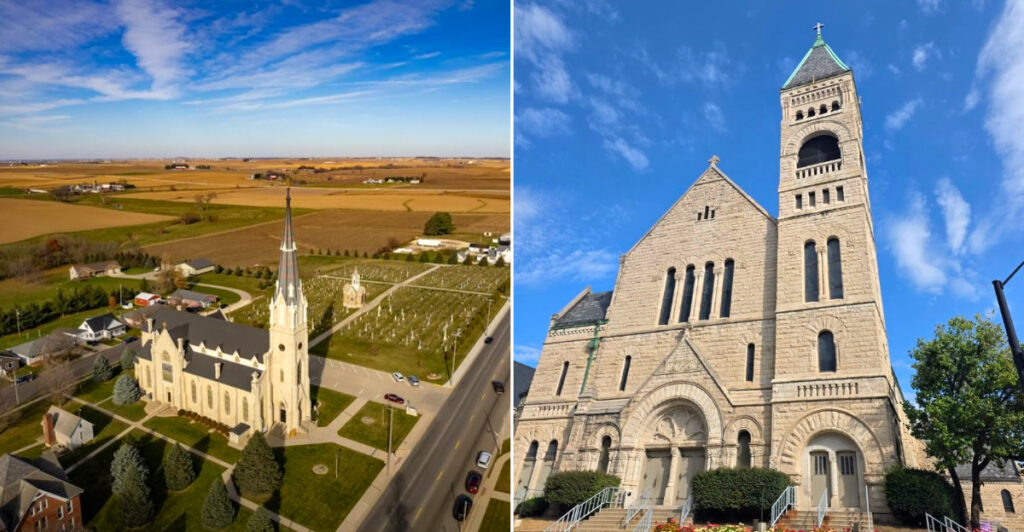
Iowa is not the first place most people picture when they think of old-world church beauty.
Then you walk into a basilica in a small town, or stand beneath a cathedral ceiling in a river city, and that assumption starts to fall apart quickly.
These churches were built with more than brick, stone, and stained glass.
They carry the faith of immigrant communities, the patience of skilled hands, and the kind of beauty that still asks people to look up and be quiet for a moment.
You can visit them for the architecture, the history, or the sacred feeling inside. Either way, they make Iowa feel a little older, deeper, and more surprising than the map suggests.
1. Basilica of St. Francis Xavier, Dyersville
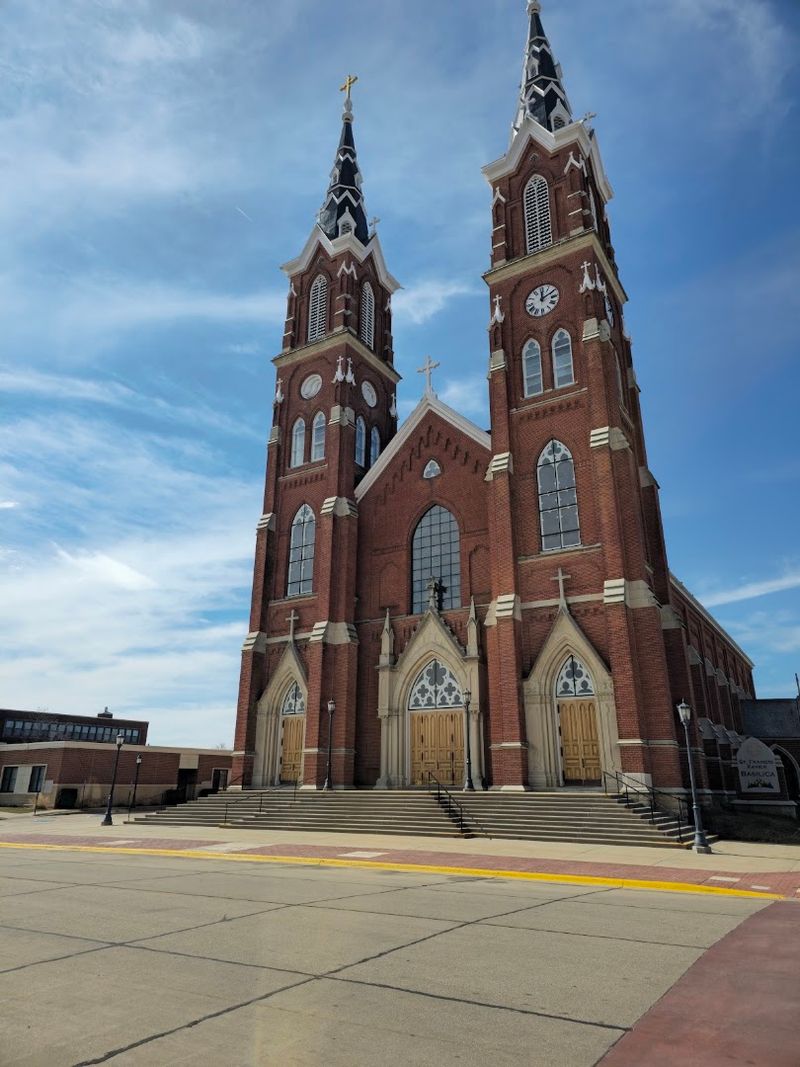
Few small towns in America can claim a church grand enough to earn the title of basilica, but Dyersville, Iowa, does exactly that.
The Basilica of St. Francis Xavier sits at 104 3rd Street SW and towers over the surrounding community with twin Gothic spires that reach approximately 212 feet into the sky.
Built between 1887 and 1889, this red-brick Gothic Revival landmark was designed by Dubuque architects Fridolin Heer Sr. and Fridolin Heer Jr.
Inside, the church is just as breathtaking as its exterior suggests.
Stained glass windows fill the nave with warm, colorful light, while carved wooden altars, decorative painting, and intricate craftsmanship give the space an unmistakably old-world atmosphere.
Pope Pius XII granted the church the title of minor basilica in 1956, placing it among a relatively small number of American churches to receive that distinction.
If you visit Dyersville and skip this landmark, you have missed one of the city’s defining architectural treasures.
2. Cathedral of St. Raphael, Dubuque
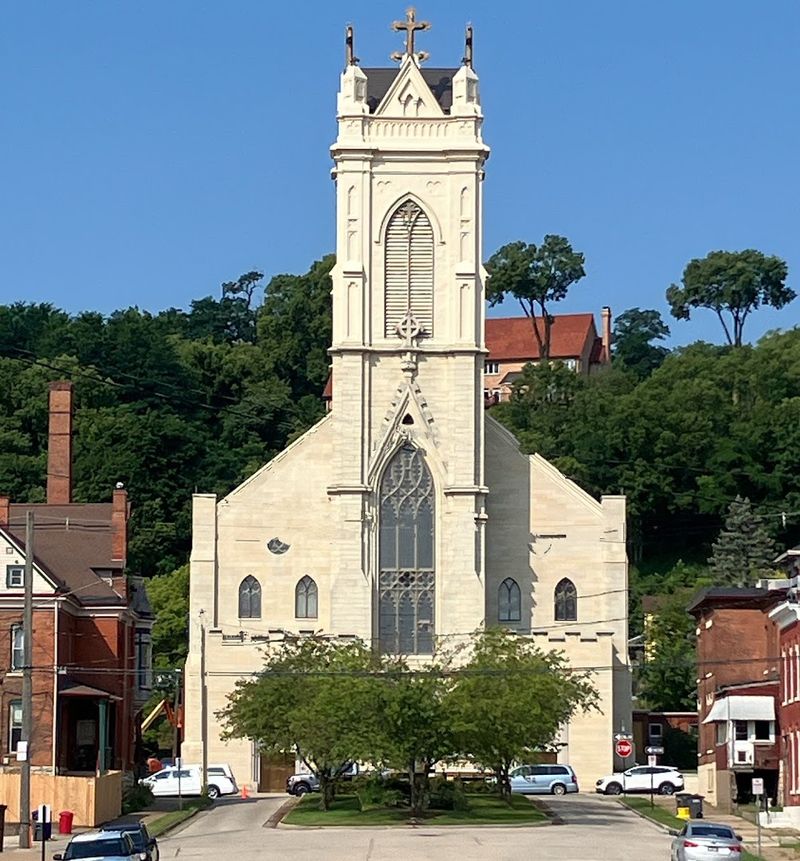
Sitting proudly at 231 Bluff Street in Dubuque, the Cathedral of St. Raphael carries the kind of quiet authority that generations of history can produce.
As the mother church of the Archdiocese of Dubuque, it holds a central role in Iowa’s Catholic heritage and has been a spiritual anchor for the city since the early 1800s.
The current structure was designed by John Mullany, dedicated in 1861, and built in the Gothic Revival style. Its prominent tower was completed in 1878.
The interior is equally impressive, with pointed arches, a high nave, stained glass, marble features, and carefully preserved religious artwork that gives the space a sense of timeless reverence.
Dubuque itself is one of Iowa’s oldest cities, perched along the Mississippi River bluffs, and the cathedral fits naturally into the city’s rich architectural landscape.
Because this remains an active place of worship, visitors should check the current Mass, parish, or tour schedule before expecting the interior to be open.
This is a place where the history of a city and the history of a faith intertwine beautifully.
3. Sacred Heart Cathedral, Davenport
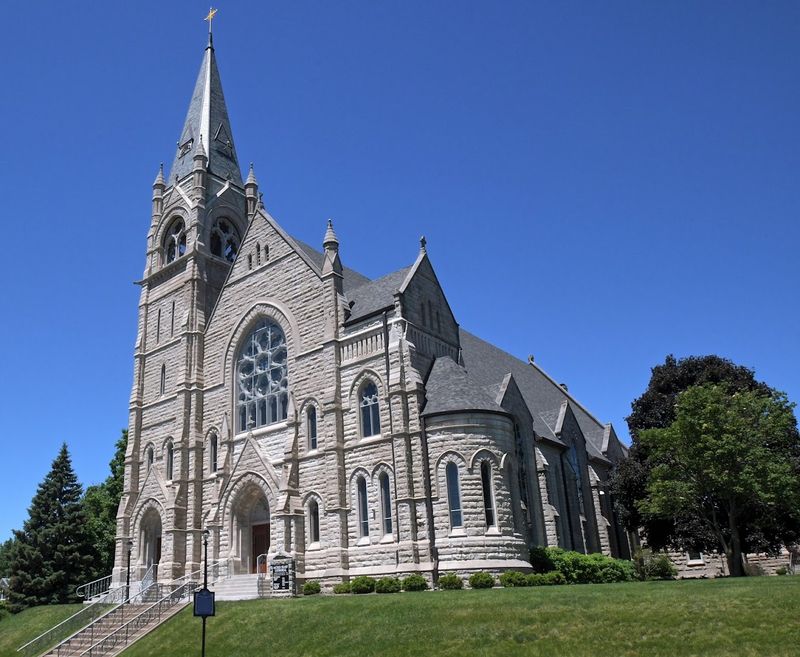
There is something immediately calming about stepping into Sacred Heart Cathedral, located at 422 East 10th Street in Davenport, Iowa.
This cathedral serves as the seat of the Diocese of Davenport and has been a cornerstone of the Quad Cities region’s religious and cultural life for generations.
Designed by James J. Egan and completed in 1891, the building is a Gothic Revival landmark constructed of brick and faced with rock-cut Bedford limestone.
Pointed windows, buttresses, and a tall spire give the exterior the vertical character associated with European Gothic church design.
Inside, richly worked wood, traditional pews, an ornate sanctuary, and stained glass windows create an atmosphere that rewards slow and careful attention.
Davenport sits right on the Mississippi River, so combining a cathedral visit with a riverside walk makes for a wonderfully full afternoon.
Sacred Heart is one of those places that rewards an unhurried visit rather than a quick glance on the way to somewhere else.
4. St. Ambrose Cathedral, Des Moines
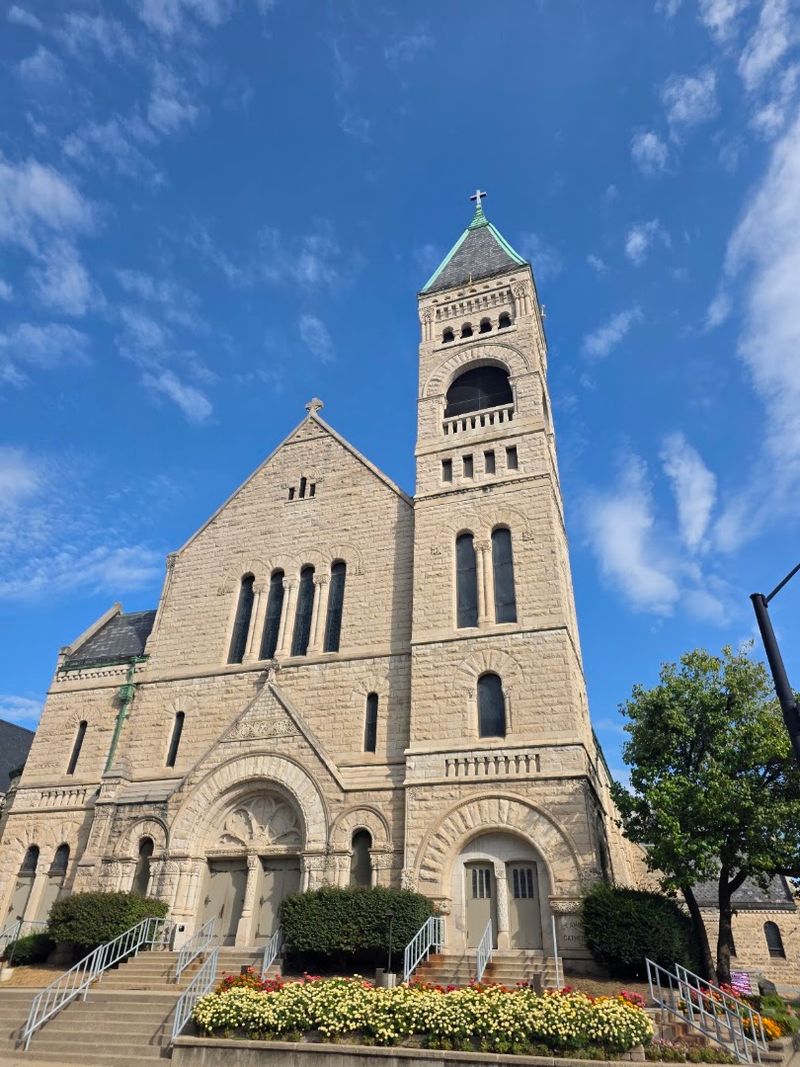
Right in the heart of Iowa’s capital city, St. Ambrose Cathedral at 607 High Street stands as a dignified reminder that Des Moines has deep roots stretching back long before the glass towers of its modern skyline arrived.
Built in 1890 and 1891, this Richardsonian Romanesque church serves as the cathedral of the Diocese of Des Moines and anchors its downtown surroundings with an impressive architectural presence.
Rough-faced stone walls, broad rounded arches, and a substantial corner tower give the exterior a distinctly European character that feels refreshingly unexpected in a Midwestern capital.
Inside, the atmosphere is warm and solemn, with stained glass, richly detailed religious artwork, and a painted barrel-vaulted sanctuary ceiling.
The cathedral has undergone restoration and improvement work over the years to preserve its historic character while keeping the building functional for an active modern congregation.
Visiting St. Ambrose is a great way to understand the layered history of Des Moines beyond its well-known political and business identity.
It proves that beauty and faith have long been part of this city’s foundation.
5. Cathedral of the Epiphany, Sioux City
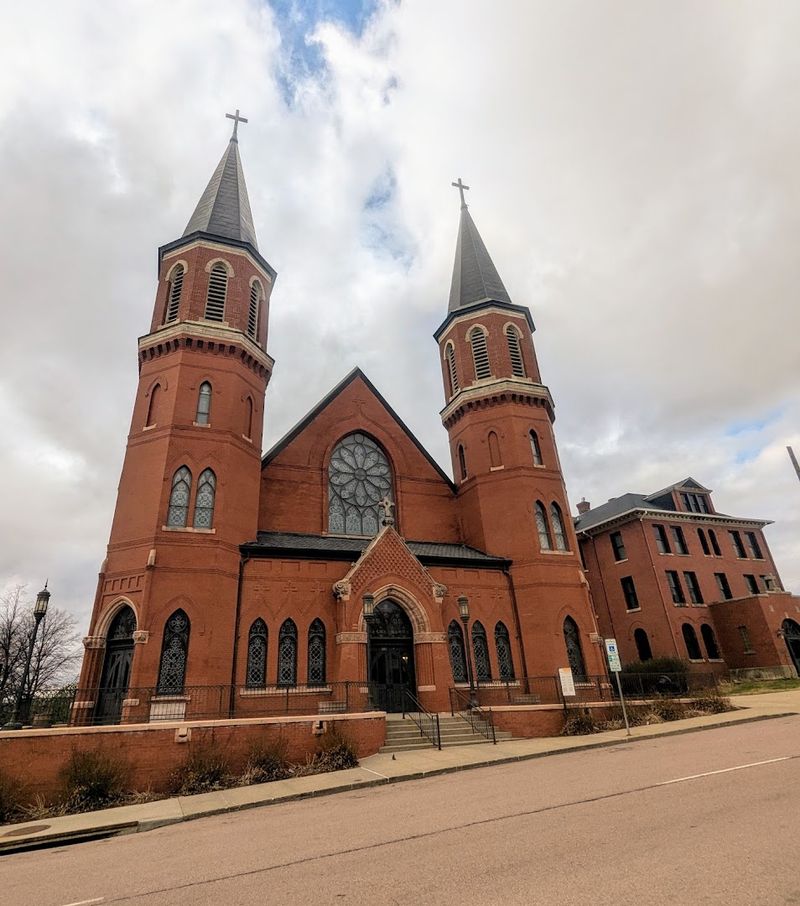
Sioux City’s Cathedral of the Epiphany, located at 1003 Douglas Street, brings a level of Gothic grandeur to the Missouri River corridor that genuinely catches first-time visitors off guard.
As the mother church of the Diocese of Sioux City, this cathedral carries enormous spiritual significance for the region, but its architectural beauty alone is reason enough to seek it out.
The soaring vaulted interior creates a sense of vertical space that pulls the eyes upward and creates a natural feeling of awe.
Intricate stone carvings, detailed woodwork in the choir loft, and a collection of richly colored stained glass windows all contribute to an interior that feels carefully assembled over many decades of devotion.
The cathedral’s exterior features sharp Gothic lines and decorative stonework that look especially striking when lit up on a winter evening.
Sioux City itself is often overlooked by travelers passing through western Iowa, which makes discovering a cathedral of this quality feel like a genuine reward for the curious explorer.
Plan to spend at least an hour here, because rushing through would simply sell it short.
6. St. Patrick Catholic Church, Imogene
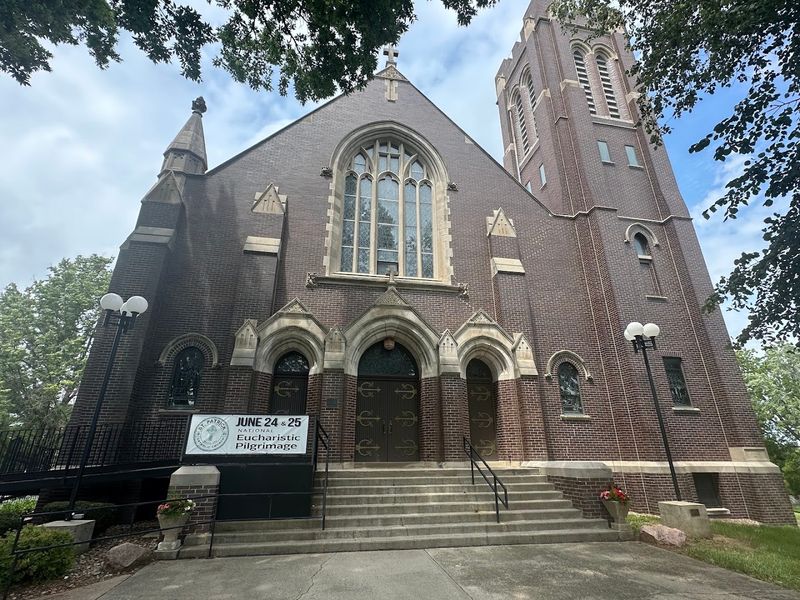
Tiny Imogene, Iowa, holds a surprise that stops many road-trippers in their tracks: an elaborate red-brick Catholic church rising above the surrounding rural landscape.
St. Patrick Catholic Church at 304 3rd Street serves a parish founded in 1880 by Irish Catholic settlers who carried their religious traditions into southwestern Iowa.
The present church was constructed in 1915 and 1916 after an earlier parish building was lost to fire. Its exterior combines Late Gothic Revival and Romanesque influences beneath an approximately 80-foot bell tower.
Inside, the church is far more ornate than its small-town setting might suggest.
Carrara marble altars, stained glass made in Munich, mosaic Stations of the Cross from Venice, and other carefully preserved details give the interior a strong European character.
Visiting St. Patrick means encountering an important piece of rural Iowa history that is rarely discussed in mainstream travel guides.
The surrounding countryside is beautiful in its own quiet, wide-open way, making the drive to Imogene part of the experience rather than merely a means to an end.
7. St. Wenceslaus Catholic Church, Spillville
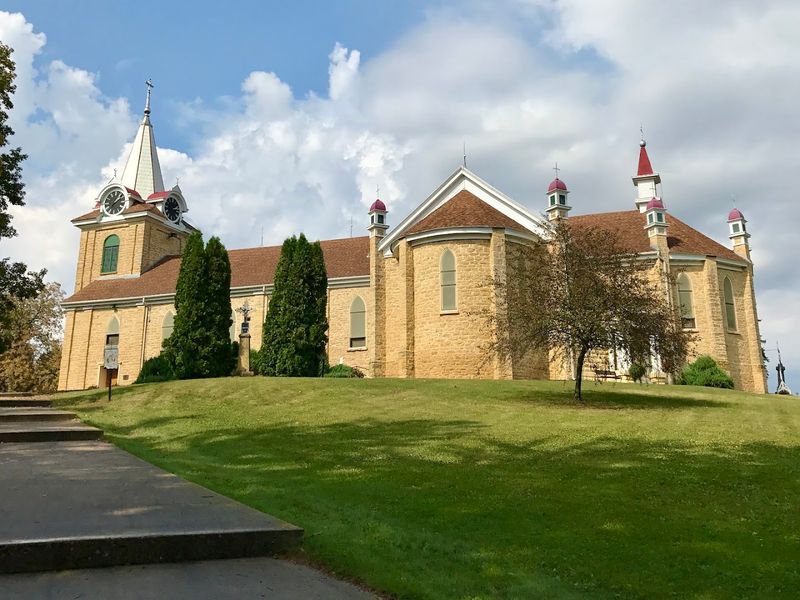
Music lovers and history buffs alike will appreciate that the village of Spillville, Iowa, is where composer Antonin Dvorak spent the summer of 1893, and St. Wenceslaus Catholic Church at 207 Church Street played a central role in that famous visit.
Dvorak reportedly played the church organ during Sunday services, and the memory of that summer still lingers in the air of this beautifully preserved Czech immigrant community.
The church itself is a lovely example of the Gothic ecclesiastical architecture that Bohemian settlers brought with them to northeastern Iowa in the mid-1800s.
Its limestone construction gives the building a natural, earthy quality that blends harmoniously with the wooded landscape of the Turkey River valley surrounding it.
The interior features traditional wooden pews, a classic altar arrangement, and stained glass windows that cast soft, filtered light throughout the nave.
Spillville is also home to the famous Bily Clocks Museum, so combining both stops makes for a wonderfully quirky and culturally rich day trip.
St. Wenceslaus is one of those places where art, history, and faith all converge in the most unexpected and satisfying way.
8. St. Boniface Catholic Church, New Vienna
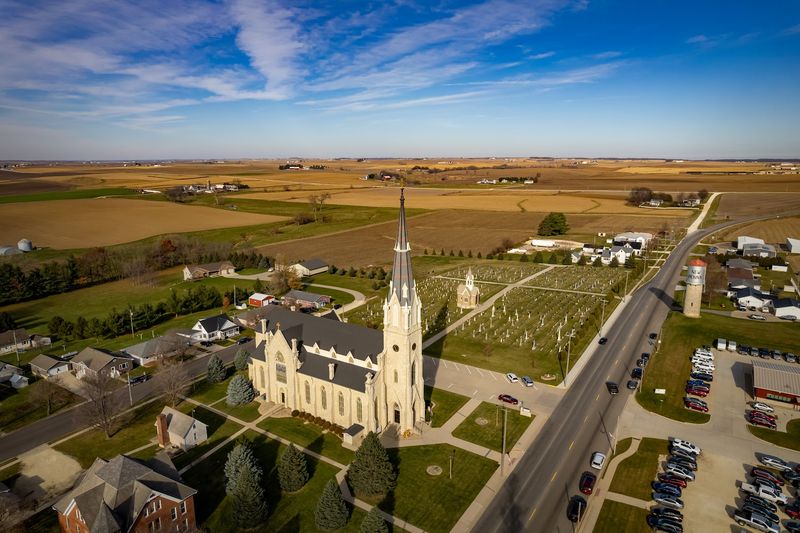
New Vienna, Iowa, is a small German Catholic settlement in the rolling hills of Dubuque County, and St. Boniface Catholic Church at 7401 Columbus Street is its crowning architectural achievement.
German immigrants who settled this area during the 1840s and 1850s carried their religious traditions into their new community and later created a church with unmistakable European inspiration.
Constructed between 1884 and 1887, St. Boniface is a French Gothic-inspired structure built from pale magnesia limestone quarried nearby rather than brick.
Its approximately 200-foot tower and spire can be seen from a considerable distance across the surrounding farmland.
Inside, the church is comparatively restrained but carefully composed, with coupled columns, stained glass, and a carved mahogany altar providing the principal decorative focus.
The drive through Dubuque County’s scenic countryside to reach New Vienna is itself a pleasure, with gently rolling hills that feel far removed from the flat prairie many people associate with Iowa.
St. Boniface rewards every mile of the journey.
9. St. Luke Catholic Church, St. Lucas
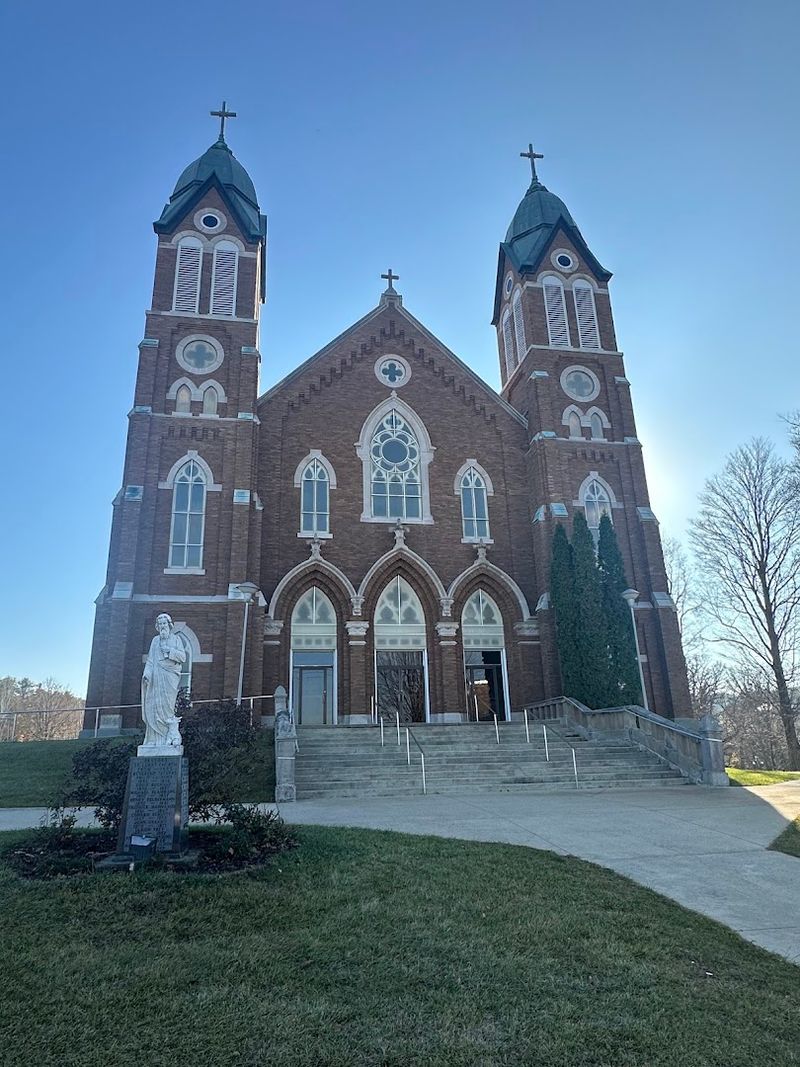
St. Luke Catholic Church has shaped the identity of St. Lucas for generations, giving the small northeastern Iowa community a deep connection between faith, heritage, and place.
Located at 215 East Main Street, the parish was founded in 1855 by settlers whose community was then commonly known as Statheltown.
The present red-brick church was constructed in 1914 and 1915 and features twin towers, limestone trim, and Gothic influences drawn from French and German church architecture.
Inside, original altars, Bavarian stained glass, traditional pews, and carefully preserved decorative work create an interior far more elaborate than the rural setting might suggest.
St. Lucas sits in Fayette County, a part of Iowa known for wooded ridges, streams, farmland, and scenic roads that make the drive enjoyable in any season.
The connection between the parish and the town’s identity gives the church a sense of place that feels rare and meaningful.
Here, faith helped shape the community, and that is a story worth telling.
10. St. Mary of the Visitation Catholic Church, Ottumwa
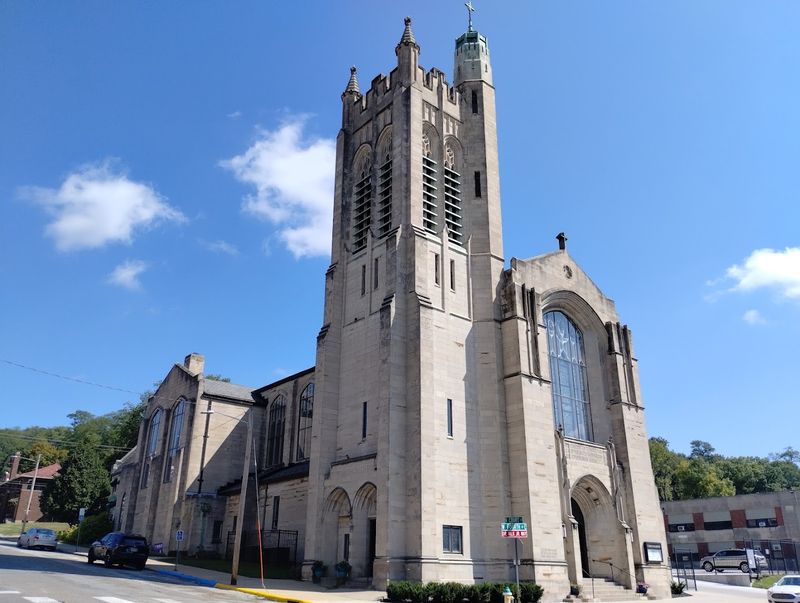
Ottumwa might be best known outside Iowa as the hometown of a certain fictional television character, but St. Mary of the Visitation Catholic Church at 216 North Court Street gives the city a very real and beautiful architectural landmark.
The Catholic community connected with St. Mary dates to 1849, while the present Late Gothic Revival church was constructed during the late 1920s.
Bedford limestone covers the exterior, and the prominent corner bell tower gives the facade a strong vertical presence that commands attention from the street.
Inside, the traditional arrangement, detailed woodwork, religious artwork, and stained glass bring European church-building traditions into the heart of southeastern Iowa.
Since July 2025, St. Mary and St. Patrick have operated together as St. Joseph Parish, although the St. Mary building remains an active place of Catholic worship.
Pairing a church visit with a walk along the Des Moines River creates a lovely and well-rounded afternoon in this often-underestimated city.
Beauty and history combine here in ways that consistently surprise first-time visitors.
11. St. John the Evangelist Catholic Church, Independence
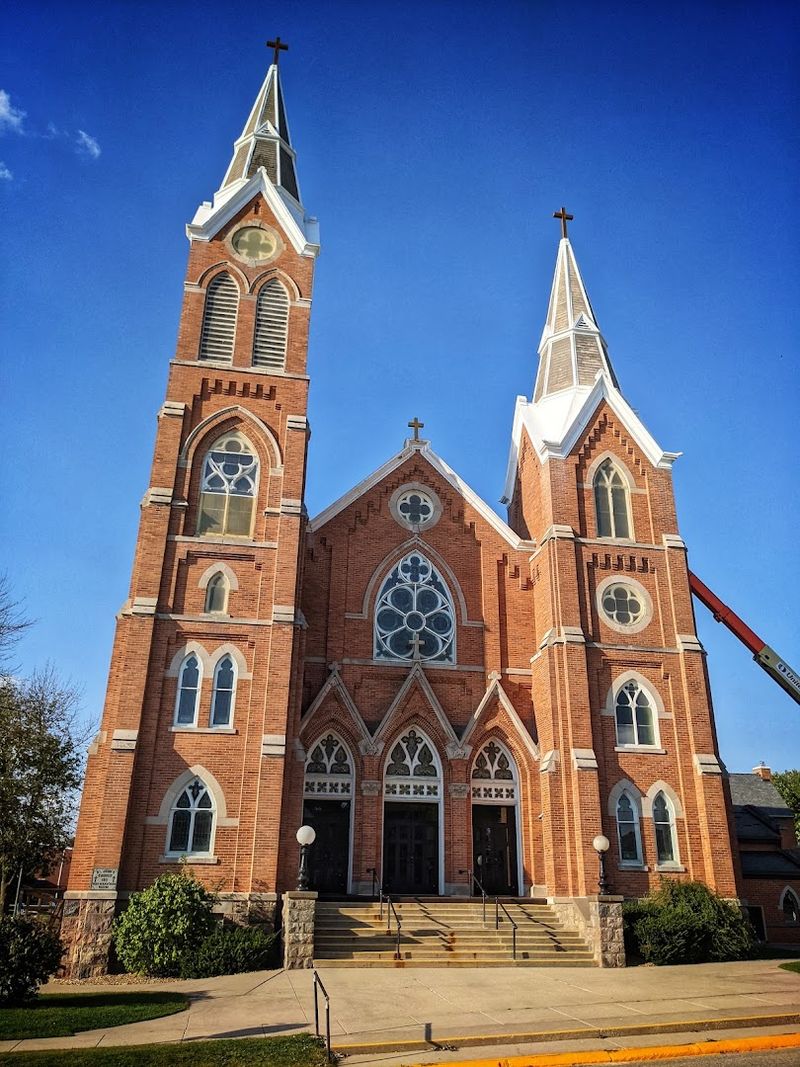
Independence, Iowa, is a quiet Buchanan County seat, and St. John the Evangelist Catholic Church at 209 5th Avenue NE adds a striking chapter to its architectural story.
The parish traces its history to 1856, while the present Gothic Revival church was completed around 1911.
Its red-brick exterior, cast-stone details, twin towers, and design influenced by 15th-century French churches give it a distinctly European character.
Inside, traditional wooden pews, a richly decorated sanctuary, and stained glass create a soft and reverent atmosphere during daylight hours.
The area’s Catholic history includes both Irish and German communities. A separate German parish dedicated to St. Joseph was established in 1882 and later merged with St. John in 1958.
Independence itself has a charming downtown and sits along the Wapsipinicon River, giving visitors plenty of reasons to linger in the area beyond the church.
St. John the Evangelist is the kind of find that makes explorers glad they took a quieter road through northeastern Iowa.