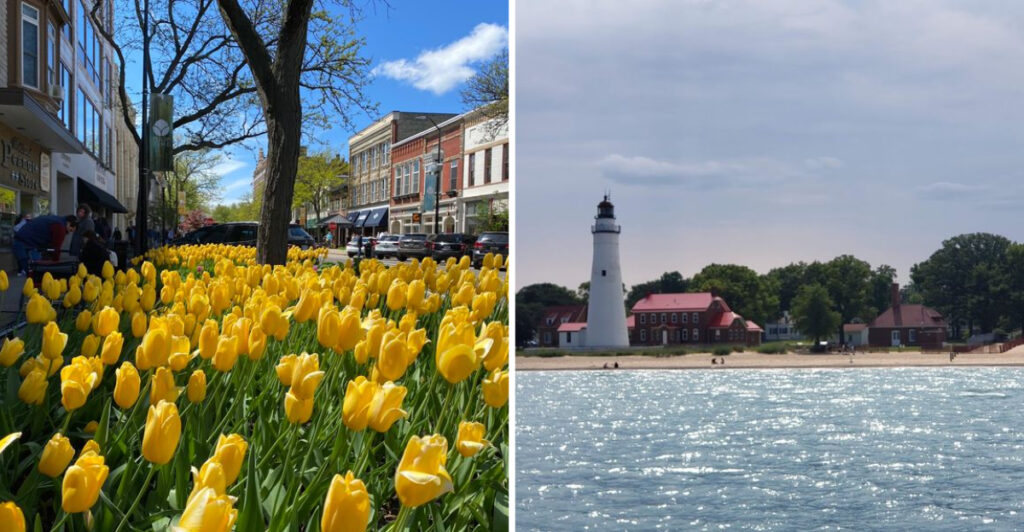
Choo-choose your day trip carefully, because Michigan has stops ready to pull you off the couch and onto the rails.
The Wolverine, Blue Water, and Pere Marquette turn travel time into part of the fun. Farmland rolls past, and rivers flash beyond the glass.
The timetable deserves one serious look before departure. Some stations receive only one daily round trip, while others offer more flexibility. Check the return train before booking so your easy escape does not become an accidental overnight stay.
Once the schedule lines up, the rest practically runs on rails.
Michigan looks especially good from a train window. The ride home comes with tired feet and absolutely no steering wheel.
1. New Buffalo
The first surprise comes quickly when the train leaves Chicago and reaches Michigan’s southwest corner.
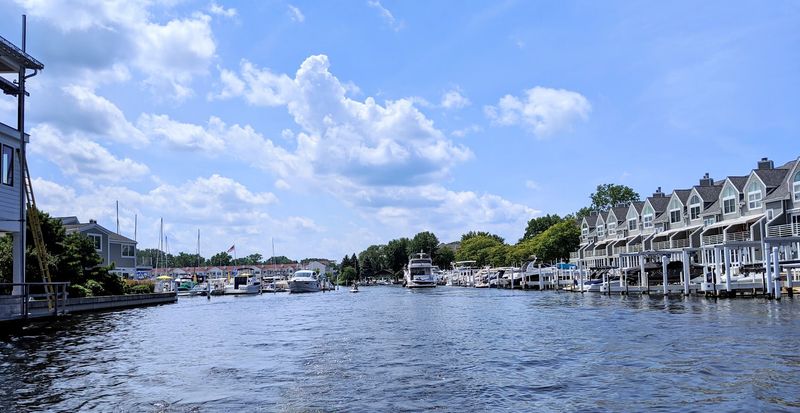
New Buffalo sits beside Lake Michigan, with a compact downtown that lets you trade the platform for shops, restaurants, and waterfront air without arranging a complicated transfer.
Start along Whittaker Street, where independent businesses and casual dining spots keep the walk lively. Continue toward the marina and public beach when the weather cooperates. The town is small enough that you can wander without turning the day into a mileage challenge.
This stop works especially well for travelers who want the vacation mood without spending half the trip getting there. One moment you are watching industrial scenery outside Chicago, and soon the lake is filling the horizon.
Lunch can stay simple. Order a sandwich, fish dish, baked treat, or whatever local special catches your attention, then save time for the sand. The return train feels much more satisfying when a little beach grit follows you aboard.
Before planning, confirm the Wolverine schedule carefully because not every train stops here and same-day options depend heavily on your starting station.
2. St. Joseph
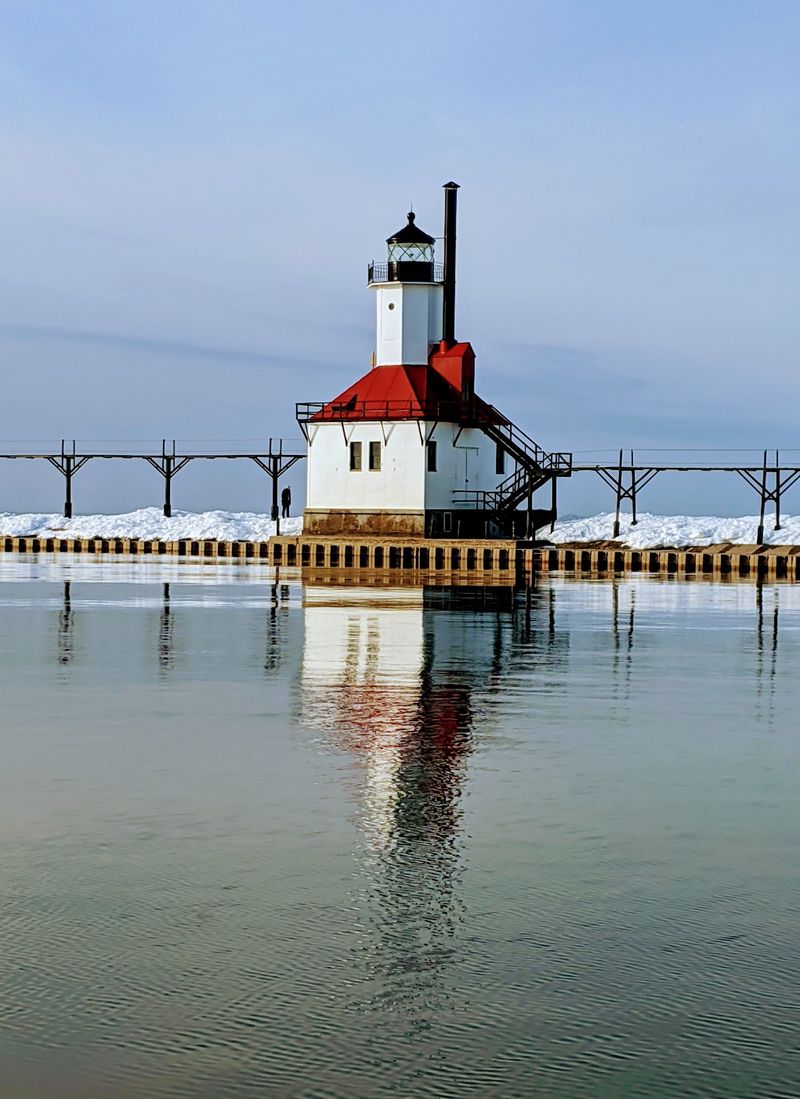
Arriving in St. Joseph places you below a downtown perched above Lake Michigan. That elevation creates the day’s first decision: head toward Silver Beach or climb toward the shops and restaurants along the bluff.
Beach-first travelers can walk toward Silver Beach County Park, the pier, and the lighthouse views. Families may also enjoy the nearby carousel and fountain area, while photographers will find plenty to aim at before lunch.
Downtown brings a different rhythm. State Street and the surrounding blocks offer cafés, bakeries, boutiques, and restaurants within a manageable area. You can eat, browse, and return toward the water without needing to reorganize the whole day.
The best part is the contrast. Sand and lake views sit below, while shaded streets and bluff-top parks wait above. You get two versions of the same town with one train ticket and a good pair of shoes.
Amtrak serves this station on the Pere Marquette, which operates one daily round trip. That makes timetable planning essential rather than optional, especially when the return train is the only one available.
3. Holland
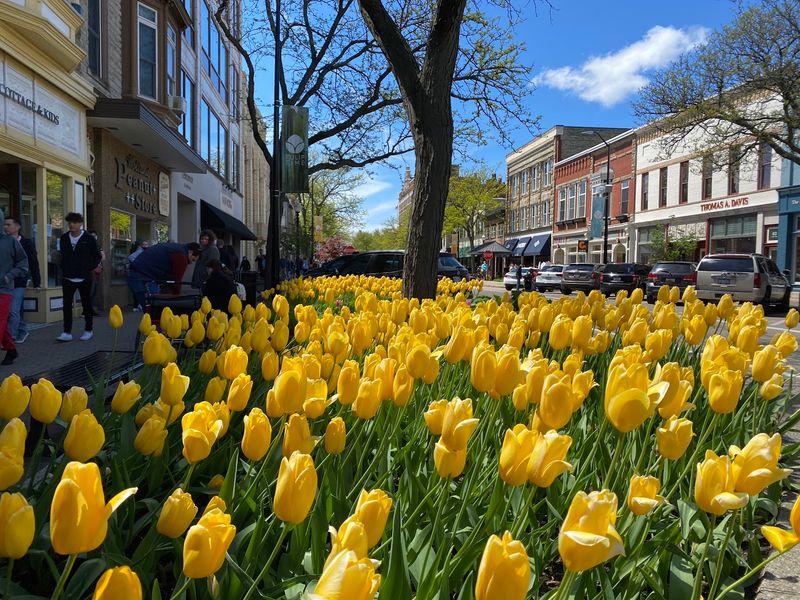
Holland gives you a day trip with a clear visual identity. Brick storefronts, Dutch references, landscaped streets, and the nearby windmill create a destination that feels distinct before you have chosen lunch.
Begin downtown, where locally owned shops and eateries line walkable blocks near Hope College. The center stays active beyond tulip season, so you do not need spring blooms to justify the ride.
Windmill Island Gardens sits near downtown and features De Zwaan, an authentic working Dutch windmill brought from the Netherlands in 1964. Seasonal operations can change, so check access before making it the center of your itinerary.
Food can follow the Dutch theme or move in another direction entirely. A bakery stop suits the setting, but coffee shops, brunch counters, and broader restaurant choices keep the day from becoming one long cultural reenactment.
The Pere Marquette provides the rail connection, and only one round trip operates daily. Build the schedule backward from the departure time, then decide how much of downtown and the windmill grounds comfortably fit.
4. Grand Rapids
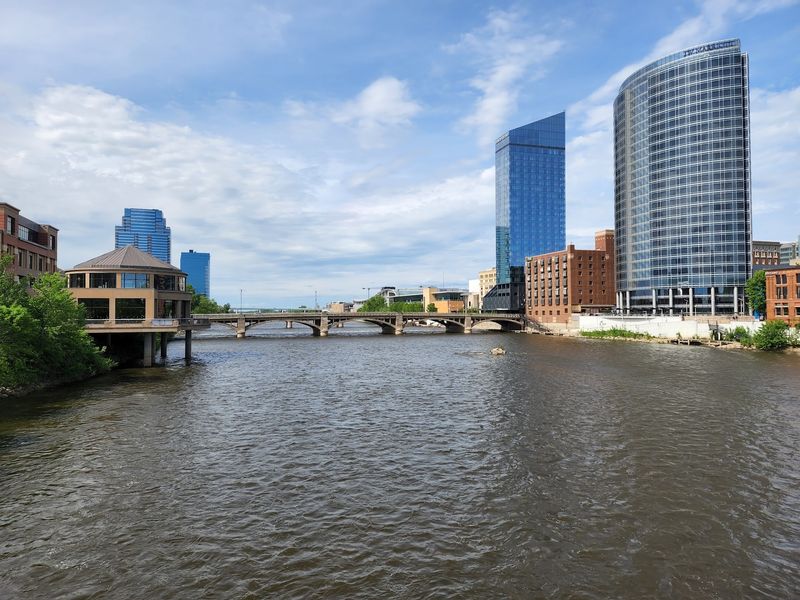
Grand Rapids is the list’s easiest place to let appetite take control. The station sits close to the Downtown Market, where indoor food merchants and restaurants create an immediate answer to the question of what to eat first.
You could spend a large part of the visit inside the market, moving between savory plates, baked goods, coffee, and dessert. That is a perfectly defensible plan, especially when weather makes outdoor wandering less appealing.
The city offers much more once you step outside. Downtown parks, public art, museums, and the Grand River create several routes for walking off lunch.
The Grand Rapids Public Museum sits on the river’s west bank, while other cultural attractions spread through the center. You can choose one major stop or let downtown scenery fill the hours naturally.
This destination suits travelers who dislike rigid itineraries. Eat first, choose a museum if the mood strikes, then follow the river or browse downtown before returning to the platform.
The Pere Marquette links the city with Chicago through one daily round trip. Because this is the route’s eastern endpoint, verify that the schedule allows the length of visit you want from your departure point.
5. Kalamazoo
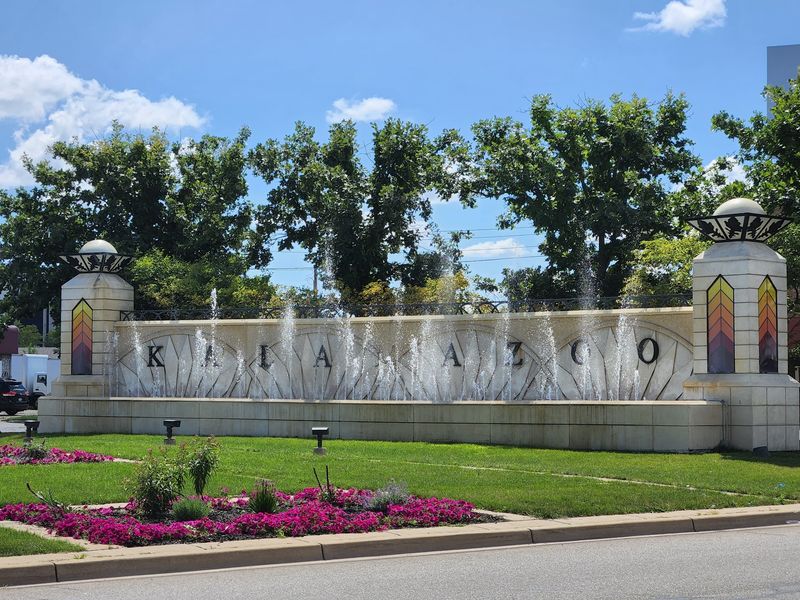
Kalamazoo’s station places you close to the center of the action, making this one of the more flexible stops on the Blue Water and Wolverine routes.
Restaurants, shops, cultural venues, and public spaces begin within a short distance of the platform. Start with coffee or breakfast if your train arrives early, then let downtown determine the rest.
The Kalamazoo Mall offers an outdoor pedestrian shopping district that runs through the center and makes casual exploration easy. You can pause for lunch, browse local businesses, or find a bench when your legs request negotiations.
Museums and performing arts add indoor options, while the restaurant scene covers plenty of ground without forcing you into a single neighborhood. You can keep the day relaxed or fill every hour.
Cyclists have another possibility. The Kal-Haven Trail connects the Kalamazoo area with South Haven, though riding a major portion is not a casual addition to a short rail trip.
Bring a bike only after checking current bicycle rules and your realistic return schedule. This station receives service from both the Wolverine and Blue Water, creating more options than towns served by one daily train.
6. Battle Creek
Kalamazoo’s station places you close to the center of the action, making this one of the more flexible stops on the Blue Water and Wolverine routes.
Restaurants, shops, cultural venues, and public spaces begin within a short distance of the platform. Start with coffee or breakfast if your train arrives early, then let downtown determine the rest.
The Kalamazoo Mall offers an outdoor pedestrian shopping district that runs through the center and makes casual exploration easy. You can pause for lunch, browse local businesses, or find a bench when your legs request negotiations.
Museums and performing arts add indoor options, while the restaurant scene covers plenty of ground without forcing you into a single neighborhood. You can keep the day relaxed or fill every hour.
Cyclists have another possibility. The Kal-Haven Trail connects the Kalamazoo area with South Haven, though riding a major portion is not a casual addition to a short rail trip.
Bring a bike only after checking current bicycle rules and your realistic return schedule. This station receives service from both the Wolverine and Blue Water, creating more options than towns served by one daily train.
7. East Lansing
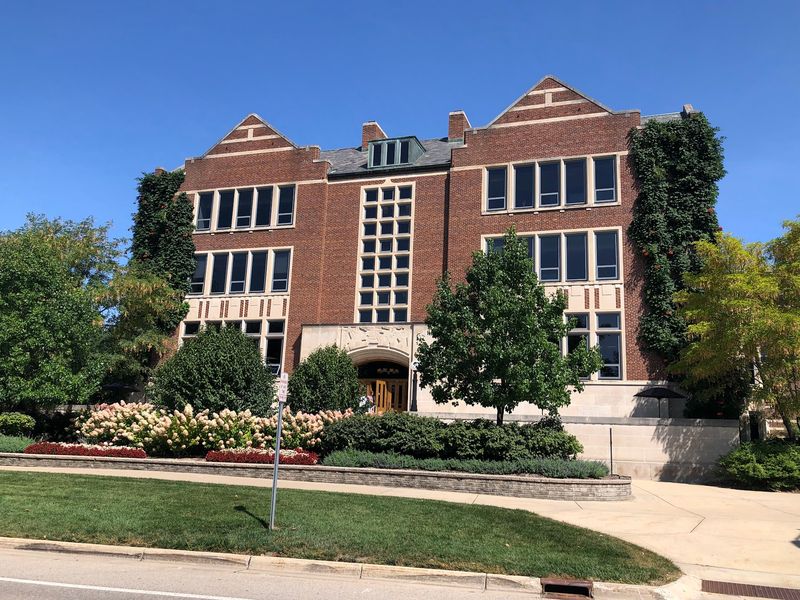
The energy changes as soon as you reach East Lansing. Michigan State University brings students, faculty, events, museums, gardens, and a broad dining mix to the area around campus.
Grand River Avenue is the obvious food route. Restaurants representing several cuisines line the corridor, making it easy to move from noodles or shawarma to burgers, coffee, or dessert without needing a car for every decision.
The campus gives you room to roam after eating. Paths lead through green spaces, past academic buildings, and toward attractions such as the Eli and Edythe Broad Art Museum and the W.J. Beal Botanical Garden.
Check current opening information before centering the day on a particular venue. You do not want to arrive with museum-level enthusiasm and find a locked door holding a very different schedule.
The station is south of the main campus core, so allow time for a local bus, rideshare, or a substantial walk. That transfer is manageable, but it should not be discovered when your return train is approaching.
Blue Water service reaches the area once in each direction daily. The limited frequency makes this a timetable-first trip, but the campus offers enough food and activity to fill the hours between trains.
8. Ann Arbor
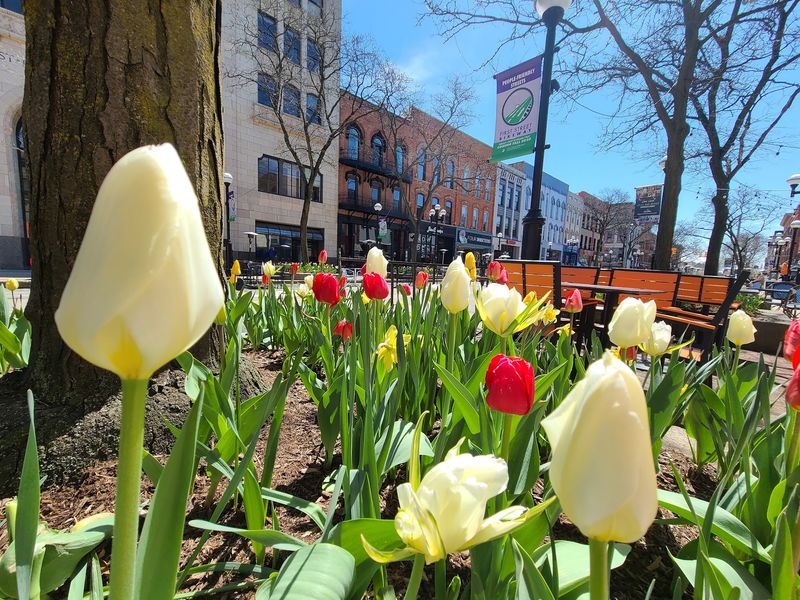
Ann Arbor greets rail travelers with a problem: too many good choices within one energetic city. The station sits north of downtown, close enough for a walk toward Kerrytown and the central business district.
Kerrytown Market and Shops makes a strong opening stop. Food businesses, specialty retailers, and the nearby farmers market area create plenty of reasons to browse before you have reached the heart of downtown.
Continue toward Main Street or the University of Michigan campus depending on your mood. Bookstores, museums, cafés, restaurants, and public spaces can fill the rest of the visit without much effort.
Food lovers may already have a famous deli in mind, but the city’s dining identity extends well beyond one institution. Korean, Middle Eastern, vegetarian, bakery, noodle, pizza, and seasonal American options make indecision almost guaranteed.
The Wolverine offers multiple daily round trips, giving this stop better scheduling flexibility than several destinations on the list.
Still, compare the exact trains serving your origin before assuming the final departure will wait while you debate one more dessert.
9. Detroit
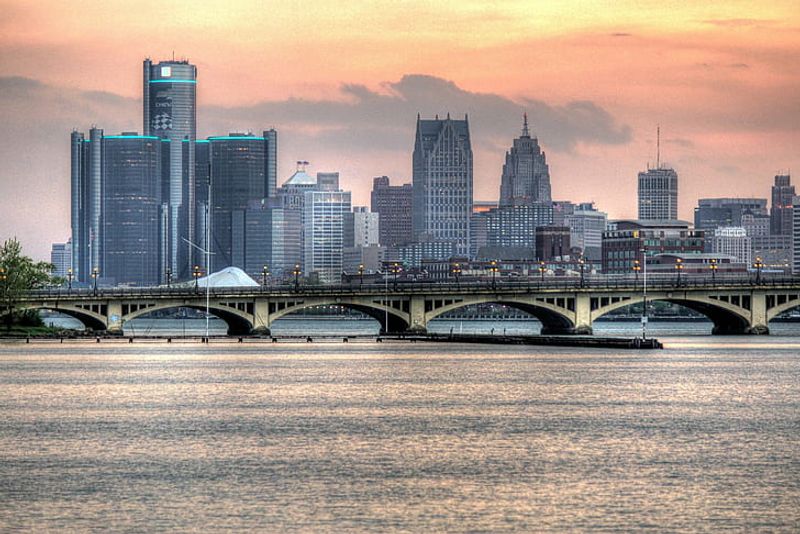
Detroit demands a different scale of planning. The Amtrak station sits in New Center, where the QLINE provides a useful connection toward Midtown and downtown along Woodward Avenue.
You can build the day around museums, architecture, markets, sports, or food. The Detroit Institute of Arts and other Midtown attractions are closer to the station, while downtown adds riverfront walks, historic buildings, and major entertainment venues.
Eastern Market deserves attention, but its fullest market experience depends on the day of the week. Check the calendar before arriving with visions of overflowing sheds and dozens of vendors.
Eating presents the happiest complication. Detroit-style pizza, coney dogs, Middle Eastern cooking, soul food, Mexican restaurants, and bakeries reflect the city’s communities and history.
The Wolverine provides several daily trains, which improves day-trip flexibility. The city is still too large to explore without priorities, so choose one or two neighborhoods instead of spending the afternoon traveling between distant goals.
Leave extra time for the trip back to New Center. Missing a train because one last square of pizza seemed urgent would be painfully on brand.
10. Port Huron
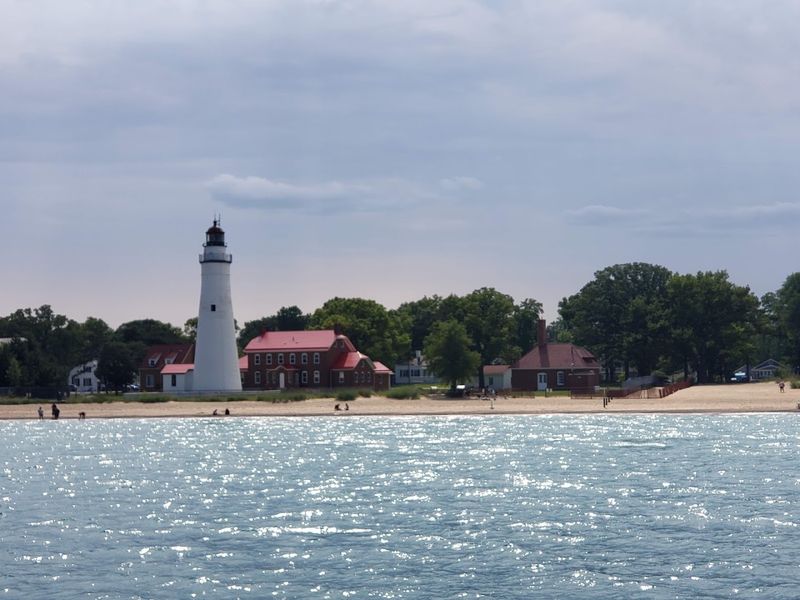
The Blue Water finishes its Michigan journey in Port Huron, where Lake Huron flows into the St. Clair River. Freighters, bridges, river views, and maritime history give the city a clear sense of place.
The station is not directly in the downtown waterfront district, so plan transportation after arrival. Once you reach the river, the moving ships provide free entertainment that can hold your attention far longer than expected.
Walk along the waterfront, explore maritime attractions when open, and look toward the Blue Water Bridge connecting Michigan with Ontario.
The current, international traffic, and broad water views make the stop feel like a genuine endpoint. Lunch can lean toward freshwater fish, diner classics, sandwiches, or whatever suits the day.
The best table may be the one that gets you back outside quickly enough to watch another freighter pass.
Only one Blue Water round trip operates daily, and its schedule is designed around travel to and from Chicago rather than casual same-day sightseeing from every Michigan station.
For many travelers, this destination works better as a longer visit or as the starting point for a westbound adventure.