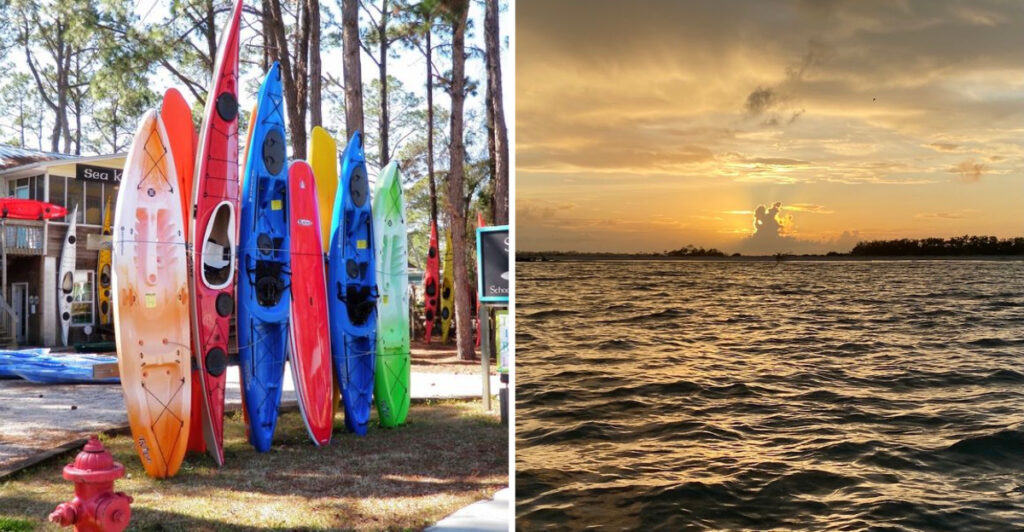
Georgia hides this beach behind open water, and your reward starts the moment the shoreline disappears behind you.
There is no bridge, parking lot, or easy walk from the car. Reaching the uninhabited island means arriving by boat, paddleboard, or guided trip, with the crossing becoming part of the day.
Once you land, pale sand and shifting blue-green water replace the usual beach crowds. The colors change with the tide, sky, and depth, so no two arrivals look quite the same.
This is not a last-minute flip-flop stop. You need a route and enough time to enjoy the journey.
Ready to trade an ordinary beach entrance for a Georgia shoreline you actually have to earn?
Pale Sand And Shallow Water Create The Tropical Illusion
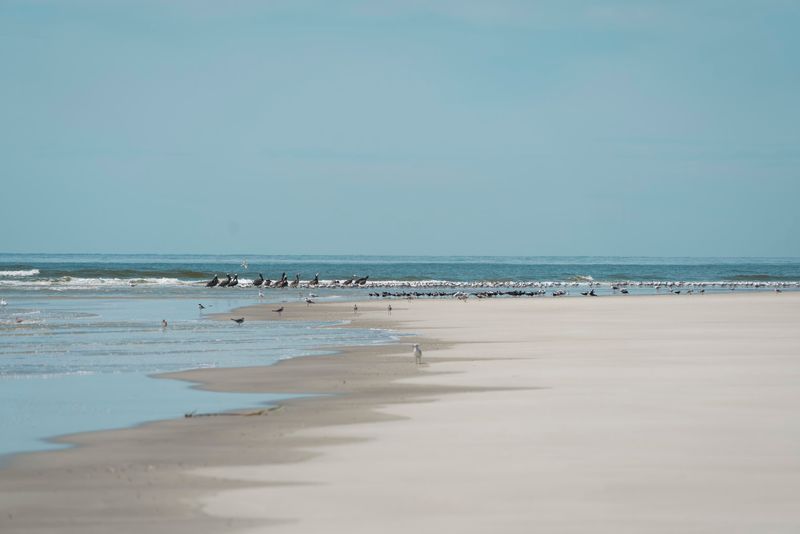
Bright sunlight can make Little Tybee’s outer beaches look far removed from the Georgia coast. Pale sand borders shallow channels where water shifts through blue, green, and silver.
Sunlight reaches the sandy bottom in shallower areas, while tides continually change the depth and shape of the channels. Clear weather strengthens the tropical impression, while clouds bring softer colors.
You are not arriving at a manufactured lagoon with one guaranteed shade printed on a brochure. The shoreline changes with wind, water, and sand.
A bar visible during lower water can disappear later. A narrow channel may widen enough to make your return route look unfamiliar.
Little Tybee also lacks the visual clutter surrounding developed beaches. There are no hotel towers behind the dunes, rows of rental umbrellas, or paved promenades beside the sand.
Instead, your view moves between ocean, dunes, marsh grass, driftwood, and sky. Even your kayak looks unusually colorful when it becomes the brightest object for hundreds of yards.
Keep your camera protected during the crossing. Once you land, the island provides plenty of scenery without anyone arranging a single beach chair.
Reaching Little Tybee Requires A Trip Across The Water
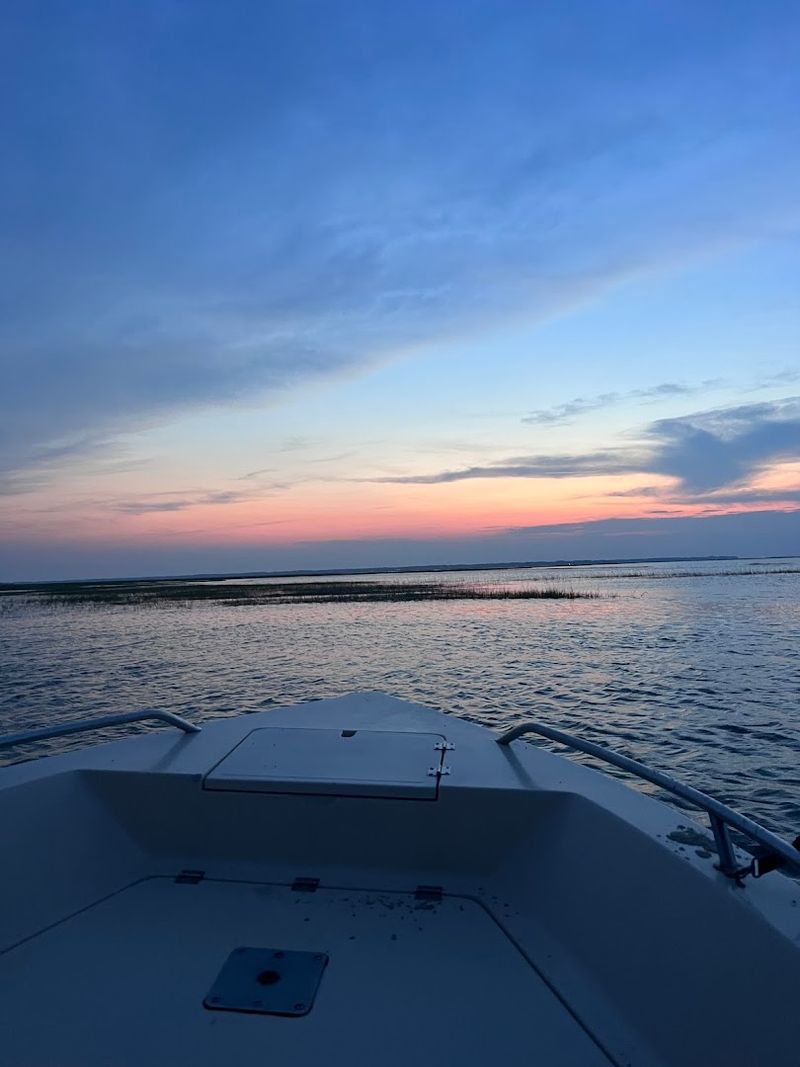
No road or bridge connects Little Tybee Island with the mainland. Visitors arrive by boat, kayak, stand-up paddleboard, or personal watercraft, depending on conditions and current rules.
The distance from Tybee can look harmless from shore. The surrounding water is tidal, however, and Visit Tybee warns that conditions change dramatically on roughly six-hour cycles.
Current direction matters as much as distance. A relaxed outward paddle can become a tiring return when the water changes teams.
First-time visitors benefit from using a local guide or charter captain. Experienced operators understand the creeks, landing areas, wind, and tide patterns that can smooth the crossing.
Independent paddlers should check marine weather and tide information before launching. You also need an honest view of your stamina and boat control.
A commonly used small-boat launch is the Tybee Creek Boat Ramp. You will find it at the end of Alley 3 off Chatham Avenue, Tybee Island, GA 31328, with a paved ramp and paved parking.
Tybee Island parking fees apply there. Georgia’s Department of Natural Resources recommends the site for small boats, so larger vessels require another launch plan.
Once you push away, the developed shore begins shrinking behind you. The crossing is not an inconvenience before the attraction. It is the opening chapter.
Little In Name But Vast In Scale
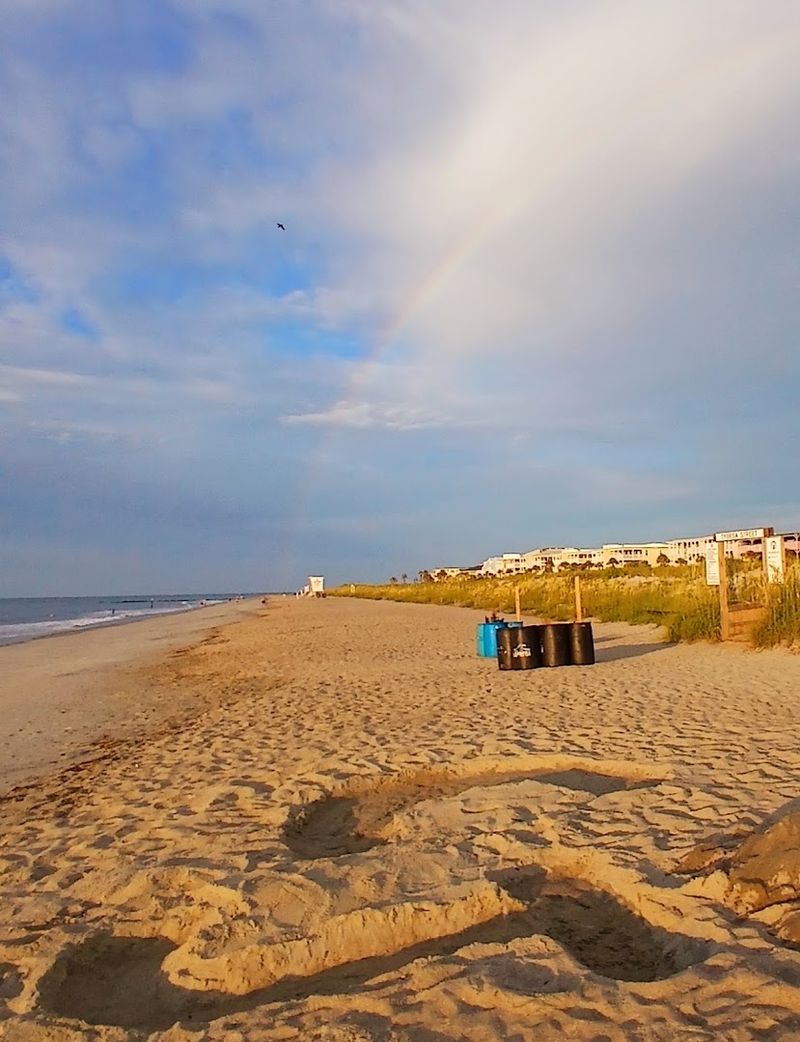
The beach earns an immediate laugh from anyone who studies its size on a map. The preserve is more than twice the size of neighboring Tybee Island despite carrying the word “Little.”
It is not one simple oval of sand. The area includes shifting islands, salt marshes, beaches, tidal creeks, dunes, and wooded sections shaped by water.
It has a changing maze that can contain dozens of islands, depending on the tide and how landforms are counted. That geography explains why local knowledge matters beyond the open shoreline.
The Atlantic side brings broad beach views and breaking waves. Inside the preserve, waterways wind between marsh grass and lead toward sections road-bound visitors never see.
Natural dunes rise behind portions of the beach. Farther inland, live oak, pine, and palm contribute to the subtropical coastal landscape.
You can walk a long section of shore and still see only a small piece of the preserve. Trying to finish Little Tybee in one day is like reading three pages and claiming the entire book.
The scale creates breathing room, but it does not make navigation automatic. Repeated marsh views can look deceptively similar as water levels change.
Carry a reliable navigation method and know your route back. Wandering is charming until every creek starts wearing the same green outfit.
Tidal Creeks Turn The Crossing Into The Main Adventure
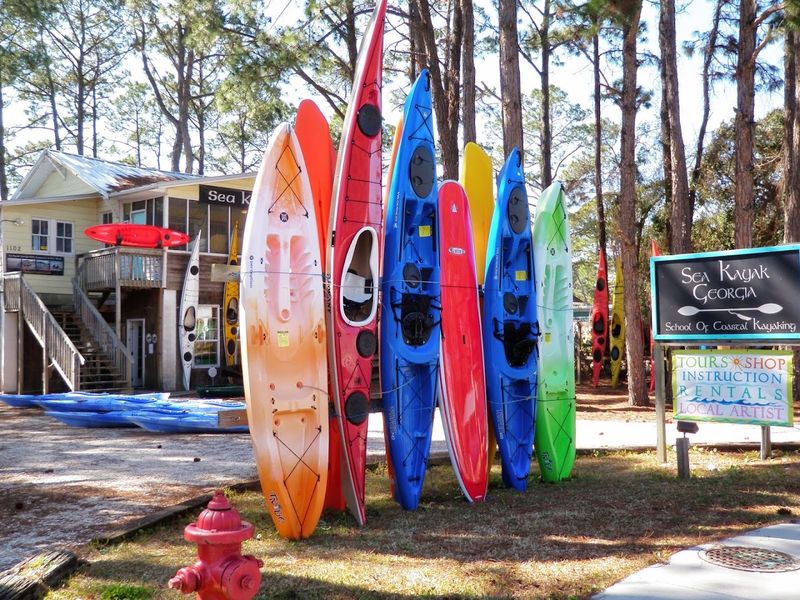
The outer beach may earn the photographs, but Little Tybee’s tidal creeks provide the strongest sense of exploration. These waterways carry you between tall marsh grass, sandy edges, and open views.
Each bend reveals another channel, exposed bank, cluster of birds, or distant line of dunes.
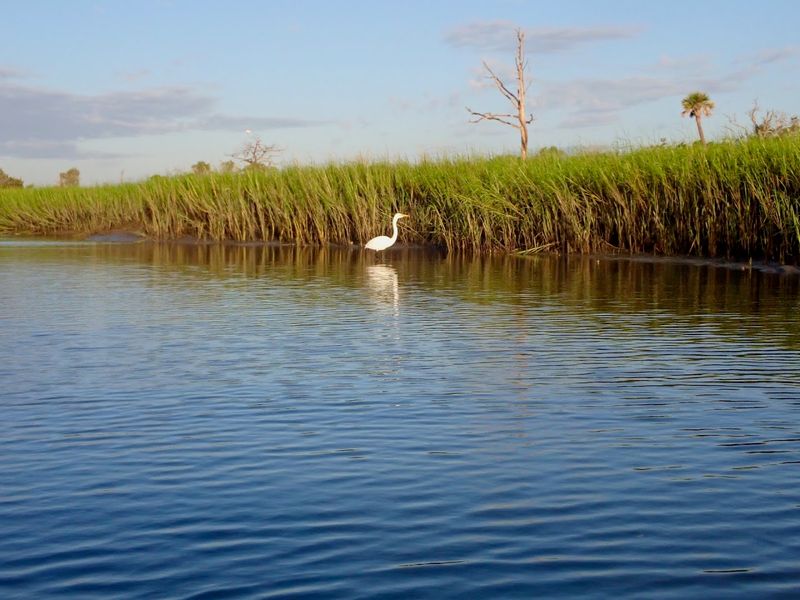
Bottlenose dolphins use the surrounding coastal waters, and guided outings often include wildlife watching. Herons, egrets, ospreys, pelicans, and other coastal birds also appear around Tybee’s waterways.
Watch without chasing or crowding them. Slowing down gives wildlife space and helps you notice movement along the bank.
The tide controls the pace again. Water moving with you can make the kayak glide, while an opposing current becomes an upper-body examination.
Would you rather argue with the current or let a local guide choose the route?
Guides can also explain how the marsh functions. The wetlands filter water and provide a natural storm barrier for nearby communities.
That role becomes clearer from water level. Marsh grass stops being roadside scenery and becomes the structure surrounding your route.
Keep your paddle secure, gear attached, and attention forward. Little Tybee does not provide a helpful arrow whenever the creek divides.
Primitive Camping Extends The Escape Past Sunset
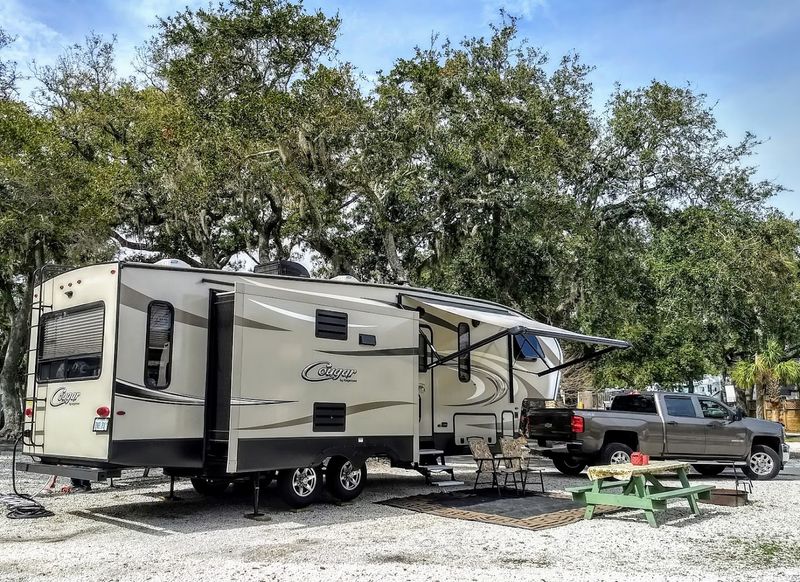
Camping on Little Tybee takes the experience beyond a daytime landing.
Do not picture a campground office, numbered pad, electrical hookup, or bathhouse. This is self-contained camping on an uninhabited island, and you must carry everything across the water.
Drinking water deserves the first space in your packing plan. Food, sun protection, weather-ready clothing, navigation equipment, lighting, and trash storage follow closely.
Your campsite also needs careful placement. Tides rise, wind changes, and sand that looks generous in daylight may offer less room later.
Check current rules and conditions before staying overnight. Protected areas, wildlife activity, and coastal conditions can affect where you may land, walk, or camp.
After dark, waves, moving water, wind, and bird calls replace engines and parking-lot noise. The night sky also receives less nearby glare.
On a clear evening, your tent opening may become the best window on the island. Morning brings sunrise over an undeveloped barrier-island landscape and the important task of packing every item you brought.
Seasonal Closures Protect Birds That Need The Shore
Little Tybee is recreational space, but it is also important habitat. Georgia’s Bird Island Rule protects coastal sites used by seabirds and shorebirds for nesting, feeding, resting, and migration.
The rule was updated in 2026. On Little Tybee Island Natural Area, sections marked with signs close seasonally, and the closure extends through the intertidal zone.
Do not land a boat, walk, or enter the waterline beside a posted closure. The marker protects more than the dry sand behind it.
Pets are prohibited year-round at sites covered by the Bird Island Rule. Leave your dog on the mainland even if the life jacket and kayak pose are already perfected.
American oystercatchers, Wilson’s plovers, least terns, black skimmers, and other coastal birds use Georgia beaches and bars. Eggs and chicks can blend into the sand, making distance especially important.
If birds call loudly, dive, or perform distraction displays, you are too close. Back away and give them the space they are requesting.
Walk below the high-tide line where access is open and avoid every posted nesting area. Binoculars let you see more while asking less from wildlife.
Your best encounter is one that does not force an animal to abandon its normal behavior.
Careful Preparation Keeps The Island Wild
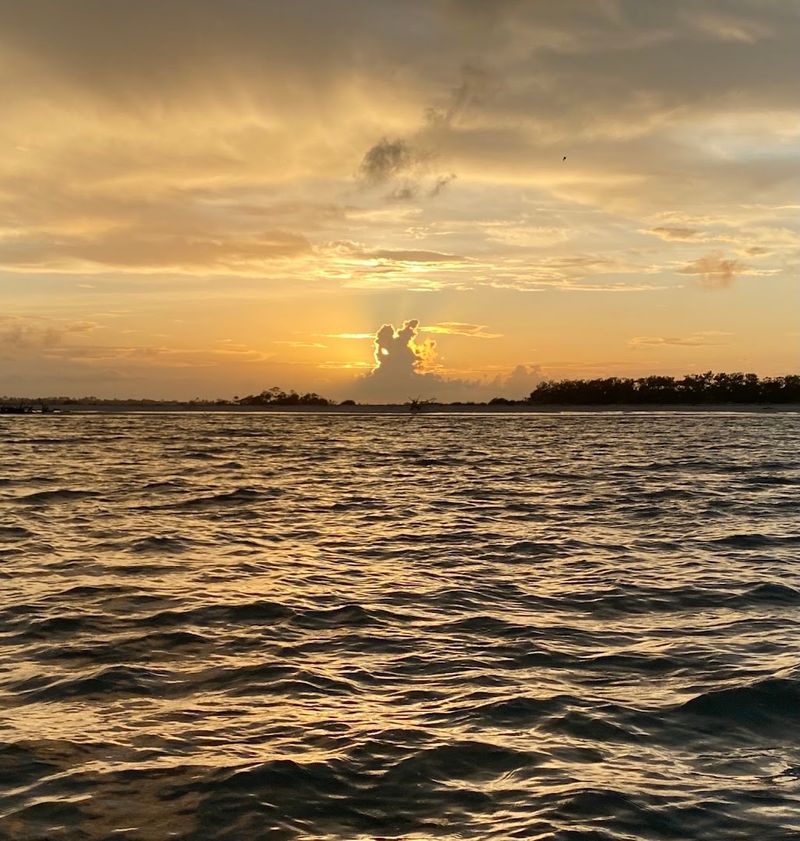
Little Tybee offers no convenience store after launch. Pack food, drinking water, sun protection, medications, safety equipment, and weather layers before leaving Tybee Island.
Secure everything against water and wind. A loose wrapper can escape faster than your kayak turns, and nobody arrives later to collect it. So, carry all trash back with you.
Review tide tables, marine forecasts, parking rules, and current wildlife closures before departure. Let someone on shore know your route and expected return time when traveling independently.
A personal flotation device belongs on you, not beneath a dry bag. Communication equipment should be protected and reachable rather than buried under lunch.
The island does not promise Caribbean water every hour. It offers a Georgia coast shaped by tides, marshes, open beaches, and far less development.
You may arrive for the pale sand and blue-green shallows. You will remember the crossing, quiet creeks, enormous sky, and rare pleasure of seeing no road behind the dunes.
Little Tybee stays remarkable because reaching it requires preparation and visiting it requires restraint. Bring what you need, follow every closure, and take home only photographs, sandy gear, and a much better beach story.