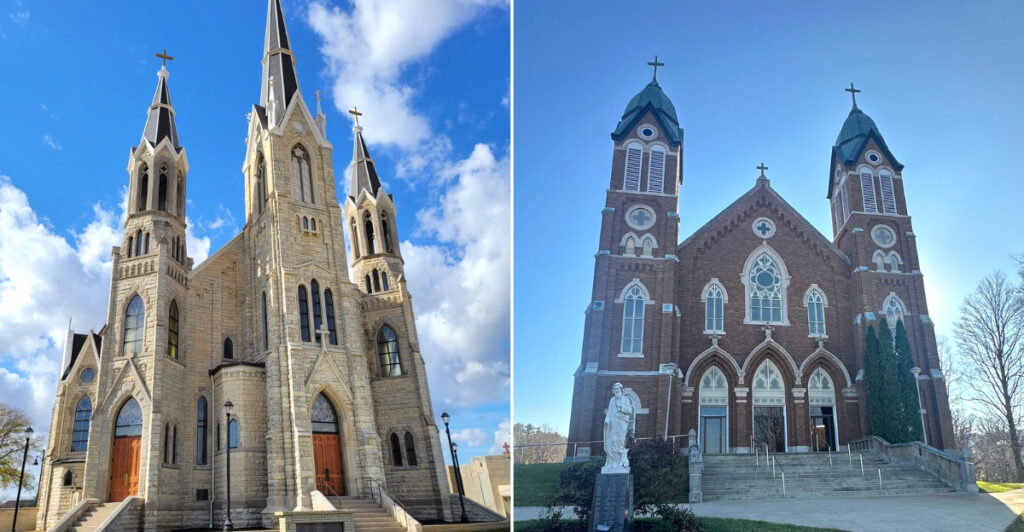
I have driven through plenty of small Iowa towns without expecting much more than a quiet main street and a few familiar storefronts.
Then a church spire appears above the rooftops, and the whole place suddenly feels different.
These buildings do more than dominate the skyline. They carry the faith, patience, and craftsmanship of communities that built with far more ambition than their town size would suggest.
Inside, the mood often changes again. Light falls through stained glass, voices soften, and even a quick visit begins to feel like a small pause from the rest of the day.
These 13 churches are grand in scale, but their strongest impression is quieter. That may be exactly what makes them so memorable.
1. Basilica of St. Francis Xavier, Dyersville
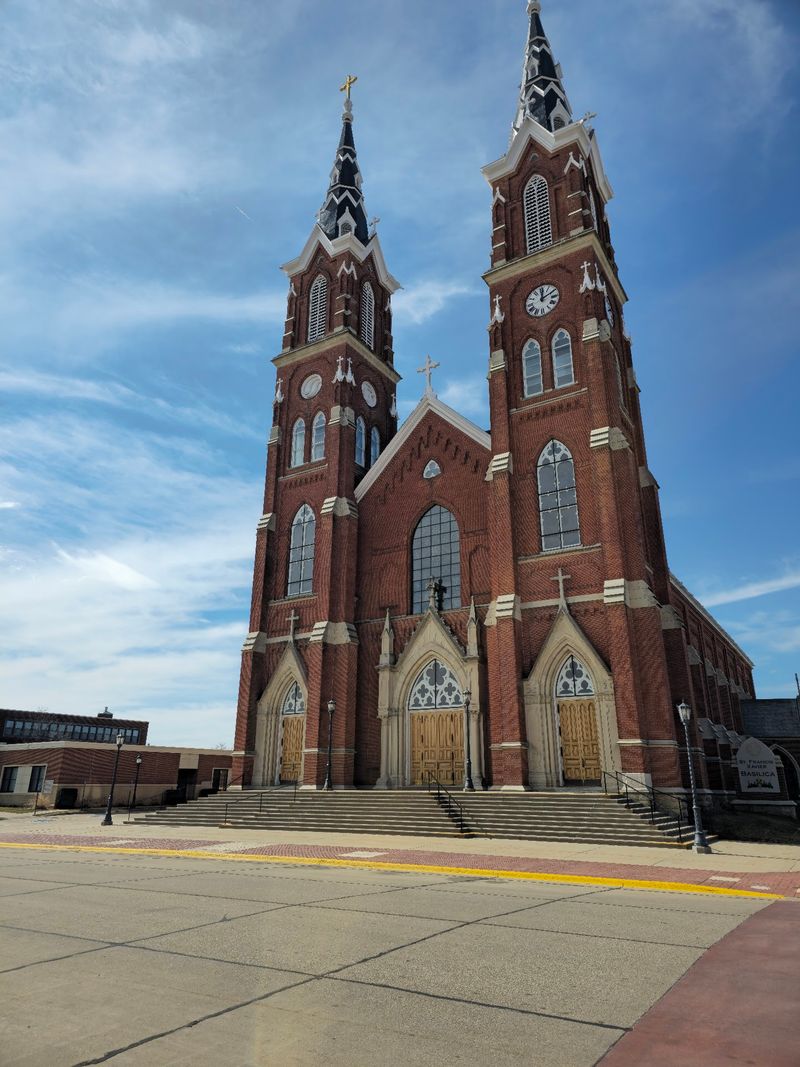
Right in the middle of Dyersville, Iowa, stands a church so architecturally significant that it was designated a minor basilica in 1956 in recognition of the building’s architectural attributes and the fervent faith of its congregation.
The Basilica of St. Francis Xavier, at 104 3rd Street SW, was completed in 1889 and features twin Gothic spires that stretch nearly 212 feet into the sky.
Walking up to the entrance, you immediately sense the scale of the place. The stone facade is detailed and imposing, yet the surrounding neighborhood of modest homes makes the contrast even more striking.
Inside, the vaulted ceilings soar overhead while rows of stained glass windows filter colored light across the nave. The craftsmanship in the woodwork and stonework reflects the determination of the German immigrant community that built it.
Dyersville itself is a small town with a big personality, and the basilica is its crown jewel. Plan a visit during daylight hours to catch the spires at their most photogenic, especially when the afternoon sun hits the stone just right.
2. St. Patrick Catholic Church, Imogene
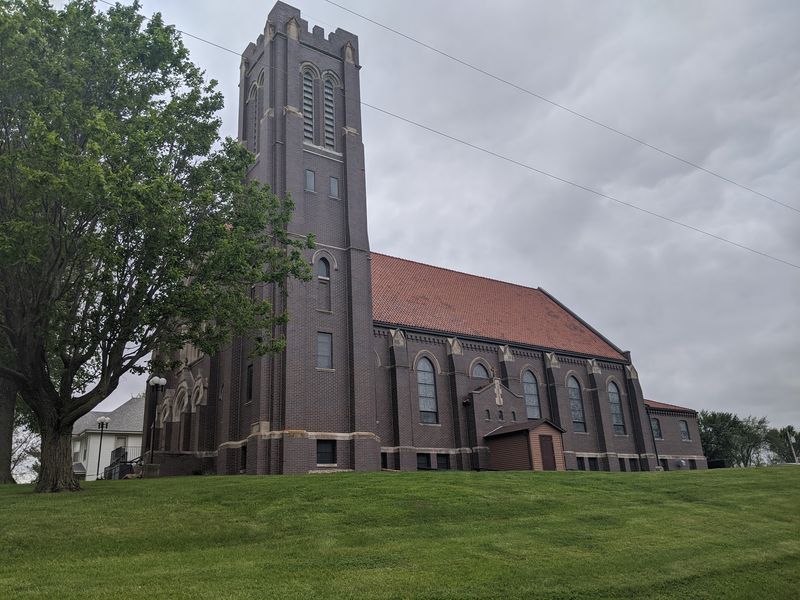
Spotting a church this bold in a town this small genuinely stops you in your tracks. St. Patrick Catholic Church at 304 3rd Street in Imogene, Iowa, serves a community so tiny that the church itself is practically the town landmark.
Built by Irish immigrant settlers, the church carries a real sense of heritage pride. The Gothic styling and tall brick steeple stand out dramatically against the flat southwestern Iowa farmland surrounding it.
The interior is well-preserved and features traditional Catholic appointments, including a beautifully maintained altar area that reflects the devotion of generations of parishioners.
Imogene has a population of only around 50 people, which makes the presence of such an architecturally serious church feel almost dreamlike.
The proportions of the building simply do not match the size of the town, and that disconnect is exactly what makes it fascinating.
If you are road-tripping through southwestern Iowa, this little church is worth the detour. The peaceful rural setting adds a layer of quiet charm that larger churches in bigger cities rarely offer.
3. St. Wenceslaus Catholic Church, Spillville
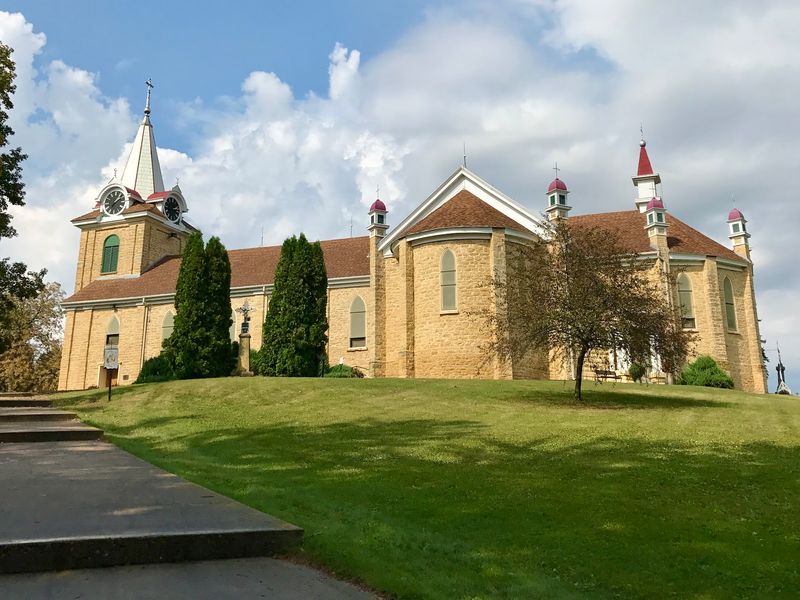
Spillville, Iowa, is already famous for being the place where composer Antonin Dvorak spent a summer in 1893, and St. Wenceslaus Catholic Church at 207 Church Street is a fitting backdrop for that kind of cultural weight.
The church was built by Czech immigrants and named for the patron saint of Bohemia, giving it a deeply personal connection to the community’s roots.
The stonework and tower design reflect a European sensibility that feels transported directly from Central Europe.
The interior is warm and carefully maintained, with traditional religious art and woodwork that speak to the pride of the parish’s founding families.
Spillville is a small town in northeastern Iowa, and the church anchors the community both physically and spiritually. The surrounding landscape of wooded hills and the Turkey River valley adds a scenic dimension to any visit.
Come in the fall when the trees around the church turn golden and the stone exterior glows in the autumn light. It is the kind of scene that makes you want to sit quietly and just take it all in.
4. St. Boniface Catholic Church, New Vienna
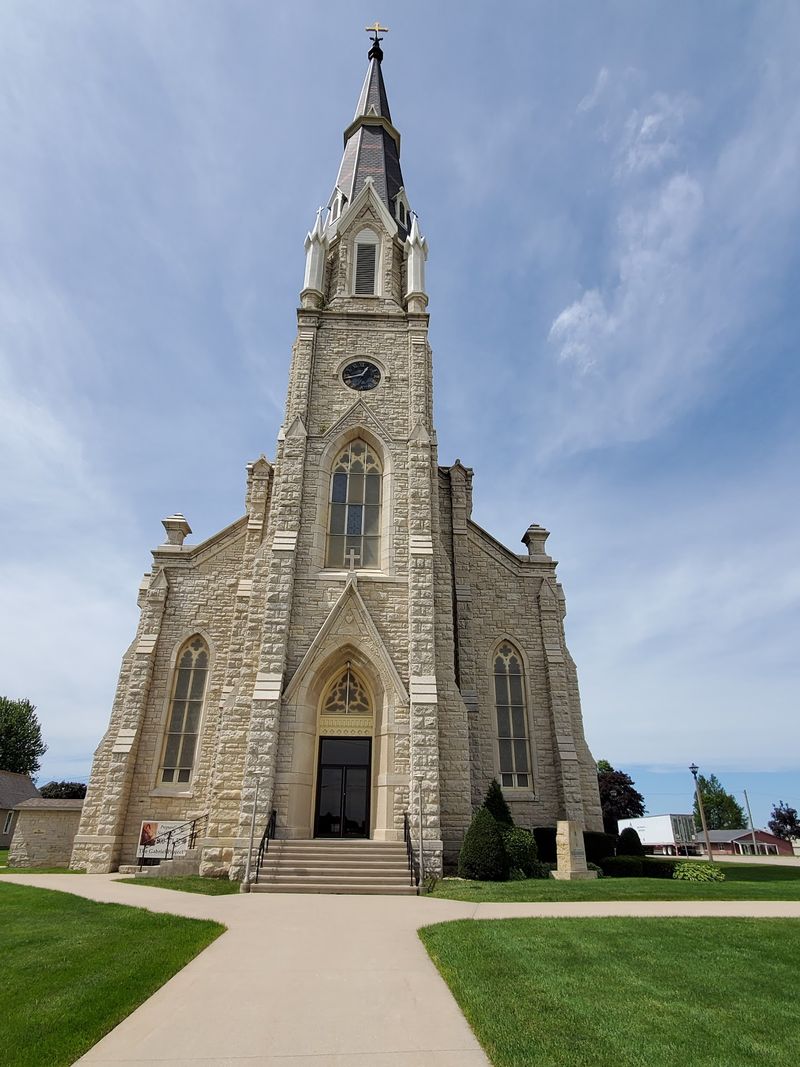
New Vienna, Iowa, might have fewer than 400 residents, but its skyline is anchored by one of the most commanding church towers in the entire state.
St. Boniface Catholic Church at 7401 Columbus Street was built by German settlers who clearly had no intention of building anything less than extraordinary. The limestone construction and soaring Gothic spire give the building an authority that commands attention from miles away on the surrounding farmland.
The interior continues to impress with high vaulted ceilings, detailed woodwork, and stained glass that throws brilliant patterns of color across the stone floors during morning services.
The church has been a center of community life in this Dubuque County town for well over a century, and the care invested in its upkeep is visible in every corner.
New Vienna sits in the rolling hills of northeastern Iowa, and the drive through the countryside to reach it is scenic in its own right. Pair a visit here with a stop at nearby Dyersville for a full day of architectural discovery along some of Iowa’s most beautiful back roads.
5. Saints Peter and Paul Catholic Church, Petersburg
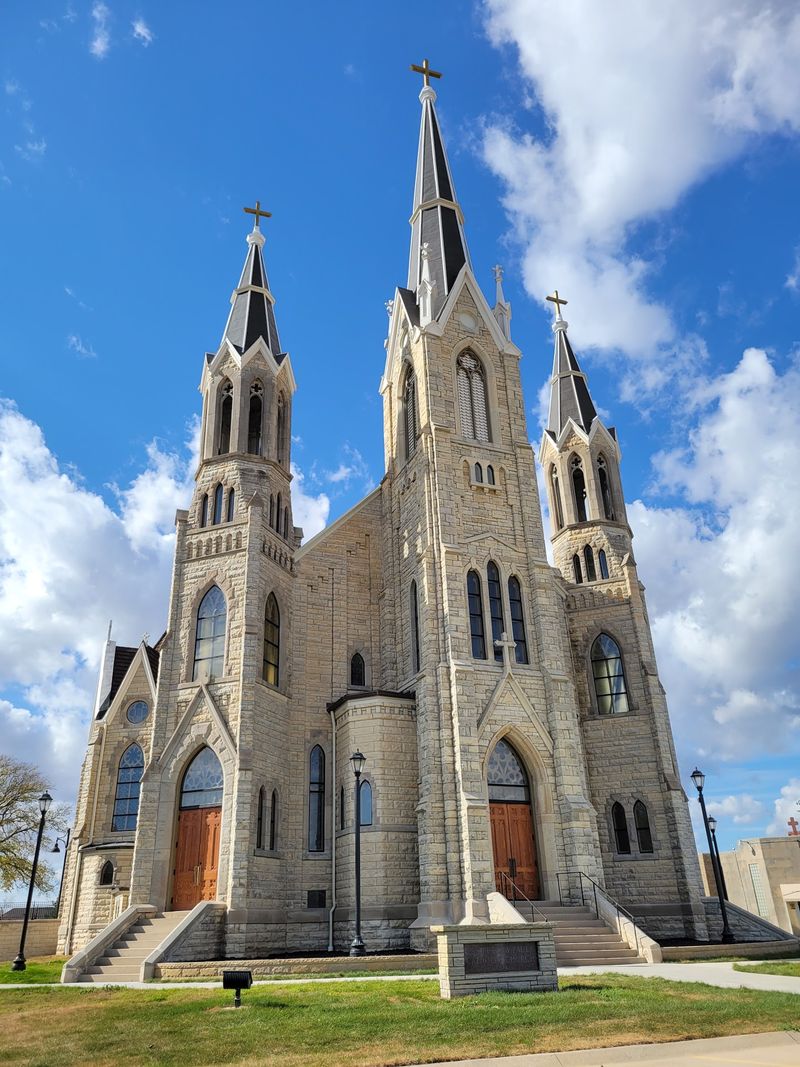
Just outside Dyersville, Iowa, in the unincorporated community of Petersburg, a grand rural church rewards those willing to venture a little farther along 1625 300th Avenue.
Saints Peter and Paul Catholic Church serves the farming community surrounding Petersburg, and its scale tells you everything about how seriously those early settlers took their faith.
The stone Gothic Revival construction, dominant central tower, and two additional towers create a profile that photographs beautifully against the wide Iowa sky.
The interior is richly detailed and dignified, with traditional furnishings and decorative elements that reflect decades of careful stewardship by the parish community.
What makes this church especially interesting is its location. Surrounded by open fields in a tiny unincorporated community, it stands almost like a monument to the persistence of rural Catholic culture in the American Midwest.
Visiting on a clear morning gives you the best light for photography and a sense of peaceful solitude that is hard to find elsewhere. It pairs naturally with a visit to the nearby Basilica of St. Francis Xavier, making the Dyersville area a genuine destination for church architecture enthusiasts.
6. St. Luke Catholic Church, St. Lucas
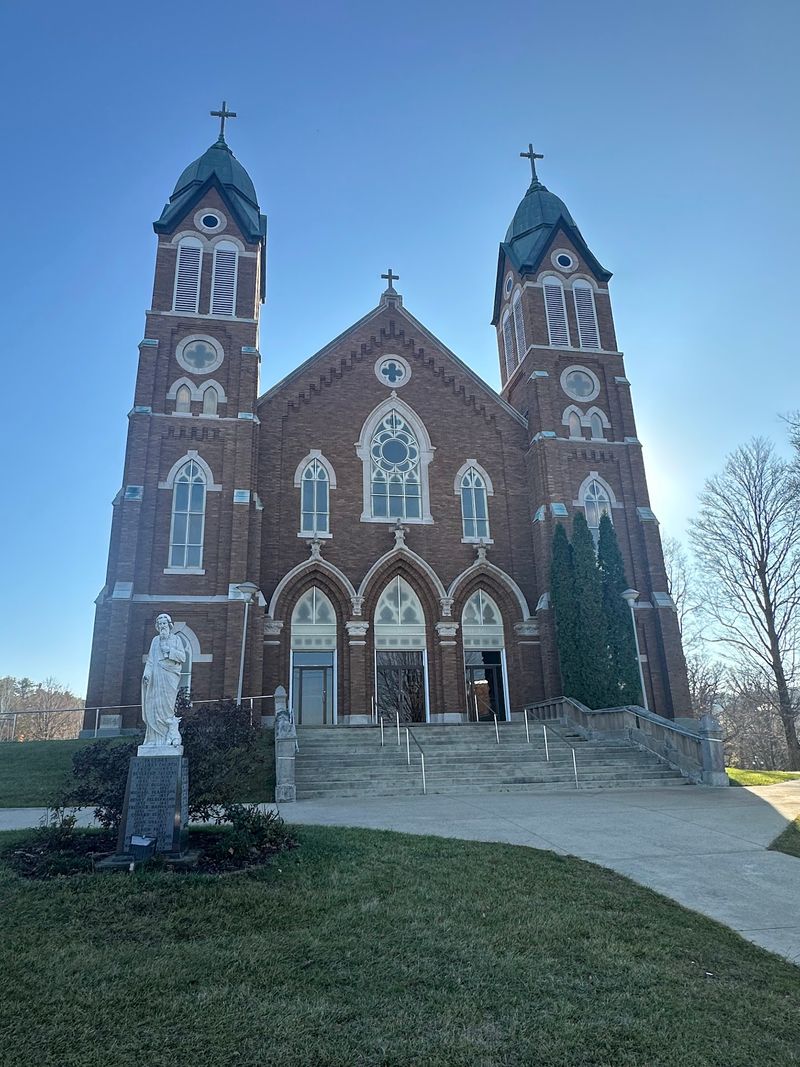
There is something delightfully fitting about a town named St. Lucas being home to St. Luke Catholic Church, and the building at 215 East Main Street absolutely lives up to the name.
Located in Fayette County in northeastern Iowa, this church serves a small but proud community and features architecture that punches well above the town’s modest size. The brick exterior and prominent steeple give it a stately presence along the quiet main street.
Inside, the church maintains a traditional Catholic interior with a well-appointed sanctuary, quality woodwork, and stained glass that adds warmth and color to the space. The overall impression is one of careful, loving maintenance across generations.
St. Lucas is a small town, but it sits in a region of Iowa that rewards slow driving and curious exploration. The rolling terrain of Fayette County provides a scenic backdrop to any visit.
The church is best appreciated up close, where the brick detailing and architectural proportions become fully apparent. It is a straightforward but genuinely beautiful building that earns its place on any architectural road trip through the upper Midwest.
7. St. John the Evangelist Catholic Church, Independence
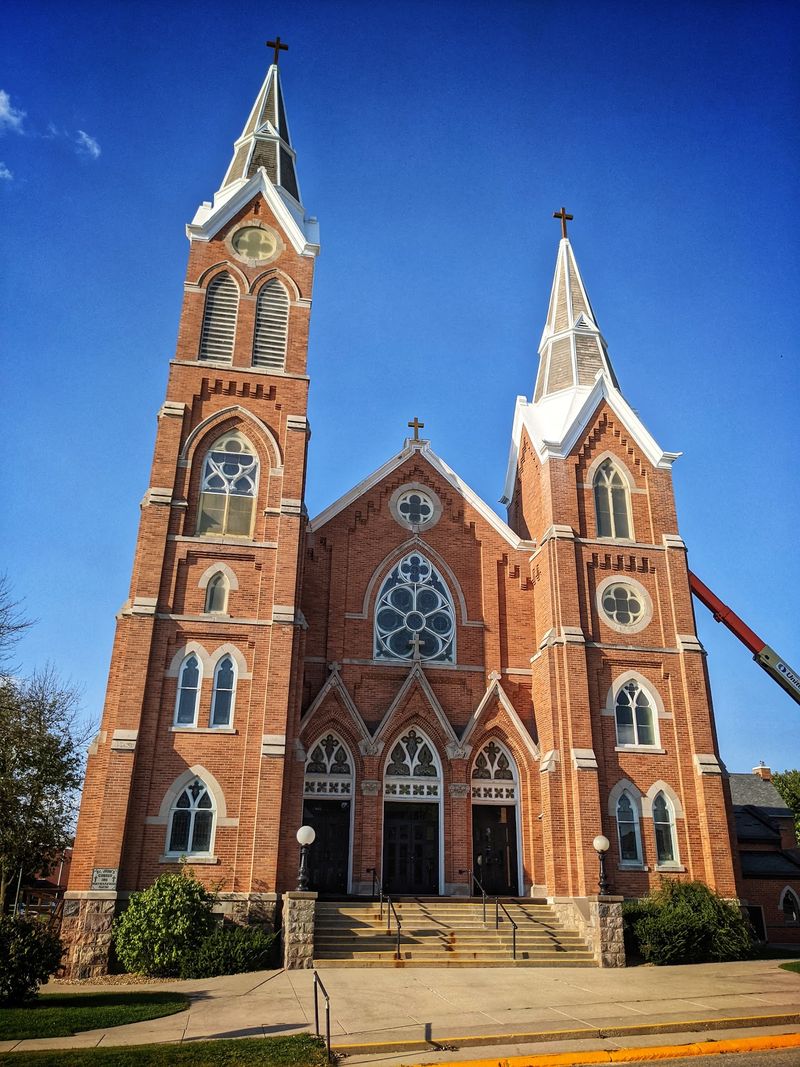
Independence, Iowa, is a small city in Buchanan County, and St. John the Evangelist Catholic Church at 209 5th Avenue NE is one of its most architecturally distinguished landmarks.
The church features a bold Gothic Revival design with a prominent tower, decorative brickwork, and strong vertical lines that draw the eye upward from the street. Up close, the quality of the masonry and the attention to detail in the facade become genuinely impressive.
The interior carries the same ambition as the exterior. High ceilings, detailed woodwork, and stained glass windows create an atmosphere that feels both grand and genuinely welcoming to visitors.
Independence has a modest population, which makes the scale of this church all the more remarkable. It stands as a testament to the ambitions of the Catholic immigrant communities who settled this part of Iowa in the 19th century.
The town is also home to other historic buildings, so a visit to St. John can anchor a broader afternoon of architectural exploration.
The church is most striking in early morning light when the brick facade takes on a warm, rich tone.
8. St. Mary Catholic Church, Guttenberg
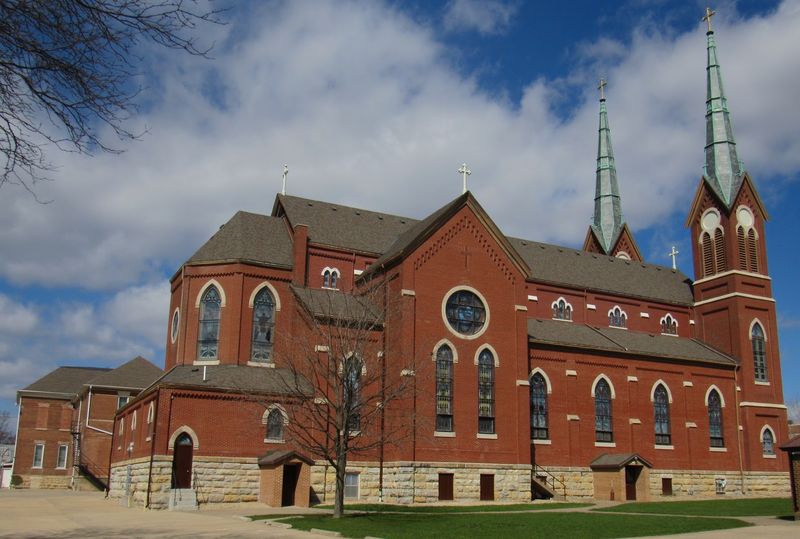
Guttenberg, Iowa, is a river town perched along the Mississippi bluffs, and St. Mary Catholic Church at 518 South 2nd Street fits the dramatic setting perfectly.
The church was built by German immigrant settlers who named their town after Johannes Gutenberg, the inventor of the printing press, so it should come as no surprise that they also built a church worthy of lasting attention. The stone construction and tall spire give it a European character that complements the town’s distinctly old-world atmosphere.
Inside, the church features a traditional nave with high ceilings and stained glass that catches the light beautifully, especially on sunny mornings when the Mississippi River glitters just a few blocks away.
Guttenberg itself is a charming destination with a well-preserved historic main street and stunning river views. Combining a visit to St. Mary with a walk along the riverfront makes for a deeply satisfying afternoon.
The church sits on a gentle rise that gives it added visual presence from the street below. Whether you are a history buff, an architecture fan, or just a curious road tripper, this one delivers on every level.
9. St. Joseph Catholic Church, Elkader
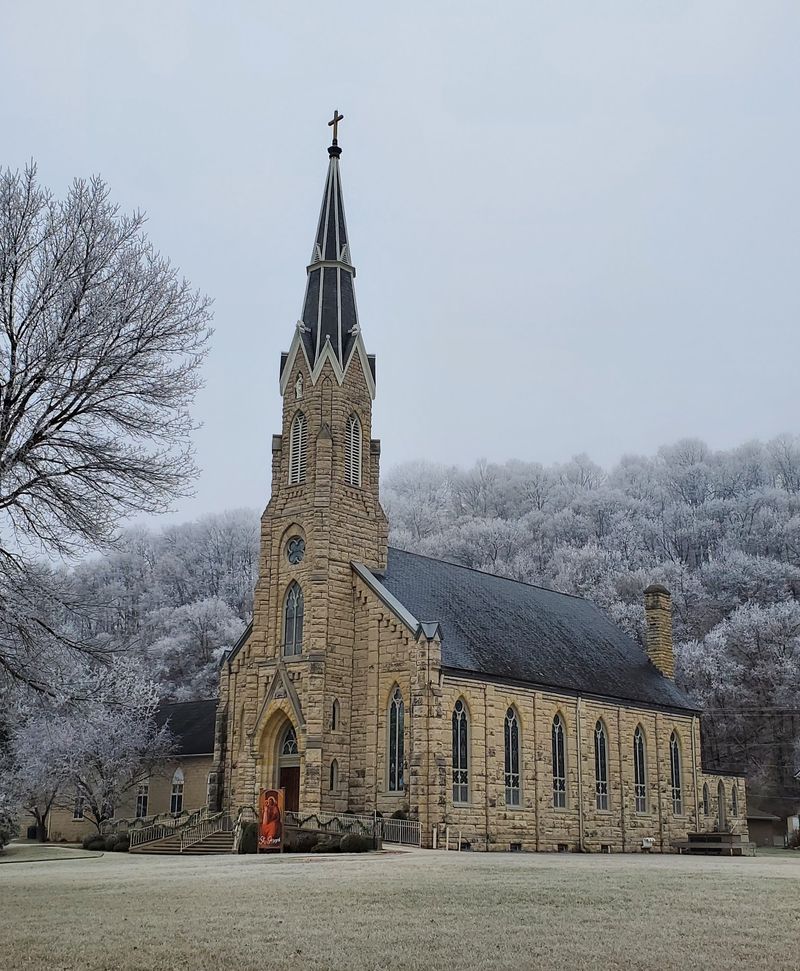
Elkader is one of Iowa’s most scenic small towns, tucked into the Turkey River valley in Clayton County, and St. Joseph Catholic Church at 330 1st Street SW adds an architectural highlight to an already beautiful setting.
The church features a classic brick construction with Gothic-influenced design elements, including a solid bell tower and arched windows that give the facade a dignified rhythm.
The building’s proportions feel confident and well-balanced, the work of builders who knew exactly what they were doing.
Inside, the sanctuary is traditionally appointed with a well-crafted altar, quality woodwork, and stained glass that creates a warm, contemplative atmosphere. The care put into the interior reflects the long history of the parish in this community.
Elkader itself is worth exploring beyond the church. The town has a remarkable historic opera house, the landmark stone-arch Keystone Bridge, and the scenic Turkey River for those who enjoy outdoor activities.
The combination of natural beauty and architectural interest makes Elkader one of the most rewarding stops on any northeastern Iowa road trip. St. Joseph is the kind of church that quietly earns your admiration the longer you spend time with it.
10. Holy Trinity Catholic Church, Protivin
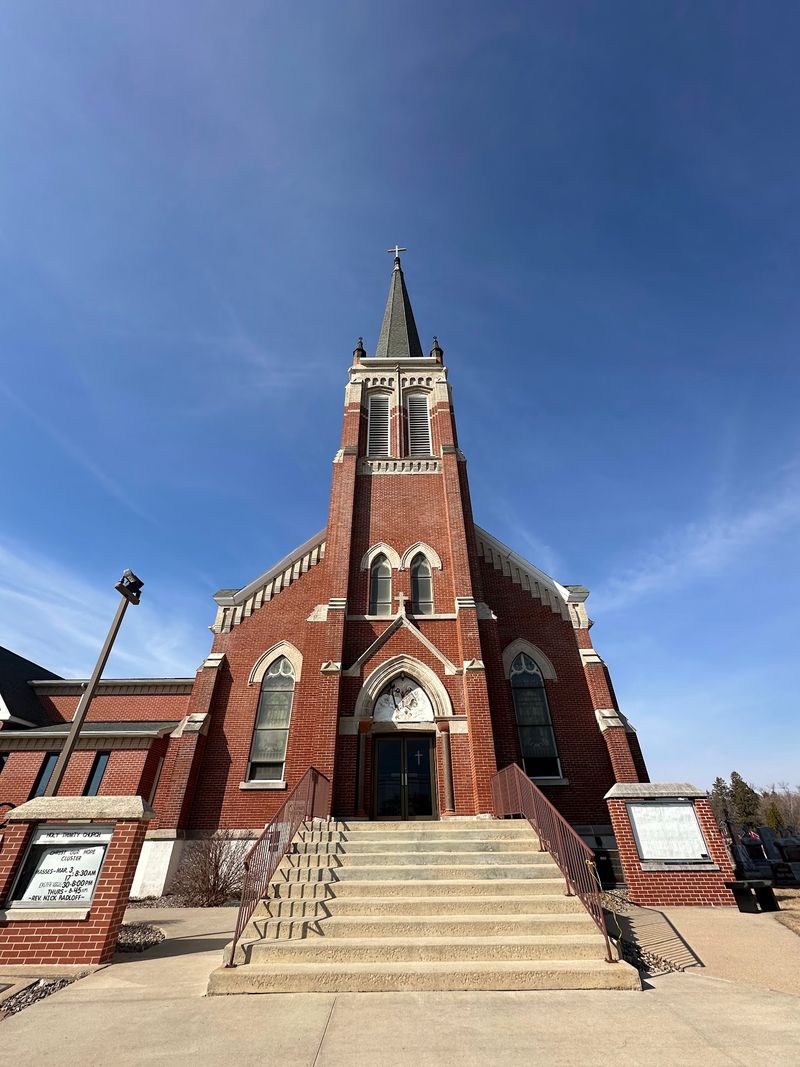
Czech heritage runs deep in Protivin, Iowa, and Holy Trinity Catholic Church at 124 North Main Street is the architectural expression of that pride.
The church’s twin towers and brick facade give it a commanding presence on the small-town main street, and the scale of the building relative to the surrounding homes and businesses creates a striking visual contrast. This is a church that means business, architecturally speaking.
The interior reflects the same ambition, with a well-maintained sanctuary featuring traditional religious art, quality woodwork, and stained glass windows that fill the space with warm, filtered light.
Protivin is a small community in Howard County in northeastern Iowa, and the church has served as the heart of local Czech Catholic life for generations.
The community’s connection to its European roots is visible throughout the building’s design and decoration.
Visiting Holy Trinity offers a chance to appreciate how immigrant communities expressed identity and faith through architecture on the American frontier.
The church is best experienced in person, where the scale and detail of the building fully reveal themselves in a way that photographs alone cannot capture.
11. St. Joseph Catholic Church, Earling
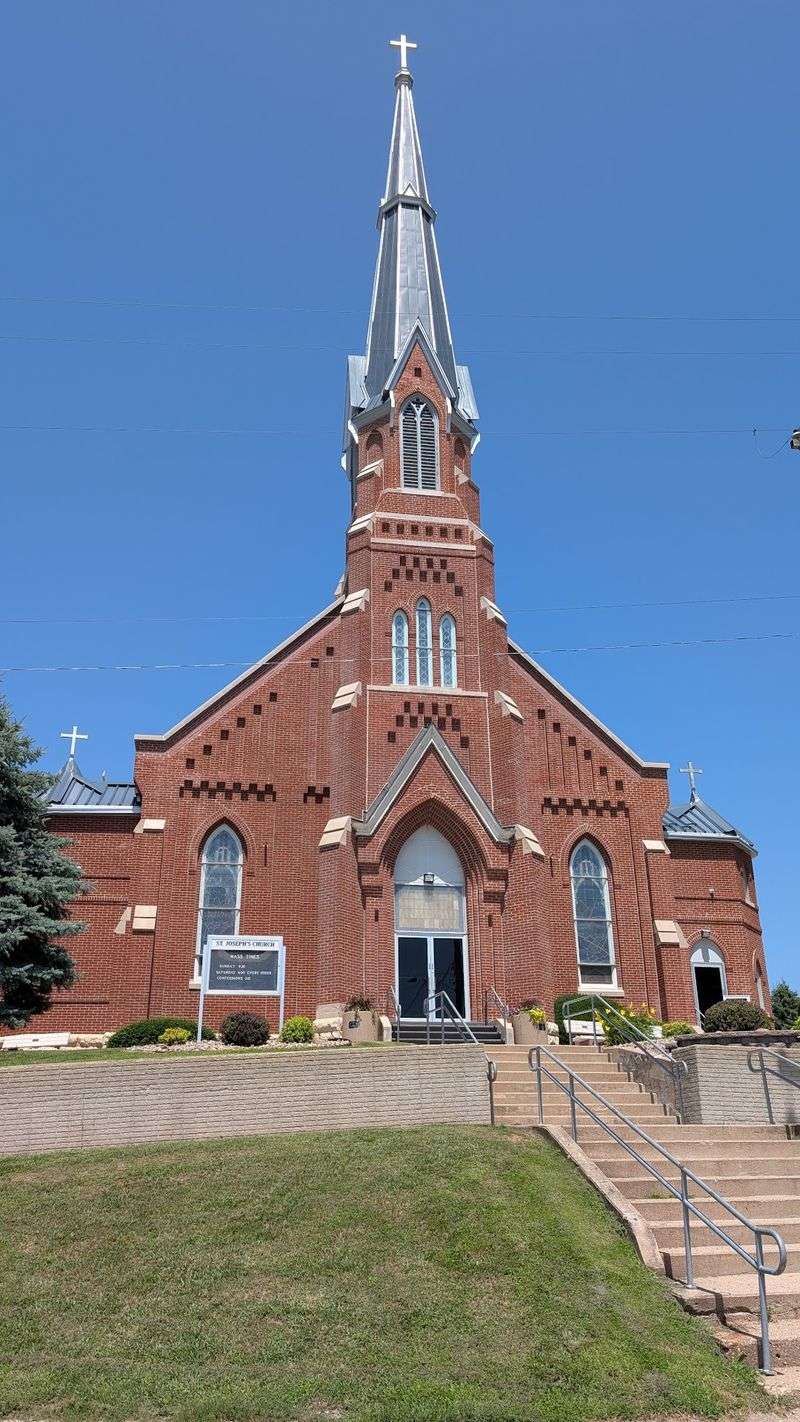
Few churches in Iowa create quite the impression that St. Joseph Catholic Church does when you first catch sight of it rising above the flat farmland surrounding tiny Earling, in Shelby County.
Located at 212 2nd Street, the church is a substantial brick structure with a prominent bell tower that dominates the skyline of a town with only a few hundred residents.
The sheer audacity of building something this large in this location is part of what makes it so memorable.
The interior is rich with traditional Catholic furnishings, including an impressive altar and carefully maintained woodwork that speak to the deep faith of the community that built and sustained this parish over the decades.
Earling has a history connected to the early 20th century Catholic Church in America, which adds another layer of interest for history-minded visitors. The town is quiet and unassuming, which makes the grandeur of the church feel even more pronounced.
A visit here is a genuinely humbling experience. The dedication required to construct and maintain a building of this quality in such a remote location says everything about the values of the people who called Earling home.
12. St. Joseph Catholic Church, Bellevue
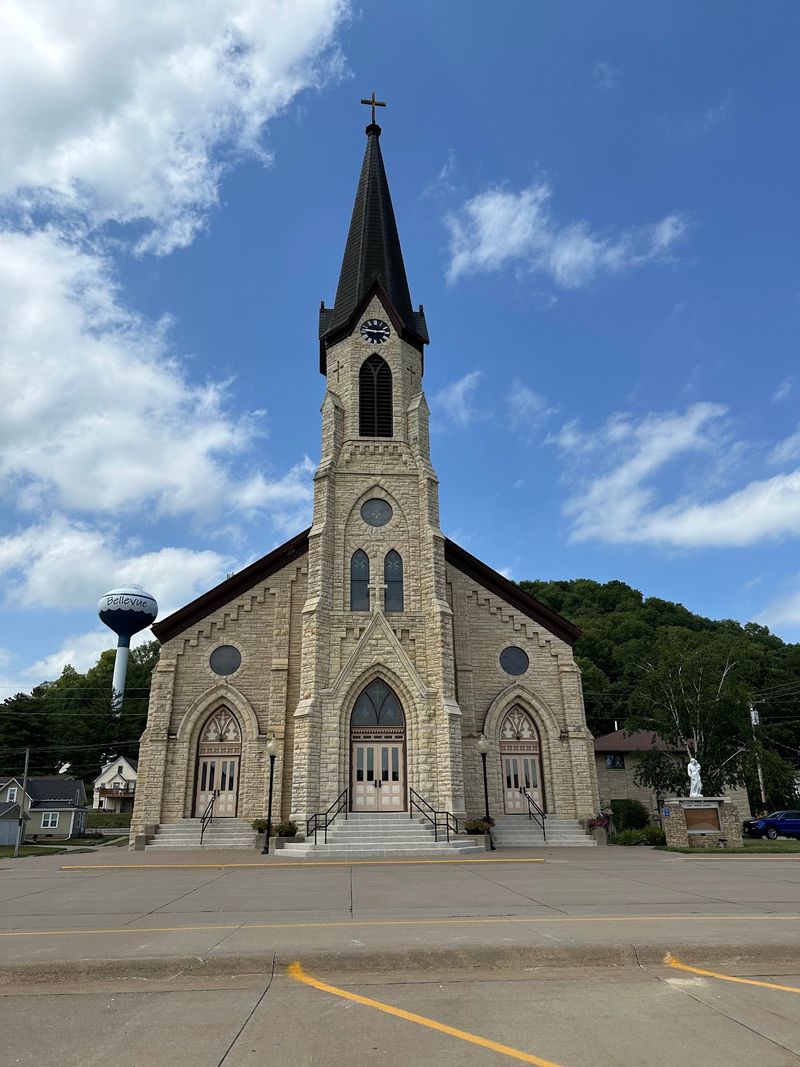
Perched in the Mississippi River town of Bellevue, Iowa, St. Joseph Catholic Church at 405 Franklin Street brings a sense of architectural grandeur to one of the state’s most scenic small communities.
Bellevue sits in Jackson County along the western bank of the Mississippi, and the town’s bluff-top setting gives any tall steeple an extra boost of visual drama. St. Joseph takes full advantage of its elevated position, presenting a bold silhouette against the river valley sky.
The church’s construction reflects the craftsmanship of the 19th century Catholic communities that settled this part of Iowa, with quality materials and careful detailing throughout the exterior and interior.
Inside, the sanctuary features traditional appointments including a well-crafted altar, stained glass windows, and wooden pews that have welcomed worshippers for generations. The atmosphere is one of quiet dignity.
Bellevue itself is a destination worth lingering in, with Bellevue State Park nearby offering stunning bluff-top views of the Mississippi.
Combining a visit to St. Joseph with an afternoon in the park makes for a memorable and well-rounded trip to this corner of eastern Iowa.
13. St. Patrick Catholic Church, Waukon
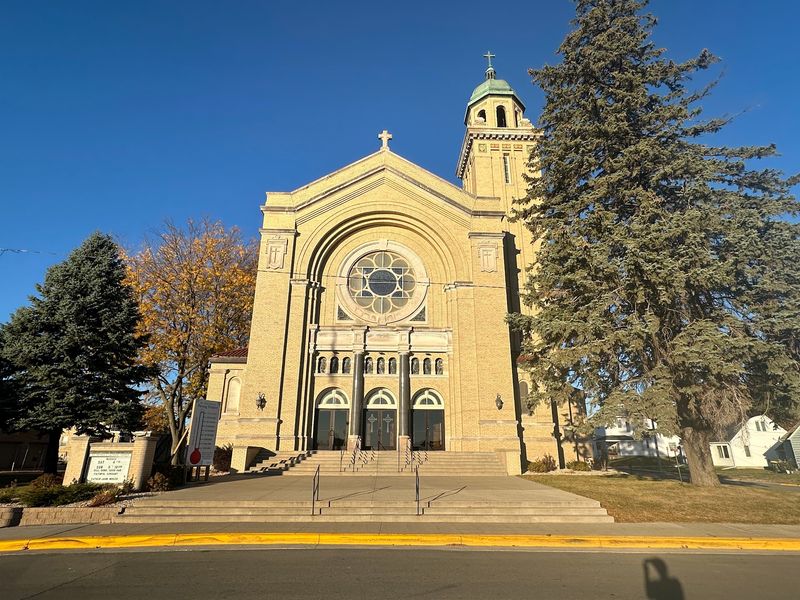
Waukon is the county seat of Allamakee County in the far northeastern corner of Iowa, and St. Patrick Catholic Church at 101 2nd Street SW is one of its most architecturally striking landmarks.
The church features a prominent domed bell tower, a large circular rose window, and a well-proportioned light-brick facade that gives it a strong, confident presence on the town streetscape.
The Irish dedication of the parish is fitting for a region that saw significant Irish Catholic settlement in the 19th century.
Inside, the church maintains a traditional interior with quality woodwork, a well-appointed altar, and stained glass windows that create a beautifully lit worship space.
The overall effect is one of understated elegance.
Waukon sits close to the bluff country along the Upper Iowa River, making it a natural starting point for exploring one of Iowa’s most scenic regions. The combination of outdoor beauty and architectural history gives the area genuine appeal for a weekend road trip.
St. Patrick rounds out this list with exactly the kind of quiet confidence that defines the best small-town churches in Iowa.
Grand without being showy, historic without feeling frozen in time, it is a building that rewards a thoughtful visit and lingers in the memory long after you have driven away.