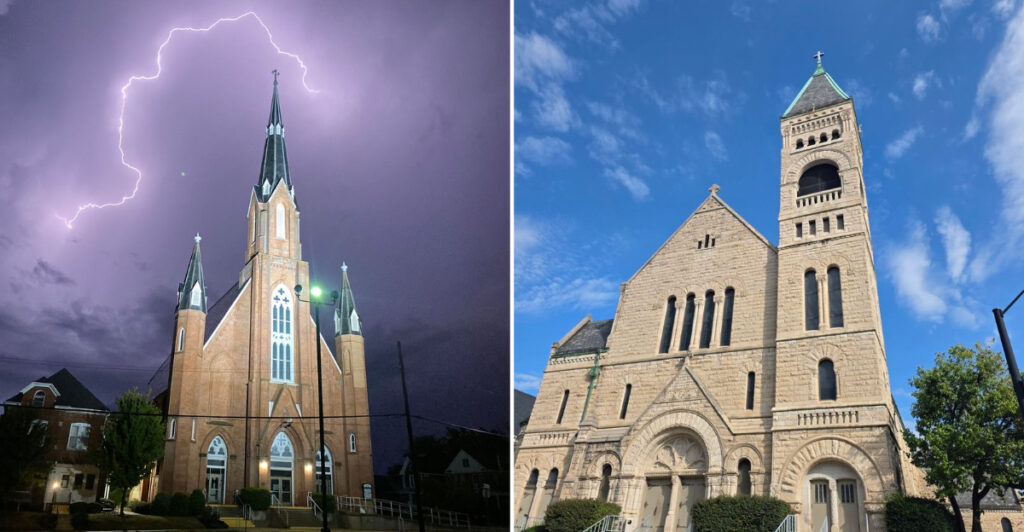
I learned a valuable lesson while driving through Iowa: never underestimate a church spire’s ability to ruin your carefully planned schedule. I once spotted one above the rooftops, pulled over for a quick photo, and somehow lost half an hour admiring the stonework.
Honestly, my neck complained before I did. The state is filled with remarkable churches that bring unexpected drama to river towns and city streets.
Tall towers rise over quiet neighborhoods, while detailed facades reveal the skill and pride of the communities that built them. Each stop offers more than a pretty picture, with local history woven into the brick, glass, and carved stone.
Keep your camera nearby and leave extra room in the day, because these Iowa landmarks have a habit of turning quick stops into memorable detours.
1. Basilica Of St. Francis Xavier, Dyersville
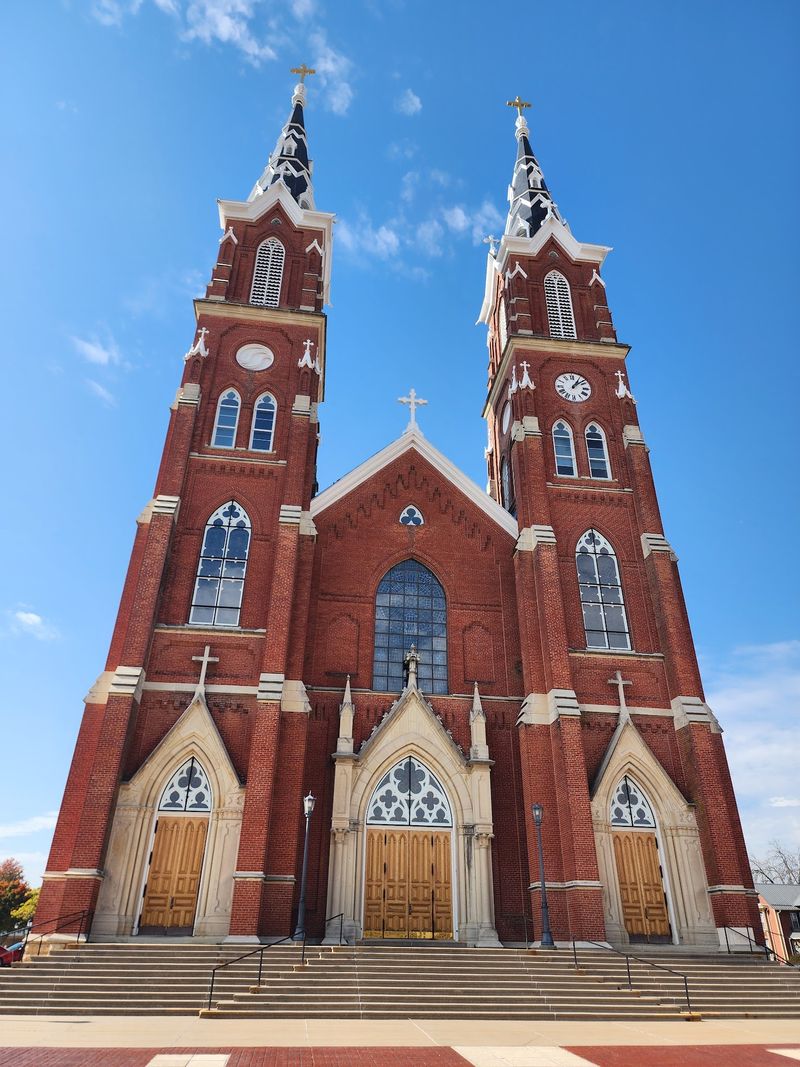
Sitting in the heart of a small Iowa farm town, the Basilica of St. Francis Xavier in Dyersville looks like it was airlifted straight from medieval France.
The twin Gothic spires shoot nearly 212 feet into the sky, making them visible from miles away across the flat cornfields.
Construction began in 1887, and the church was dedicated in December 1889 after local parishioners made major financial sacrifices to complete it.
It was designated a minor basilica by Pope Pius XII in 1956, making it one of only a handful of minor basilicas in the United States located outside a major city.
The interior is just as jaw-dropping, with hand-painted murals, ornate altars, and stained glass windows that flood the nave with colored light on sunny mornings.
Dyersville itself is a quiet town, best known for the Field of Dreams movie site, but the basilica gives visitors a second reason to stop that many find even more memorable.
Plan your visit for a clear morning when the light catches the spires from the east. You will not regret it.
2. Sacred Heart Cathedral, Davenport
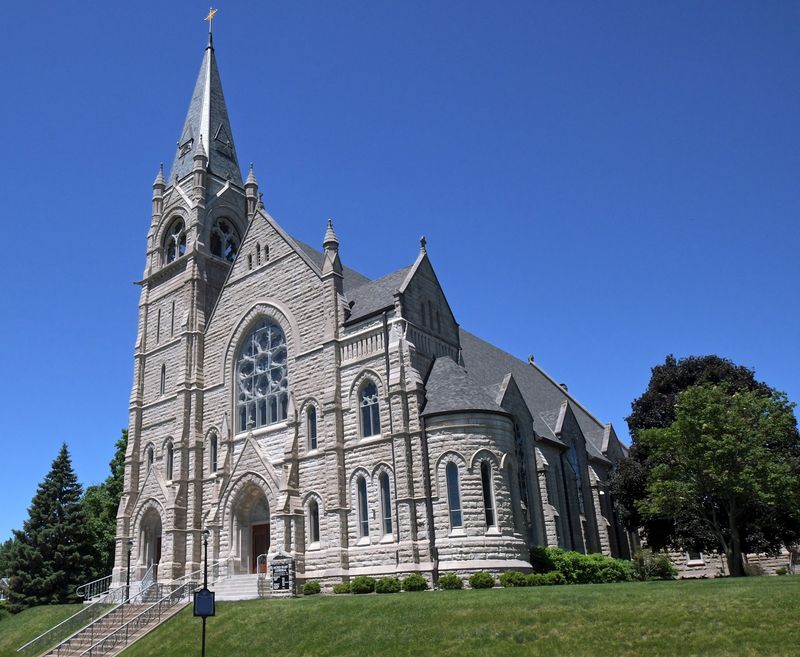
There is something quietly commanding about Sacred Heart Cathedral in Davenport that stops you mid-step when you first see it rising above the surrounding streets.
Dedicated in 1891, this Gothic Revival cathedral serves as the mother church of the Diocese of Davenport and remains one of the city’s most prominent religious landmarks.
The tower anchors the facade with a solid, grounded presence that feels almost like a watchtower over the Mississippi River city below.
Inside, the cathedral preserves an atmosphere of reverent calm, with warm woodwork, arched ceilings, and windows that glow amber and gold in afternoon light.
Davenport sits on the banks of the Mississippi River as part of the Quad Cities region, and the cathedral has been a visual anchor in this urban landscape for well over a century.
Restoration projects over the years have kept the building in excellent condition, ensuring that future generations can appreciate its craftsmanship.
If you are traveling along the Iowa side of the Mississippi, Sacred Heart Cathedral is a stop that rewards curiosity with genuine architectural beauty and a strong sense of local history.
3. Church Of All Saints, Keokuk
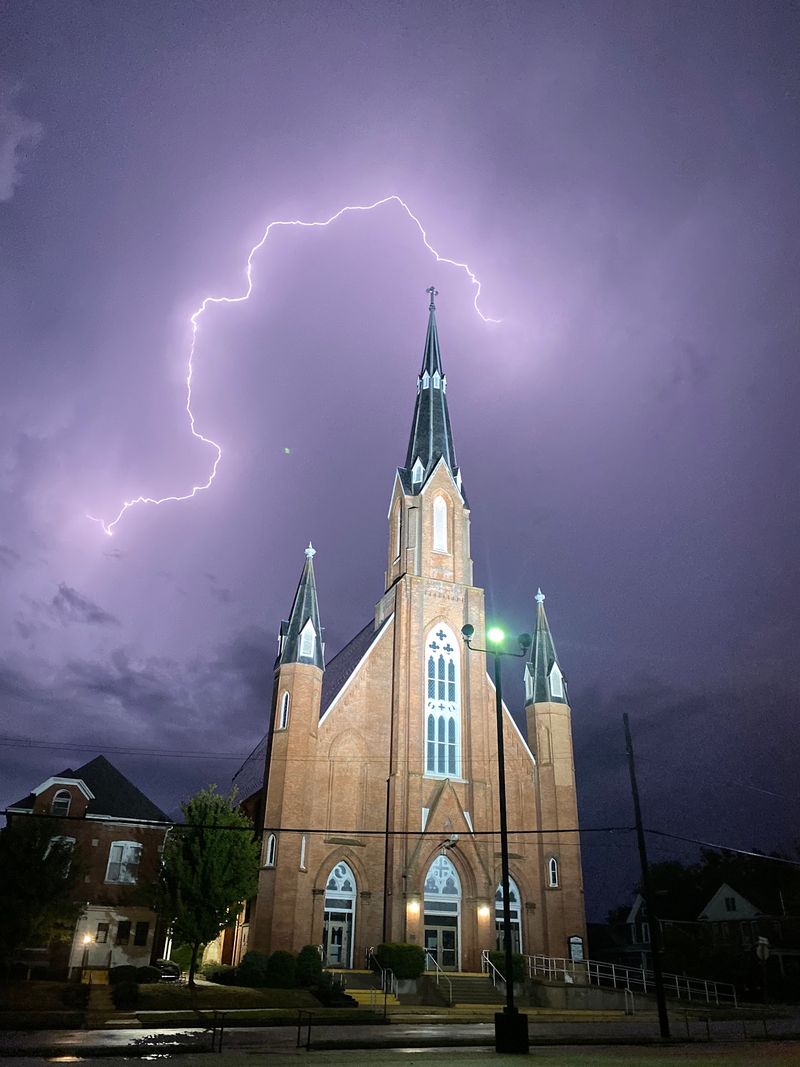
Keokuk is a river city with a long memory, and the Church of All Saints fits right into its historic character with a tower that rises with quiet authority above the surrounding neighborhood.
This Roman Catholic church features handsome Late Gothic Revival stonework that gives it a weight and permanence unusual for a city of Keokuk’s modest size.
The tower is the first thing your eye finds, standing firm against the sky like a landmark that has been orienting locals for generations.
Keokuk sits at the very southern tip of Iowa where the Des Moines River meets the Mississippi, a location that gave it strategic and commercial importance throughout the 1800s.
The Church of All Saints reflects that era of prosperity and ambition in its architecture, built to impress and built to last.
The surrounding streets are lined with Victorian-era homes, making a walk around the neighborhood feel like a genuinely rewarding architectural tour.
Visiting in autumn is particularly worthwhile, when the trees surrounding the church turn gold and red and frame the tower in a way that practically begs to be photographed from every angle you can find.
4. Basilica Of Saint John, Des Moines
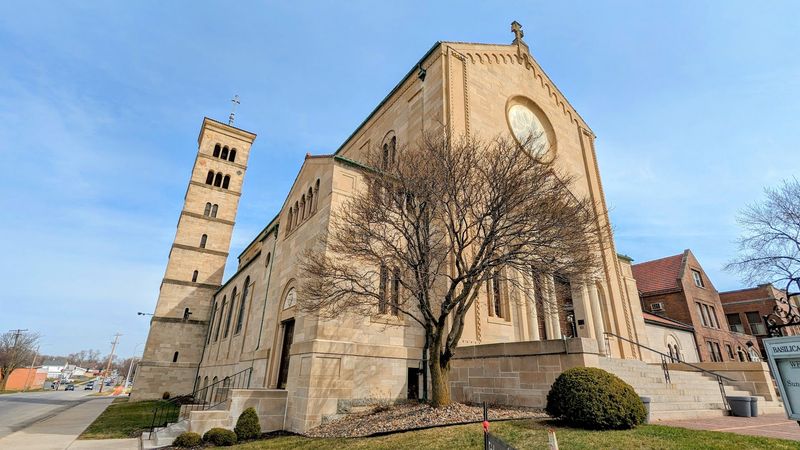
Right in the middle of Iowa’s capital city, the Basilica of Saint John manages to feel both grand and approachable, which is a harder balance to strike than it sounds.
Its Lombardy Romanesque Revival design features a bold bell tower, rounded arches, and a monumental limestone exterior.
The parish was established in 1905, and the present church was completed and dedicated in 1927.
Elevated to the status of minor basilica in 1989, Saint John carries an official honor that matches the ambition of its architecture.
The interior is worth every moment you spend inside, featuring a coffered ceiling, polished marble, and altars that reflect the craftsmanship of an era when churches were built to last centuries.
Des Moines is a city that often surprises visitors with its cultural depth, and the Basilica of Saint John is one of the clearest examples of why.
Morning light does something special to the brick facade, warming the stone in a way that makes the whole building seem to glow from within.
5. St. Ambrose Cathedral, Des Moines
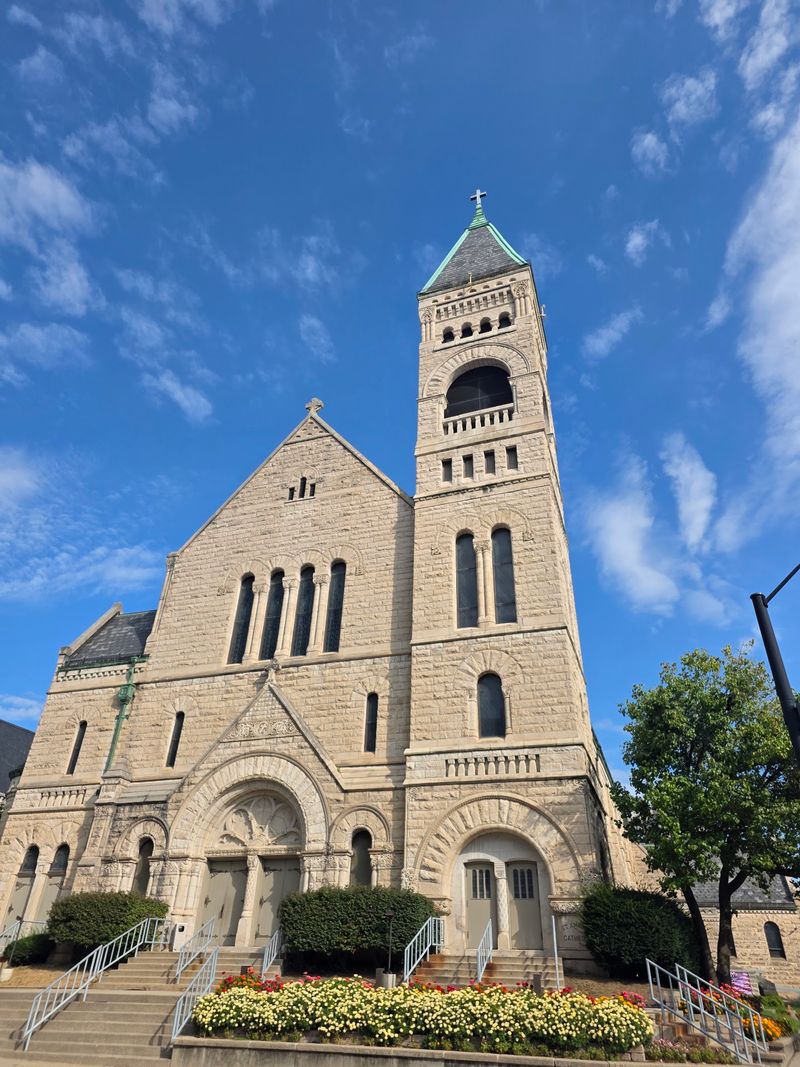
Two impressive Catholic landmarks share the same city, and St. Ambrose Cathedral holds its own in Des Moines with a presence that is unmistakably confident.
Serving as the seat of the Diocese of Des Moines, St. Ambrose Cathedral carries the architectural weight you would expect from a mother church, with a facade that commands attention from the street.
The cathedral’s design features classical elements that feel more Roman than Gothic, giving it a dignified, almost civic quality that sets it apart from the pointed spires you might expect.
Construction on the current building began in 1890, and the church was dedicated in October 1891 before becoming a cathedral in 1911.
The interior space is soaring and serene, with high ceilings, elegant columns, and carefully maintained artwork that reflects over a century of parish life and devotion.
Des Moines rewards slow exploration, and spending an afternoon moving between St. Ambrose Cathedral and the nearby Basilica of Saint John gives you a genuine architectural double feature.
Both buildings tell the story of Iowa’s Catholic heritage with stone, glass, and craftsmanship that no photograph can fully capture until you are standing right in front of them.
6. Cathedral Of St. Raphael, Dubuque
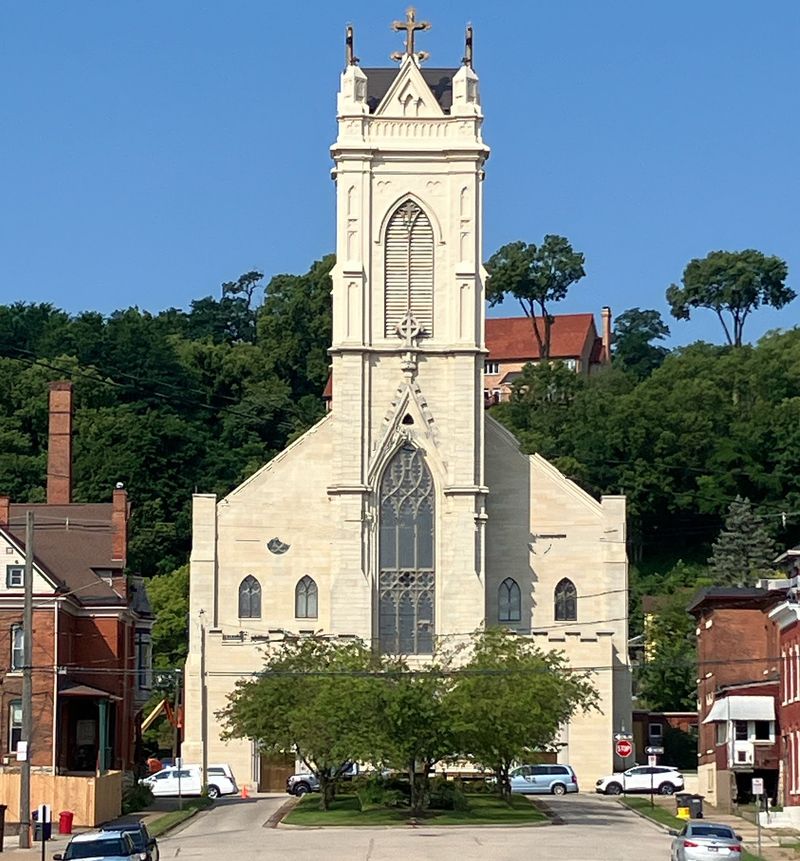
Dubuque is arguably the most architecturally rich city in Iowa, and the Cathedral of St. Raphael sits at the center of that legacy with quiet, confident elegance.
As the oldest Catholic diocese west of the Mississippi River, Dubuque has deep ecclesiastical roots, and the Cathedral of St. Raphael has been the heart of that tradition since the early 1800s.
The current building features a neoclassical facade with tall columns and a refined spire that rises above the surrounding bluffs with understated grace.
The interior is beautifully preserved, with vaulted ceilings, detailed woodwork, and a calm atmosphere that invites visitors to slow down and look carefully at the details.
Dubuque itself sits dramatically on the bluffs above the Mississippi River, and exploring the city on foot reveals historic architecture around nearly every corner.
The cathedral anchors the historic downtown area and pairs naturally with visits to the nearby Mathias Ham House and the National Mississippi River Museum.
If you only visit one church in northeastern Iowa, this is the one that earns the trip, both for its history and for the way its spire catches the late afternoon light.
7. St. Mary Of The Visitation Catholic Church, Iowa City
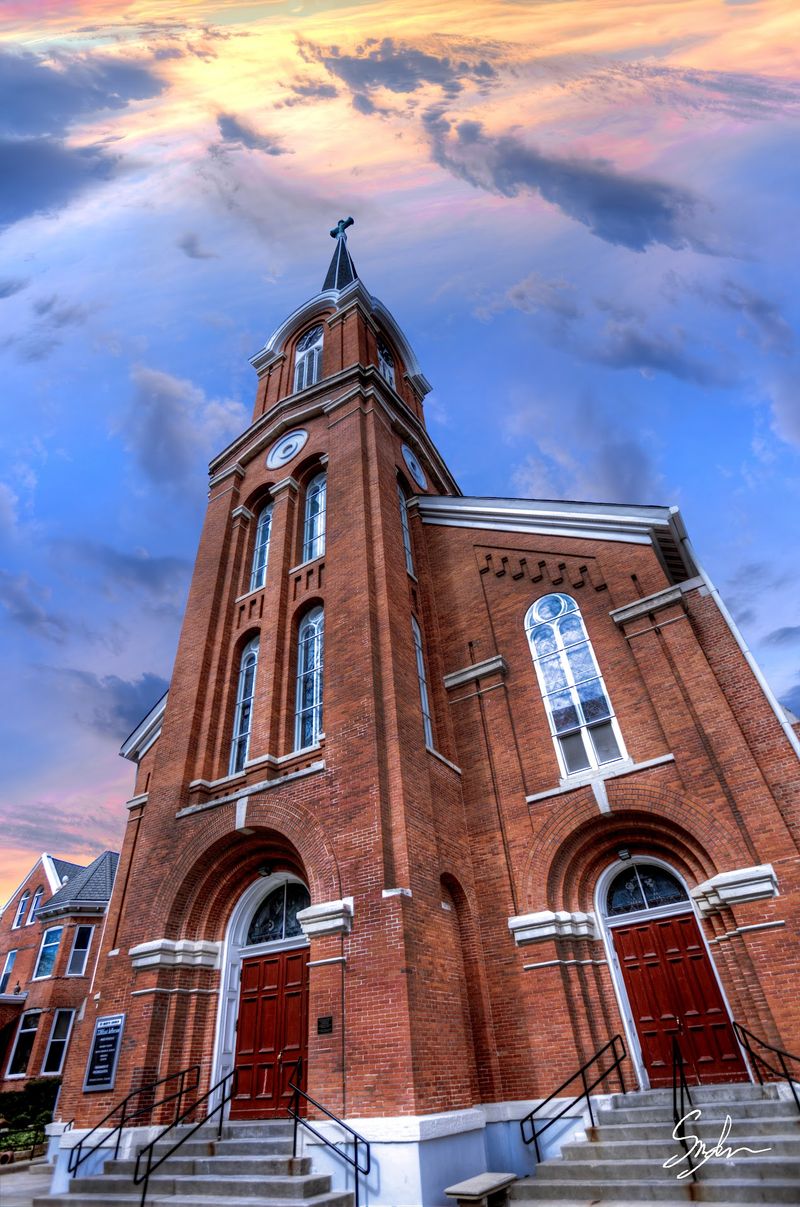
College towns are not always known for their churches, but St. Mary of the Visitation Catholic Church in Iowa City holds its own against the University of Iowa’s iconic buildings with genuine architectural confidence.
The church features a pointed Gothic spire and warm brick construction that gives it a grounded, classic feel in the middle of a busy university neighborhood.
Founded in 1841, St. Mary’s is one of Iowa’s older Catholic parishes and predates statehood by five years.
That kind of history gives the building a deeper significance than its relatively modest exterior might suggest at first glance.
The interior rewards visitors with beautiful stained glass and an intimate scale that feels welcoming rather than overwhelming.
Iowa City buzzes with student energy most of the year, and the church provides a calm counterpoint to the surrounding academic hustle.
The spire is particularly photogenic in spring when flowering trees bloom along the nearby streets, framing the Gothic tower in soft pink and white blossoms.
St. Mary’s is a reminder that some of Iowa’s most enduring landmarks are not on university campuses but right beside them, watching history unfold one semester at a time.
8. St. Mary Catholic Church, Guttenberg
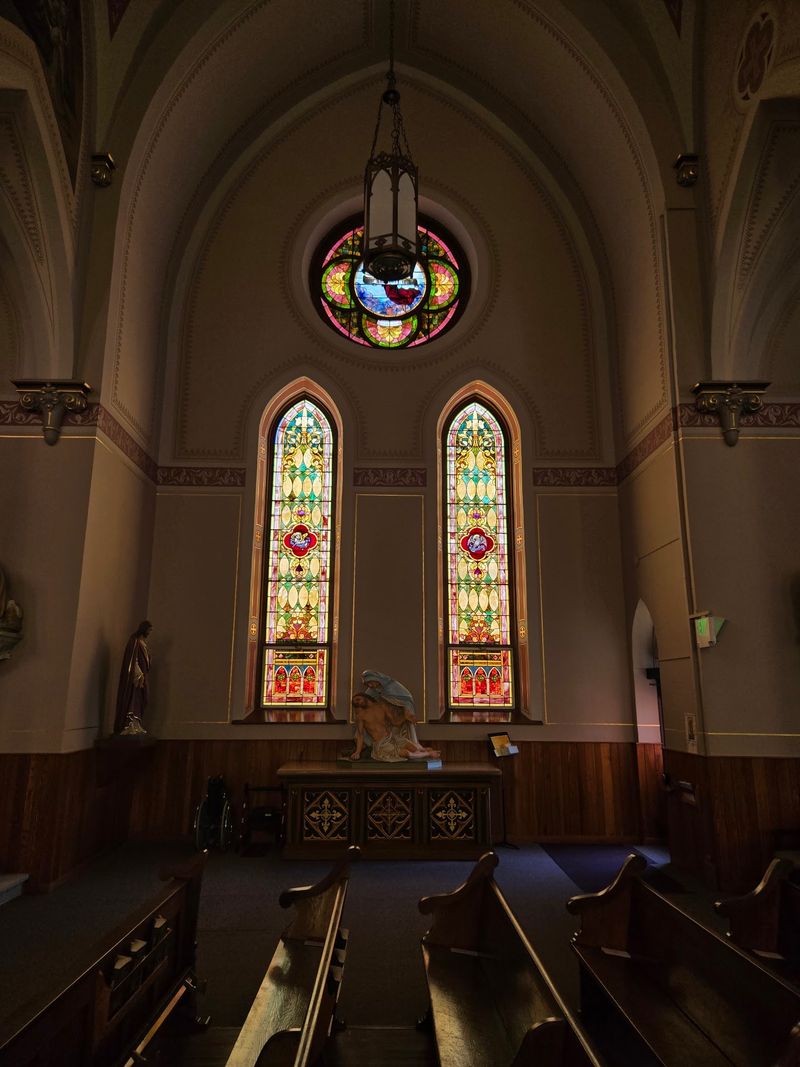
Guttenberg is a small Mississippi River town that looks like it belongs in a painting, and St. Mary Catholic Church fits that scene perfectly with a tower that rises above the rooftops and points toward the bluffs beyond.
The church reflects the strong German immigrant heritage of Guttenberg, a town named after Johannes Gutenberg and settled largely by German-speaking families in the 1840s.
The Gothic Revival brickwork and twin spires give the building a European character that feels entirely at home in this historic river town.
Guttenberg sits along the Great River Road National Scenic Byway, making it a natural stop for travelers exploring the Iowa side of the Mississippi.
The church tower is visible from the riverfront, creating a picturesque silhouette that has welcomed travelers and residents alike for well over a century.
The interior features traditional Catholic devotional artwork and a peaceful atmosphere that contrasts nicely with the lively outdoor scenes along the riverfront just a short walk away.
Come in summer when the bluffs are green and the riverfront is especially inviting. St. Mary’s tower against that backdrop is the kind of view that stays with you long after you have driven home.
9. St. Mary Catholic Church, Riverside
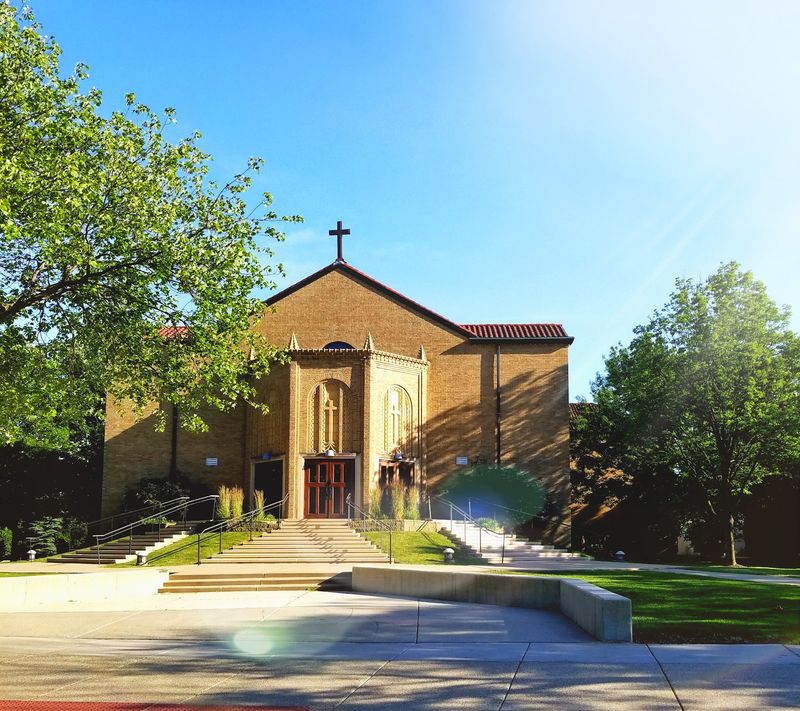
Not every church on this list rises above a skyline or commands attention from a riverfront, and St. Mary Catholic Church in Riverside proves that beauty can arrive in smaller packages too.
Riverside is a tiny Iowa town with an outsized claim to fame as the self-proclaimed future birthplace of Star Trek’s Captain James T. Kirk, but the church offers a different kind of landmark entirely.
The brick bell tower of St. Mary’s gives this small rural parish a visual identity that anchors the town’s modest main area with quiet dignity.
Rural Iowa Catholic churches like this one were often built by tight-knit immigrant communities who treated the construction of their parish as a communal act of faith and pride.
That spirit comes through in the careful craftsmanship of the building, which has served the local community through generations of change in the surrounding countryside.
Riverside sits in Washington County in southeastern Iowa, making it accessible as a day trip from Iowa City or the Quad Cities area.
The combination of Riverside’s quirky pop culture identity and its genuinely historic church makes for a visit that is equal parts fun and meaningful, which is a hard combination to beat on any road trip.
10. St. Patrick Catholic Church, Imogene
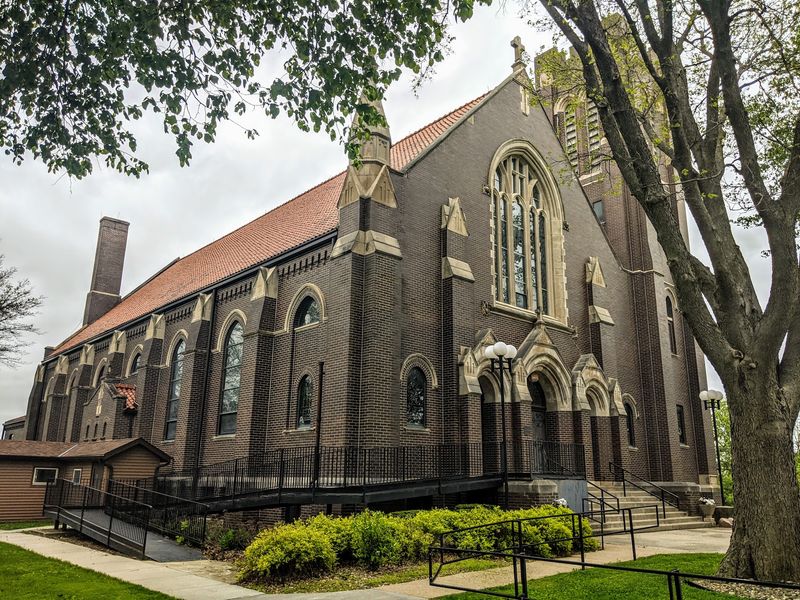
Somewhere in the rolling farmland of southwestern Iowa, the tiny town of Imogene hides one of the state’s most surprising architectural landmarks.
St. Patrick Catholic Church in Imogene is the kind of place that makes you do a double-take when you first see its tower rising unexpectedly above the corn and soybean fields.
The church was built to serve an Irish immigrant community that settled in this corner of Fremont County during the mid-1800s, and the building carries that heritage with pride.
The tower draws the eye from a considerable distance across the flat southwestern Iowa landscape, functioning almost like a lighthouse for anyone navigating the rural grid roads.
Imogene itself is a very small community, but the presence of St. Patrick’s gives it a gravity that outlasts its size.
The church interior reflects the devotion of generations of farm families who kept the parish alive through drought, economic hardship, and the constant change of rural American life.
Visiting St. Patrick’s requires a genuine detour off the main highway, and that is exactly what makes it feel like a discovery rather than just another stop on a list. Some of the best things in Iowa reward a little extra effort to find.