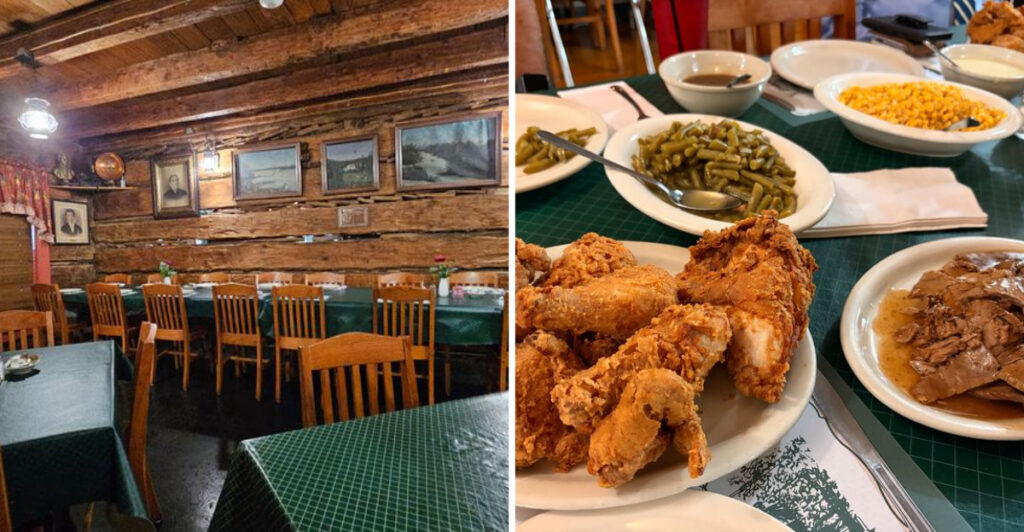
Indiana dinner history began with stagecoaches and stayed for the fried chicken.
Built in 1825 as a midday stop and trading post, this landmark now serves roast beef, country ham, mashed potatoes, and pies that know exactly how to steal the finale.
The building reached its 200th year in 2025, but dinner still follows a simple rhythm. Cars pull in, tables fill, and shared bowls start moving before anyone remembers to talk about history.
The original log room and Abraham Lincoln connection give the place plenty of stories. Then the platters arrive, and gravy makes a strong case for changing the subject.
This may be Indiana’s oldest restaurant, but nothing about the meal belongs behind glass.
Indiana’s Oldest Restaurant Began As A Stagecoach Stop
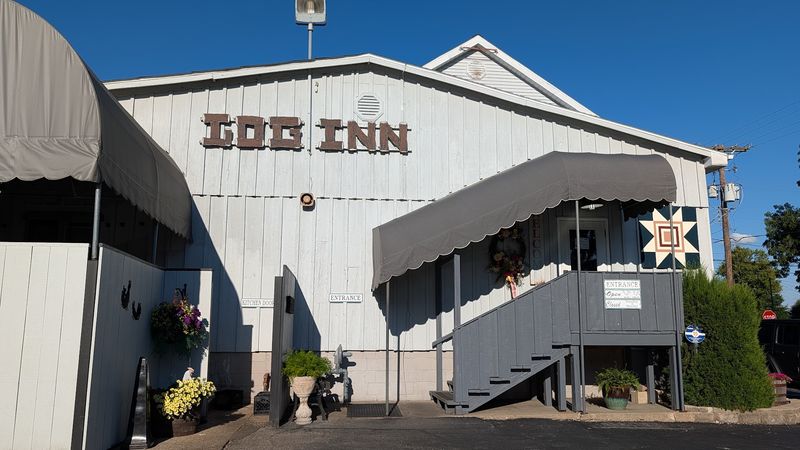
Two centuries ago, dinner came with hoofbeats outside.
The Log Inn was built in 1825 as a stagecoach stop and trading post along the route between Evansville and Vincennes. Travelers once paused here during journeys that depended on horses, road conditions, and schedules measured in days rather than minutes.
The original log structure still survives within the larger building. Later additions expanded the property, but the oldest section remains part of the dining experience instead of sitting behind a fence or museum display.
That gives the restaurant a rare kind of continuity. The same site has moved from serving stagecoach passengers to hosting family dinners, celebrations, and road-trippers arriving by car.
The building is recognized as Indiana’s oldest restaurant. It reached its 200th anniversary in 2025, a milestone that places its history in a category few operating restaurants can approach.
The Log Inn did not begin as the family restaurant you see today. The current restaurant operation dates to 1965, when Pete and Victoria Rettig opened it inside the historic building. Their family later carried the business forward.
The road changed. The dining room grew. The appetite clearly kept pace.
That long history still remains accessible rather than distant. You can touch the old walls, sit down for dinner, and watch a two-century story continue around bowls of potatoes and gravy.
County Road 200 East Leads To The Original Log Room
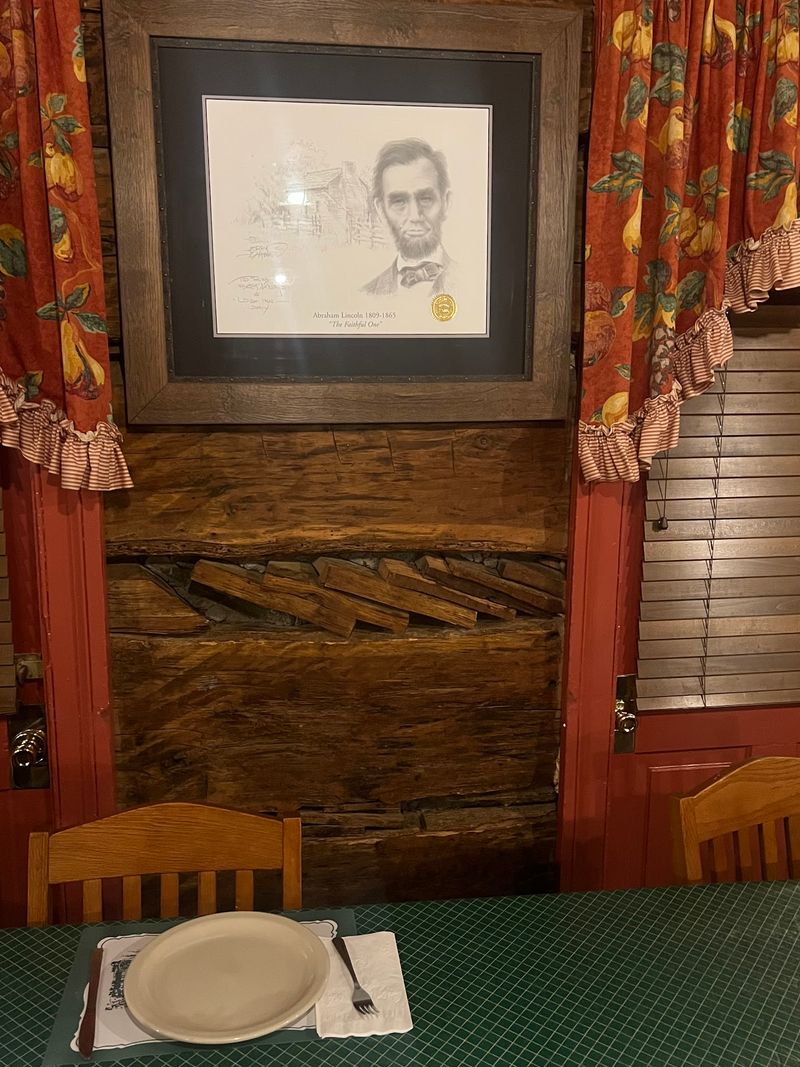
The turn off the highway is short. The trip backward in time is much longer.
The Log Inn sits about twelve miles north of Evansville and roughly one mile east of U.S. Highway 41. The rural setting gives the approach a slower rhythm before the parking lot and dinner crowd come into view.
Inside, you can dine in the original log portion of the building, where thick wood walls connect the current restaurant to its stagecoach years. Historical photographs and memorabilia add context without turning the meal into a formal tour.
The Lincoln Room carries the strongest story. Abraham Lincoln stopped at the property in November 1844 while returning from a campaign trip through southern Indiana. He had been speaking in support of Henry Clay during the presidential race.
That visit happened sixteen years before Lincoln became president. Today, guests can still eat in the original section associated with his stop, placing fried chicken and mashed potatoes in a room with a genuine link to American history.
The restaurant is located at 12491 County Road 200 East, Haubstadt, Indiana 47639. From U.S. 41, the final stretch runs about a mile along the county road.
You may come looking for a historic plaque. The smell from the kitchen tends to redirect the tour.
Fried Chicken Gives The Family Table Its Centerpiece
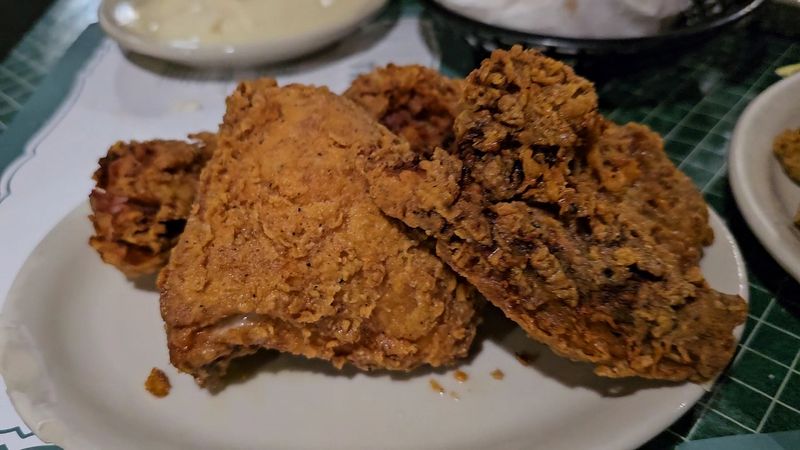
The history gets you through the door. Fried chicken makes sure you stay seated.
The Log Inn’s family-style dinner begins with a choice of half a chicken, country ham, or roast beef for each person. Parties must include at least three people to order the family-style option.
Fried chicken remains the meal most closely associated with the restaurant. The pieces arrive ready to share the table with mashed potatoes, gravy, vegetables, slaw, rolls, and butter.
The format matters as much as the main dish. Instead of receiving one isolated plate, the group gets platters and bowls that move around the table. Everyone chooses an entrée, then reaches for the same sides.
That passing, scooping, and negotiating creates a different pace from an individually plated dinner. One bowl heads left, the gravy moves right, and somebody quietly claims the final roll before anyone can object.
Country ham adds a salty, traditional alternative, while roast beef gives the table a softer, gravy-friendly option. A mixed group can order different meats and still share the same family-style spread.
The chicken may be the headline, but the real experience begins when every bowl starts moving at once.
Shared Bowls Turn Dinner Into A Full Table Event
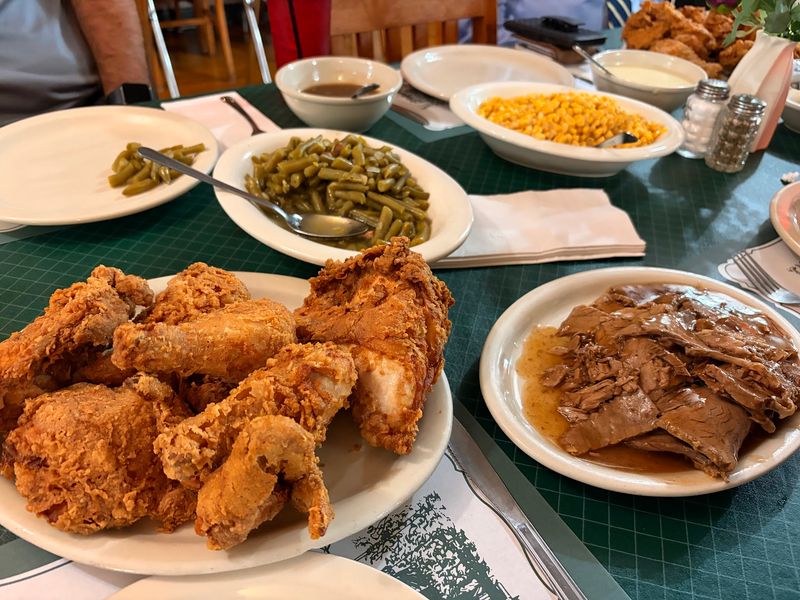
The mashed potatoes do not arrive alone, and neither should your appetite.
Family-style dinners include mashed potatoes, gravy, two vegetables, slaw, hot rolls, and butter. The food arrives in bowls and platters sized for sharing rather than in carefully separated individual portions.
Vegetable choices include peas, corn, and red cabbage, while German fries are available for an additional charge per person. German potato salad and other sides can also be ordered separately from the à la carte menu.
The potatoes and gravy form the center of gravity. They work beside fried chicken, ham, or roast beef and give every diner a reason to keep one eye on the bowl as it circles the table.
Slaw brings a cooler, crisper pause between richer bites. Hot rolls handle butter, gravy, or anything else left behind once the plates begin clearing.
This style of service works especially well for groups because the meal becomes naturally communal. You are not simply eating beside one another. You are passing, offering, asking, and watching portions mysteriously shrink each time a bowl returns.
The table fills quickly, but conversation tends to slow down. Refills and second helpings keep everyone seated a little longer, especially when the rolls remain warm and another spoonful of gravy still looks possible.
Family-style dinner has a way of making the clock less persuasive.
The À La Carte Menu Gives Smaller Groups More Room
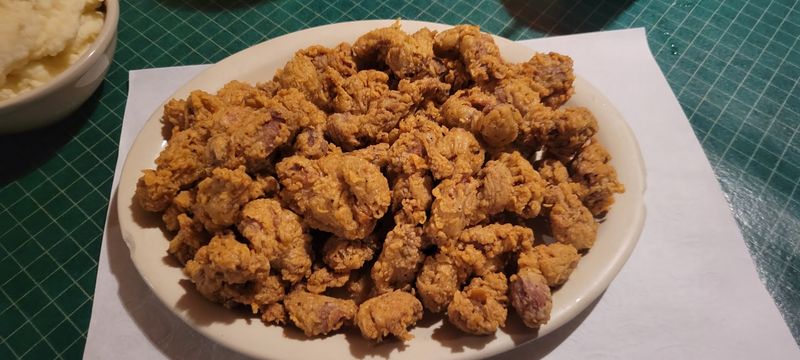
Not every table arrives with three people and a plan for shared bowls.
The à la carte menu gives couples, solo diners, and anyone wanting a different route plenty of choices. Fried chicken remains available in half- and quarter-chicken portions, while country ham and roast beef can be ordered separately.
Chicken livers and chicken gizzards keep the menu rooted in traditional Midwestern and Southern-style comfort food. Catfish fillets, fried shrimp, stuffed shrimp, a seafood platter, and grilled chicken widen the selection beyond the family-style trio.
An open-faced beef plate with potatoes offers another gravy-forward option. Sandwiches include hamburgers, cheeseburgers, hot ham, roast beef, grilled cheese, grilled chicken, and catfish on days when it is available.
The appetizer list is equally enthusiastic. Fried mushrooms, onion rings, cauliflower, cheese balls, mozzarella sticks, egg rolls, and nacho nuggets can turn the opening round into a full table of its own.
That range keeps one person’s craving from controlling the entire dinner. A group can share family-style chicken while another diner orders catfish, shrimp, or chicken livers without leaving the same historic room.
The menu respects tradition, but it does not make everyone eat the same thing to participate.
Homemade Pies Give Dessert A Difficult Decision
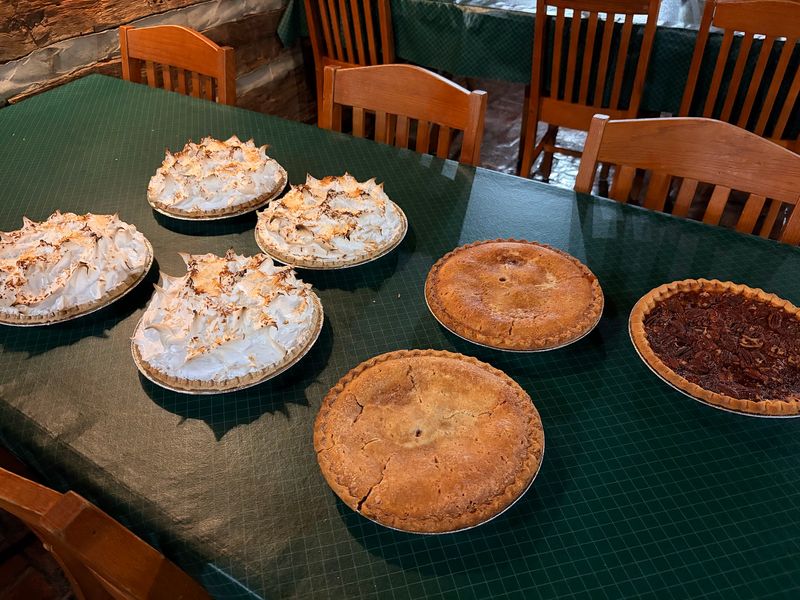
The main meal fills the table. Dessert fills the last available corner.
The Log Inn offers apple, cherry, pecan, chocolate, coconut cream, and lemon meringue pies. Cheesecake, German chocolate cake, carrot cake, caramel apple, and ice cream add even more ways to ignore the idea that dinner is finished.
Seasonal strawberry pie brings another option when available. Its limited appearance gives regulars a reason to check the dessert list before deciding they are too full.
Coconut cream and lemon meringue lean light in texture, while pecan and chocolate bring a richer finish after fried chicken and gravy. Apple and cherry keep the lineup firmly connected to classic family-restaurant desserts.
The easiest solution is sharing several slices, although dessert-sharing agreements often become less generous once the forks arrive.
Pie also travels well when the family-style meal has used every bit of available appetite. Taking a slice home gives the evening an encore without requiring anyone to admit defeat at the table.
The restaurant has lasted two hundred years. Your plan to skip dessert may not survive two minutes.
Limited Dinner Hours Make Early Arrival Part Of The Ritual
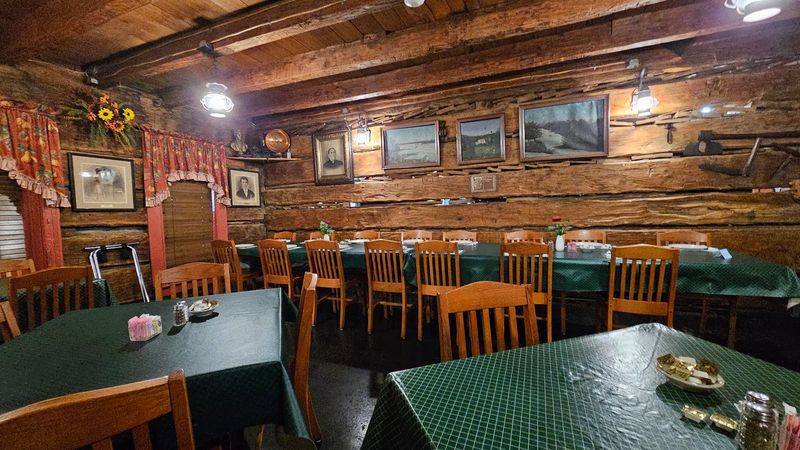
The doors open at four Tuesday through Saturday, and the parking lot quickly learns its job.
The Log Inn serves dinner five evenings a week and remains closed Sunday and Monday. Friday and Saturday hours may extend later, giving weekend diners a little more room for chicken, shared sides, and pie.
Reservations are available for parties of two or more from Tuesday through Thursday. On Friday and Saturday, reservations are limited to groups of twelve or more, leaving smaller parties to arrive as walk-ins.
Those rules help explain why early arrivals gather before service. A popular historic restaurant with a narrow dinner window can fill quickly, especially at the end of the week.
To-go orders are available during regular dinner hours, although eating inside gives you the full combination of original log walls, shared bowls, and two centuries of history.
The family-style format gives groups a natural reason to linger, while smaller parties can build their meal from the à la carte menu. Either route can end with pie if the main course leaves even a little room.
Arrive early, choose your meat, pass the potatoes, and save room for dessert. After 200 years, what would you order first at Indiana’s oldest restaurant?