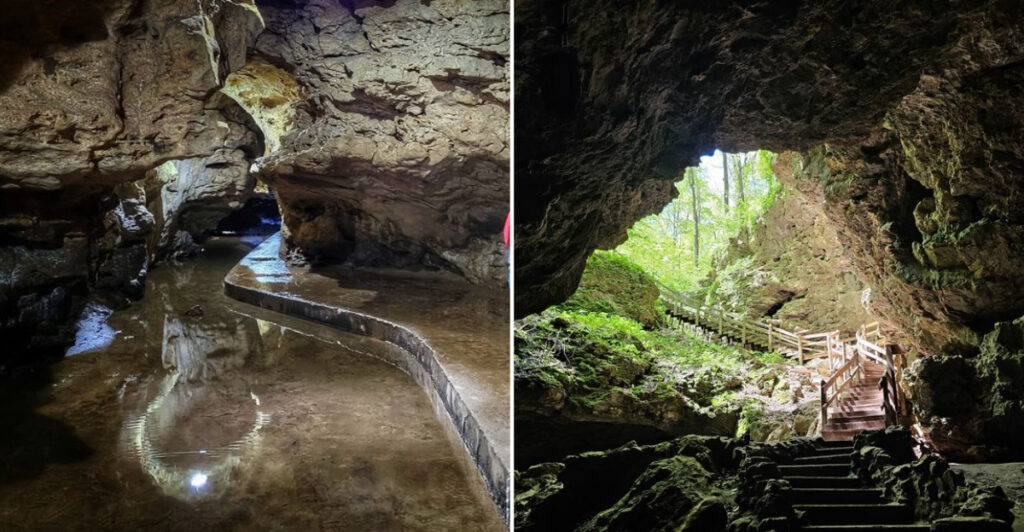
A few steps into this Iowa adventure, daylight starts disappearing behind you. Deep in Jackson County, a remarkable state park hides the largest collection of caves found in any Iowa state park, with trails weaving through rugged limestone country above ground.
My first look at the cave entrances made the whole outing feel less like a normal hike and more like discovering a secret passage. Soon I was ducking beneath rock ceilings and squeezing through narrow openings with muddy shoes and a ridiculous grin.
The cool air underground only adds to the surprise, especially on a warm day. There is plenty happening above the caves, too, with wooded trails and dramatic rock formations giving the park an almost storybook feel.
It is the kind of outing that turns an ordinary afternoon into a small adventure.
Where Iowa Goes Underground
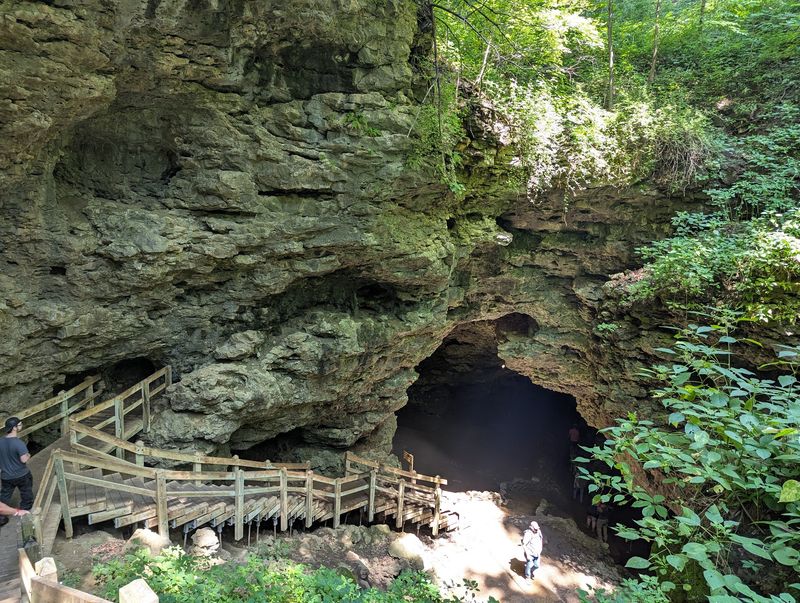
Most state parks offer a nice walk and maybe a waterfall if you are lucky. Maquoketa Caves State Park raises the stakes by offering a full underground adventure right alongside its above-ground trails.
The park sits at 9688 Caves Rd, Maquoketa, Iowa 52060, tucked into the rugged terrain of Jackson County in eastern Iowa. It is a surprisingly short drive from Dubuque, making it an easy day trip that punches well above its weight in terms of wow factor.
What sets this park apart is the sheer number of caves packed into a relatively compact area. The park contains more caves than any other Iowa state park, with over a dozen accessible formations spread across the trail system.
The landscape itself is a mix of dense woodland, dramatic limestone bluffs, and hidden ravines that feel genuinely remote even though the parking lot is never far away. That combination of accessibility and raw natural character is what keeps people coming back season after season.
Inside Dancehall Cave
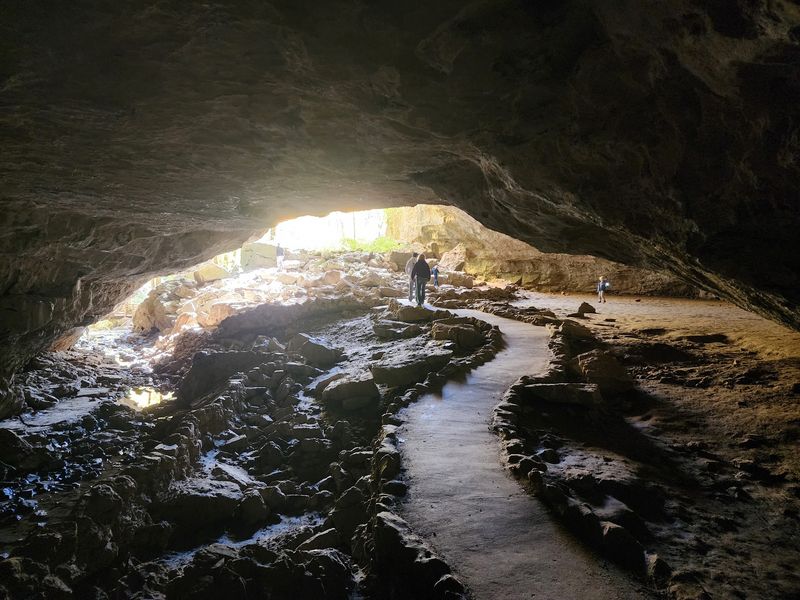
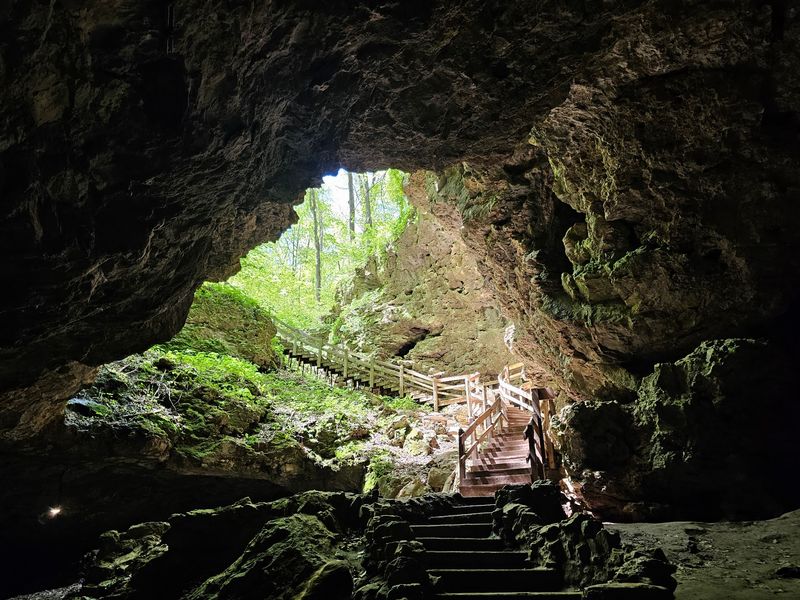
Nothing quite prepares you for the moment you step inside Dancehall Cave. The ceiling shoots upward, the air drops several degrees, and the sheer size of the space makes you stop mid-step just to take it all in.
Dancehall Cave is the largest cave in the park and one of the most impressive natural spaces I have ever walked through. The cavern is wide enough and tall enough that early visitors reportedly used it as a social gathering space, which is exactly how it earned its memorable name.
A maintained walkway runs through the cave, so you do not need to be an experienced spelunker to enjoy it. The path guides you through the main chamber and past walls of ancient limestone that have been shaped over thousands of years by water moving through the rock.
One of the wildest parts of the experience is realizing that the cave actually passes beneath the main road. You walk underground, cross under the pavement above, and emerge on the other side feeling like you have pulled off some kind of geological magic trick.
Bring a flashlight to catch the finer details along the walls that the ambient light misses entirely.
A Trail With Secret Entrances
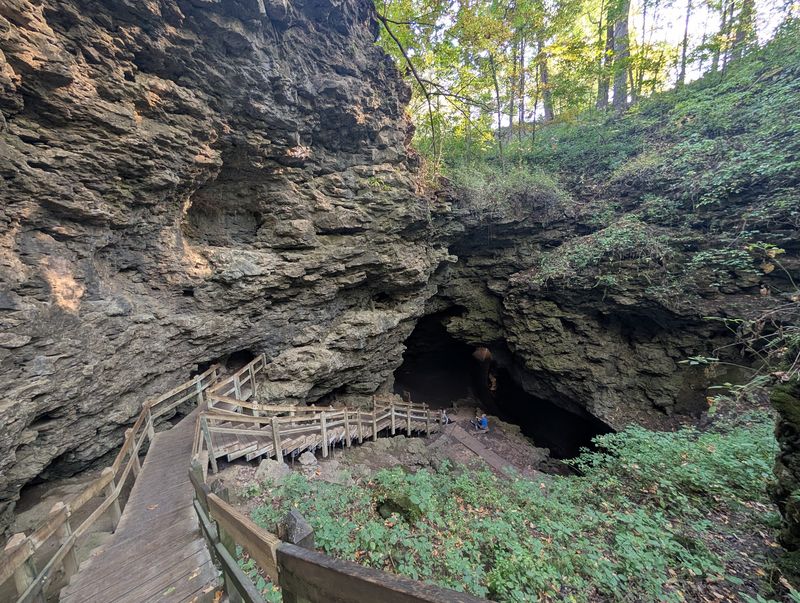
The trail network here is more of a choose-your-own-adventure situation than a single straightforward path, and that is part of what makes it so fun to explore.
Several interconnected trails loop through the park, passing cave after cave as they wind through the wooded hillsides. The terrain varies throughout the park, with rocky footing, staircases, steep inclines, and uneven sections, while some tighter caves are better suited to experienced cavers.
One practical note worth taking seriously: grab a map from the parking area before you head out. The signage along the trails can be inconsistent, and without a map in hand, it is genuinely easy to miss some of the smaller caves tucked off the main route.
The maps are free and available at the trailhead kiosks.
The trails are well maintained overall, and the park staff do a solid job of keeping the paths clear and accessible across the seasons.
Fall is a particularly good time to visit because the changing foliage turns the limestone bluffs into a backdrop that looks almost too good to be real. Wear sturdy shoes with grip, because muddy conditions can make some sections slippery after rain.
Cool, Dark, And Wild
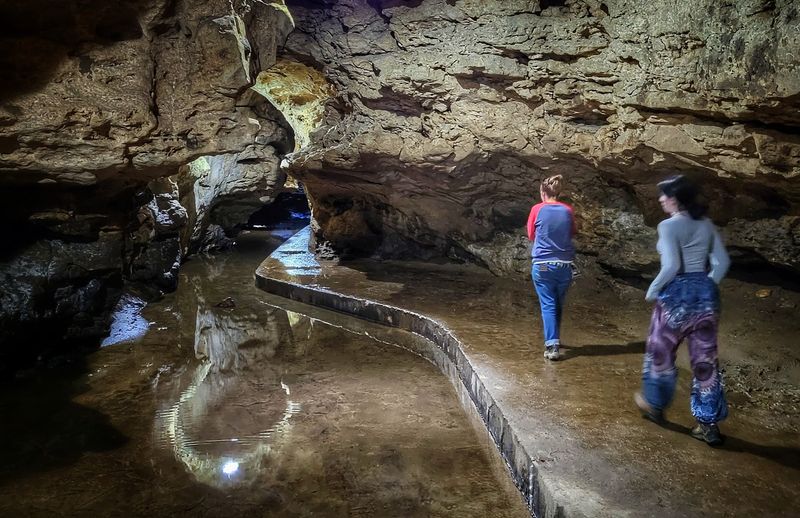
There is a specific kind of quiet that exists inside a cave, and Maquoketa delivers it in full. The moment you move past the cave entrance, the outside world goes on mute.
The temperature inside the caves stays consistently cool and humid regardless of the season. On a hot summer day, that coolness hits you like a natural air conditioning system that nobody had to install or maintain.
On a rainy spring afternoon, the contrast between the damp chill inside and the wet weather outside is oddly comforting.
The rock walls hold a faint mineral smell that is hard to describe but instantly recognizable once you have experienced it.
Moss clings to the lower sections of some cave walls, and thin trickles of water sometimes run along the floor, reminding you that these formations are still very much alive and slowly changing.
Smaller caves in the park offer a more hands-on experience, where you can crouch, crawl, and squeeze through tighter passages if you are up for it. These are the spots that produce the best photos and the most memorable stories.
Headlamps work better than standard flashlights in tight spaces, so that small upgrade is worth making before your visit.
Life Above Ground
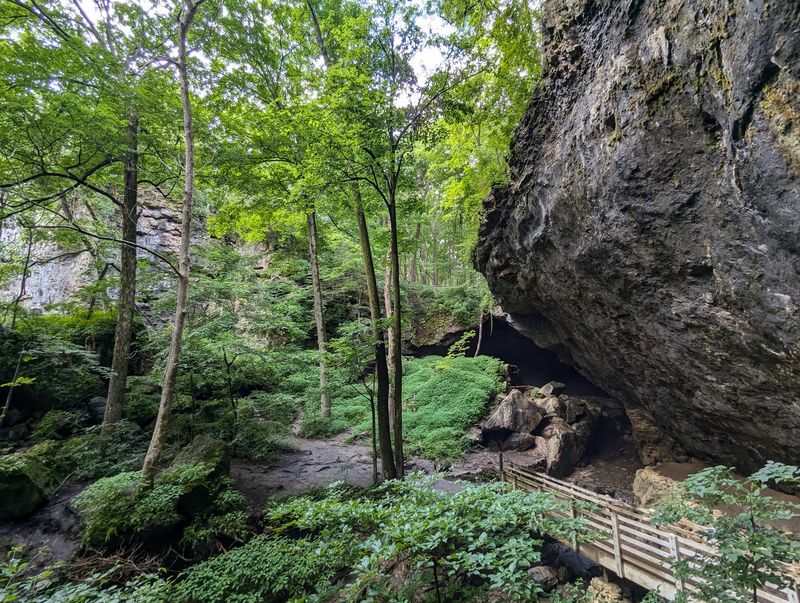
The caves get most of the attention, but the above-ground portions of the park are quietly doing a lot of impressive work on their own.
The forested hillsides are home to white-tailed deer, and I spotted several near the walk-in campsites during an early morning stretch of the trail.
The park also has a healthy population of birds, and the woodland edges are good spots for catching sight of species that prefer the transition zones between forest and open terrain.
Wildflowers bloom throughout the park in spring and early summer, dotting the trailside with color that contrasts beautifully against the grey limestone.
The bluffs themselves are geological storytellers, with visible layers of rock that represent millions of years of sediment and pressure compressed into the hillsides you walk past.
Bug spray is a genuine recommendation for summer visits, not just a polite suggestion. The wooded and humid environment near the cave entrances creates ideal conditions for insects, and a quick application before hitting the trail makes the whole experience significantly more enjoyable.
The park also welcomes leashed dogs, so four-legged hiking companions are more than welcome to join in on the exploration as long as they stay on the leash.
Camping Options And Overnight Stays
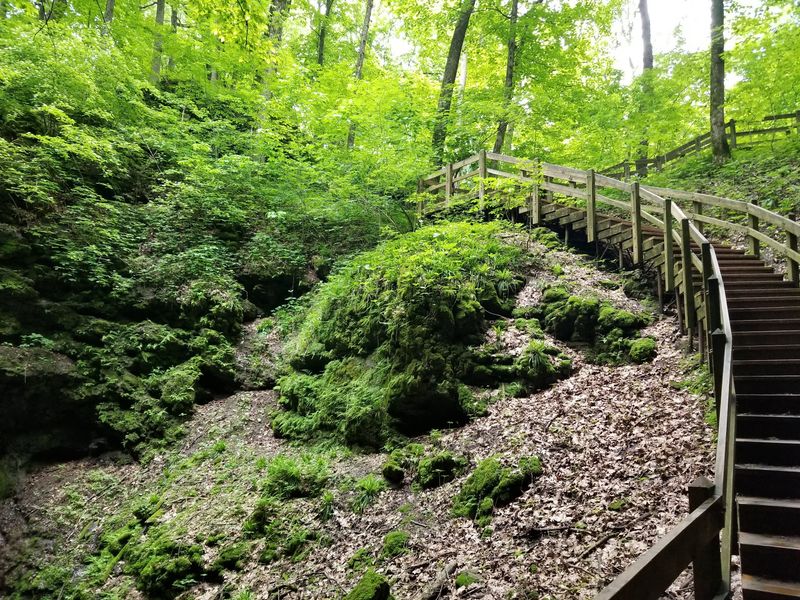
Spending a single afternoon at this park is genuinely satisfying, but staying overnight turns the whole experience into something richer and more memorable.
The campground sits within the park and offers a mix of standard sites and walk-in sites for those who want a slightly more secluded setup. The campground includes standard electric sites and walk-to sites surrounded by the park’s wooded landscape.
It is small, which means it never gets overwhelmingly crowded, but it also means sites can fill up quickly during peak season. Early reservations are a smart move if you are planning a weekend visit between late spring and early fall.
Facilities include a small playground with sand and a slide, covered picnic areas, and restrooms that open up in late spring.
Early-season campers, think late March or early April, should be aware that indoor bathrooms and showers may not yet be operational, though the park does provide portable facilities in the interim.
Waking up inside the park and having the trails mostly to yourself in the early morning is a reward that is hard to put a price on.
What To Bring Underground
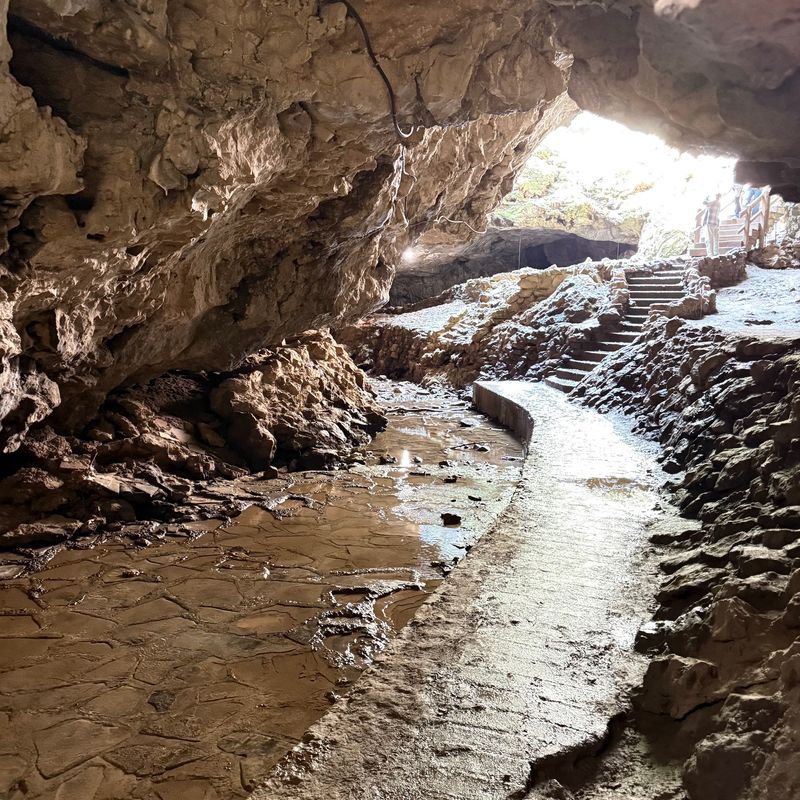
A little preparation goes a long way at this park, and a few small choices before you arrive can make the difference between a good trip and a great one.
Footwear is the number-one thing to get right. The trails mix packed dirt, loose rock, and muddy sections that can get slick after rain, so solid hiking boots or trail shoes with real grip are the right call.
Sandals and casual sneakers will let you down at the worst possible moment.
Bring a flashlight or headlamp even if you plan to stick to the main caves. The deeper sections of Dancehall Cave and several of the smaller formations have areas where natural light does not reach, and the details hiding in those darker corners are some of the most interesting parts of the experience.
An extra pair of socks and shoes stored in the car is a tip that sounds overly cautious until you step ankle-deep into a muddy patch halfway through the trail. The park is free to enter, which means the only investment required is your time and a bit of gear planning.
The hours run from 4 AM to 10:30 PM every day of the week, giving you a generous window to plan your visit around the weather and your own schedule.
Why It’s Worth The Trip
A 4.8-star rating across more than 4,000 reviews is not something that happens by accident. It reflects a place that consistently delivers on its promise, and Maquoketa Caves State Park has been doing exactly that for generations of visitors.
Families with young kids, solo hikers, scout troops, and couples looking for something more interesting than a standard weekend walk all seem to find exactly what they are looking for here.
The park manages to be accessible enough for casual visitors while still offering enough depth and challenge to satisfy people who take their outdoor adventures seriously.
The fact that admission is completely free removes the usual barrier that keeps people from trying new parks on a whim. There is genuinely no reason not to stop in if you are anywhere near eastern Iowa, and the drive from Dubuque takes less than 30 minutes.
What stays with you after the visit is not just the caves themselves but the cumulative effect of the whole experience: the cool underground air, the limestone walls, the forest above, and that particular satisfaction of having explored something that most people drive right past without knowing it exists.
This is the kind of place that earns a permanent spot in your rotation of favorite outdoor destinations.