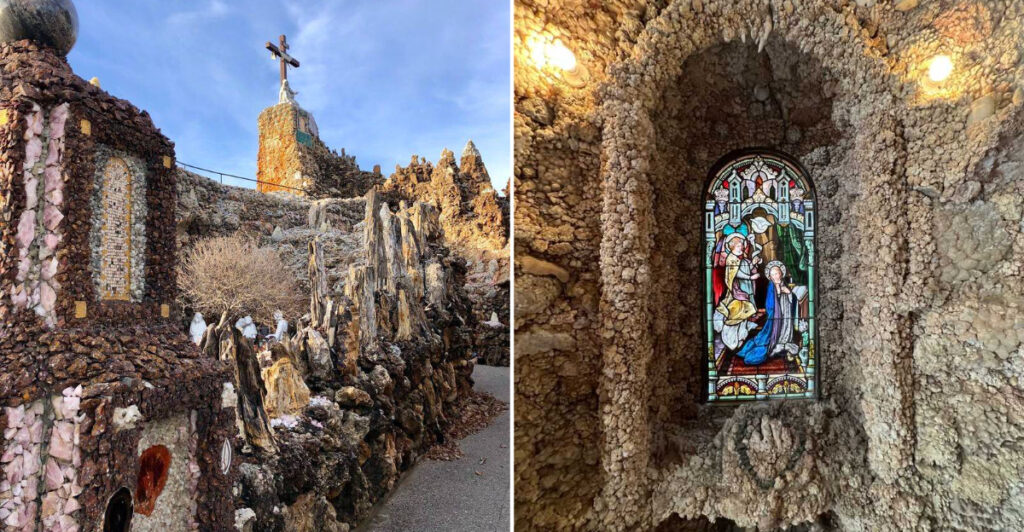
Imagine turning a promise made during a serious illness into a stone masterpiece that takes more than four decades to build. In a small Iowa town, one Catholic priest did exactly that, creating an elaborate religious landmark covered with glittering minerals and unusual rock formations.
The closer you look, the more details seem to appear, with biblical scenes worked carefully into the massive structure. It has earned the unofficial nickname Eighth Wonder of the World, and the scale alone helps explain why that label has stuck around for so long.
What began as one man’s act of devotion eventually became a landmark known far beyond its quiet Midwestern setting.
A Priest With A Promise And A Pile Of Rocks
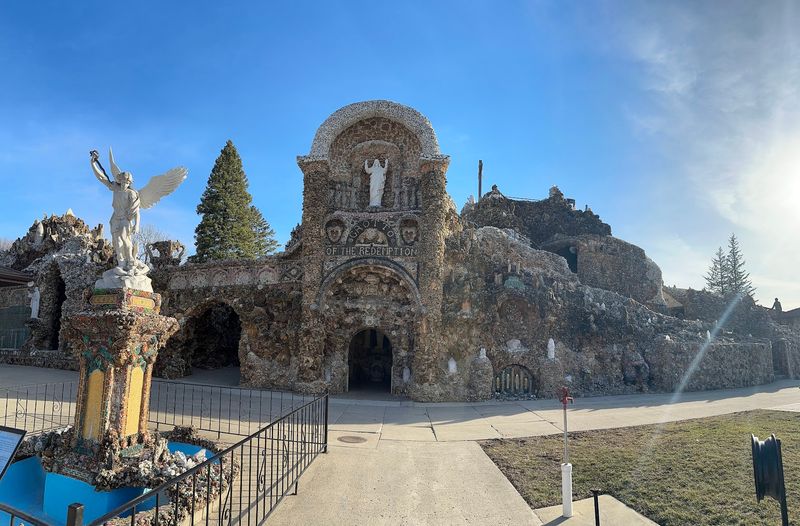
Father Paul Dobberstein made a vow when he was seriously ill as a young seminary student: if he recovered, he would build a shrine to honor the Virgin Mary.
He survived, and he kept his word in the most spectacular fashion imaginable.
Starting in 1912, Dobberstein began collecting rocks, minerals, and gemstones from across the country, carefully planning a structure that would tell the story of the Redemption through biblical scenes embedded in stone.
He worked on the Grotto of the Redemption in West Bend, Iowa for 42 years, until his passing in 1954, and the project was continued by his assistant, Father Louis Greving, and later by dedicated caretakers.
What started as one man’s promise became a multigenerational labor of devotion, and the results are nothing short of extraordinary.
The full address is 208 1st Ave NW, West Bend, Iowa 50597, and the outdoor shrine grounds remain open around the clock throughout the year, with admission supported by free-will donations.
The World’s Largest Man-Made Grotto
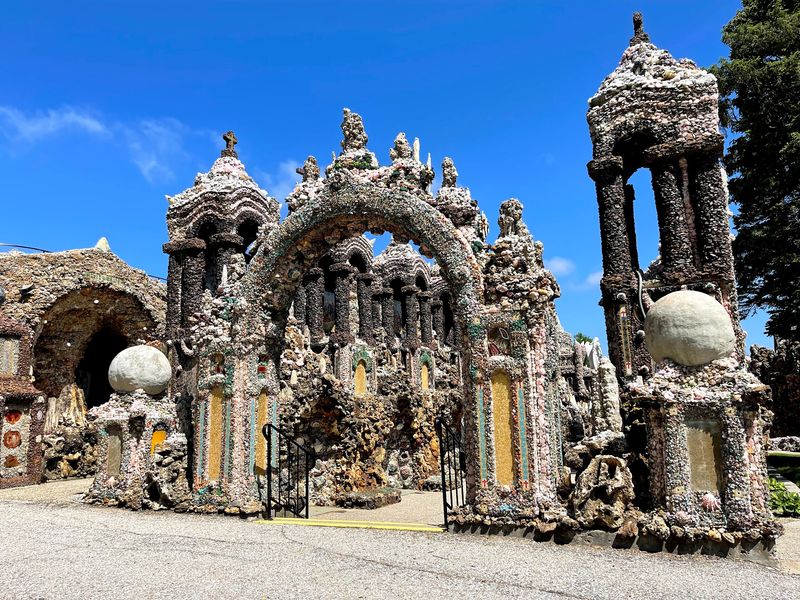
Nine separate grottos make up the full complex, each one dedicated to a different scene from the life of Christ, from the Nativity to the Resurrection.
Together, they form the largest man-made grotto in the world, a title the site has held for decades and shows no signs of giving up anytime soon.
The sheer scale of the place hits you before you even get close enough to study the details.
Walls tower overhead, packed so densely with rocks and gems that there is almost no visible mortar between them.
Every surface tells a story, and every corner reveals something new, a fossil here, a sparkling mineral cluster there, a carved figure emerging from a wall of petrified wood.
I walked the full circuit twice, and the second pass revealed details I had completely missed the first time around.
The complexity of the design is genuinely hard to process in a single visit, which is exactly why so many people come back for a second or even third look.
Precious Stones Worth Millions
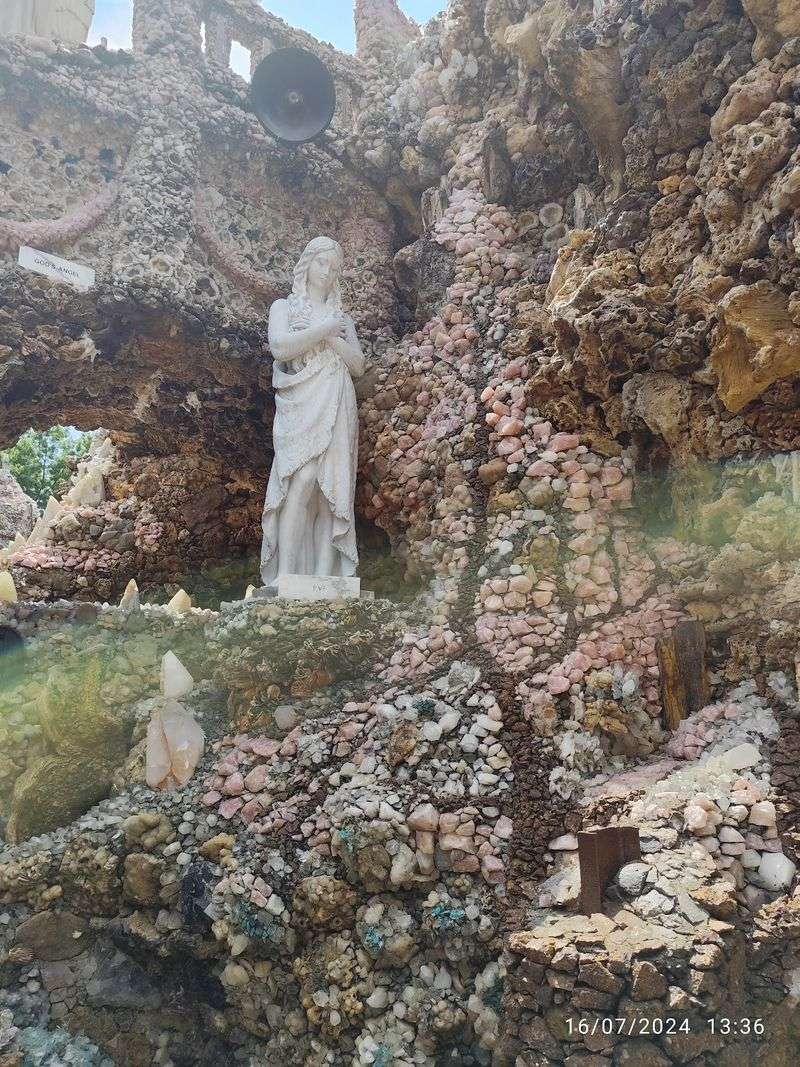
The geological value of what is packed into these walls is staggering.
Experts have estimated the minerals and gemstones embedded throughout the Grotto of the Redemption to be worth several million dollars, and the site describes the collection as one of the largest concentrations of precious stones and gems found in one location.
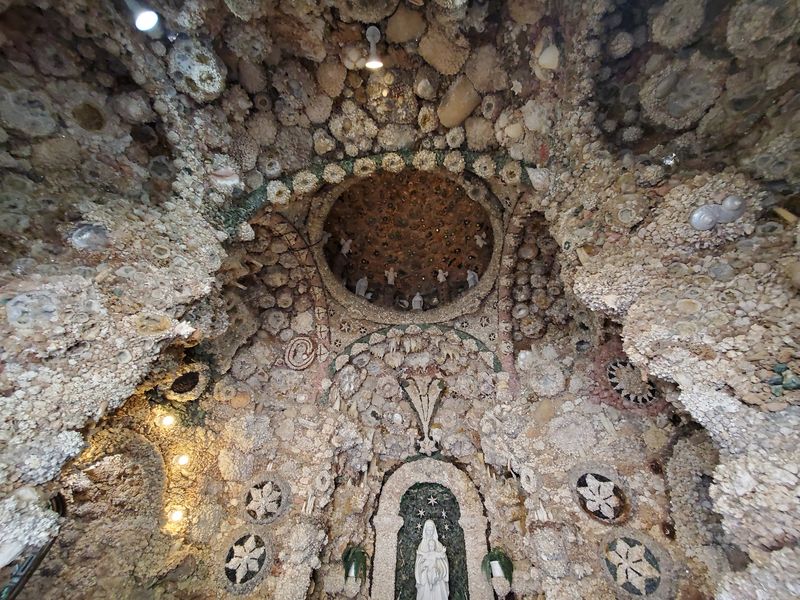
Father Dobberstein gathered specimens from all over North America and beyond, including Brazilian amethyst, petrified wood, stalactites, coral, shells, quartz crystals, and rare minerals that most people have never even heard of.
The visitor center displays a comprehensive guide to the stones used, which helps you appreciate what you are actually looking at as you walk through the grottos.
Before I saw that display, I had no idea that some of those shimmering walls contained minerals that form only under extremely rare geological conditions.
The rocks are arranged not just for beauty, but with intention, chosen for their color, texture, and symbolic meaning to complement the biblical scenes they surround.
It transforms a walk through the grounds into something closer to a geology lesson wrapped inside a work of sacred art.
The Eighth Wonder Of The World Title
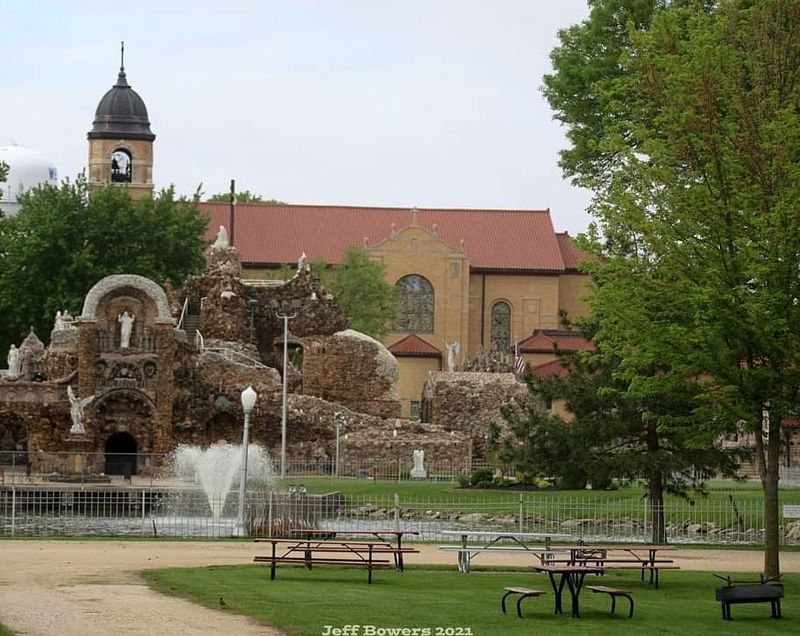
The nickname “Eighth Wonder of the World” was not invented by a local tourism board trying to drum up visitors.
It came from people who actually saw the place and genuinely could not think of a more fitting description.
The title has been used by journalists, travel writers, and visitors for decades, and it continues to circulate today because nothing about this place feels ordinary once you have stood in front of it.
The combination of scale, craftsmanship, geological rarity, and artistic vision creates an experience that does not fit neatly into any single category.
It is not quite a museum, not quite a church, not quite a garden, and not quite a geological exhibit, but it contains elements of all four in a way that feels completely original.
I have visited a lot of unusual landmarks across the country, and very few have left me genuinely struggling to explain what I just experienced to someone who has not been there.
This one did exactly that, and the moment I tried to describe it to a friend back home, I understood why the “Eighth Wonder” label has stuck around for so long.
Biblical Scenes Carved Into Every Corner
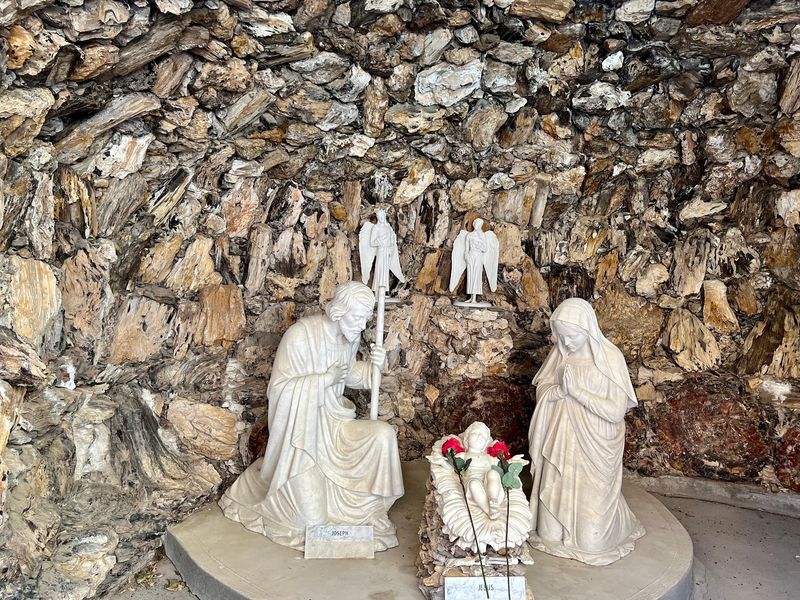
Every grotto within the complex tells a specific chapter of the Christian story, and the scenes are rendered with a level of detail that rewards slow, careful looking.
The Nativity scene, the Stations of the Cross, the Resurrection, the crowning of the Virgin Mary, all of these are depicted through sculpture, mosaic, and stone in ways that feel both ancient and vivid at the same time.
Father Dobberstein did not just place figures against a plain background; he built entire environments around each scene, using the natural colors and textures of the rocks to create mood and atmosphere.
The Stations of the Cross mosaics in particular drew me in for longer than I expected, and I found myself reading the small plaques and absorbing the sequence of events in a way that felt more immersive than any traditional church setting.
Whether you are religious or not, the storytelling embedded in the stonework is genuinely compelling.
The artistic choices feel deliberate and thoughtful rather than decorative, and that intentionality is part of what separates this place from any other roadside attraction you might stumble across.
The Church Next Door Is A Hidden Treasure
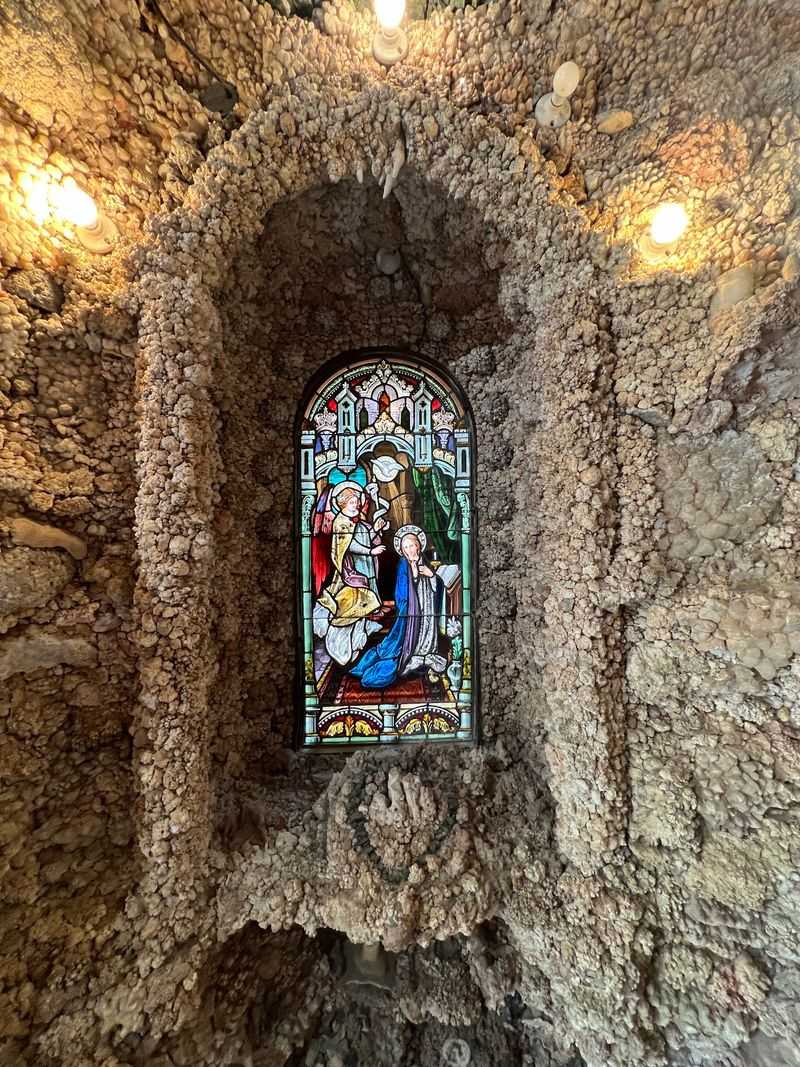
Most visitors focus all their attention on the outdoor grottos, which is completely understandable, but the adjacent Saints Peter and Paul Catholic Church deserves serious time and attention of its own.
The adjacent Saints Peter and Paul Catholic Church is closely connected to the shrine and gives visitors another look at the religious history behind the Grotto.
On a sunny day, the stained glass windows cast pools of colored light across the church interior, creating a peaceful atmosphere that complements a visit to the nearby Grotto.
The craftsmanship in the church mirrors the dedication visible outside, with the same meticulous attention to detail and the same sense that every inch of the space was considered carefully.
I sat in one of the pews for a few quiet minutes and felt a genuine sense of calm settle over me, which was a pleasant and unexpected bonus on what had already been a full and stimulating visit.
Even if you are not Catholic, the church is worth every minute you spend inside it.
Free Tours, A Museum, And A Gift Shop
One of the most refreshing things about visiting the Grotto of the Redemption is that admission is based entirely on a free-will donation, meaning there is no ticket booth, no price barrier, and no pressure.
Free guided tours run at the top of every hour and are absolutely worth joining, since the guides share historical context, point out details you would never notice on your own, and explain the symbolism behind the stone choices in each grotto.
The on-site museum houses a detailed display of the minerals and gemstones used throughout the complex, which adds a fascinating educational layer to the visit.
I spent a good chunk of time in that museum and left with a much deeper appreciation for the geological scope of what Father Dobberstein assembled over his lifetime.
The gift shop carries a range of souvenirs at reasonable prices, from small rock samples to religious items, and the staff inside are genuinely friendly and easy to chat with.
The whole experience feels community-driven rather than commercial, which is a quality that has become increasingly rare at well-known attractions.
Two Completely Different Experiences
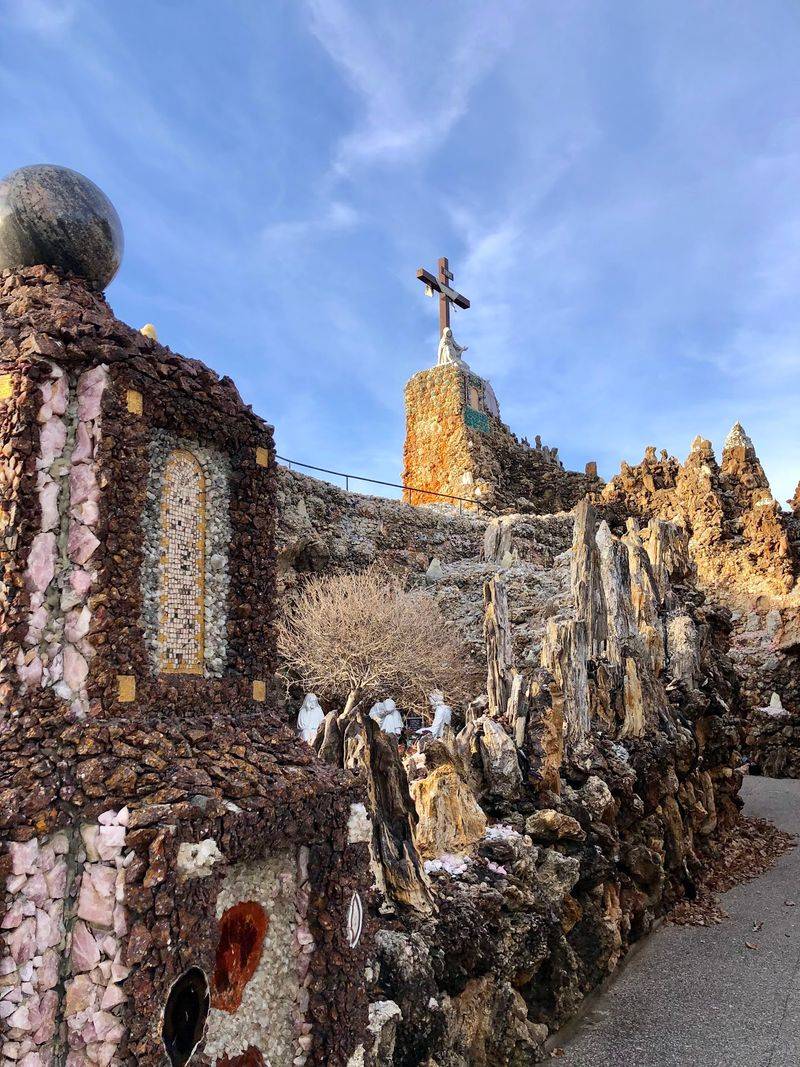
The Grotto of the Redemption is open around the clock, every single day of the year, and that all-hours access is not just a logistical detail; it genuinely changes the experience depending on when you arrive.
During the day, natural light brings out the true colors of the minerals and gemstones, letting you appreciate the geological variety and the intricate detail of each scene in full clarity.
After dark, the grottos are illuminated with carefully placed lighting that shifts the mood entirely, casting dramatic shadows, highlighting specific sculptures, and making the sparkling minerals glow in ways that feel almost theatrical.
I visited once in the afternoon and came back after sunset on the same trip, and the two experiences felt distinct enough that they could have been separate places entirely.
The nighttime version has a hushed, almost otherworldly quality that is hard to put into words but very easy to feel the moment you step onto the grounds.
If your schedule allows for both, do not skip the evening visit, because the grotto at night has a quiet magic that the daytime version, as stunning as it is, simply cannot replicate.