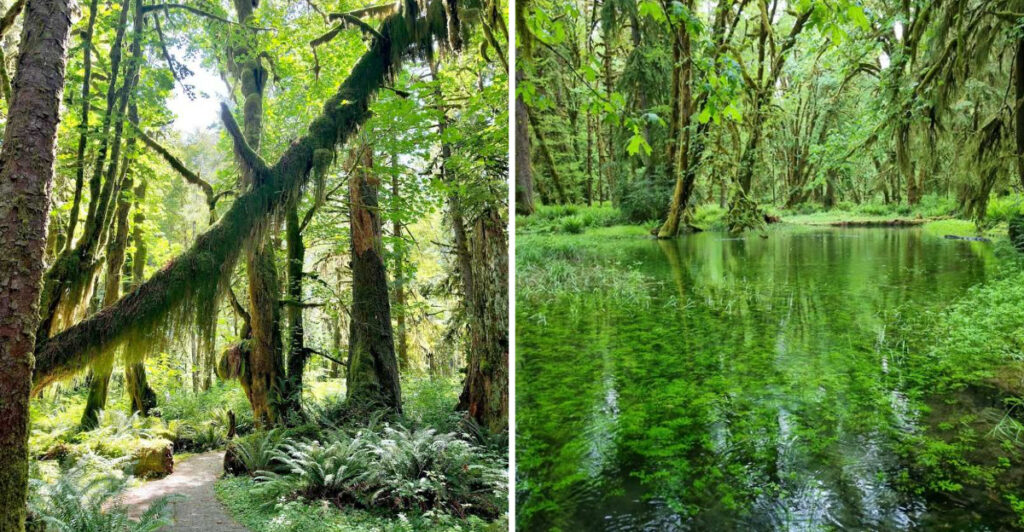
Alright, which one of you forgot to tell this forest it is supposed to look real?
This Washington loop wastes absolutely no time showing off. Almost as soon as you leave the parking area, moss-covered bigleaf maples take over, with ferns and rainforest growth filling in the rest of the scene.
The trail is only about half a mile, which makes the whole thing feel slightly unfair to hikes that demand hours before delivering a view this good.
All that Quinault rain keeps the greenery working overtime, with mosses and lichens climbing trunks, branches, and anything else that stands still long enough.
The path stays manageable, though roots, wooden bridges, and a small step keep your feet involved in the experience.
Washington basically pressed the enchanted-forest button and called it a trail.
Half A Mile Is Enough To Enter Another World
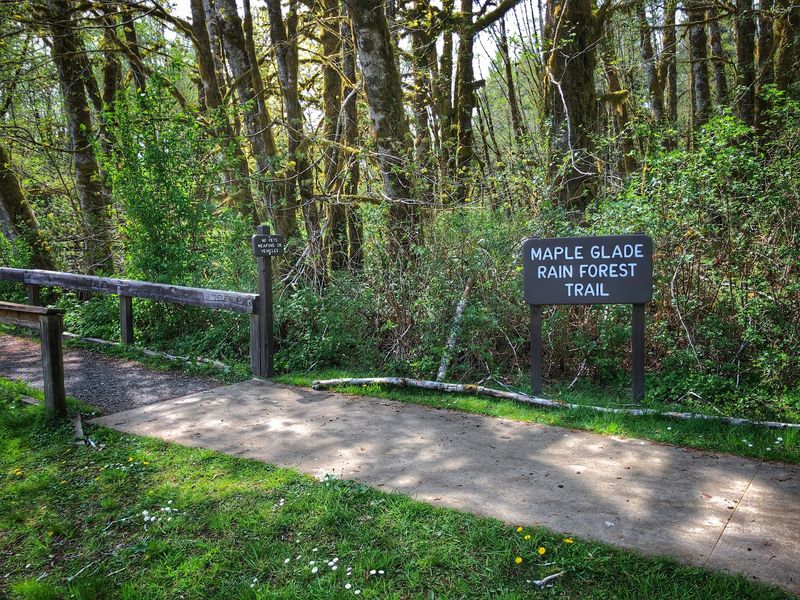
You do not need to set aside an entire day to see the Quinault Rain Forest up close. Maple Glade is a 0.5-mile loop, so it can fit easily into a day that also includes Lake Quinault or another short walk.
The route begins at the west end of the ranger-station parking area. A ramp leads to a wooden bridge, followed by another ramp into the forest.
From there, the loop moves through bigleaf maples and small stream channels before circling back toward the starting area.
Most of the trail has a gentle grade, but the surface is not perfectly smooth. Roots and bridge edges rise above the tread in places, and one section includes a short step.
Wet weather can also leave portions of the path muddy or flooded, especially during the wetter months.
Take the loop slowly rather than treating its short distance as a reason to rush. Half a mile goes quickly, but the trail is much more interesting when you stop to notice the moss, water, roots, and changing shapes of the trees around you.
The Bigleaf Maples Set The Scene Immediately
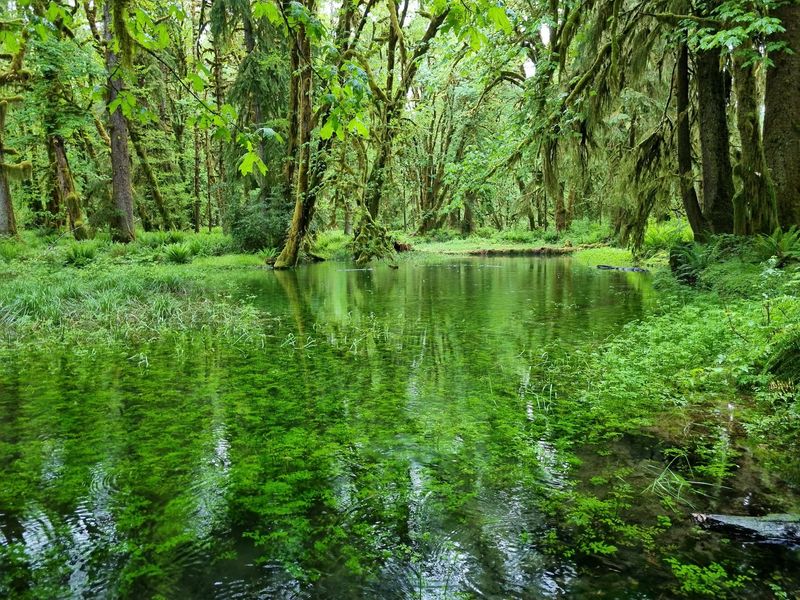
The trees give this loop its name almost as soon as you enter the grove. Bigleaf maples spread broad limbs overhead, creating the kind of damp, shaded surfaces where mosses and ferns can grow directly on the bark and branches.
The leaves are famously large, but the trunks can be even more striking. Moisture allows layers of green growth to collect along bends, forks, and horizontal limbs, so one tree can look like a small garden suspended above the trail.
Sitka spruce, western hemlock, and other rain-forest trees add height around the maples. Below them, ferns and low vegetation fill much of the understory, giving you something to look at from the forest floor all the way to the canopy.
Roosevelt elk also use the rain-forest valleys of Olympic National Park. If you see one, stay on the trail and give it plenty of space. A distant view is enough, and keeping your distance protects both you and the animal.
Try looking up before you move on. Following one maple trunk from its roots to its highest visible branches is an easy way to see how much life can occupy a single tree.
Moss Does Most Of The Decorating Here
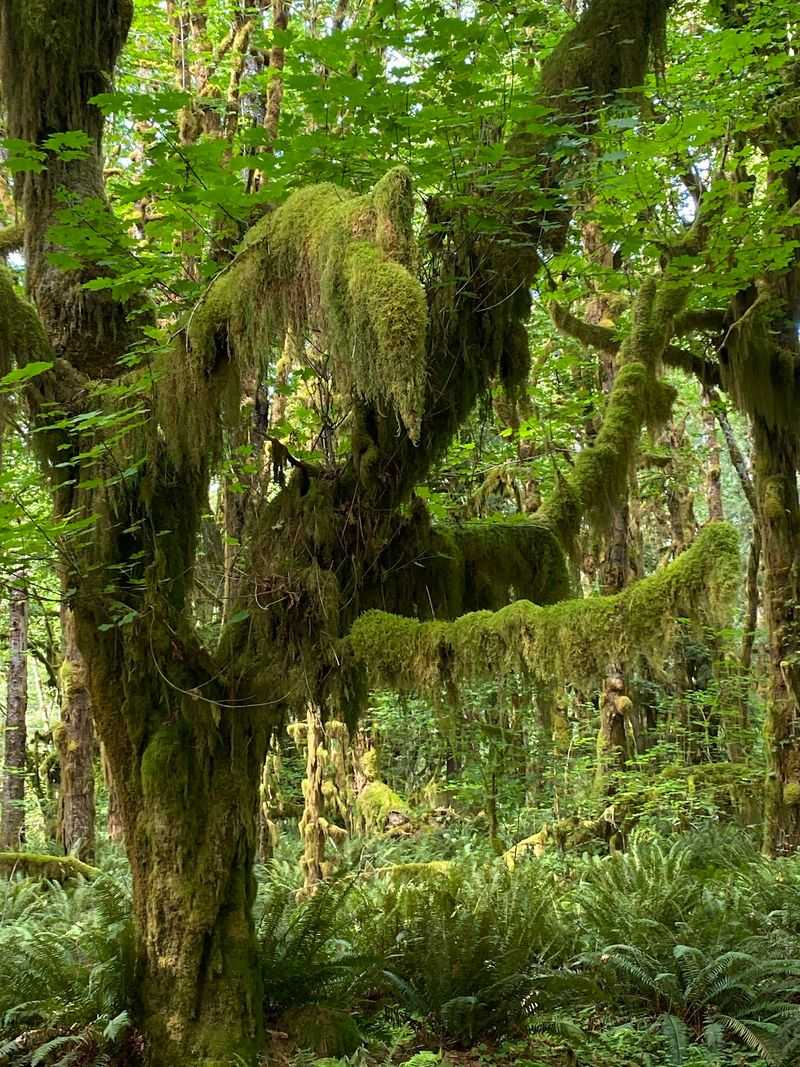
Green does not stay on the ground in the Quinault Rain Forest. Moss spreads across trunks, hangs from branches, settles over fallen wood, and mixes with ferns and lichens until almost every level of the forest seems covered.
That abundance comes from the wet, mild climate on the west side of the Olympic Peninsula. Persistent moisture allows epiphytes to thrive on living trees without taking nutrients from them, and bigleaf maples provide especially good surfaces for that growth.
Look closely, and you will start noticing smaller details between the dramatic trunks. Lichens form patches on bark and rock, while ferns appear in crevices and along fallen wood.
The more slowly you walk, the more the forest shifts from one big green view into hundreds of smaller textures.
Stay on the established trail and leave the moss where it grows. Repeated touching and stepping can damage delicate vegetation, especially in a place where the same surfaces attract many curious hands.
A gray or rainy day does not ruin this walk. Damp weather is part of what keeps the grove so lush, so a rain layer and shoes with decent grip can make the forest easier to enjoy.
Even Fallen Trees Become Part Of The Forest
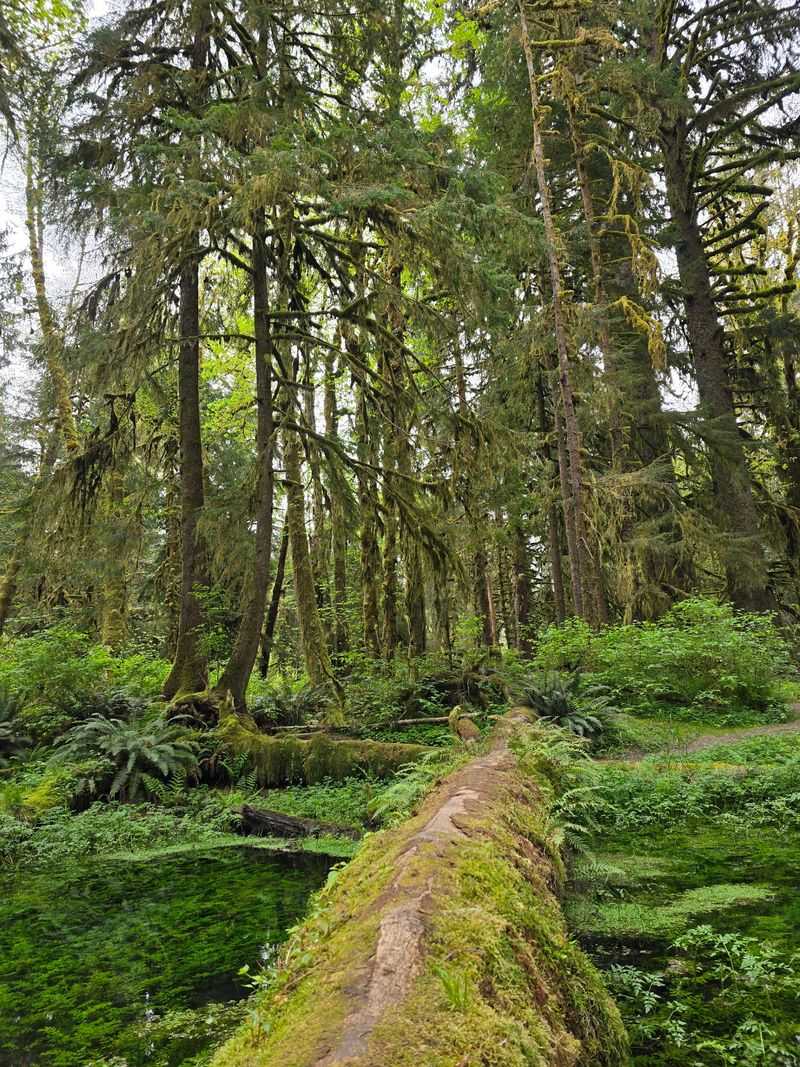
The most interesting trees are not always the ones still standing. In a temperate rain forest, fallen wood continues to support the ecosystem long after a trunk reaches the ground.
Large logs can decay slowly in the cool, wet environment. During that process, mosses, fungi, insects, small animals, and tree seedlings use the wood as habitat.
Some fallen trunks become nurse logs, giving young trees a raised place to begin growing above the crowded forest floor.
As a nurse log breaks down, roots from the younger trees can reach toward the soil. Years later, the original log may disappear while the new trees remain, sometimes standing on exposed roots that show where the old wood once sat.
Maple Glade gives you several chances to see this cycle without leaving the path. Fallen wood rests among ferns and moss while living branches twist overhead and roots cross portions of the trail.
Look down as often as you look up. A huge standing tree may catch your attention first, but a moss-covered log supporting new growth can tell just as much of the rain forest’s story.
Wooden Bridges Carry You Across The Wettest Ground
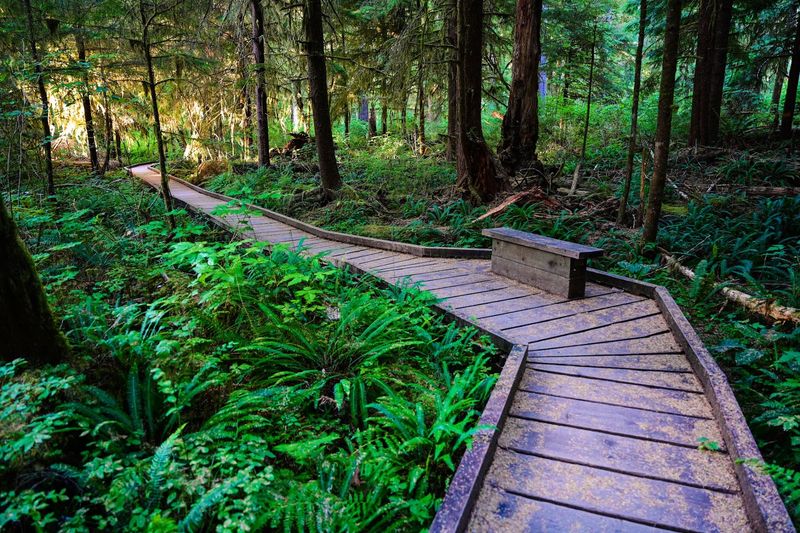
Water threads through the Maple Glade loop in narrow channels, and wooden bridges help carry the trail across the wettest sections. The first crossing is the largest, with a bridge about fifty feet long connecting the developed trailhead area with the forest beyond.
The bridges keep you above normal stream flow, but they are still part of a wet trail. Bridge ends can sit slightly above the surrounding tread, wood can become slick, and water can change the condition of nearby gravel and roots after heavy rain.
Farther into the grove, smaller crossings give you a closer look at how water moves among roots, ferns, and fallen branches. Instead of one large river beside the trail, the moisture appears in many narrow channels spread through the forest floor.
Flooding can affect portions of the loop during the wetter part of the year, so check trail conditions before making a long drive after major storms. When the path is open, take the bridges at an easy pace and leave room for other hikers to pass.
The Walk Can Continue To A Historic Homestead
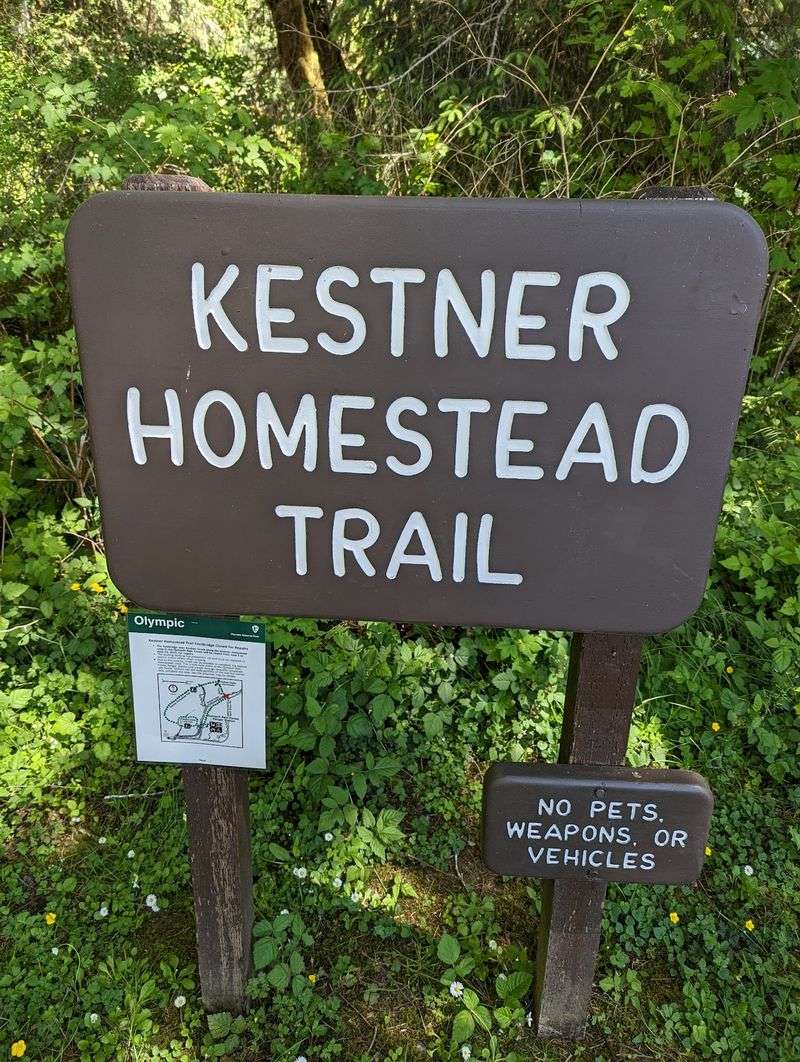
Reaching the end of the half-mile loop does not have to mean heading straight back to the car. A connecting route leads toward the Kestner Homestead, adding a historical stop if you still have time and energy.
The Kestner Homestead Trail forms an easy 1.3-mile loop from the ranger-station area, with a shorter out-and-back option available from the nearby information kiosk.
The route follows part of the old entrance road and crosses Kestner Creek before reaching the homestead area.
Historic buildings and an old orchard remain at the site, giving you a very different view of the Quinault Valley after the dense forest of Maple Glade. The ground is generally gentle, but roots, bridge boards, grass, and uneven sections still appear along the way.
Wildlife awareness matters on both trails. Black bears live in Olympic National Park, and Roosevelt elk use these valleys. Keep food secured, never feed wildlife, and give any large animal enough room that it can continue moving naturally.
If half a mile is enough, finish Maple Glade and call it a satisfying short walk. If you want more, the homestead adds another chapter without turning the outing into a major backcountry hike.
Quinault Rain Forest Makes Green Look Almost Unreal
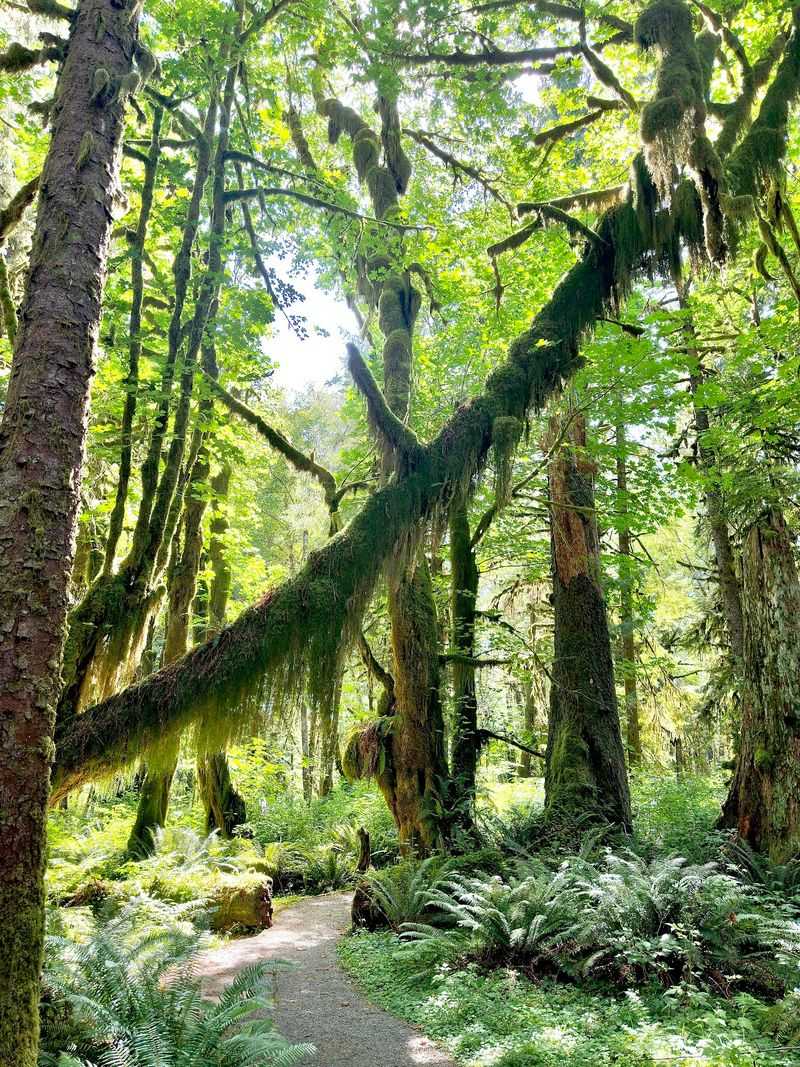
Maple Glade is only a small piece of the Quinault Valley, but it gives you a compact introduction to the temperate rain forest on this side of Olympic National Park.
Bigleaf maples, Sitka spruce, western hemlock, mosses, ferns, nurse logs, streams, and wildlife all belong to the same wet ecosystem.
The practical side of the visit stays fairly simple. The trail begins near the Quinault Rain Forest Ranger Station on North Shore Road, where restrooms, picnic tables, and visitor information may be available depending on the season.
The ranger station itself operates seasonally, so do not depend on the building being open for basic route finding.
Pets are not allowed on Maple Glade Trail. Olympic National Park permits leashed pets only in designated areas, and this loop is not one of them, so make other arrangements before arriving with a dog.
The Quinault Rain Forest Ranger Station is located at 913 North Shore Road, Amanda Park, WA 98526. From U.S.
Highway 101, follow North Shore Quinault Road toward the ranger-station area and use current park information if weather or recent storms may have affected access.
Once you step onto the loop, the practical details fade behind the trees. Half a mile of moss, maples, streams, fallen wood, and wooden crossings is enough to show why Washington’s rain forests can look almost unreal without asking you to spend the entire day on the trail.