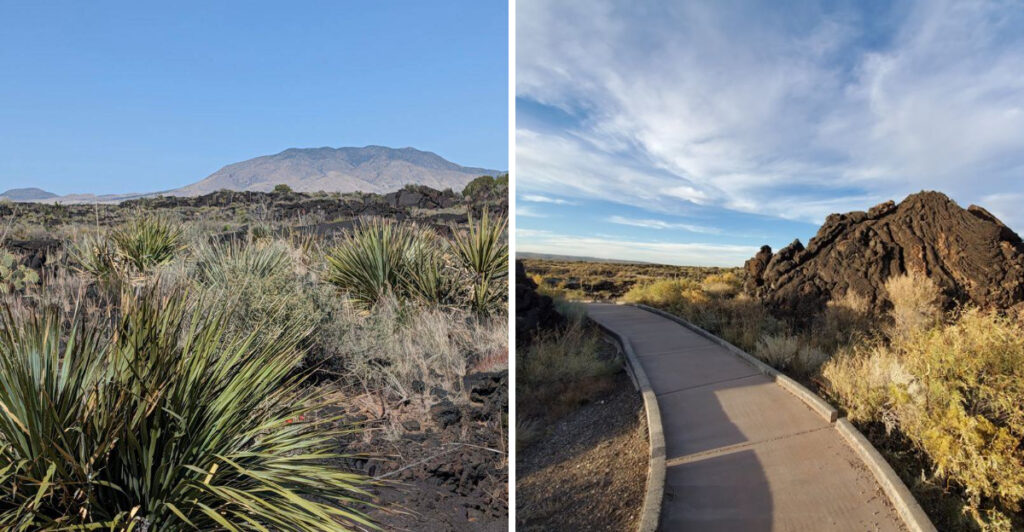
The first glimpse of this lava field can stop a road trip conversation mid-sentence. Black rock pours across the desert floor in a band, looking strangely fresh for something that hardened thousands of years ago.
A short paved trail takes you close enough to see the folds and rough edges left behind as the lava cooled. The walk does not demand much time, which makes the scenery feel more surprising.
New Mexico is full of places that reward a long drive, but this one delivers its biggest moment immediately after you leave the car. Tiny plants cling to the dark rock, and the open sky makes the whole field seem larger.
Each bend changes the view just enough to keep you looking. By the end of the loop, the landscape feels less like a roadside stop and more like a close-up look at a volcanic event paused in place.
Jagged Lava Formations Beneath Endless Skies
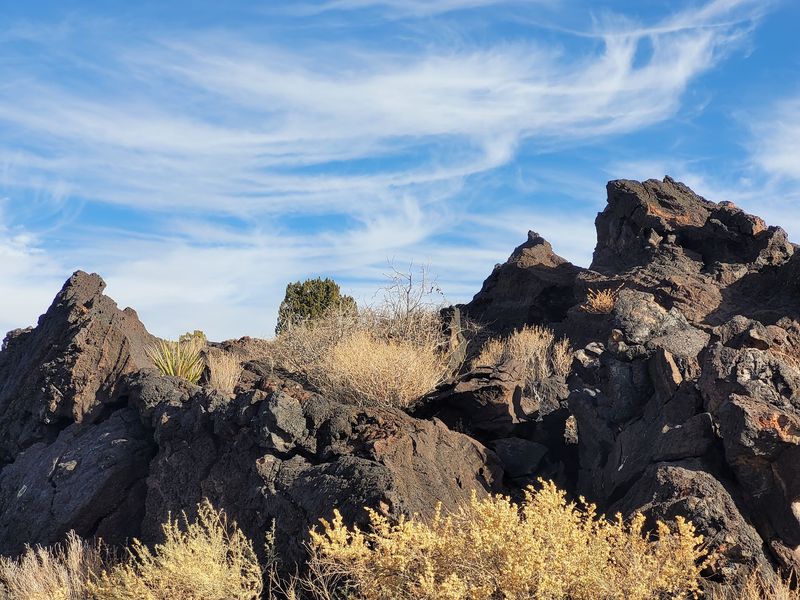
Right away, the black rock grabs your attention as it rolls out for miles under a sky that seems to have no edges. Most of the surface is smooth, ropey pahoehoe lava, but rough, spiky patches of a’a lava poke through and give the ground a broken, wild look.
Standing there, I felt tiny against so much open space. The dark stone meets the pale desert and the enormous sky, and that contrast makes the whole scene feel bigger than it really is.
Bring a hat and sunglasses, because the bright light bouncing off everything can be intense during midday hours.
The hardened flows create sharp ridges and low mounds that catch shadows as the sun shifts. Early morning or late afternoon light really shows off the texture and colors.
Little Black Peak sits at the northern end of this flow, which is where all of this ancient rock first poured out.
This is one of the coolest first impressions you can get in New Mexico, and it happens the moment you leave your car at Malpais Nature Trail at Carrizozo, NM 88301 and look up at that vast, sweeping ceiling of blue.
A Surreal Walk Across Ancient Lava
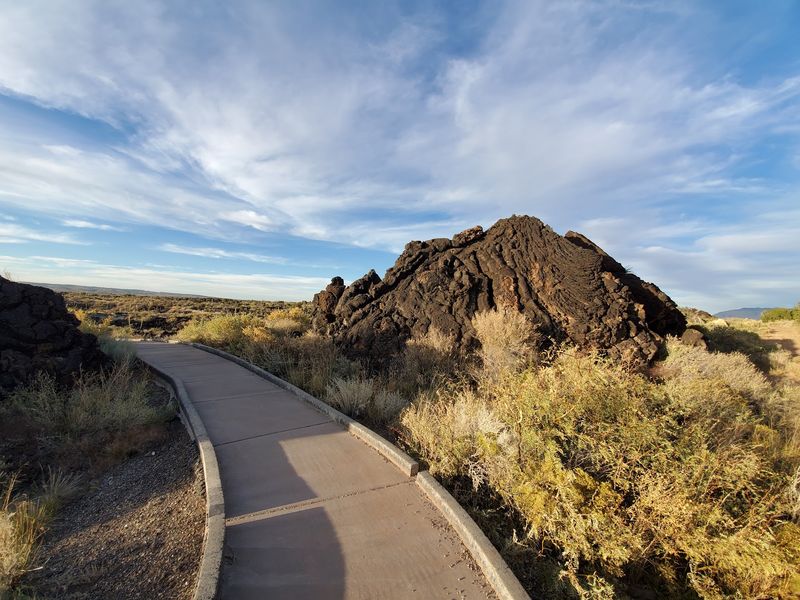
Setting foot on the smooth paved path feels like walking straight into another world. The loop runs about three-quarters of a mile, and it carries you right into a lava flow that cooled and stopped moving roughly 5,000 years ago.
What surprised me most was how easy the walk is. The path is level, wheelchair friendly, and clean, so families, older visitors, and curious kids can all enjoy it without any struggle.
Most people finish in about thirty minutes, though I lingered longer just to take photos.
Interpretive signs stand along the route, and grabbing a brochure at the visitor center helps you match the numbered markers to real facts about the rock and the creatures living here. The information turns a simple stroll into a mini science lesson.
Little plants push up through cracks in the dark stone, proving that life finds a way even in harsh spots. Carry plenty of water since there is almost no shade anywhere.
Every bend offers a new angle on this solidified river, and by the end I understood why so many travelers call it a can’t-miss detour.
Blackened Rock And Rugged Desert Views
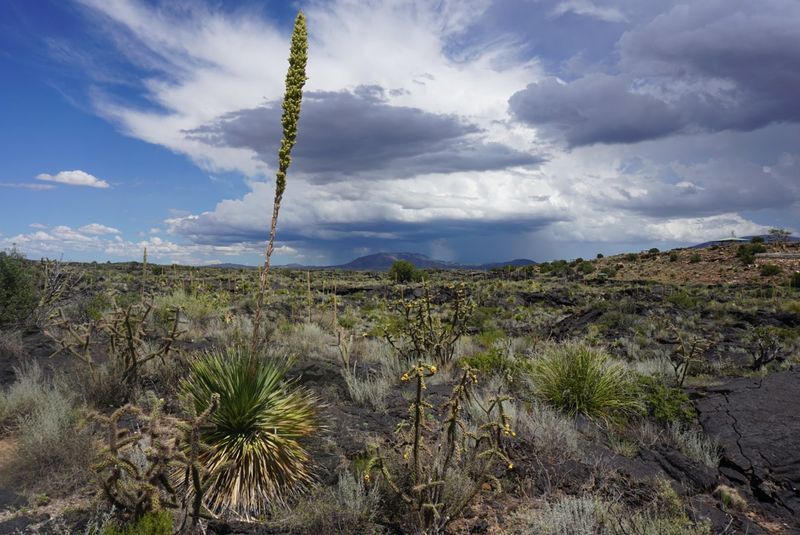
From high above, this lava flow looks like a long charcoal-brown streak scratched across the pale desert floor. Down on the ground, that same dark rock dominates every view and gives the place its bold, unusual character.
Up close, the rock is not as empty as it seems from far away. Tiny flowers, hardy shrubs, and small critters make their homes in the cracks, adding little splashes of green and color that stand out against the black.
Looking outward, the rugged terrain stretches toward the horizon, and on clear days you can spot the distant Sacramento Mountains. The mix of dark lava in front and bright, sandy land beyond creates a striking scene that keeps changing as clouds pass overhead.
I found the best views came when the sun sat low, painting the rocks with warm tones and long shadows. That is also the coolest, most comfortable time to walk.
The contrast between the ancient rock and the surrounding land makes this one of the most memorable pull-offs in New Mexico, especially for anyone who loves wide, dramatic scenery with a story behind it.
Twisting Paths Through A Volcanic Landscape
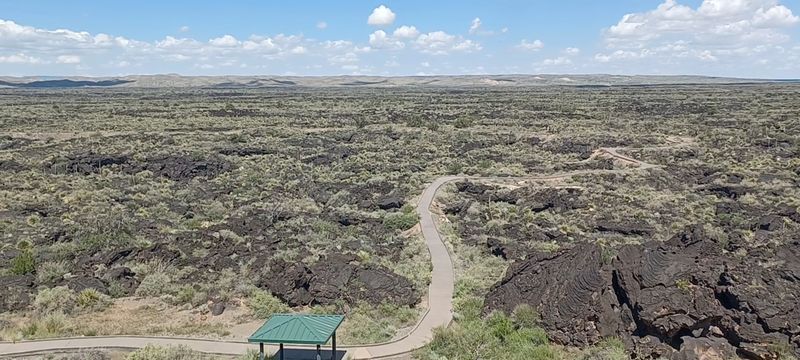
Curving gently through the heart of the flow, the trail never runs in a straight line for long. It loops and bends, and each turn reveals a fresh view of the black rock rolling out in every direction.
Walking these curves, I noticed how the path seems to follow the natural shape of the old lava. Long ago, the molten rock crept along in winding channels from its northern vent, and the trail lets you trace some of that ancient movement with your own feet.
The route stays flat and easy, with the only real slope being a short switchback near the parking lot. That gentle climb is not steep, so most visitors handle it without any trouble at all.
Because the path weaves back and forth, you get many angles to study the rock and snap pictures. I kept stopping to look at how different sections cooled and cracked in their own ways.
Following these twists gave me a real sense of the slow, steady power that shaped this ground, and it made the whole walk feel like a quiet adventure through frozen fire.
Strange Lava Shapes Around Every Turn
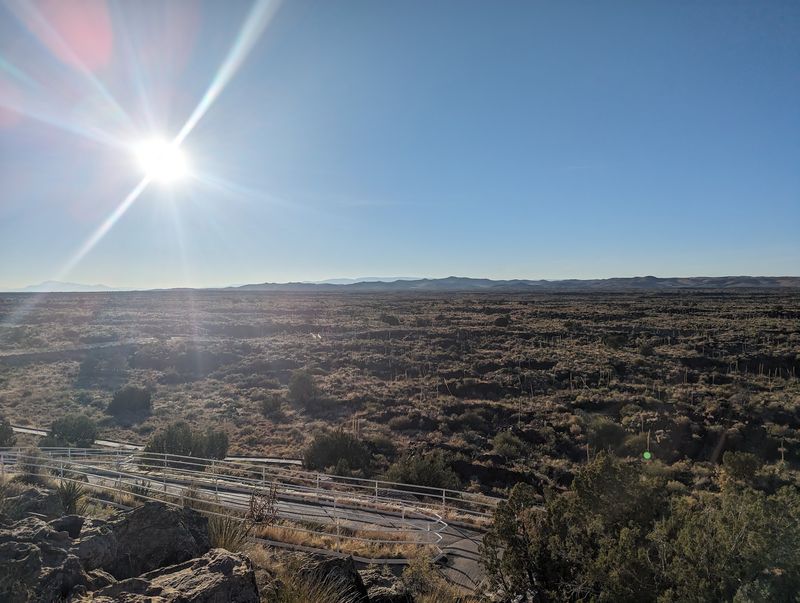
Odd and fascinating rock shapes wait at nearly every bend along the loop. As the molten rock cooled and hardened, it froze into forms that look almost sculpted by hand.
The flow here is mostly pahoehoe lava, which creates smooth, ropey surfaces and little bumps that experts call lava toes. I loved crouching down to see the tiny ripples that look exactly like the rock was once soft and flowing.
Keep your eyes open for pressure ridges, small dome-shaped mounds, and holes where gas bubbles once popped and collapsed. These features make the ground feel alive with texture, even though it has been still for thousands of years.
An artist reviewer once described imagining the fiery rock slowly pouring down and stiffening in place, and honestly, that image stuck with me the whole walk. The shapes really do spark your imagination.
Kids especially get a kick out of hunting for the strangest formations, turning the trail into a fun treasure search. Just remind them to watch where they step and stay close.
Every twist offers a new surprise, and that steady sense of discovery kept me smiling the entire time.
Dramatic Textures Across The Dark Terrain
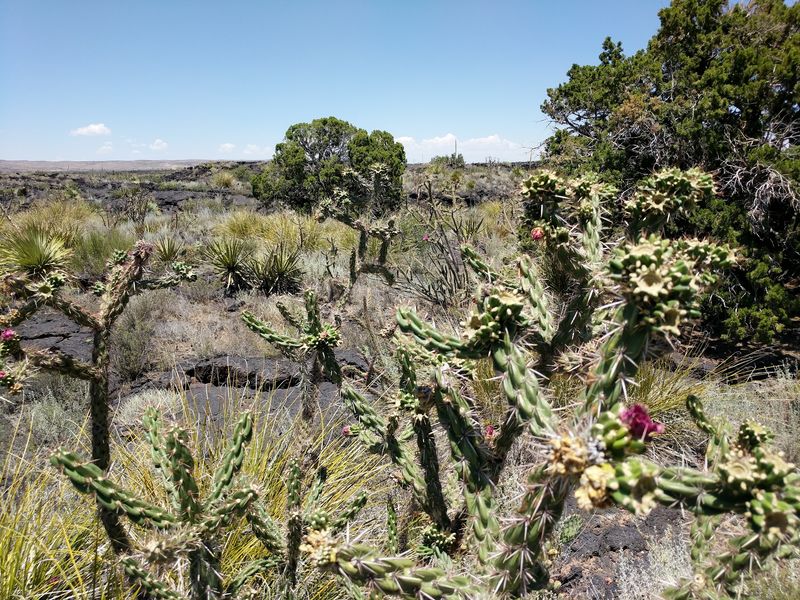
Texture is the real star of this dark terrain, and it invites you to look closely at every surface. Smooth ropey lava stretches across much of the ground, while rougher, chunky blocks break it up in spots.
Running my eyes over the rock, I spotted places where the surface almost shimmers with a faint colorful sheen. That glassy shine shows up in young lava flows, and this one is among the youngest in the country.
The top of the flow stayed remarkably well preserved over the centuries. You can see the exact swirls and folds the rock made as it cooled, frozen right where they stopped.
These varied surfaces make great photo subjects, so bring a camera and get down low for detail shots. The morning and evening light really deepens the grooves and shadows.
Please look but tread carefully, since the rock can be sharp and uneven off the paved path. Sturdy shoes make a big difference.
All these patterns together form a natural work of art, and studying them up close gave me a deeper respect for how fire once shaped this quiet, striking corner of the desert.
Quiet Corners Of A Frozen Lava Field
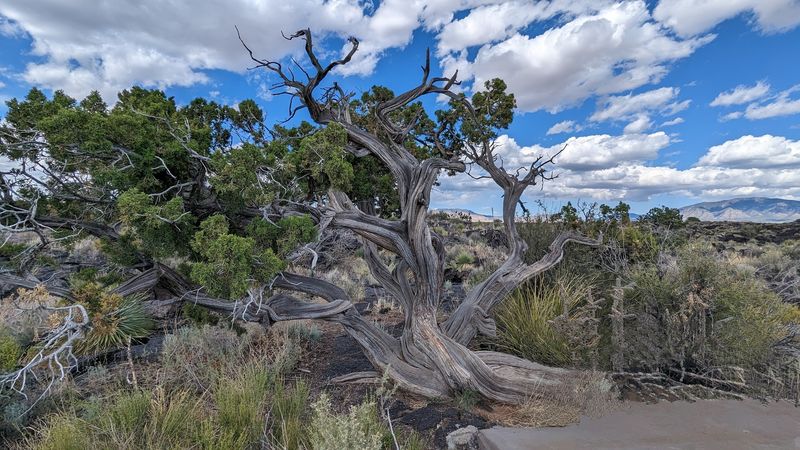
Peace settles over you quickly once you step away from the busy trailhead. The wide field of hardened rock holds pockets of stillness where the only sound is the wind moving across the stone.
Wandering a little farther along the loop, I found spots where I felt completely alone with the landscape. That calm, hushed feeling is rare and refreshing, especially after a long stretch of highway driving.
This frozen field of basalt spreads out like a still river, and its quiet size makes it a wonderful place to slow down and simply think. I sat for a while just soaking in the silence.
Sunset visits are especially lovely, with softer light and cooler air making the whole area feel gentle and welcoming. Fewer people show up during those hours too.
A quick word of caution though, since rattlesnakes, bees, and yellow jackets can appear here. Stay alert, keep children within reach, and stick to the trail when you can.
The blend of dramatic history and deep quiet makes these corners some of my favorite places to pause, breathe, and let the wonder of the spot fully sink in.
An Otherworldly Landscape Frozen In Stone
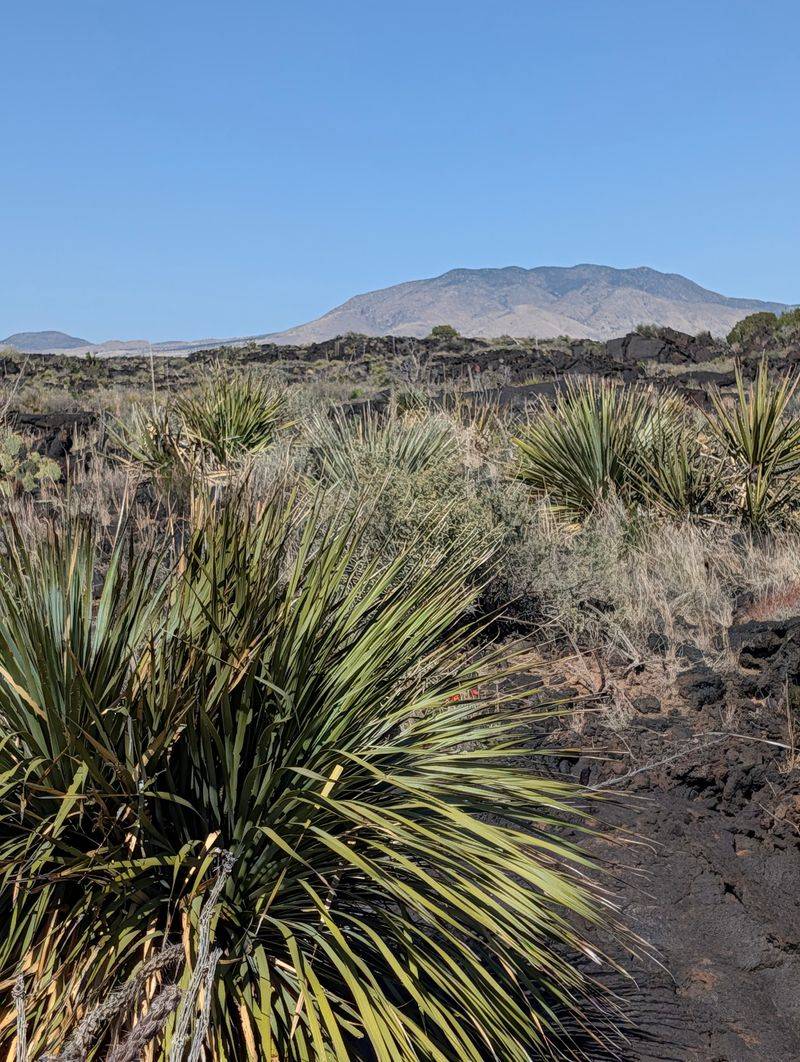
Few places look as alien as this stretch of black stone spreading toward the horizon. The whole scene feels like a snapshot of Earth’s fiery past, held perfectly still for thousands of years.
Geologists treasure this spot because it counts among the youngest and best preserved lava flows in the country. The flow runs roughly 40 to 50 miles long and up to 160 feet thick, covering well over a hundred square miles.
Standing at the edge of it, I understood why visitors compare the view to another planet. The basalt cooled into bold, unusual formations that continue to amaze everyone who walks among them.
Fun fact, the entire flow lines up in a long north-south streak that shows up clearly in satellite photos, with the pale White Sands sitting nearby. Seeing that pattern from above makes the whole region feel connected.
If you are road tripping between Albuquerque and White Sands, this stop fits perfectly and takes under an hour to explore. You will find it about four miles west of town along US Highway 380 at Malpais Nature Trail at Carrizozo, NM 88301.