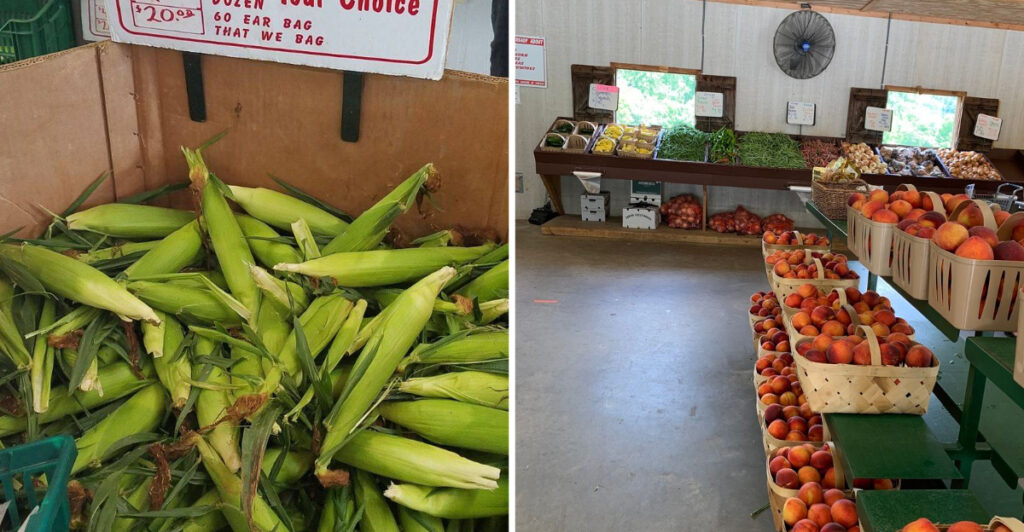
Corn season is calling. Are you picking up?
This North Georgia farm market follows the harvest calendar closely, so summer can completely change what lands in your basket. Sweet corn usually shows up around July 1 and can keep going until the first frost.
That gives Highway 441 travelers a very specific reason to pull over.
The rest of the market moves with the fields too. Peaches, tomatoes, berries, beans, squash, pumpkins, greens, and other crops take turns as the season shifts.
There is plenty of family history behind that rhythm. The farming tradition now reaches its fifth and sixth generations, which gives every harvest a little more weight than a standard roadside produce stop.
If fresh corn is the mission, this is one summer call you probably should not send to voicemail.
This Rabun Gap Farm Has Been Growing Produce For More Than 40 Years
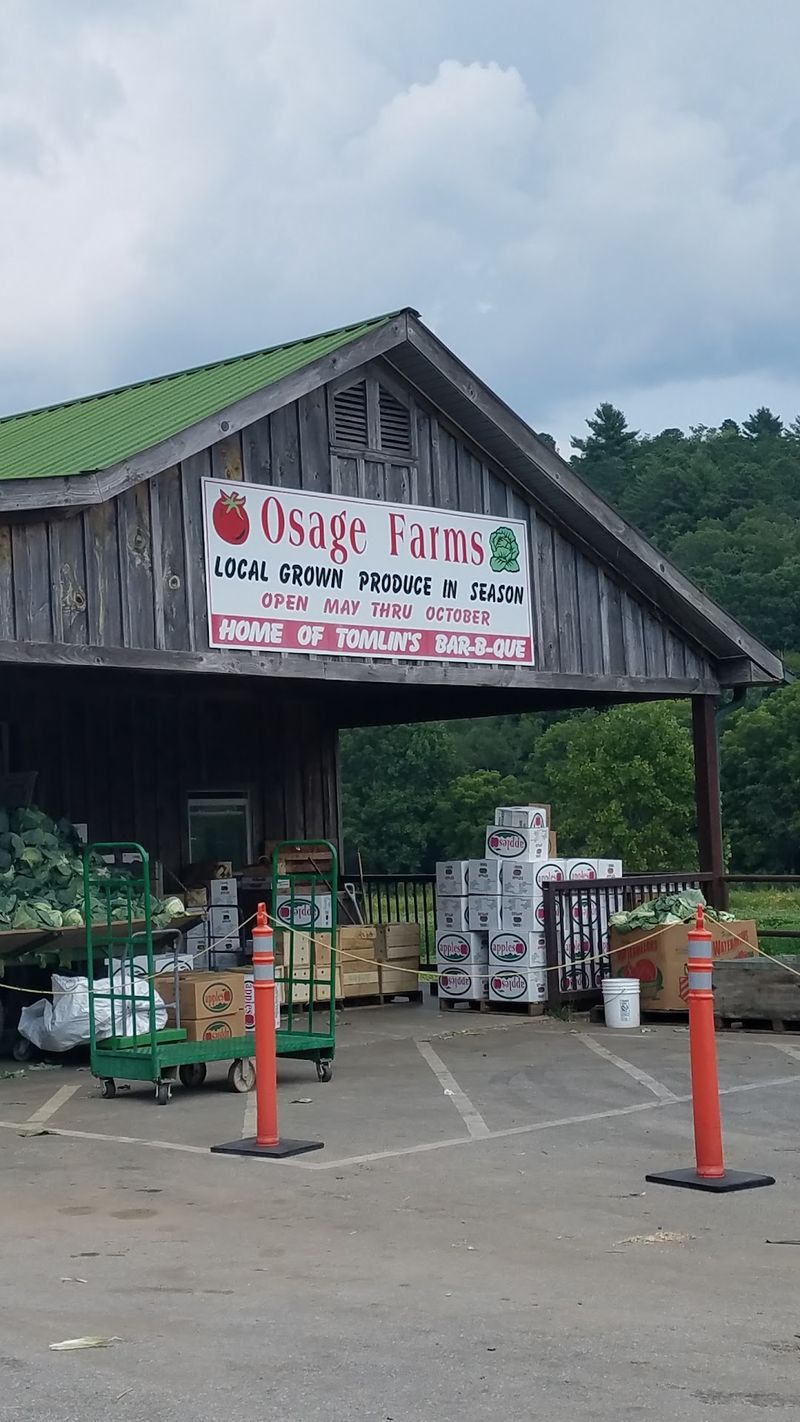
A long growing history sits behind the bins and baskets at Osage Farms. The family farm has been raising vegetables in the Rabun Gap Valley for more than 40 years, with the produce market serving as the seasonal place to buy what is ready.
The operation is family-owned, and the current farm story centers on Ricky and Clint James. Their connection to farming started early. Ricky planted his first cabbage patch at age 11 after working with his grandfather, while Clint was eager to start plowing when he was 6.
That background helps explain why the market follows the agricultural calendar instead of trying to keep the same lineup year-round. Strawberries belong to spring. Corn and beans arrive later.
Apples, pumpkins, greens, and potatoes push the season toward fall.
The vegetable market is open every day from May through October, so you have a broad window for a visit even though individual crops come and go.
You can find Osage Farms at 5030 Hwy 441 North, Rabun Gap, GA 30568. Once you arrive, the useful question is not simply what the market carries, but what the fields are producing that week.
Sweet Corn Season Usually Starts Around July 1
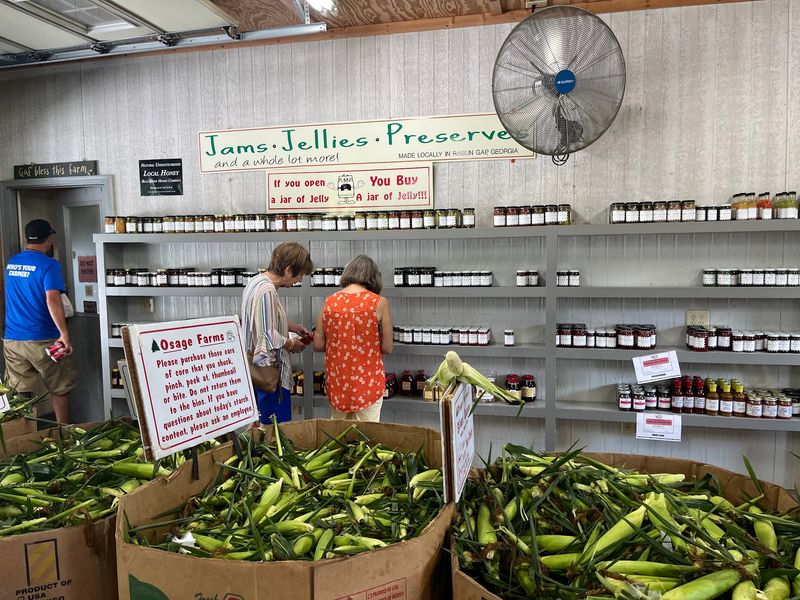
If sweet corn is the reason you are heading to Rabun Gap, July is the month to start watching. Osage Farms places its usual sweet-corn season from about July 1 until the first frost.
The dates are estimates rather than guarantees. Weather decides when planting, growth, and harvest line up, so the season can shift as conditions change. That is true across the farm’s crop calendar, not just for corn.
Instead of relying on a fixed date every year, check what is being harvested close to your trip. That gives you a better chance of arriving when the crop you want is actually available.
Sweet corn grows alongside tomatoes, cabbage, green beans, peppers, and potatoes. The farm raises both heirloom and hybrid tomatoes as part of that mix.
Once corn season begins, it overlaps with several other summer crops. Beans and okra are generally listed from July 1 until frost, while tomatoes usually begin later in July.
That gives you more than one reason to time a midsummer stop. If the corn is ready, the rest of the market may be moving deeper into its busiest stretch too.
The Sweet Corn Is One Of The Crops Grown By The James Family
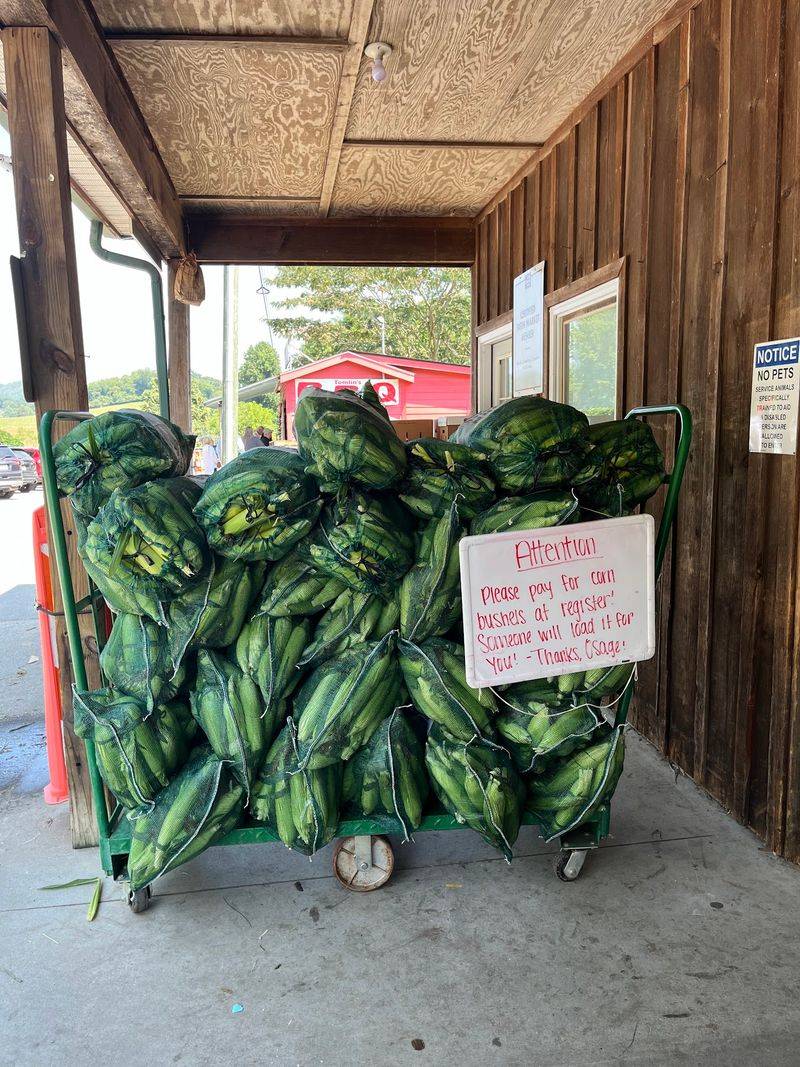
The market is not simply a roadside shop carrying a fixed catalog of produce. Ricky and Clint James grow seasonal fruits and vegetables as part of the family farming operation, and sweet corn is one of the crops tied directly to that work.
That connection matters when you are deciding when to visit. The farm’s calendar is based on approximate harvest windows, which means the selection reflects what can actually be grown through the changing North Georgia season.
In early May, strawberries are the crop to watch. Peaches begin around June, followed by blueberries later that month. Cabbage, squash, and cucumbers also move into season during June before corn, beans, and okra join the calendar around July 1.
Tomatoes usually follow later in July. By September, apples, winter squash, pumpkins, greens, and potatoes begin taking more space in the seasonal lineup.
If you arrive expecting every crop at once, the farm calendar will quickly change that idea. A May visit and a September visit are supposed to look different.
For corn, summer is the key window. For everything else, let the month guide your shopping list before you head toward Rabun Gap.
Fifth And Sixth Generation Farmers Keep The Growing Tradition Going
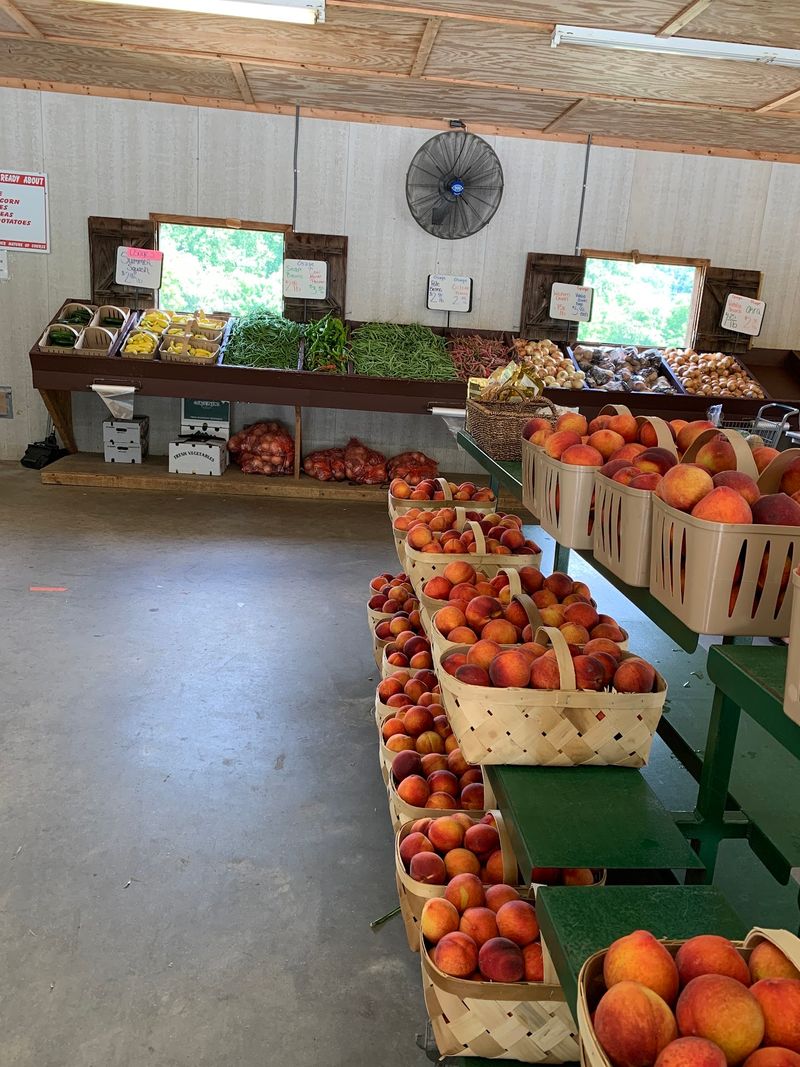
Farming here is not a one-generation project. Ricky and Clint James are fifth- and sixth-generation farmers, carrying the family’s agricultural work into another era.
Ricky started with his grandfather and planted a cabbage patch at 11. Clint was already interested in plowing by age 6.
Today, the crops they grow feed directly into the seasonal rhythm of the produce market. That means the family history is not simply something framed on a wall.
It still shows up in the practical work of planting, harvesting, and changing the market selection as the months move forward.
If you visit in summer, you may be looking for corn, beans, tomatoes, or peaches. Come later, and the emphasis can shift toward apples, pumpkins, greens, and potatoes.
The farming operation also extends beyond Georgia. After the vegetable season winds down, the family turns attention toward Fraser fir Christmas trees at its Scaly Mountain, North Carolina farm.
That makes the year a cycle rather than a single produce season. Warm months belong to fruits and vegetables in Rabun Gap, while the colder part of the calendar brings the Christmas-tree side of the family business into focus.
The Produce Changes With Whatever The Fields Are Ready To Give
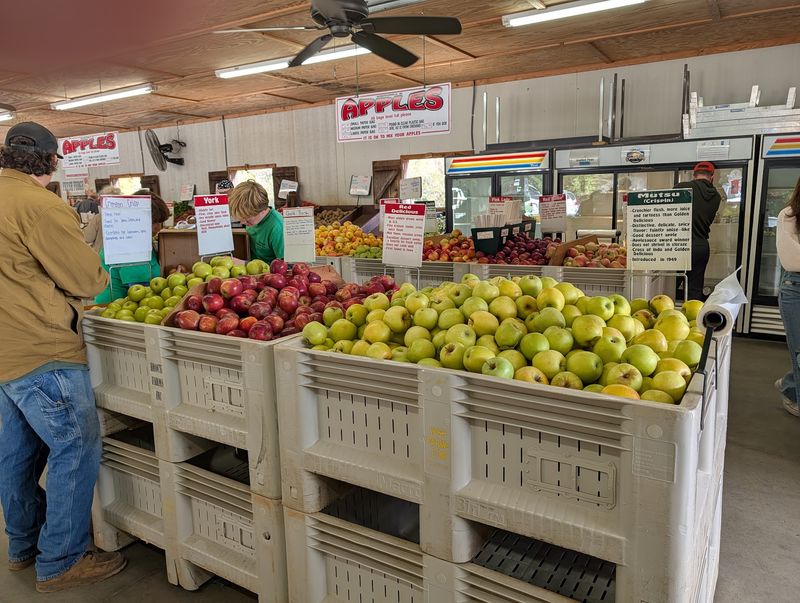
The easiest way to understand Osage Farms is to look at its crop calendar. Instead of promising every fruit and vegetable all season, the schedule moves with the weather and the harvest.
Strawberries are usually associated with May. Peaches generally run from June into the end of summer, while blueberries arrive from late June into early August. Cabbage begins around late June and can continue into October.
Squash and cucumbers also start around late June and may last until frost. Beans, okra, and sweet corn generally begin around July 1, followed by tomatoes later in July.
Fall brings another change. Apples typically start around September 1. Winter squash and pumpkins follow in September, with greens and potatoes coming later in the month.
Those dates are only estimates because weather controls the real schedule. Keep that in mind if one particular crop is the reason for your drive.
You do not have to memorize the whole calendar. Pick the produce you care about most, check its usual window, and see what is currently being harvested before you leave.
The changing lineup is simply what seasonal farm shopping looks like when the fields set the pace.
Highway 441 Makes The Market Easy To Add To A North Georgia Drive
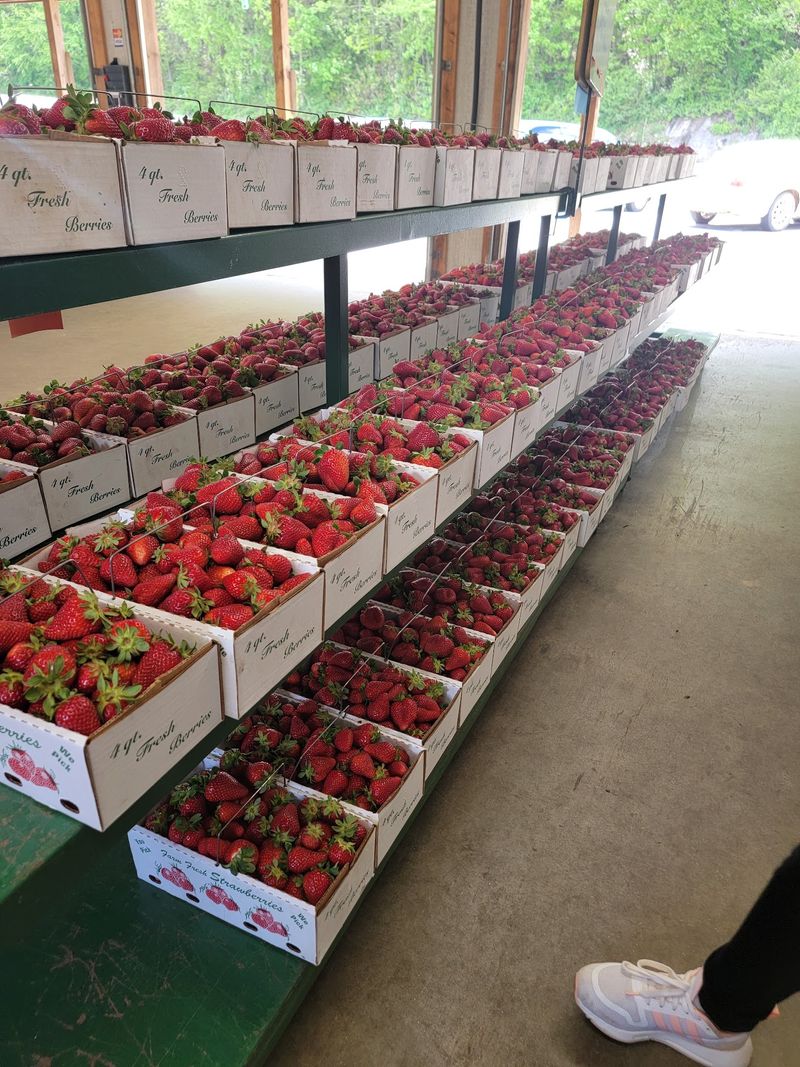
Osage Farms sits directly along Highway 441 in Rabun Gap, placing it on one of the main north-south routes through this corner of Georgia. Keep heading north and the road carries you toward the North Carolina state line.
That makes the produce market easy to work into a mountain drive without turning the stop into a complicated detour. Rabun Gap lies north of Clayton and Dillard, while the family’s Christmas-tree operation sits across the state line in Scaly Mountain, North Carolina.
If you are traveling through the area during the growing season, the month can help decide whether a stop makes sense. May points toward strawberries. June brings peaches, blueberries, cabbage, squash, and cucumbers into the picture.
July adds corn, beans, and okra before tomatoes reach their usual window.
By September, the shelves can shift toward apples, pumpkins, greens, winter squash, and potatoes.
That seasonal change gives you a practical reason to check the market more than once if you pass through northeast Georgia at different times of year.
The farm’s public produce season runs from May through October. If your route falls inside those months, check what is being harvested and build the stop around the crop you most want to bring home.
Summer Is Prime Time To Catch Sweet Corn At Its Best
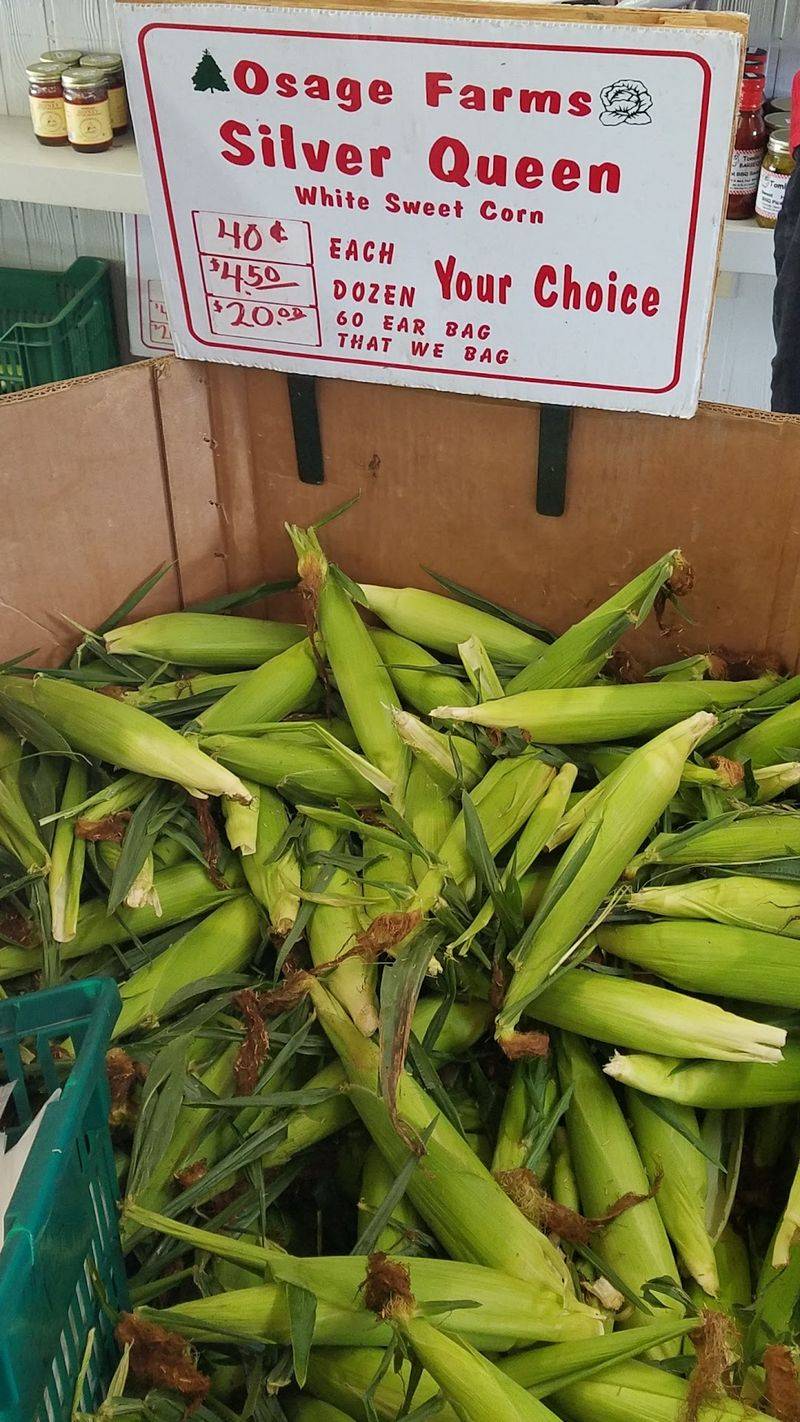
For sweet corn, the simplest plan is to aim for the heart of summer. The crop usually runs from roughly July 1 until frost, giving you a long potential window while still leaving the exact harvest to the weather.
July also overlaps with beans, okra, blueberries, squash, cucumbers, cabbage, and eventually tomatoes. Peaches can remain part of the summer mix as well, so a corn run does not have to end with corn.
The key is to treat the calendar as a guide rather than a promise. Growing conditions can speed up or delay a crop, and the farm makes that uncertainty clear in its seasonal schedule.
If you want a specific item, checking close to the day of your trip is more useful than assuming last year’s timing will repeat perfectly.
The vegetable market stays open daily through the May-to-October season, giving you room to choose a weekday or weekend that fits your route.
Once autumn arrives, the farming year begins to turn toward pumpkins, greens, potatoes, apples, and eventually the Fraser fir Christmas-tree operation in North Carolina.
So if sweet corn is what puts Rabun Gap on your summer map, start watching around July. The harvest decides the exact day, but the season gives you a clear place to begin.