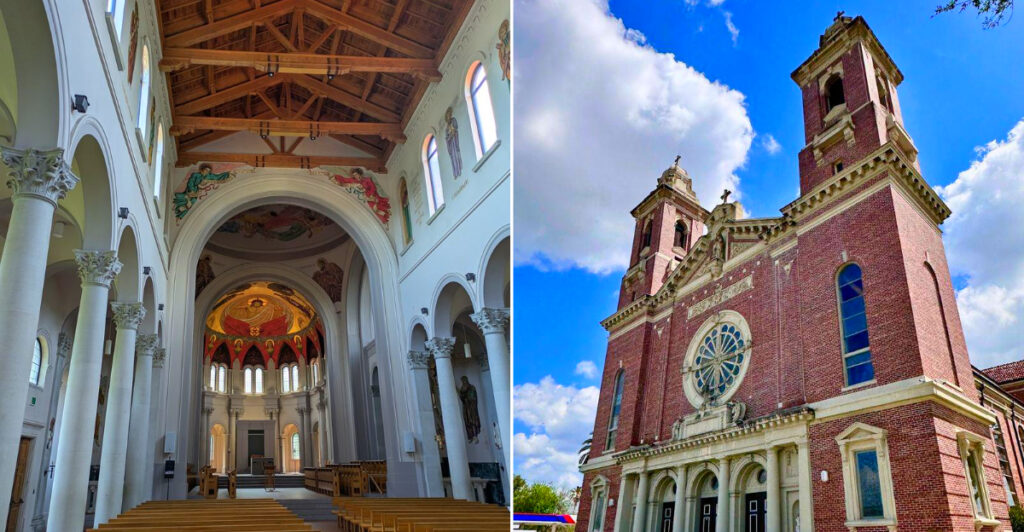
The oldest building in the Mississippi Valley is not a courthouse. It is a convent. I learned that standing inside its thick walls, looking at handwritten records from the 1700s, realizing the nuns who lived here educated girls of every background when almost nobody else would.
Louisiana’s sacred spaces carry stories that no history textbook includes. There is a monastery where Benedictine monks bake altar bread and handcraft wooden caskets, and they took their right to sell those caskets to the Supreme Court.
There is a church that served as the spiritual home of the Acadians after their forced exile. There is a basilica that houses a relic given by a pope.
These are not tourist stops. They are proof that faith and survival are the same story. Louisiana has churches where nuns arrived in 1727, monks still make caskets by hand, and a plantation church preserves the real history.
12. Old Ursuline Convent Museum
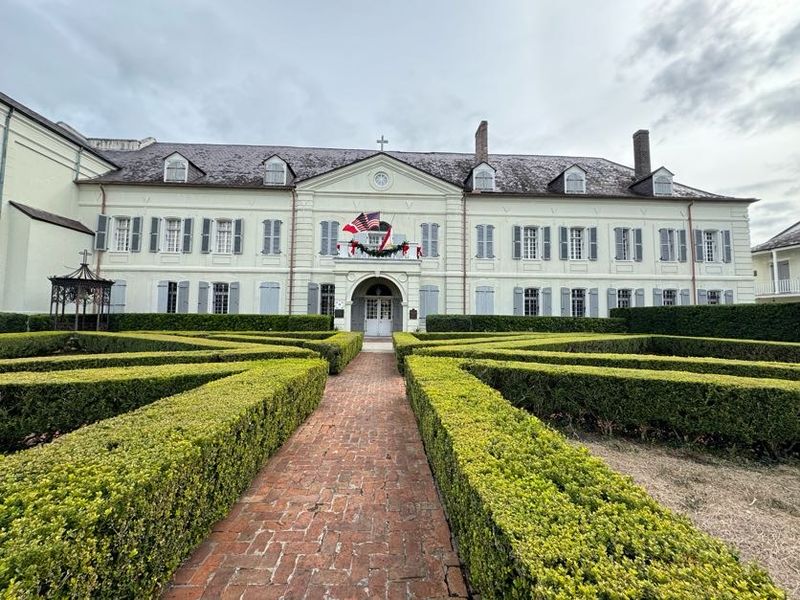
Surviving New Orleans for nearly three centuries is an architectural achievement all by itself. The Old Ursuline Convent Museum stands at 1112 Chartres Street, New Orleans, LA 70116, inside a French Colonial building authorized by King Louis XV in 1745 and completed around 1752 or 1753.
It survived the catastrophic French Quarter fires of 1788 and 1794, making it one of the oldest surviving buildings in the Mississippi Valley.
The Ursuline sisters had arrived in Louisiana in 1727. Their work extended well beyond religious instruction.
They operated a school for girls and an orphanage, and the convent became part of the social infrastructure of a colonial city still trying to establish itself.
Later chapters were just as unexpected: the building served as an archbishop’s residence, a boys’ school, the city’s first public school, and even a meeting place for the Louisiana Legislature from 1831 to 1834.
Visitors can now explore it as a museum, with self-guided and docent-led tours offered Tuesday through Saturday.
Look beyond the age of the walls. The remarkable story is how many completely different versions of New Orleans passed through the same rooms.
11. Saint Joseph Abbey
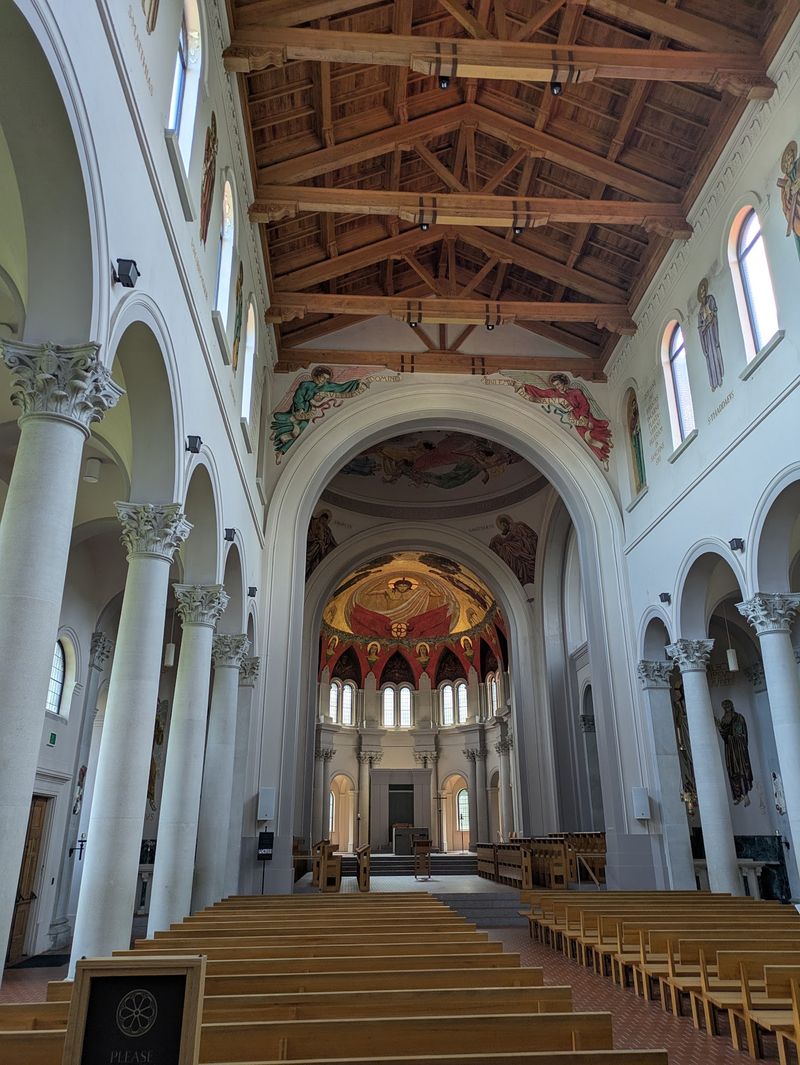
Prayer and woodworking have produced one of Louisiana’s strangest legal stories in the pine woods north of Covington. Saint Joseph Abbey is at 75376 River Road, Saint Benedict, LA 70457, home to a Benedictine community whose Louisiana roots stretch to the late nineteenth century.
The monks eventually established themselves at Saint Benedict in the early 1900s, where the abbey and seminary continue today.
The peaceful grounds conceal a surprisingly combative chapter. In 2007, the monks began selling handmade wooden caskets to support education and health-care costs.
Louisiana funeral regulators ordered them to stop because they were not licensed funeral directors. The monks sued, eventually winning in federal district court and before the Fifth Circuit.
Their victory helped establish that Louisiana could not reserve casket sales exclusively for licensed funeral homes simply to protect those businesses from competition.
The woodshop remains active. Monks, employees, and volunteers currently make traditional and monastic caskets from cypress and mahogany, with proceeds supporting abbey life and ministries.
Visitors should remember that this is an active monastery rather than an attraction designed around sightseeing. Check current visitor and prayer schedules, then give the place enough time to become quiet around you.
10. Saint Martin De Tours Catholic Church
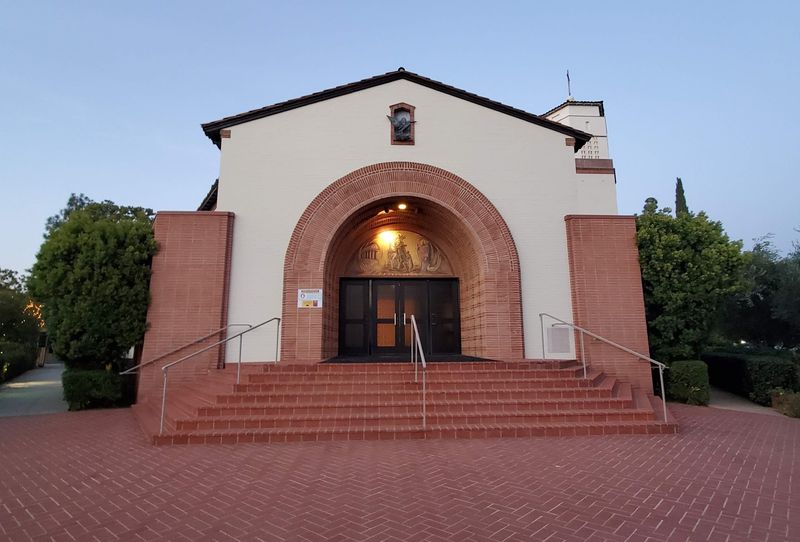
Acadian history becomes something physical inside this St. Martinville church. Saint Martin de Tours Catholic Church stands at 133 South Main Street, St. Martinville, LA 70582, where a parish was founded in 1765 by Acadian exiles who had been expelled from their homeland in present-day eastern Canada.
The church still describes itself as one of Louisiana’s oldest Catholic parishes and has long been known as the Mother Church of the Acadians.
The current church began construction in 1836 and was dedicated in 1844. Its long history makes the building more than a religious landmark.
The parish became a cultural center for St. Martinville and the surrounding Attakapas country as displaced Acadian families established communities that would profoundly shape southern Louisiana.
The grounds deserve as much attention as the sanctuary. Monuments and the adjacent cemetery connect the church to military history, local families, and the Evangeline story that became intertwined with popular ideas about Acadian exile.
The church currently allows self-guided visits outside Masses, Holy Days, weddings, and other services.
Do not treat this as a five-minute architecture stop. Stand in the square and consider what it meant for people forced from one homeland to build another around this exact place.
9. Minor Basilica Of The Immaculate Conception
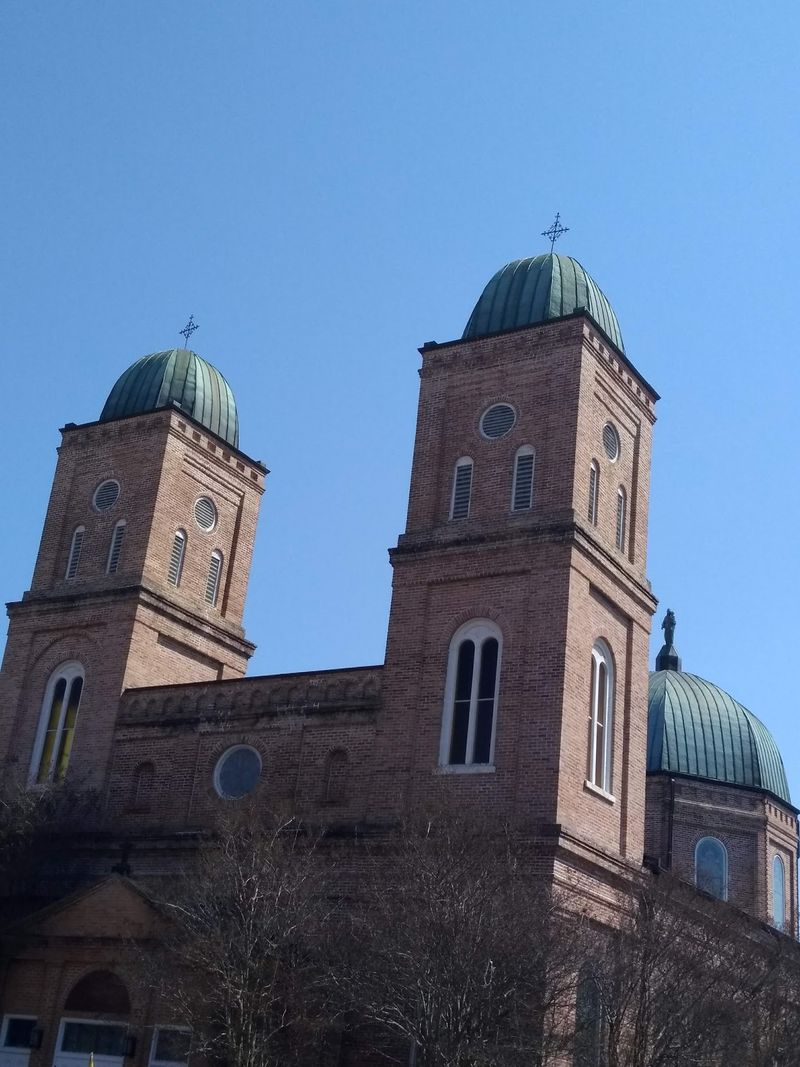
Nearly three centuries of Catholic history sit behind the doors of this Natchitoches landmark. The Minor Basilica of the Immaculate Conception has its physical church at 605 Second Street, Natchitoches, LA 71457, while the parish traces its beginnings to 1728, only a little more than a decade after the French established Natchitoches.
The present building represents only one chapter in a long sequence of churches used by the congregation. Construction began in 1857 but was interrupted by the Civil War and Reconstruction, leaving parts of the church unfinished for decades.
It eventually became one of the architectural anchors of the historic district, filled with religious furnishings and decorative work reflecting European Catholic traditions translated into a Louisiana setting.
The church also carries an unusual institutional history. It once served as the cathedral of the Diocese of Natchitoches before the episcopal seat moved to Alexandria.
In 2009, Pope Benedict XVI elevated it to the status of minor basilica, recognizing its historical, architectural, and pastoral importance.
Walk outside afterward and look at how naturally the church sits within old Natchitoches.
That may be its strongest effect. Something with roots in eighteenth-century colonial Louisiana still functions not as a preserved ruin but as a living parish at the center of town.
8. Cathedral Of Saint John Berchmans
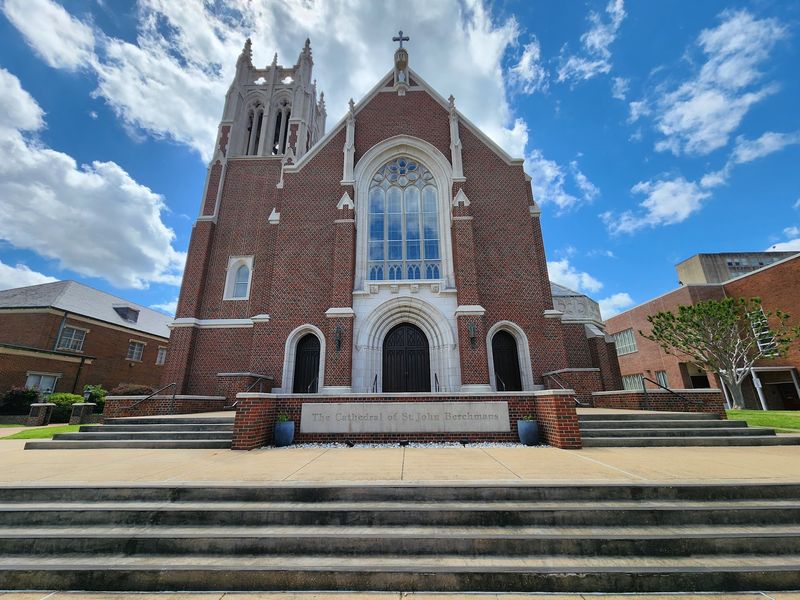
A European saint and a Louisiana miracle are unexpectedly connected inside this Shreveport cathedral. The Cathedral of Saint John Berchmans stands at 939 Jordan Street, Shreveport, LA 71101, where a Jesuit parish was established in 1902.
The current church was completed in the late 1920s and became the cathedral of the newly created Diocese of Shreveport in 1986.
Its Tudor and Gothic Revival elements give the interior an unusual character, with exposed wooden beams meeting pointed arches and stained glass. But the building’s most intriguing story involves its patron.
John Berchmans was a young seventeenth-century Belgian Jesuit. His canonization became closely linked to Louisiana after Mary Wilson, a novice at the Academy of the Sacred Heart in Grand Coteau, attributed her extraordinary recovery from severe illness in 1866 to his intercession.
That Louisiana case played a decisive role in the process that ultimately led to his sainthood.
The Shreveport cathedral later received relics associated with Berchmans, strengthening a connection between northern Louisiana and a saint whose life unfolded thousands of miles away.
That is the kind of history easy to miss from the sidewalk. The building looks local.
Its story stretches from Shreveport to Belgium, Rome, and back to Louisiana.
7. Rock Chapel
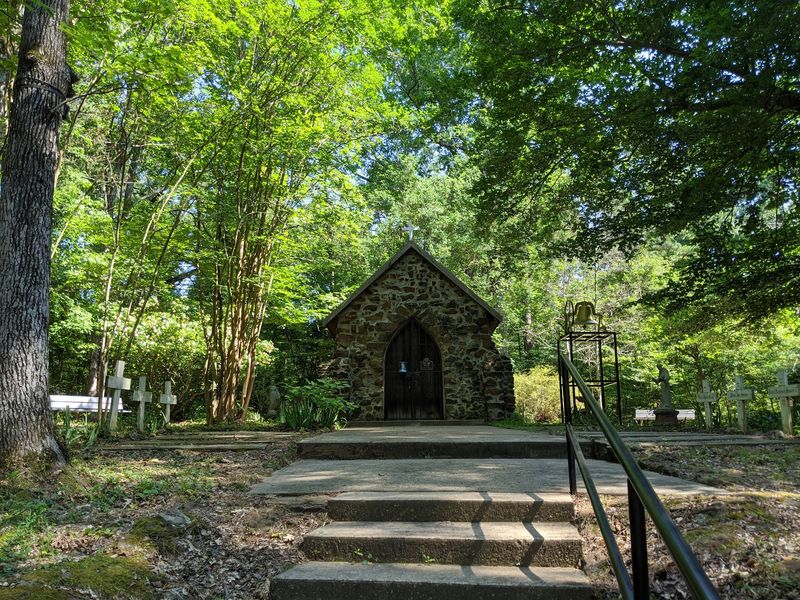
Nothing about the drive prepares you for a stone chapel barely larger than a garden shed appearing among the trees. Rock Chapel lies off Smithport Lake Road near Mansfield, LA 71052, in the Carmel community of DeSoto Parish.
The chapel was built in 1891 by members of the Carmelite order and can be reached by a small drive and footbridge away from the main road.
Its scale is part of the effect. Instead of towers, stained-glass walls, or an enormous nave, visitors find a tiny handmade sanctuary built from local materials in a rural setting.
The chapel once belonged to a larger Carmelite presence in the area, but the surrounding monastery complex did not survive. That leaves the little stone structure feeling almost improbable, a physical fragment of a religious community that largely disappeared from the landscape.
Later restoration preserved the chapel rather than transforming it into something grander. That restraint matters.
The place works because it still feels intimate and slightly hidden.
Directions deserve attention before leaving a reliable signal area because there is no major visitor complex announcing the destination. Wear shoes suited to the short walk and treat the surrounding property respectfully.
Some Louisiana landmarks impress by surviving hurricanes, wars, or centuries of urban development. Rock Chapel does something quieter.
It survived being forgotten.
6. St. Gabriel Catholic Church
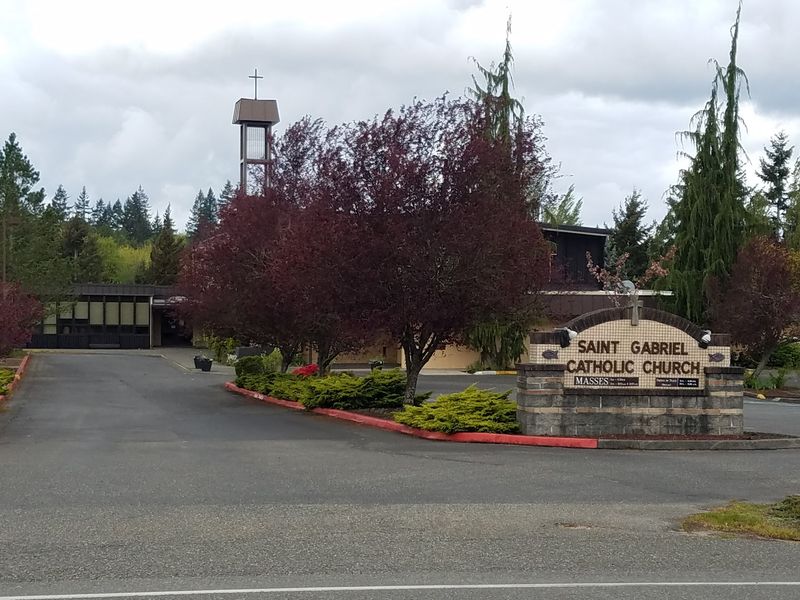
Cypress timbers connect this church directly to Louisiana before statehood. The historic St. Gabriel church stands within the parish complex at 3625 Highway 75, St. Gabriel, LA 70776, where Acadian settlers established a Catholic community along the Mississippi River during the Spanish colonial period.
The original church was constructed from cypress cut from nearby swamps and has survived into the present.
Its history reflects how precarious settlement could be along the river. Around the turn of the twentieth century, the entire historic building was moved farther from the Mississippi rather than abandoned as the river and levee system changed around it.
Parish records note that the old timbers remained remarkably sound during the move.
Then there is the bell.
Cast in 1768, it bears a Spanish inscription invoking Saint Mary of Mercy and still hangs in the tower. That single object links Acadian settlers, Spanish colonial government, Catholic worship, and the modern community through a sound that has crossed centuries.
A newer church, dedicated in 1953, stands behind the historic structure, allowing the parish to keep using the old building as a preserved landmark rather than sacrificing it to growth.
5. St. Charles Borromeo Catholic Church
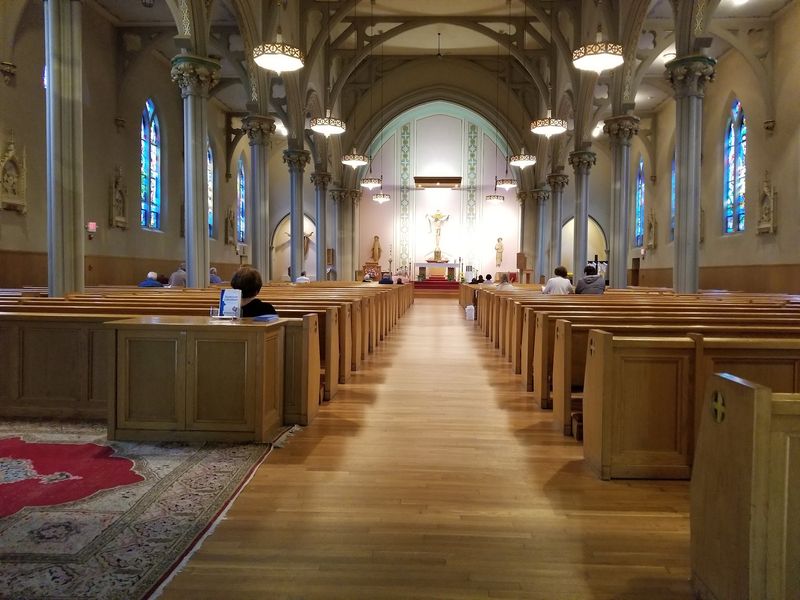
River travelers once knew they were getting close to New Orleans when a small red church appeared along the Mississippi. St. Charles Borromeo Catholic Church is at 13396 River Road, Destrehan, LA 70047, on a parish site whose religious history reaches back to the German Coast settlements of colonial Louisiana.
The famous landmark was the Little Red Church, a nineteenth-century frame building painted a distinctive red. Steamboat pilots and passengers used it as a familiar visual marker along a river where landmarks mattered long before GPS.
Parish history remembers travelers recognizing the church as a sign that the long journey toward New Orleans was nearing its end.
The building standing today is newer, but the parish deliberately keeps the Little Red Church story alive. A replica on the grounds preserves the visual memory of a structure that became part of everyday river navigation as well as religious life.
That intersection is what makes this stop interesting.
Louisiana churches rarely existed in isolation from the physical world around them. They were gathering places, cemeteries, schools, navigation markers, and evidence that a dispersed settlement had become a community.
4. St. Landry Catholic Church
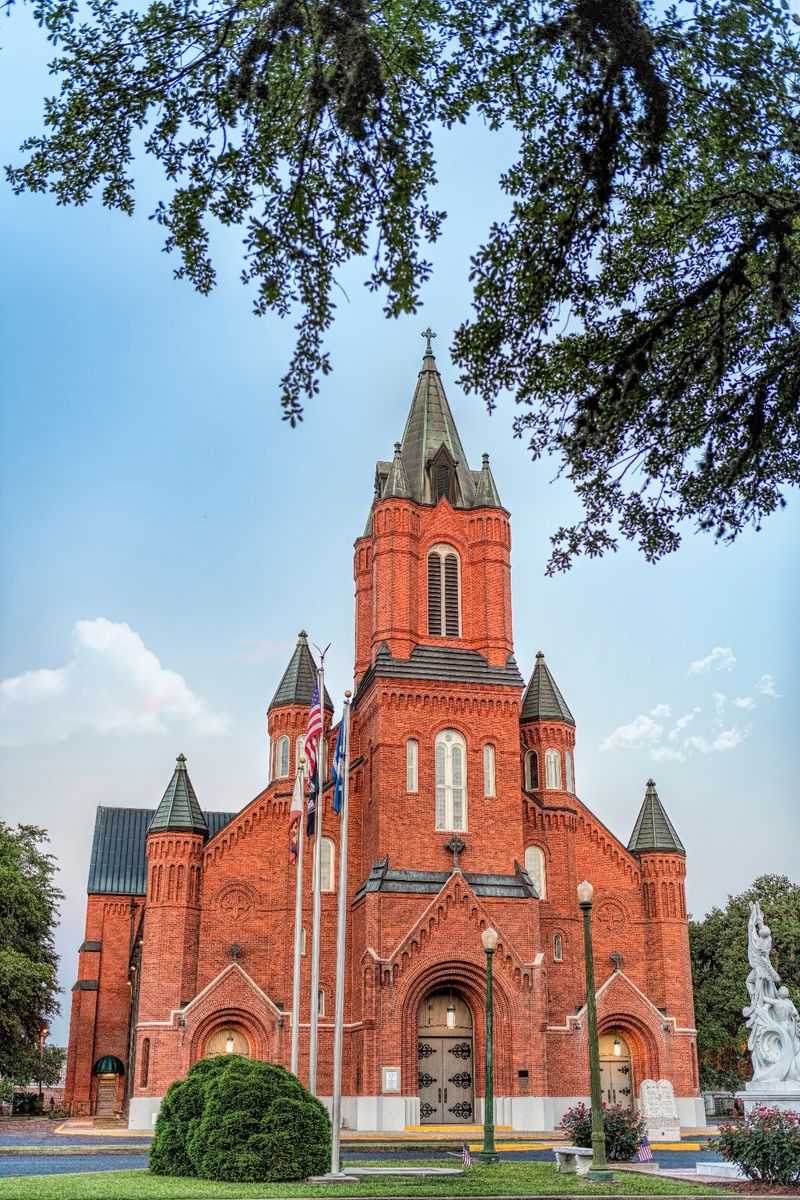
The scale seems almost excessive until you realize how much of Acadiana once looked toward this parish. St. Landry Catholic Church stands at 1020 North Main Street, Opelousas, LA 70570, where the current cathedral-sized building was completed in 1909.
The parish describes itself as the Mother Church of Acadiana, reflecting its historic role in Catholic life across a much larger region than modern Opelousas.
The architecture mixes Gothic and Romanesque Revival influences, but the most compelling history continues outside.
St. Landry Catholic Cemetery dates to around 1798 and contains graves reaching back into Louisiana’s early state and territorial history. Veterans of multiple American wars are buried there, and the cemetery has become such an important historical resource that local tours periodically use actors and storytelling to bring some of those lives back into view.
That makes the churchyard more than an ornamental background for an imposing sanctuary.
Walk through slowly and the names begin to reveal patterns: French and Creole families, soldiers, community leaders, clergy, children, and generations who lived through periods of Louisiana history usually summarized in a few textbook paragraphs.
The church tells the institutional story.
3. St. John The Baptist Catholic Church
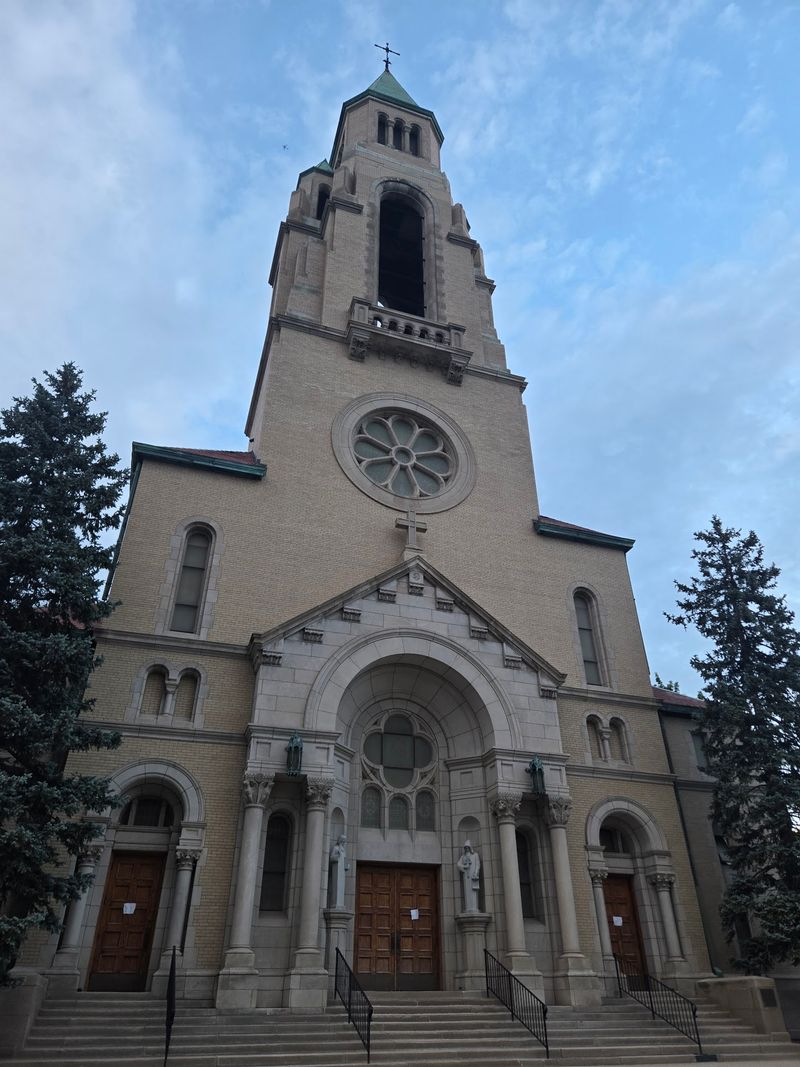
Rebuilding is embedded in the history of this River Road parish. St. John the Baptist Catholic Church stands at 2349 Highway 18, Edgard, LA 70049, with the parish office at 2361 Highway 18.
The congregation has roots reaching deep into Louisiana’s German Coast era, while the present church dates to the early twentieth century after earlier buildings were lost or replaced.
The current structure was built around 1920, but the cemetery beside it preserves a much longer community memory. Parish and local histories trace burial activity here back to the era of the earliest church, making the grounds one of the most historically significant parts of the complex.
Inside, the church carries the visual ambition of an established river parish rather than a frontier chapel. Outside, the graves make the passage of time harder to ignore.
That contrast matters along the Mississippi, where communities repeatedly rebuilt after floods, fires, storms, and economic change.
Spend time in the cemetery rather than treating it as scenery. The oldest Louisiana churchyards often reveal who actually lived in places whose histories are otherwise told through plantation owners, politicians, or major institutions.
2. Madonna Chapel
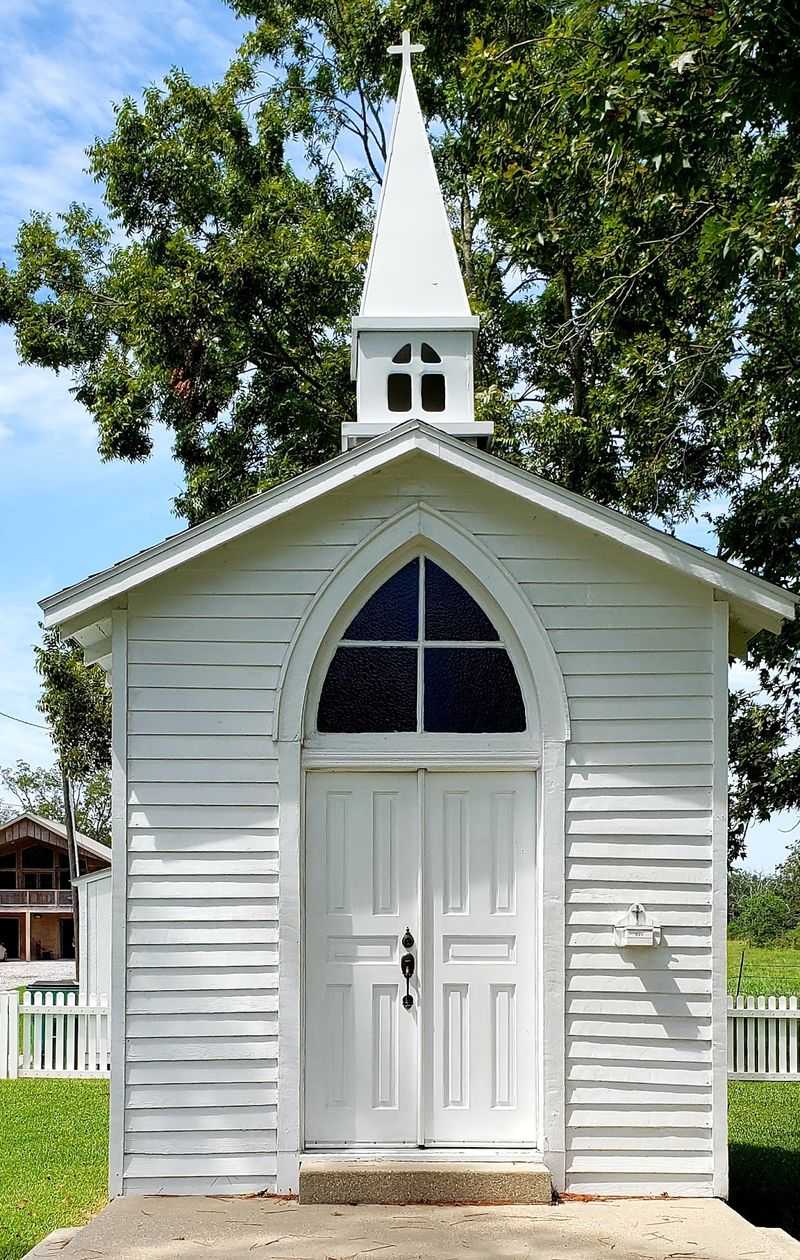
Size becomes almost comic until you hear why the chapel exists. Madonna Chapel stands at 28527 LA-405, Plaquemine, LA, along the Great River Road near Bayou Goula and White Castle.
The present sanctuary measures only about nine feet by nine feet and has long been promoted through Ripley’s Believe It or Not! as one of the world’s smallest churches.
Its origin is far more intimate than the roadside curiosity label suggests.
Italian farmer Anthony Gullo built the original seven-by-seven-foot chapel in 1902 after making a promise connected to the recovery of his seriously ill son. When levee work forced the first building to be removed in 1924, the family rebuilt it nearby, slightly larger but still astonishingly small.
The tradition continues. A special Mass is celebrated each year on August 15 for the Feast of the Assumption.
The 2026 Mass was held there on August 15, confirming that this is still an active devotional site rather than an abandoned roadside relic.
Outside that annual service, the chapel remains open for quiet visitors, with local tourism information even noting that the key is traditionally kept in the mailbox.
1. St. Joseph Co-Cathedral
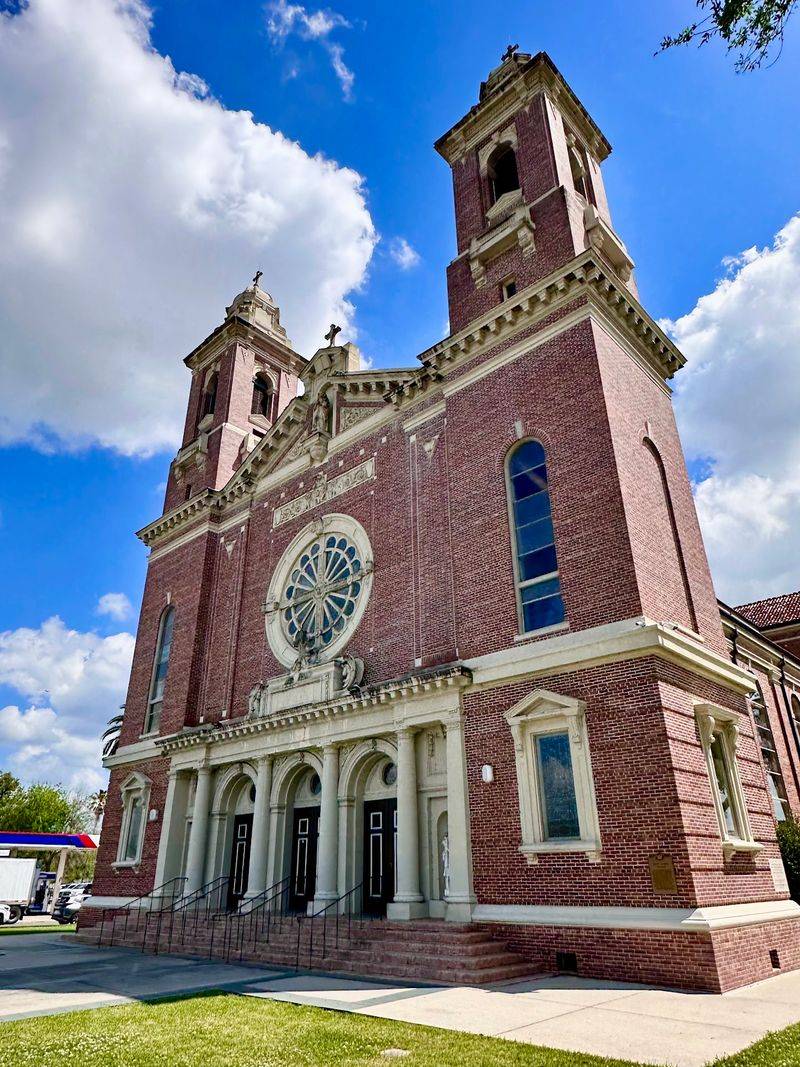
Fire destroyed the old church, but one of its strangest treasures came out alive. St. Joseph Co-Cathedral stands at 721 Canal Boulevard, Thibodaux, LA 70301, where the present Renaissance Revival building was completed in 1923 after a devastating 1916 fire consumed its predecessor.
Its parish history begins much earlier. St. Joseph developed in the early nineteenth century and became the mother parish for later Catholic communities across the region.
The present church eventually became co-cathedral of the Diocese of Houma-Thibodaux after that diocese was established in 1977.
The object visitors remember most, however, arrived from Rome in the nineteenth century.
In 1867, Father Charles Menard requested a saint’s relic for his Louisiana parish and chose Saint Valerie. The relic was placed inside a wax effigy representing the martyr.
When the former church burned in 1916, the Saint Valerie relic survived and was later placed inside the new church, where the glass reliquary remains one of its most unusual features.
Look upward too. Marble work, stained glass, twin towers, and a roughly 34-foot baldachin give the sanctuary scale well beyond what many travelers expect in Thibodaux.