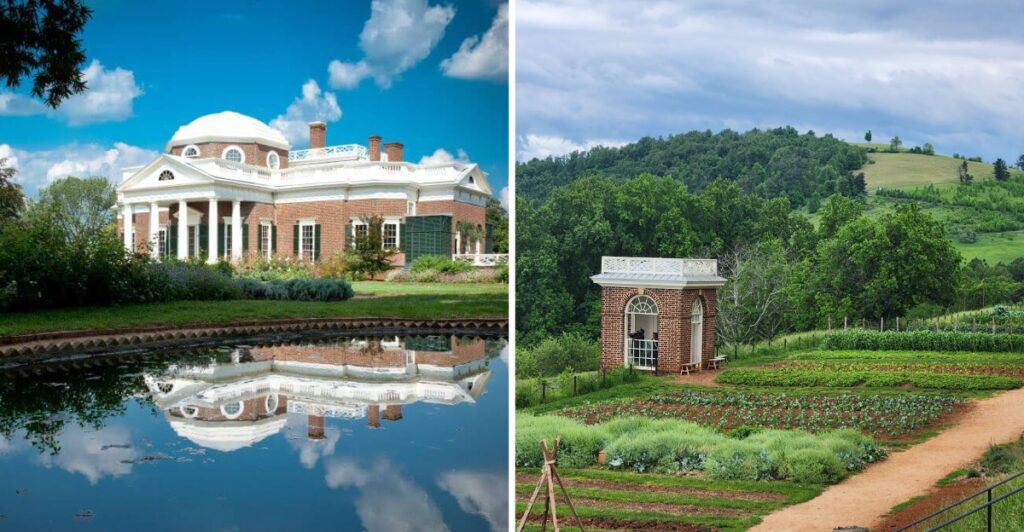
A three-story house that pretends to be one story from the outside. That’s the kind of sneaky design trick that makes me grin every time I think about it.
It sits on a mountaintop with the Blue Ridge Mountains rolling off in the distance. It also wears the first dome ever placed on an American house.
One man spent more than forty years designing and redesigning it, which sounds like the longest home renovation in history.
The gardens below look like they belong in the French countryside. Yet this whole scene lives in central Virginia, not across an ocean.
What gets me is how much history and beauty share the same hill here. I’d happily spend a full day wandering it, no passport required.
That Dome On The Hill Is Even Cooler Than It Looks
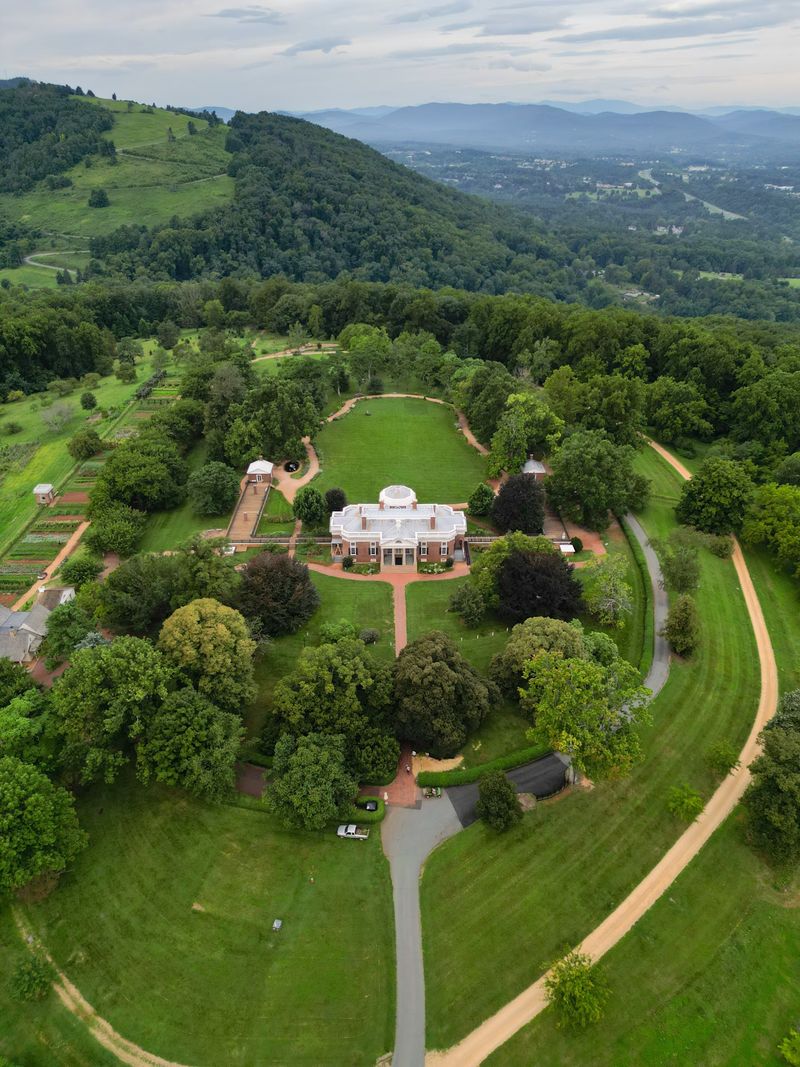
Thomas Jefferson’s Monticello wears a dome that made history long before postcards existed. It was the first dome ever placed on an American house.
Jefferson designed the home in a French Neoclassical and Palladian style.
He also borrowed ideas from ancient Rome, which explains the stately columns and porticoes.
The octagonal Dome Room also features a central skylight.
Construction began in 1771 and was largely finished by 1809. That timeline covers nearly four decades of tinkering, tearing down, and rebuilding.
Here’s the clever part that still makes people double-check. The house has three stories, but Jefferson made it look like only one from outside.
He wanted a grand look without the bulky height of a typical mansion. The result feels balanced and calm, like it grew right out of the mountain.
Bring a camera for the grounds, because photography is allowed outdoors. Inside the house, personal photography and video are generally permitted, but flash photography and recording tours are prohibited.
Restrictions on flash photography and recording tours help protect the historic interiors and minimize disruptions. You can still capture memories while enjoying the historic rooms firsthand.
Stand on the West Lawn and study those columns for a minute. You’ll see why the place shows up on the back of the nickel.
Those Mountain Views Will Make You Forget Your Phone Exists
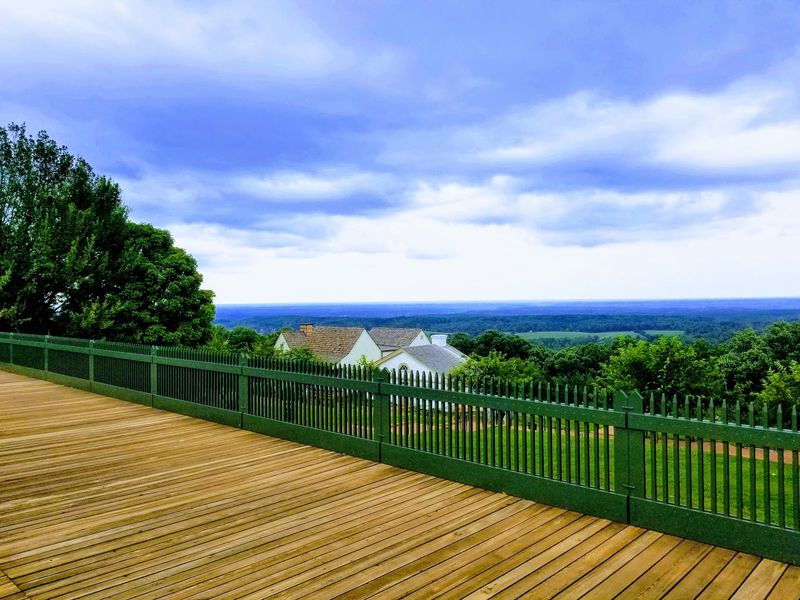
Jefferson picked this hilltop for a reason, and the reason is all around you. The name Monticello even means little mountain in Italian.
The estate originally encompassed approximately five thousand Virginia acres.
From the top, rolling countryside stretches out in every direction. The Blue Ridge Mountains rise along the horizon like a soft blue wall.
Monticello’s grounds include orchards, vineyards, and wooded slopes.
Honestly, this is the part that earns the European postcard comparison. Green hills, tidy gardens, and a classical house make the whole scene feel imported.
A shuttle bus carries visitors from the visitor center up to the mountaintop house. It runs back and forth, so you won’t be stuck at the top.
Prefer to stretch your legs instead? A shaded trail connects the visitor center with the main grounds.
Just know the walk climbs uphill on the way up. The good news is gravity helps you on the trip back down.
Wear comfortable shoes and pack sunscreen on warmer days. Much of the best viewing happens outdoors, and Virginia summers can get toasty.
Give yourself a few quiet minutes near the edge of the lawn. Jefferson spent decades staring at this view, and you’ll quickly understand why.
A Two-Acre Vegetable Garden Puts Most Backyard Plots To Shame
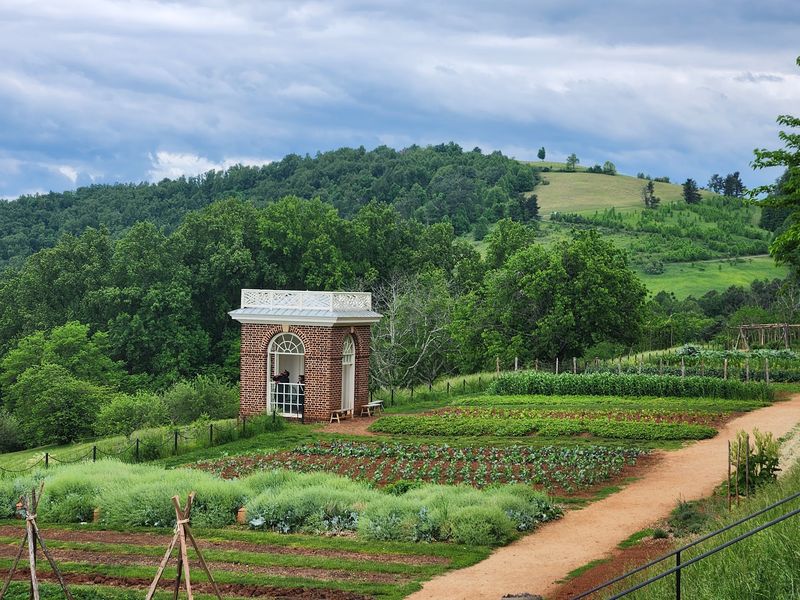
Two whole acres of vegetables sit on the side of this mountain. Most of us struggle to keep one tomato plant happy.
The Vegetable Garden was both practical and experimental in Jefferson’s day. He treated it like an outdoor laboratory for trying new plants.
Jefferson experimented with roughly 330 vegetable varieties here.
Today the gardens still feature heirloom plant varieties. That means you can see crops tied to older seed lines, not just supermarket favorites.
Close to the house, the Oval Beds burst with color. The Winding Flower Walk loops along the lawn and adds even more blooms.
These spaces make the estate feel like a European country garden. Neat beds, curving paths, and big sky do a lot of heavy lifting.
Want someone to explain what you’re looking at? Guided Gardens and Grounds Tours are offered from late March through October, weather permitting.
Spring and summer visits bring the most growth and color. Plan around those months if flowers are high on your wish list.
Gardeners, consider this fair warning. You may head home with big plans and a sudden urge to buy seeds.
Revolving Doors And Alcove Beds Prove Jefferson Loved A Good Gadget
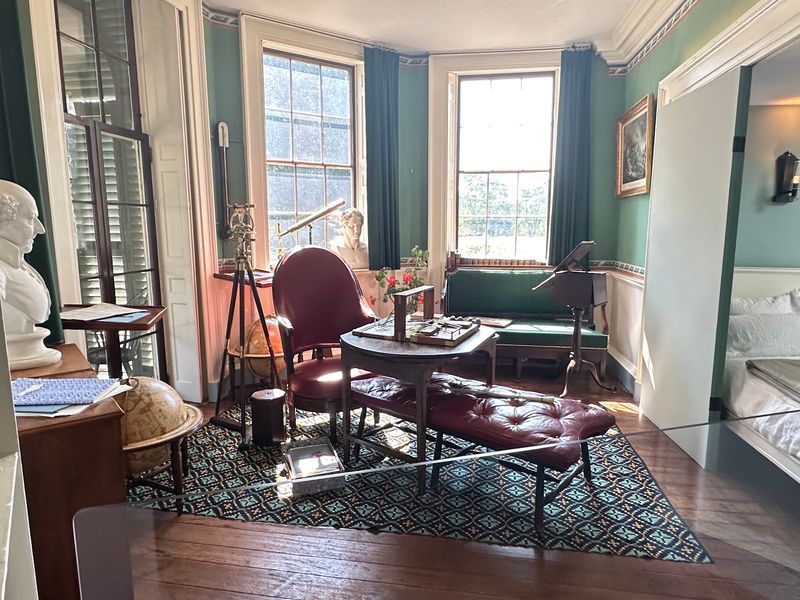
Revolving doors, dumbwaiters, and beds tucked into wall alcoves all live inside this house. Jefferson clearly enjoyed solving everyday problems with clever ideas.
The Great Clock displays time indoors and outdoors.
The Highlights Tour is the most popular way to see inside. It lasts about 45 minutes and covers the first floor.
That tour also visits the West Lawn and the South Wing.
Rooms follow careful rules of symmetry and proportion. Everything feels measured, like the house was drawn with a ruler and a lot of patience.
You’ll also see paintings, furnishings, and Jefferson’s inventions along the way. It’s a peek at how one very curious mind arranged daily life.
Curious about the upper floors? The Behind-the-Scenes Tour adds the private second and third floors.
Be ready for steep, narrow stairs on that one. Comfortable shoes matter, and large strollers aren’t allowed inside the house.
Booking tickets ahead is a smart move during busy seasons. Then you can relax and enjoy the gadgets instead of watching the clock.
Kids Get Their Own Corner Of History Here
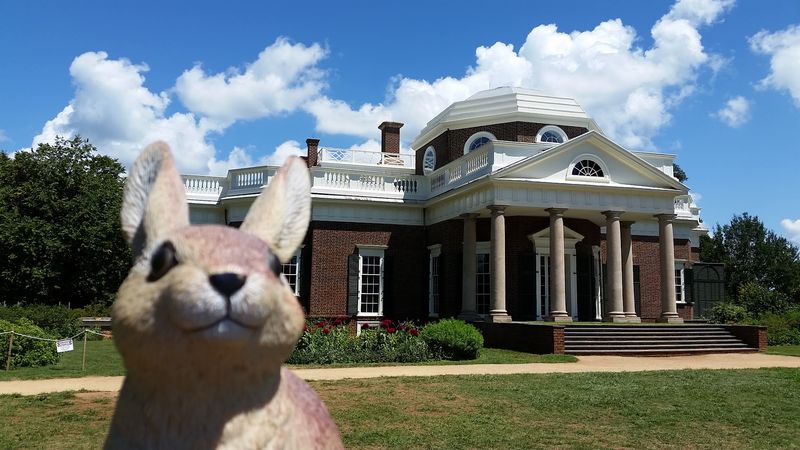
Little historians have it pretty good on this mountain. The Griffin Discovery Room is a hands-on space built just for kids.
It sits inside the David M. Rubenstein Visitor Center. Children can touch, explore, and learn without anyone shushing them.
Families with kids ages 5 to 11 should look at the Family Friendly Tour. It runs about 45 minutes and keeps things engaging for younger minds.
Scavenger hunts add another layer of fun around the grounds. Searching for clues turns a history lesson into a game.
Then there’s the showstopper for many young visitors. A historical actor-interpreter portrays Thomas Jefferson himself.
Meeting a founding father in person is not something that happens at the mall. It can spark questions kids actually want answers to.
Check the schedule before you go, since appearances vary by day. Nothing deflates a kid faster than missing the main character.
Pack snacks, water, and patience for the walking. A tired kid and a hilltop do not always mix, but a good plan helps a lot.
Start Smart At The Visitor Center Before You Head Uphill
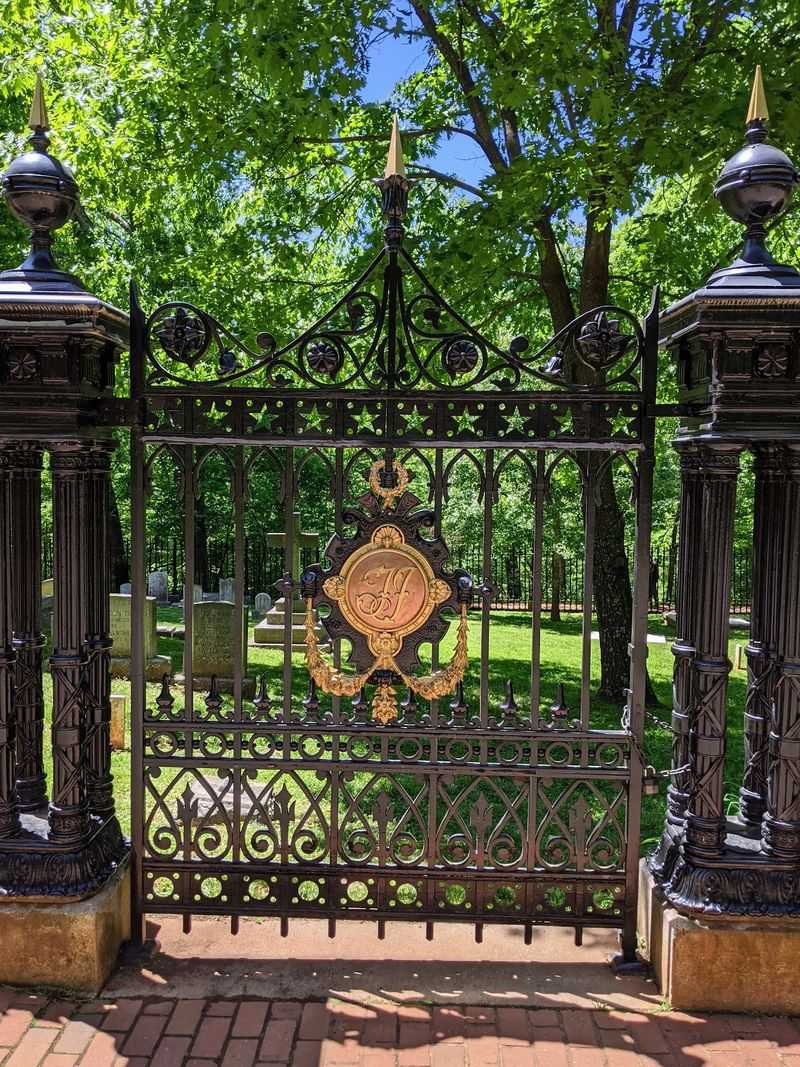
Every great visit here begins at the bottom of the hill. The David M. Rubenstein Visitor Center serves as the gateway to the estate.
Exhibit galleries help set the stage before you see the house. One standout is 1776: Road to the Declaration.
Another exhibit, Many Threads, One Story Orientation Timeline, ties the bigger story together. It’s a handy primer if your history class memories are fuzzy.
Hungry already? The Monticello Café offers casual fare for a break between tours.
Sandwiches and salads make easy options before or after the climb. Refueling here keeps the afternoon from turning grumpy.
The gift shop sits here too, packed with souvenirs and books. It’s a solid spot to grab something for the history buff back home.
Monticello provides wheelchair-accessible shuttles, routes, and first-floor access to the historic house, although the upper floors and some pathways are not wheelchair accessible.
The shuttle to the mountaintop helps visitors who prefer not to hike.
Arrive early so you can explore before your tour time. Monticello opens at 8:30 a.m., and those quiet morning hours feel extra peaceful.
A World Heritage Badge Puts This Home In Rare Company
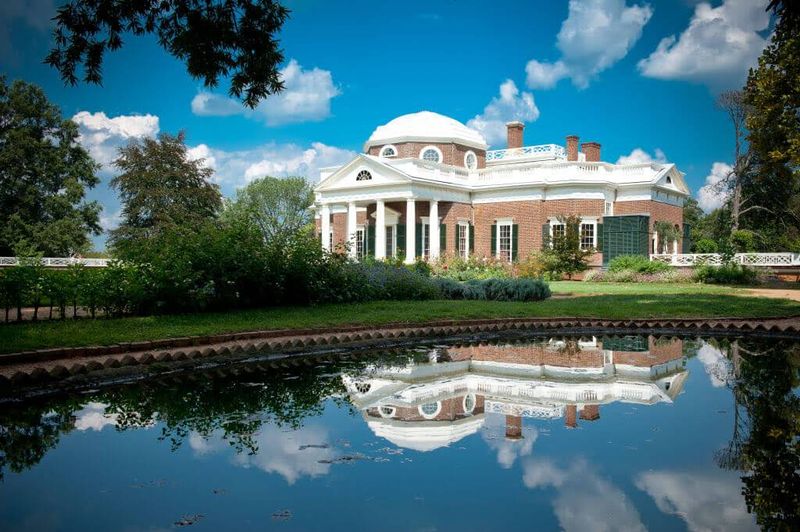
Monticello is the only U.S. presidential home designated as a UNESCO World Heritage Site.
It shares the honor with the nearby University of Virginia. Jefferson designed that campus too, so he clearly kept busy.
Both landmarks received joint UNESCO recognition back in 1987.
The listing places this Virginia hilltop alongside famous landmarks around the world. Not bad for a house that took forty-plus years to finish.
Jefferson wrote the Declaration of Independence and served as the third U.S. President. Monticello was his primary residence and plantation through it all.
You’ll find the estate at 1050 Monticello Loop, Charlottesville, VA 22902. It sits near the Blue Ridge Mountains in central Virginia.
That location makes it easy to pair with a trip into Charlottesville. The university’s historic grounds offer another dose of Jefferson’s design style.
Political history fans should check out the Founding Friends, Founding Foes Tour. It explores the twisty relationship between Jefferson and John Adams.
Think of it as a centuries-old friendship drama. Only this one shaped a country instead of a group chat.