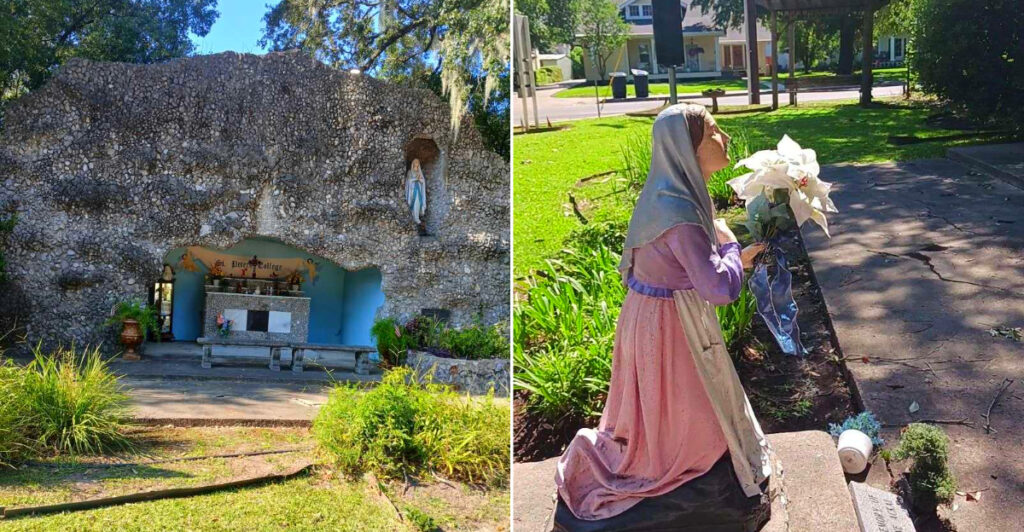
Spanish moss hangs from branches thick enough to be scaffolding. Below, a stone grotto with a pale statue and votive candles flickering in glass cups.
The roots of the live oak have grown through the stonework, twisting around the shrine like the tree decided to claim it.
I stood there for ten minutes without moving. The silence is not empty. It is full of birdsong and the drip of recent rain and something else I cannot name. Not a cathedral with a parking lot and a gift shop. A pocket of stillness on a residential street you could walk past a hundred times without noticing.
The tree was likely growing during the Civil War. The grotto was built beneath it, and somewhere along the way the two became inseparable.
At this quiet grotto, roots twist through Louisiana stone, and neither the tree nor the shrine seems interested in letting go.
Learn The 1941 Backstory First
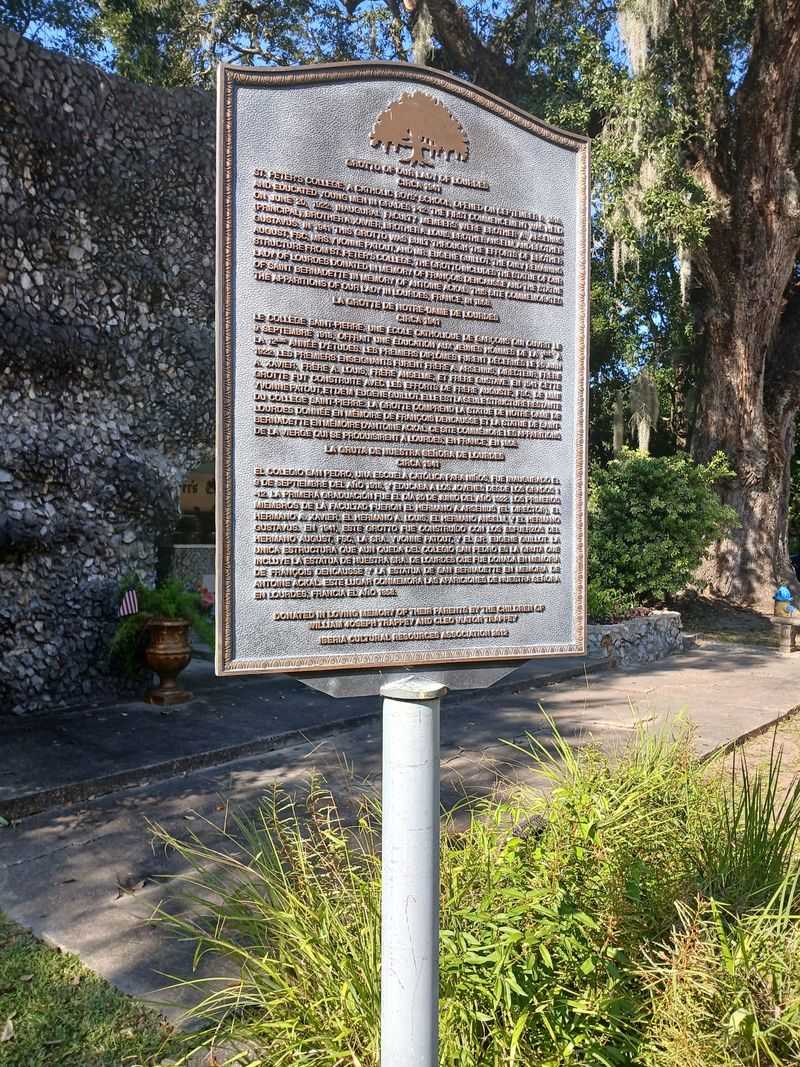
Plenty of visitors notice the statues first, but the deeper story begins in 1941, when the grotto was built to honor pioneer families of New Iberia and give thanks for blessings in the Teche country. Knowing that changes the mood.
What looks like a pretty devotional stop becomes a memorial of gratitude, local memory, and faith shaped by south Louisiana history.
The site also recalls the 1858 apparitions of the Virgin Mary to Saint Bernadette Soubirous in Lourdes, France, which inspired replicas around the world. Here, the connection feels both global and deeply local.
Before you leave, pause long enough to read any markers and absorb the timeline, because the remaining structure from St. Peter’s College carries more history than its quiet size first suggests. That perspective turns a brief stop into an encounter with the town’s past and present.
Main Street Finds A Grotto Beneath The Oaks
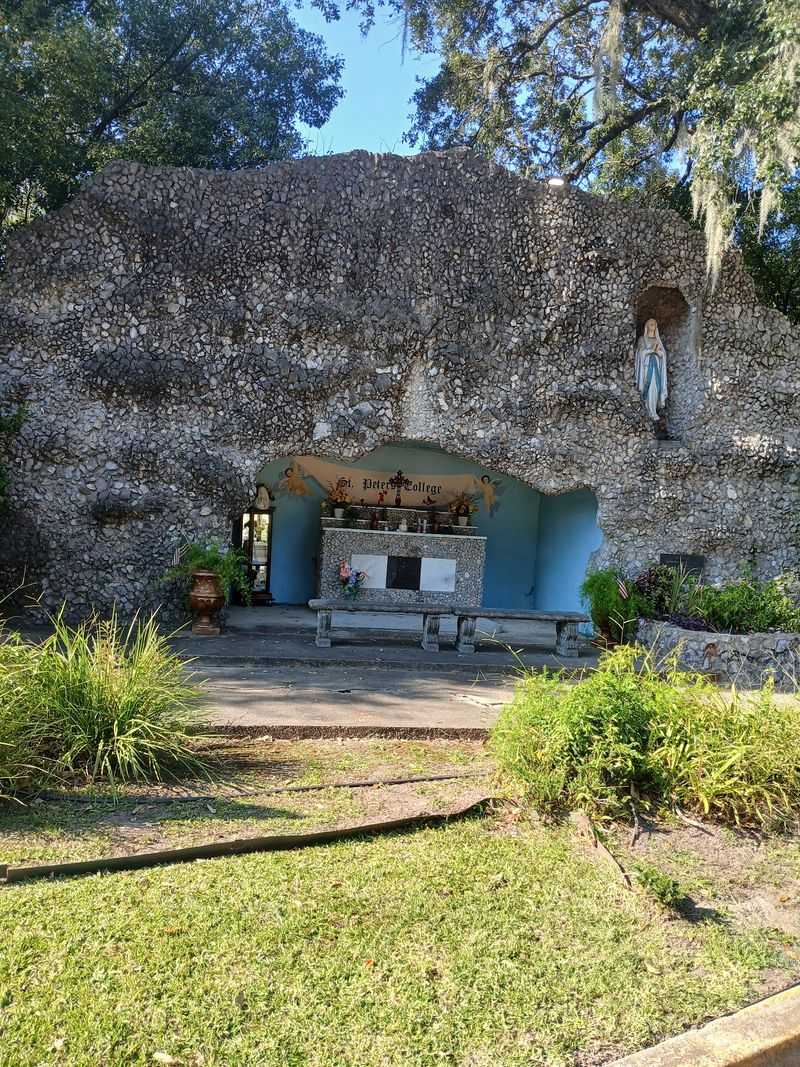
The Grotto of Our Lady of Lourdes is located at 445 East Main Street in New Iberia, Louisiana, in the historic downtown district beside the Iberia Parish Library and City Hall. East Main Street carries LA-182 through this part of town, making it the natural final approach.
Continue along East Main Street toward the 400 block, where the historic streetscape gives way to the library and civic buildings. The grotto sits outdoors beneath mature trees on the same property, so there is no separate church driveway to find.
Use available public parking around the downtown block and finish the short approach on foot toward the library grounds. The grotto is directly beside the library at 445 East Main Street, making the shrine easy to reach once you are on the property.
Study The Craft Up Close
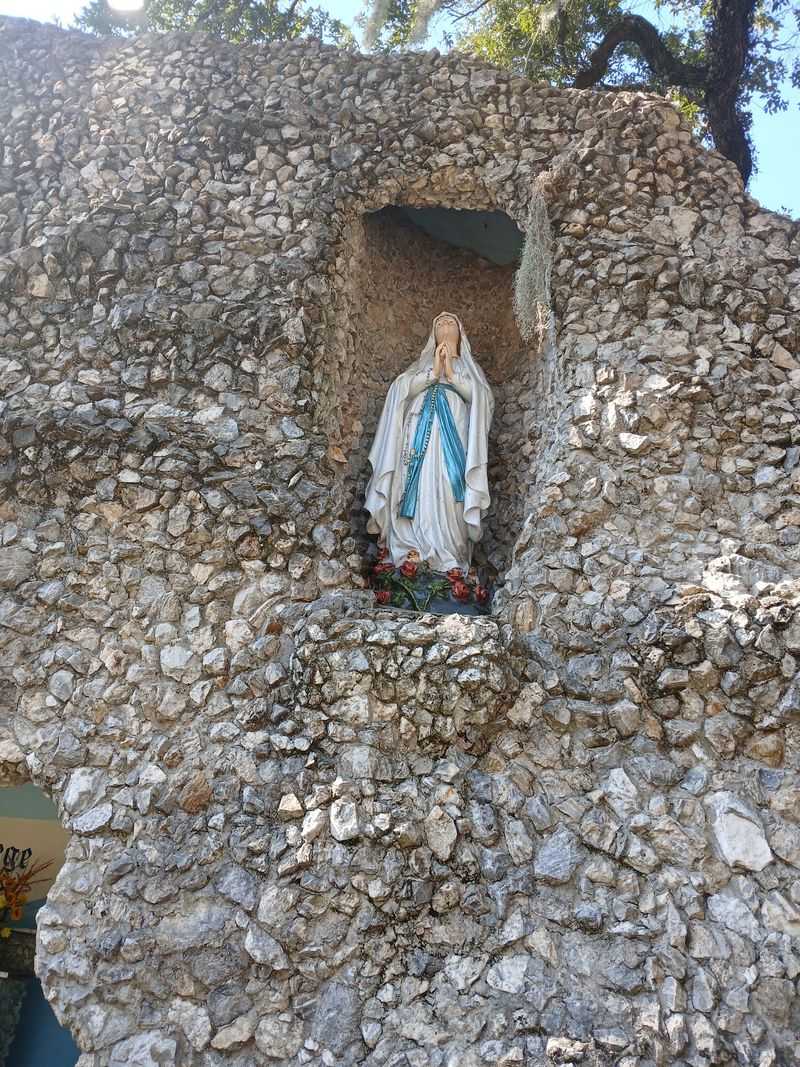
Concrete and Louisiana marble are not the materials most people expect to feel tender, yet they do here. The grotto is a smaller-scale replica of the famous site at Lourdes in France, and its design turns hard surfaces into something surprisingly gentle.
Bernadette kneels before Our Lady, and the composition gives the whole scene a clear direction, almost like a prayer frozen in place.
Architect Eugene Guillot designed the shrine, and the Christ Brothers of St. Peter’s College built it, with Brother August, FSC, and Mrs. Yvonne Patout playing important roles. Those names matter because they root the shrine in local hands, not distant ideas.
Spend a minute looking at textures, edges, and proportions, and you will see how carefully this compact place was made. Even a short visit rewards slow eyes more than quick snapshots taken from the sidewalk.
Picture The Lost Campus Around It
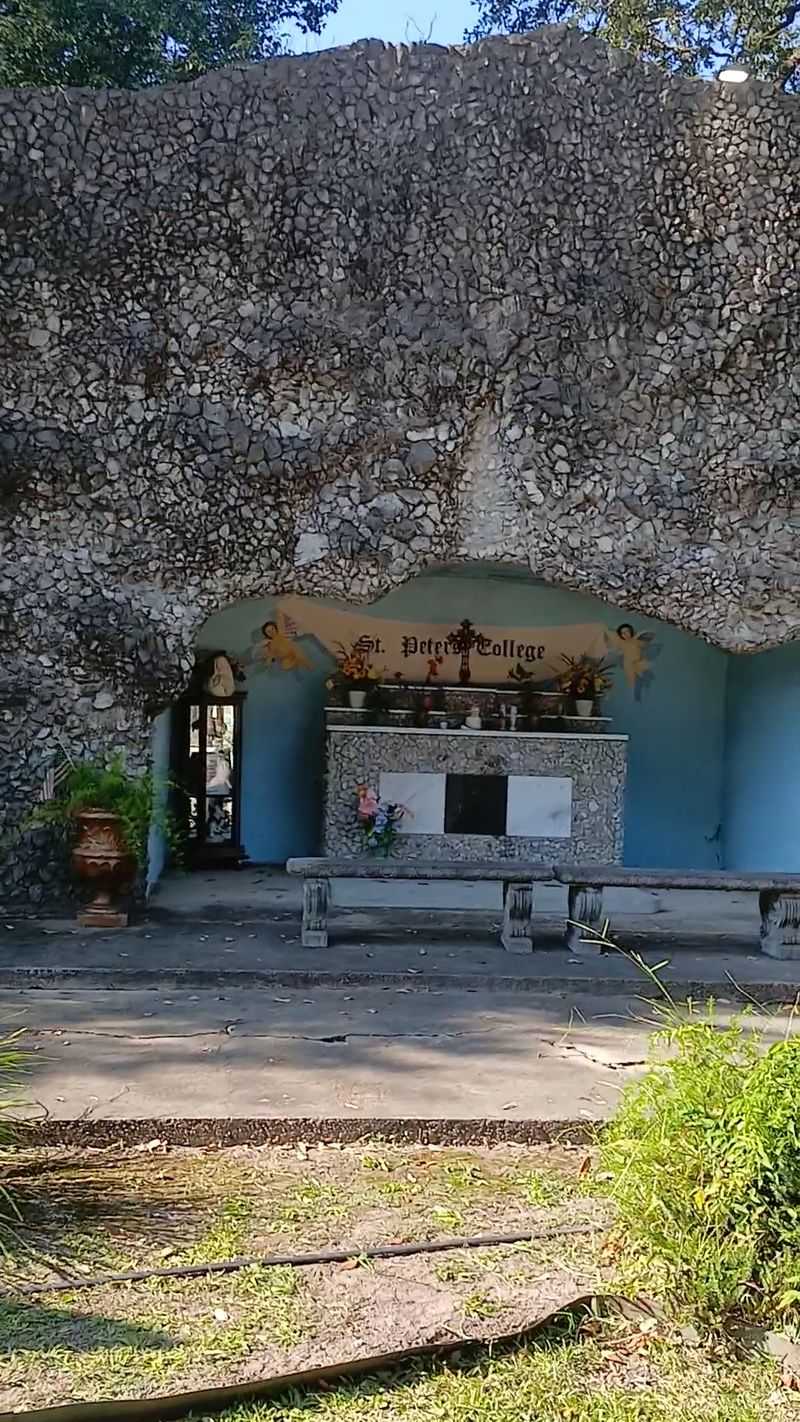
One of the strangest facts about the grotto is also one of the most moving. It is the only remaining structure from St. Peter’s College, a Catholic boys’ school that operated from 1918 on this former campus.
That means the shrine is not just a devotional landmark. It is also the surviving witness to a whole chapter of school life that has otherwise faded from view.
I found that detail changed the way the grounds felt. Instead of seeing an isolated monument, I started imagining students passing by, prayers said between ordinary days, and decades of neighborhood change around it.
If you enjoy places where one structure carries many stories at once, give yourself time to stand still and let the missing campus fill in around it. The imagination has room to work here and history answers softly if listened.
Notice The Memorial Gifts
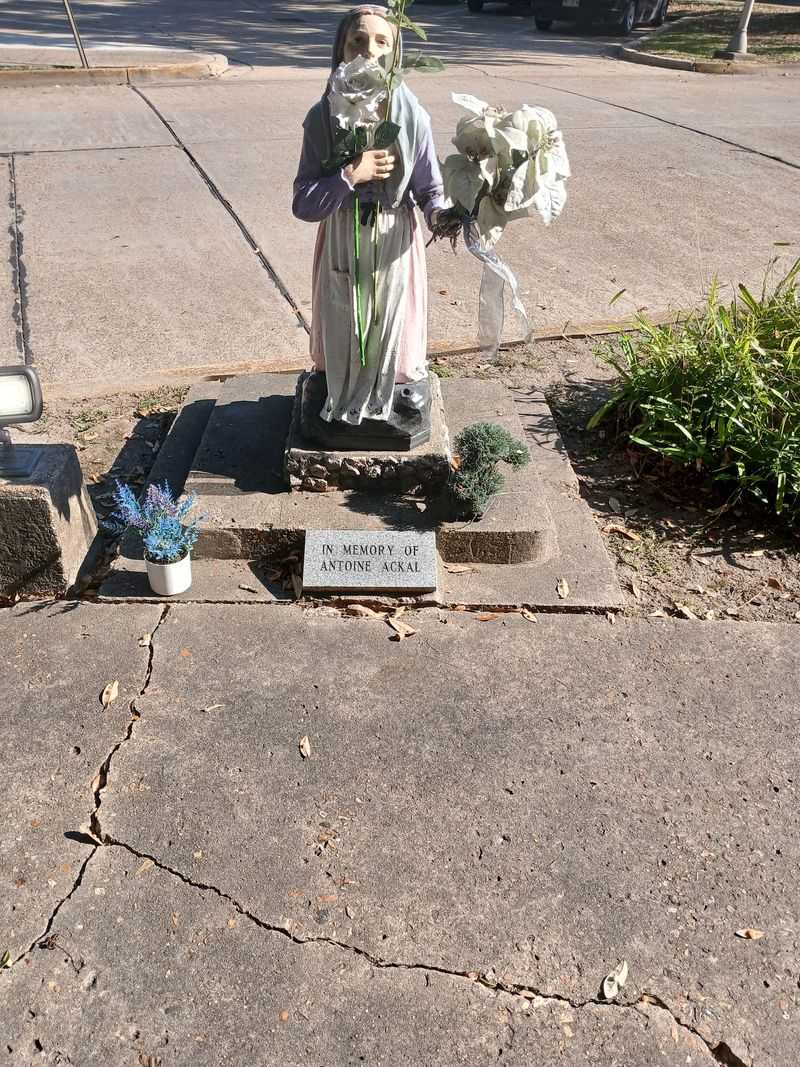
Small details keep this place from feeling generic, especially once you learn who is represented. The statue of Our Lady of Lourdes was donated in memory of François Dencausse, while Saint Bernadette was donated in memory of Antoine Ackal.
Those memorial gifts make the shrine feel personal, as if family remembrance is built right into the scene instead of added later.
Another useful bit of context is the 1996 restoration led by Mayor Cliff Aucoin. Without that work, a fragile outdoor landmark like this could easily have lost its clarity over time.
Look closely at the figures and stonework rather than treating them as background, because preservation is part of what allows visitors today to experience a place first shaped decades earlier. It is a reminder that care, not luck, keeps meaningful public sites standing for the next generation nearby.
Respect The Living Devotion
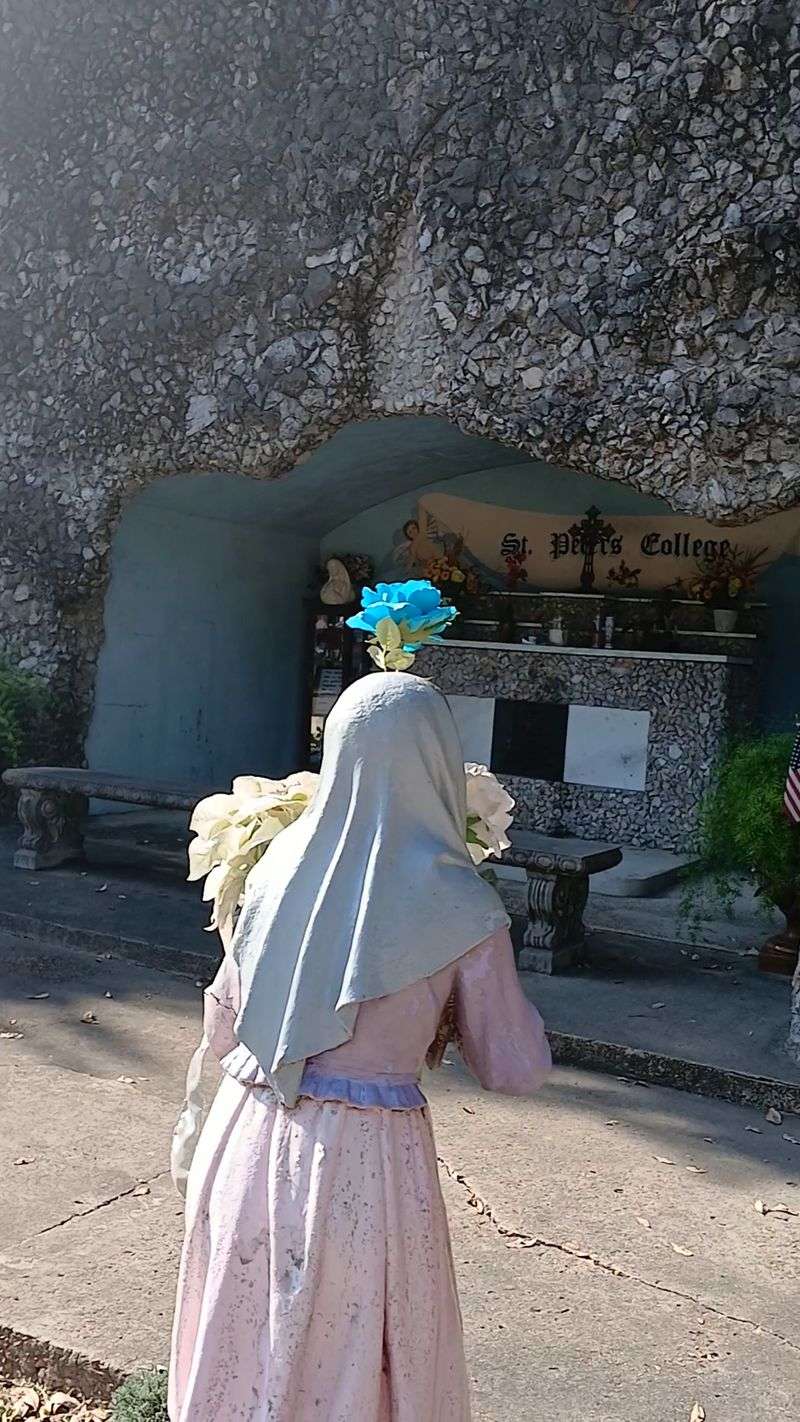
Faith is the obvious reason people come, but remembrance widens the meaning of the site. In 1967, the grotto was rededicated by the Veterans of Foreign Wars to honor local service members who died for the country.
That layer of memory sits quietly beside the Marian devotion, giving the place a civic weight as well as a spiritual one.
You do not need to arrive during an event to feel that mix. Regular prayer gatherings, rosaries, and candle lighting have kept the grotto active in local life, especially within Cajun communities whose history carries endurance and strong religious roots.
Be respectful with your voice, your timing, and your camera, because what may look like a picturesque stop for visitors is still a living place of devotion. Quiet attention suits it better than hurry, and the atmosphere notices the difference away.
Use Its Downtown Location Wisely
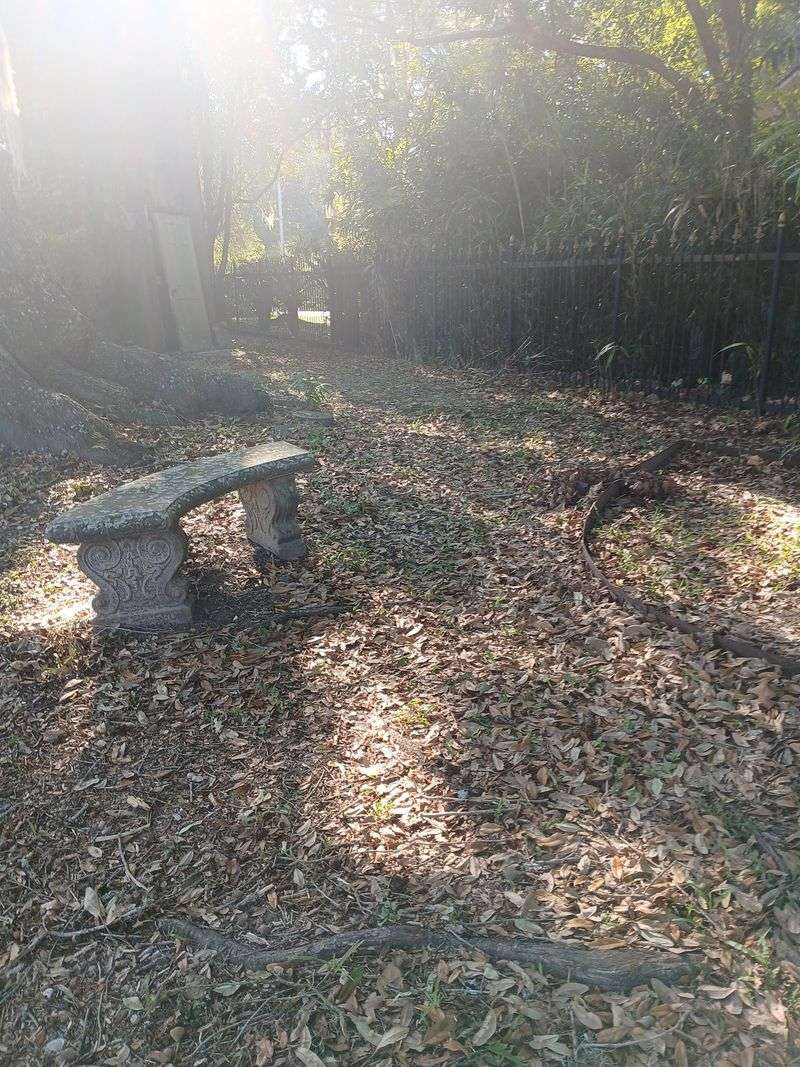
A practical perk hides in plain sight here: the grotto sits in downtown New Iberia, next to the Iberia Parish Library on East Main Street. Because of that central location, it is easy to add to a walking loop with historic homes, nearby churches, and a glance toward Bayou Teche.
You do not need to plan a whole day around it to make the stop worthwhile.
What surprised me was how quickly the mood shifts once you step near the shrine. Cars pass, daily business continues, and yet the oak canopy and recessed setting create a pocket of stillness.
If you are exploring downtown, build in ten unhurried minutes rather than treating the site as a drive-by landmark. The calm works best when you allow yourself to slow down a notch.
That pause changes the visit more than you expect.
Listen To The Tree
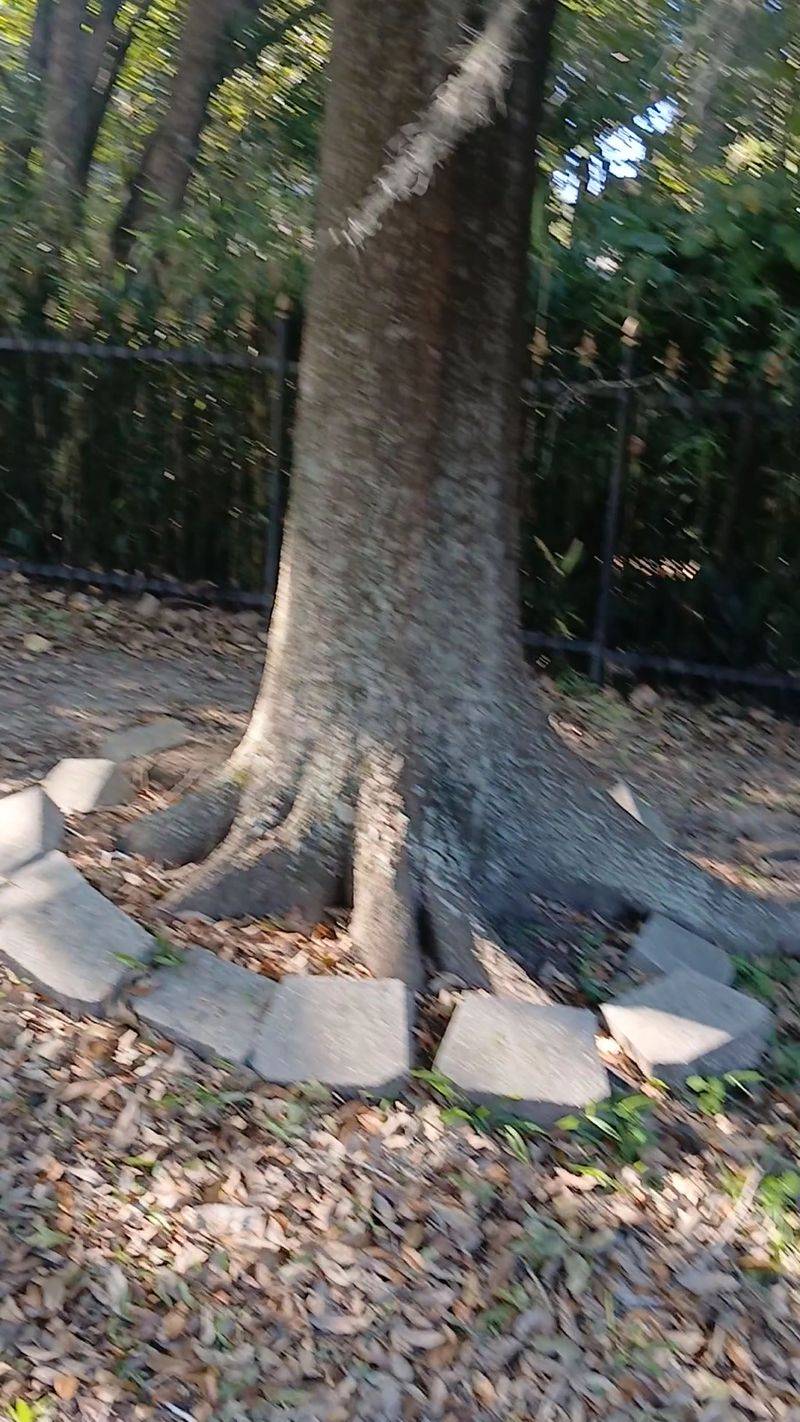
Listen for the leaves before you look for the statues. The live oak above the grotto does more than provide shade.
It creates a soft rustle, a shifting pattern of light, and a feeling of shelter that fits the shrine better than any fence or wall could. In south Louisiana, trees often shape the spirit of a place as much as buildings do.
That matters in every season, especially on warm days when the canopy makes the stop more comfortable. The age of the oak, about 150 years, adds a sense of time that the eye understands before the brain catches up.
Try standing beneath it for a minute without taking a photo. You may notice the setting feels less like a tourist stop and more like borrowed quiet.
It is a rare shelter that feels earned rather than manufactured.
Keep Your Voice Low
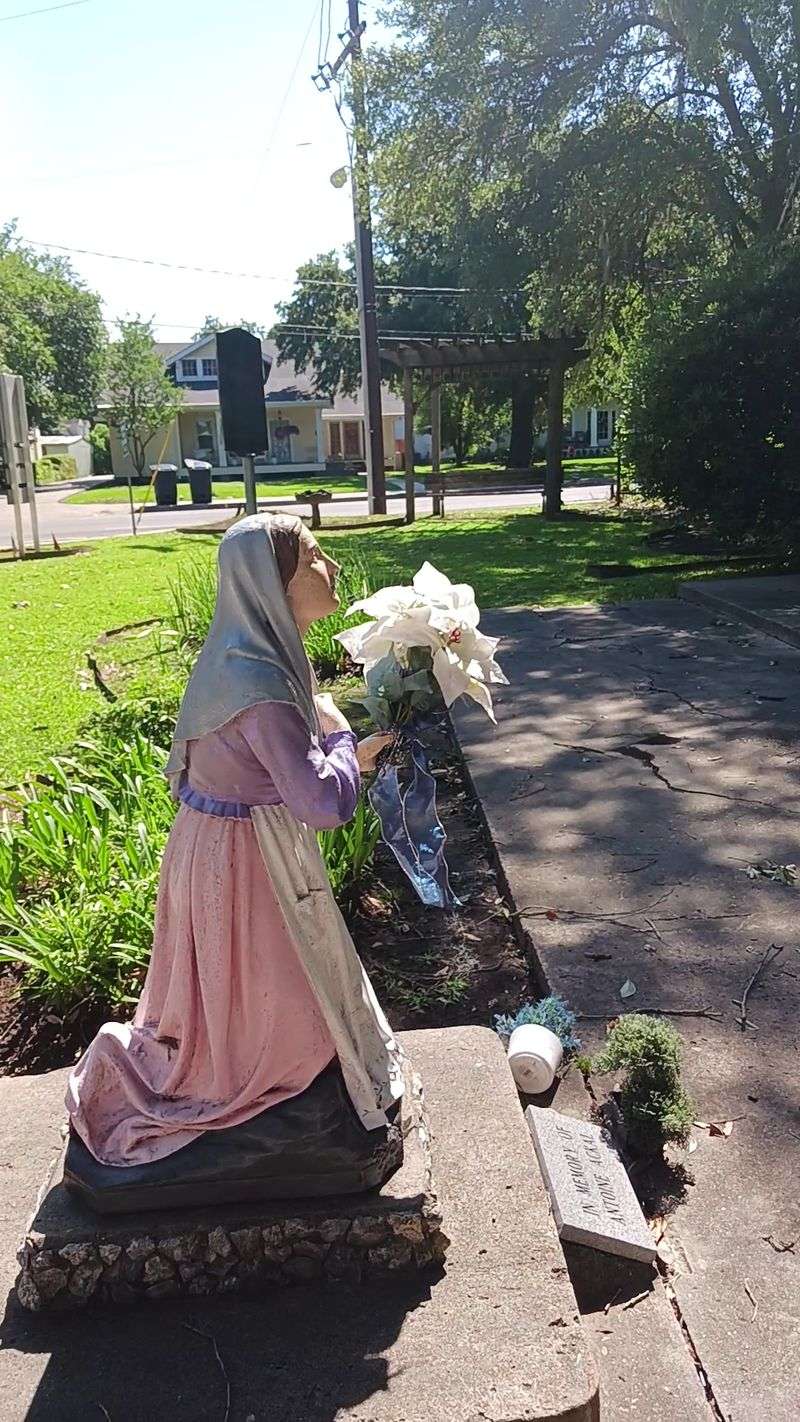
No sign has to lecture you for the rules to become obvious. People come here to pray, light candles, and say the rosary, so the best tip is simple courtesy.
Keep conversations low, step aside if someone is deep in devotion, and avoid turning the shrine into a loud photo backdrop. Respect reads clearly in a place like this.
Even if you visit out of curiosity rather than faith, the atmosphere is easy to understand. Solemn does not mean unfriendly.
It means the space works best when visitors match its tone. I found that slowing my steps and lowering my voice made the details stand out more, from the kneeling Bernadette to the protective sweep of the oak branches.
Good manners are not just polite here. They actually improve the experience.
That is a lesson for nearly any sacred place.
Notice The Sacred Block Around It
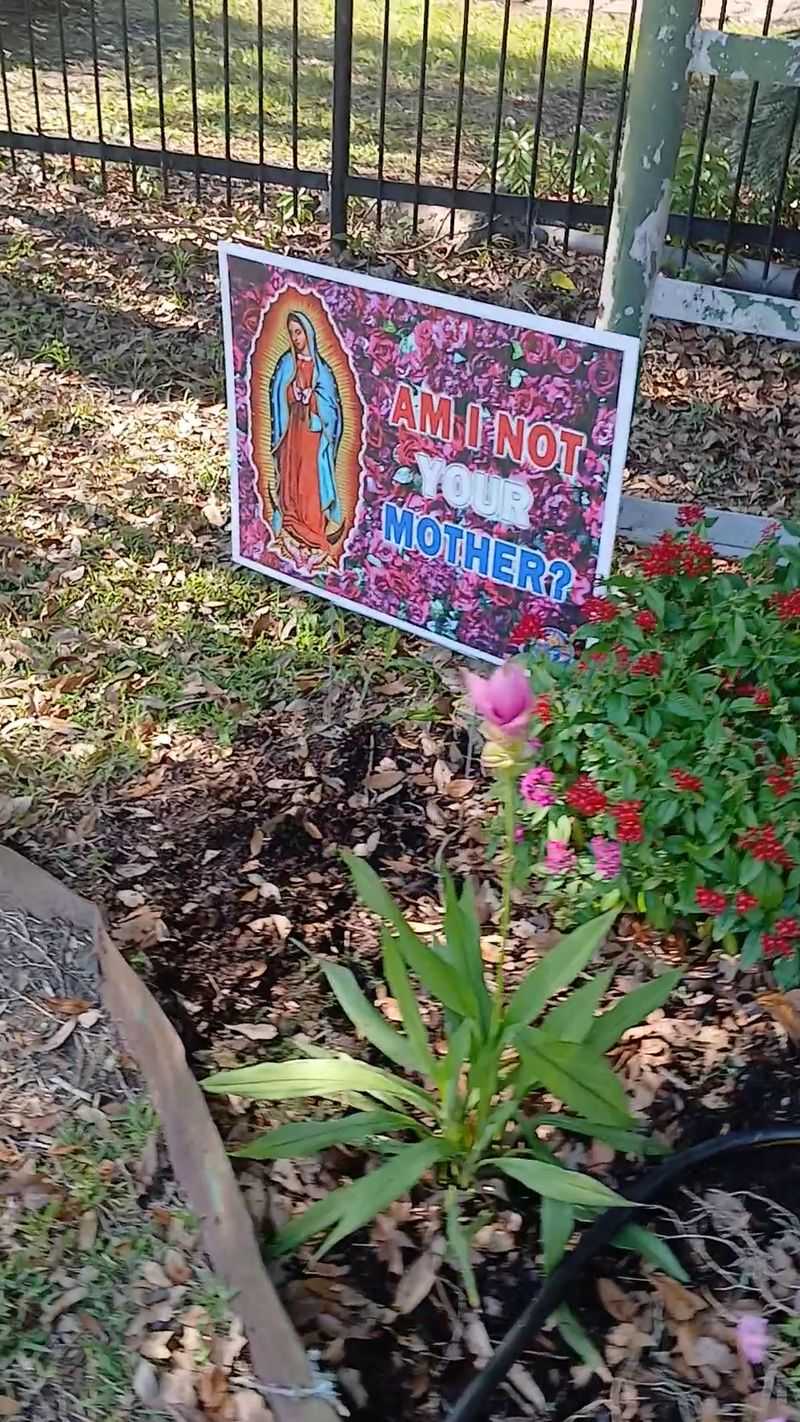
The grotto rewards a short, focused visit, but it also makes more sense when you notice its religious neighbors. St. Peter’s Catholic Church and Rosary House are nearby, which helps explain why this block carries such a strong devotional character.
The area feels woven together by practice, memory, and architecture rather than assembled for show.
Because the shrine stands in the middle of that setting, I would not rush in and out with only one photo in mind. Walk the immediate surroundings, notice the live oaks and older buildings, then return your attention to the grotto itself.
The contrast is part of the appeal. You are in the heart of town, yet the shrine still manages to feel set apart.
That balance between everyday life and retreat is one of its quiet strengths. It feels rooted, not staged, and matters.
Stay Longer Than Planned
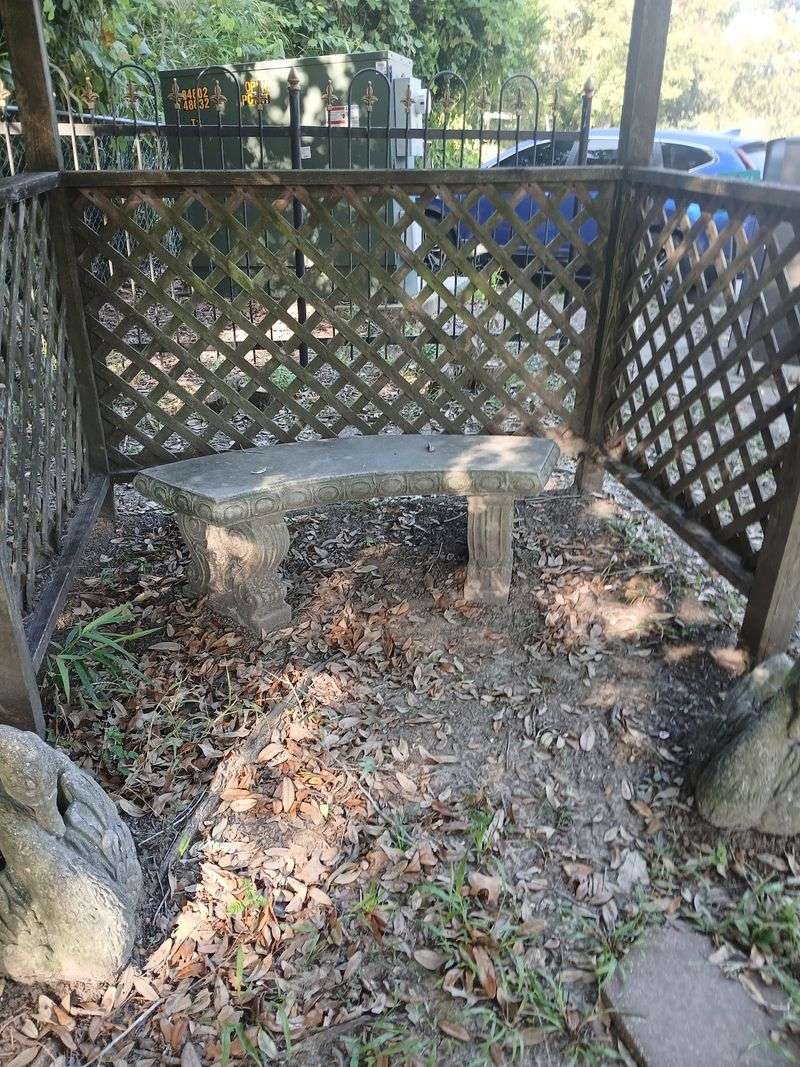
Some places announce themselves loudly. The Grotto of Our Lady of Lourdes does the opposite, which is exactly why it stays with you.
It sits beside a busy street, yet under that old live oak it gathers stillness with impressive skill. A visitor who expects spectacle may miss the point. A visitor who expects atmosphere, history, and quiet meaning will leave satisfied.
My best advice is to treat the stop like a conversation, not a checklist. Notice the replica’s link to Lourdes, France, the 1941 construction, the surviving connection to St. Peter’s College, and the community memory added in 1967.
Then simply stay a little longer than planned. The grotto reveals itself in layers, and none of them need a grand performance. They just need your attention, which is a rarer gift than most travelers realize on a first visit.