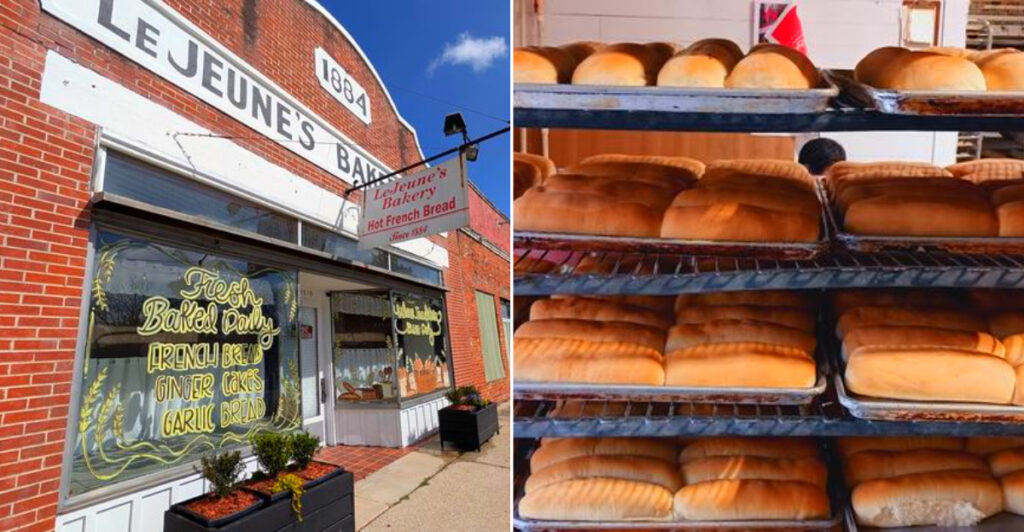
My grandmother used to make ginger cakes, and I thought I knew what they tasted like until I walked into this place. The ones here are darker, spicier, denser. They taste like something that predates the word artisanal by about a century.
The building has not changed. The bread is still hand-formed and baked in a brick oven that has been running since the 1880s.
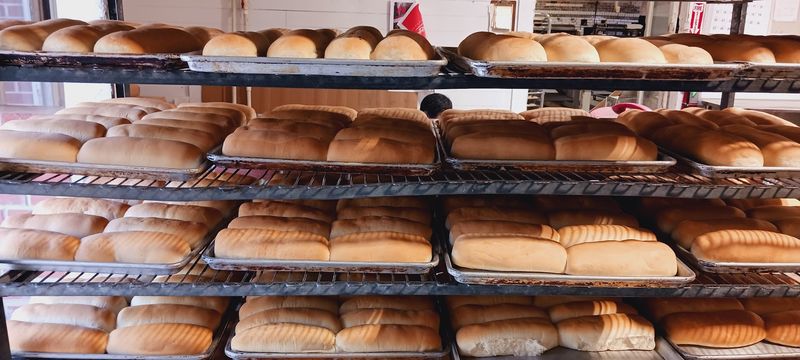
The crust shatters when you tear it, and the inside is soft and slightly tangy in a way that factory bread never manages.
I got there at nine and the ginger cakes were already half gone. By noon, the shelves are empty and they close. There is no website, no delivery, no second batch. One Louisiana bakery has made French bread the same way since the 1880s, and it still sells out every day before you have finished your lunch.
Watch For The Red Light
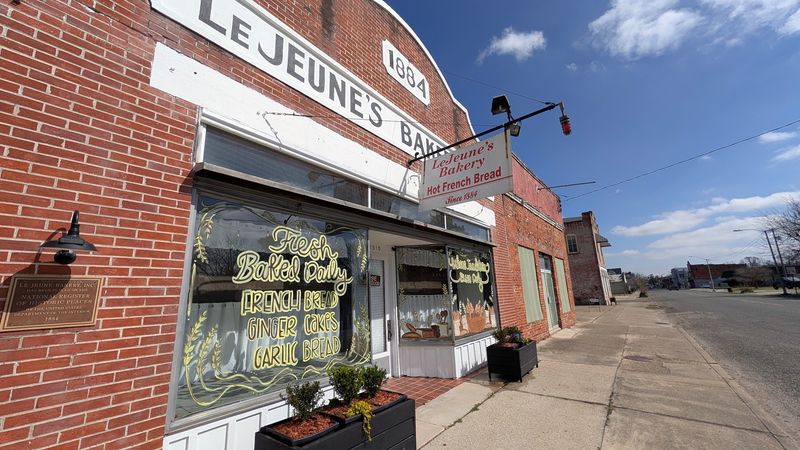
A glowing red light outside LeJeune’s carries a far happier message than most red signals. Local tradition says the light announces that a fresh batch of French bread has left the oven and is ready for customers.
Look for it as you approach the bakery on Main Street, especially during the morning baking period. The signal reflects the close connection between this business and Jeanerette, where residents learned to read a simple bulb as an invitation to fetch hot bread.
Do not assume the light guarantees a loaf will remain by the time you park, since popular batches can move quickly. Head inside promptly, ask what has just been baked, and handle a hot purchase carefully.
Fresh bread may release steam inside its wrapping, so avoid sealing it tightly in plastic until it cools. That small pause helps protect the crust instead of trapping moisture around it.
Main Street Delivers You To 1884
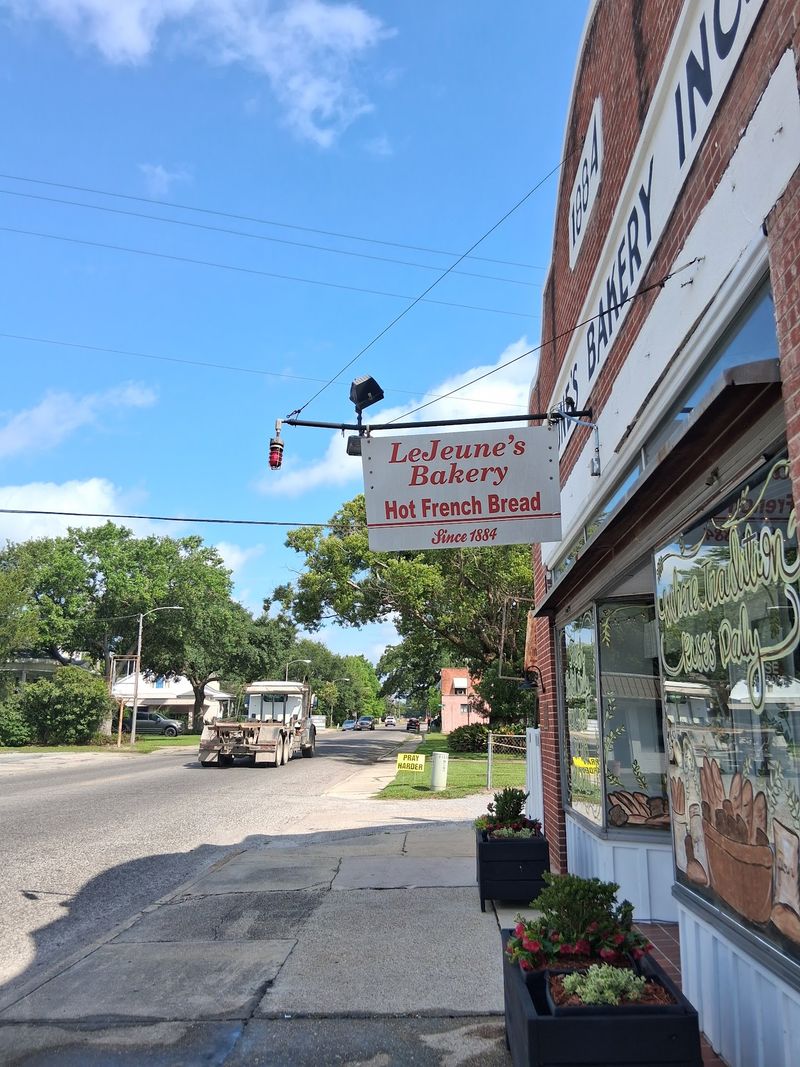
LeJeune’s Bakery is located at 1510 Main Street in Jeanerette, Louisiana, along LA-182 through the historic center of town. From US-90, take the Jeanerette exit and follow the local route toward Main Street and downtown.
Continue along Main Street toward the 1500 block, where the bakery’s historic red-brick storefront sits directly beside the road. The old-fashioned LeJeune’s Bakery sign makes the building easy to pick out among the surrounding downtown properties.
Find a legal parking space nearby and finish the short approach on foot to the Main Street entrance. The bakery occupies the same Jeanerette location that has housed the business since the 19th century.
Call Before A Long Drive
Three hours on the road can build a mighty appetite, but it cannot produce bread that has already sold out. Travelers should call LeJeune’s before leaving, especially when Jeanerette is a special trip rather than a stop along an existing route.
Ask whether French bread is available, whether another batch is expected, and whether the regular weekday schedule has changed. Published hours are 8 a.m. to 4:30 p.m.
Monday through Friday, with Saturday and Sunday listed as closed, but direct confirmation is safest.
The bakery’s phone number is 337-276-5690. Keep the address, 1510 Main Street, Jeanerette, Louisiana 70544, saved in your map because similarly named businesses can confuse a hurried search.
A quick conversation also helps when buying several loaves. Staff can explain current availability without forcing you to guess, which is useful when feeding a family or filling precious freezer space.
Taste The Bread While Fresh
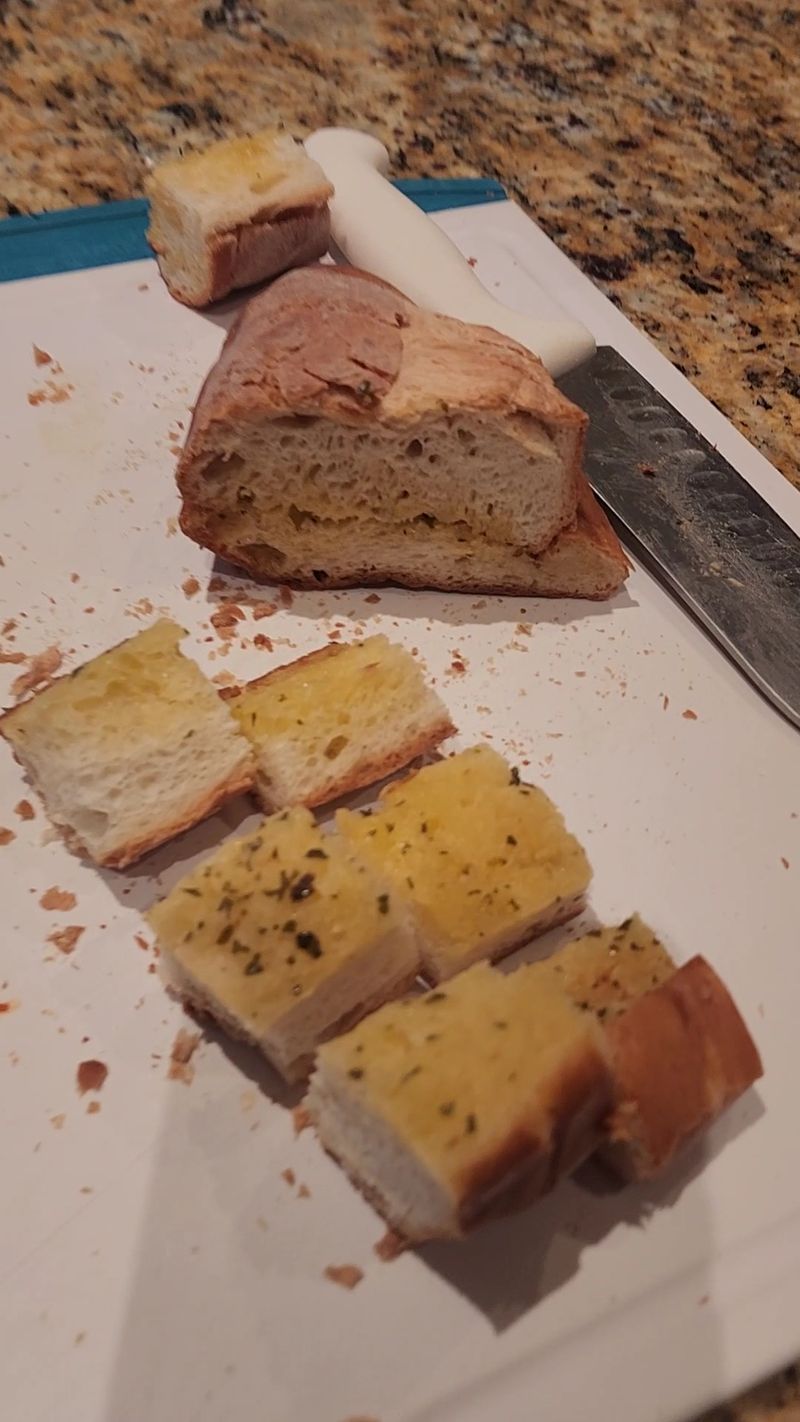
The first crackle of the crust explains why this loaf inspires early morning trips. LeJeune’s French bread pairs a crisp, flaky outside with a notably soft center, creating a texture that is easiest to appreciate soon after purchase.
Tear off a plain piece before adding anything. That simple taste reveals the mild wheat flavor and lets you notice how the handmade loaf differs from packaged supermarket bread.
A little salted butter is enough if you want a richer bite without covering its character.
For lunch, use the bread for a sandwich or serve thick pieces beside a meal. Keep expectations grounded in its regional style rather than comparing it with every French loaf made elsewhere.
LeJeune’s bread reflects the bakery’s own long-running method and community history. If the loaf is still hot, give it a moment before cutting, since slicing too quickly can press down its tender interior and release useful steam.
Respect The Short Ingredient List
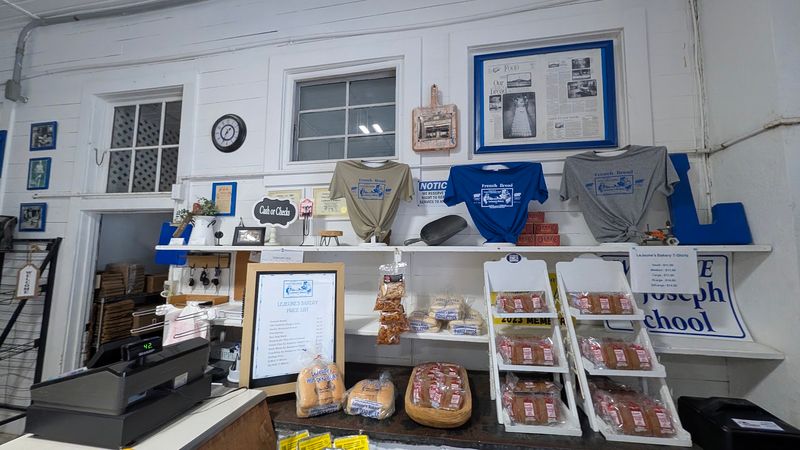
Nothing flashy hides inside the bakery’s best-known loaf. LeJeune’s describes its French bread as preservative free, with a simple formula that allows flour, fermentation, and careful baking to shape the finished taste and texture.
That simplicity comes with a practical tradeoff: the bread should not be treated like a factory loaf designed to sit untouched for many days. Buy only what you can eat, share, or freeze while it remains in good condition.
Check the bakery’s packaging or ask staff if ingredient details matter because of an allergy or dietary need.
At home, keep the loaf away from heat and excess humidity. Paper can help preserve the crust briefly, while an airtight freezer wrap works better for longer storage.
Avoid leaving it exposed on the counter, where Louisiana air can quickly change its texture. Simple bread rewards simple care, preferably followed by prompt eating and plenty of napkins.
Notice The Handmade Character
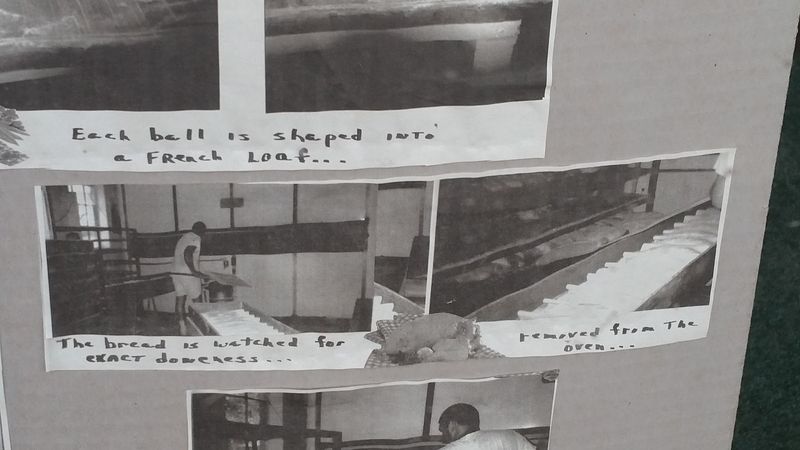
No two hand-shaped loaves need to look as if they marched from a plastic mold. At LeJeune’s, bakers continue to shape French bread manually, preserving the individual character that owner Ricky LeJeune says machinery cannot reproduce.
Notice the loaf’s gentle variations rather than searching for factory-level sameness. Small differences in form, crust, or browning are natural signs of hands working with living dough.
The larger achievement is consistency in the familiar crisp exterior and soft middle that generations of customers expect.
Ricky represents the family’s sixth generation and also works as a sugar cane farmer. His reported 4 a.m. bakery starts show how much unseen labor happens before customers reach the counter.
Visitors should appreciate that rhythm without slowing the crew during a busy morning. Ask permission before photographing work areas or equipment, and remember that this is an active bakery first, not a staged exhibit created merely for passing cameras.
Meet A Sixth Generation Tradition
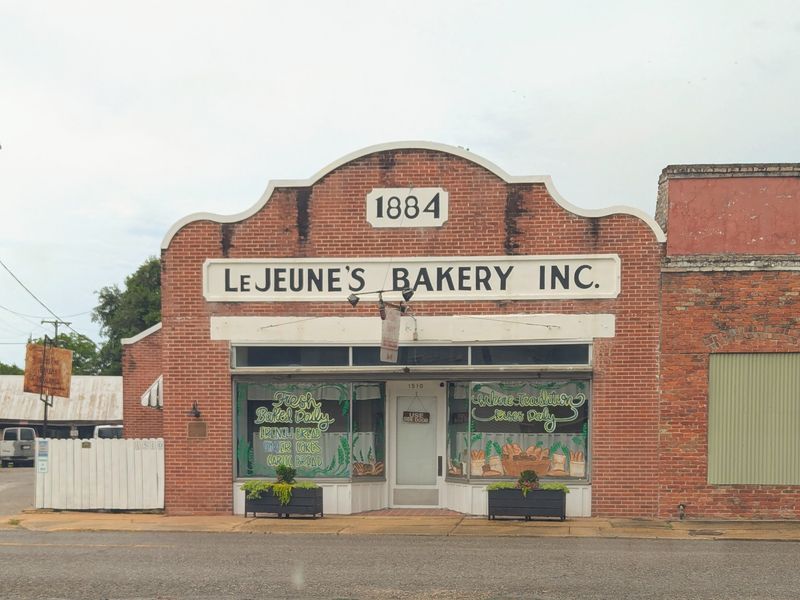
Family history here does not sit quietly in a frame; it wakes before dawn and gets flour on its clothes. Ricky LeJeune, a sixth-generation descendant of the founding family, helps continue the bakery methods associated with its famous French bread.
LeJeune’s began in 1884 under Oscar J. LeJeune and was originally known as Old Reliable City Bakery.
More than a century later, family involvement remains central to the business, giving each loaf a clear link to the people who maintained the operation through changing times.
If a family member or baker has time to speak, listen before launching into a long list of questions. Early hours are demanding, and production must come before storytelling.
A brief, polite conversation can still deepen your understanding of the place. Buy the bread, learn a little history, and recognize that preserving tradition requires daily work, not merely an old recipe tucked safely inside a drawer.
Try The Ginger Cakes
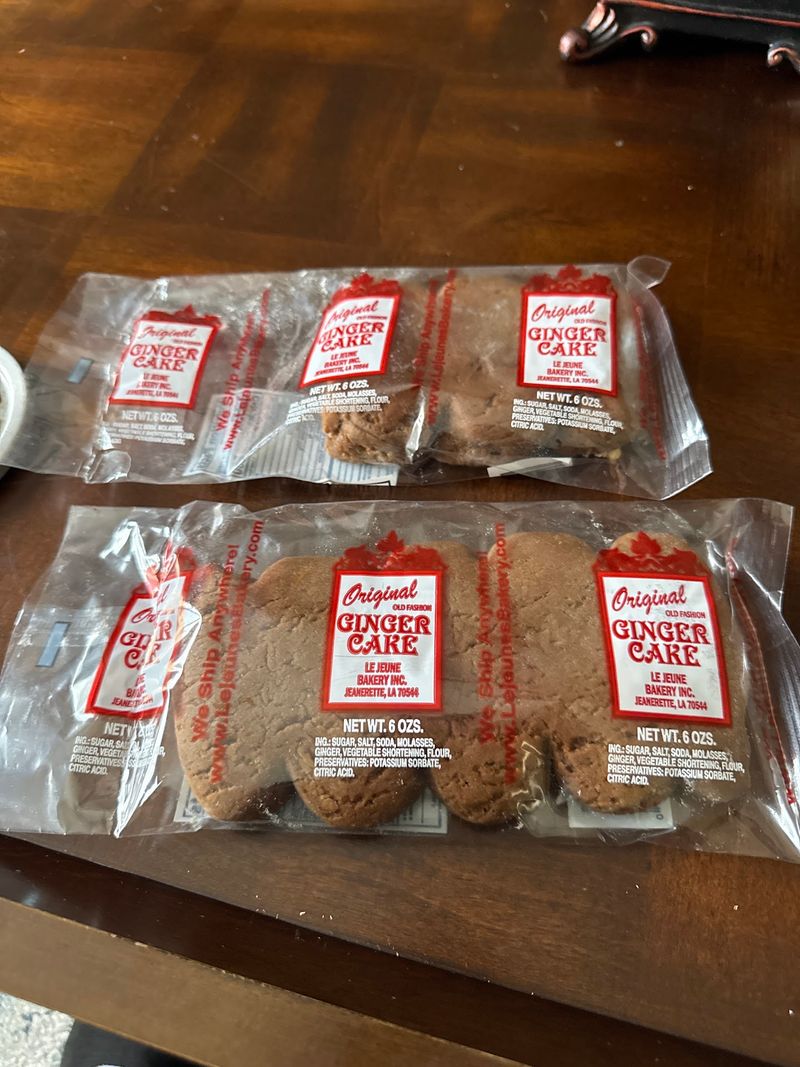
French bread gets top billing, but the dark, fragrant ginger cakes deserve room in your order. LeJeune’s traces these molasses-rich cakes to its long baking tradition, giving visitors another way to taste the bakery’s history without buying another loaf.
The cakes offer a deeper sweetness and spiced character that contrast nicely with the mild bread. Ask what sizes are available that day, since selection can vary.
They travel more easily than a warm, crisp loaf and can make a useful gift for someone who could not join the trip.
Serve a piece as it comes before experimenting with toppings or unusual pairings. The bakery also makes other products, including pistolettes, hot dog buns, and garlic bread, though availability should be confirmed directly.
Choosing one unfamiliar item turns a bread run into a broader tasting experience. Still, resist buying faster than you can store everything properly, because excitement is not a preservation method.
Explore The Historic Building
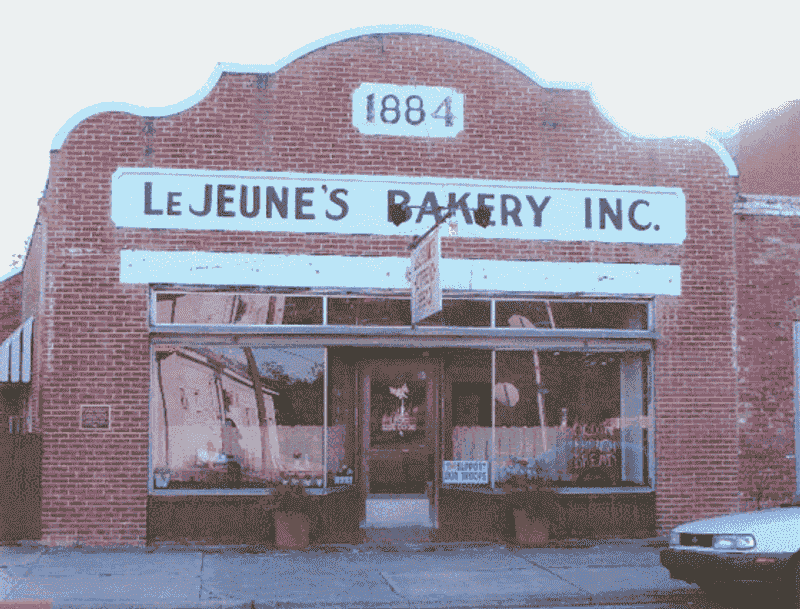
The building has earned more than affection from hungry neighbors. LeJeune’s Bakery was added to the National Register of Historic Places on April 22, 2003, recognizing a site tied closely to Louisiana’s commercial and food history.
Pause outside to study the modest Main Street setting before entering. The unpolished appearance suits a working bakery that has served Jeanerette since 1884.
Inside, historic equipment and practical surroundings make the space feel less like a polished attraction and more like a business still carrying out its original purpose.
Move respectfully and follow any instructions about restricted areas. There is no need to treat old machinery as a prop, and visitors should never touch equipment without clear permission.
The bakery does not depend on a large dining room or elaborate display to create interest. Its strongest exhibit is edible: bread produced in a historic place where baking remains part of the daily routine.
Freeze Extra Loaves Carefully
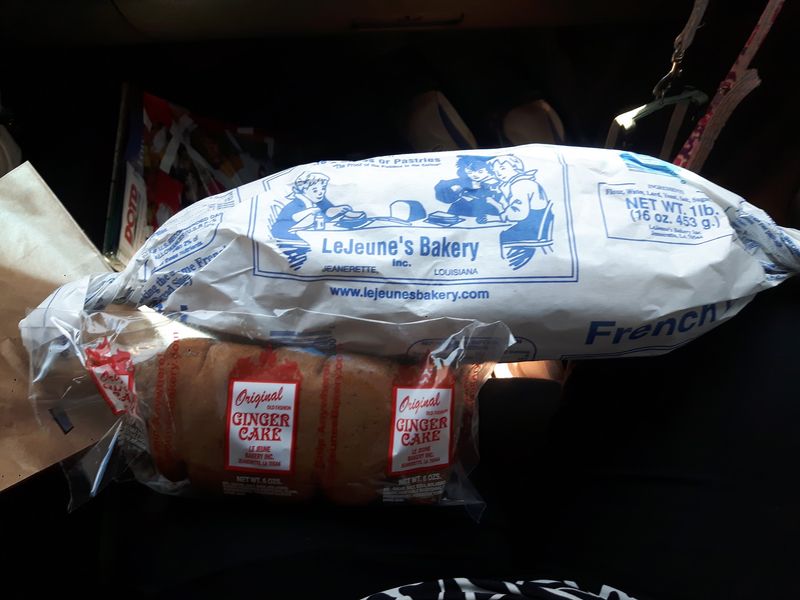
A freezer can turn one successful morning visit into several good meals. Since LeJeune’s French bread contains no preservatives, extra loaves should be protected promptly rather than left on the counter until their soft centers become dry.
Allow warm bread to cool completely before wrapping it. Trapped steam creates moisture, which can soften the crust and encourage poor texture.
Wrap each loaf tightly in freezer-safe material, remove excess air, add the date, and freeze it while its quality is still high.
For easier portions, cut a cooled loaf before freezing and separate sections with suitable wrap. Thaw only what you need, then warm the bread gently in an oven to refresh the outside.
Avoid overheating, which can turn that tender center tough. Some travelers buy several loaves for this exact purpose, but calling ahead is considerate when planning a large purchase from a bakery producing limited daily quantities.
Enjoy The Recipe Story Wisely
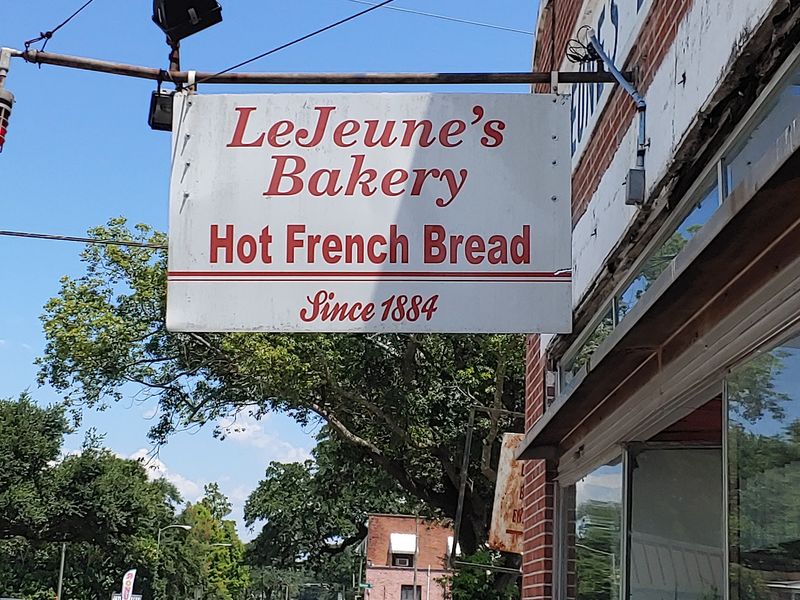
A card game may be the only origin story here almost as tempting as the bread. According to LeJeune family lore, an ancestor called Uncle Zim won the treasured French bread recipe from another baker during a wager.
Enjoy that tale as family tradition rather than presenting every colorful detail as documented history. What can be firmly traced is the bakery’s founding by Oscar J.
LeJeune in 1884 and its remarkable continuation through six generations of the family. The enduring business is impressive enough without polishing legend into certainty.
Ask courteously if staff have time to share the story in their own words. A busy counter at sellout hour is not the best moment for a history interview, so let service come first.
Then carry the anecdote home with your loaf. It adds flavor to the visit, while the crisp crust, soft crumb, and handmade process provide evidence you can actually taste.