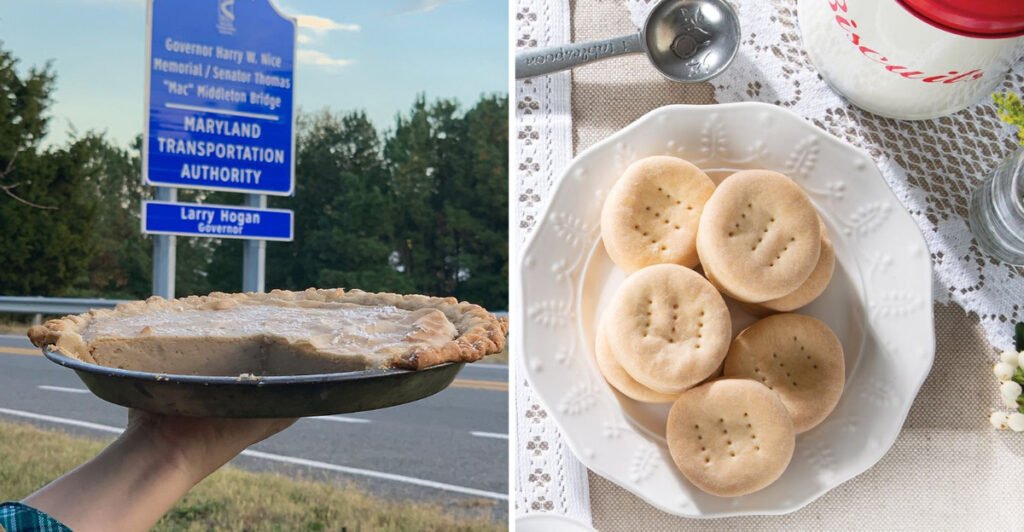
Crab cakes may get the spotlight, but Maryland has a much deeper recipe box.
Some of the state’s most distinctive foods come from old bakery counters, family kitchens, local festivals, and traditions that never needed much fanfare to stick around.
A few are getting harder to find. Others are still made much the same way. Even if their names sound like something your grandmother might have written on an index card decades ago.
That mix is what makes Maryland food history so interesting. Some dishes stayed common, while others became little edible time capsules.
I like the ones that make you stop and ask, “People still make that?”
In Maryland, the answer is often yes.
1. Baltimore Coddies
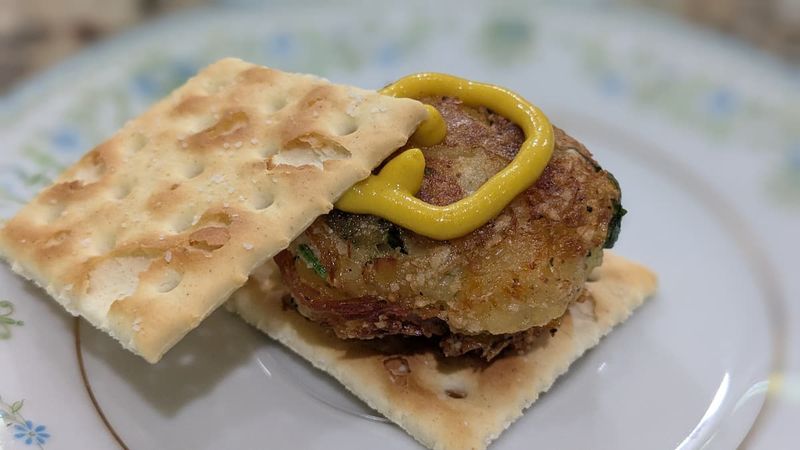
Baltimore coddies are proof that a simple combination can become part of a city’s food identity.
The classic version combines salt cod with mashed potatoes before the mixture is shaped into small cakes and fried. Instead of arriving on a bun, the coddie is traditionally paired with saltine crackers and yellow mustard.
Baltimore’s coddie tradition developed in the early twentieth century, when inexpensive fish cakes became closely associated with neighborhood markets and lunch counters. Fannie Jacobson
Cohen is often credited with helping establish the local style through a stall at Belair Market.
Coddies became less common as neighborhood food habits changed, but they never disappeared completely.
That combination explains why coddies worked so well as everyday food. They were inexpensive, compact, and easy to serve quickly, yet still had enough substance to stand as a meal.
You can still find versions at a handful of longtime Baltimore food businesses.
The combination of salty cod, potato, mustard, and crackers still gives you a direct taste of an old Baltimore lunch tradition without requiring much ceremony.
2. Maryland Beaten Biscuits
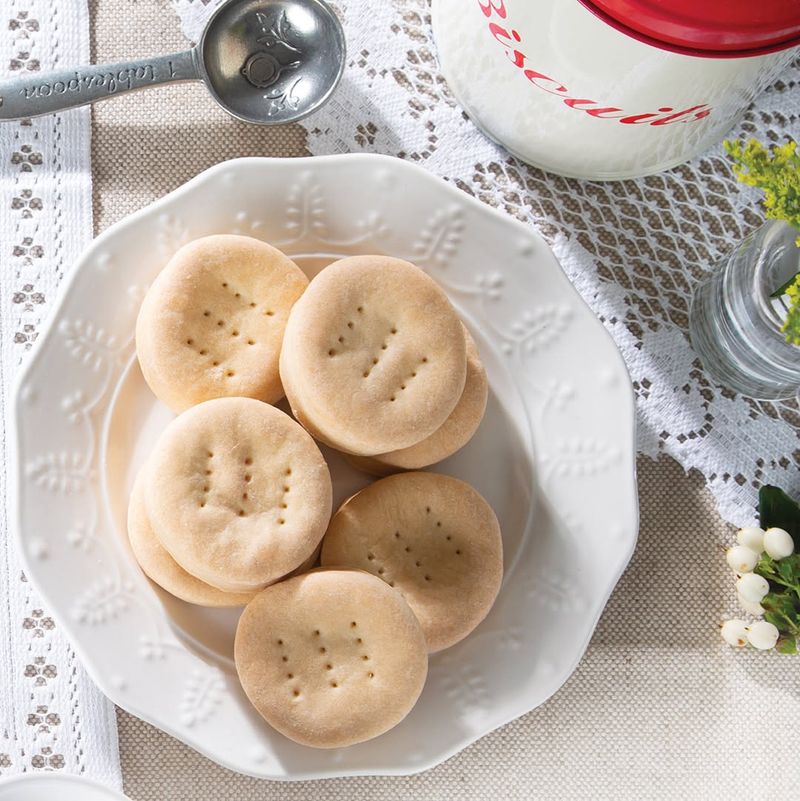
Maryland beaten biscuits are nothing like the tall, fluffy biscuits that dominate most breakfast tables today.
Traditional versions use an unleavened dough that is repeatedly beaten to incorporate air. Before mechanical biscuit machines became available, that could mean pounding the dough by hand for a surprisingly long time.
The finished biscuit has a firm exterior and a dense interior rather than soft, flaky layers. Its sturdy texture also made it well suited to serving with thin slices of country ham.
The dense texture gave beaten biscuits an advantage beyond tradition. They traveled well, held up beside country ham, and could be prepared ahead for gatherings without collapsing like softer biscuits.
Beaten biscuits once held an important place at Maryland gatherings, particularly on the Eastern Shore. Their labor-intensive preparation eventually made them far less common.
The last major commercial producer, Orrell’s Maryland Beaten Biscuit Company in Wye Mills, closed in 2013. Limited batches can still appear from smaller makers and home kitchens, but finding them now takes more effort.
If you do encounter one, expect something deliberately dense, compact, and very different from a modern breakfast biscuit.
3. Smearcase Cheesecake
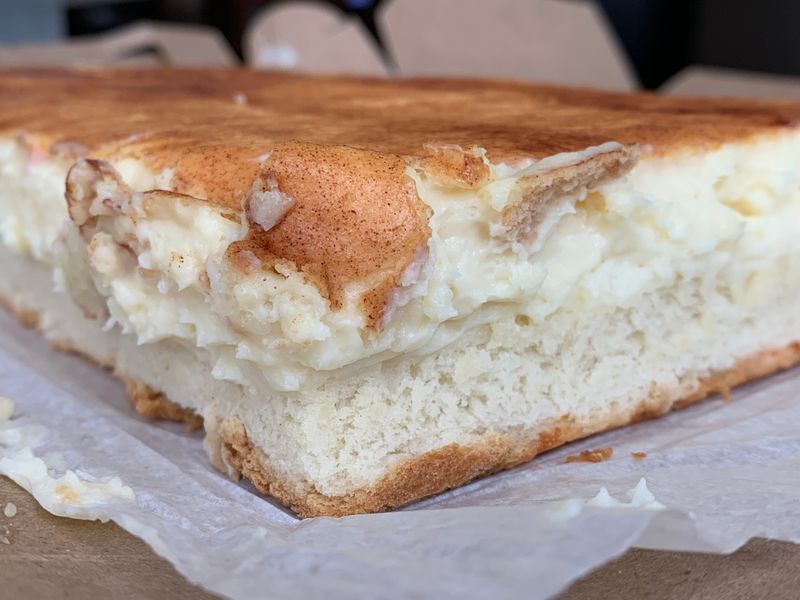
Smearcase might have an unusual name, but Baltimore bakers once knew exactly what it meant.
The word comes from the German Schmierkäse, a term associated with soft or spreadable cheese. Baltimore’s smearcase developed through the city’s German-American baking traditions and became a local style of cheesecake.
Older versions commonly use cottage-style cheese rather than the heavy cream-cheese filling associated with New York cheesecake. The filling sits over a dough-like or yeasted crust, often with cinnamon scattered across the top.
The result is lighter and tangier than many modern cheesecakes.
Because the filling is lighter than many modern cheesecakes, smearcase lands somewhere between pastry and custard. The yeasted base and cinnamon make each slice especially distinct from contemporary styles.
Smearcase became harder to find as Baltimore’s baking scene changed, but it never vanished entirely. Woodlea Bakery still carries the dessert, keeping the old local style available to anyone curious enough to try it.
A slice still offers a taste of Baltimore’s German-American baking tradition, with a lighter filling and a very different character from a standard cream-cheese cheesecake.
4. Baltimore Peach Cake
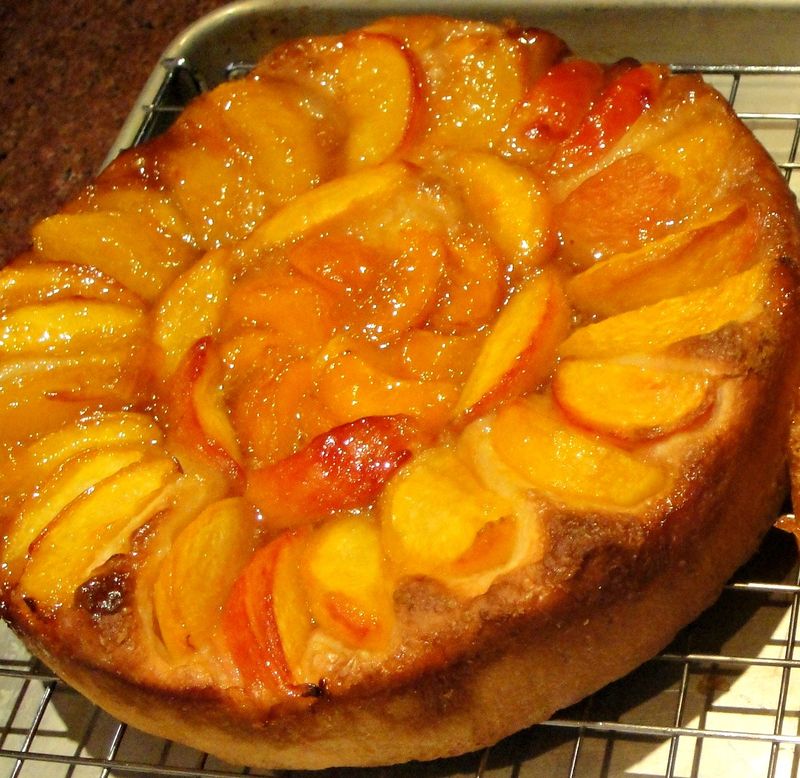
Fresh peaches and yeasted dough have been sharing the same Baltimore baking pan for well over a century.
Baltimore peach cake uses a soft yeast-raised base rather than a standard cake batter. Fresh peach slices cover the top, creating a dessert that lands somewhere between coffee cake, sweet bread, and fruit pastry.
References to the cake appeared in Baltimore newspapers by the 1880s, with an 1884 mention among the earliest documented examples.
Its strong connection to summer makes sense. Fresh peaches are central to the recipe, so the cake has traditionally followed the fruit rather than appearing on bakery shelves all year.
Some versions add glaze or sugar over the peaches, while others keep the topping simpler.
The seasonal nature is part of the cake’s identity. When fresh peaches arrive, the dessert makes sense again, with juicy fruit sitting over a soft base that absorbs sweetness.
The good news is that Baltimore peach cake is not merely historical. A few Maryland bakeries still make it when peaches are in season.
If you see one in summer, the yeasted base and fresh fruit give you a dessert that still tastes closely connected to Baltimore’s old bakery traditions.
5. Eastern Shore White Potato Pie
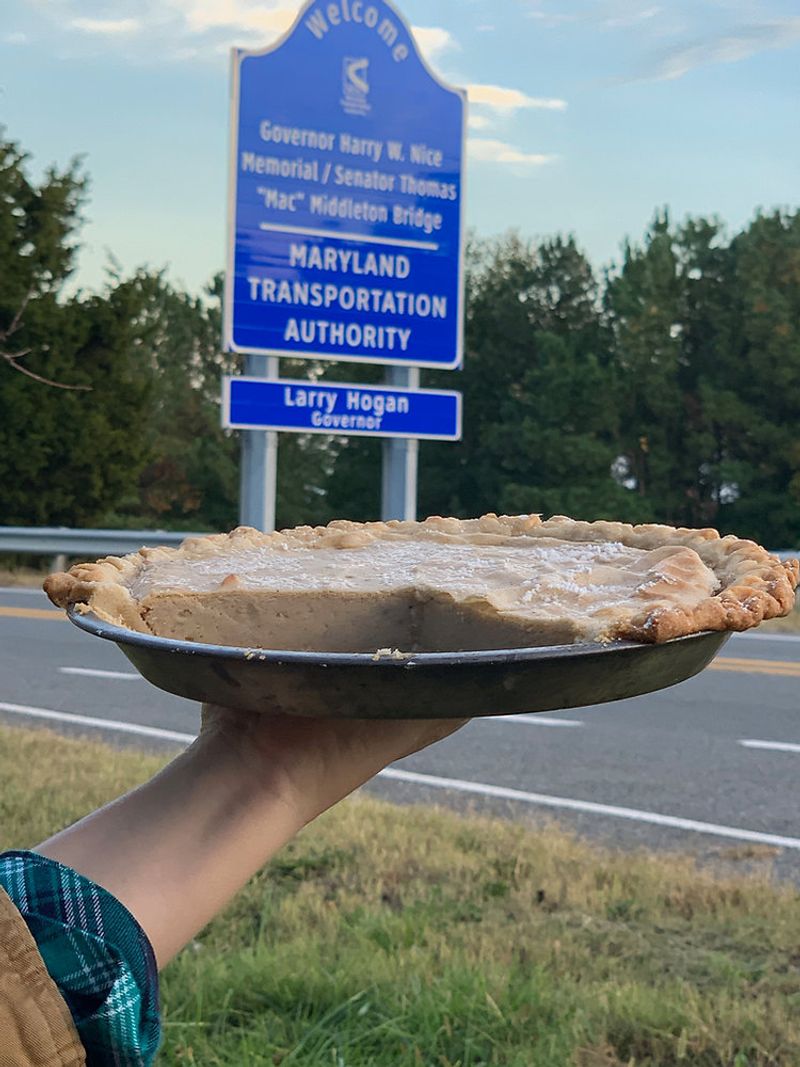
The name sounds unusual until you remember how often older recipes turned everyday ingredients into dessert.
Eastern Shore white potato pie starts with mashed white potatoes rather than sweet potatoes. Eggs, sugar, cream, lemon, vanilla, nutmeg, and other warm seasonings can join the filling depending on the recipe.
Once baked in a pastry crust, the potatoes create a smooth, custard-like center with a mild flavor that carries citrus and spice easily.
The precise origin of the pie is difficult to pin down. What is clear is its strong connection to Maryland food history and the agricultural traditions of the Eastern Shore.
White potatoes were abundant and practical, making them a natural ingredient for cooks working with what grew locally.
The pie is much less common today than many other Maryland desserts, but historic recipes have kept it from disappearing entirely.
If mashed potatoes in dessert sound strange, one slice explains why the idea survived as long as it did.
6. Southern Maryland Hard Jelly Cake
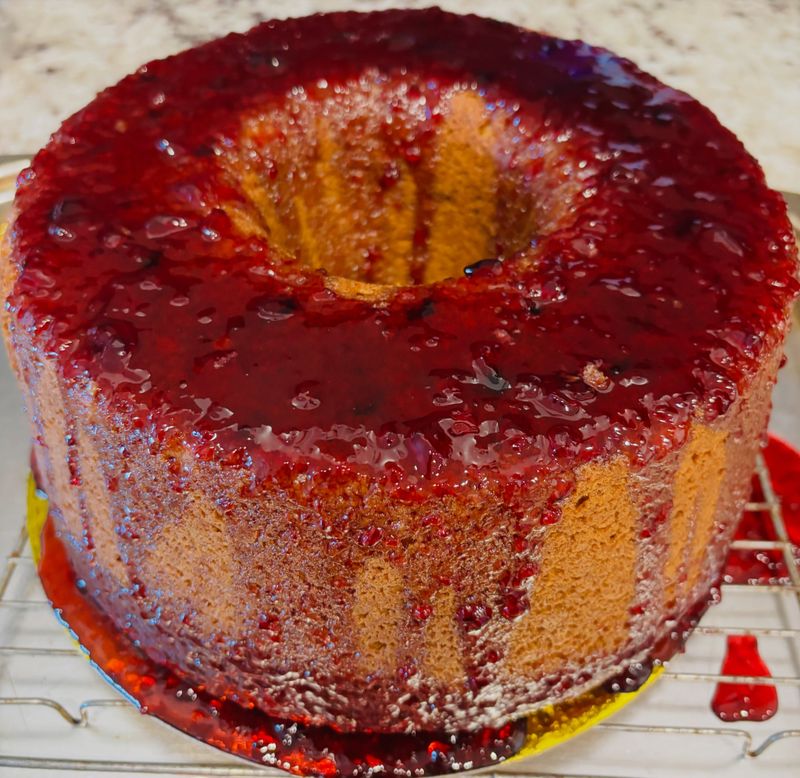
Hard Jelly Cake belongs to a particularly local corner of Maryland food history.
The dessert is strongly associated with Shady Side in Southern Maryland, where it became known as a Christmas specialty. Historic Maryland recipes describe a tall cake made from many thin layers with jelly spread between them.
The layers are baked firmer than those in a typical soft layer cake, which helps explain the “hard” in the name. Once stacked, the jelly creates visible stripes through every slice.
Those thin layers also make the cake visually striking. Once sliced, the alternating cake and jelly lines show how much work went into building it one layer at a time.
A version of the recipe appeared in the 1966 cookbook Maryland’s Way, where it was described as an old Southern Maryland tradition.
Hard Jelly Cake is genuinely rare today. Making numerous individual layers takes time, and the dessert never spread far beyond the communities where it became established.
Today, it survives mainly through historic recipes and bakers willing to keep a highly local Christmas tradition going.
7. Maryland Black Walnut Cake
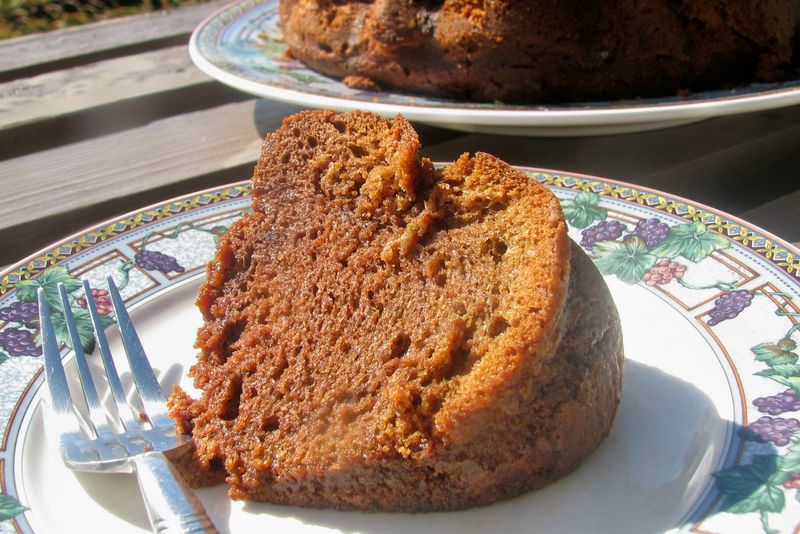
Black walnuts have a much stronger flavor than the common English walnuts found in most baking aisles, and Maryland cooks put that intensity to good use.
Historic Maryland black walnut cakes often resemble rich pound cakes filled with chopped nuts. Black walnuts bring a deep, earthy flavor that stands out even in a dense, buttery batter.
The ingredient was once especially practical in areas where black walnut trees grew naturally. Harvesting the nuts, however, required patience. Their thick shells are notoriously difficult to crack compared with ordinary walnuts.
Maryland cookbooks preserved several black walnut cake recipes, and the dessert has been documented as part of the state’s older baking traditions.
Black walnut cake rewards patience in a different way. The nuts bring deeper flavor than standard walnuts, so even a simple pound-cake-style recipe can taste unusually rich and distinctly old-fashioned.
You are less likely to see one at a modern bakery than a chocolate or vanilla layer cake, but home bakers can still recreate it without changing the basic idea.
The appeal comes directly from the walnuts. Their bold flavor gives this Maryland cake a personality that milder nuts simply cannot duplicate.
8. Baltimore Lemon Sticks
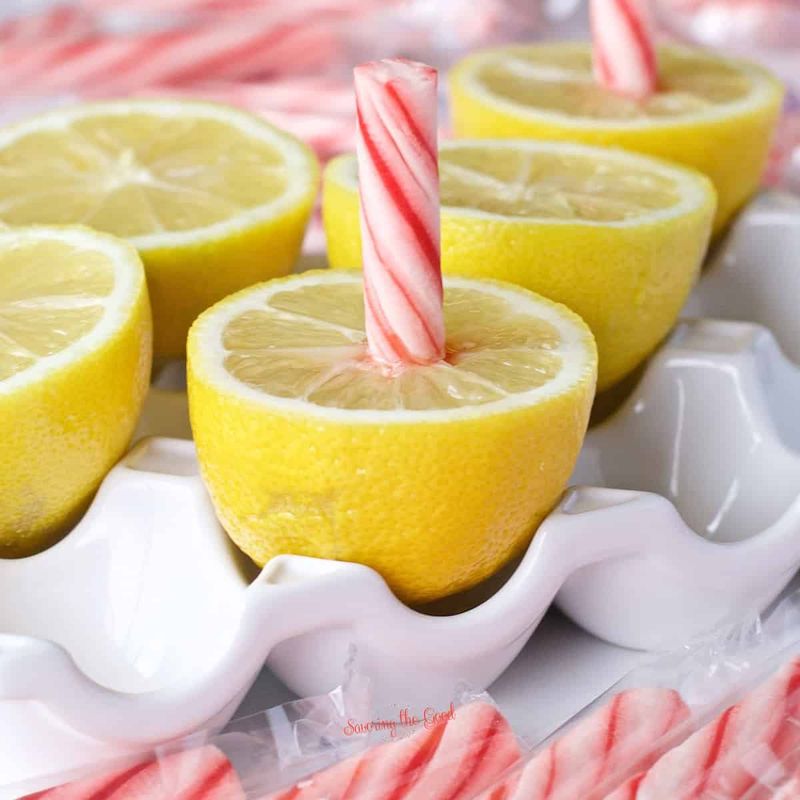
A lemon and a peppermint stick do not sound like much of a recipe, but Baltimore turned the combination into a spring tradition.
A Baltimore lemon stick begins with a fresh lemon cut open enough to hold a porous peppermint candy stick. The candy acts like a straw, drawing lemon juice upward while slowly softening.
Each sip combines sharp citrus with peppermint sweetness.
The treat works because the lemon and candy change each other as you eat it. The peppermint softens, the juice sweetens, and the flavor shifts slightly with every pull through the straw.
References to children eating lemons with peppermint sticks in Baltimore date to the early twentieth century, and the treat became closely associated with the city’s Flower Mart by the 1920s.
That connection is still active. Lemon sticks continue to be sold at Flower Mart, where thousands can be prepared during the annual event.
You do not need a kitchen or complicated recipe to understand the appeal. The candy does most of the work once it starts absorbing the juice.
For a food tradition that has lasted more than a century, Baltimore’s lemon stick remains remarkably simple and very much alive.
9. Goetze’s Caramel Creams
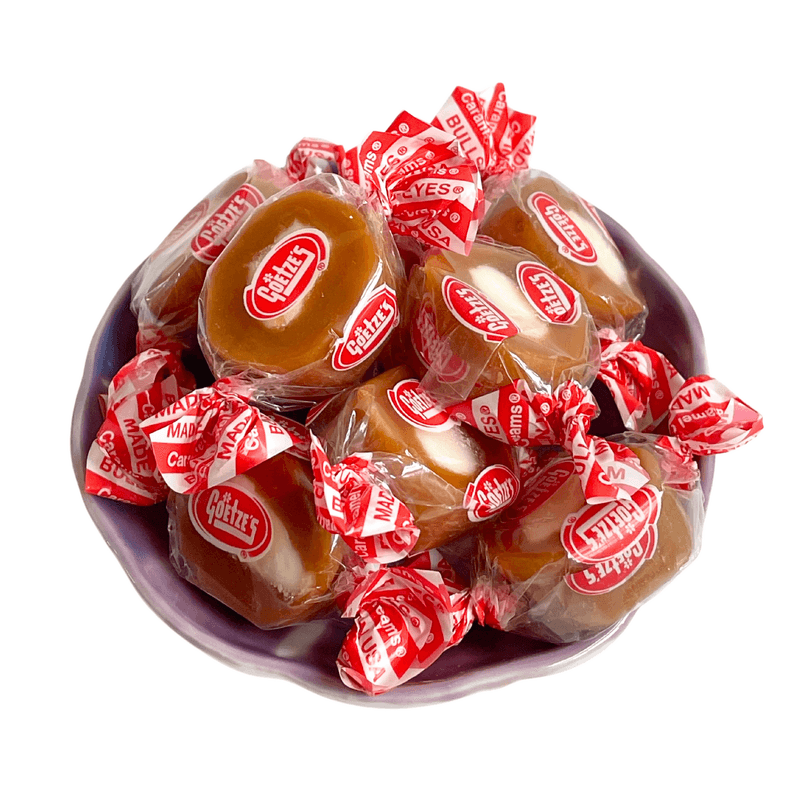
Goetze’s has been part of Baltimore candy making since 1895, but Caramel Creams arrived a little later.
The company introduced Caramel Creams in 1918. The familiar bull’s-eye shape makes Caramel Creams easy to identify before you taste one. That visual consistency helped the candy stay recognizable as packaging and retail habits changed around it.
Each piece wraps chewy caramel around a soft white cream center, creating the bull’s-eye appearance that helped inspire the candies’ familiar nickname, Bull’s-Eyes.
They are one of the easiest foods on this list to find today because Goetze’s continues making them in Baltimore.
The company’s long history gives the candy a direct connection to Maryland manufacturing rather than simply a nostalgic association with the state.
Caramel Creams have also traveled far beyond Baltimore, so you may recognize them even if you have never lived in Maryland.
What has stayed consistent is the basic two-part construction. The contrast between chewy caramel and the softer center is still the defining feature more than a century after their introduction.
Baltimore is still producing Caramel Creams more than a century after the candy first appeared.
10. Otterbein’s Thin Cookies
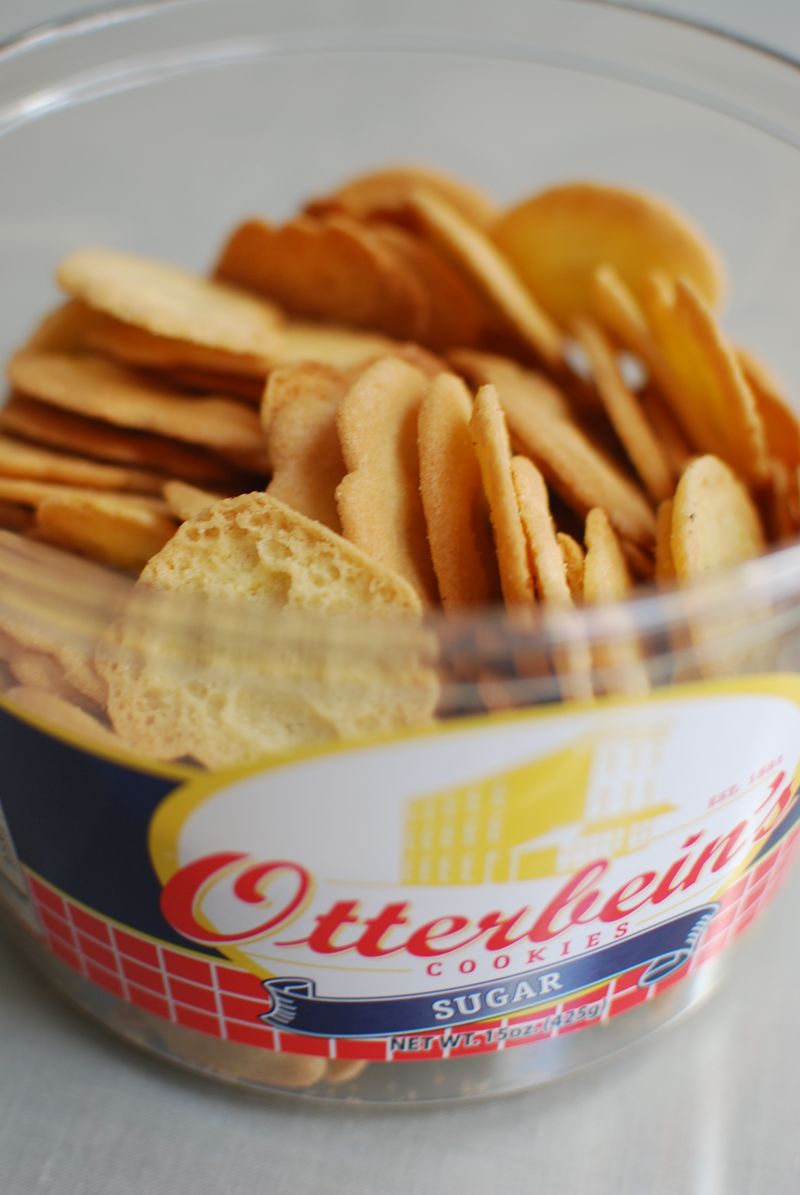
Otterbein’s has been baking in Maryland since 1881, and thin, crisp cookies remain the company’s signature.
These are not soft bakery cookies with thick centers. Otterbein’s thin profile is part of the appeal. The cookies break cleanly, crunch loudly, and stay very different from oversized bakery cookies that rely on softness, frosting, or thick centers.
Otterbein’s style is intentionally thin and crunchy, giving each cookie a light structure and pronounced snap.
The company’s current lineup includes Sugar, Chocolate Chip, Ginger, and Lemon cookies, all continuing the crisp style associated with the brand.
Otterbein’s began as a Baltimore bakery and became one of Maryland’s longest-running cookie names. More than a century later, the company remains active and its cookies are still sold in local stores.
That longevity makes this entry different from genuinely rare foods such as Hard Jelly Cake or beaten biscuits.
You do not have to hunt down an old cookbook to taste Otterbein’s. The product is still part of Maryland’s current food landscape.
For anyone exploring the state through its older brands, these thin cookies offer a direct connection between nineteenth-century Baltimore baking and the snack aisle today.