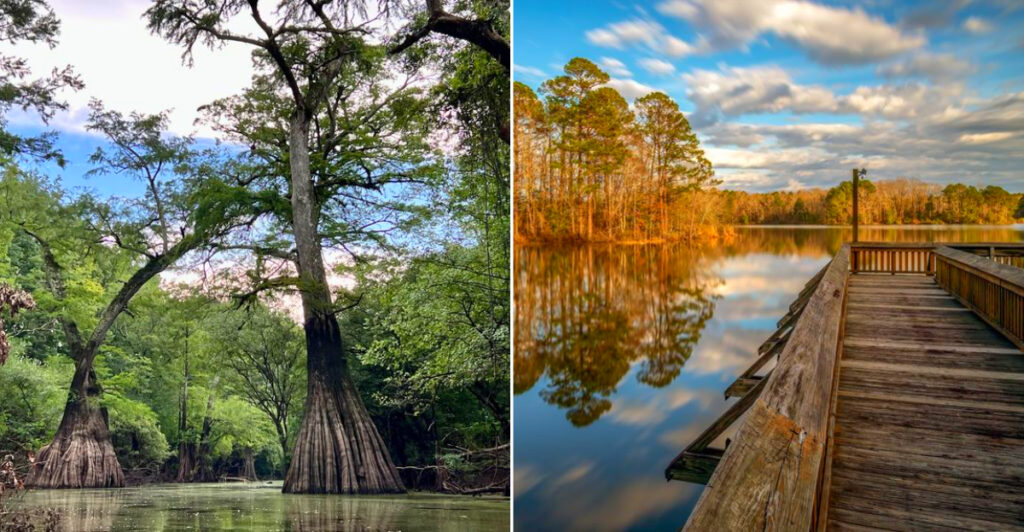
Most visitors to Louisiana stick to the French Quarter plus maybe a swamp tour, then leave thinking they have seen what the state has to offer. I used to be one of those visitors until I started pulling into state parks on a whim.
What I found was a network of places that feel like someone’s best-kept secret: a park where the beach is made of actual sand, a lake so still that the cypress reflections look painted on the surface, trails that wind through bottomland hardwood plus come out at overlooks you did not know existed.
Each park sits far enough off the main road that you have to mean it when you turn, which is exactly what makes them worth the detour.
These ten state parks prove Louisiana rewards anyone willing to look past the obvious, from cypress swamps to quiet beach access most visitors never find.
10. Chemin-A-Haut State Park
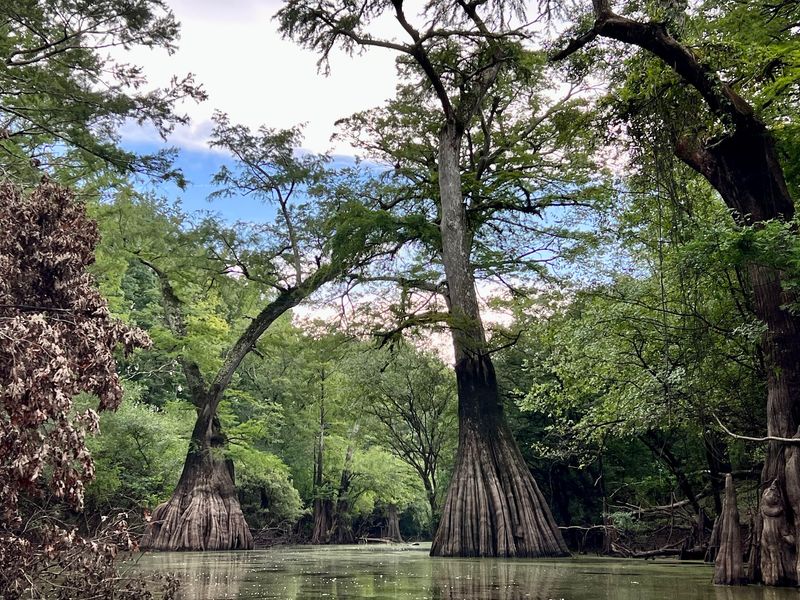
The most memorable landmark at this north Louisiana park is not a trail, overlook, or waterfall. It is a tree large enough to paddle into.
Chemin-A-Haut State Park sits at 14656 State Park Road, Bastrop, LA 71220, on high ground overlooking Bayou Bartholomew. Its French name means “high road,” recalling a route used by Native Americans during seasonal travel through the region.
Today, the park mixes hardwood forest, bottomland cypress flats, bayou scenery, and unusually varied terrain for a Louisiana getaway.
The star is the enormous hollow cypress known as the Castle Tree. Estimates place its age around 800 to 1,000 years, and its cavernous base is large enough for paddlers to move inside when water conditions cooperate.
That alone gives Chemin-A-Haut a sense of discovery few ordinary park stops can match.
Back on land, the Bobcat Trail runs 1.1 miles, a short Boy Scout Trail offers an easier outing, and an eight-mile equestrian route moves through pine, hardwood, cypress flats, and creekside habitat. Kayaks are available seasonally, while Big Slough Lake provides shore fishing.
Come for the giant cypress.
Stay because the rest of the park feels surprisingly far removed from the Louisiana most travelers know.
9. Lake Bruin State Park
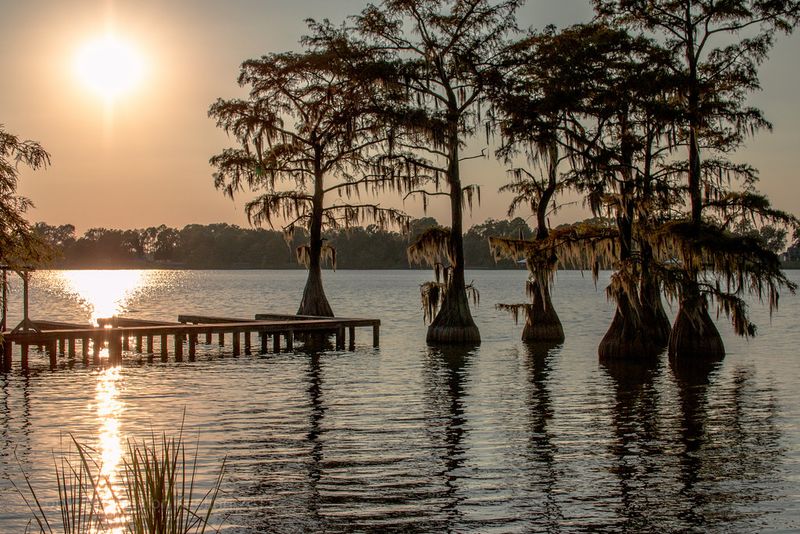
Everything at this park seems to drift naturally toward the water.
Lake Bruin State Park is at 201 State Park Road, St. Joseph, LA 71366, occupying only 53 acres beside more than 3,000 acres of lake. The park began as a fish hatchery in 1928, and that history still feels appropriate because fishing remains woven into almost every corner of the place.
Three large fishing piers reach into the lake, a boat launch operates year-round, docking is available, and flat-bottom boat rentals make it possible to get onto the water without arriving with an entire fishing rig. Largemouth bass draw anglers throughout the year, with spring and early fall among the stronger periods, while crappie and bluegill add more options closer to shore.
Yet Lake Bruin works just as well when fishing is not the point.
Lakeside campsites put overnight guests close to the water, a water playground handles hot afternoons, and picnic areas sit beside piers and open lake views. Much of the park’s infrastructure is also wheelchair accessible.
The scale is part of the appeal. Nothing requires a complicated itinerary.
Walk the shoreline, watch boats move through the cypress-lined water, and let the day organize itself.
Sometimes the most interesting state park is simply the one that makes doing less feel completely reasonable.
8. Lake Fausse Pointe State Park
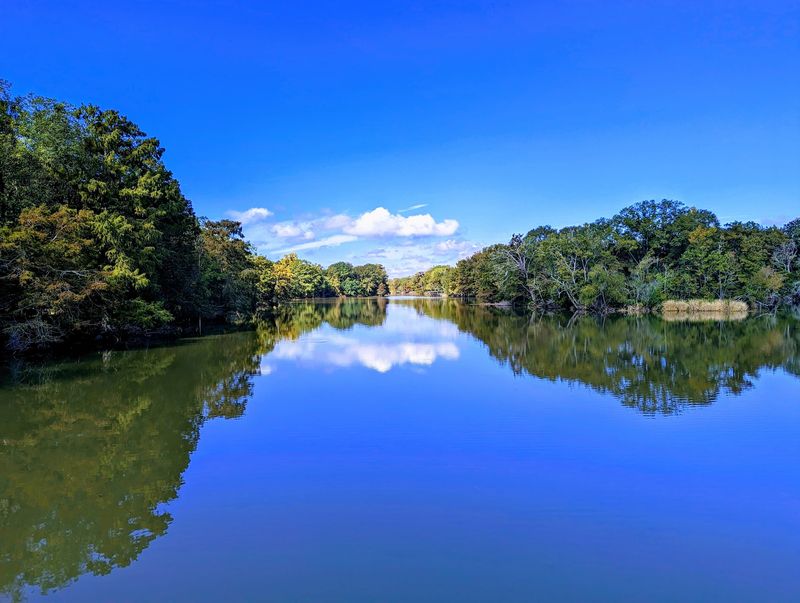
Road noise begins losing the argument almost immediately at Lake Fausse Pointe.
The park covers about 6,000 acres at 5400 Levee Road, St. Martinville, LA 70582, on the edge of the Atchafalaya Basin. Cypress, waterways, hardwood forest, and wetland habitat create exactly the sort of landscape people imagine when they picture wild south Louisiana, except here visitors can actually spend the night inside it.
Paddling is the clearest introduction.
A boat launch opens into the Basin’s maze of waterways, while a designated canoe trail gives kayakers and canoeists a close look at the plants and wildlife that thrive around the park. Three hiking trails provide a dry-land alternative, and many of the cabins sit directly on the water, turning morning wildlife watching into something that can happen before breakfast.
The landscape carries cultural history too. The surrounding area was once home to Chitimacha people before later French, Acadian, Spanish, and other communities shaped the region.
This is not a park that rewards rushing between attractions.
Launch a canoe early, watch turtles disappear from logs, listen for birds in the trees, and give the waterways time to reveal themselves.
The Atchafalaya Basin already knows how to create drama.
Lake Fausse Pointe simply gives visitors somewhere to enter it.
7. Cypremort Point State Park
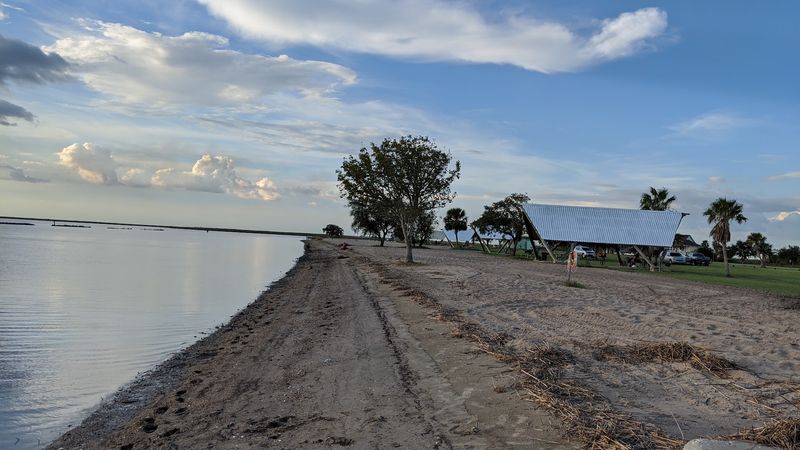
Finding a sandy beach beside Louisiana marsh can feel almost like arriving in the wrong state.
Cypremort Point State Park sits at 306 Beach Lane, Cypremort Point, LA 70538, on Vermilion Bay. The 185-acre property includes a half-mile man-made beach, making it one of the relatively few Louisiana coastal destinations where visitors can reach a beachlike Gulf setting directly by car.
The beach is only half the story.
Fishing areas flank the park, with built-in rod holders, lighting, a fish-cleaning station, and kayak access. A nearby boat launch puts anglers only a few miles from Gulf waters, where redfish and flounder are among the catches associated with the area.
Sailing, crabbing, paddling, and windsurfing also take advantage of the open bay.
Then the scenery changes completely along the marsh boardwalk.
That path provides close views into wetland habitat where nutria, muskrats, alligators, deer, rabbits, foxes, and a wide range of birds may appear. Louisiana State Parks even notes black bears among the wildlife using the broader area.
Six cabins and more than two dozen campsites make an overnight stay easy.
Come late enough to stay for sunset.
The park itself calls those evening views spectacular, and Vermilion Bay has enough open sky to make the claim believable.
6. Lake Bistineau State Park
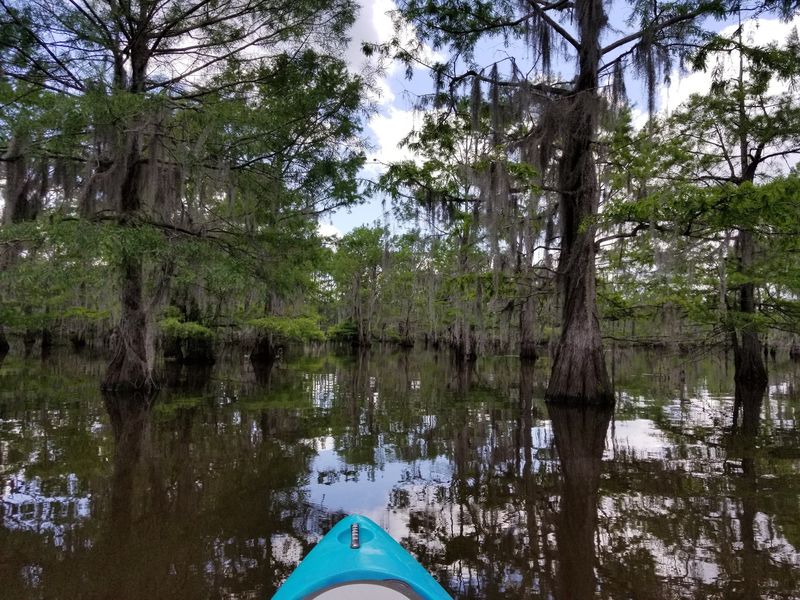
Cypress trunks rising straight from the water make Lake Bistineau look older than almost everything around it.
The park sits at 103 State Park Road, Doyline, LA 71023, on the western shore of a lake whose unusual history stretches back more than two centuries. A massive Red River logjam flooded thousands of acres around 1800, and after later drainage changed the landscape again, a permanent dam across Loggy Bayou in 1935 helped create the lake known today.
Trails move well beyond a quick lakeside stroll. The state park system lists hiking and biking routes along with a 6.5-mile equestrian trail that passes through pine and hardwood woods and beside the lake.
Cabins and campsites make it easy to turn the scenery into an overnight trip.
There is one important difference for visitors in late summer 2026.
A lake drawdown began August 12 to help control the spread of giant salvinia, and the park’s boat launch and boat rentals are closed during the drawdown period. The park itself remains open.
Walk beneath the hardwoods, photograph the cypress landscape, and see a famous north Louisiana lake while its water management story is happening in real time.
5. Poverty Point Reservoir State Park
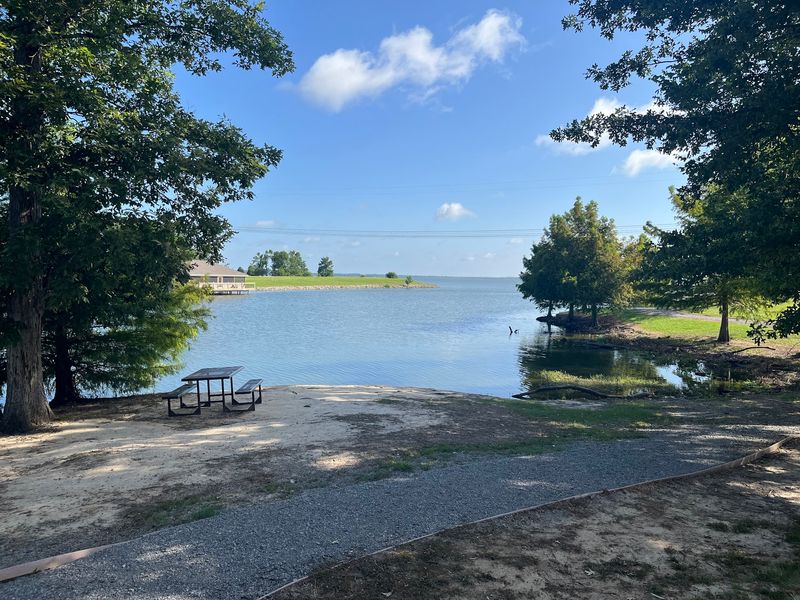
The name suggests history, but the surprise here is wildlife.
Poverty Point Reservoir State Park is at 1500 Poverty Point Parkway, Delhi, LA 71232, centered on a 2,700-acre man-made lake. Water sports and fishing dominate much of the warm season, while spring and fall bring migrating birds through this section of the Mississippi Flyway.
Cormorants, ducks, geese, and pelicans are among the species Louisiana State Parks highlights around the reservoir.
The more unexpected resident is the Louisiana black bear.
A nature trail follows an offshoot of Bayou Macon, and the eastern side of the park contains recognized bear habitat. Bear-proof trash containers are provided, and visitors are specifically reminded to keep food and refuse secured around cabins and day-use areas.
That makes a simple lake trip feel considerably wilder.
Anglers can pursue largemouth bass, black crappie, bluegill, and channel catfish year-round, while overnight options range from waterfront cabins to larger lodges and RV camping.
The park also sits in one of Louisiana’s most archaeologically fascinating regions, close to the monumental earthworks of Poverty Point World Heritage Site.
Spend one part of the trip watching pelicans skim the reservoir and another thinking about people who transformed this landscape thousands of years ago.
Very few lake weekends come with that much range.
4. Jimmie Davis State Park
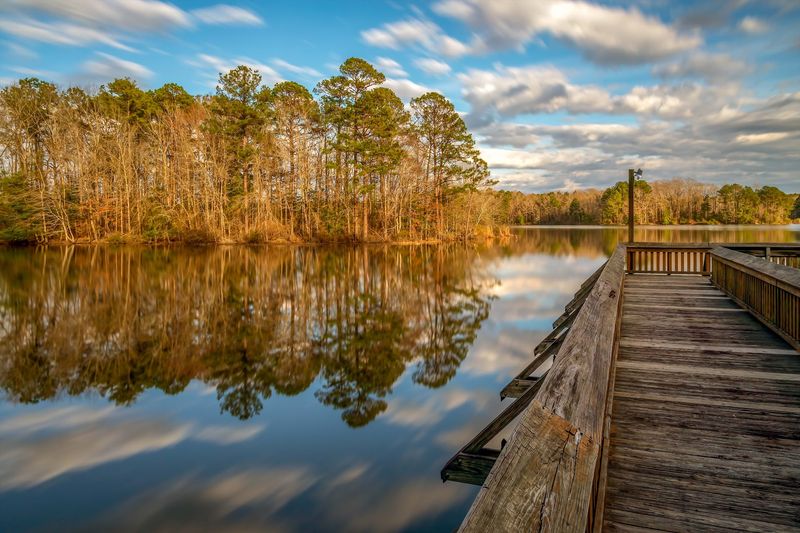
North Louisiana does beaches better than many people expect.
At 1209 State Park Road, Chatham, LA 71226, Jimmie Davis State Park spreads across a peninsula in Caney Lake, surrounding visitors with clear water and mixed pine-hardwood forest. The lake was created when Caney Creek was dammed in 1986, and its reputation for trophy bass still draws serious anglers decades later.
Two boat launches and a fishing pier handle the fishing side, while the sandy swimming area gives the park a completely different personality in summer. There is also a water playground, paddling, disc golf, hiking, cabins, RV camping, and larger lodging for groups.
Birders should bring binoculars rather than treating the forest as scenery between the parking lot and lake. Louisiana State Parks specifically notes the variety of birds living in or migrating through the surrounding woodland.
The park itself opened in 1996 as Caney Creek Lake State Park. It was renamed in 2003 for Jimmie H.
Davis, Louisiana’s two-term governor.
What makes the place memorable, though, is simpler.
Water appears almost everywhere you turn.
Book a cabin, catch sunrise from the peninsula, swim after lunch, and watch the forest begin swallowing the light again toward evening.
3. North Toledo Bend State Park
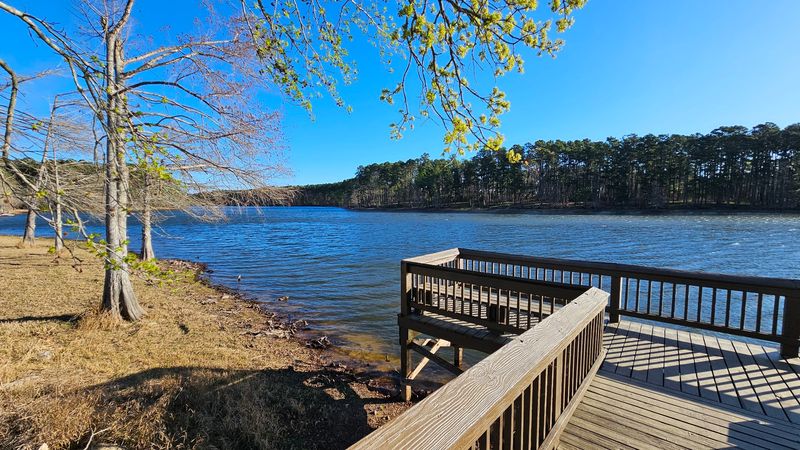
Louisiana suddenly feels much larger when Toledo Bend fills the horizon.
North Toledo Bend State Park occupies more than 900 acres at 2907 North Toledo Park Road, Zwolle, LA 71486, on one of the country’s largest man-made reservoirs. Fishing gets much of the publicity, but the park is surprisingly rewarding for anyone who would rather explore the land around the lake.
Three hiking and biking options provide real range.
There is a 1.5-mile loop for an easier outing, a more demanding four-mile loop, and a 12-mile multi-use trail for visitors who actually want to earn dinner. The wooded terrain and reservoir views make those routes feel far removed from the flat swamp image routinely attached to Louisiana.
Water access is equally practical.
A double boat ramp, large parking area, rentals, and a fish-cleaning station serve anglers heading onto Toledo Bend, a reservoir nationally associated with major freshwater fishing tournaments. A seasonal swimming pool provides an alternative when getting into the lake itself is not part of the plan.
Cabins and camping make it easy to stay long enough to see the reservoir in several moods.
Morning can be glassy and quiet. Afternoon can feel enormous and bright.
2. South Toledo Bend State Park
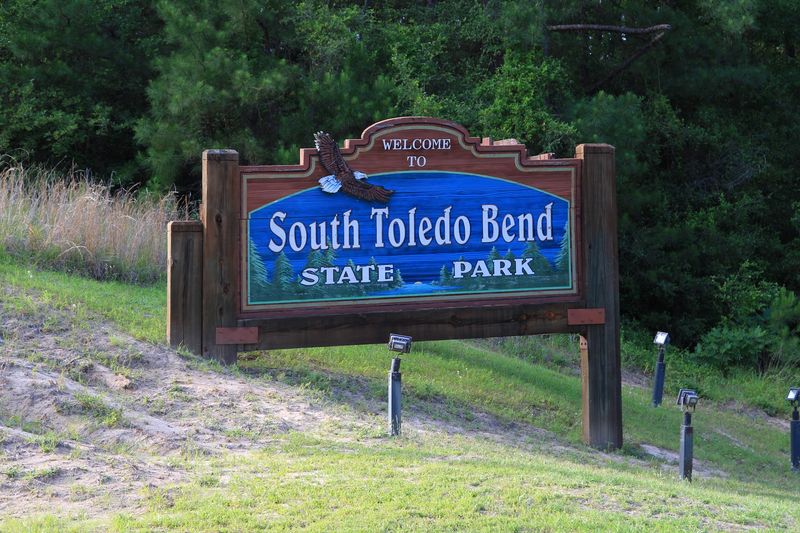
The address almost gives away what visitors should watch for.
South Toledo Bend State Park sits at 120 Bald Eagle Road, Anacoco, LA 71403, on small bluffs extending over the southern portion of Toledo Bend Reservoir. Those elevated viewpoints make the park immediately distinct, with broad water vistas appearing from several parts of the property.
Bald eagles are not simply decorative branding.
Louisiana State Parks identifies the area as common nesting habitat for the species, which takes advantage of the reservoir’s abundant fish. Bass, catfish, bream, and white perch support both birds and anglers, while a two-lane boat ramp provides direct access for visitors carrying their own fishing ambitions.
The easiest big view comes from the visitor-center area.
An open-air breezeway leads to an observation deck overlooking the reservoir and nearby islands, while a 3,000-foot surfaced nature trail loops through habitat around the visitor center and RV camping area.
That makes South Toledo Bend unusually friendly to mixed groups.
One person can fish all morning, another can birdwatch, and somebody else can take a short trail without turning the outing into an expedition.
Bring binoculars even if birds are not normally the priority.
1. Palmetto Island State Park
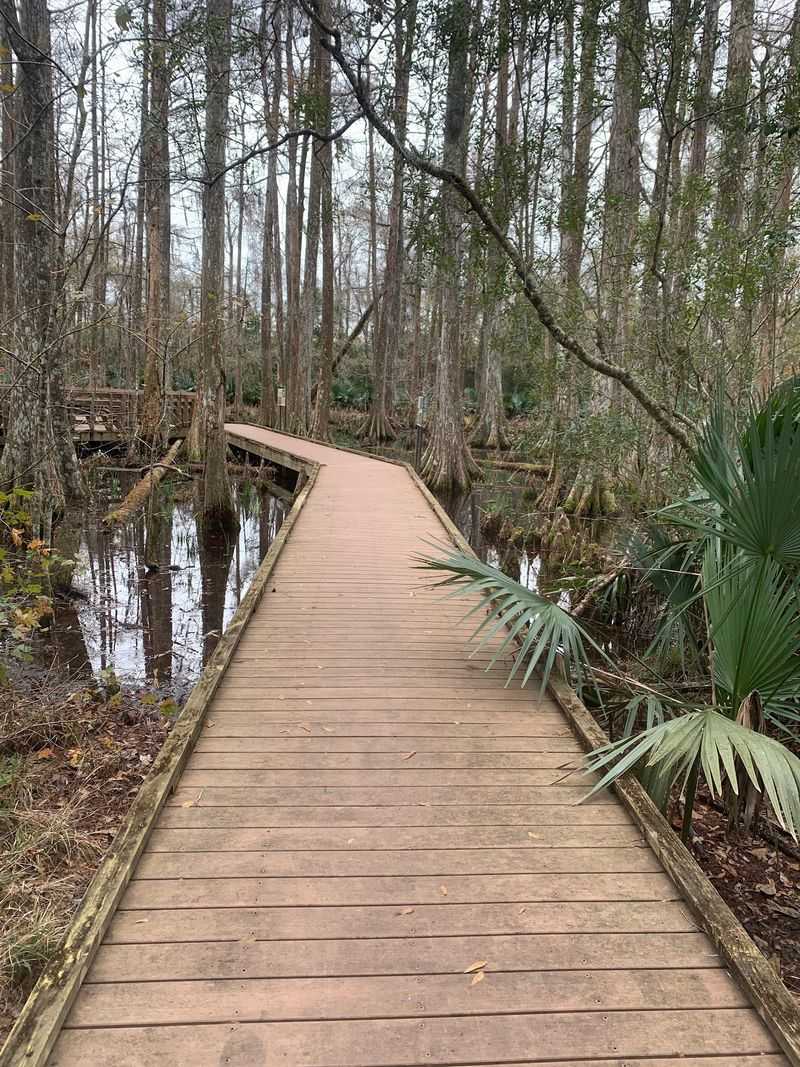
The landscape feels lush enough that the word “island” almost makes sense before you remember there is no ocean around it.
Palmetto Island State Park is at 19501 Pleasant Road, Abbeville, LA 70510, along the Vermilion River. Dwarf palmettos spread beneath the forest canopy and appear so consistently across the property that the park incorporated their shapes into its architectural details.
The best way to understand the place is from low on the water.
A launch provides access to the Vermilion River, while interior lagoons let canoeists and kayakers move through wetland habitat at a much quieter pace. Canoe rentals are available, making paddling possible even without arriving with equipment strapped to the roof.
Hiking and biking trails provide another route through the bottomland landscape, and one park trail includes a spot where visitors can see the Louisiana red iris.
Six cabins sit among the trees, each with a screened porch, while 95 RV campsites and backcountry camping options make the park capable of handling anything from a comfortable weekend to a more stripped-down stay. A water playground gives families somewhere to cool off in summer.