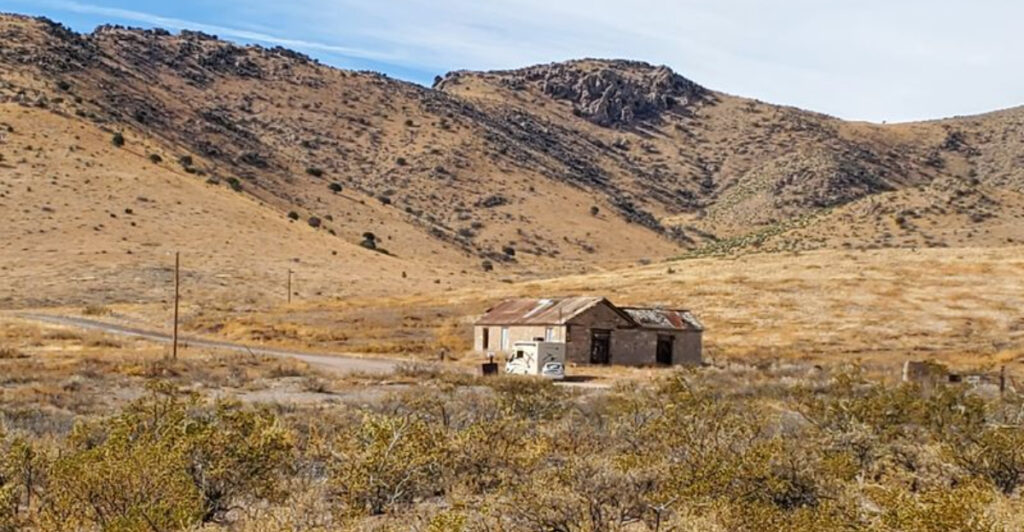
You know a place has a story when the quiet feels louder than expected. That is exactly the feeling here.
Old buildings still line the path, and every few steps there is something else that makes you stop and look twice. A restored schoolhouse brings the past closer through photographs and everyday objects, while a small chapel adds another unexpected layer to the walk.
The desert around it makes the whole place feel even more cut off, which only adds to the curiosity. This New Mexico stop once grew around silver mining, but you do not need a history lesson to enjoy wandering through what remains.
The fun is in noticing the little details and wondering who stood in these same spots years ago. Take your time, keep your eyes open, and let the place reveal itself slowly.
Chances are, you will leave with more questions than you arrived with.
Desert Silence Gives The Old Town An Eerie Beauty
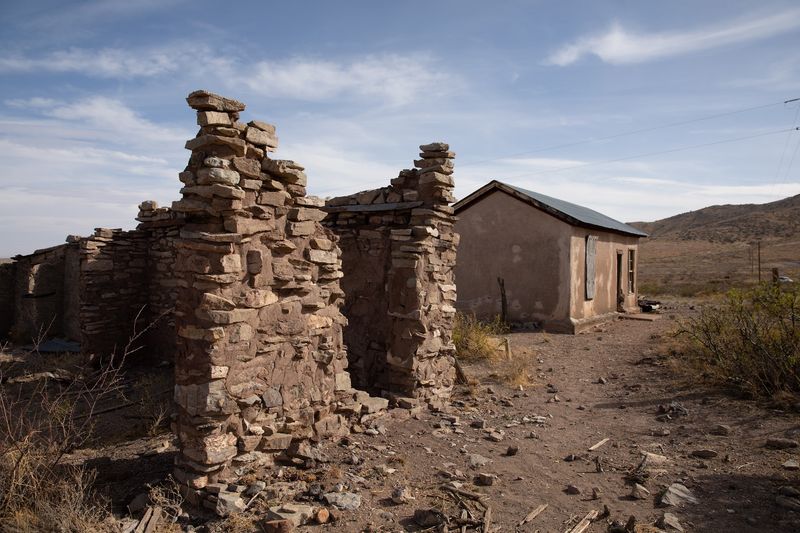
Quiet has a texture out here, and it settles over the ruins the moment a car engine shuts off. Wind moves through gaps in old boards, a distant cow lows somewhere past the fence line, and that is often the entire soundtrack.
Some travelers report walking the whole loop without meeting another soul, which turns a simple stroll into something closer to time travel. Signs note that cameras watch the site around the clock, so the emptiness comes with a quiet guardian rather than a free-for-all.
The stillness works on you slowly, sharpening small details you would normally miss. A bent nail, a shard of purple glass, the scrape of gravel underfoot all seem louder than they should.
I find it fascinating that a place built on noise, blasting, hauling, shouting, now trades entirely in silence. Nothing here shouts for attention, which is exactly why the site holds it.
The walking route stays flat and gentle, so families and older visitors can manage it comfortably. Admission costs nothing, and a donation box near the classroom lets appreciative wanderers chip in.
Anyone hunting for hushed, sun-baked atmosphere will find it at the Lake Valley Historic Townsite at 26 Lake Valley School Rd, Hillsboro, NM 88042.
A Restored Schoolhouse Brings The Past Into Focus
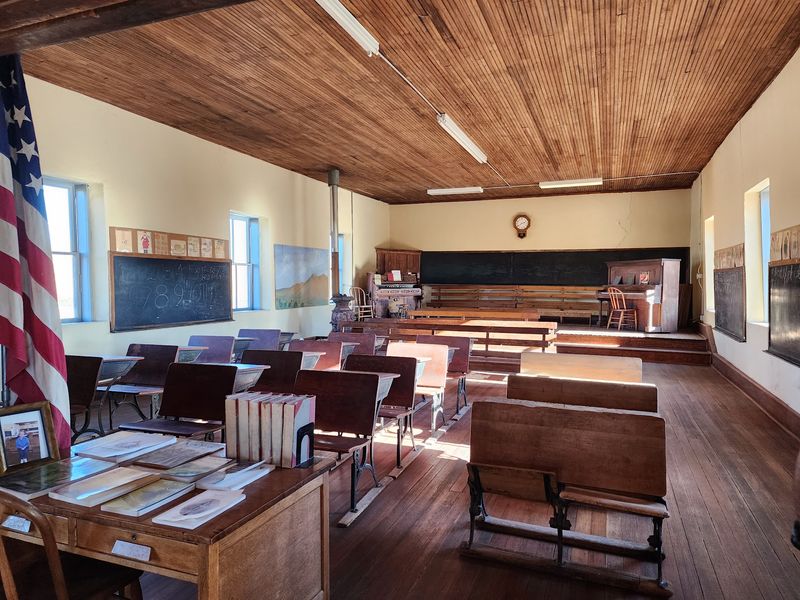
Roughly 500 feet up the road from the main ruins sits the building that turns a curious walk into a real history lesson. The old schoolhouse in New Mexico has been restored by the Bureau of Land Management, and inside waits a surprisingly full museum.
Glass cases hold mining tools, household objects, and printed articles, while the walls carry black and white photographs of the town when it was crowded and loud. Displays explain the surrounding mining district in plain language, which helps first-time visitors make sense of the rubble outside.
Older neighbors from nearby ranches have shared memories of monthly potlucks and dances held in this very classroom during the 1970s. Imagining fiddle music bouncing off those wooden walls while children played through the empty streets outside gives me goosebumps.
A visitor register, a donation box, and the site’s only vault toilet all sit here, so the stop serves practical purposes too. Skipping it means skipping the heart of the whole experience.
Hours run 9 AM to 4 PM Thursday through Monday, with Tuesday and Wednesday closed. Checking current access before making the drive can help avoid a disappointing arrival.
Crumbling Walls Trace Streets That Once Bustled
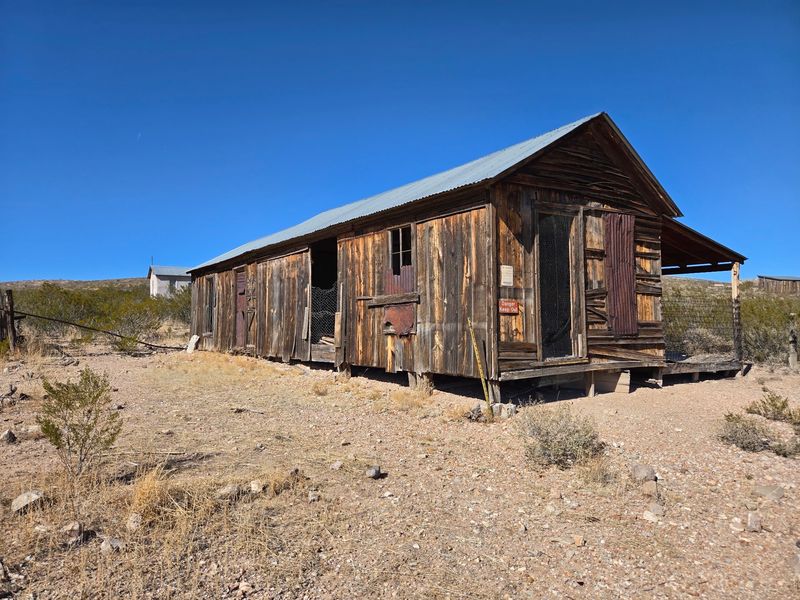
Follow the marked path and the town’s old layout starts to appear like a sketch under tracing paper. Low adobe stubs, tilting doorframes, and scattered lumber mark where homes, shops, and boarding houses once lined the streets.
Interpretive signposts along the route name the buildings and explain who used them, which keeps the walk from turning into guesswork. The BLM also provides printed literature, so self-guided touring here actually feels guided.
Fire claimed a large portion of the original town in the late 1800s, and later years took the rest through weather and neglect. What survives is fragmentary, yet those fragments make the scale surprisingly clear.
Most structures are viewed from outside only, roped off for safety and preservation. Broken glass lies scattered across much of the ground, so sturdy closed shoes beat sandals every time.
Dogs are permitted, though owners generally keep them close because of that glass. Cattle wander the surrounding range too, leaving their own obstacles on the path.
Reading a sign, then looking up at a pile of boards that once held a family, rearranges how you think about ruins. Ninety-seven reviewers average this stop at 4.5 stars, and the ruined streets earn much of that praise.
The Old Chapel Still Commands Attention
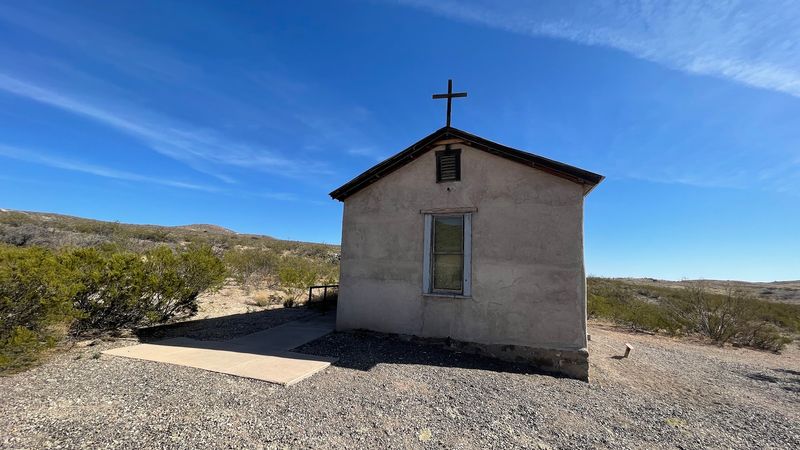
One building refuses to fade quietly into the desert, and it stands taller than everything around it. The chapel has been carefully maintained, its simple lines and small tower still holding the shape of a proper church.
Visitors often mention how well kept both the chapel and the school remain compared with the rest of the site. During open hours, the chapel door is frequently unlocked, letting people step inside rather than peer through a window.
Inside, the space is plain and cool, a welcome break from the sun beating down on the trail. Wooden benches and bare walls make the room feel honest, unfussy, and quietly powerful.
Restoration work by federal caretakers explains why this structure survived while neighbors collapsed. That effort turned a fragile shell into the site’s most photographed landmark.
What strikes me is how a modest building can anchor an entire abandoned town in the eye. Every angle of the walking loop seems to bend back toward it.
Photographers do well arriving earlier in the open window, when shadows still fall at interesting angles across the boards. Later in the day, harsh light flattens the details that make the chapel worth the drive out here.
Mining Remnants Reveal A Hardworking Past
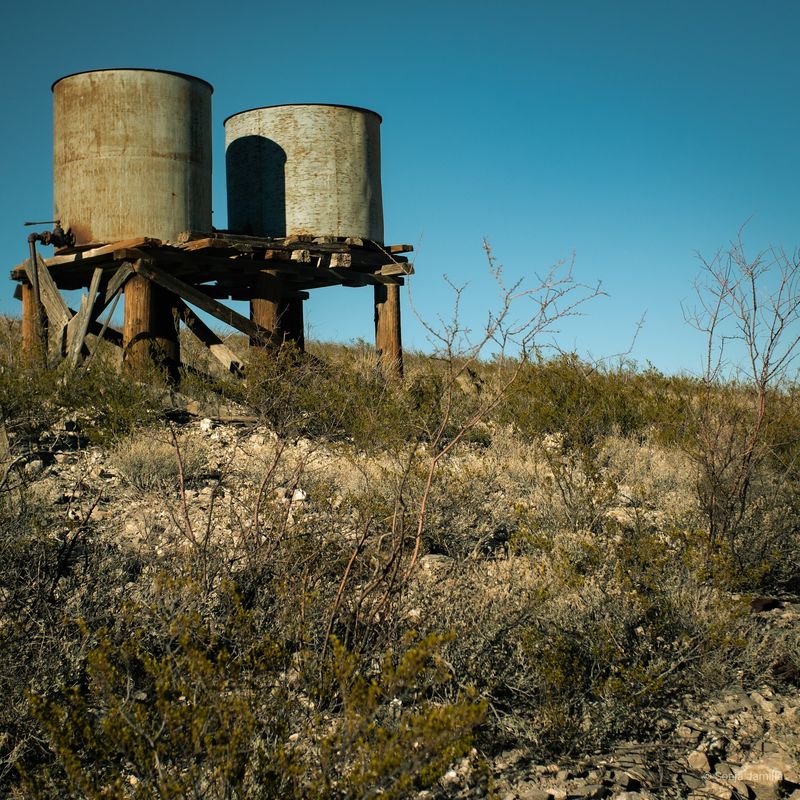
Silver built this place, and the evidence still scars the hillsides around the townsite. Ore from the surrounding district drew workers here in the 1800s, filling homes, filling the school, and filling the streets with purpose.
The mines themselves sit off limits, fenced and distant, since abandoned shafts are genuinely dangerous. Even so, rusted machinery parts, tailings piles, and hauling routes remain visible from safe distances along the trail.
Museum exhibits in the schoolhouse fill the gaps that fencing creates. Photographs of headframes, ore carts, and crews in work clothes explain how the ore moved from rock to railcar.
Mining shows up in visitor comments more than almost any other topic, and for good reason. Without the ore, none of these ruins would exist.
Reading about the hours those crews worked underground makes the surviving buildings feel less like scenery and more like earned shelter. Hard labor built every board here.
The scenic backcountry byway running from the townsite toward Hillsboro adds more mining history along the way. Many travelers pair the two, treating the drive as an extension of the walk rather than just transport.
Rock and rust tell this chapter better than any plaque could manage.
Empty Buildings Stand Against Vast Desert Skies
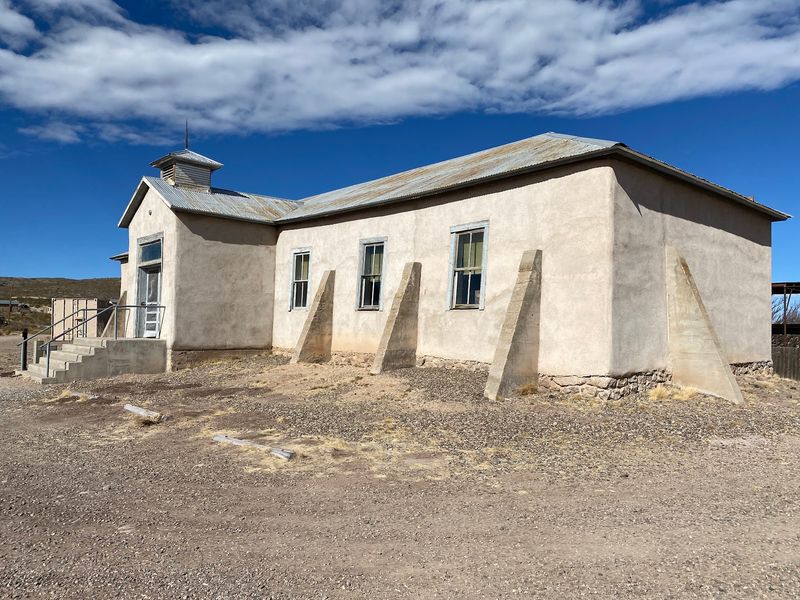
Skies do a lot of heavy lifting at this site, stretching wide and unbroken above the ruins. Weathered gray boards against deep blue create the kind of contrast photographers chase across whole states.
Summer afternoons often bring towering clouds that pile up over the hills, changing the mood of the townsite by the hour. Morning light, by contrast, keeps everything crisp and golden.
Shade is scarce out here, which matters more than it sounds. Caretakers have been known to bring water out to visitors caught in the heat, a small kindness that says a lot about the hospitality at this remote outpost.
Hats, sunscreen, and a full water bottle belong in every daypack for this walk. The loop is short, though desert sun does not care about distance.
Wide-open views rank among the most praised features in visitor accounts, described repeatedly as breathtaking. The emptiness above the ruins amplifies the emptiness below.
Something about a doorway framing nothing but sky sticks with people long after they drive home. That image alone justifies the miles of pavement and gravel.
Cooler months, roughly October through April, make the exposure far more comfortable for daytime wandering here.
Forgotten Foundations Peek Out Along The Trail
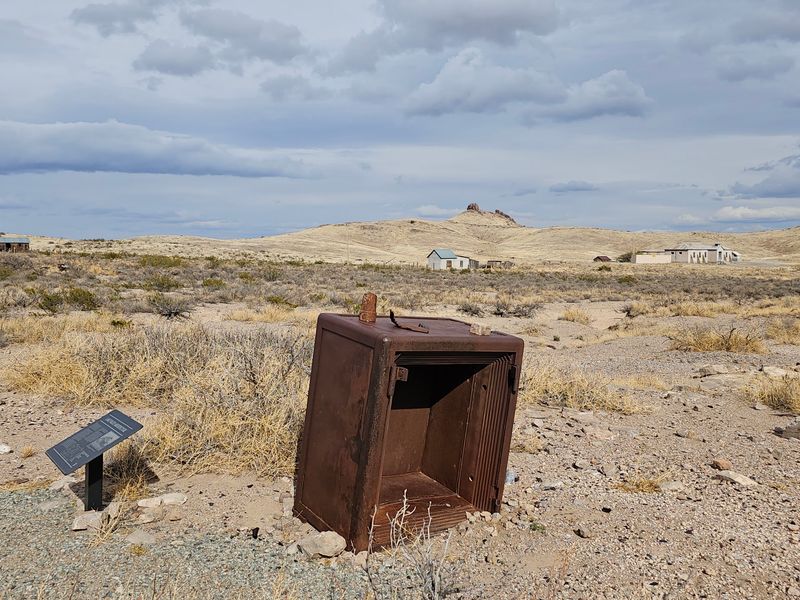
Look down instead of up and a second layer of the town appears underfoot. Stone footings, concrete slabs, and rectangular outlines poke through dry soil where buildings vanished long ago.
These low remnants are easy to walk past without noticing, yet the numbered signs point several of them out. Suddenly a patch of weeds becomes a store, a hotel, or somebody’s front room.
Because so much burned in the late 1800s, foundations often outlasted the walls they once carried. They are the town’s quietest survivors.
Scattered artifacts turn up too, from bottle glass to bits of hardware, all of which stay put by law and common sense. Leaving them means the next visitor gets the same small thrill of discovery.
Honestly, the foundations moved me more than the standing buildings, since they mark lives that left almost nothing behind. A rectangle of stone is a strangely personal thing.
Kids often enjoy this part most, counting outlines and matching them to the trail brochure. It turns history into a scavenger hunt without any gimmicks.
Pace matters here, because rushing the loop means missing half of what survives at ankle height. Slow feet see more.
Rugged Hills Make The Ruins Feel Even More Remote
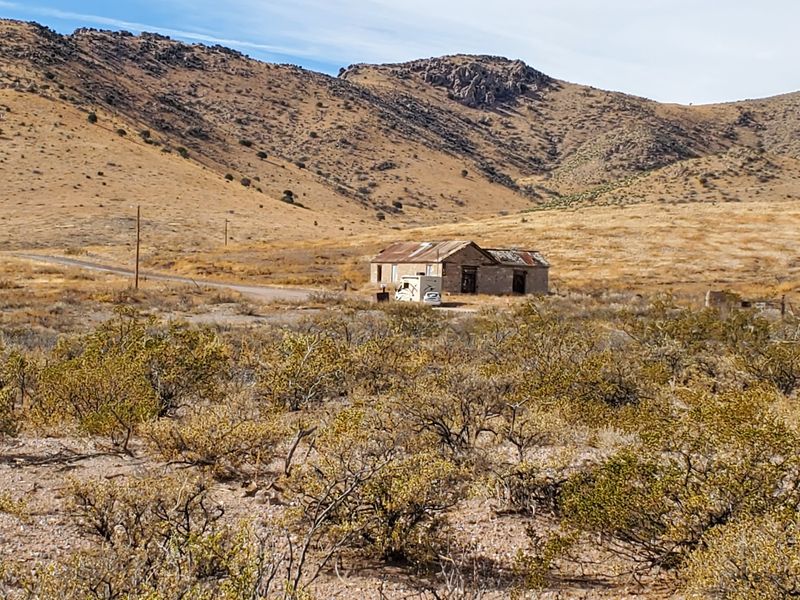
Rough, sun-bleached hills rise around the townsite and close it off from everything modern. The nearest amenities sit well down the road, which is exactly why the isolation feels genuine rather than staged.
The drive out surprises plenty of travelers, who mention it running longer than expected before arriving. Almost all of them add that the miles paid off.
The site connects to Hillsboro by a scenic backcountry byway that many describe as one of the most memorable parts of the day. Rolling terrain, big views, and almost no traffic define that stretch.
Some visitors combine the stop with Fort Cummings to build a fuller day of southern history. Pairing sites makes sense when distances are this generous.
Fuel up before heading out, since services thin out fast in this corner of New Mexico. Cell service can be patchy too, so downloading directions ahead helps.
The townsite closes at 4 PM, so arriving by early afternoon still leaves room to explore without hurrying. Nothing spoils a long drive faster than a locked entrance.
Ringed by empty hills, this abandoned town keeps its secrets exactly where it left them.