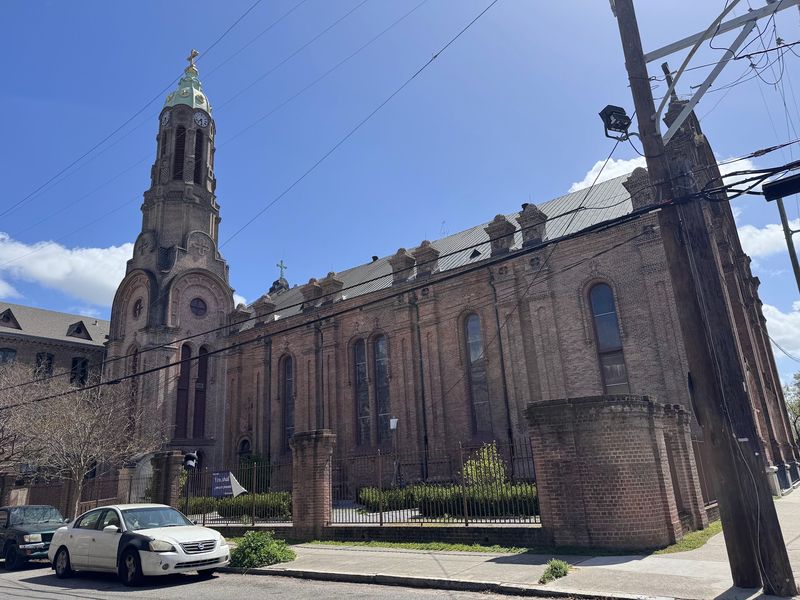
A busy New Orleans street can change fast once you step onto the grounds of St. Mary’s Assumption Church. This old Catholic church feels calm, beautiful, and a little set apart from the rush around it.
That contrast is what makes the place memorable, because it shows how a city landmark can still feel deeply personal. If you like history, architecture, or simply quiet spaces, this church gives you plenty to notice.
A church in the Lower Garden District
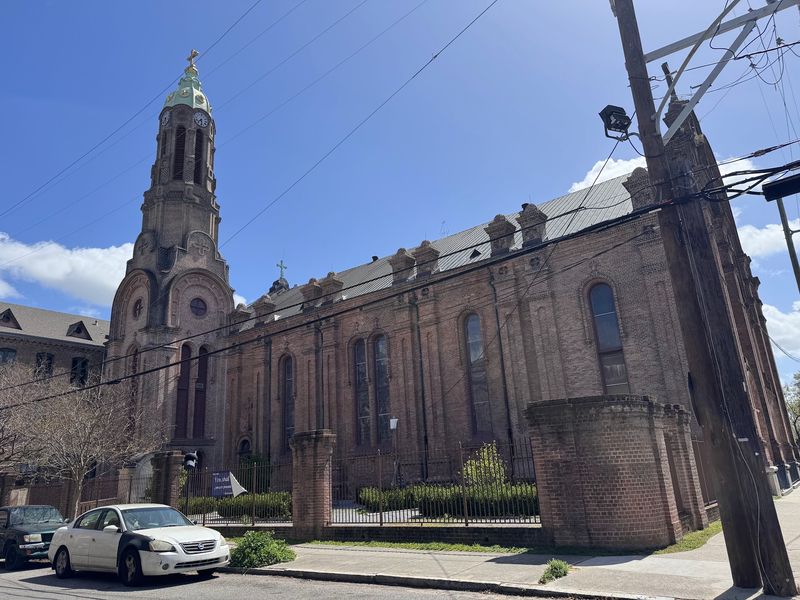
Just a few blocks can change the mood of a city, and St. Mary’s Assumption Church proves it. Set at 923 Josephine Street in New Orleans, it stands in the Lower Garden District as an active Catholic church with a presence that feels older and steadier than the traffic outside.
Plenty of visitors seem surprised by how tucked away it feels. Reviews describe it as off the beaten path, a place that does not get the same crush of sightseeing crowds as more famous churches, yet still leaves a strong impression on people who step inside.
That quieter setting matters to the experience. Instead of meeting the building in a packed square, you approach it through an ordinary neighbourhood street, and that makes the church feel discovered rather than advertised.
Location also helps explain the title of this article. The church is in New Orleans, but regulars and visitors alike talk about it as a reprieve, a peaceful pocket where the tone changes almost at once.
For travellers, worshipers, and local residents, St. Mary’s works as both landmark and living place. It is not only something to look at.
It is a church that people still use, return to, and remember long after they leave Josephine Street behind.
A long-lived neighborhood story
Some buildings carry their history quietly, and that is part of the charm here. Visitors repeatedly describe St. Mary’s Assumption Church as a beautiful old New Orleans Catholic church, and several mention its roots in the city’s German Catholic community.
That background gives the place more than age. It gives the church a neighbourhood story, one shaped by immigrant families, parish life, weddings, worship, and the everyday routines that slowly turn a building into a local anchor.
Regulars even note that some locals refer to it as Saint Alphonsus, which hints at the layered church history in this part of New Orleans. For a newcomer, that kind of overlap can feel confusing at first, but it also shows how deeply church life has been woven into the area over time.
History here does not sit behind glass. People still attend Mass, celebrate weddings, visit the grounds, and stop by while exploring the district, so the past and present share the same space.
That mix is one reason the church feels so peaceful. Old places often slow us down, and St. Mary’s seems to do that naturally.
It invites you to pay attention, not through flashy storytelling, but through the steady confidence of a place that has meant something for generations.
The commanding exterior presence
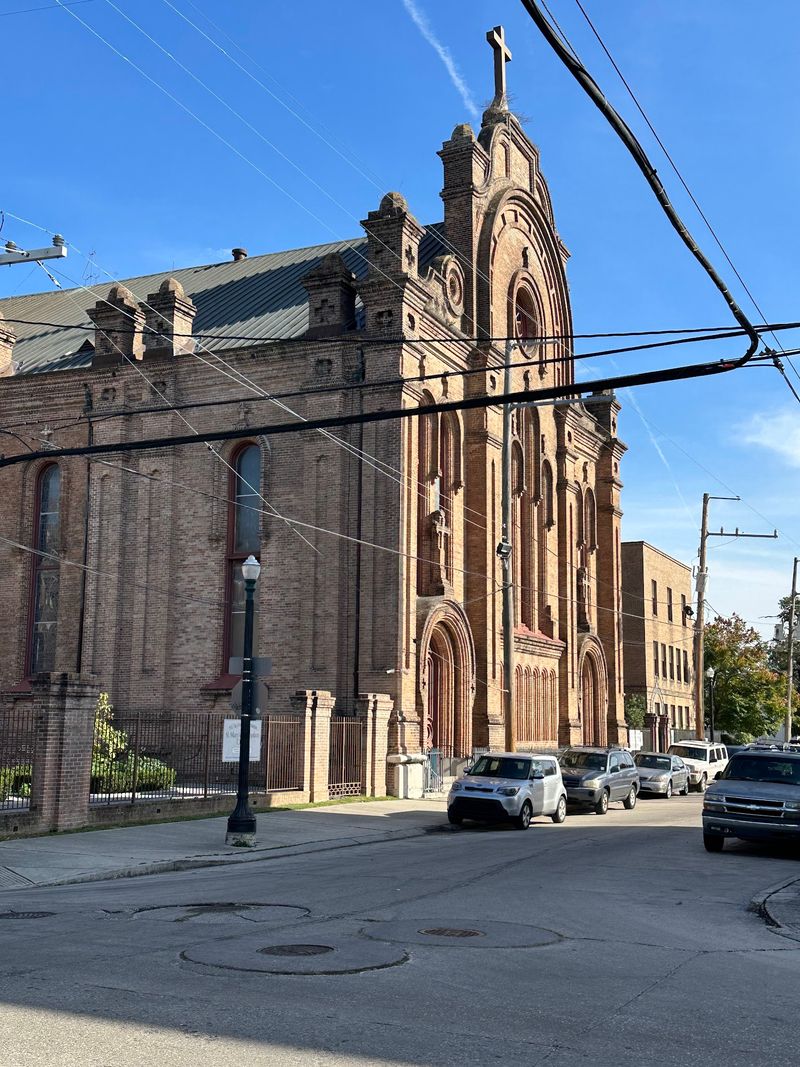
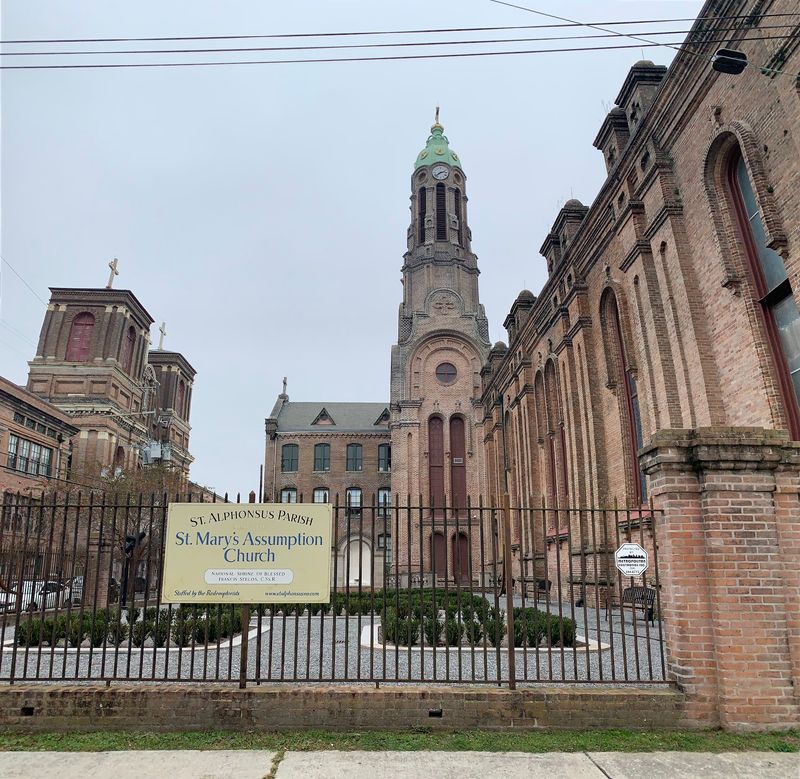
First impressions land quickly at St. Mary’s, and the outside sets the tone before you ever reach a door. Visitors call the church majestic from the street, and that word fits because the building rises with the kind of confidence that makes people instinctively slow their pace.
From a distance, the church reads as a serious historic structure. Up close, the effect becomes more personal, because the scale feels grand without seeming cold or shut off from the neighborhood around it.
Several visitors also mention the grounds, describing them as well manicured and beautifully designed. That matters more than it may sound, since the approach to a church often shapes your mood before the interior does any work at all.
Instead of feeling crowded by the city, the exterior seems to hold its own space. Street life continues nearby, but the church face, the surrounding grounds, and the careful upkeep create a visual pause that separates one block from the next.
For architecture lovers, that outer appearance is reason enough to stop. For everyone else, it is the first clue that the calm people talk about is not only found inside.
St. Mary’s begins creating that peaceful feeling right at the sidewalk, where old masonry and open space start changing the rhythm of your visit.
An interior that hushes the room
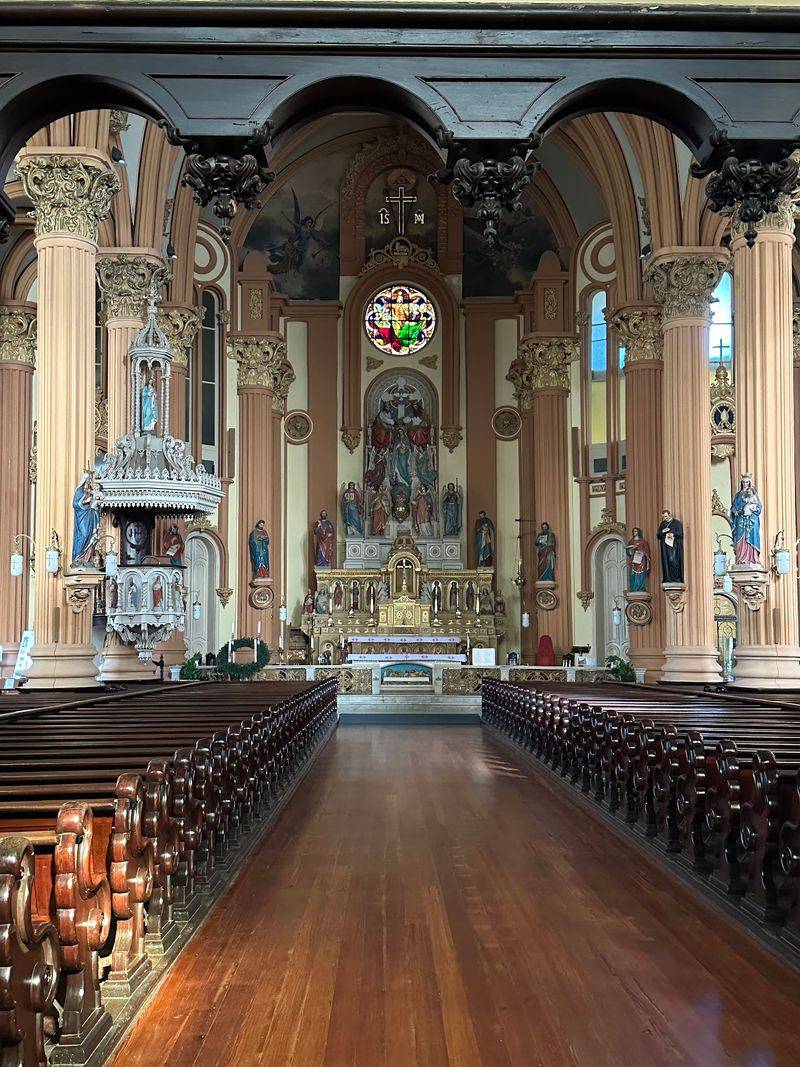
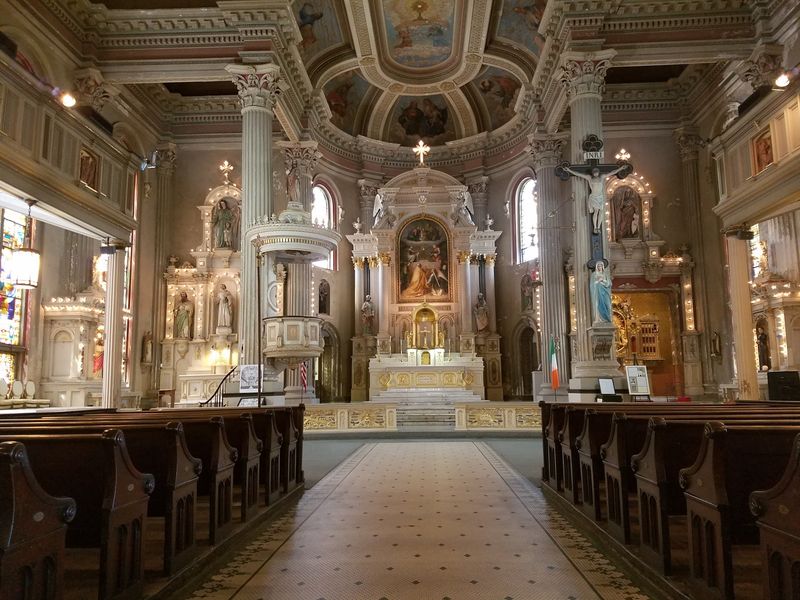
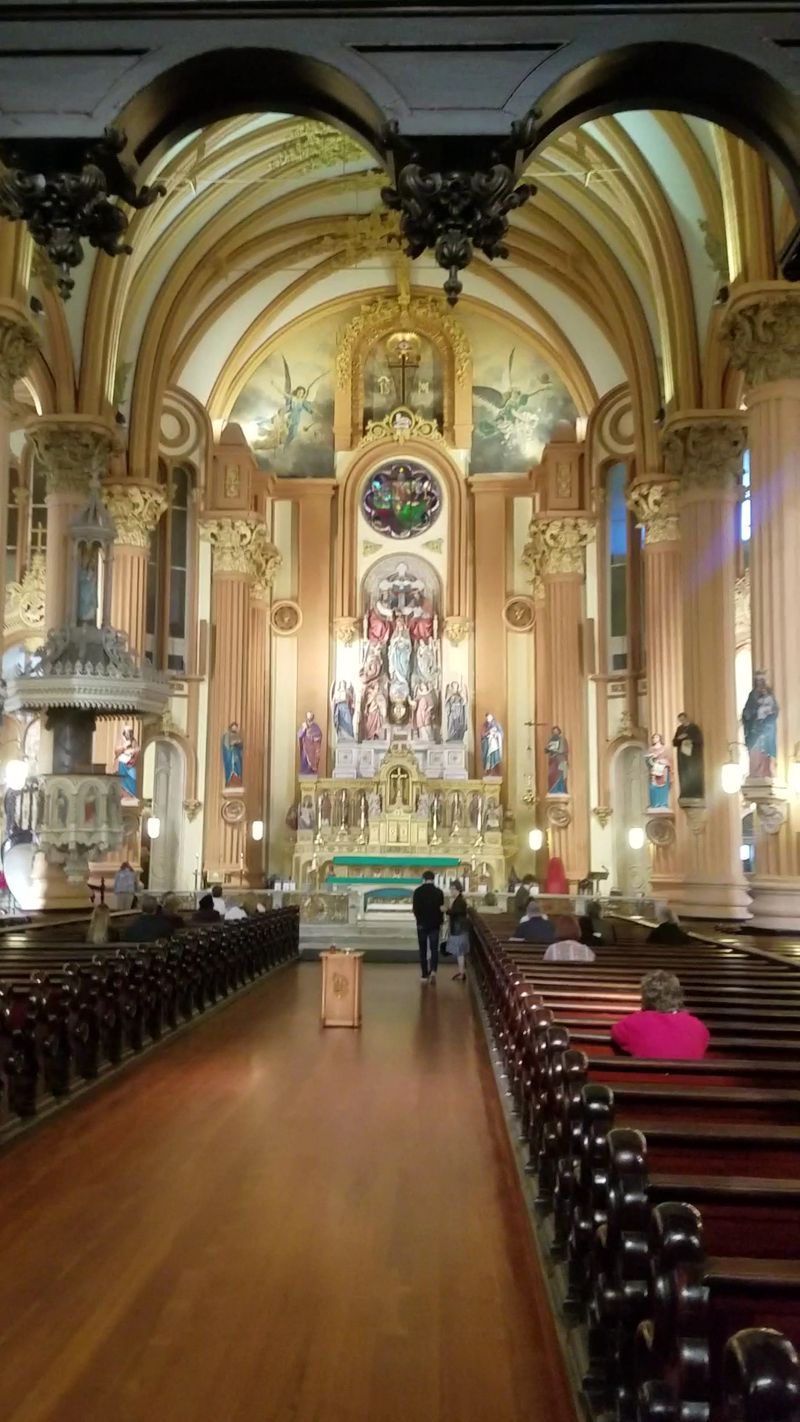
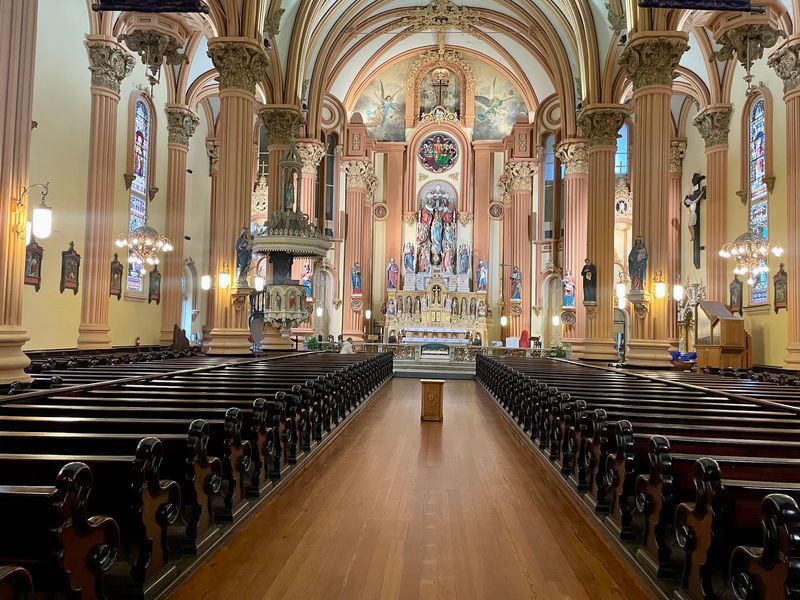
Walk through the doors and the mood changes immediately. More than one visitor says the interior is absolutely amazing or breathtaking, and that reaction makes sense because the church seems built to quiet conversation without asking for silence out loud.
The inside has the kind of beauty that pulls your eyes upward and forward at the same time. People who came for weddings, sightseeing, worship, or concerts all describe the interior as a highlight, which suggests the space works across many different kinds of visits.
What stands out most is not only decoration, but the feeling of being held in place for a minute. A busy day outside can make your mind race, yet interiors like this slow the pace simply through scale, light, and order.
Visitors also mention how welcome and comfortable the church feels for people of faith. Even if you arrive mainly to admire architecture, the space still reads first as a living sanctuary rather than a museum room.
That helps explain why the church lingers in memory. Plenty of historic buildings are impressive, but fewer manage to feel deeply restful as well.
St. Mary’s seems to do both at once. It offers beauty you can study closely, while also giving you the easier gift of a calm place to sit, look around, and breathe.
Stained glass, altar, and old-world detail
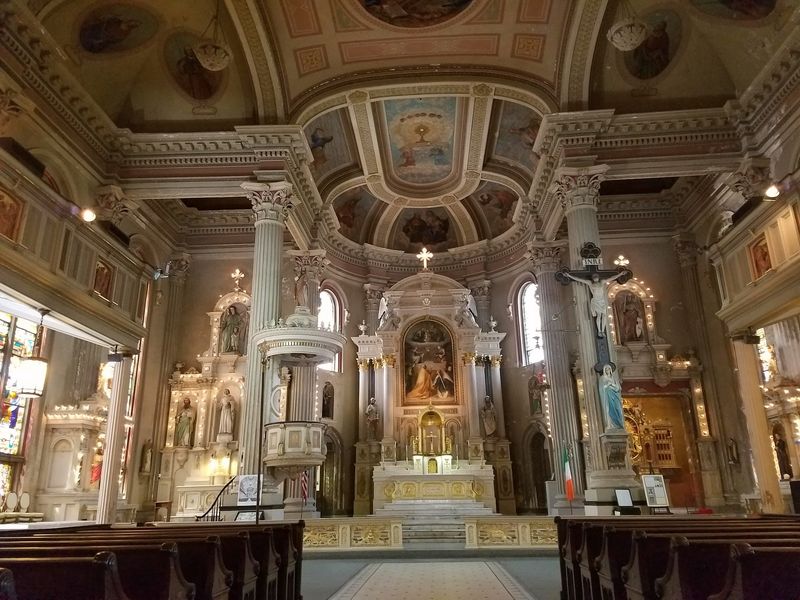
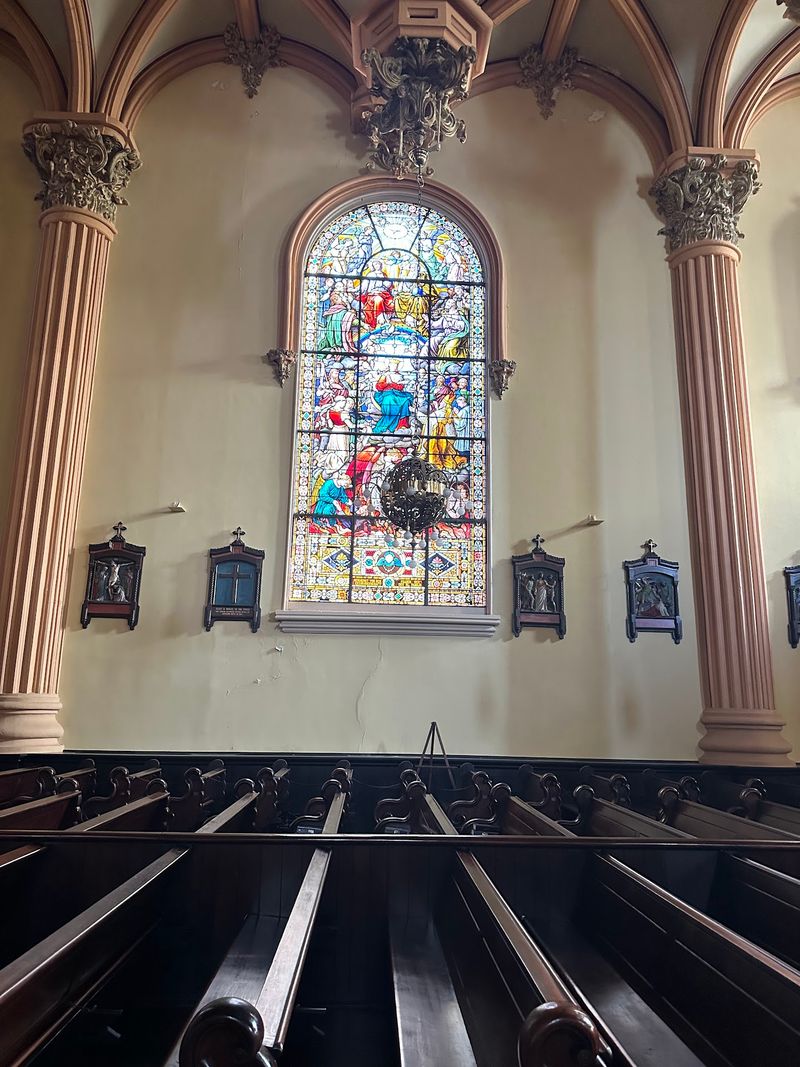
Look a little longer, and the details begin doing their own quiet storytelling. Visitors single out the stained glass, Renaissance style architecture, and especially the large German style altar, all of which give St. Mary’s a richer character than a quick glance can capture.
Stained glass in a church never works alone. It changes the light, softens hard edges, and turns ordinary daylight into something more reflective, which helps explain why people often describe the church as peaceful rather than merely pretty.
The altar seems to leave one of the strongest impressions. A reviewer called it breathtaking, and another pointed to the church’s German identity, so the altar becomes more than decoration.
It acts almost like a signature, linking the room’s visual beauty to the community that built and cherished it.
Architectural details also reward slow looking. A church like this invites you to notice layered craftsmanship, not in a rushed checklist way, but in small moments when color, carving, and structure suddenly come together.
That is part of the pleasure of visiting St. Mary’s. The church can make a bold first impression, yet its finer features are what keep your attention.
By the time you leave, you may remember not one dramatic element, but the way many smaller details worked together to create an atmosphere of depth, warmth, and steadiness.
Music, acoustics, and the choir loft
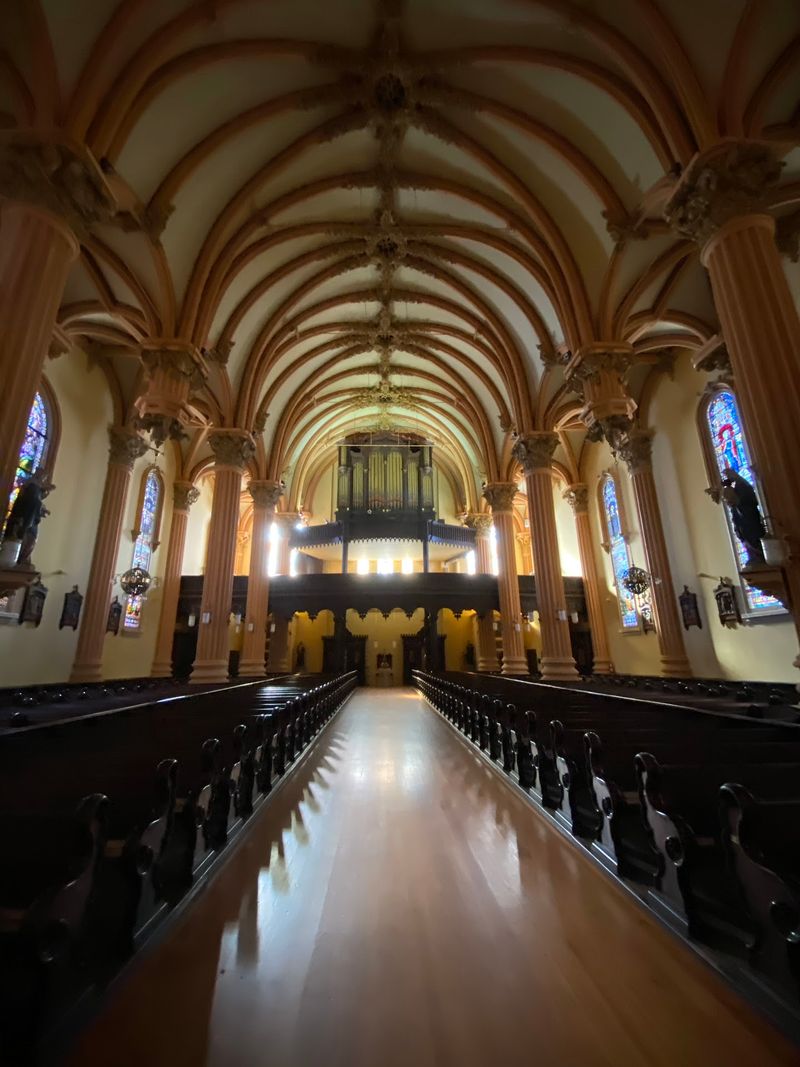
Not every church is remembered for sound, but St. Mary’s earns that praise too. Visitors mention hearing a chorus concert there, and others praise the acoustics, the program quality, and the large pipe organ housed in the choir loft.
That combination tells you something important about the building. A church can be visually striking, yet music reveals another layer of its design, because high ceilings and long interior lines shape how voices and instruments carry through the room.
Concertgoers seem to have felt that strongly here. One review remembered the event as enjoyable, while another described the environment, talent, and acoustics with unusual enthusiasm.
Even without hearing a performance yourself, those comments suggest the church is a place where sound can fill the space in a memorable way.
The pipe organ adds to that old-world atmosphere. Even when silent, an instrument like that changes how you look at a church, reminding you that worship spaces were often built not just for sight, but for listening.
So the peace of St. Mary’s is not only the quiet kind. It also includes the fuller calm that music can bring, where a room feels alive without becoming noisy.
For many visitors, that makes the church feel both sacred and cultural, a place where beauty reaches the ears as much as the eyes.
The Father Seelos connection
Beyond architecture, St. Mary’s carries a devotional identity that many visitors clearly notice. Reviews describe it as a Catholic shrine connected to Blessed Father Seelos, and some say people come from around the world with that connection in mind.
For travelers who know little about him, the church offers a reason to learn more. Visitors mention Father Seelos relics as something not to miss, and one review also notes that you can watch a film about him and take a guided tour that explains both his story and the church itself.
That spiritual layer changes the feel of a visit. A church can be admired as architecture, but a shrine invites a more personal kind of attention, one shaped by prayer, reflection, and the sense that the place means more than its walls alone.
Grounds markers and devotional features seem to deepen that experience. Even people who arrive unexpectedly often describe the stop in heartfelt terms, suggesting the church can feel meaningful whether or not it was on your original plan.
St. Mary’s, then, works on two levels at once. It is a historic New Orleans church with visual grandeur, and it is also a place of devotion centered on a figure still important to many Catholics.
That pairing helps explain why the church feels peaceful in such a lasting, inward way.
Gardens, gift shop, and a warm welcome
Sometimes the small human touches shape a place as much as the grand architecture does. At St. Mary’s, visitors frequently mention the gardens, the gift shop, and the kindness of the people they met during their visit.
The grounds are described as beautiful and carefully kept, which gives the church a softer edge. Instead of approaching only a large historic building, you move through a setting that seems cared for in a personal way, and that care becomes part of the experience.
The gift shop comes up more often than you might expect. Visitors say it offers a range of items, from inexpensive charms to keepsakes for families, and several specifically note how kind the shop staff are.
That matters, because warmth is easy to sense and hard to fake.
Kindness from staff and clergy appears in multiple reviews as well. People describe feeling welcome, comfortable, and at ease, which helps explain why the church can leave such a strong impression even on visitors who only stopped in briefly.
All of that supports the article’s central feeling. Peace is not created by architecture alone.
It also grows from tidy gardens, a friendly greeting, and the sense that ordinary hospitality still matters. At St. Mary’s, those simpler details help the church feel less like a stop on a list and more like a place ready to receive people well.
A refuge for worshipers, visitors, and wedding guests
Different people arrive here for different reasons, yet they often come away with a similar feeling. Wedding guests, concert attendees, worshipers, and curious visitors all describe St. Mary’s as moving, beautiful, and deeply peaceful.
That range says a lot about the place. Some churches feel best suited to formal worship only, while others are mostly visited as historic sights.
St. Mary’s seems to bridge those roles with unusual ease, staying active as a church while still welcoming people who simply want to see it.
Weddings are one especially visible part of its life. Reviews mention the church as a favorite for brides who want a historic setting, and guests describe ceremonies there as memorable and lovely.
The building’s beauty clearly adds to those moments, but the mood of the space seems to matter just as much.
Worship remains central, of course. Visitors mention Mass, a Spanish language service at 7 p.m. on Ash Wednesday, and a positive priest leading one service.
Those details show that the church is not only preserved for admiration. It is still being lived in, spiritually speaking.
Because of that, St. Mary’s suits more than one kind of traveler. It works for people seeking beauty, for those wanting a calm place to pray, and for anyone hoping to feel New Orleans in a quieter register than the city usually advertises.
Simple planning and a gentle final impression
If you are thinking about visiting, the practical details are fairly simple. St. Mary’s Assumption Church is located at 923 Josephine Street, New Orleans, LA 70130, and the church website listed for it is stalphonsusno.com, with phone number +1 504-522-6748.
Hours are the one detail best checked before you go. Reviews mention free guided tours available until 3 p.m., and one visitor noted attending a Spanish language Mass at 7 p.m. on Ash Wednesday, but the broader day-to-day schedule is not fully laid out in the information here.
Price is also handled best with modest expectations. A visitor specifically mentioned free guided tours, and another described a special event as bargain priced, but there is no complete list of current admission or event costs in the source material, so checking directly is the safest move.
Getting there is straightforward in one sense: you are heading to Josephine Street in New Orleans, in the Lower Garden District area noted by visitors. Once you arrive, the shift in atmosphere seems to be part of the reward.
St. Mary’s Assumption Church leaves a gentle kind of impression. It is beautiful, yes, but more than that, it feels set apart in the best way, as if the city softens at the doorstep and gives you a little room to breathe.