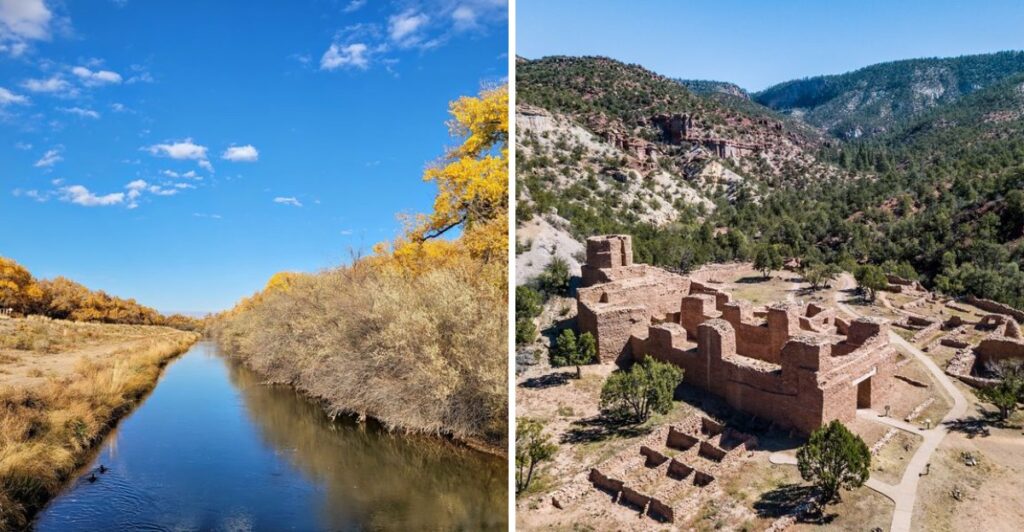
You know that first cool morning when staying home suddenly feels like a wasted opportunity? New Mexico is full of autumn day trips that make it easy to act on that feeling without booking a room or spending much.
Golden cottonwoods brighten river corridors, and mountain parks trade summer heat for crisp hiking weather. Historic sites become easier to explore at a slower pace, while wildlife refuges start welcoming seasonal arrivals overhead.
Plenty of these destinations charge only a small fee, and several are completely free to enter. The drive can be half the fun too, especially when fall color starts appearing along mountain highways.
Pack lunch and grab a jacket. Then choose a direction that sounds good.
A few hours later, you could be standing beside ancient stone walls or watching cranes lift off at sunrise, wondering why you almost spent the day doing errands instead of going somewhere.
1. Coyote Creek State Park, Guadalupita
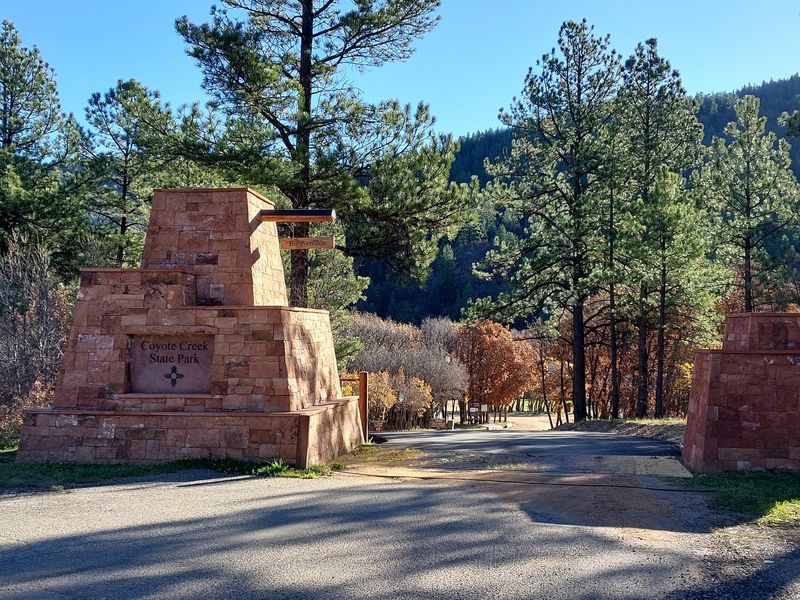
A narrow green valley split by a chattering stream sets the scene at Coyote Creek State Park, sitting along Guadalupita Highway 434 at Mile Marker 17 in Guadalupita, New Mexico 87722. Spruce and pine crowd the slopes above, and when fall arrives the whole basin shifts to gold and rust.
Fly fishing draws plenty of folks to the creek, since the water runs cold and clear through the meadow. Others stick to the park’s three-quarter-mile hiking trail, which loops past quiet wet meadows where dozens of local bird species pass through.
Picnic sites come with tables and grills, so a packed lunch turns into a proper outdoor feast surrounded by color. I find the thought of eating a sandwich under all that yellow foliage weirdly appealing.
History quietly threads through the park too. Old acequias, the hand-dug irrigation ditches that kept nearby farms alive for generations, still trace the valley floor and tell you plenty about how people made this high country work.
Mornings here run chilly in autumn, so layers matter more than sunscreen. Fees are modest, camping is available for anyone who wants to stretch the trip, and the drive up Highway 434 delivers scenery before you even park.
Small park, big payoff, and hardly a crowd in sight.
2. Fenton Lake State Park, Jemez Springs
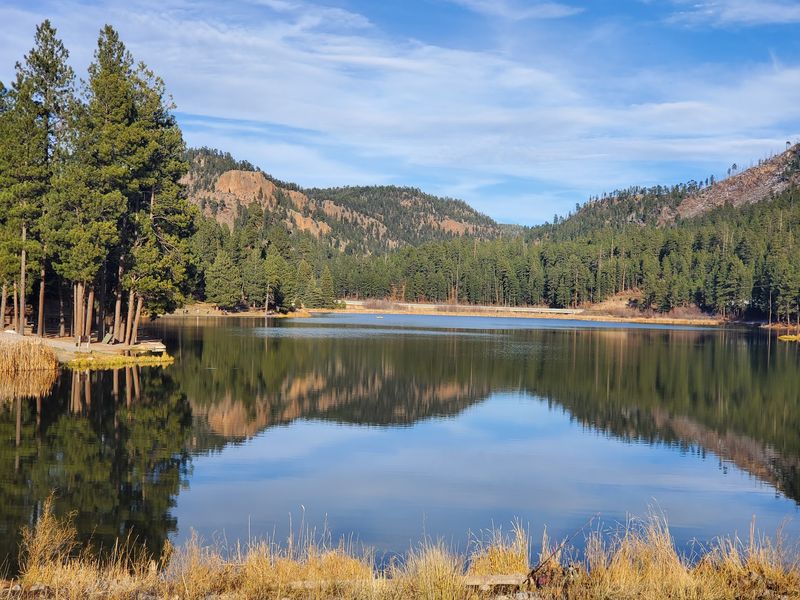
Cool air, still water, and pine shade define Fenton Lake State Park at 455 Fenton Lake Road in Jemez Springs, New Mexico 87025. The small lake sits cradled in the Jemez Mountains, ringed by ponderosa pines and aspens that go bright gold once temperatures drop.
Trout fishing keeps this place busy through fall and into spring, with rainbow and German brown trout stocked in the lake. Motorized boats are largely off the table, which is exactly why canoes and kayaks glide across the surface in near silence.
Picnic areas dot the shoreline, giving families an easy spot to spread out a blanket without hiking a single mile. Gentle paths, including the Hal Baxter Memorial Cross-Country Ski Trail, double as leisurely walking routes during warmer autumn afternoons before snow arrives.
Wildlife watching adds another layer, since migratory birds stop by and elk sometimes wander the meadows at dawn and dusk. Bring binoculars and patience.
The drive in along Highway 4 winds past red rock cliffs and hot springs country, making the journey feel like part of the destination. Day-use fees stay low, and the parking lot fills fastest on weekends.
Few places in New Mexico serve up mountain calm this cheaply.
3. Los Luceros Historic Site, Alcalde
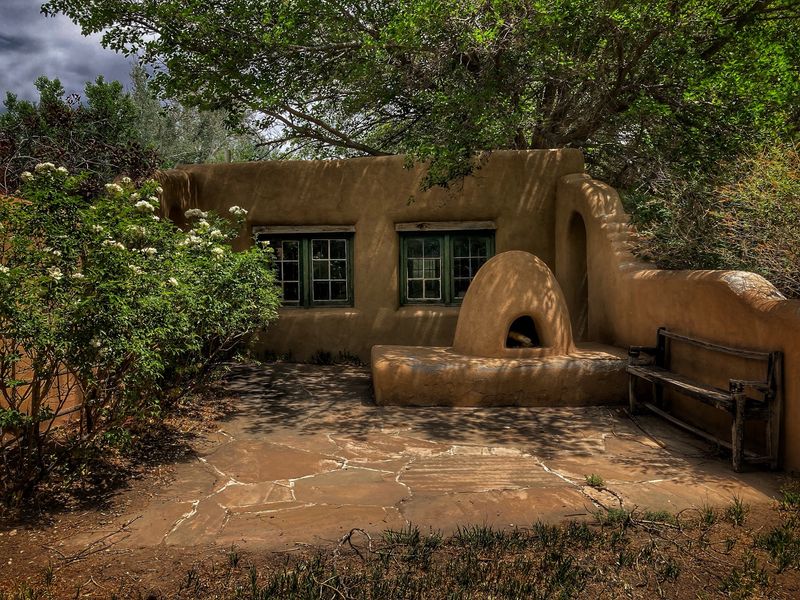
Apple trees, adobe walls, and cottonwoods dropping yellow leaves make October the sweet spot at Los Luceros Historic Site, found at 253 County Road 41 in Alcalde, New Mexico 87511. The riverside ranch spreads across orchards, fields, and pasture north of Española.
Its Territorial-style hacienda anchors the property and holds centuries of northern New Mexico stories inside thick walls. Guided looks at the buildings pair nicely with a slow wander through the grounds.
Autumn is when the place really wakes up. The annual Fall Festival brings food trucks and craft vendors to the grounds, while performances and family-friendly activities fill out the scheduled September celebration.
The Rio Grande Sky Fiesta is the other big draw, filling the morning sky with hot air balloons while Halloween-themed activities keep kids busy and the Heritage Kitchen serves up local plates. Sounds like a full day where nobody complains about being bored.
General admission runs modest, and children often get in free, which makes this one of the friendlier outings for a family budget. Restrooms, shade, and level walking paths help too.
Photographers should aim for late afternoon, when low light hits the adobe and the orchard rows glow.
History, cider-scented air, and balloons overhead for pocket change.
4. Bosque del Apache National Wildlife Refuge, San Antonio
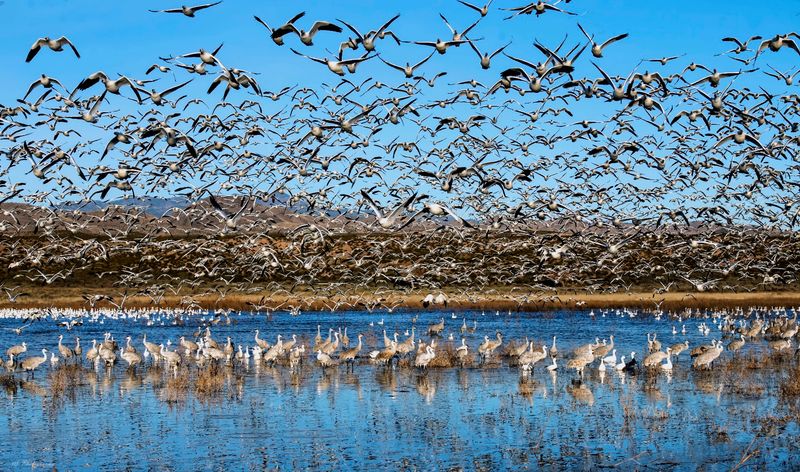
Sound arrives before sight here. Snow geese lift off in a roaring white cloud at Bosque del Apache National Wildlife Refuge, located at 1001 State Highway 1 in San Antonio, New Mexico 87832, and the noise carries for a mile.
Autumn and winter turn this stretch of wetlands and farm fields into one of the continent’s great bird shows. Sandhill cranes and snow geese arrive by the thousands, roosting in shallow ponds and feeding in nearby fields.
The Wildlife Drive loop, roughly twelve miles of gravel and pavement, puts viewing platforms and pull-offs within easy reach of a car window. Photographers stake out spots before sunrise and rarely regret the early alarm.
I am still amazed that this many birds choose one valley along the Rio Grande.
December 2 through 5 brings the Festival of the Cranes, with a packed schedule of workshops and tours. The refuge’s daily entrance fee is $5, while festival activities may carry separate registration costs.
Hikers have miles of trails through cottonwood bosque and desert edges, with routes stretching several miles for anyone wanting distance. Dress warm, since dawn temperatures bite.
Cheap entry, unforgettable racket, and a memory that outlasts the tank of gas.
5. Villanueva State Park, Villanueva
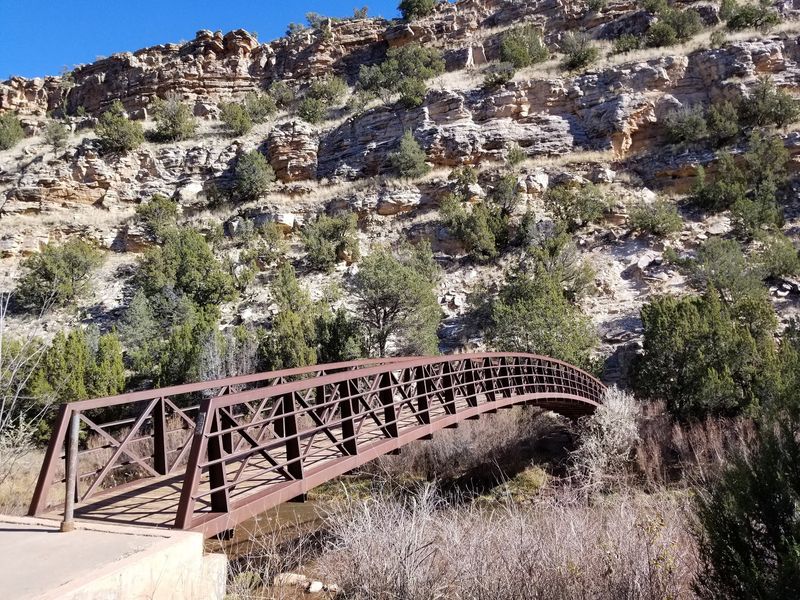
Red sandstone bluffs squeeze the Pecos River into a snug canyon at Villanueva State Park, reachable at 135 Dodge Road in Villanueva, New Mexico 87583. Old cottonwoods line the water and turn brilliant yellow once nights get cold.
Fishing keeps anglers happy along the riverbank, where catfish and trout show up depending on the season. Camping under those big trees stretches a day trip into an overnight without much added cost.
Trails climb the canyon walls for wide views over the valley, and birders do well along the brushy river corridor. The Lookout Point route counts as moderately challenging, crossing the Pecos on a footbridge before rewarding hikers with sweeping vistas.
The surrounding villages carry deep Spanish colonial roots, and the drive in passes old adobe homes and small farm plots that have been worked for generations.
Practical notes: day-use fees are low, shade is plentiful, and the park sits close enough to Interstate 25 to make an easy escape from Santa Fe or Las Vegas.
Autumn weekends stay pleasantly quiet compared to summer, which suits anyone who prefers river sounds over crowd noise.
Quiet canyon, glowing cottonwoods, and a bridge worth crossing twice.
6. Jemez Historic Site, Jemez Springs
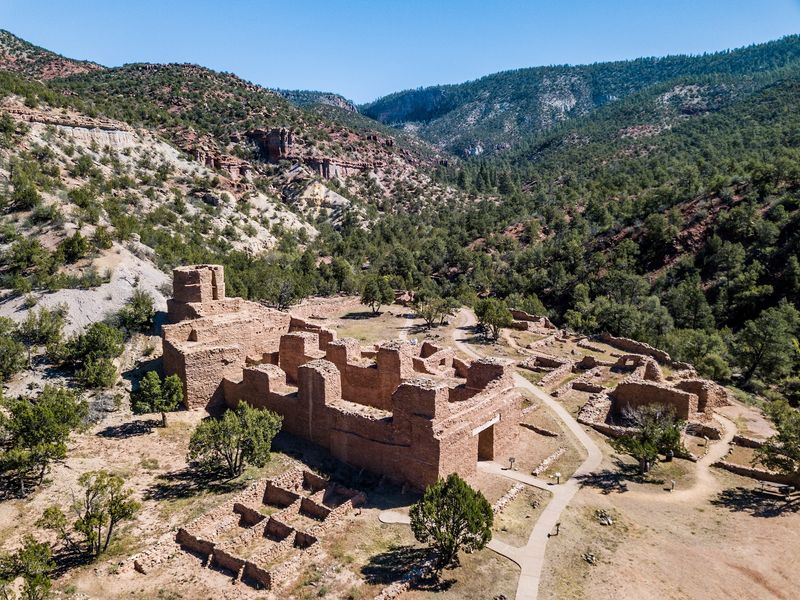
Stone walls thick enough to muffle the wind still stand at Jemez Historic Site, a National Historic Landmark at 18160 Highway 4 in Jemez Springs, New Mexico 87025. The setting is a red rock canyon that photographs beautifully in slanted autumn light.
Ruins of Giusewa, an ancestral Jemez village, spread across the grounds and once held hundreds of rooms stacked in multiple stories. Beside them rise the remains of San José de los Jemez Church, a Spanish mission built with massive stone walls.
An interpretive trail of about 1,400 feet loops through the site with signs explaining what you are seeing. The heritage center shares history and culture from the viewpoint of today’s Jemez tribal members, which gives the whole visit a fuller voice.
Fall programs like Stargazing at Gisewa and talks on ancient and modern astronomers connect the ruins to the night sky above them. Clear canyon air makes for excellent viewing.
Adult admission is a small fee, while children sixteen and under, New Mexico residents over sixty, and Tribal members often enter free. Combine the stop with a soak-free stroll through Jemez Springs village nearby.
Ancient rooms, mission stones, and stars over a canyon that keeps its secrets.
7. Cerrillos Hills State Park, Cerrillos
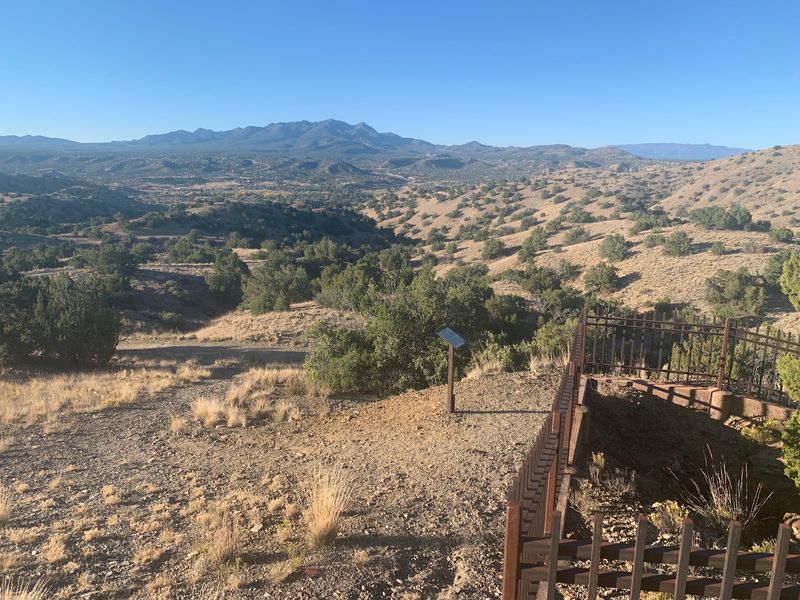
Turquoise, lead, and silver once came out of these hills, and the old diggings are still visible at Cerrillos Hills State Park, headquartered at 37 Main Street in Cerrillos, New Mexico 87010. The park sits south of Santa Fe along the Turquoise Trail.
Roughly five miles of trails handle hiking, mountain biking, and horseback riding across piñon and juniper slopes. Signs mark historic mine sites, and high points open up long views toward the Sandia, Ortiz, Jemez, and Sangre de Cristo ranges.
Day use only here, which keeps things simple: park, walk, look, leave. The visitor center opens on weekends and by appointment, offering trail advice plus a gift shop stocked with local goods.
Autumn events add flavor. Fiesta de Los Cerrillos brings donkey hikes, live music, and vendors into the mix, while Moon Hikes and Star Parties turn the dark sky into the main attraction.
The village of Cerrillos itself, with dusty streets and old storefronts, has stood in for the Old West in more than a few films. Worth a slow walk after the trails.
Vehicle fees stay modest, making this an easy budget outing.
Mining history, mountain panoramas, and donkeys that steal the show.
8. Rio Grande Nature Center State Park, Albuquerque
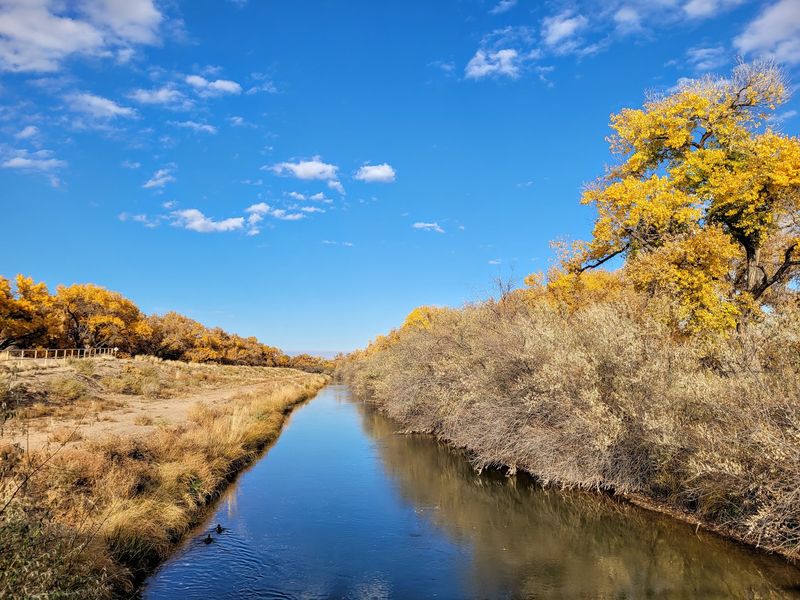
City traffic hums a few blocks away, yet the loudest sound inside Rio Grande Nature Center State Park is usually a duck. The preserve sits at 2901 Candelaria Road NW in Albuquerque, New Mexico 87107, tucked into riverside forest and meadow.
Position matters here. The park lies along the Rio Grande flyway, so hundreds of bird species pass through, including sandhill cranes in the cooler months plus roadrunners and wood ducks.
About 1.2 miles of trails wander beneath towering cottonwoods and past quiet ponds. When those cottonwoods turn gold, the whole bosque looks lit from within.
The visitor center is the clever part, with indoor viewing windows facing a pond so birdwatching stays comfortable on cold mornings. Exhibits, a nature gift shop, and outdoor blinds round it out.
Seasonal programming such as the Fall Festival and Autumn Wings focuses on migrating birds and hands-on citizen science, which gives kids something to do besides walk. A small parking fee applies.
Strollers roll easily, benches appear often, and the paths suit anyone not looking for a workout. I appreciate that a place this peaceful sits inside a major city.
Golden leaves, glass-front bird watching, and cranes without a long drive.
9. Pecos National Historical Park, Pecos
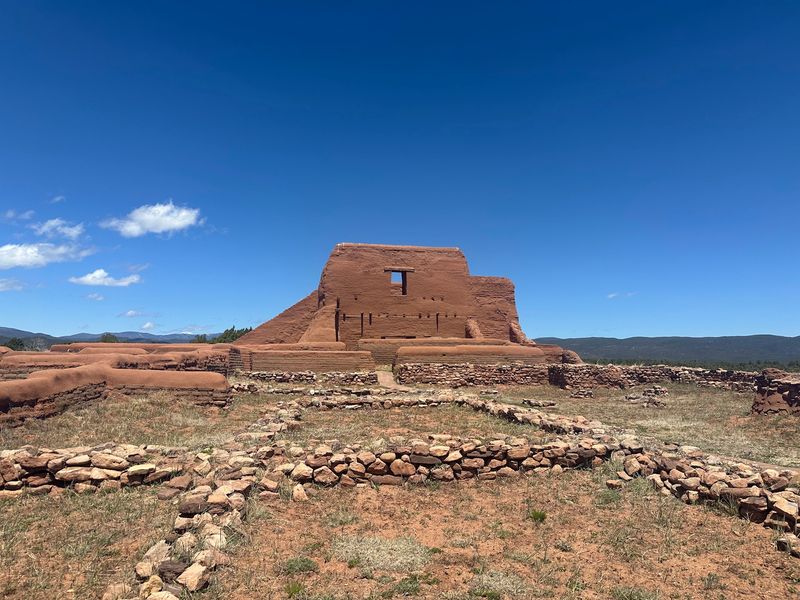
No entrance fee, a thousand years of history, and mountain air that smells like pine. Pecos National Historical Park, at 1 Peach Drive in Pecos, New Mexico 87552, sits among piñon, juniper, and ponderosa in the shadow of the Sangre de Cristo Mountains.
Ruins of Cicuye, better known as Pecos Pueblo, spread across a low ridge where Plains and Pueblo peoples once traded goods on a major scale. Nearby stand the walls of a Spanish mission church built during the colonial era.
The Ancestral Sites Trail runs about 1.25 miles, self-guided and gentle, winding past pueblo walls, reconstructed kivas you can climb into, and the mission itself. Mild autumn temperatures make the loop far more comfortable than a summer walk.
Beyond the pueblo, a 2.3-mile Civil War Battlefield Trail tells the story of the Battle of Glorieta Pass, fought right through this valley.
Ranger-led tours of the Forked Lightning Ranch, once owned by movie star Greer Garson, add a Hollywood twist to the ranching history. Availability varies, so checking ahead saves disappointment.
The visitor center museum does a solid job connecting the layers before you head outside.
Free admission and kivas you can actually descend into.
10. El Malpais National Monument, Grants
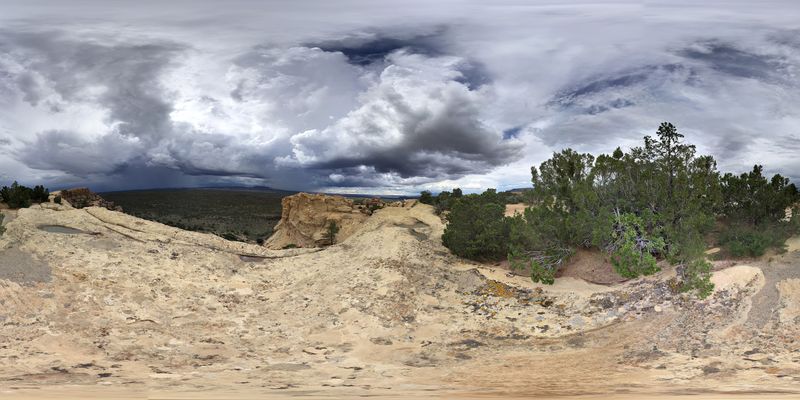
Black rock stretches to the horizon, jagged and buckled, at El Malpais National Monument, administered from 1900 E Santa Fe Avenue in Grants, New Mexico 87020. The name translates roughly to the badlands, which the terrain earns honestly.
Volcanic history wrote this landscape: sprawling lava flows, cinder cones, and lava tube caves that run cool and dark beneath the surface. Admission is free, which feels almost unfair given the scale of the scenery.
Cooler autumn weather transforms hiking here from punishing to pleasant. The Lava Falls Trail crosses newer flows over short distances, while the Zuni-Acoma Trail follows an ancient trade route and demands real effort plus sturdy boots.
For a view without the scramble, Sandstone Bluffs Overlook delivers a wide panorama across the lava sea toward distant mountains. Sunset light on the black rock is something else entirely.
Some lava tube caves open to explorers with a free permit, and rules exist to protect bats from disease, so gear cleaning matters. Bring a reliable flashlight, water, and gloves, because the rock is sharp.
Cell service is spotty and services are thin, making Grants the smart place to fuel up first.
Lava, caves, and big empty sky for exactly zero dollars.
11. El Morro National Monument, Ramah
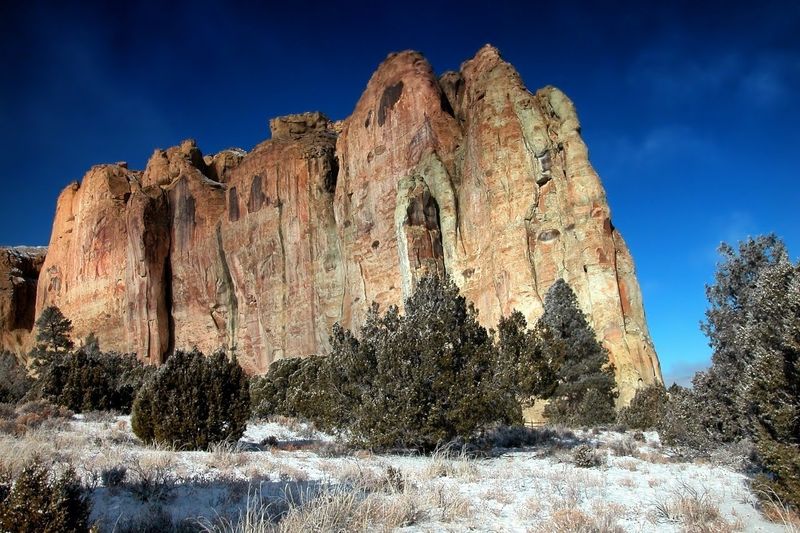
Travelers carved their names into this cliff for centuries, and the signatures are still there. El Morro National Monument stands at Mile Marker 44.6 on Highway 53 near Ramah, New Mexico 87321, a tall sandstone bluff that hid a dependable waterhole at its base.
That pool made the rock famous. Ancestral Puebloans, Spanish explorers, and later American pioneers all stopped here, leaving behind more than two thousand inscriptions and petroglyphs on the stone face.
The Inscription Rock Trail runs about 0.75 miles, with paved sections along the route passing the pool and carvings up close. Reading centuries of messages on one wall is a strange and moving experience.
Ambitious walkers take the two-mile Headland Trail up to the top of the bluff, where wide views open across the high desert and the Ancestral Puebloan village of Atsinna sits along the rim.
Autumn brings comfortable temperatures and thinner crowds, though the trail to the summit closes when weather turns icy. Elevation is high, so pace yourself.
A free, first-come campground lets visitors stay for the stars, and the visitor center handles maps and water.
Old names in stone under one of New Mexico’s darkest skies.
12. Salinas Pueblo Missions National Monument Abó Unit, Mountainair
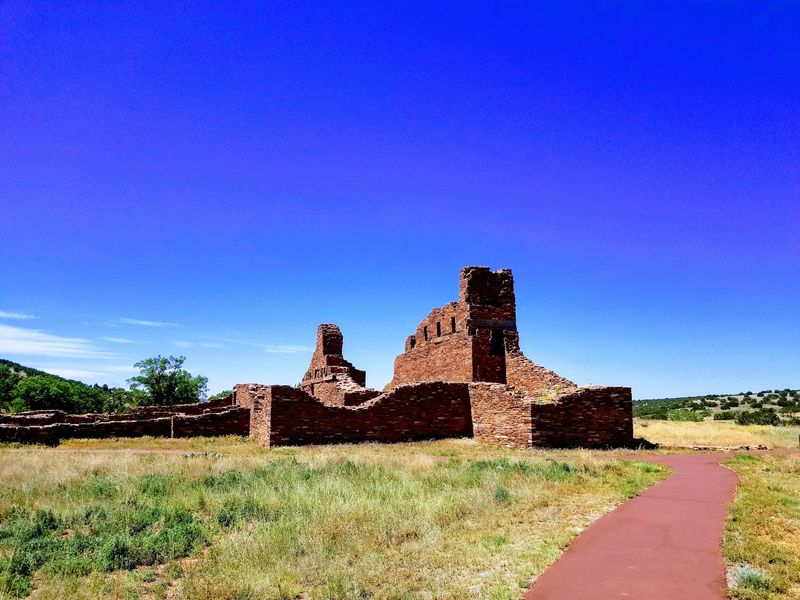
Red sandstone walls rise straight out of the grassland at the Abó Unit of Salinas Pueblo Missions National Monument, located on NM-513 about nine miles west of Mountainair, New Mexico 87036. The standing ruins catch late light in a way that stops people mid-step.
San Gregorio de Abó, a Spanish colonial mission church, dominates the site with unusually tall remaining walls. Around it sit the mounds and remnants of Ancestral Puebloan villages, evidence of people living and farming here across many centuries.
Interpretive trails loop through the stone and adobe structures at an easy pace, passing pit house depressions and pueblo room blocks. Signs explain the trade in salt, corn, and hides that made this region a crossroads.
Ranger-guided hikes run weekly and are often free, adding stories about cultural change and the wildlife that shares the site now.
Dark sky designation opens another door entirely. Dark Skies, Bright Stars events bring ranger-led evening walks, telescope viewing, and astrophotography opportunities to the ruins.
Mountainair makes a handy stop for food and gas before or after, and the drive across the Estancia Valley is quietly scenic in fall.
Roofless church, ancient neighborhoods, and a sky full of stars afterward.