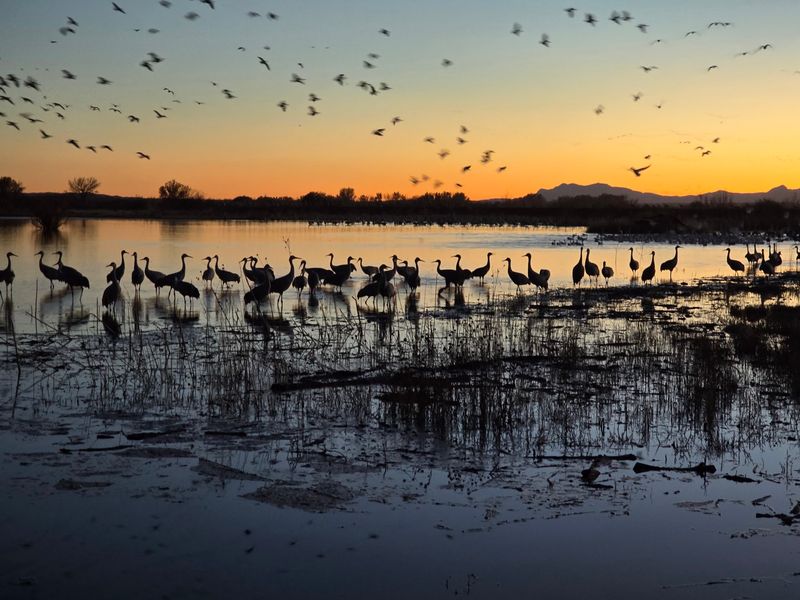
Some of the best winter spectacles in New Mexico happen far from the crowds, in places most people speed right past on the highway. Picture a cold December dawn where the sky suddenly fills with thousands of gray birds calling out all at once, and you have the whole scene to yourself.
It feels like stumbling onto a secret that somehow everyone else forgot. That’s the quiet magic waiting at a modest refuge tucked into the central part of the state.
A Highway Stop That Hides A Wildlife Wonder
Right off the highway between Albuquerque and the more famous Bosque del Apache, sits a spot plenty of travelers zip past without a second glance. Bernardo Wildlife Area, at 164 NM-116 in Bosque, New Mexico, turns out to be one of the state’s quietest winter treasures.
Managed as part of the larger Ladd S. Gordon Waterfowl Complex, this roughly 1,700-acre area gives sandhill cranes and snow geese a safe place to spend the cold months.
Regulars describe it as a mini version of its better-known neighbor, only closer to the city and far less crowded.
What makes it special is the sense of solitude. You can pull off along a dirt road, roll down your window, and simply watch.
Visitors often say they saw more birds here than at the big-name refuge nearby.
It’s the kind of place that rewards curiosity. Nobody hands you a glossy brochure or a crowded parking lot.
Instead, you get open fields, big skies, and a front-row seat to one of New Mexico’s most impressive natural gatherings.
Part Of A Bigger Waterfowl Story
Behind every great birding spot is a bit of careful planning, and Bernardo is no exception. It belongs to the Ladd S.
Gordon Waterfowl Complex, a network managed by the New Mexico Department of Game and Fish to give migrating birds a reliable place to rest and feed.
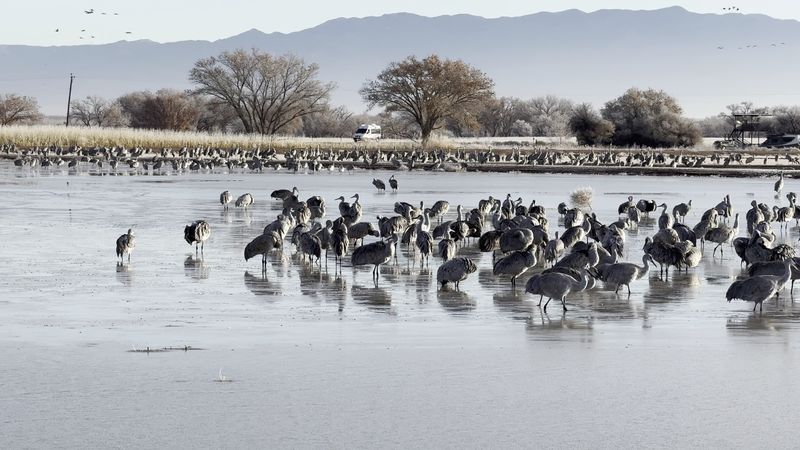
Each winter this stretch of the Middle Rio Grande Basin welcomes as many as 12,000 sandhill cranes and 25,000 snow geese. Together with nearby refuges, it helps feed roughly half of the waterbirds that spend the season in the region.
The land didn’t become bird paradise by accident. Fields are flooded and crops are planted on purpose, all to keep the flocks well-fed and healthy through the coldest stretch of the year.
Long-time visitors mention ongoing projects to expand the habitat, with hopes it may one day rank among the crown jewels of New Mexico nature reserves. For now, it quietly does its job, spreading the crane population across the valley so no single spot carries the whole load.
When The Cranes Fill The Winter Sky
Timing is everything if you want the full show. From mid-November through mid-February, the refuge comes alive as sandhill cranes settle in for the season.
These birds belong to the Rocky Mountain population, and they travel along the Central Flyway from northern nesting grounds in places like Wyoming, Idaho, Montana, Colorado, Alaska, and Canada. They’re chasing warmer weather, drifting as far south as New Mexico, southeast Arizona, and northern Mexico.
By late November most have arrived, and they begin heading back north around mid-February. Their travels are genuinely impressive: cranes can fly up to 50 miles per hour and cover as much as 400 miles in a single day.
Visitors who came in December and early February report skies thick with thousands of birds. One traveler who arrived just after sunrise on a single-digit morning couldn’t stop snapping photos, calling it a once-in-a-lifetime experience.
If you’re planning a trip, January and February often bring the peak numbers, though you’ll rarely find the crowds you might expect for a scene this dramatic.
Getting To Know These Towering Birds
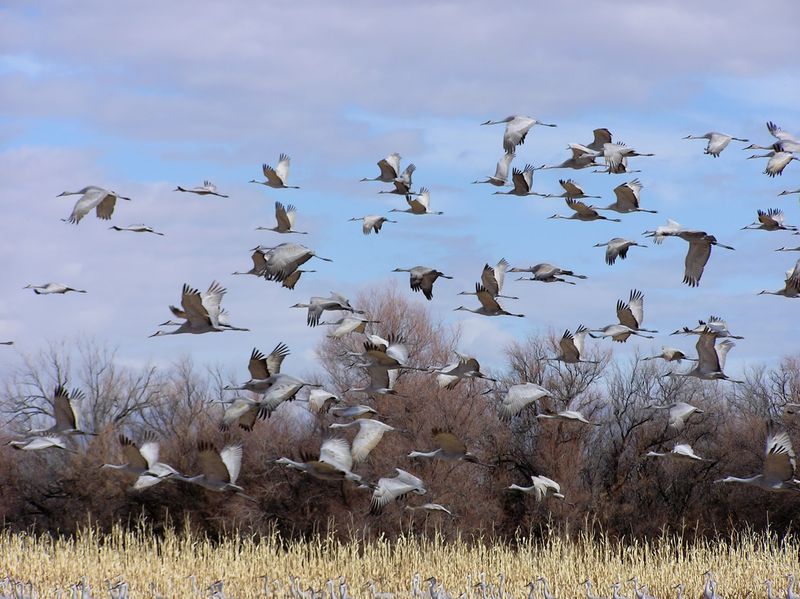
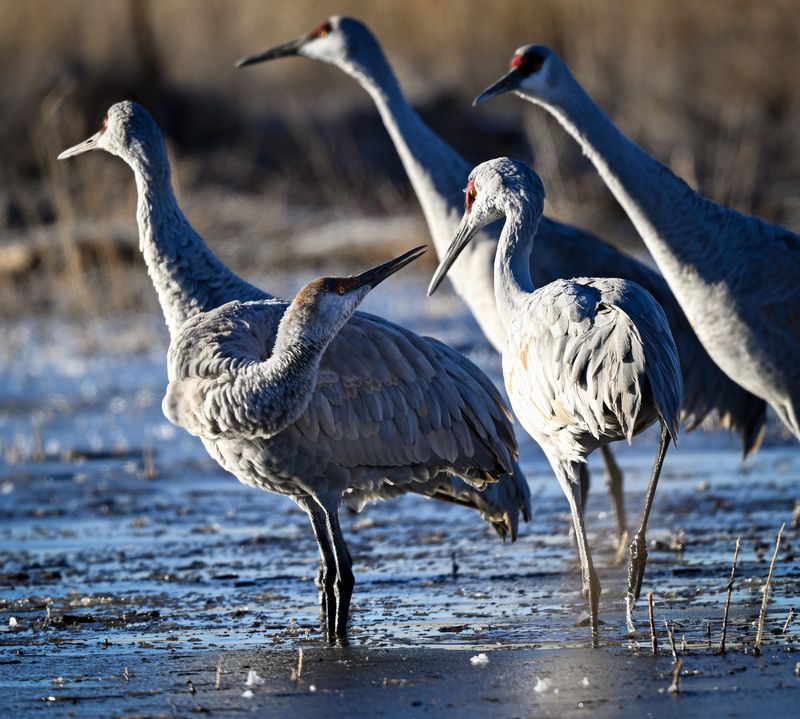
Standing four to five feet tall with wingspans stretching up to 6.5 feet, sandhill cranes are hard to mistake for anything else. Their bodies are a soft gray, topped with a striking crimson cap that gives them a regal look.
Younger birds, charmingly called colts, wear brownish heads before they grow into their adult colors. Watch a family group and you can often pick out the youngsters trailing close to their parents.
These are patient, long-lived birds with a graceful, deliberate way of moving through the shallows. When they lift into the air together, the effect is genuinely breathtaking.
What surprises many first-time visitors is the scale of it all. Seeing a couple of cranes back home feels exciting, but standing among tens of thousands, as one awestruck traveler put it, is a completely different experience.
Bring binoculars and you’ll notice the little details: the red patch of skin near the eye, the elegant curve of the neck, and the way they tilt their heads while feeding. Up close, they’re every bit as impressive as their reputation suggests.
The Rolling Call You Feel In Your Chest
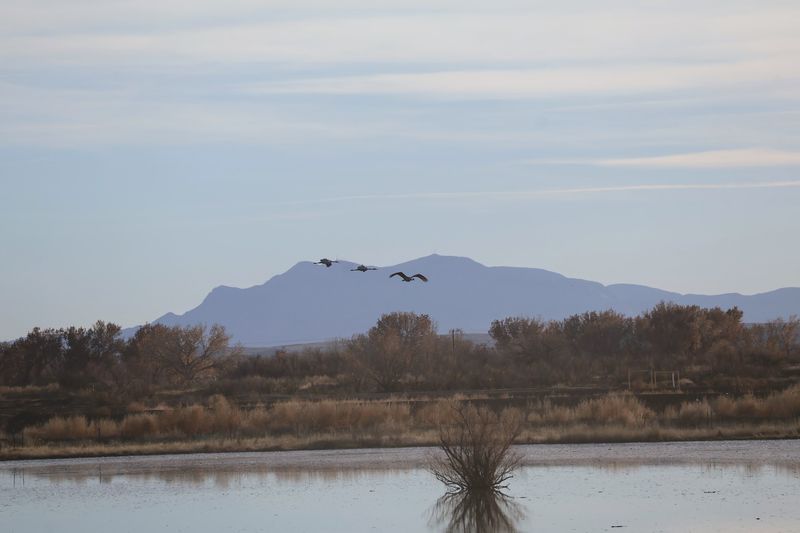
Long before you spot the birds, you’ll hear them. Sandhill cranes announce themselves with a loud, rolling, trumpeting rattle that can carry more than two miles across open ground.
That deep, resonant sound isn’t just for show. It comes from a remarkably long trachea that coils inside the bird’s breastbone, giving each call an unusually rich and far-reaching tone.
Cranes have plenty more to say, too. Softer purrs keep mates and family close, sharp guard calls sound the alarm, and synchronized unison calls strengthen the bond between paired birds.
The young colts chime in with thin, high-pitched peeps.
Visitors often talk about the soundscape as much as the sight. One described the whole experience as being dropped into the middle of a nature documentary, complete with squawks, rattles, and rustling wings.
Standing quietly beside your car as the noise swells and fades is oddly moving. It’s a reminder that this refuge isn’t just something you look at, it’s something you hear, feel, and remember long after you’ve driven home.
Dawn And Dusk Flights Worth Setting An Alarm For
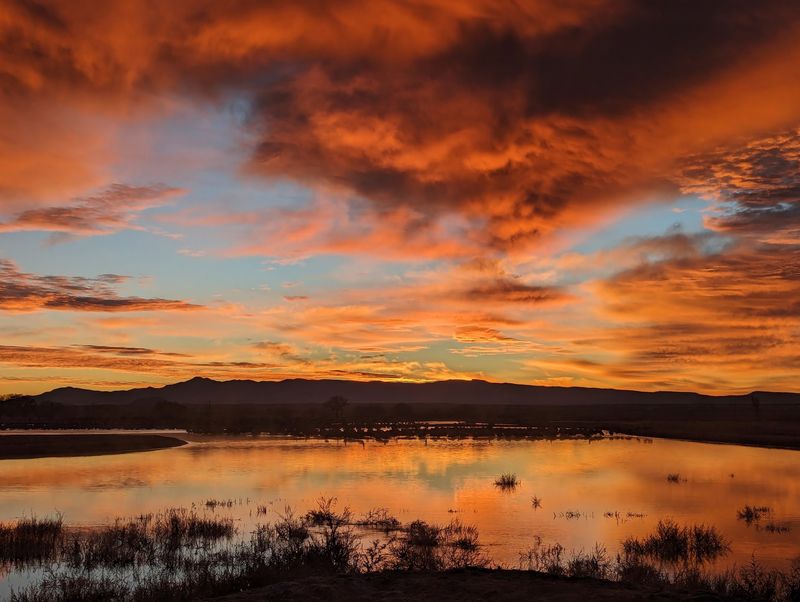
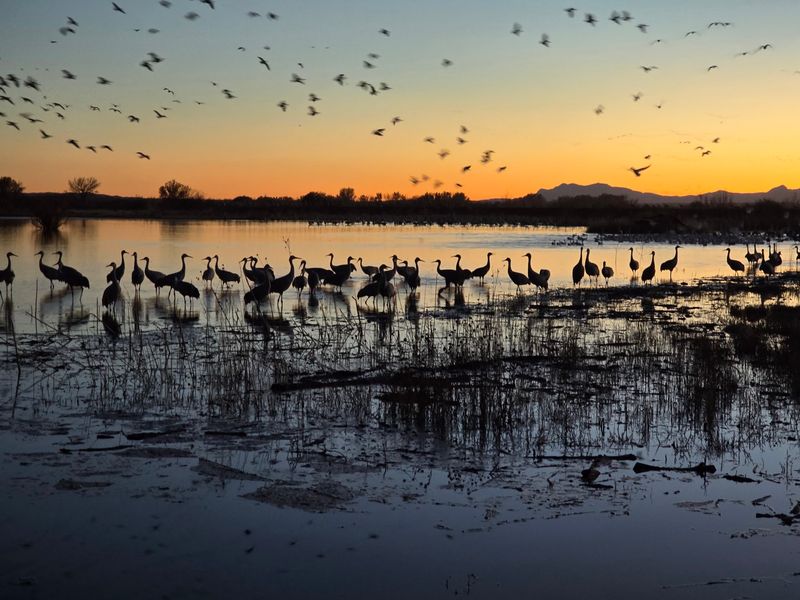
The daily rhythm of the birds is where the real drama lives. As the sun dips low, thousands of cranes and geese rise together and glide toward ponds and flooded fields, where shallow water keeps them safe from coyotes through the night.
Come dawn, the whole scene runs in reverse. The flocks lift off in a swirling, noisy cloud and scatter toward the cultivated fields to feed for the day.
Those fields are planted on purpose with corn, winter wheat, sorghum, and alfalfa, giving the wintering birds plenty to eat. Managers even trim the corn periodically so the cranes can feast, and feast they do, gathering in magnificent droves.
Visitors who braved the early cold say the sunrise liftoff was the highlight of their trip. Several called the sunrises and sunsets here extraordinary, the kind that make freezing fingers feel entirely worth it.
If you can only pick one time to visit, aim for first light or the golden hour before dusk. That’s when the sky truly comes alive.
Those Mesmerizing Crane Dances
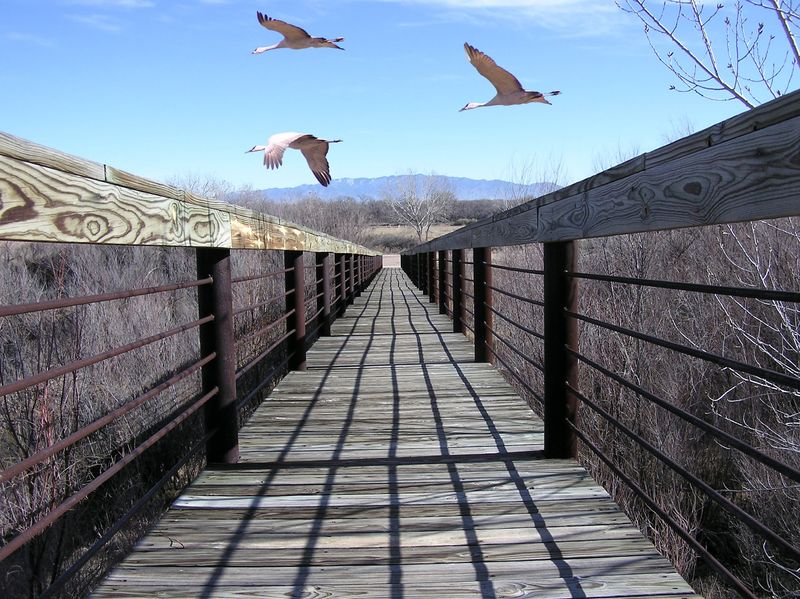
Few things in the bird world are as delightful as a crane dance. With wings flapping, heads bowing, and bodies leaping into the air, these performances look almost choreographed.
Sometimes the birds toss sticks or bits of plants skyward, adding a playful flourish to the whole routine. While the dancing is often tied to courtship, you can spot it throughout the year, not just during the mating season.
There’s a tender side to these birds, too. Sandhill cranes form lifelong pair bonds, and their young colts stay close to their parents for nine to ten months after hatching.
Watching a pair move in sync, mirroring each other’s steps, it’s easy to see why people linger long past when they meant to leave. One visitor admitted they simply didn’t want to go home.
Bring patience and keep your eyes on the crowd. Amid thousands of feeding birds, a sudden burst of leaping and wing-spreading can happen at any moment, and catching one of these graceful displays feels like a small, joyful reward for showing up.
The Three-Mile Loop You Can Drive, Walk, Or Bike
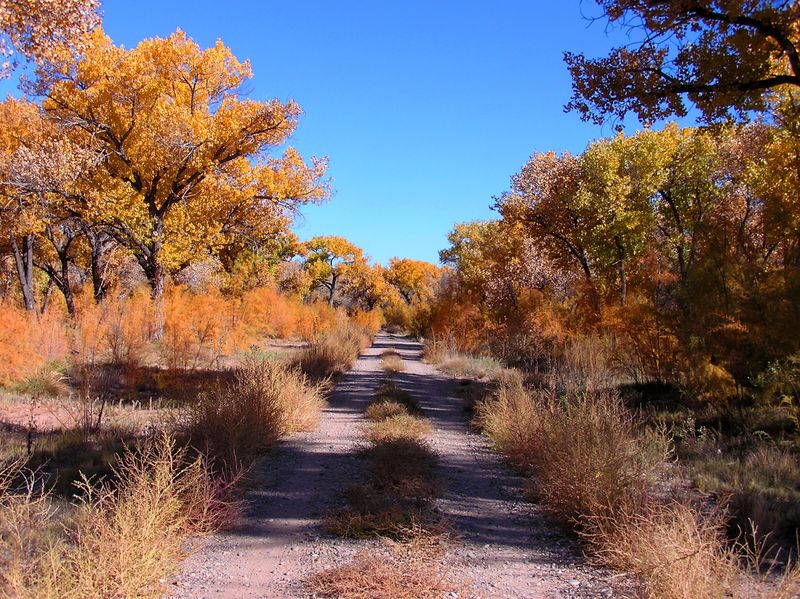
Exploring here is refreshingly simple. A three-mile loop winds through the refuge, and you’re welcome to drive it, walk it, or pedal it at your own pace.
The roads themselves get high marks from visitors, with several noting they were among the smoothest and best-maintained they’d seen anywhere in the state. Numerous pullouts and parking areas let you stop wherever the birds happen to gather.
Because much of the experience happens from the roadside, you can simply ease your car onto the shoulder, roll down the window, and watch. On quieter days it feels like the whole loop belongs to you.
A few visitors mention that signage about the size and location of the trails could be clearer, and that on some days certain fields hold more water and more birds than others. Scouting the different pullouts pays off.
If the gates happen to be locked when you arrive, longtime regulars suggest walking in if you’re able. However you travel it, the loop keeps things easy, unhurried, and perfectly suited to slow wildlife watching.
Elevated Platforms And Hidden Blinds
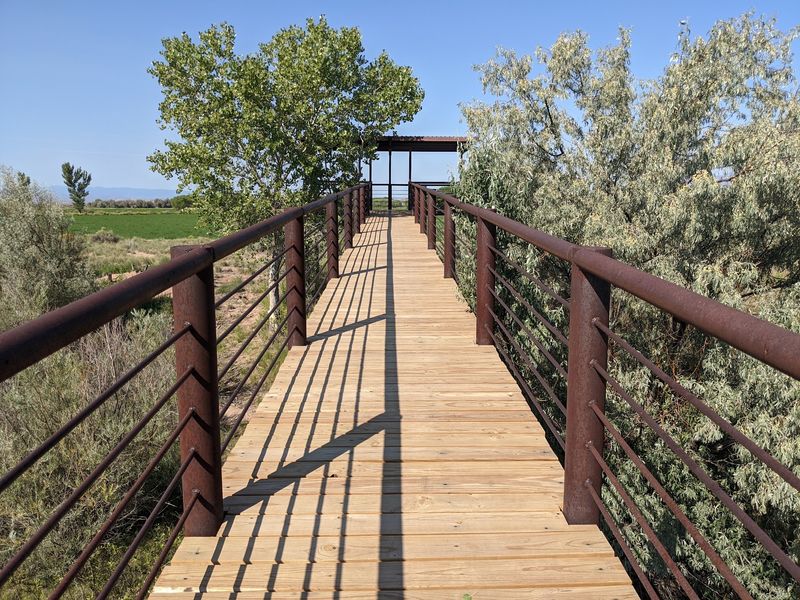
For serious watching and photography, the built-in vantage points make a real difference. Three elevated platforms give you a sweeping look across the fields, perfect for taking in the sheer scale of the flocks.
Tucked near the water, wooden blinds offer concealed spots where you can observe wildlife along the shoreline without spooking anything. Visitors describe these blinds as super cool and well worth seeking out.
The setup lets you stay close to the action while keeping a respectful distance. Because the birds aren’t disturbed, they often carry on feeding and calling just as they would if no one were there.
Photographers especially appreciate the strategic placement of these structures near the water features. One visitor noted the cranes seemed unbothered by calm, patient observers standing about thirty feet away.
Even if you’re not chasing the perfect shot, climbing a platform at first light is a lovely way to soak in the whole panorama. From up high, the shifting patterns of thousands of birds spread out below you turn an ordinary morning into something you’ll want to describe to everyone back home.
A Photographer’s Playground With A Few Rules
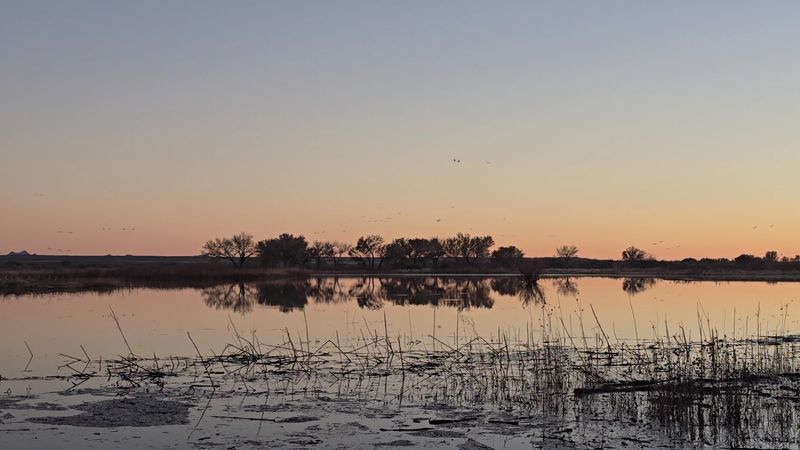
Camera lovers tend to fall hard for this place. With thousands upon thousands of birds moving across the fields, the photo opportunities feel almost endless.
That said, gear matters here. One photographer found that a 200mm lens on a full-frame camera wasn’t quite enough, suggesting something closer to 600mm to really fill the frame with distant birds.
Since the rules keep you on the roadway, some visitors note that the cranes can sit farther off than they’d like for close-up shots. A little patience and the right lens go a long way toward solving that.
Even so, plenty of people leave thrilled with what they captured. One traveler admitted many of their pictures came out blurry, yet they still treasured the experience of standing amid the swirl of wings and calls.
The golden rule everyone repeats is respect. It’s a preservation area first, so honoring the wildlife, the land, and fellow watchers keeps it magical for the next person.
Come prepared, stay calm, and let the birds come to you rather than pushing for that perfect frame.
More Than Just Cranes And Geese
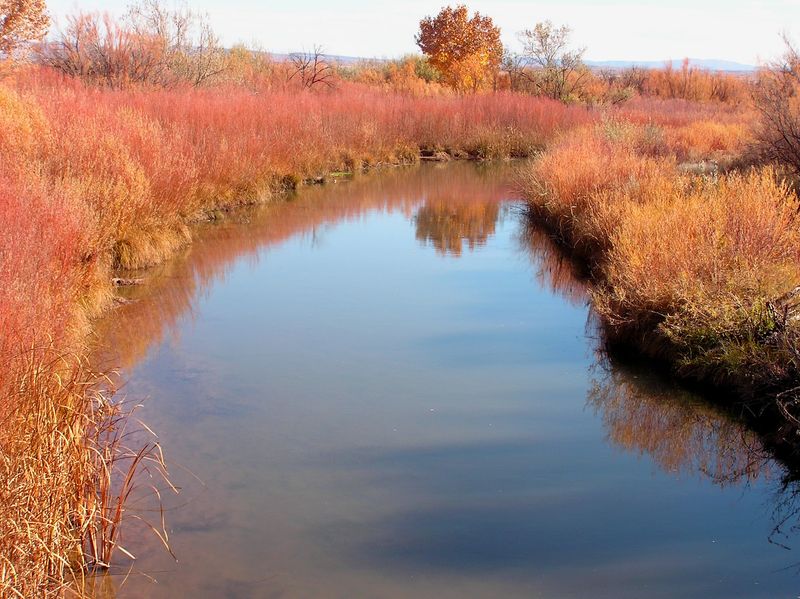
While the cranes and snow geese steal the spotlight, they’re far from the only residents worth watching for. The refuge’s mix of wetlands, grasslands, and woodlands supports a surprising range of creatures.
Lucky visitors have spotted a bald eagle surveying the fields, small herds of deer grazing nearby, and even the occasional out-of-place pheasant wandering among the crowds. Each sighting adds a little thrill of the unexpected.
The variety comes down to habitat. Different landscapes attract different animals, so a slow loop around the property can turn up more than you bargained for.
Snow geese travel in their own dazzling numbers, sometimes gathering by the thousands right alongside the cranes. The contrast of white birds against the gray flocks makes the scene even more striking.
Keep your eyes moving as you drive, and don’t fixate only on the big gatherings. Scanning the tree lines, water edges, and open grass often reveals a quieter cast of characters.
Part of the fun here is never quite knowing what might show up next, which keeps every visit feeling fresh.
Who Will Love This Quiet Escape
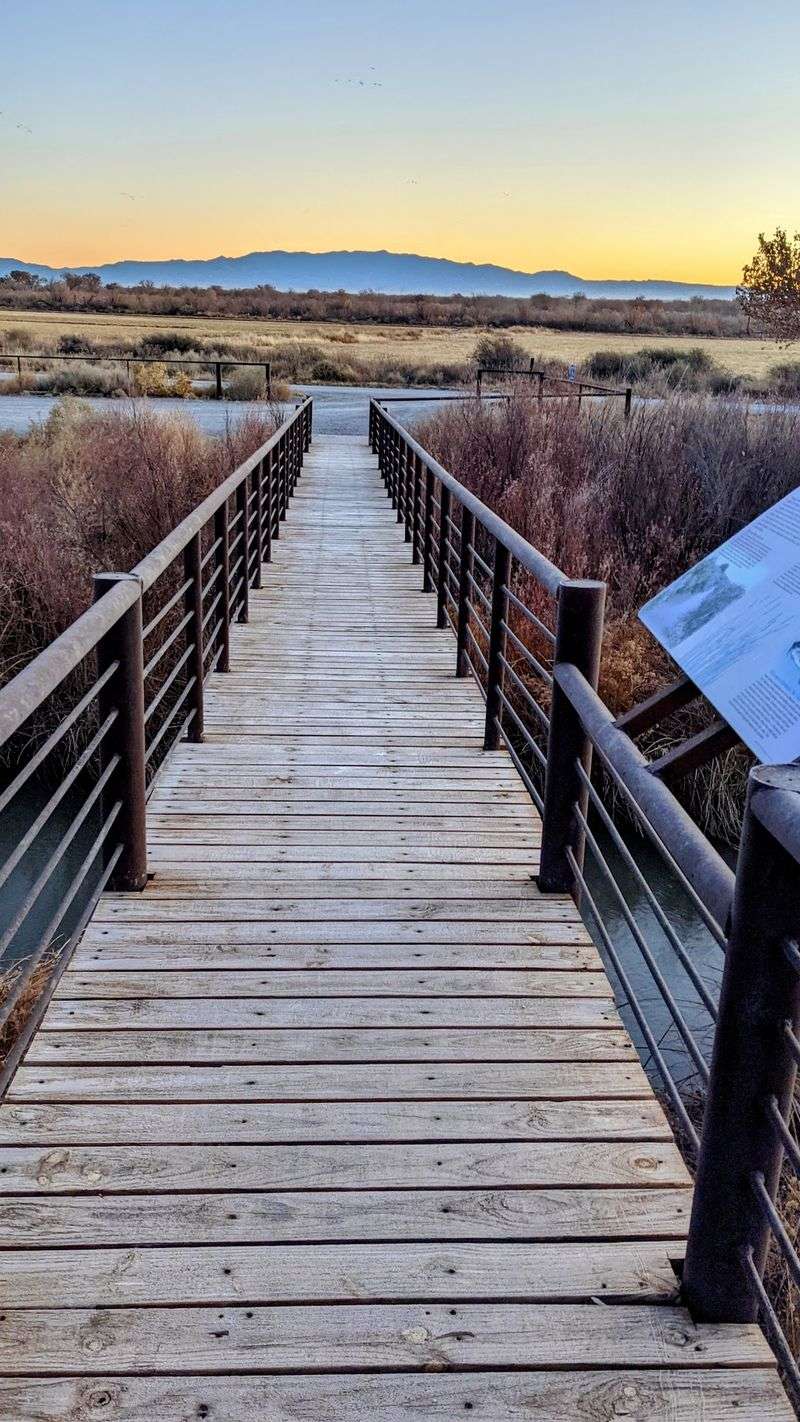
Wondering whether this trip is right for you? The short answer is that it welcomes just about everyone who enjoys the outdoors.
Dedicated birders and photographers clearly adore it, but so do families looking for an easy adventure. One visitor brought the kids, who loved the birds, the informational signs, and the whole experience enough that a return trip was already planned.
Grandparents mention wanting to bring grandchildren back, and casual day-trippers describe simply stumbling onto the place and being blown away. Because so much happens right from the car, it works well for all ages and energy levels.
The peaceful, uncrowded feel is a big part of the charm. Instead of jostling for a spot, you get room to breathe and time to watch without pressure.
Do keep in mind that this is a managed wildlife area, so during hunting season, roughly late October through late January, you may hear waterfowl hunters at nearby fields and an adjacent hunt club. It’s simply part of how these lands work, and it doesn’t take away from the beauty of watching the flocks.
Planning Your Visit To This Free Hidden Gem
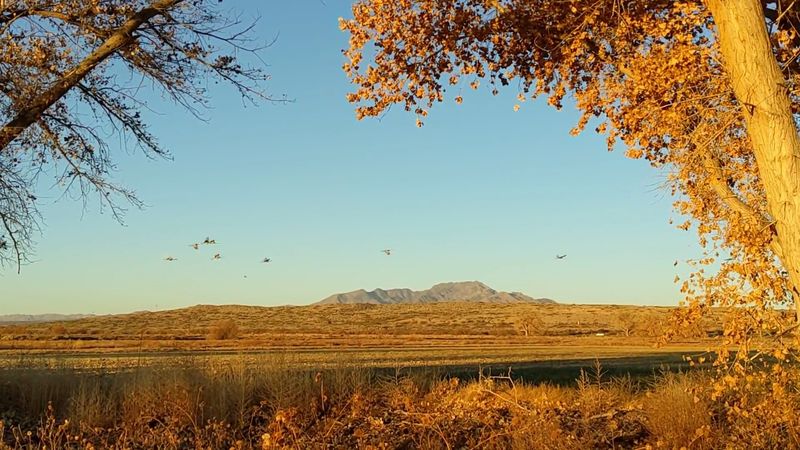
Best of all, this remarkable experience won’t cost you a thing. Admission to Bernardo Wildlife Area is free, which makes it an easy yes for any winter bird lover.
Getting there is simple, too. It sits just about an hour from Albuquerque, right off the highway on the way toward Bosque del Apache, so you can pair it with a longer road trip or make it the whole outing.
Come prepared for a rustic setting. There are restrooms on-site, but it’s smart to pack your own drinking water, binoculars, and a field guide to get the most out of your time.
Dress warmly, since the best crane action happens at sunrise and sunset when temperatures can dip well below freezing. Visitors who braved single-digit mornings still call the experience unforgettable.
If you want the fullest fields and the biggest flocks, aim for December through early February, and check current conditions since water levels shift from spot to spot. Quiet, free, and endlessly rewarding, this overlooked refuge just might become your favorite New Mexico winter secret.