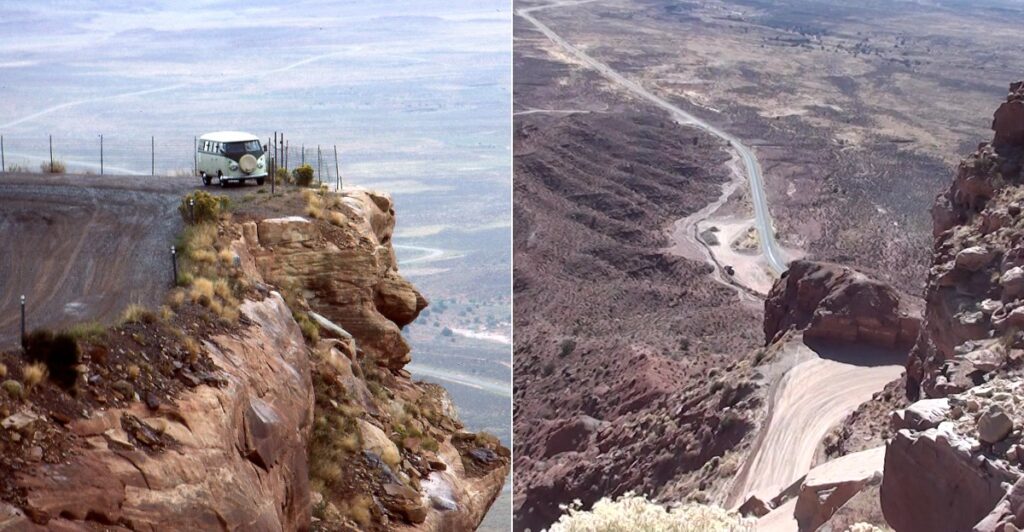
Not every memorable drive needs speed, distance, or a famous finish line. Sometimes the road itself becomes the story, especially when gravel switchbacks start climbing a mesa and the desert drops away beside you.
On this stretch of State Route 261, the drama arrives quickly in southeastern Utah, where steep grades and sharp turns demand attention without requiring a ticket or tour. The reward is a sequence of huge views that make every careful mile feel earned.
Drivers can pull over, take in the landscape, and appreciate how abruptly the terrain changes from open road to cliffside ascent. It is short enough to fit into a larger day, yet distinctive enough to become the part everyone remembers afterward.
For travelers who enjoy a little tension with their scenery, this corner of Utah turns an ordinary drive into something far more memorable than another line on the itinerary long after sunset.
The Promise Is Simple: Drive Slowly And Look Far
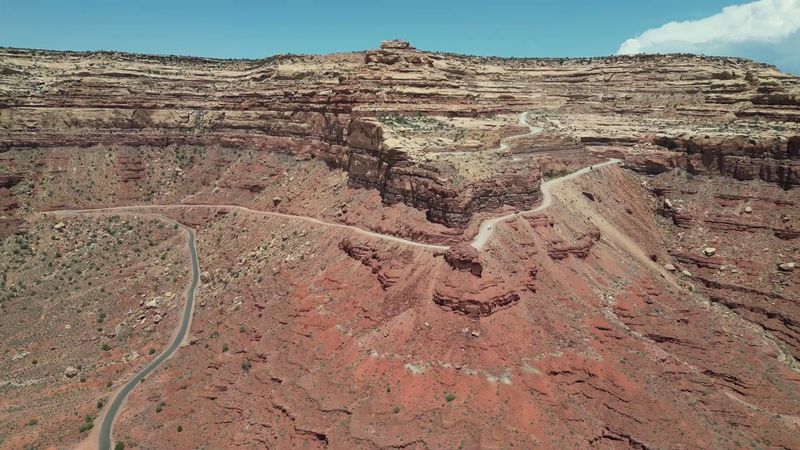
The appeal of Moki Dugway is easy to understand before the first switchback. It is a short, dramatic road that gives travelers a big scenic payoff without asking them to hike miles, book a shuttle, or decode backcountry directions.
The unpaved portion is commonly described as about three miles long, with a climb or descent of roughly 1,200 feet. That is enough to make the steering wheel feel more important than the playlist.
The grade can reach about 10 percent, so slow driving is not just polite, it is practical.
In dry weather, many standard passenger vehicles can handle the route when driven with care. Large RVs, trailers, and nervous drivers deserve a more cautious decision.
Nobody earns extra vacation points for pretending a cliff road is no big deal.
Moki Dugway works because the experience is clear. The road climbs Cedar Mesa, the gravel demands attention, and the open views explain why people keep talking about it.
In a state full of famous landscapes, Utah still manages to surprise drivers with a road that feels almost too direct.
A Gravel Climb That Changes The Whole Plan
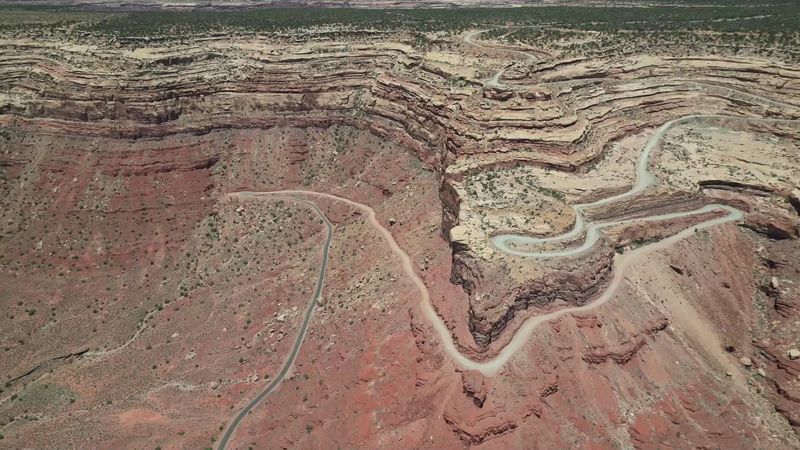
A loose plan suddenly feels more interesting when the map points toward Moki Dugway. The official Google Maps listing places it at UT-261, Mexican Hat, UT 84531, United States, which is wonderfully plain for a road that behaves nothing like a plain address.
Moki Dugway sits on Utah State Route 261 in southeastern Utah, north of Mexican Hat and below Cedar Mesa. It is not a theme park version of adventure.
It is a real public road, partly gravel, climbing a cliff face through tight switchbacks and serious elevation gain.
That makes planning refreshingly simple, in the old road trip sense. You do not need a reservation window, matching wristbands, or a family meeting that turns into a committee hearing.
You need dry conditions, a careful driver, and enough time to go slowly.
The road is famous because it compresses a lot into about three miles: steep grade, unpaved surface, exposed turns, and views across Valley of the Gods country. Moki Dugway gives Utah travelers a direct lesson in how quickly ordinary pavement can become a memorable decision.
Cedar Mesa Does Not Ease You In
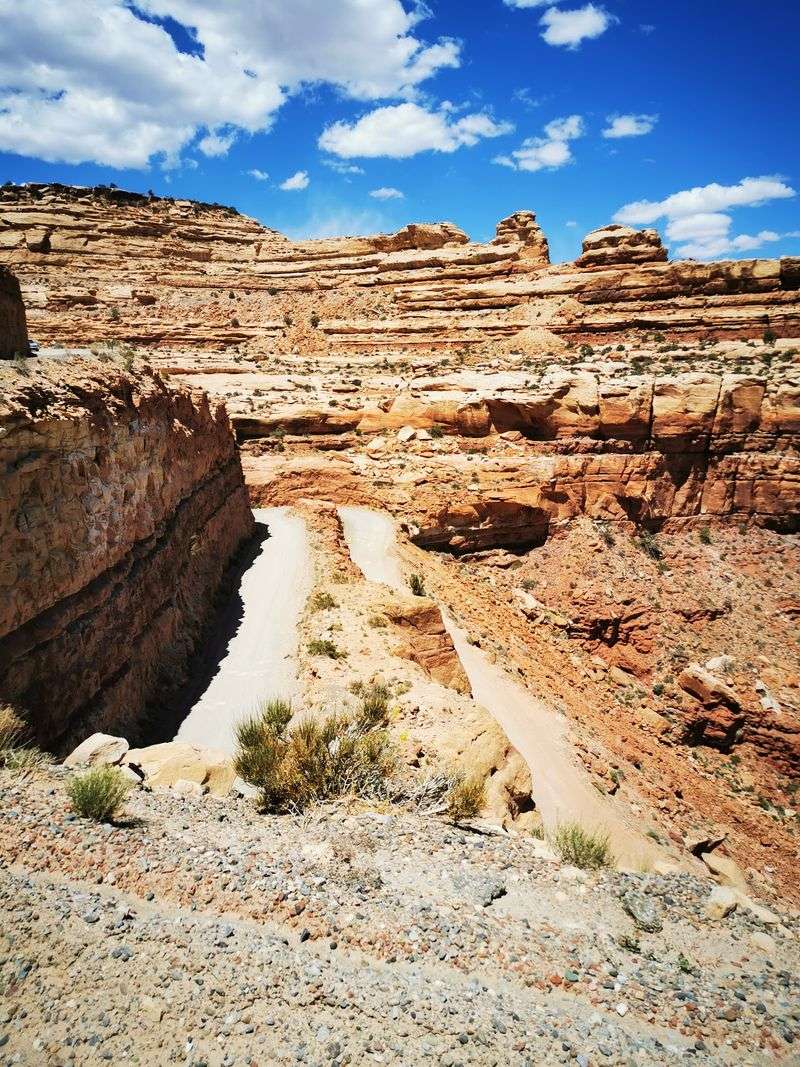
Cedar Mesa gives Moki Dugway its personality, and it is not a shy one. Approaching from the south, Utah State Route 261 moves through open desert before the road begins climbing the mesa wall in a way that gets everyone in the vehicle sitting a little straighter.
The setting is part of the Colorado Plateau, where broad views and exposed rock layers make distance feel almost measurable. The dugway itself is carved into the side of the mesa, with gravel switchbacks that replace casual cruising with careful line choice.
There are sections without guardrails, which is one reason the drive has its white knuckle reputation. That does not mean panic is the proper strategy.
It means drivers should slow down, stay alert for oncoming traffic, and use pullouts when needed.
Moki Dugway is also visually specific in a way that generic scenic roads are not. Rock wall on one side, open drop on the other, and desert country spreading below create a layout that drivers understand immediately.
Utah has many grand views, but this road makes you work for them in low gear.
A Mining Road With A Second Life
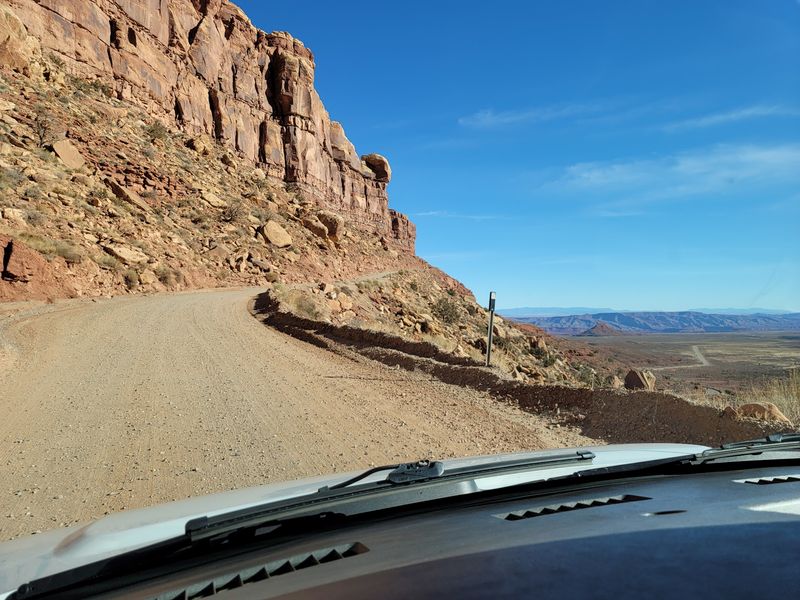
The road holds attention because it was built for work before it became famous for road trip nerves. Moki Dugway was constructed in 1958 by Texas Zinc Minerals to move uranium and vanadium ore from the Happy Jack Mine area on Cedar Mesa toward a mill near Mexican Hat.
That origin gives the route a useful kind of honesty. The curves were not designed as a scenic gimmick, even though the scenery now does a very convincing job of stealing the assignment.
The dugway solved a transportation problem in rough country.
Good To Know: Moki Dugway remains part of Utah State Route 261, so it is a real road rather than a closed historic exhibit.
Its current role connects modern travelers with a specific chapter of southeastern Utah history. The mining traffic is gone, but the route still shows how engineering, geology, and necessity met on the face of Cedar Mesa.
Moki Dugway is also associated with the Trail of the Ancients National Scenic Byway, a broader regional route tied to archaeology, mesas, and desert communities. Knowing that background changes the drive.
The switchbacks become more than a thrill, they become evidence of how people found practical paths through very demanding land.
Different Travelers Find Different Reasons To Grip The Door Handle
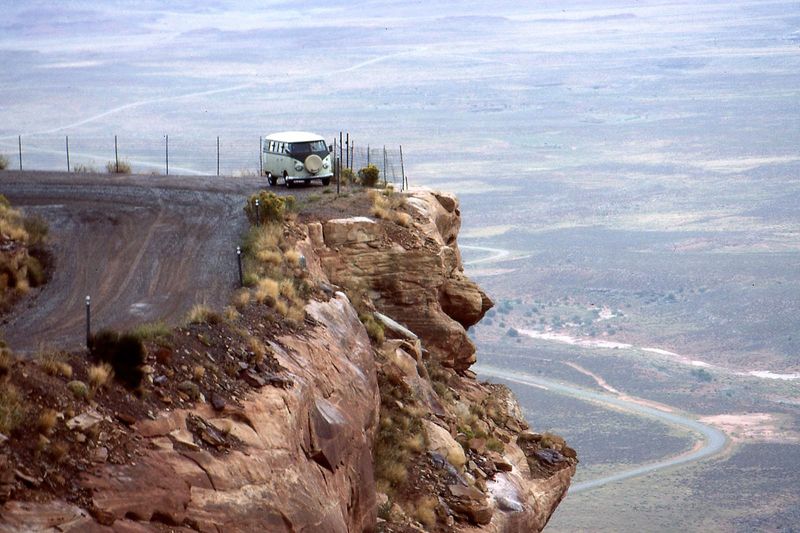
Families, couples, solo travelers, and weekend drivers can all read Moki Dugway differently, which is part of its odd charm. One passenger may be studying the geology.
Another may be silently negotiating with gravity. Both are having a very Utah moment.
Families should treat the drive as a slow observation outing, not a race to the top. Kids who are old enough to notice elevation changes may find the switchbacks more interesting than another long highway stretch, especially when adults explain why the gravel road climbs the mesa in tight bends.
Couples get a shared decision that is more memorable than choosing lunch. Solo visitors may appreciate the simple focus the road requires, since there is not much room for multitasking when the cliff is handling visual drama.
Weekend travelers can fold it into a broader San Juan County route without building an entire vacation around one stop.
Moki Dugway rewards honest self assessment. Drivers uncomfortable with heights, gravel, or narrow curves should not feel silly choosing another route.
For steady drivers in suitable conditions, the road offers a compact, memorable encounter with southeastern Utah terrain and the kind of story that needs very little polishing later.
A Simple Saturday Detour With Serious Steering
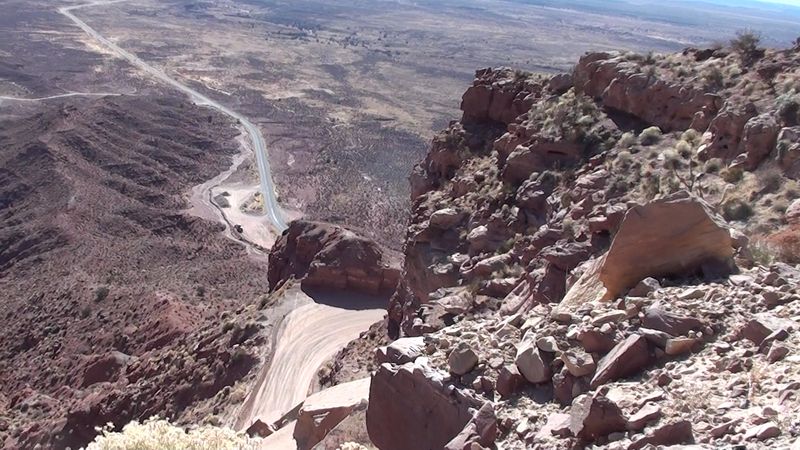
A simple Saturday detour is the right scale for Moki Dugway, provided the weather and vehicle both cooperate. The address to use for navigation is UT-261, Mexican Hat, UT 84531, United States, though the real instruction is even shorter: take your time.
The road is listed as open 24 hours, but daylight is the sensible choice for most travelers. Gravel, curves, steep grades, and limited barriers are easier to manage when visibility is clear.
Rain, snow, or muddy conditions can change the character of the drive quickly, so checking current road and weather information is smart.
Travelers should avoid dragging long trailers into a situation that already has enough personality. A standard vehicle in dry conditions may be fine, but bigger rigs need extra caution.
Pullouts are useful for pausing, letting traffic pass, or simply giving the person in the passenger seat a chance to unclench diplomatically.
Moki Dugway does not require a full itinerary. Bring water, keep fuel needs in mind, drive slowly, and avoid treating the route like a shortcut that owes you time.
In this part of Utah, the practical plan is the calm one: steady speed, clear weather, and no hurry.
Why The Scary Part Stays With You
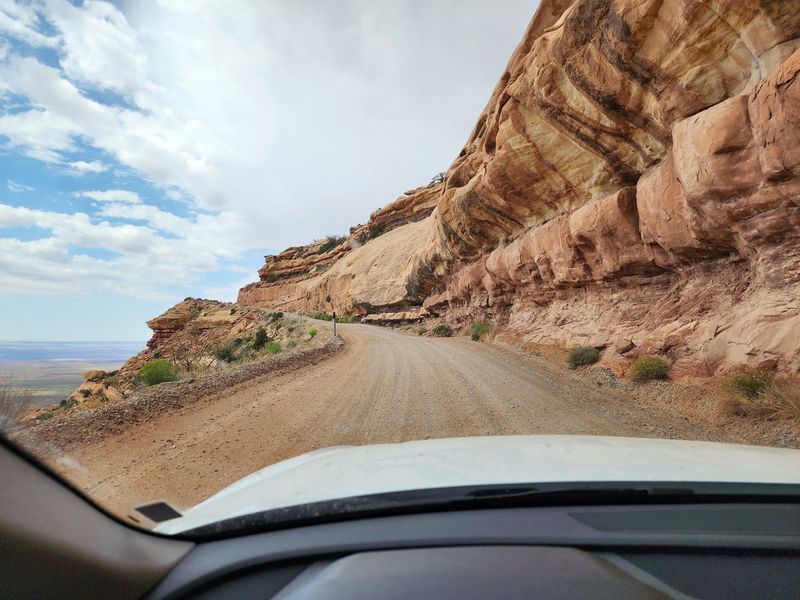
The lasting memory of Moki Dugway is not only that it feels scary. Plenty of roads can raise a pulse.
This one stays interesting because the drama has a clear shape: a short gravel climb, a big elevation change, exposed switchbacks, and a high desert view that explains the fuss without a brochure doing cartwheels.
Its strongest feature is the way it makes geography understandable. Cedar Mesa is no longer just a name on a map.
Valley country below, mesa country above, and the road between them all line up in one visible lesson. Utah often does this well, turning scale into something a driver can actually grasp.
Moki Dugway also respects attention. Go slowly, choose the right conditions, and the road can be managed by many travelers.
Rush it, ignore weather, or bring the wrong vehicle, and the experience becomes more stressful than it needs to be. That is not mystery.
That is common sense wearing hiking boots.
For road trippers who like their scenery with a little honest effort, Moki Dugway is hard to forget. Text the careful driver in your group and say, “It is only three miles, but you will talk about the turns all the way home.”