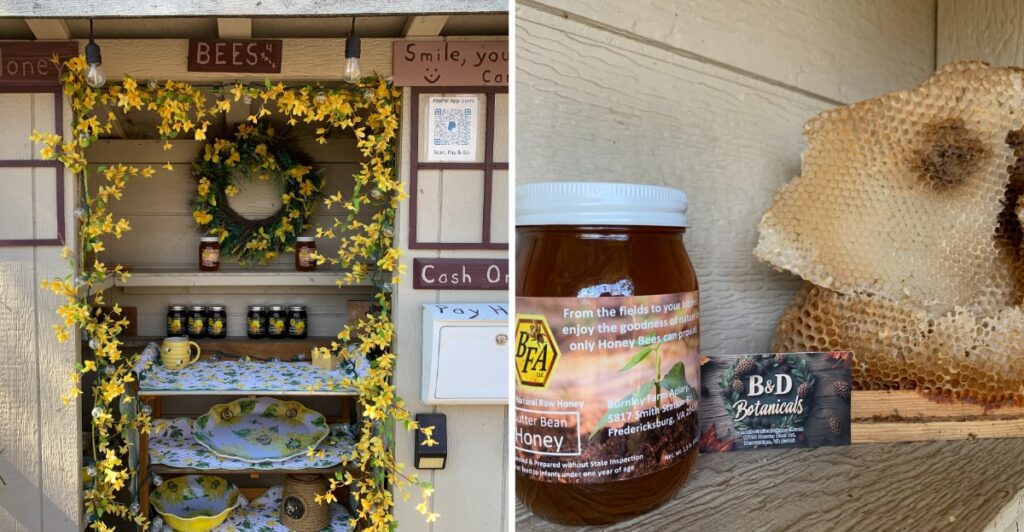
Honey tastes a little more interesting when the bees did the shopping.
At this Virginia farm stand, the jars come straight from the apiary’s own hives, and the setup is about as unfussy as it gets.
Grab what catches your eye, then head home with honey that reflects where the bees have been working.
Wildflower jars keep things local, while varietal batches can lean toward crops like blueberry or cranberry.
The stand may be small, but the operation behind it is not.
Dozens of hives work across several bee yards, with some colonies also helping nearby farms through pollination.
I’d go in thinking one jar was enough.
Then blueberry honey would start making its case.
Burnley Farm Apiary Grew From A Few Hives Into A Working Apiary
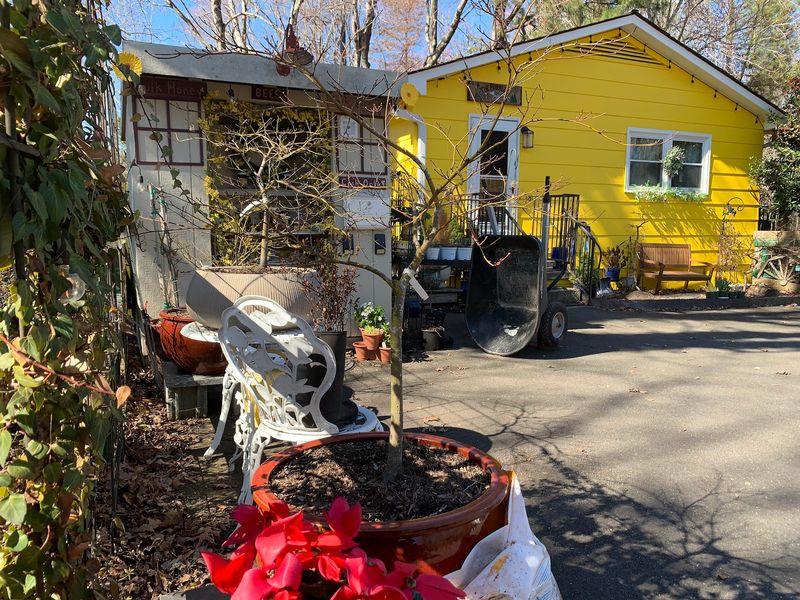
Thurman Burnley began keeping bees in the summer of 2013. The first colony did not make it, so he tried again the following year with 10 colonies and kept learning from there.
By 2015, beekeeping had moved well beyond a garden experiment. Burnley worked with a migratory beekeeper, traveling between Ohio and Florida, and started Burnley Farm Apiary in the final days of that year.
The scale grew with the experience. The apiary now runs roughly 100 to 200 colonies set up across multiple bee yards. Honey is one part of the work, while pollination, swarm removal, wax, and other beekeeping activities have also been part of the business.
That background matters when you stop for a jar because the stand is attached to an active apiary rather than a general country store carrying somebody else’s product.
You do not need to understand hive management to shop here. Start with the honey. The rest of the operation simply explains why the jars can change depending on the bee yard, season, and crop.
A quick stop can stay quick, but curiosity has plenty to work with once you start comparing the choices.
The Self-Serve Stand Keeps A Honey Stop Straightforward
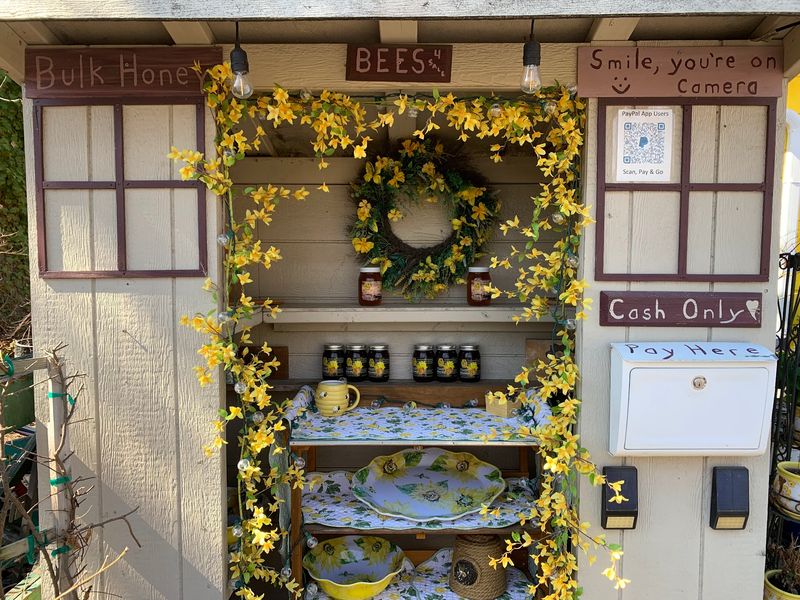
The home honey stand runs on a simple system. It is self-serve, prices are marked on the lids, and honey purchases are cash and carry.
Burnley Farm Apiary is at 5817 Smith Station Rd, Fredericksburg, VA 22407. Use the paved driveway when you arrive, since the gravel drive belongs to the neighboring property.
The stand is open daily, giving you a wide window to stop by without turning the visit into an appointment. Pick a time during daylight hours, bring cash, and check the lids before deciding which jar goes home.
Since the stand is self-serve, the easiest visit is also the simplest one. Read the lid, compare the jar sizes and varieties that are actually available, then pay in cash and head out.
There is no need to build the stop around a sales counter or wait for someone to walk you through the selection.
The setup also keeps pressure out of the purchase. You can compare what is available, choose a size or honey type, pay, and continue with the day.
If the pantry is already stocked, buying one jar makes sense. If you are comparing wildflower with a varietal honey, two jars give breakfast a little more room for experimentation.
The stand may be small, but the decision at the shelf does not have to be.
Raw Wildflower Honey Changes With What Is Blooming
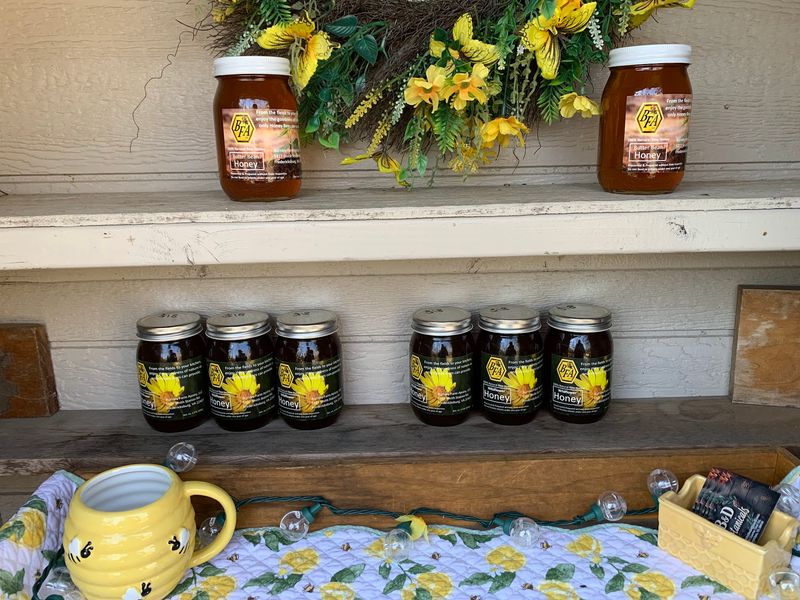
Wildflower honey is the flexible part of the lineup because its nectar does not come from one identified crop.
Burnley Farm Apiary’s wildflower honey comes from bee yards around Spotsylvania. The apiary uses the term for honey produced from multiple nectar sources or when one source cannot be singled out.
That means the flavor can shift as the season moves. Different trees and flowering plants contribute nectar at different times, so a jar produced earlier in the year does not have to taste exactly like one produced later.
The honey is sold raw. It is not heated or pasteurized and is only lightly strained before sale.
Crystallization can happen naturally, too. A jar turning cloudy or firm does not mean the honey has spoiled. Crystallized honey can be gently warmed back toward a liquid consistency, while some people simply use it as it is.
For the shopper, wildflower is the easiest starting point when you want honey connected to the apiary’s local bee yards without choosing a single crop.
Try it on toast, biscuits, oatmeal, or another simple food where the honey gets enough room to stand on its own.
Varietal Honey Follows The Bees To Specific Crops
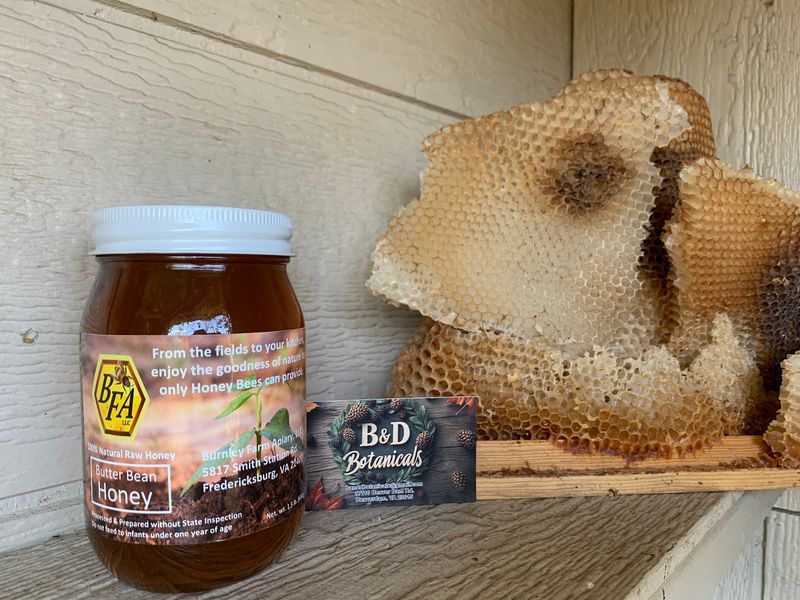
Varietal honey takes a different route from the wildflower jars.
For these batches, hives are placed near large farms where one flowering crop is dominant. The bees gather heavily from that nectar source, allowing the finished honey to develop a flavor profile connected to the crop.
Burnley Farm Apiary specifically lists blueberry, cranberry, and butter bean among its varietal honeys. Those jars come from pollination work outside Spotsylvania rather than from the local wildflower bee yards.
That makes side-by-side tasting more interesting than choosing by label alone. A crop name does not mean the honey has fruit, flavoring, or syrup mixed into it. The difference starts with the nectar the bees collect.
If blueberry catches your eye first, start there. Butter bean makes a less expected comparison, while cranberry adds another crop-specific option when it is available.
Availability can naturally depend on pollination work and the honey produced in a given season, so the stand should not be treated like a supermarket shelf where every variety is guaranteed every day.
Pick from what is actually there. Part of the fun is seeing which crop-linked honey made it to the stand on your visit.
One Hundred To Two Hundred Colonies Keep The Operation Moving
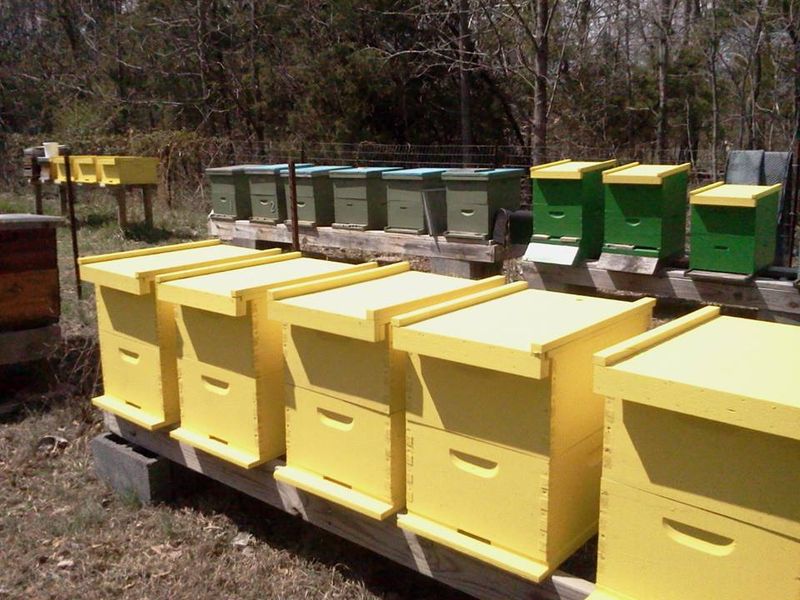
A small self-serve stand can hide a surprisingly active beekeeping operation behind it.
Burnley Farm Apiary currently runs between roughly 100 and 200 colonies spread across multiple bee yards. That range reflects an apiary whose bees are doing more than producing one uniform batch of honey in one location.
Different yards give the colonies access to different forage, while some hives are moved for pollination work. That helps explain why wildflower and varietal honey can share the same business without coming from exactly the same surroundings.
Managing that many colonies also means the work changes with the season. Bee health, forage, weather, hive movement, honey production, and pollination schedules all affect what happens long before a jar reaches the stand.
For shoppers, the useful part is much simpler. The honey is produced from Burnley Farm Apiary’s own hives, and the jars can reflect where those bees have been working.
You might arrive thinking only about a sweetener for tea and leave comparing bee yards and crops in your head.
No spreadsheet is required. Read the labels, choose what sounds good, and let breakfast handle the tasting test.
Pollination Work Sends The Bees To Orchards And Fields
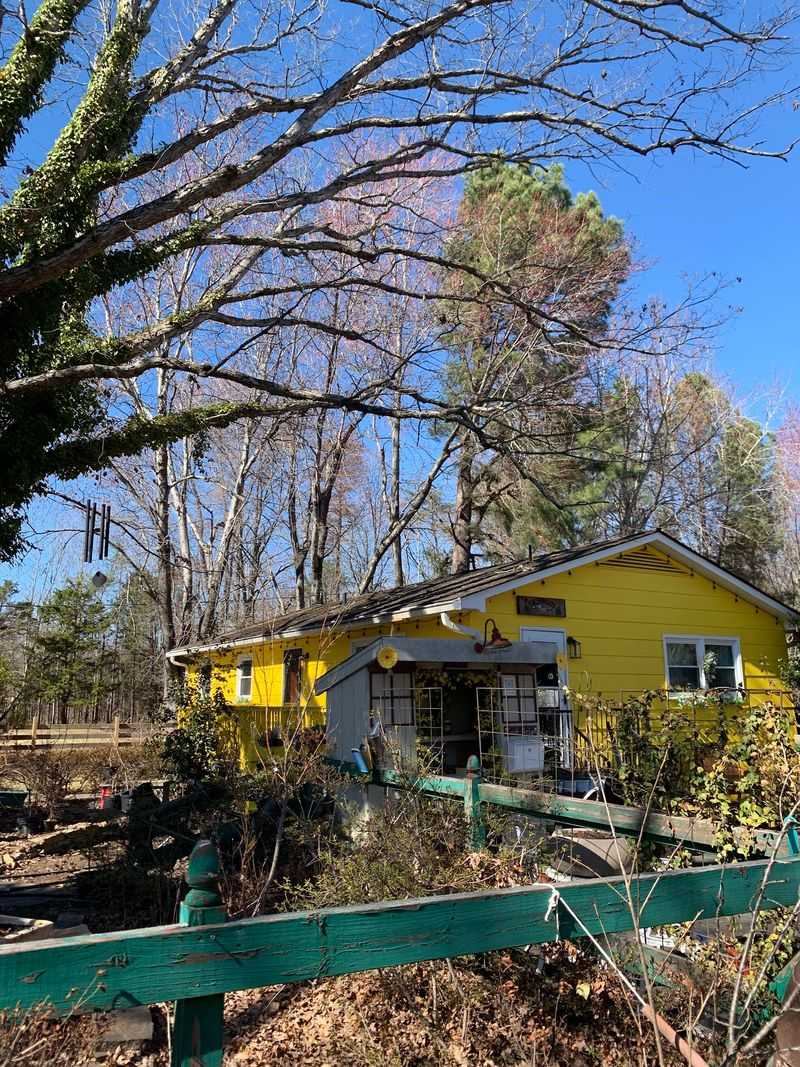
Honey is the part you can carry home, but pollination is another working side of the apiary.
Burnley Farm Apiary provides pollination services in Virginia and places colonies with growers for periods that vary by crop and weather.
The hives need truck-and-trailer access, and placement is typically handled when the bees are inside their hives, often at night or very early in the morning.
The crop list is broad. The apiary works with apples, cherries, peaches, other orchard trees, melons, pumpkins, cucumbers, blueberries, blackberries, raspberries, grapes, sunflowers, and other plants.
Those jobs also connect directly to some of the varietal honey at the stand. When hives spend time around a dominant flowering crop, the nectar can produce a distinct batch such as blueberry or butter bean honey.
The apiary also avoids placing hives where pesticide or chemical use would put the colonies at risk without an opportunity to move them before spraying.
A jar from the stand can therefore point back to much more than the home yard. Some batches begin with bees working agricultural land well beyond Fredericksburg.
That is a useful detail to remember when two jars taste noticeably different.
Buying Honey Still Means Stopping In Person
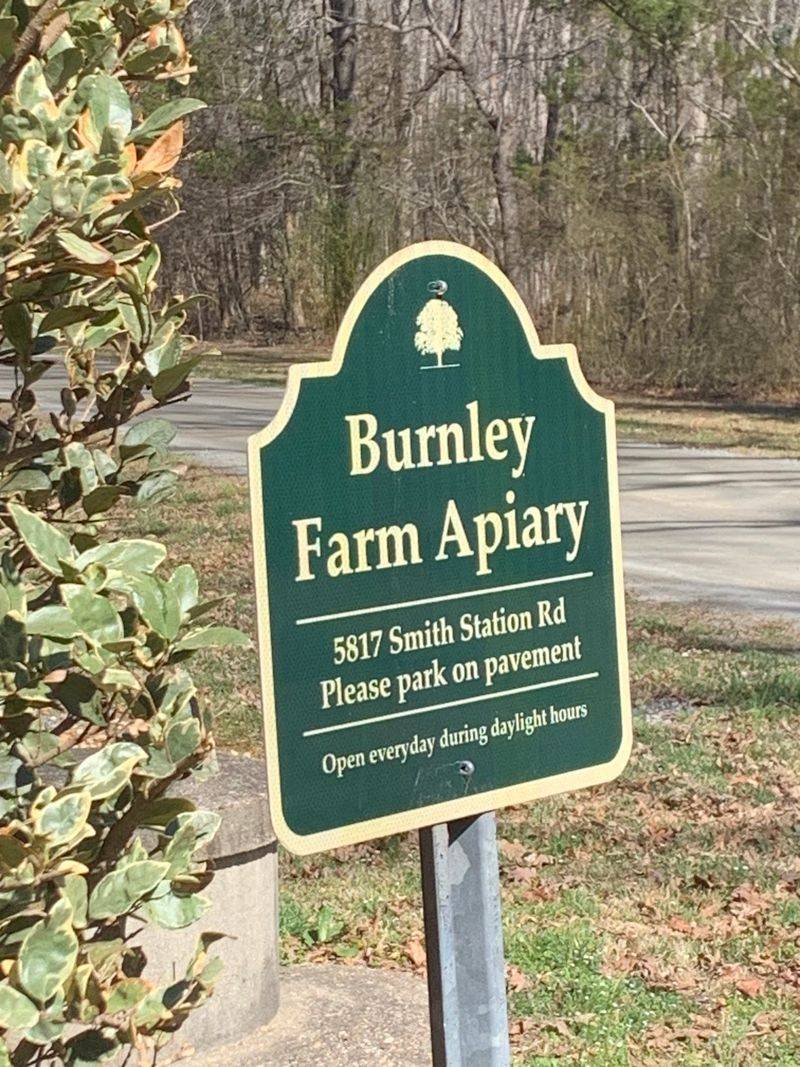
For honey, Burnley Farm Apiary keeps the buying process firmly offline.
The business does not sell honey online and does not ship it. The Fredericksburg home stand remains the direct option for picking up jars, with daily access and a self-serve cash setup.
There is also a notable 2026 change elsewhere in the business. Burnley Farm Apiary is no longer selling honey or other products at the Spotsylvania County Farmers Market, so an older routine of looking for the apiary there no longer matches the current setup.
Honey bee package and nucleus-colony sales are also being handled by Valentour Honey Bees for 2026 while Burnley focuses attention on another business venture. That change affects bee sales rather than the home honey stand, which remains active.
For a honey shopper, the plan stays refreshingly short. Check the time, bring cash, take the paved driveway, and see what jars are waiting.
Wildflower is the natural first choice if you want the apiary’s Spotsylvania honey. A varietal jar makes the stop more interesting when blueberry, cranberry, butter bean, or another crop-linked batch is available.
You may arrive for one. The shelf gets the final vote.