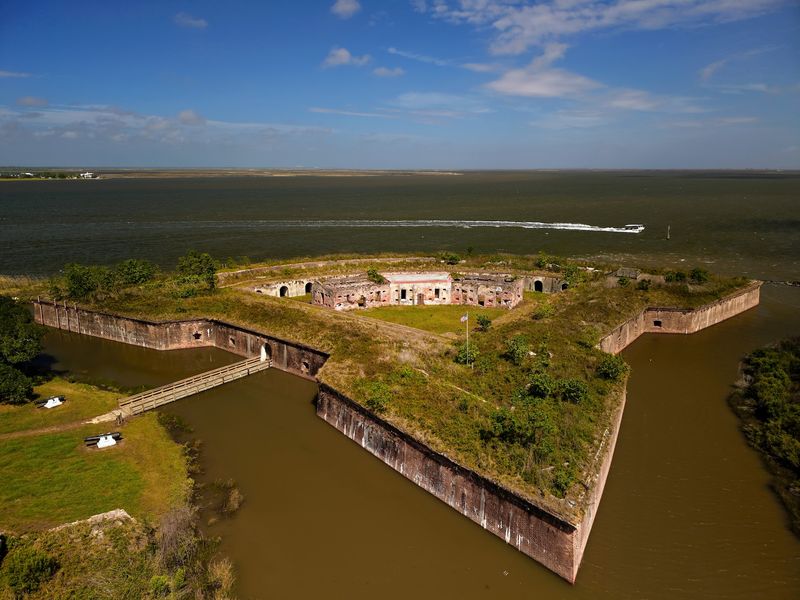
Fort Pike has been standing just east of New Orleans for nearly 200 years, and it has picked up plenty of stories along the way. The old brick fort was built to protect the city, but today its empty rooms and weathered walls tell a very different story.
Visitors have reported strange sounds and unexplained experiences here, adding a bit of mystery to an already fascinating piece of Louisiana history. Whether you come for the past or the ghost stories, Fort Pike is the kind of place that makes you want to know more.
Where Fort Pike Sits On The Edge Of New Orleans
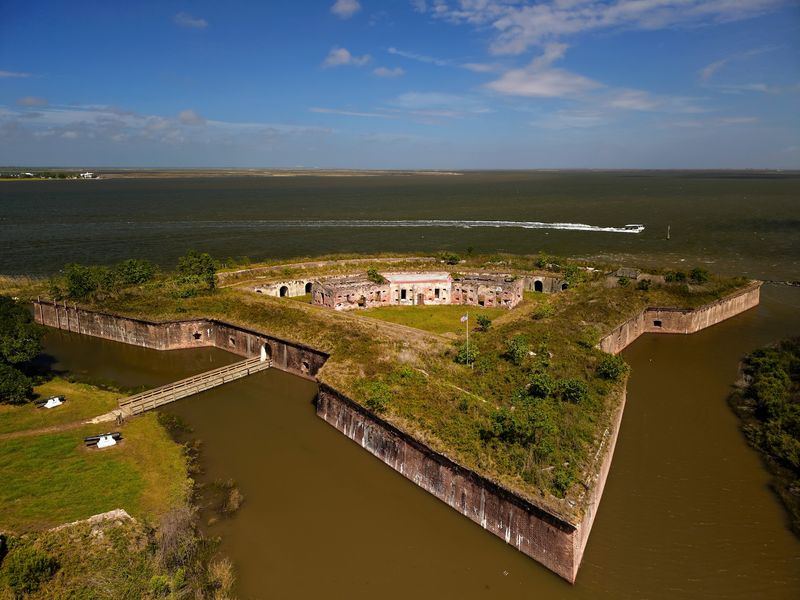
Way out on Chef Menteur Highway, about an hour from the busy heart of New Orleans, the road opens up to marsh, water, and sky. That is where you find Fort Pike, sitting quietly at 27100 Chef Menteur Hwy near the Rigolets pass.
One traveler stumbled onto the place by accident while cruising the Gulf on smaller roads, calling it a true gem he was glad he stopped to see. That is the magic of the spot.
It is not a place you rush toward. It is a place the road hands to you when you least expect it.
The fort guards the narrow waterway that connects the Gulf to Lake Pontchartrain. Long ago, that made it important for protecting the city from ships.
Today, the location gives visitors wide views of the water and a peaceful, almost lonely feeling.
Boaters still use the launch nearby, and folks pull over just to take photos. Getting here takes some driving, but the reward is a piece of history most people never knew existed.
A Fort Built To Guard The City
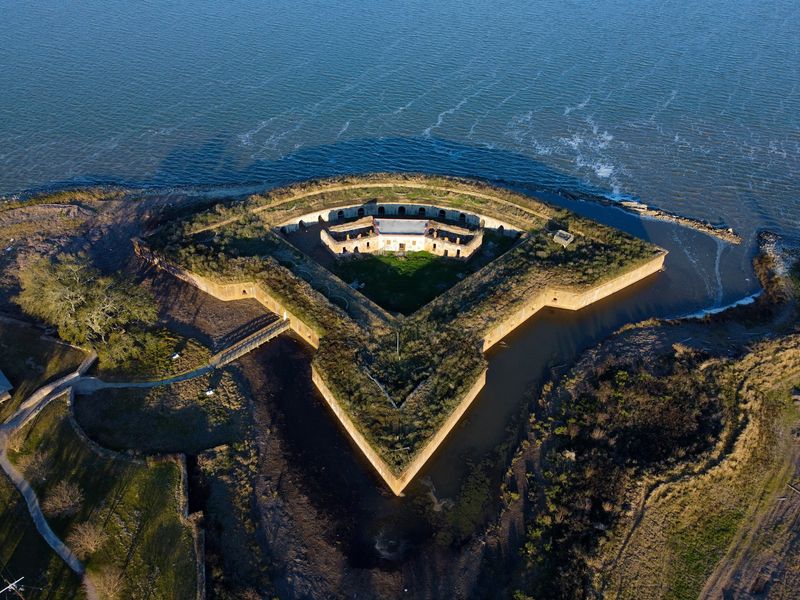
Construction on Fort Pike began in 1819 and wrapped up around 1826, in the years right after the War of 1812. The young country wanted to make sure no hostile ships could sail up the Rigolets and threaten New Orleans again.
Engineers built it as a third-tier fort with thick brick walls made to hold cannons and soldiers. It was named to honor Brigadier General Zebulon Pike, a name some visitors still note when they read about the site.
Here is the surprising twist. In all its years standing guard, no cannon at Fort Pike was ever fired in an actual battle.
The fort mostly served as a training ground and a place for troops to pass through.
One review pointed out that a French fort once stood on this very spot back in 1793 before the current building rose. Layers of history stack up here, one after another.
By 1890, the Army walked away and left the fort behind. Even without a single shot fired in war, its walls carry nearly two centuries of stories.
The Seminole Prisoners And Chief Jumper’s Resting Place
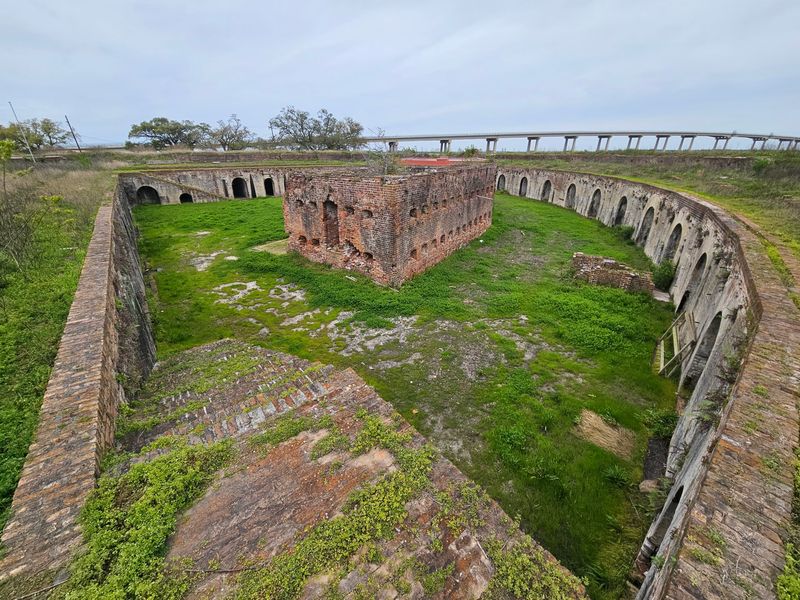
Not all of Fort Pike’s history is about defense. During the Seminole Wars of the 1830s, the fort became a holding area for Seminole prisoners who were later moved westward toward Oklahoma.
Among them was Chief Jumper, a respected Seminole leader. He grew ill with what was likely a respiratory sickness and passed while held at the fort.
Out of respect, he was laid to rest within the walls, buried with his rifle, pipe, and tobacco in a ceremony honoring his standing.
Knowing this changes how the place feels. The quiet brick chambers are not just old military rooms.
They hold memories of people forced far from their homes, and of a leader whose story ended here.
Visitors who learn this part of the history often walk the grounds a little slower. It reminds everyone that forts were not only about soldiers and cannons but about the many lives caught up in the events of the time.
The word honor comes up when people describe this site, and stories like Chief Jumper’s are a big reason why.
The Civil War Years And The Soldiers Who Trained Here
When the Civil War broke out, Fort Pike changed hands more than once. Confederate forces controlled it early on, but Union troops later took it back and put it to important use.
The Union army turned the fort into a training facility for United States Colored Troops. These included men who had recently escaped enslavement and now learned artillery skills within these walls.
It became a place of change and new beginnings for many.
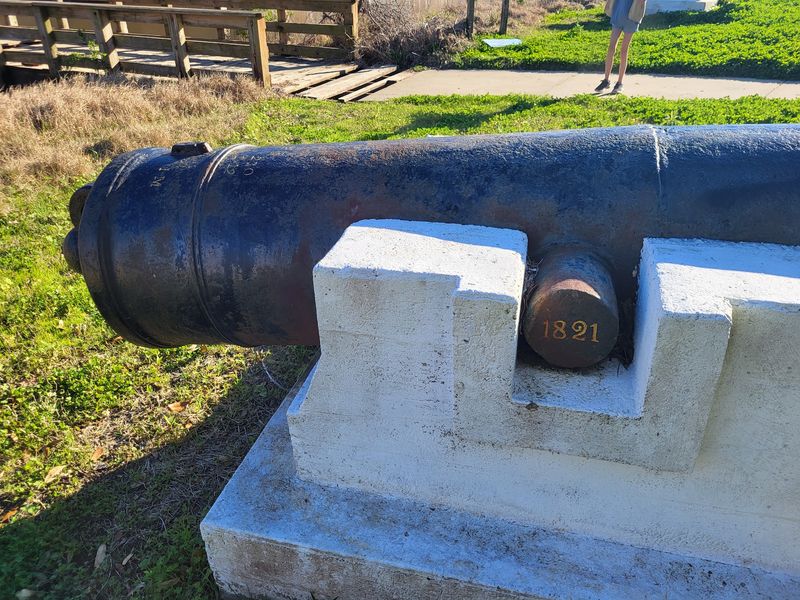
That history gives the old cannons scattered around the site an extra weight. One visitor mentioned photographing the cannons resting in the weeds, calling the fort an abandoned ruin with plenty to see.
Those same cannons once helped teach soldiers who were writing a new chapter of their own lives.
Cannons come up often when people describe their visits, and it is easy to see why. They are some of the most eye-catching pieces still on the grounds.
Standing near them, you can almost picture the drills and lessons that echoed across this courtyard. The fort’s role in training these troops is one of its proudest and most meaningful stories.
Tales Of The Watchful Sergeant
Once the sun dips low and the gates close, the stories start. Over the years, people have shared accounts of what they believe is the spirit of a sergeant still keeping watch over the old fort.
Some visitors describe a strong feeling of being observed, as if unseen eyes follow them across the grounds. It is the kind of sensation that makes you stop and glance over your shoulder, even when you know no one is there.
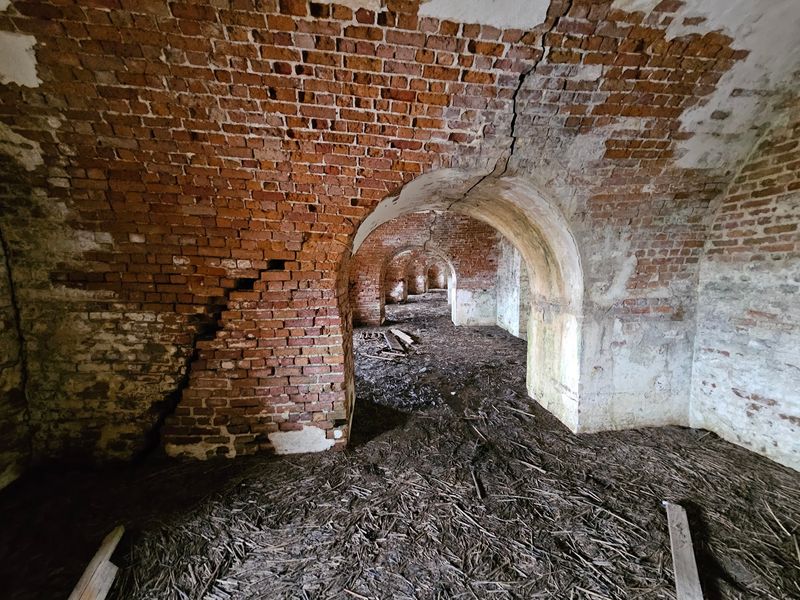
Others report the sound of heavy boots moving across the floors, slow and steady, like someone making rounds. In an empty fort, footsteps with no one attached to them are hard to shake off.
Whether you believe in such things or not, these tales add a thrilling layer to an already fascinating place. A fort that trained so many soldiers seems like just the spot for a phantom sergeant to linger.
Ghost stories tend to grow around old, quiet places, and Fort Pike has all the ingredients. The lonely setting and weathered walls only make the legend of the watchful sergeant feel more alive.
Whispers, Lights, And Soldiers At The Cannons
The watchful sergeant is far from the only story people tell. Some who have visited claim to hear whispered conversations drifting through the air when no one else is around.
Faint voices with no source are unsettling enough, but the reports do not stop there. Strange lights have been seen moving through the ruins, floating along the walls and passageways where no lamp should be shining.
Perhaps the most striking accounts involve apparitions of African-American soldiers from the Civil War era. Witnesses say they appear to be practicing at the cannons, as if the training drills of the past never truly ended.
Given the fort’s real history as a training ground for United States Colored Troops, these stories carry a haunting echo of the truth. It is as if the walls remember the work that once filled them.
Skeptics might chalk it up to wind, shadows, and imagination playing tricks. Believers see something more.
Either way, these legends make wandering the grounds after dark a spine-tingling idea, and they keep curious visitors talking long after they leave.
The Wooden Bridge And The View From Above
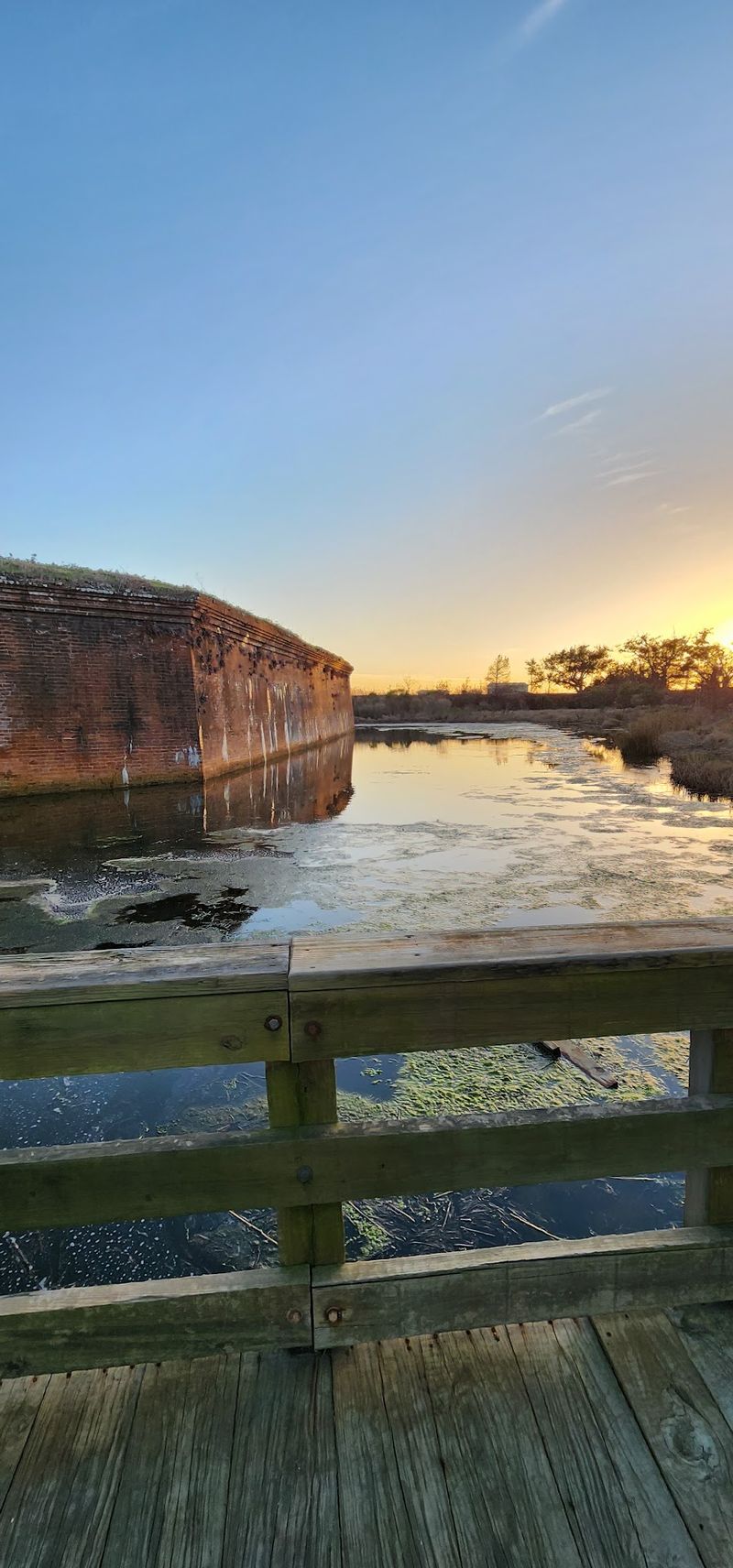
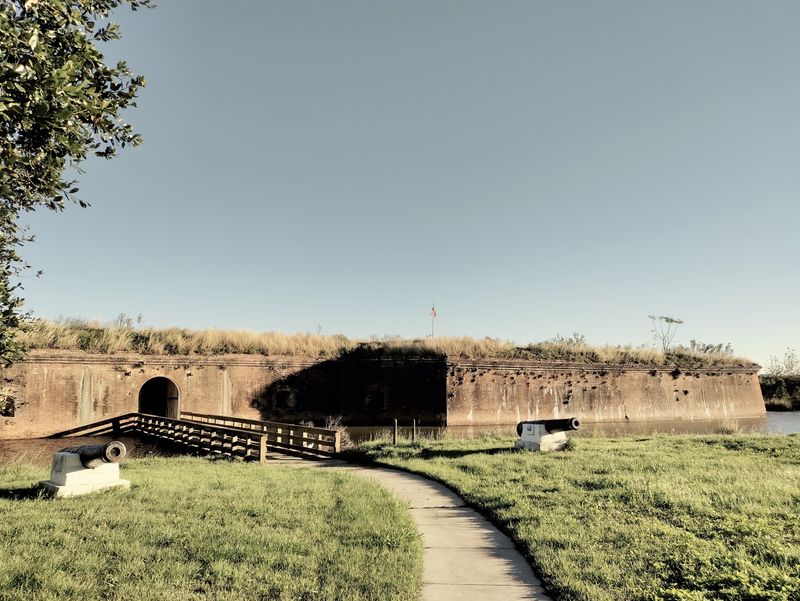
To reach the fort’s entrance, you cross a wooden bridge that stretches over the water. It is one of the features visitors mention most, and for good reason.
One traveler called the bridge solid and used it to peek inside the fort, while another admitted he did not trust the old planks enough to cross alone. Your comfort level may vary, but the bridge itself is a memorable part of the experience.
Climb up top and the payoff is worth it. From the higher walls, you get sweeping views of the water and the Gulf beyond, the kind of scenery that makes people pull out binoculars just to soak it all in.
The views were special enough that one couple even held their wedding on top of Fort Pike, calling it an absolutely beautiful day. That tells you something about the magic of standing up there.
Whether you are crossing the bridge or gazing out from the ramparts, the fort rewards those who take their time. The mix of old brick and open water creates a scene that sticks with you.
Picnic Spots, Boat Launch, And The October Festival
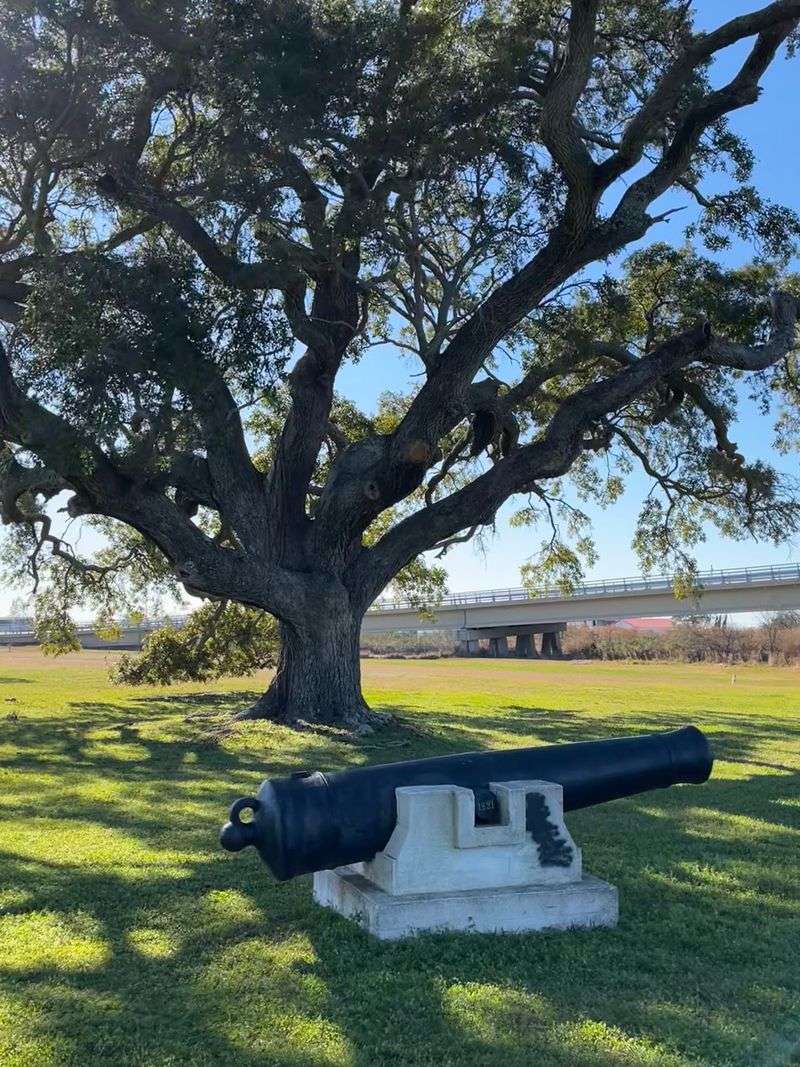
Beyond the fort walls, the grounds offer a few extra reasons to visit. Old picnic tables and grills are scattered about, and folks have long treated the area as a fine picnic site.
The nearby boat launch is a favorite too, though one visitor noted the path to the ramp can get rutted and needs some rock or shell fill to smooth it out. If you are bringing a boat, take the approach slow.
The biggest event of the year is the Fort Pike festival, usually held on a Saturday in October. During the festival, the fort actually opens to the public, and a knowledgeable guide shares the story of Fort Pike and its twin, Fort Macomb.
The celebration comes with live music and a car show, which visitors often mention as a fun bonus. For many locals, it is a rare chance to roam a fort they remember from childhood.
If you want to actually step inside the walls, planning your trip around that October weekend is your best bet. It turns a quiet ruin into a lively gathering.
Knowing Before You Go
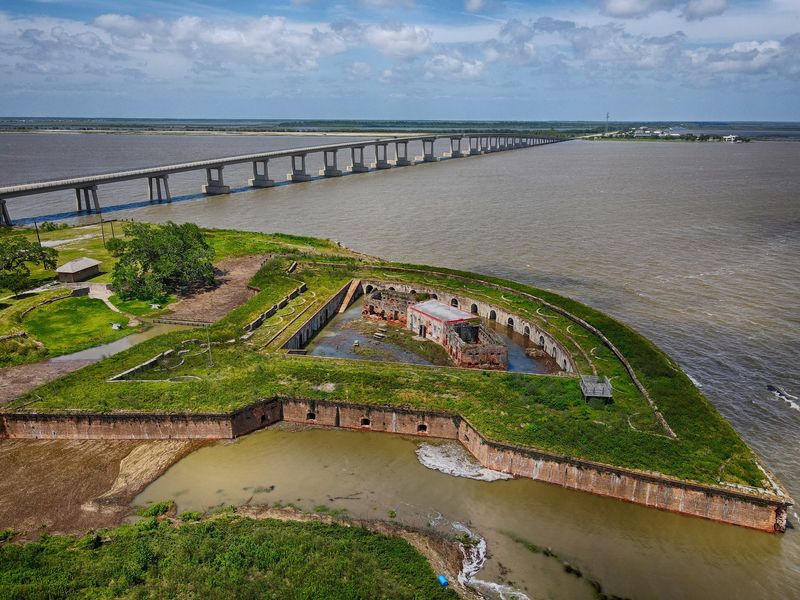
Here is the honest truth every visitor should know. Fort Pike has been closed to the public on a regular basis for years, with several reviews pointing to 2015 and the effects of Hurricane Katrina back in 2005.
Budget shortfalls have left the grounds unmaintained much of the time, and the state has struggled to fund repairs. Some travelers have driven all the way out only to find locked gates, which is a real disappointment if you expect to walk inside.
Still, plenty of people say the trip is worth it just to view the fort from the bridgeway and take in those wide water views. Reviewers suggest bringing binoculars and enjoying the sight of the old fort from a distance.
If you truly want inside, aim for the October festival or call ahead about appointments, since the boat launch may stay open even when the fort does not.
Come with the right expectations and Fort Pike still delivers history, scenery, and a haunting sense of the past. It is a weathered old landmark worth honoring, even from behind the gates.