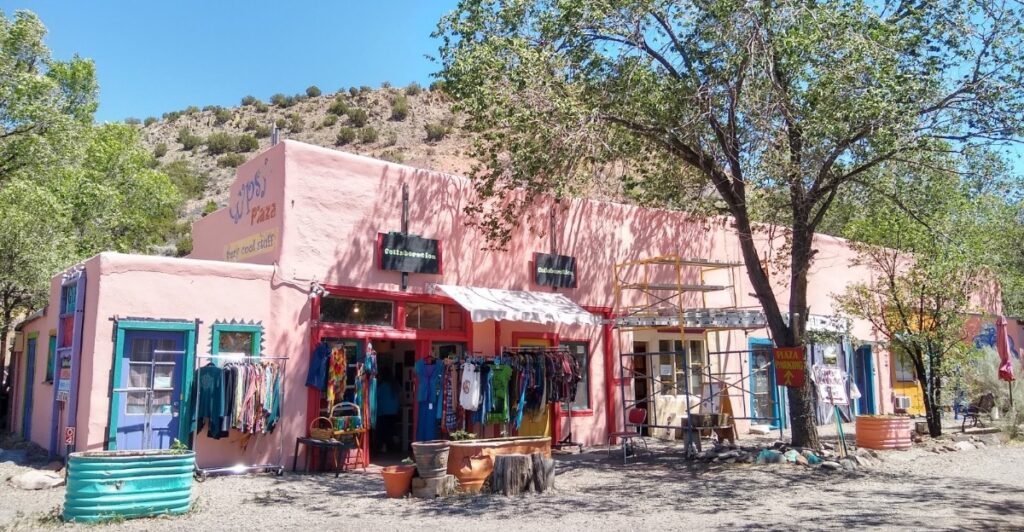
The first thing that catches your eye is the color, splashes of it on old wooden buildings that once housed coal miners and their families. You could blink and drive right past this speck on the map in New Mexico, assuming it was just another quiet stretch of desert road.
But slow down, park the car, and you’ll find a place packed with more creativity, character, and surprise than towns ten times its size. Some of the best discoveries hide in the smallest packages.
A Speck on State Road 14 With a Big Personality
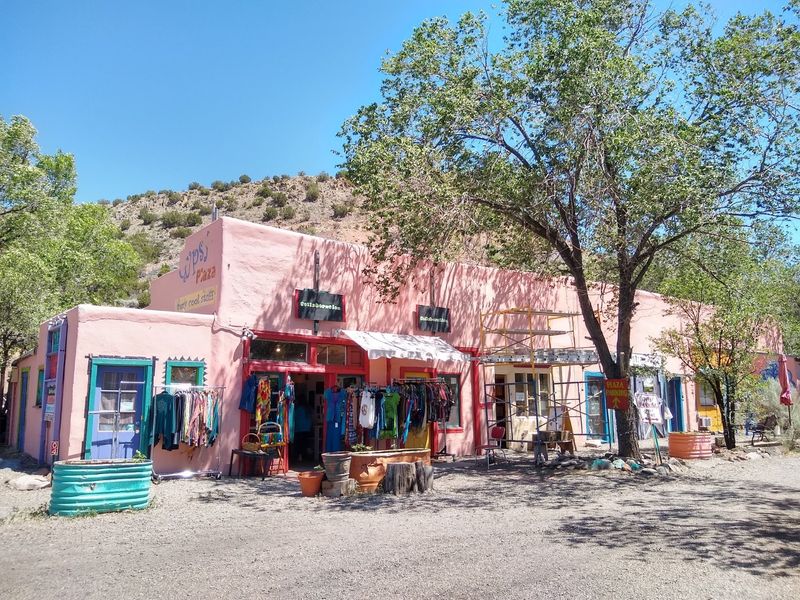
Roughly halfway between Albuquerque and Santa Fe, along the winding ribbon of State Road 14, sits a community that most travelers underestimate the moment they spot it. Madrid is a census-designated place in Santa Fe County, and it barely registers on population charts.
Just 247 people called it home as of the 2020 census, which makes it more of a close-knit village than a town. Yet its size is exactly what makes the payoff so satisfying once you slow down.
Part of the greater Santa Fe metropolitan area, Madrid manages to feel worlds away from any city bustle. The old buildings pressed shoulder to shoulder along the highway tell you right away that something interesting happened here long before the galleries arrived.
Drivers zipping through often clock it as a picturesque blur and keep going toward bigger names down the road. That instinct is understandable, but it also means they miss what makes this little dot on the map genuinely worth the stop.
From Coal Country to Ghost Town and Back Again
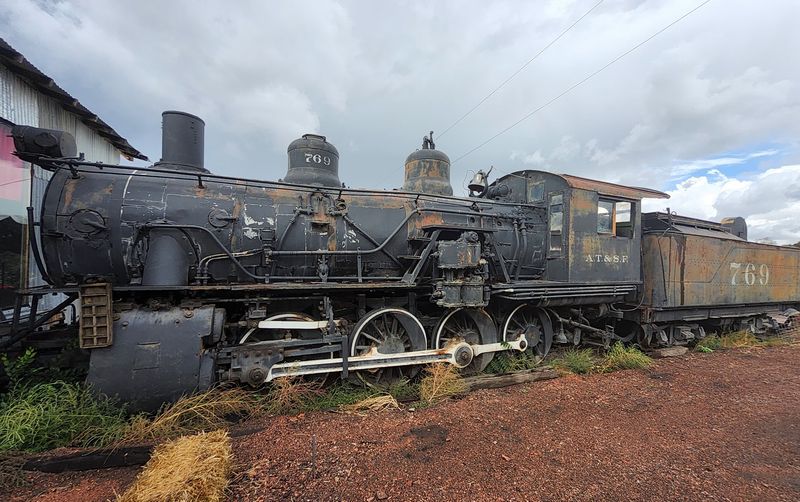
Long before easels and paintbrushes, this place ran on coal. Madrid grew up as a company mining town, with rows of homes and shops built to house the workers who dug fuel from the surrounding hills.
The rhythm of the town rose and fell with the fortunes of the mines. When demand dropped off in the decades that followed, the population scattered and the buildings emptied out, leaving behind something close to a ghost town.
For years it sat mostly quiet, a collection of weathered structures baking under the New Mexico sun. That could have been the end of the story, another abandoned settlement swallowed by the desert.
Instead, a new wave of residents arrived and saw opportunity in those old bones. Artists, makers, and free spirits began buying up the vacant houses and breathing life back into the place.
What you see today is the result of that revival. The past hasn’t been erased so much as repurposed, with mining-era architecture now serving as the backbone of a thriving creative community.
An Artists’ Colony Lining the Highway
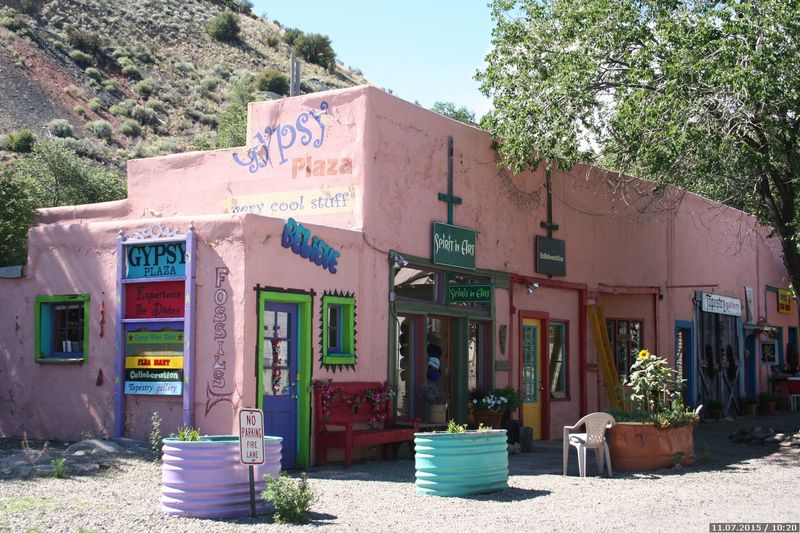
Walk the main stretch and you’ll understand why people call this an artists’ community. Galleries and studios line New Mexico State Road 14, one after another, each with its own flavor and point of view.
The variety is part of the charm. One doorway might lead you to pottery and hand-thrown ceramics, while the next opens onto paintings, jewelry, sculpture, or textiles crafted by people who actually live nearby.
Because so many of the creators work right where they sell, there’s a genuine connection between the art and the town. You’re not browsing mass-produced souvenirs; you’re seeing pieces shaped by hands that know these hills and this light.
The buildings themselves add to the experience, their old mining-era frames now bursting with color and imagination. Bright murals, quirky signage, and repurposed materials turn the whole street into a kind of open-air showcase.
Strolling from gallery to gallery, you get the sense that the entire village is one continuous work in progress. That creative energy is exactly what transformed a fading coal town into a destination worth planning a trip around.
A Landscape That Sets the Stage
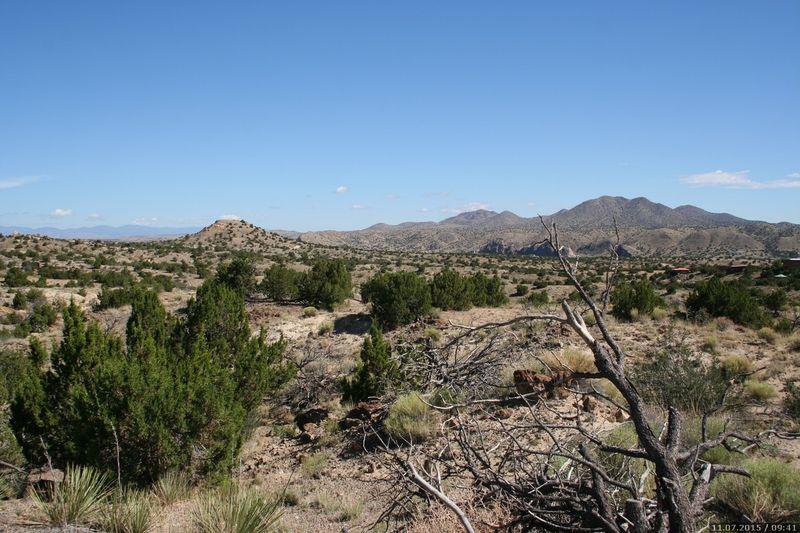
Rolling into the area, the scenery does half the work of selling the place. Set in the high country of central New Mexico, the surroundings mix desert scrub with the gentle rise of nearby hills and mountains.
The drive along State Road 14 is often called a scenic route for good reason. The road curves through open terrain dotted with pinon and juniper, giving you long views and that big, clear New Mexico sky overhead.
Light plays a starring role here. Morning and late afternoon paint the buildings and hills in warm tones, which is part of why so many artists were drawn to the region in the first place.
The elevation keeps things a touch cooler and crisper than the lower desert basins, adding to the appeal for travelers looking to escape the heat. Every season brings a slightly different mood to the landscape.
Framed against this backdrop, the colorful little village feels almost like a painting itself. The setting isn’t just where the town happens to be; it’s a genuine part of the draw.
The Turquoise Trail Connection
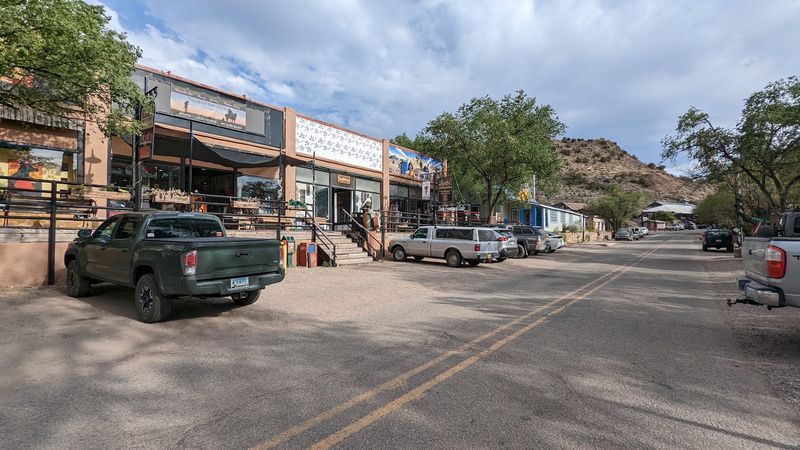
Ask road-trippers how they ended up here and many will point to the Turquoise Trail. State Road 14, the same highway threading through the village, forms part of this well-loved scenic byway linking the Albuquerque and Santa Fe areas.
That connection is a big reason the town punches above its weight. Instead of sitting isolated, it’s a natural stop on a route people take specifically for the views and the string of quirky communities along the way.
Choosing the byway over the faster interstate rewards you with a slower, richer journey. The road rolls past old mining sites, small settlements, and stretches of open country that feel refreshingly untouched.
Because the drive is the destination as much as any single town, travelers tend to arrive relaxed and ready to wander. That mindset suits a place built around browsing galleries and soaking up atmosphere.
Pairing the trip with other stops along the trail makes for an easy, satisfying day out. The little village becomes the colorful centerpiece of a route that many New Mexicans consider one of the state’s most enjoyable drives.
A Community Small Enough to Feel Personal
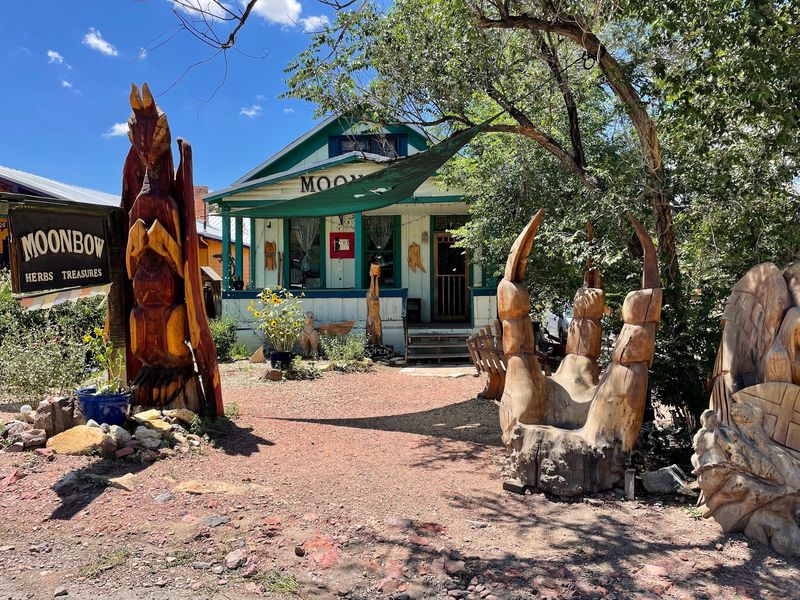
Numbers alone tell part of the story: a couple hundred residents means you’re never lost in a crowd here. That tiny population creates an intimacy you simply won’t find in bigger tourist hubs.
Shopkeepers and makers often greet visitors like neighbors, happy to chat about their craft or point you toward the next interesting doorway. The vibe leans warm and unhurried rather than slick or commercial.
Everyone seems to know everyone, and that closeness spills over to the people passing through. You get the feeling you’ve stumbled into a real community rather than a stage set built for tourists.
The independent spirit runs deep. With so many residents involved in art and small business, there’s a shared pride in keeping the place authentic and a little offbeat.
For travelers who like their stops with personality and a human touch, this scale is the whole point. Wandering these few blocks, you’re not just observing a town; you’re briefly part of its everyday rhythm, which is exactly what makes it stick in your memory long after you drive off.
Who Will Love a Stop Here
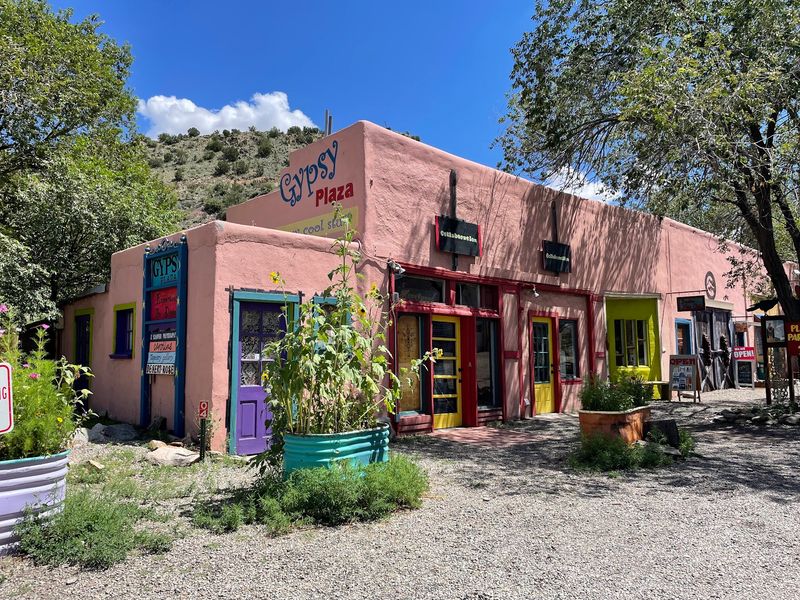
Certain travelers practically light up in a place like this. Art lovers, photographers, and anyone with a soft spot for handmade goods will find plenty to keep them wandering for hours.
Curious road-trippers make ideal visitors too. If you enjoy pulling over on a whim, poking around unusual shops, and chatting with the people who made what’s on the shelves, the town rewards that kind of open-ended exploring.
History buffs get something here as well. The mining-era buildings and the town’s dramatic rise, fall, and rebirth give the whole visit an extra layer of meaning beyond the pretty storefronts.
It also suits people looking to slow down. There’s no rush, no big-city pressure, just a compact strip of creativity you can take at your own pace.
Families and casual browsers can enjoy an easy, low-key afternoon strolling the galleries. The one crowd that might feel restless is anyone chasing nonstop, high-energy attractions, since the appeal here is quieter and more soulful.
For everyone else, it’s a delightful surprise waiting off the main road.
Practical Notes for the Drive In
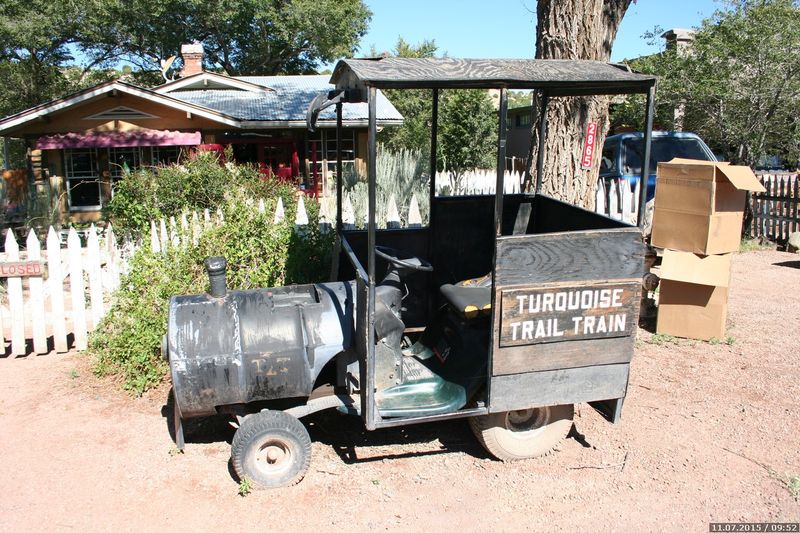
Getting here is refreshingly simple. The village sits directly on New Mexico State Road 14, roughly midway between Albuquerque and Santa Fe, so it slots neatly into a day trip from either city.
Plan to arrive by car, since this is very much a driving destination reached along the Turquoise Trail. The route itself is scenic, so build in a little extra time to enjoy the views rather than rushing straight through.
Once you’re in, exploring is easy on foot. The galleries and shops cluster along the highway through town, meaning you can park and stroll the main stretch without much walking between stops.
Because it’s a small community rather than a large resort town, keep your expectations tuned to charm over convenience. Hours at individual shops can vary, so it helps to treat your visit as a relaxed wander rather than a tightly scheduled itinerary.
Pairing the stop with other points along the byway makes for a well-rounded outing. A leisurely half-day gives you room to browse, snap photos, and soak in the setting without feeling hurried.
Why This Little Village Sticks With You
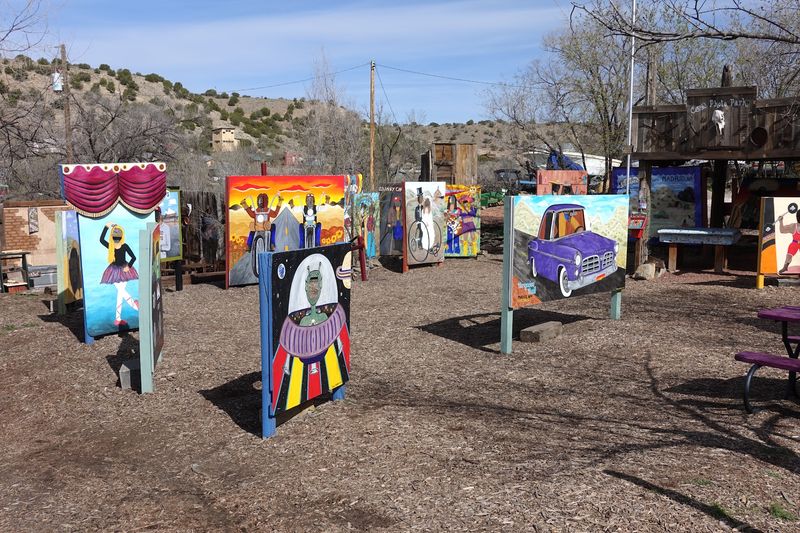
Looking back on a visit, what lingers isn’t grandeur but character. A former coal town that refused to fade quietly, then reinvented itself as a colorful artists’ haven, is exactly the kind of story that stays with you.
The magic lies in the contrast. From a fading, near-empty settlement to a lively strip of galleries and independent makers, the place proves that small doesn’t have to mean forgettable.
Travelers who take the time to stop tend to leave a little surprised at themselves. What looked like a two-minute drive-through turns into an afternoon of unexpected finds and easy conversations.
There’s a quiet pride in discovering a spot like this before the crowds catch on. It feels like a secret you’re glad you didn’t speed past on the way to somewhere flashier.
So the next time you’re winding along the Turquoise Trail in New Mexico, give this pint-sized village a chance. Mightier than it looks and full of heart, it just might become the most memorable part of your whole drive.