Antique stained glass can make ordinary sunlight look like it showed up dressed for the occasion.
Inside one little-known Kansas shop, hundreds of old panels and fragments turn browsing into a slow game of spotting color, craftsmanship, and details that have survived for decades.
Some pieces look grand enough for a historic house, while others are small enough to spark ideas for a new project.
The fun is in looking closely. A pane that seems plain from across the room can completely change once the light hits it.
My own downfall in places like this is moving too quickly at first.
I have walked past pieces I barely noticed, then caught them glowing from a different angle and doubled back immediately.
That happened with an old stained-glass panel years ago, and I stood there far longer than I expected, shifting a few steps left and right like I was testing a magic trick.
I still think good stained glass deserves a second look, especially when the sunlight gets involved.
A Warehouse Of Colored Light On East Douglas
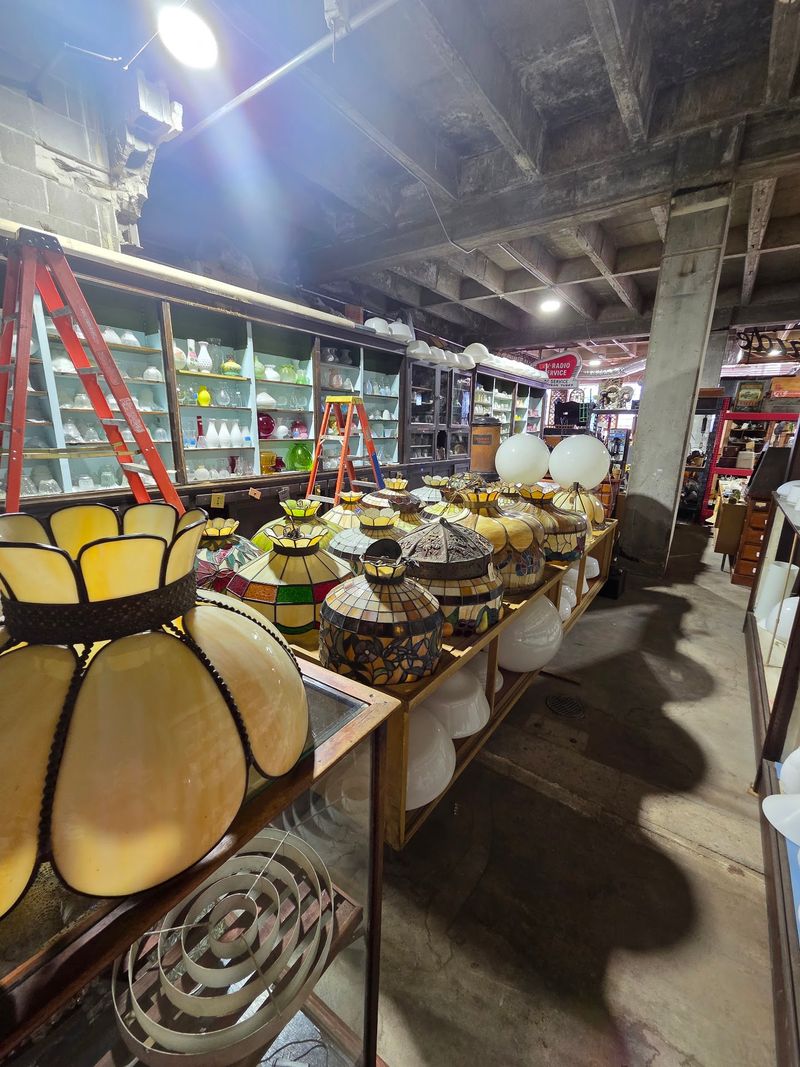
Colored glass is the first thing that grabs you the moment the front door swings open.
Panels lean in rows, stacked and sorted, and when afternoon sun hits them the concrete floor turns into a patchwork of red, amber, and deep blue.
The address is easy to remember: Old Town Architectural Salvage sits at 2020 E Douglas Ave in Wichita, Kansas, in the United States, along a stretch of road that once carried streetcars.
The shop’s current inventory confirms stained glass as a major category.
Victorian transoms, cathedral-style windows, commemorative panels, leaded windows, and larger religious pieces have all appeared in its online listings.
Some examples cost a few hundred dollars, while especially large or elaborate sets reach well into the thousands, so selection and condition clearly vary.
Current listings show pieces in several sizes and styles.
Give yourself time to walk the same row twice, because the panel you overlook the first time often becomes the one you cannot stop thinking about.
Doors Standing Shoulder To Shoulder
Nineteen separate conversations in the store seem to circle back to one subject: doors.
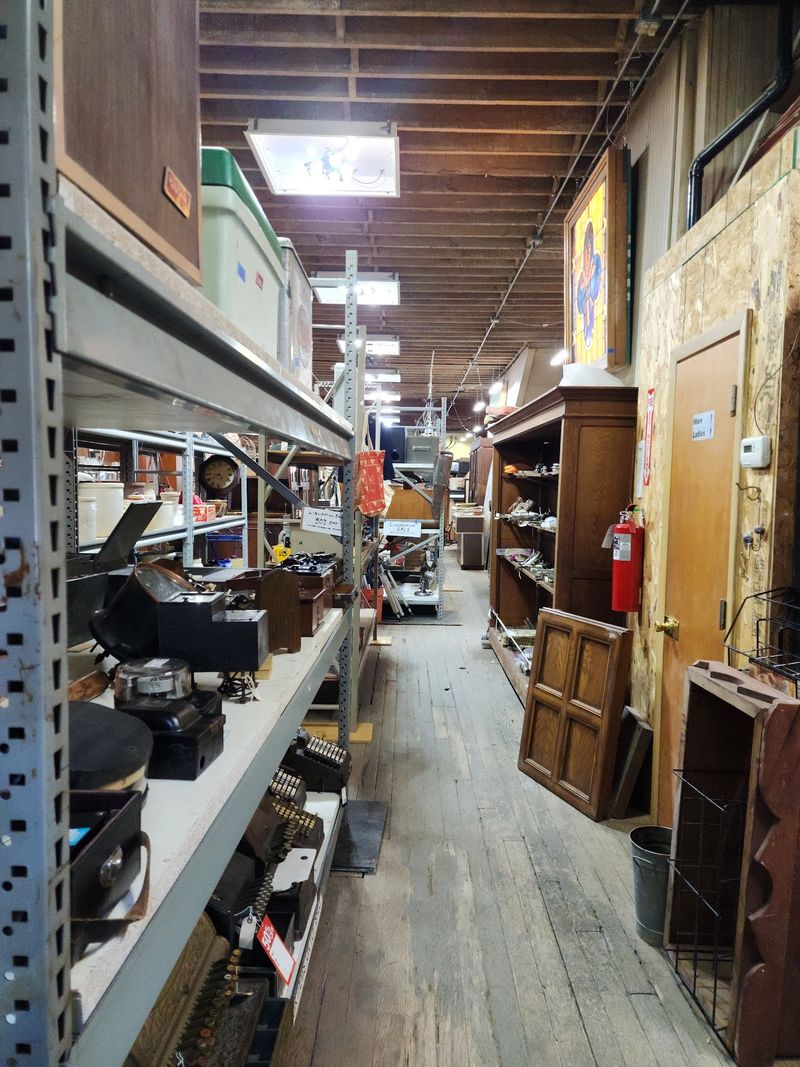
Rows of them stand upright in racks, ready to be flipped through the way you would flip through records.
French doors, screen doors, pocket doors, heavy oak slabs with beveled glass, and skinny closet doors from bungalows built a century ago all have a spot.
I watched someone hunting for an odd size for a 1920s remodel, and the odds were surprisingly good that the right one was hiding in the stack.
Measure before you drive over. Old openings rarely match modern standards, so write down height, width, thickness, and which side the hinges belong on.
A few doors still wear their original hardware, which saves you a second shopping trip. Others come bare, which means a detour to the knob bins.
Bring a friend with strong arms too, because solid wood doors weigh far more than they look like they should.
Bins Of Old Knobs, Hinges, And Latches
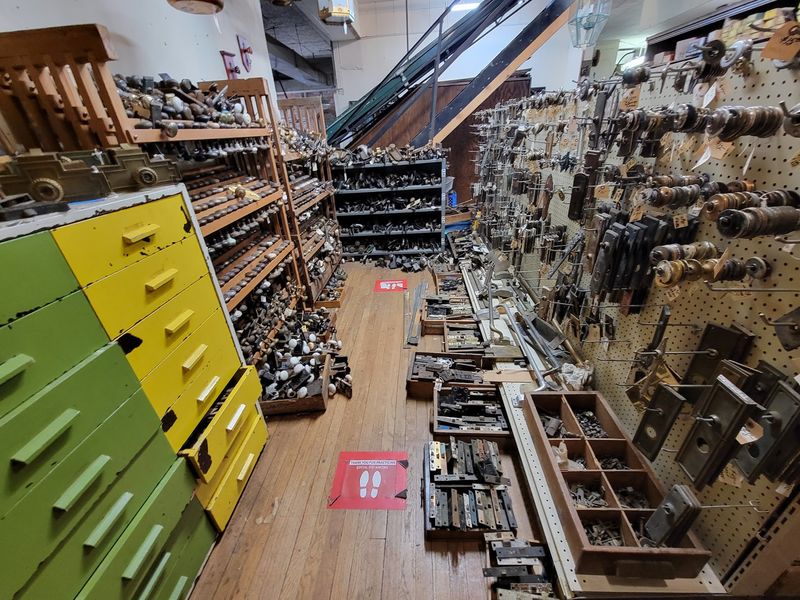
My favorite corner costs the least and takes the longest to leave.
Trays and bins hold antique door knobs in brass, glass, porcelain, and blackened cast iron, plus matching backplates, latches, and hinges with hand-stamped patterns.
Old hardware carries a weight and a sound that reproductions never quite copy. Turn one in your hand and you feel the difference right away.
Little details matter when you shop this section. Check the spindle size, count the screw holes, and see if the set includes a strike plate for the door frame.
Small pieces make excellent souvenirs if you are passing through Kansas and have no room in the car for a mantel. A single glass knob becomes a coat hook, a drawer pull, or a paperweight on a desk.
I lost track of time sorting through one tray, and honestly, that is the whole point of a place like this.
Lighting That Spans A Hundred Years
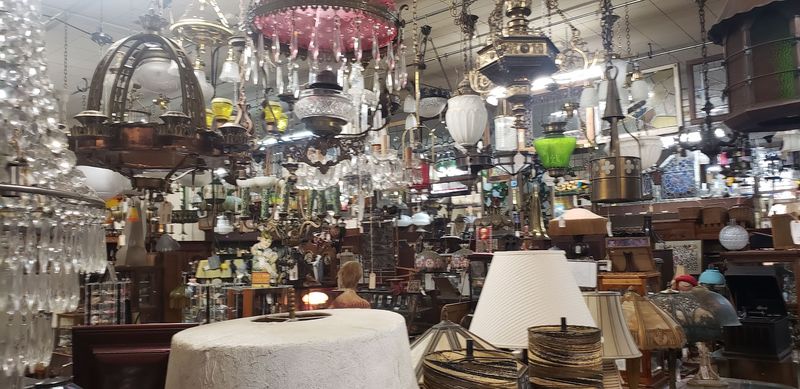
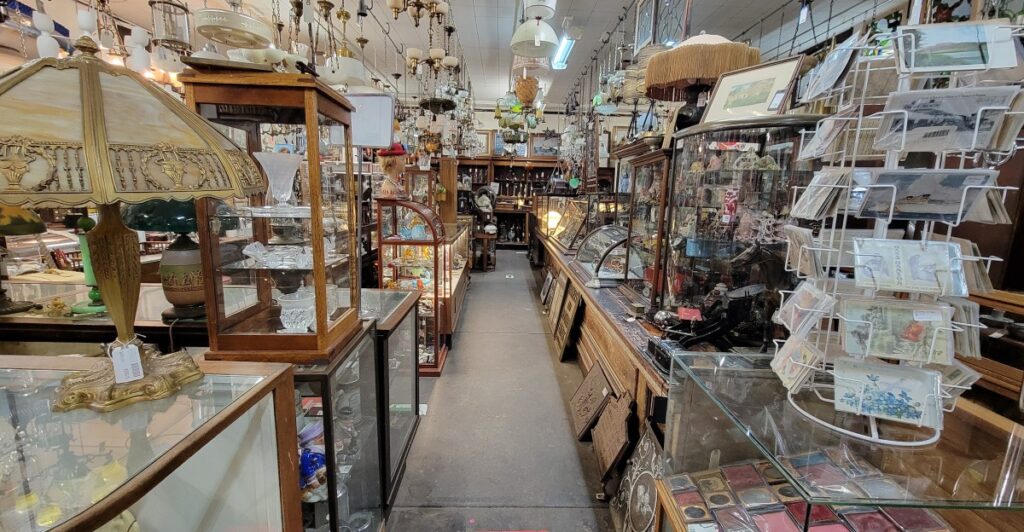
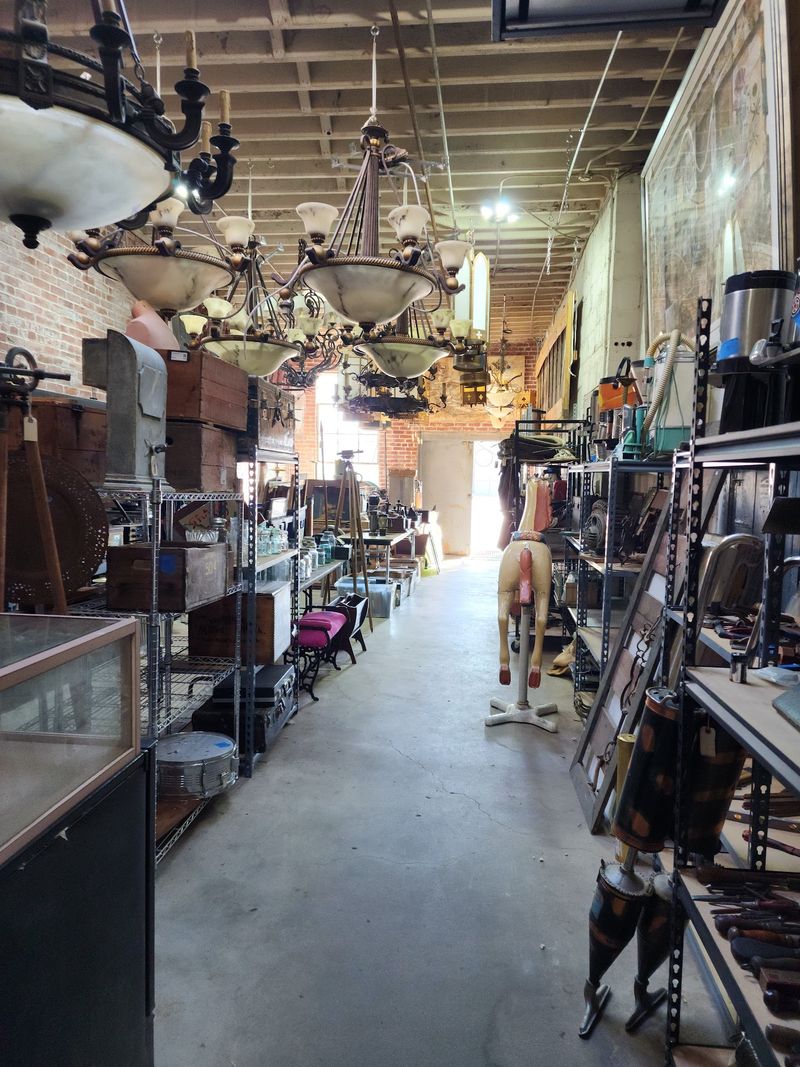
Look up. The ceiling here works overtime, hung with chandeliers, schoolhouse globes, brass sconces, and pendant fixtures in a tangle of chains and cords.
Art deco pieces show up often, with stepped shades and geometric arms that would look at home in a 1930s hotel lobby. Floor torches stand nearby like quiet sentries.
Wiring is the practical question with any vintage fixture. Ask what has been rewired and what has not, then budget for an electrician if the answer is the second one.
Shades and globes are sold separately in some cases, so check whether the piece you love comes complete or needs a matching partner.
Prices climb for the rare deco examples, and that tracks with what these fixtures fetch in bigger cities.
I left with a small brass sconce and a mental list of three others I intend to think about for an embarrassingly long time.
Mantels, Columns, And Big Architectural Bones
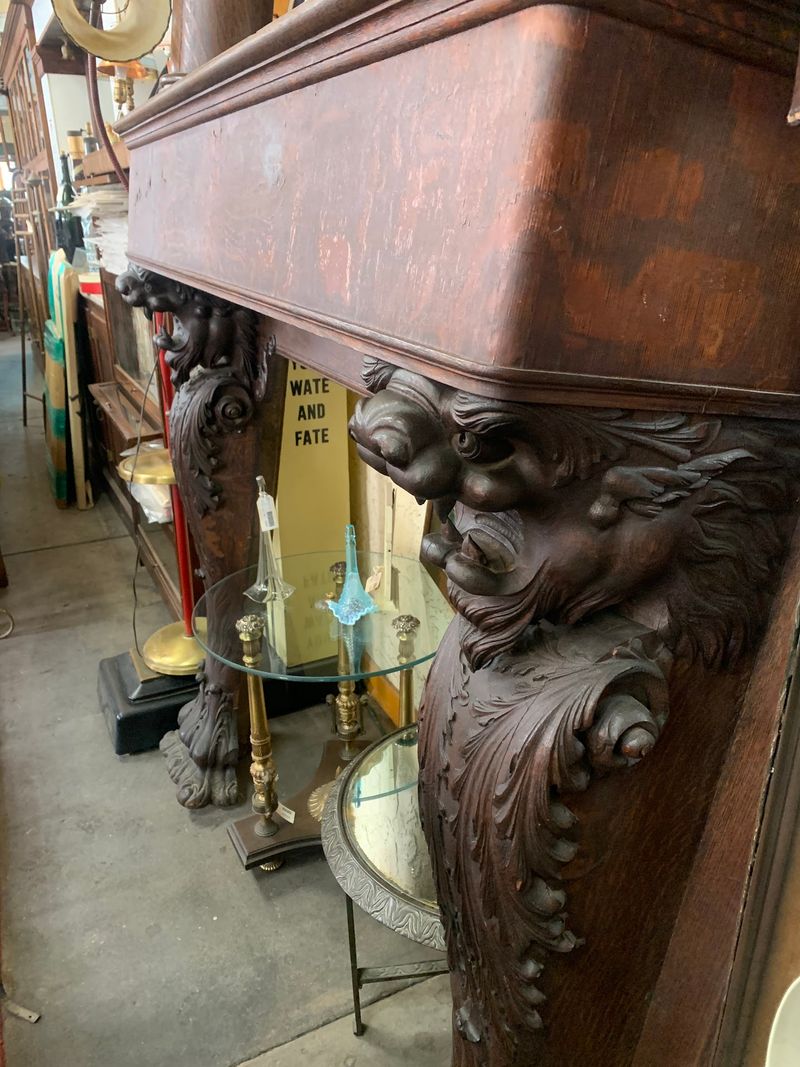
Some inventory here needs a truck, not a tote bag.
Carved fireplace mantels line one area, several with mirrors, tile surrounds, and columns built right into the design.
Tall porch columns, corbels, newel posts, and sections of decorative trim fill the heavy-duty zone of the store.
Renovators working on older Kansas houses lean on stock like this, since matching original millwork at a modern lumberyard is close to impossible.
Even if you own a newer home, one salvaged mantel can turn a plain wall into the focal point of the room. I have seen them used as headboards and as shelving too.
Plan your transportation ahead of time. Ask about loading help, and know the dimensions of your vehicle before you commit to a nine-foot column.
These big bones of old buildings deserve a second act, and standing among them feels a little like visiting relatives you never got to meet.
Oddities You Will Not Find Anywhere Else
Nothing prepared me for the 1930s shoe-fitting machine sitting near the middle of the floor, a relic from an era when stores used X-ray boxes to check whether kids’ shoes fit properly.
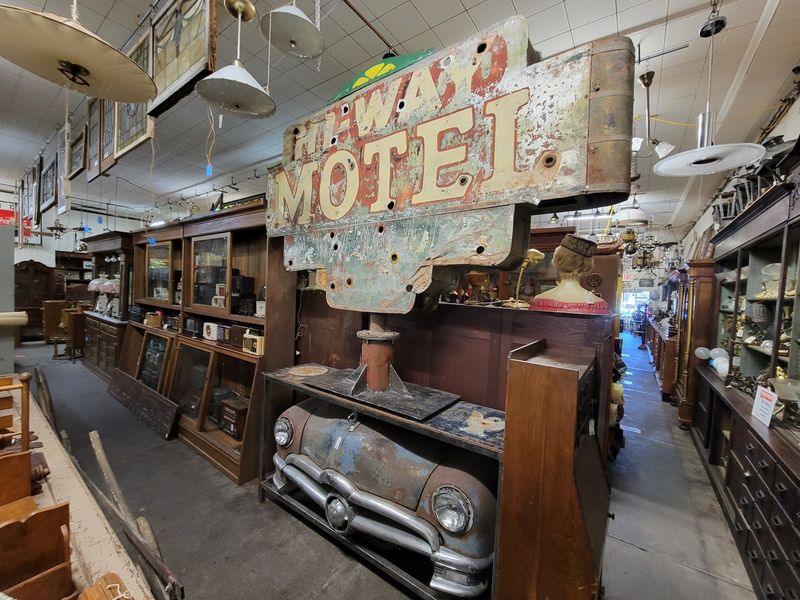
Curiosities like that turn up constantly. Old medical equipment, lead figurines, phonographs, coffee pots, ceramic handles, and barn spires all share space with the more predictable stock.
Fun fact for anyone keeping score: those shoe machines were phased out decades ago once people understood the radiation risk, which makes surviving examples genuinely rare.
The oddity section rotates faster than the rest of the store. What sits by the register today may be in somebody’s living room by next week.
That turnover is the real reason to stop in more than once. Regulars treat it as a rotating exhibit with a checkout counter.
I photographed half a dozen things I had no name for, then spent the drive home looking them up.
Prices, Bargaining, And Paying With Cash
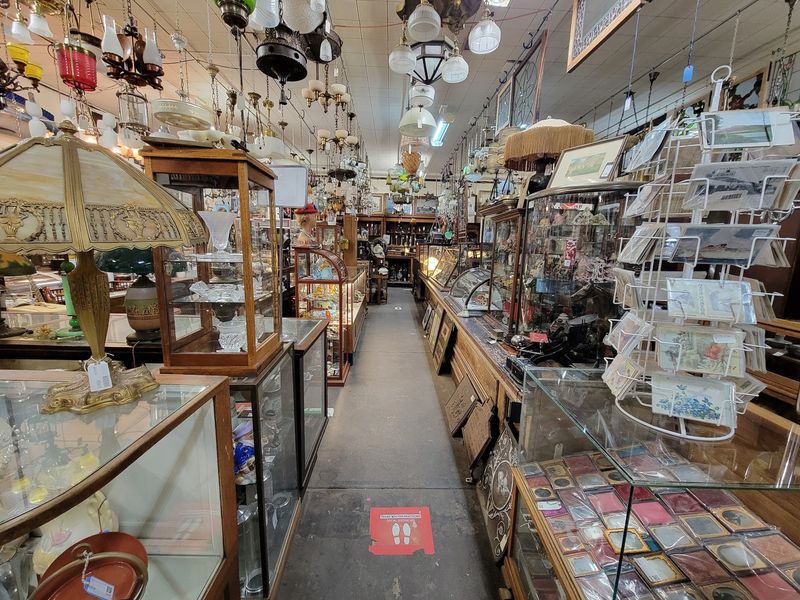
Sticker shock is real in certain aisles, and the shop makes no apology for it.
Current listings show deco fixtures and large stained glass panels carrying prices that range from hundreds into many thousands.
That said, the website maintains a sale section, where marked-down antiques appear alongside regular-price inventory as merchandise changes.
The shop advertises merchandise for sale or trade, but it does not publish a cash-discount policy or guarantee that bargaining will reduce a price.
Bargains still exist alongside the high-end stock. Small collectibles and sale items can cost far less than the largest stained-glass windows or carved mantels.
Do a lap before you buy anything. Knowing the full range of what is available helps you judge whether a price makes sense for your project.
Compare tags, check the sale inventory, and ask staff about an item before assuming that an informal negotiation or cash payment will change its price.
Hours, Parking, And Timing Your Visit
Six-day weeks are not the rule here, so check the calendar before you head over.
Showroom hours are Tuesday through Saturday from 9 am to 4 pm, with Monday available by appointment and Sunday closed.
A short window like that rewards early arrivals. Morning visits give you more of the day for browsing the stained glass, doors, lighting, and other inventory.
Saturdays are one of the regular showroom days, while appointments provide another option for shoppers who cannot make the posted Tuesday-through-Saturday schedule.
The current building sits at 2020 E Douglas Avenue, after the business relocated from its longtime North St. Francis Street space.
Give yourself at least ninety minutes if you enjoy digging through architectural salvage, antiques, lighting, hardware, doors, and stained glass at an unhurried pace.
If you are combining errands, remember that regular showroom hours end at four o’clock, and Monday visits require arranging an appointment first.
Navigating Aisles Packed To The Rafters
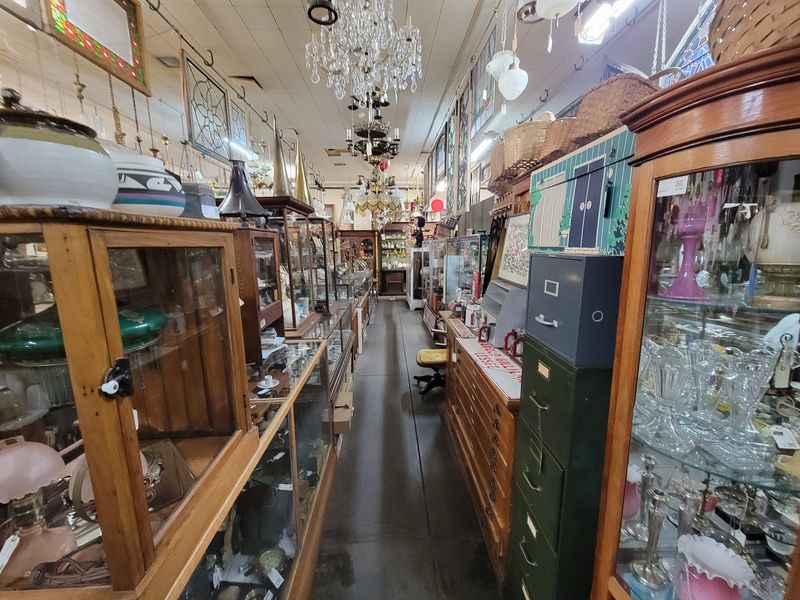
The current East Douglas showroom holds a broad mix of architectural salvage and antiques, but older reviews and photos may show the former North St. Francis Street location instead.
The official website organizes inventory into categories including stained glass, lighting, doors, hardware, architectural pieces, electronics, collectibles, signs, and art.
The business does not publish detailed accessibility information for the showroom, so visitors with mobility concerns or large strollers should contact the shop before arriving.
Wear practical shoes if you plan to spend serious time browsing and be mindful around large, fragile, or heavy architectural pieces.
Children should stay close around stained glass and other breakable inventory, just as they would in any antique or salvage store.
Staff can help locate specific items, and the official site also lets shoppers browse many products online before making the trip to Wichita.
Move slowly, look up and down, and the variety starts feeling like the point instead of clutter.
Why Salvage Shopping Beats Buying New
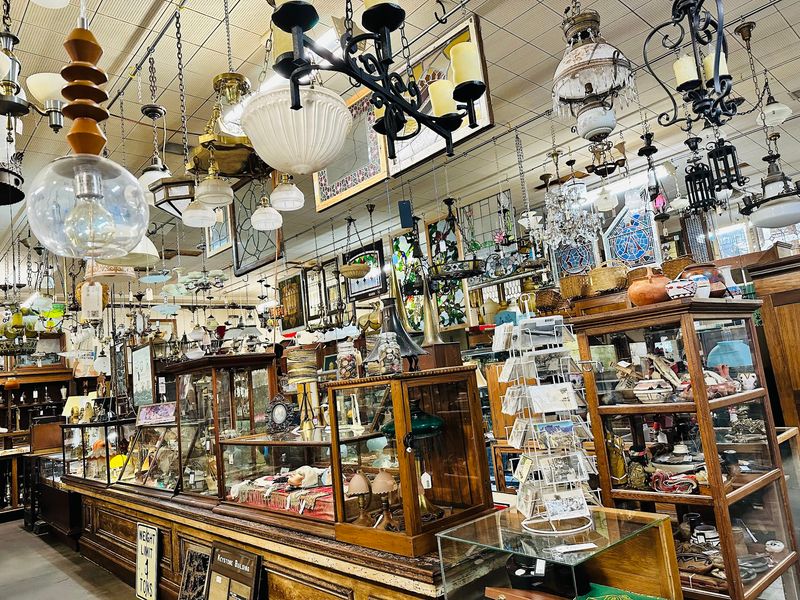
Much of the architectural inventory came from older buildings, but not every item in the store did.
The shop also sells antiques, collectibles, electronics, art, advertising pieces.
Old-growth wood, stained and leaded glass, and cast metal hardware can offer craftsmanship that is difficult to duplicate.
Repurposing is where the fun starts. A stained glass transom becomes a window hanging, an old door turns into a tabletop, and a column props up a garden gate.
Owners of century-old homes get a benefit, since period-appropriate salvage can make restoration projects look more consistent with the original building.
Newer homes gain something too. One authentic salvaged element can add character that mass-produced decor never quite delivers.
Wandering Old Town Architectural Salvage can make you look at old materials differently, wondering what might be reused instead of discarded.
Closing thought: Wichita hides plenty of good stops, but few reward slow eyes and open curiosity the way this Kansas warehouse does.