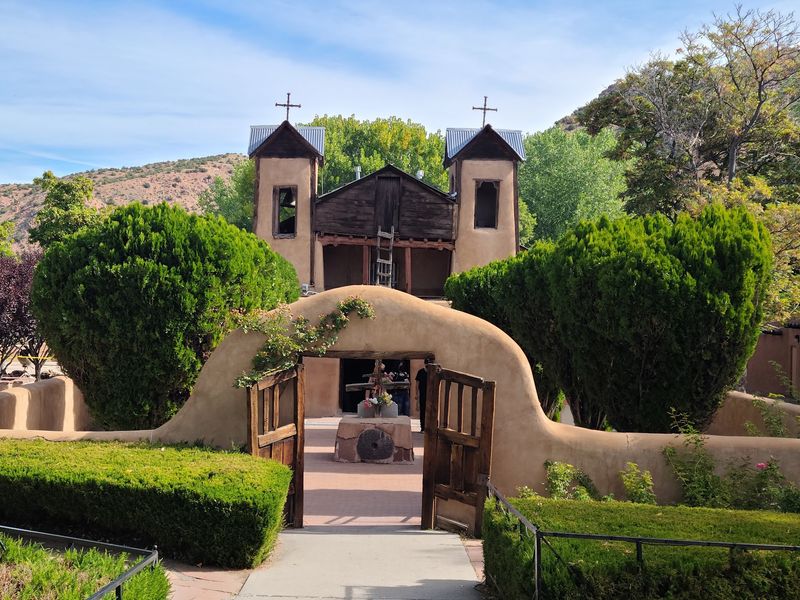
My shoulders dropped the moment I stepped through the gate, like someone had turned the volume of my whole busy life way down. I came to this quiet adobe church in New Mexico expecting a quick photo stop and instead found myself sitting in a wooden pew, not wanting to leave.
People whisper here, the air smells like earth and candle wax, and something about the place makes worry feel small. If you have ever wanted a spot that lets you truly breathe, keep reading.
A Sacred Corner of the Santa Cruz Valley
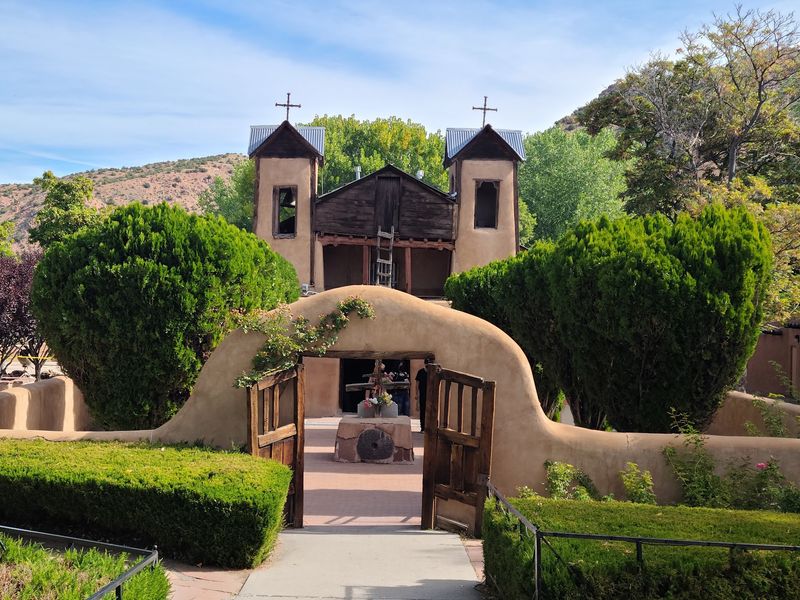
Northern New Mexico hides plenty of surprises, but few carry the quiet weight of this little adobe church resting in the Santa Cruz Valley. It sits in the village of Chimayo, cradled by rolling hills and small farming plots that have been worked for generations.
Officially, it is a Roman Catholic church and one of the most visited pilgrimage sites in the entire country. More than 300,000 people find their way here each year, some walking for miles, others simply pulling off the road curious about the fuss.
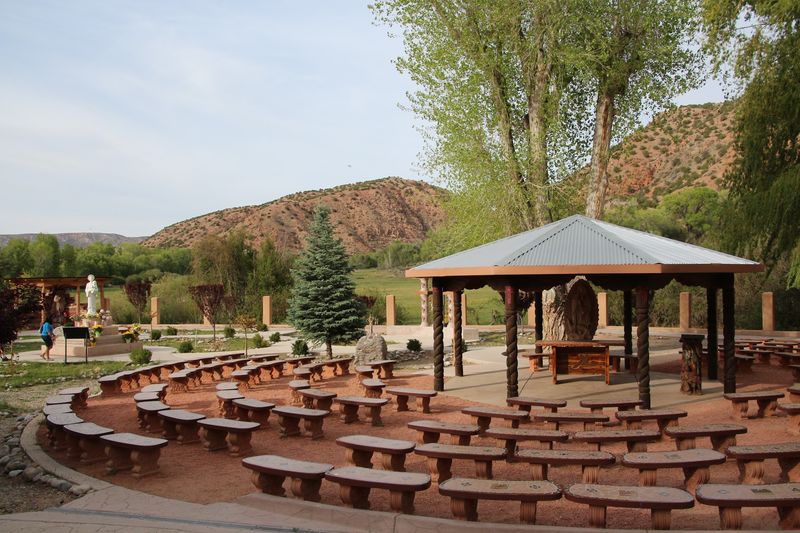
What strikes most first-timers is how humble it feels. There is no towering cathedral, no flashy entrance, just thick earthen walls, twin belfry towers, and a wall-enclosed garden that seems to hold the noise of the world at bay.
Visitors often describe the grounds as serene the second they walk in. Whether you arrive with deep faith or plain curiosity, the setting invites you to slow your steps.
It is the kind of place that rewards you for lingering rather than rushing off to the next stop on your list.
Sacred Ground Long Before the Church
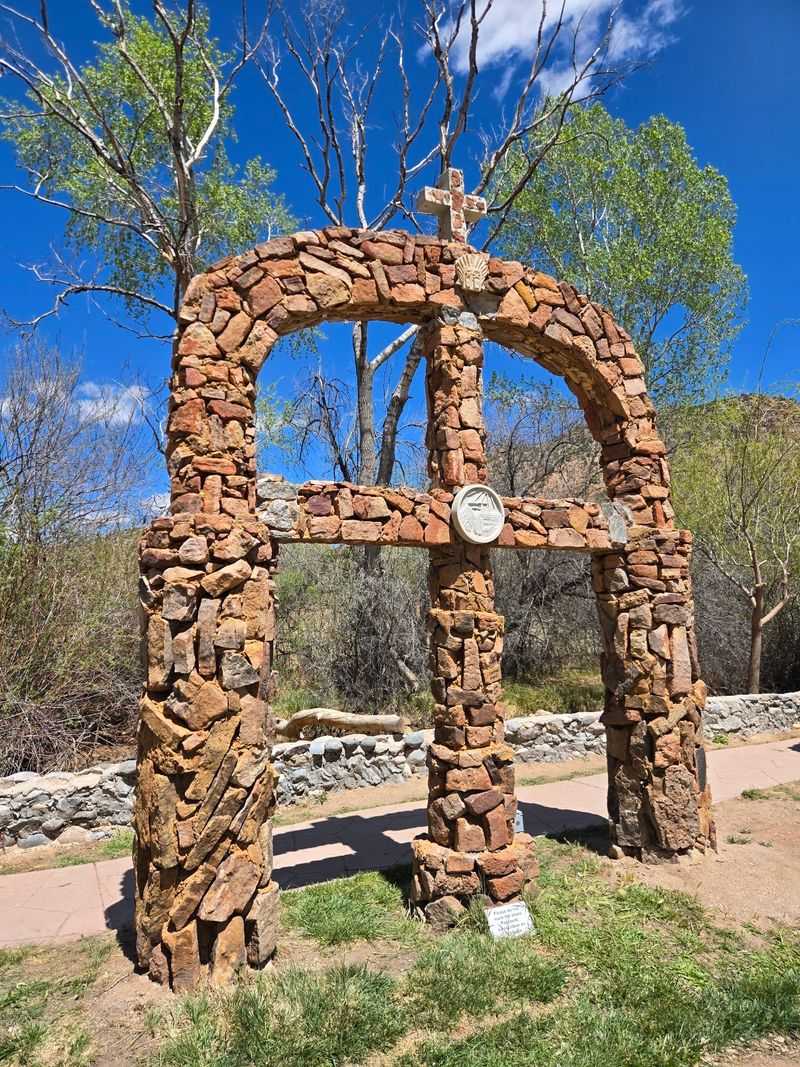
Long before any chapel rose from this soil, the valley was already considered holy. The Tewa people, who lived here for centuries before Europeans arrived, revered the nearby Tsi Mayoh hill as one of four sacred hills that anchored their world.
According to their traditions, healing spirits dwelled in hot springs that once bubbled up from the ground. When those springs eventually dried, the story goes that they left behind curative earth in their place.
That belief in the healing power of the land did not vanish when Spanish settlers came. Instead, it carried forward, blending old and new until the ground itself became the reason people traveled here.
Standing on the grounds today, it is easy to feel that layered history beneath your feet. Generations of very different people looked at this same patch of desert and sensed something worth honoring.
That continuity is part of what makes the site feel so grounded. You are not just visiting a building from the 1800s.
You are standing in a place people have treated as sacred for far longer than the walls have existed.
The Legend of the Glowing Hillside
Every great place has an origin tale, and this one begins with a light on a hill. According to tradition, in 1810 a man named Don Bernardo Abeyta saw a radiant glow coming from a hillside near his home.
Curious, he went to investigate and unearthed a crucifix from the dirt, one identified as the Black Christ of Esquipulas. It was a startling find, and word spread quickly through the community.
The crucifix was carried off to a nearby church, but the story takes a turn worthy of a fireside tale. Three separate times, it mysteriously returned to the very spot where it had been discovered.
Taking that as a clear sign, the community decided the crucifix belonged right where it was found. They built a small chapel over the site between 1810 and 1813 to honor it.
Whether you read the legend as history, faith, or folklore, it explains why the whole shrine exists at all. That stubborn return to one patch of earth set everything else in motion.
An 1816 Adobe Church That Still Stands Strong
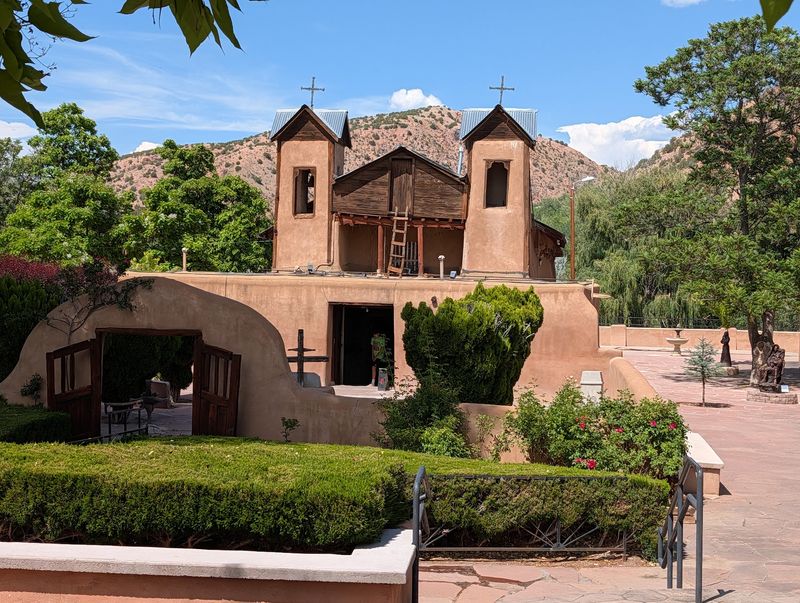
Adobe has a way of aging gracefully, and this church proves it beautifully. The original small chapel gave way to a larger structure completed in 1816, and that same building welcomes visitors today.
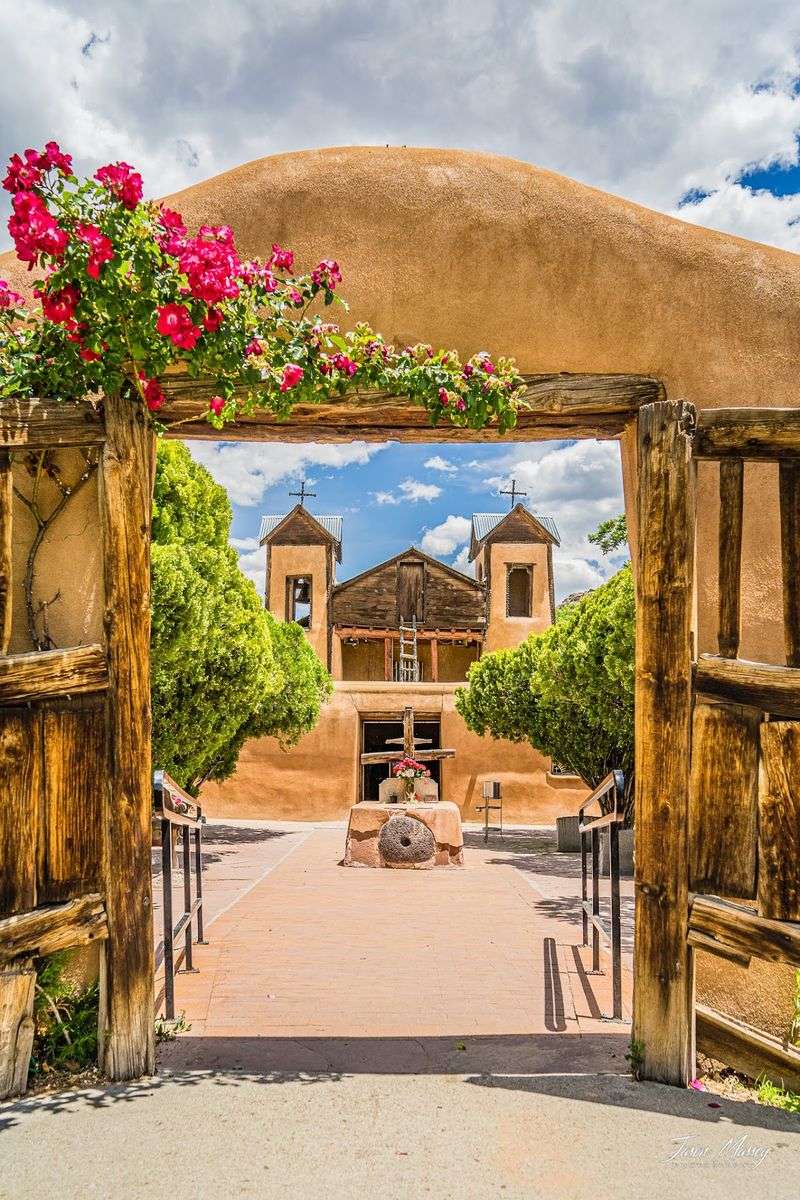
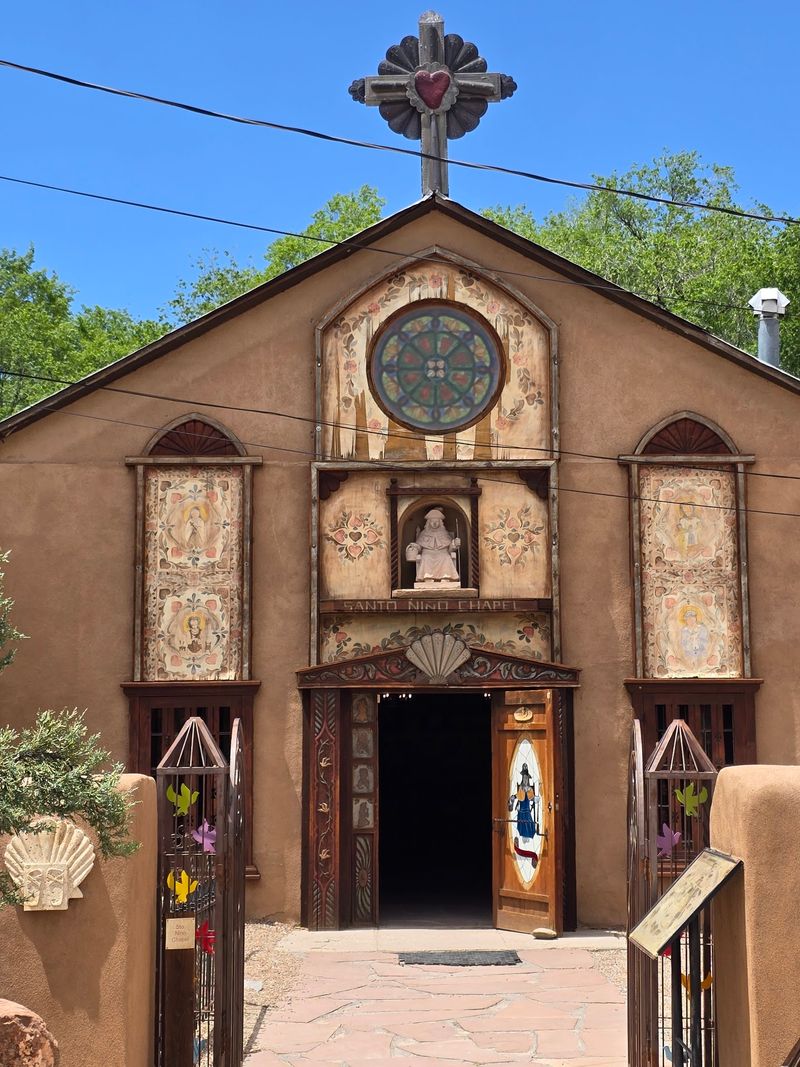
Built in the Spanish Colonial style, the church features twin front towers topped with belfries and thick earthen walls that keep the interior cool and hushed. A charming wall-enclosed garden wraps around the entrance, softening the approach with greenery.
There is something reassuring about a building that has held its shape for more than two centuries. The adobe requires ongoing care, yet it stands as a living example of how people once built to last using little more than earth, straw, and skill.
Many travelers note how well preserved it feels compared to newer replicas they have seen elsewhere. The proportions are modest, the craftsmanship honest, and the whole thing looks like it grew right out of the ground around it.
Photographers love the exterior, especially in golden late-day light when the walls glow warm. It photographs like a postcard yet feels far more real in person.
El Pocito and the Famous Holy Dirt
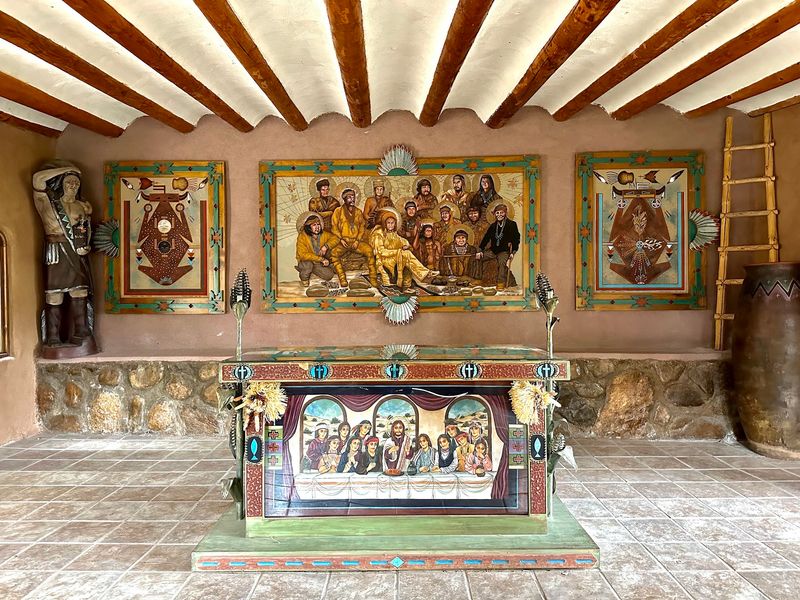
At the heart of everything sits a small pit that draws people from all over the world. Known as el pocito, it holds what many call holy dirt, or Tierra Bendita, tucked inside a modest side room of the church.
Believers say the dirt carries miraculous healing powers for all sorts of ailments. Visitors kneel beside the pit, scoop small amounts into their hands, and sometimes press it to their bodies or carry it home to loved ones who are unwell.
One thing that surprises newcomers is how the supply never runs out. The dirt is regularly replenished from the surrounding hillsides, keeping the tradition alive year after year.
Regulars mention how emotional the little room can feel, with people praying quietly as they gather a handful. Some describe the earth itself as transformative, saying they left feeling lighter than when they arrived.
If you plan to take some home, you can bring your own small container or purchase one on site for a couple of dollars. Photography is not allowed inside, so this experience stays firmly in memory rather than on your phone.
The Room of Crutches and Quiet Testaments
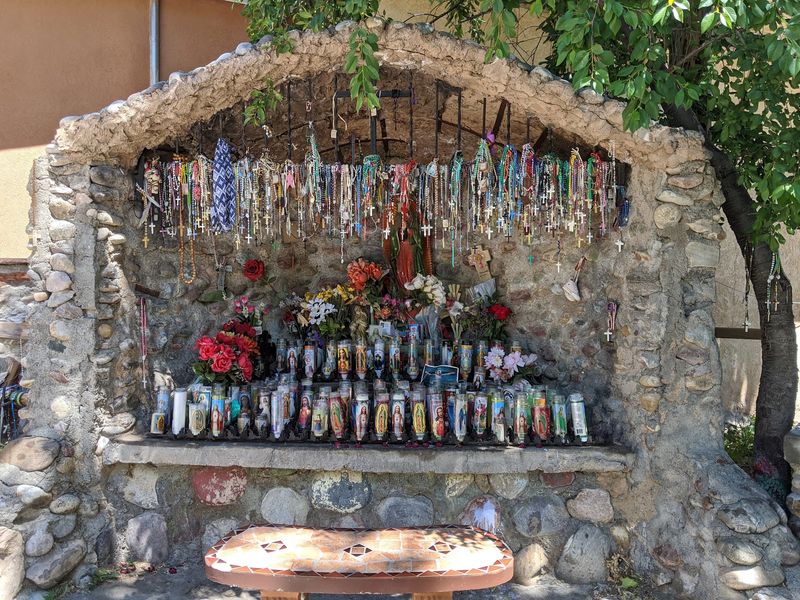
Step into the room beside the pocito and the walls themselves begin to tell stories. Crutches, braces, and countless personal mementos hang there, left behind by people who believe they found healing at this spot.
The effect is hard to shake. Each object represents a hope, a prayer, or a moment someone felt worth honoring by leaving a piece of their journey on the wall.
Handwritten notes and old photographs join the crutches, forming a patchwork of gratitude and faith. You do not have to share every belief in the room to feel moved by the sheer human longing gathered in one place.
Visitors often fall silent here, reading the notes and studying the faces in the photos. It becomes less a display and more a conversation between strangers separated by years yet united by the same reach toward hope.
Whatever brought each person to leave their mark, the room stands as a quiet witness to belief. For many, it turns out to be the most memorable corner of the entire visit, the part they think about long after the drive home.
Two Chapels, Two Very Different Moods
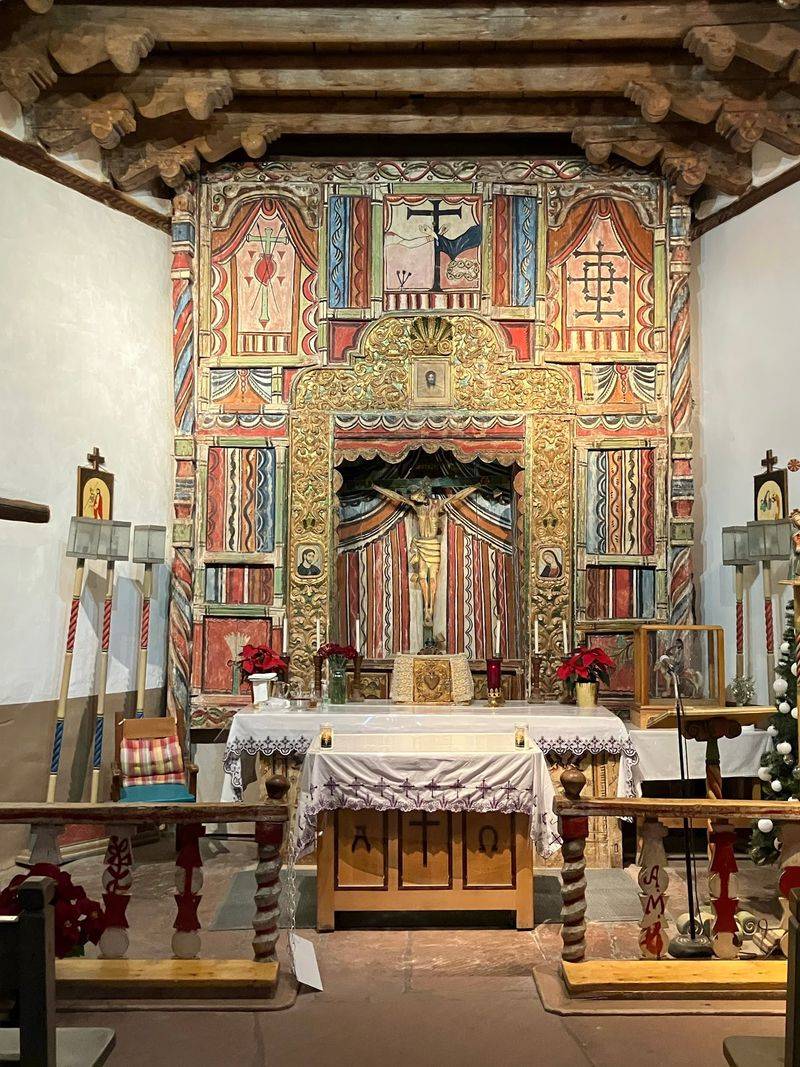
Something clever happens when you move between the two chapels on the grounds. Each carries its own emotional tone, and the contrast surprises many who wander through.
The Christ of Esquipulas Chapel leans somber and solemn, a space built for quiet reflection and heavy hearts. Step into the Holy Child of Atocha Chapel, though, and the mood shifts entirely toward symbols of life, color, and joy.
Travelers who visit both often say the side-church is less crowded yet holds some of the most beautiful carvings on the property. Slowing down to explore it rewards you with details many rushing visitors miss.
Inside both, you will find 19th-century Hispanic religious folk art, from hand-carved santos to painted frescoes. The craftsmanship reflects generations of local artistry passed down through families.
Photography is not permitted within the chapels, which nudges you to simply sit and take it in. Regulars mention finding a special stillness in the side chapel, a spot perfect for a few unhurried minutes of meditation.
Together, the two spaces show the full emotional range of the place, sorrow and celebration living side by side.
A Drive Through the High Road Country
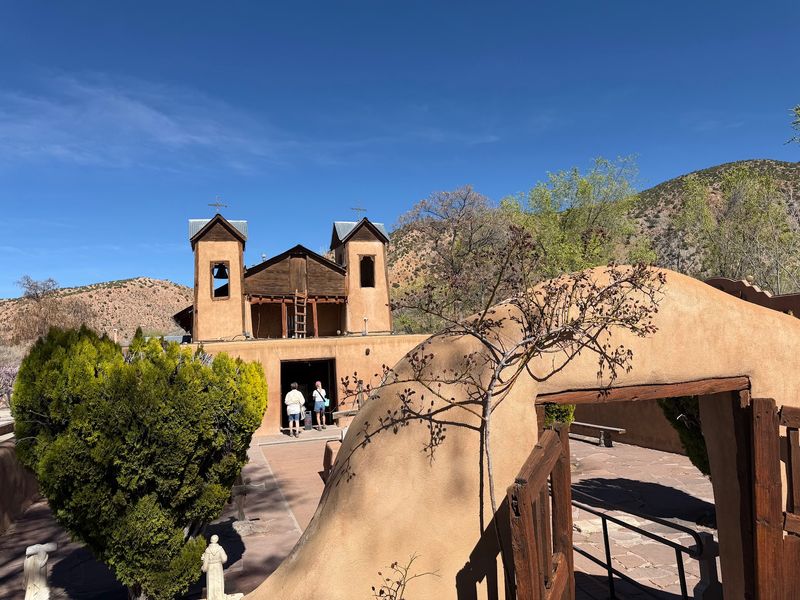
Getting there turns out to be half the reward. The route winds through high desert landscapes and historic farming communities cradled by the Sangre de Cristo Mountains.
For many travelers, the shrine marks the first significant stop on the famous High Road to Taos, which climbs north out of Santa Fe. The drive rolls past mesas, small villages, and stretches of quiet country that set a reflective mood before you even arrive.
One visitor rented a car at the Albuquerque airport, roughly 30 miles or so south, and described the trip up and back as relaxing and scenic. The open road here has a way of clearing your head.
Take it slow if you can. The point is not to rush from parking lot to parking lot but to let the scenery ease you into the calm the shrine is known for.
Fall paints the valley in warm tones, while summer offers long light for a leisurely road trip. Whenever you come, the journey itself becomes part of the story you carry home.
Chimayo’s Weaving Heritage and Artisan Shops
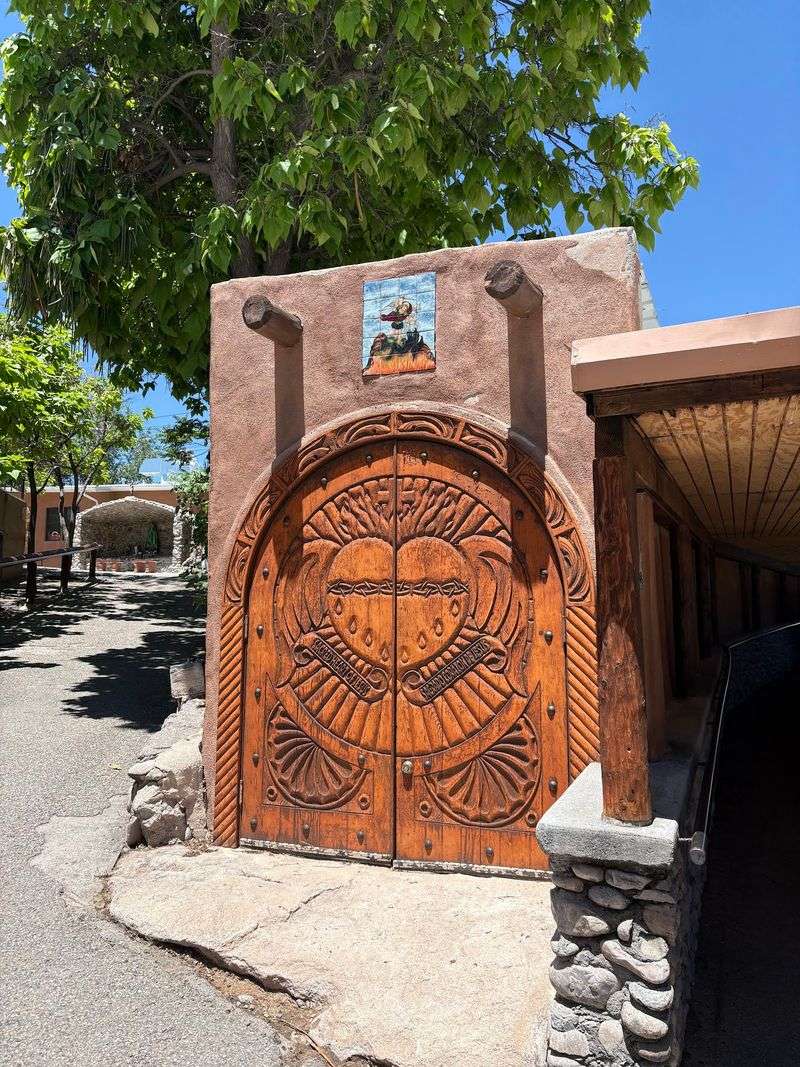
Beyond the church walls, the surrounding village carries a creative legacy worth exploring. Chimayo is renowned for its long-standing Hispanic weaving traditions, with families passing looms and patterns down through generations.
Local artisan shops line the area, offering handcrafted works that make far more meaningful souvenirs than the usual roadside trinkets. Woven blankets and rugs stand out as the signature craft, each one a small piece of the valley’s history.
On the grounds themselves, gift shops sell souvenirs alongside pieces from local artists. Visitors mention finding beautiful handmade items that support the people who actually live and create here.
A word of gentle honesty: a few travelers feel the site has grown more commercial than it once was. If shopping is not your thing, you can simply pass the stalls and head straight for the quiet corners.
Still, buying directly from a local weaver connects you to a tradition older than the shrine’s current building. For anyone who loves handmade craft, the shops add a rich layer to the visit and give you a tangible reason to slow down and chat with the makers.
The Stillness People Come Back For
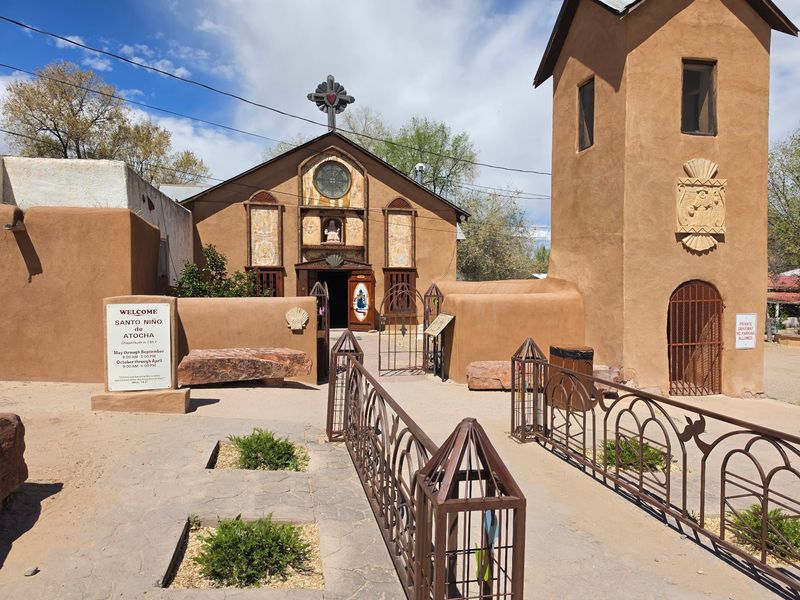
Some places calm you down without saying a word, and this shrine seems to specialize in exactly that. Visitor after visitor describes a serene, almost weightless feeling that settles over them the moment they walk the grounds.
One traveler shared how they slipped into the sanctuary to pray with only a couple of people nearby, then looked up 45 minutes later to find more than 20 kneeling in silence around them. That kind of shared, unspoken quiet is rare and hard to forget.
Others say the place seems to lift heavy thoughts right off their shoulders, easing worry from mind and body alike. Whether you attribute it to faith, history, or simple peace, the effect appears again and again in what people share.
You do not need to be religious to feel it. Even the spiritually undecided report finding the humble church a good spot for reflection.
A small stream runs nearby, and regulars recommend sitting beside it for a few minutes as part of the visit. That gentle sound of moving water rounds out the stillness perfectly.
Who Feels Most at Home Here
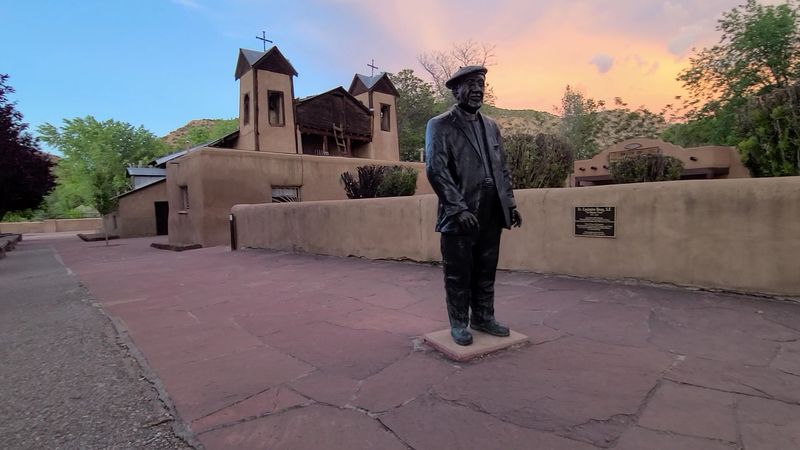
Figuring out whether a spot is right for you matters, so here is the honest read. Pilgrims and people of faith clearly form the heart of the crowd, many arriving with prayers and loved ones on their minds.
Yet the appeal stretches well past any single belief. History buffs find plenty to study in the two-century-old architecture and folk art, while quiet-seekers come simply for the meditative calm.
Couples road-tripping the High Road to Taos often stop for 30 minutes and leave glad they did, though others happily lose a few hours wandering the grounds. Families come too, some bringing containers to carry holy dirt home for relatives.
Solo travelers seem to thrive here as well, since the hushed atmosphere invites you to slow down and think without pressure to talk. The side chapel, in particular, offers a private-feeling nook for reflection.
If you crave polish and flashy attractions, this humble place might feel too plain for your taste. But if you value authenticity and a genuine sense of peace, you will likely count it among your favorite New Mexico stops.
Mass Times and the Step-Back-in-Time Experience
Timing your visit around a service adds a whole new layer to the day. The church holds regular Mass, and attending one is often described as stepping back in time.
Visitors mention an 11 a.m. Mass, while others note a Spanish service at 10:30 a.m. and an English one at noon, so it helps to plan ahead if you hope to join.
Sunday tends to be the fullest day for worship.
Those who have attended speak warmly of the priests and the sermons, calling the experience enjoyable and moving rather than stiff or formal. There is a homey, community feel to the gatherings.
Even if you are not Catholic, sitting in on a service can be a respectful way to understand what makes this place so meaningful to so many. Just remember that photography stays off-limits inside.
Holy Week draws especially large crowds, and Easter here is described as particularly powerful. If you prefer smaller numbers, a regular weekday morning offers the same reverence with far more breathing room around you.
Planning Your Visit: Hours, Parking, and Practical Tips
A little planning goes a long way toward a smooth trip. The shrine sits at 15 Santuario Dr in Chimayo and welcomes visitors from 9 a.m. to 5 p.m. every day of the week.
Good news on cost: no tickets are required to enter and explore. If you want to take holy dirt home, bring a small container or buy one on site for about two dollars.
Parking can get tight right in front of the sanctuary, especially on weekends and holidays. Regulars recommend following signs to the lower parking lot, which is flat and offers far more space, with additional parking to the right of the church.
Accessibility is available too, with ADA access reaching the higher areas such as the chapels and the dirt room. That makes the key parts of the visit reachable for most guests.
Hungry travelers should note the on-site cafe gets busy midday with long waits, so eating during off-hours is smart. You can reach the shrine at 505-351-4360 with questions before you head out.