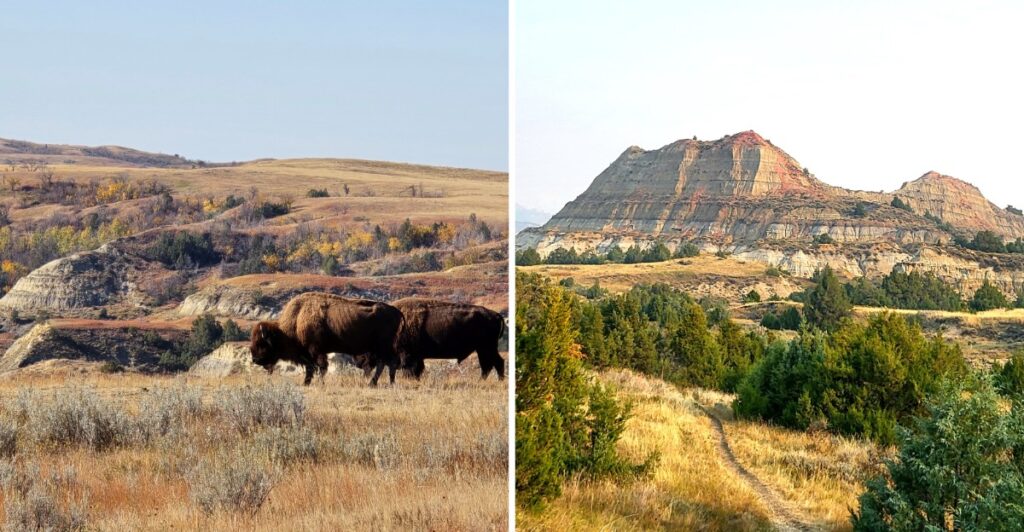
Interstate 94 has a plot twist, and it comes with striped buttes.
Out in western North Dakota, the landscape can switch moods fast. One minute, the road feels wide open. The next, the ground breaks into ridges and deep gullies.
And you barely had time to finish your snack.
You can step out for a quick look and be back on the road before long, or let curiosity pull you farther down a trail.
The badlands stretch below with far more drama than an interstate stop has any right to offer.
Then there is the wildlife.
Let’s just say some of the local residents are large enough to make the scenery feel suddenly very personal.
For a quick pull-off, this place has a surprising amount of plot.
The Prairie Changes Fast At The Canyon Rim
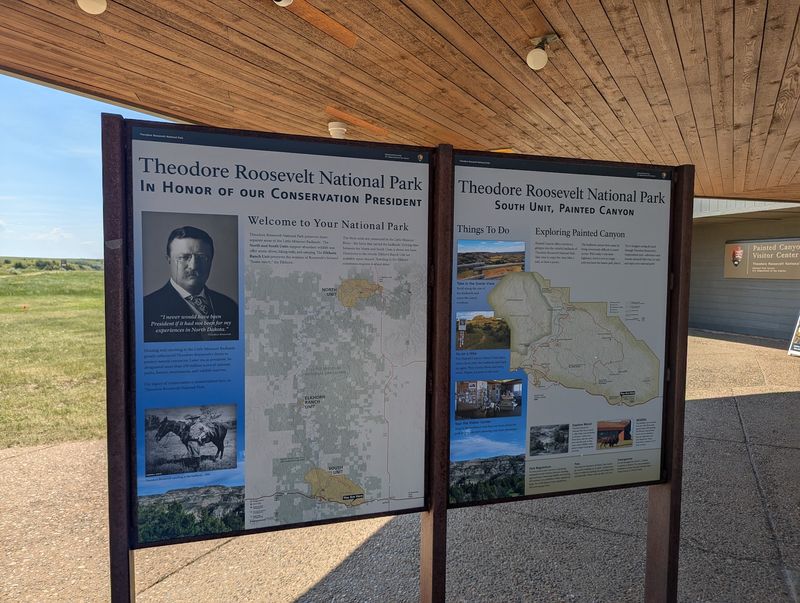
The transition into the badlands is one of the easiest things to notice on the drive. Theodore Roosevelt National Park sits within a region of mixed-grass prairie, but erosion has carved parts of the landscape into steep slopes, buttes, draws, and exposed bands of rock.
Painted Canyon puts that contrast directly in front of you.
For travelers approaching from the east, the overlook can serve as the first dramatic introduction to the park. The land no longer reads as one broad horizon.
Layers stack across the view, gullies cut between ridges, and the surface looks much more broken than the country a few miles back.
That change is not a separate landscape dropped into the prairie. It is the result of the same land being worn away over immense stretches of time. Softer material erodes faster, harder layers hold on longer, and the difference produces the irregular shapes visible from the rim.
The overlook makes that geology easy to see without requiring a trail first. If your schedule allows only a short stop, walk the rim, take in the layers, and leave the hiking for another visit.
If the view makes you curious about what the canyon looks like from below, there are two trails nearby that answer that question very differently.
Sixty-Five Million Years Sit In The Rock Layers
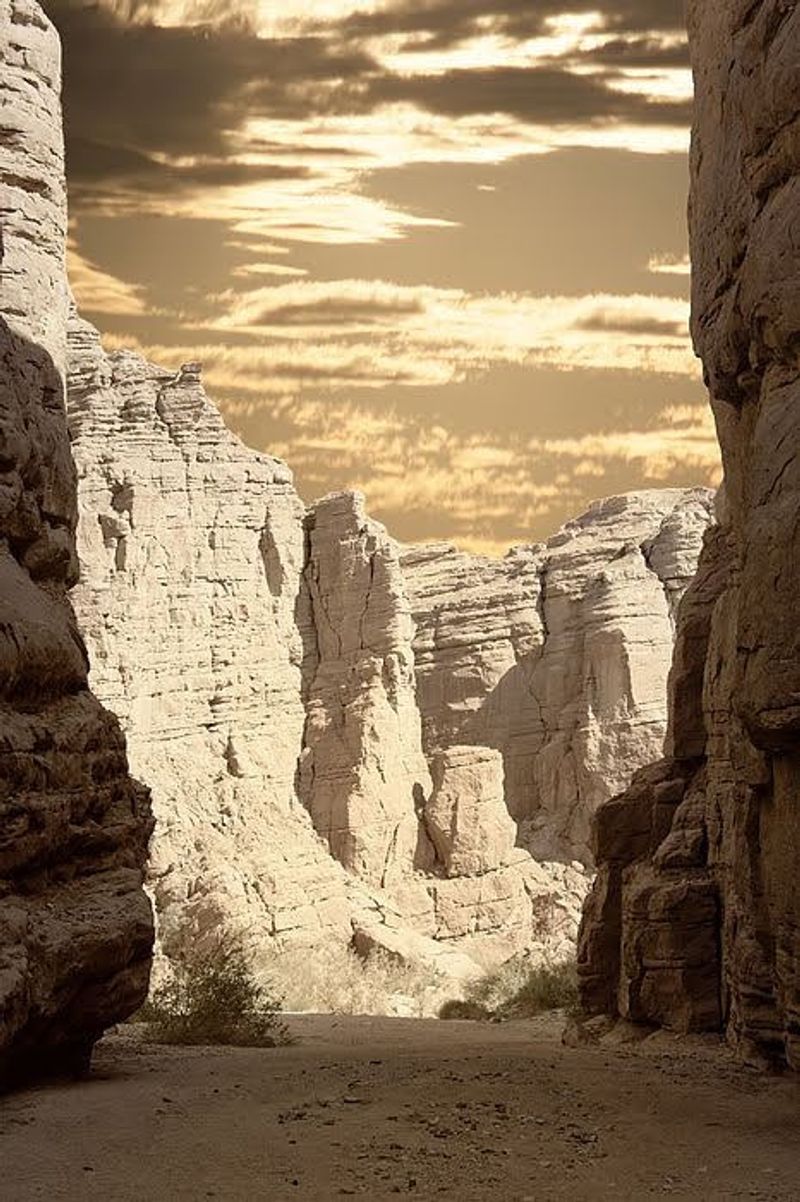
The geologic story reaches back more than 65 million years, when this part of North Dakota looked nothing like the dry badlands visible today. Rivers and swampy environments covered the region, while sediment arrived from the rising Rocky Mountains to the west.
Volcanic ash also entered the system and became part of the accumulating layers. Over time, those deposits hardened into the rock formations now exposed across the park.
The different colors come from changes in the materials and conditions represented in those layers.
Erosion did the sculpting. Water, wind, gravity, and changing river systems gradually removed softer material, leaving harder layers to protect some slopes while other sections wore away faster.
That uneven process, called differential erosion, helps create the buttes and sharply cut terrain that make the canyon look so textured.
You do not need a geology background to read the basic story.
Look for horizontal color bands, harder caps sitting above softer slopes, and channels where runoff has carried material away.
The overlook makes that geologic history easy to trace visually.
Buck Hill Helps Orient The View
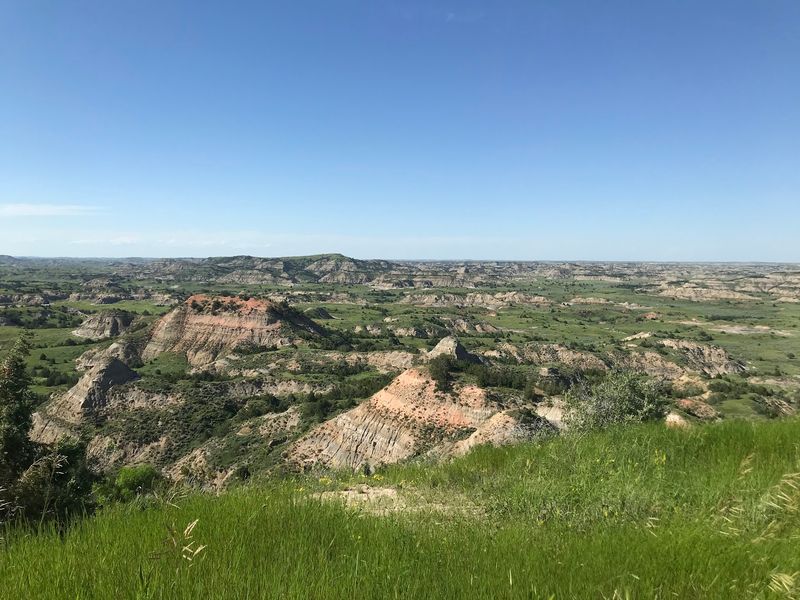
Painted Canyon is broad enough that a named landmark helps. Buck Hill, one of the higher points in Theodore Roosevelt National Park, can be seen across the canyon from the overlook.
The Painted Canyon Trail also winds through the terrain below, giving you a visual connection between the rim and the hiking routes.
Color is part of what gives the area its name. The buttes show distinct layers in different shades, creating the striped appearance that stands out from the surrounding grasslands.
Midday makes the shapes easy to read, while lower light can emphasize shadows along ridges and gullies.
A paved viewpoint and rim-side facilities mean the main panorama does not demand hiking gear. That makes the overlook useful for mixed groups where some people want a trail and others would rather stay close to the parking area.
If you have only ten or fifteen minutes, spend them at the rim instead of trying to squeeze in part of a trail. The canyon rewards a little stillness. There is a lot more going on in those layers than the highway approach suggests.
The Visitor Center Makes A Short Stop Easy
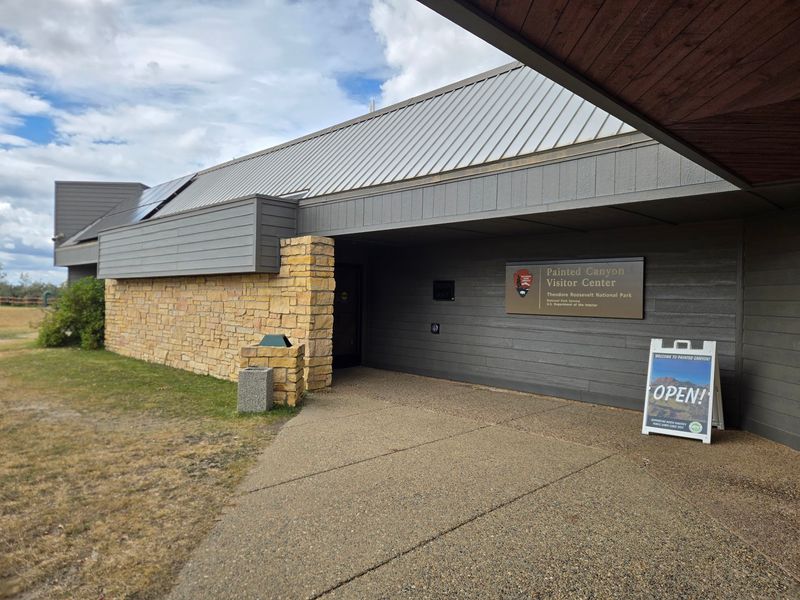
Painted Canyon is more than a pullout. The visitor center area includes panoramic views, exhibits, a staffed information desk when open, a gift shop, picnic shelters, drinking water, vending machines, public restrooms, and wheelchair-accessible facilities.
The Painted Canyon Visitor Center operates seasonally, generally from May through October. Hours can change with staffing and operations, so check them before arriving if the building is part of your plan.
The park itself is open 24 hours a day year-round, but the Painted Canyon rest area and its facilities close during winter.
For a quick road break, the picnic shelters and rim walk are enough. With more time, the information desk can help with trail conditions before you continue toward Medora.
One detail is worth keeping straight: Painted Canyon is part of the park, but it is not the entrance to the South Unit Scenic Drive. That drive begins farther west in Medora.
Exit 32 Is The Practical Access Point
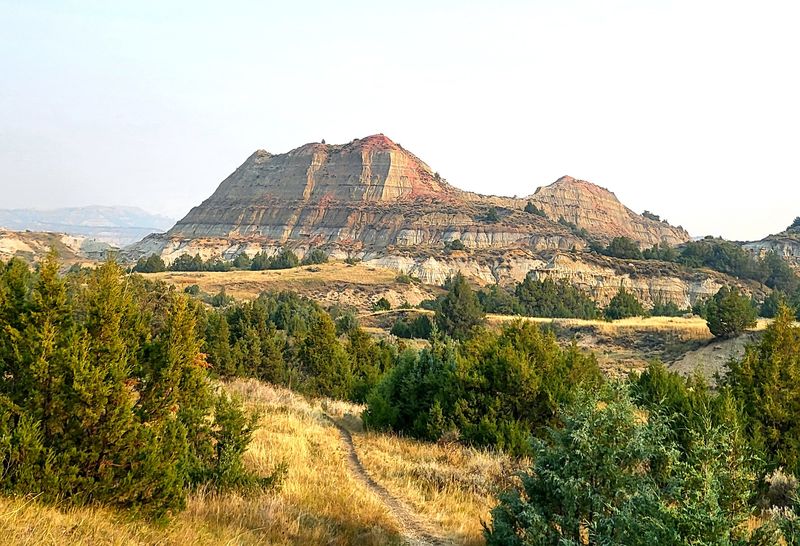
The Painted Canyon Visitor Center and overlook are reached from Interstate 94 at Exit 32 in Billings County, North Dakota, about seven miles east of Medora.
The site also functions as a state-designated rest area, which explains why it is so easy to reach during a cross-state drive.
There is no need to navigate deep into the park before seeing the canyon. From the parking area, the rim is close, and the Painted Canyon Nature Trail begins near the picnic shelters at the west end of the lot.
If Theodore Roosevelt National Park is the main destination, Painted Canyon can be an opening preview before continuing to Medora. If the interstate is the real itinerary, the overlook can still fit without a long detour.
Stretch your legs, look over the badlands, and decide whether the canyon deserves more time.
Just do not mistake the easy access for a fully separate park entrance. To drive the South Unit Scenic Drive, continue west to Medora and use the main South Unit entrance there.
Two Trails Offer Very Different Commitments
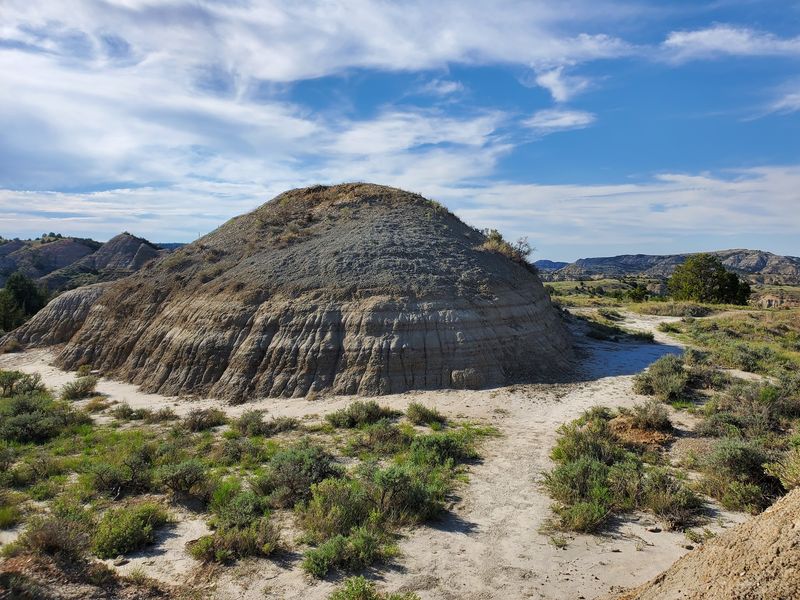
The shortest hiking option is the Painted Canyon Nature Trail, a one-mile loop that drops below the rim through juniper, wildflowers, washes, and exposed badlands.
The National Park Service rates it as a moderate challenge, and most hikers need roughly thirty to eighty minutes.
Short does not mean flat. The route has steep sections, uneven footing, loose gravel, and widely spaced log steps. After rain, some portions can become serious slipping hazards.
Proper footwear matters more here than the mileage might suggest.
Pets are not allowed on the Nature Trail, although service animals are permitted under park rules. That is worth knowing before you leave the parking area with a dog expecting a quick loop.
The longer Painted Canyon Trail runs 4.3 miles and descends farther into the canyon. Along the route, hikers can see petrified wood, including remains tied to the park’s ancient swampy environment.
At its turnaround area, the trail connects with Upper Paddock Creek Trail, opening the door to longer combinations for hikers who know the network.
Choose based on time rather than ambition. The one-mile loop gives you a real below-the-rim experience without taking over the day. The longer trail makes more sense when hiking is one of the day’s main plans rather than something squeezed between highway miles.
Bison Can Change The Plan In A Hurry
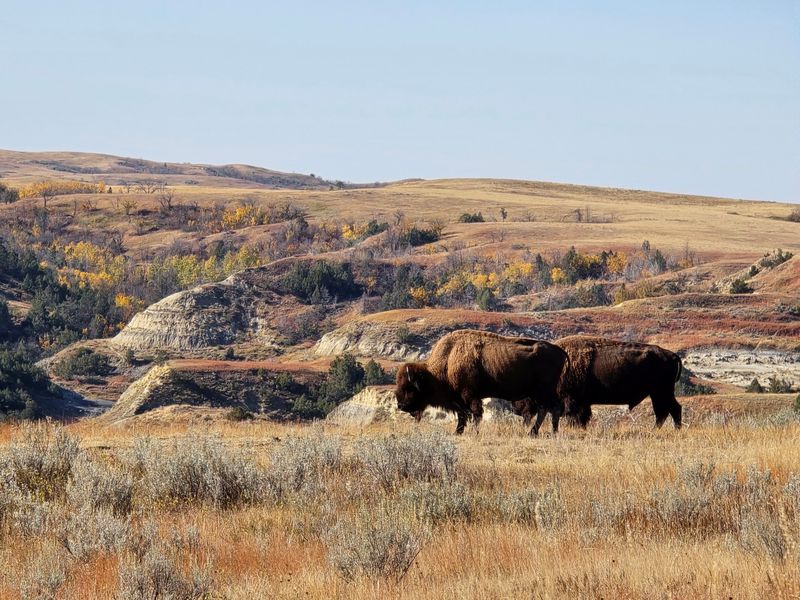
Painted Canyon is also a wildlife area, and bison are frequent visitors. Seeing one from a distance can add plenty to the stop, but the correct response is space, not a closer photograph.
Park rules require visitors to stay at least 25 yards from bison, elk, and park horses. If an animal approaches, move away and give it room to pass. Bison can look slow when grazing and still move much faster than a person expects.
That guidance matters on trails too. Blind turns and uneven terrain can shorten the distance between you and an animal before you realize it, so stay alert.
Weather deserves the same respect. North Dakota badlands conditions can swing quickly, with heat, wind, storms, rain, snow, and ice all changing what feels comfortable or safe.
Trail surfaces can become slippery after rain, while winter closes the Painted Canyon rest area and its facilities.
Match the visit to the conditions. On a clear day, add a trail. After heavy rain, stay near the rim.
If bison occupy the route, give them room.
Painted Canyon does not need much effort to make an impression. The interstate stays close, but the landscape below feels far removed from ordinary roadside scenery.
That contrast is the whole point, and you can experience it with ten minutes at the rim or several hours on foot.