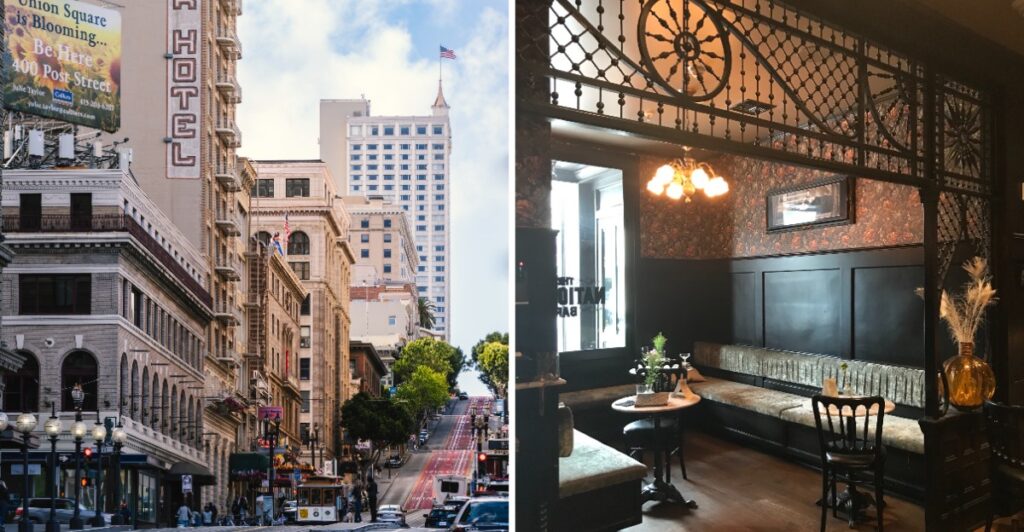
These hotels have survived more travel trends than most of us have survived hairstyles.
Some welcomed guests before cars were common. Others were already serving travelers when railroads, seaside resorts, and Gold Country boomtowns were reshaping California.
And somehow, they are still checking people in.
That is where the history gets interesting.
You are not looking at an old lobby from behind a rope. You are sleeping upstairs, walking the same halls, and using a building that has spent generations refusing retirement.
The hotels ahead reached the present by very different routes. Some endured rebuilding. Others changed with their cities and kept going.
Modern comforts may have moved in.
The old character is still easy to spot.
If your idea of history improves dramatically with a real bed and room key, this is a very good place to start.
1. Hotel Del Coronado
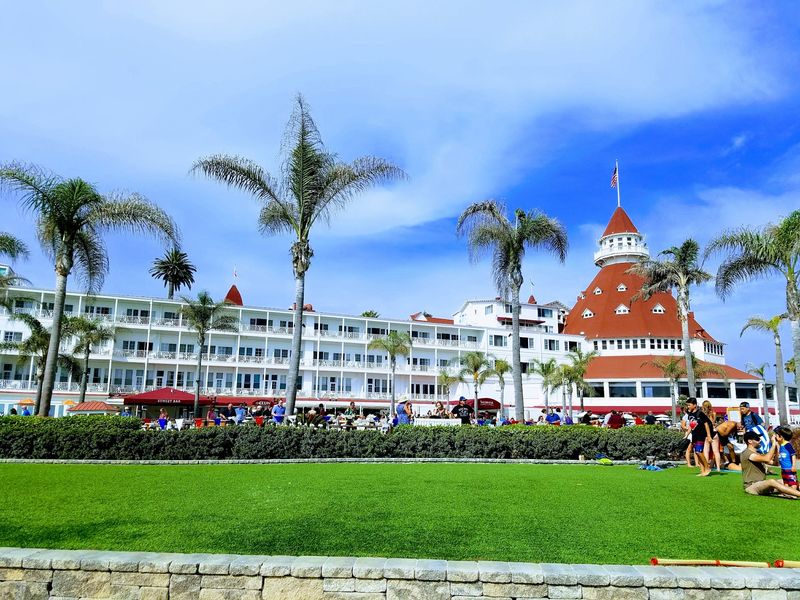
The red turrets are recognizable before you know the date attached to them.
Hotel del Coronado began welcoming guests in 1888, when the enormous wooden seaside resort arrived on Coronado with electricity, elevators, telephone service, and other features that felt unusually modern for the period.
The Victorian building remains the historic center of the resort. It was designated a National Historic Landmark in 1977, and a six-year restoration and revitalization project was completed in 2025.
Historic guestrooms, the lobby, courtyard, Crown Room, and other original spaces were included in that work.
Hollywood eventually added another layer to the story. The 1958 comedy Some Like It Hot used the hotel and beach as filming locations, while author L. Frank Baum also spent time at the property.
Baum is credited with designing the Crown Room’s distinctive chandeliers around 1911.
You do not need to turn a stay into a history lesson, but it is worth slowing down in the older building. The second-floor lobby balcony, restored Victorian rooms, red-roofed towers, and broad verandas give you plenty to notice before the beach even enters the schedule.
If your group splits between architecture people and ocean people, this is one hotel where nobody has to compromise very much.
Address: 1500 Orange Ave, Coronado, CA 92118.
2. The Mission Inn Hotel & Spa
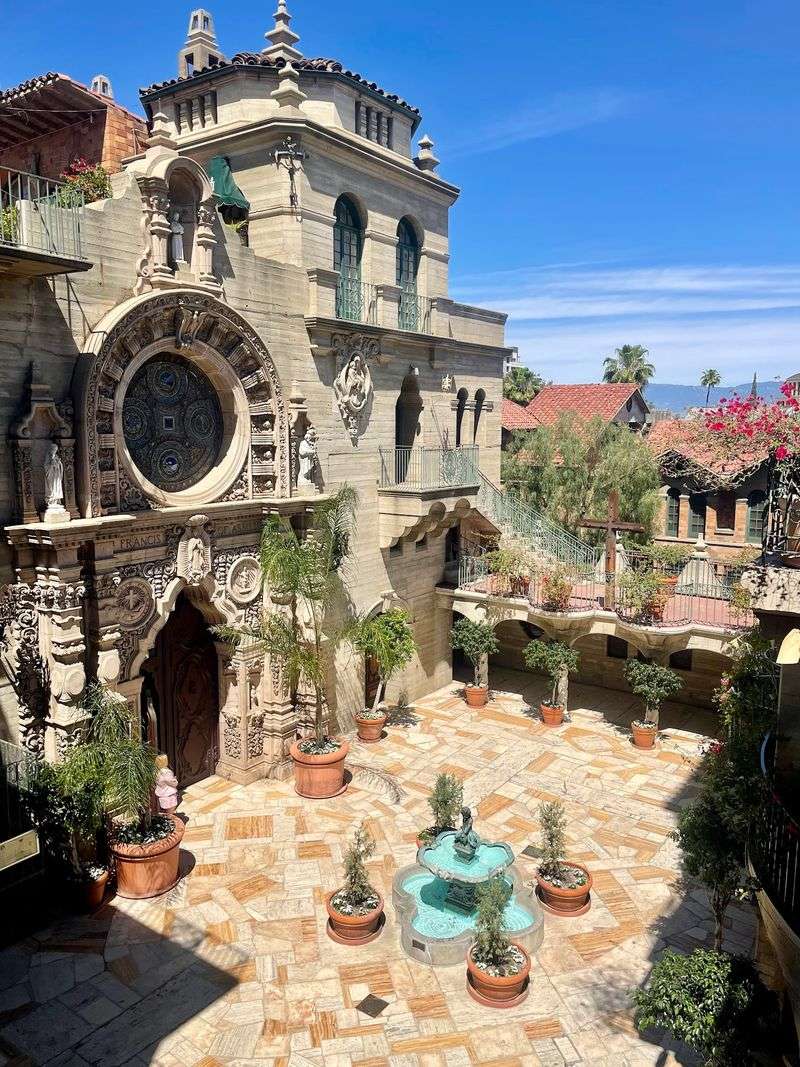
A modest adobe boarding house opened in Riverside in 1876.
By the early twentieth century, that small beginning had grown into the sprawling Mission Inn, with wings, courtyards, towers, arches, and architectural details gathered into a building that now occupies an entire city block.
The biggest transformation accelerated in 1903, when the Mission Wing added more than 200 guestrooms. The Cloister, Spanish Wing, and Rotunda Wing followed over the next few decades, creating the maze-like property guests encounter today.
That layout makes wandering part of the experience.
Courtyards open unexpectedly, stairways change direction, and decorative glass, domes, bells, carved doors, and historic furnishings turn a quick walk back to the room into something that may take longer than planned.
The hotel remains open in 2026 and continues to operate as a full-service property in downtown Riverside. Its location also puts the Fox Performing Arts Center, museums, and other downtown stops close enough to add without another major drive.
Give yourself time to explore before heading out for the day. This is not a building that reveals much from one hallway, and rushing directly from the front desk to the elevator skips a large part of the fun.
Address: 3649 Mission Inn Ave, Riverside, CA 92501.
3. Palace Hotel
San Francisco’s original Palace Hotel opened in 1875 and was considered the largest hotel in the world at the time. The building that guests enter today tells the next chapter rather than pretending nothing happened in between.
The 1906 earthquake and the fire that followed left the original property badly damaged. A new Palace opened in 1909 on the same site, using the earlier hotel’s scale and ambition as its starting point.
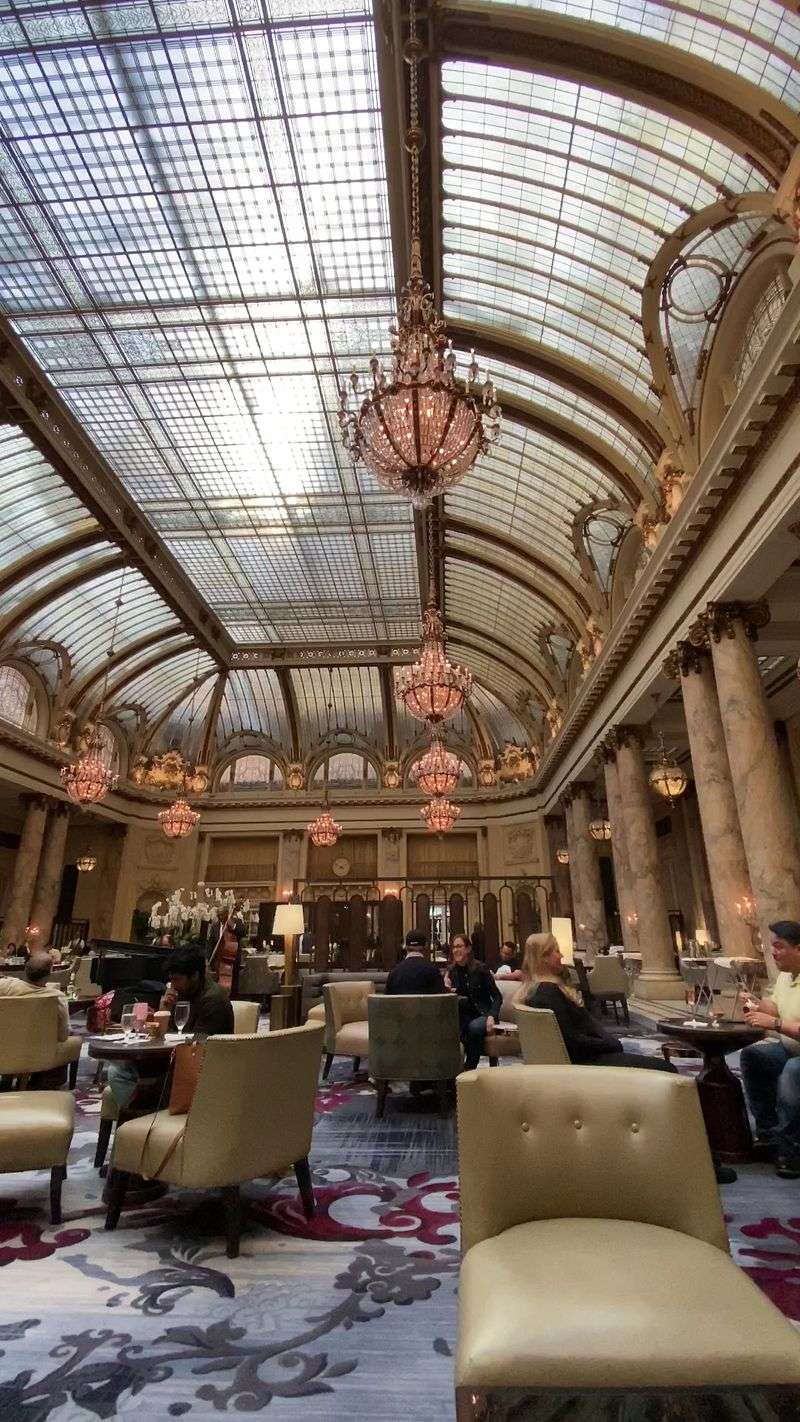
Its most memorable room arrived with that reopening. The Garden Court covers about 8,000 square feet beneath a glass ceiling assembled from more than 70,000 pieces of colored glass.
Austrian crystal chandeliers and Italian marble columns add to the sense that breakfast wandered into a grand civic hall by mistake.
History is easier to inspect in smaller doses at Landmark 18, the hotel’s lobby-level display of photographs, objects, and memorabilia from nearly 150 years of Palace history. The Maxfield Parrish Pied Piper painting also remains part of the property.
Stay here for the location and the rooms if that suits the trip, but leave ten minutes for looking up. The ceiling usually wins.
Address: 2 New Montgomery St, San Francisco, CA 94105.
4. Fairmont San Francisco
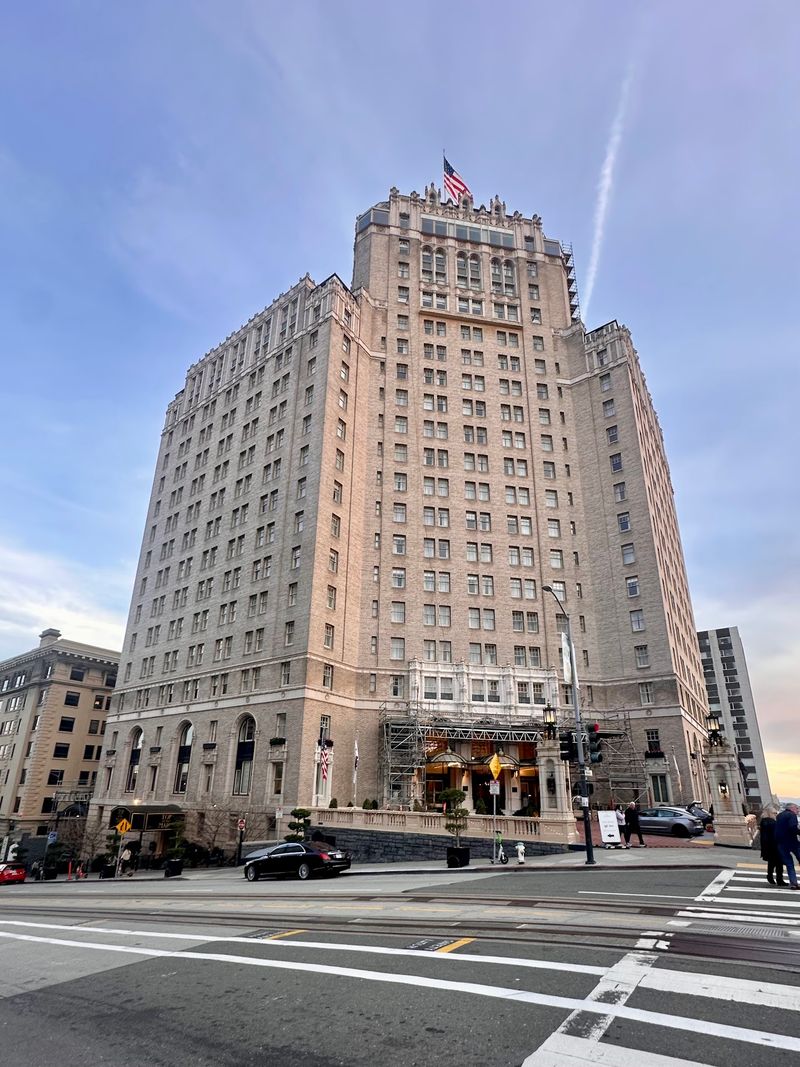
The Fairmont almost opened at the worst possible moment. The hotel was nearing completion when the 1906 earthquake struck San Francisco, damaging the interior before guests had ever checked in.
Architect Julia Morgan was brought in to help restore the building, and the Fairmont officially opened on April 18, 1907, exactly one year after the earthquake. Its stone exterior and hilltop position quickly made it one of Nob Hill’s defining buildings.
The hotel later became connected to another major piece of world history.
During the 1945 United Nations Conference in San Francisco, Secretary of State Edward Stettinius worked from the Fairmont, and important meetings among international delegates took place there while the charter was being negotiated.
The final document was approved and signed elsewhere in the city, so the hotel’s role is important without needing to stretch the story.
Today, cable cars pass the Nob Hill property, and the location makes it easy to combine a historic stay with downtown sightseeing. Inside, the grand public rooms still carry the scale expected from an early twentieth-century hotel.
Take the stairs or wander the lobby before heading out. One hundred-plus years of history is easier to appreciate when you give the building a few minutes of your attention.
Address: 950 Mason St, San Francisco, CA 94108.
5. The US Grant
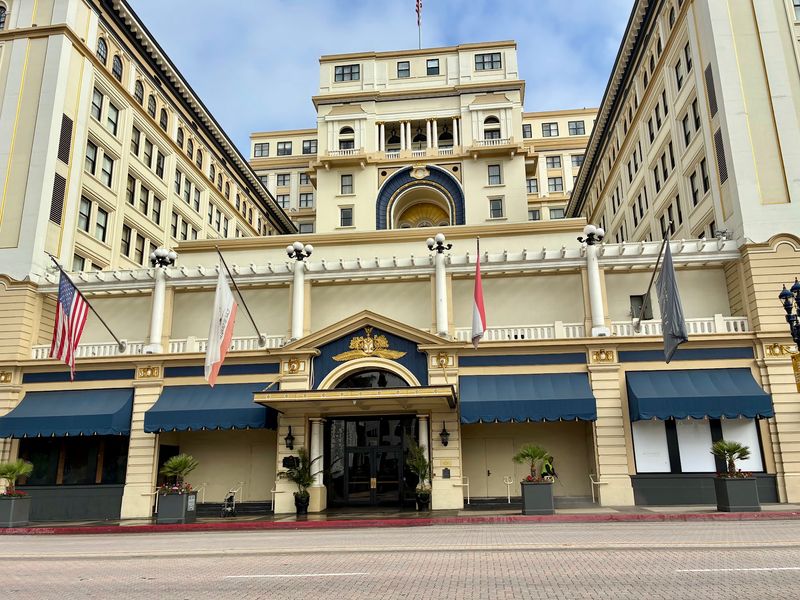
The name comes from a president, but the project belonged to his son. Ulysses S. Grant Jr. moved to San Diego in the 1890s, became active in local business and real estate, and eventually replaced the older Horton House hotel with a new property named for his father.
The US Grant officially opened on October 15, 1910. At the time, it contained more than 400 rooms and represented a remarkably ambitious project for a city far smaller than the San Diego visitors know today.
More than a century later, the downtown hotel is still taking reservations at the same Broadway address.
The building has been renovated substantially over the years, but its historic identity remains central to the property. It is now operated as part of Marriott’s Luxury Collection.
The location does some practical work too. Downtown attractions, theaters, restaurants, and public transportation are close by, so you can use the hotel as a base rather than making it the only historical stop of the weekend.
Before heading out, look around the main public spaces and consider the scale of the original 1910 project. Building a hotel with hundreds of rooms in early San Diego required a level of optimism that is still fairly easy to spot in the architecture.
Address: 326 Broadway, San Diego, CA 92101.
6. Claremont Resort & Club
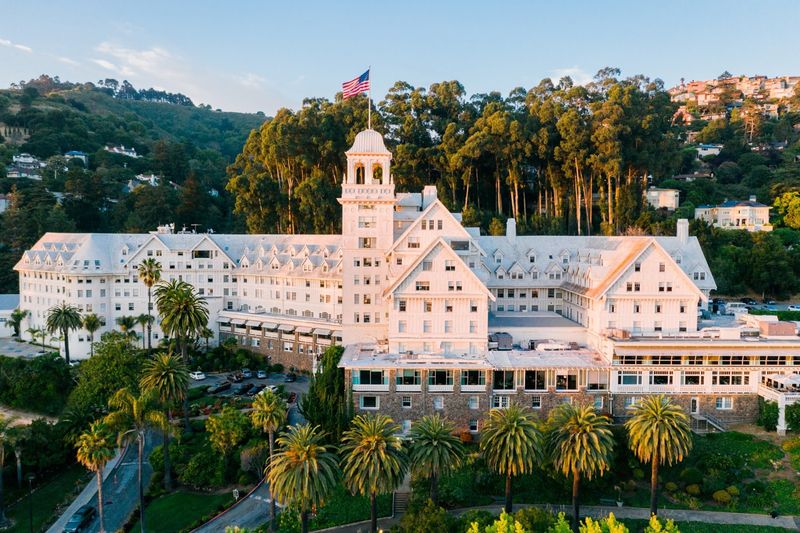
The white building above the East Bay has been watching over Berkeley and Oakland since 1915.
Claremont Resort & Club opened that year in time for the Panama-Pacific International Exposition period, turning its hillside location and Tudor Revival architecture into a landmark visible from across the bay.
Its history stretches back through several earlier development schemes, but 1915 is the date that matters for hotel guests. More than 110 years later, the resort is still operating from its 22-acre site on Tunnel Road.
The modern version leans heavily into recreation. Three heated outdoor saline pools operate year-round, while eight lighted tennis courts and four pickleball courts give active guests plenty to do without leaving the property.
One outdated detail from older descriptions is worth correcting: the resort currently states that it does not have a spa.
That makes the day’s choices refreshingly uncomplicated. Check in, explore the historic building, then choose between the pools, courts, or nearby East Bay neighborhoods depending on how energetic everyone feels.
The hillside views remain part of the appeal, but the building itself deserves attention too. Its bright exterior, tower, and long history give the property much more personality than a generic resort stop.
Address: 41 Tunnel Rd, Berkeley, CA 94705.
7. The National Exchange Hotel
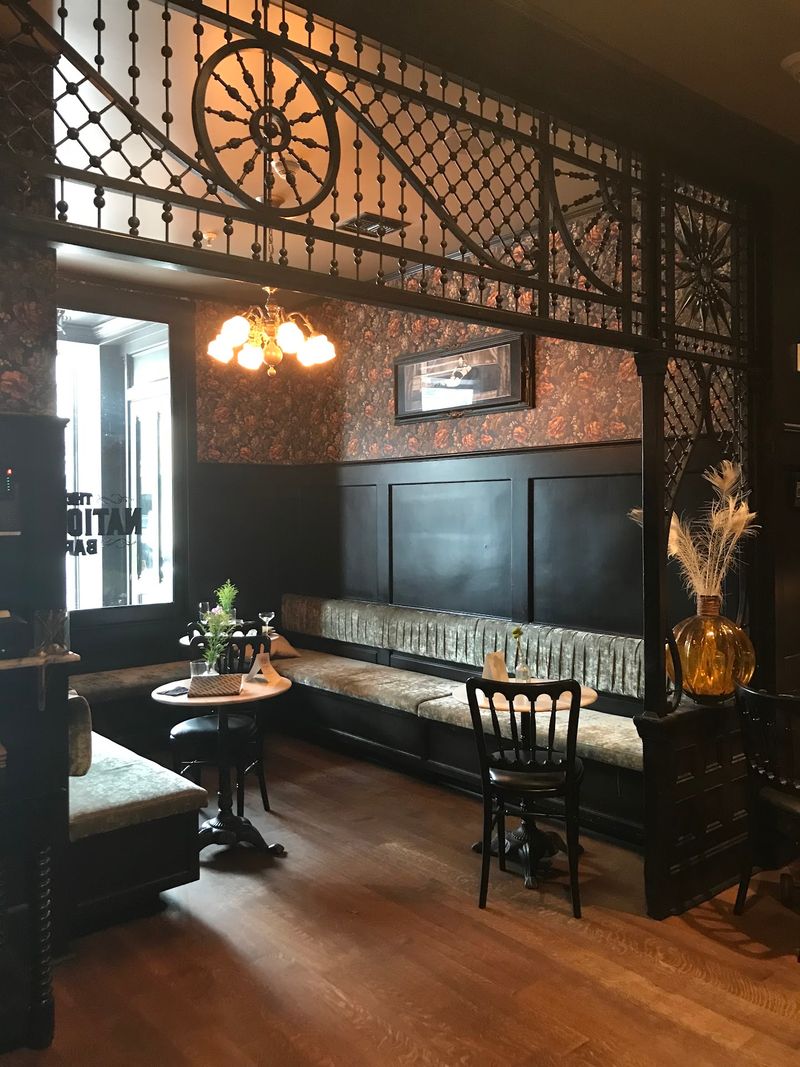
Gold Rush history is difficult to avoid in Nevada City, and this hotel has been sitting in the middle of it since 1856. The National Exchange opened on Broad Street that August, occupying brick buildings constructed during the town’s rapid growth.
The property still describes itself as one of the oldest continuously operating hotels west of the Rockies.
A three-year renovation completed in 2021 preserved original structural walls and historic architectural features while reducing the room count and adding modern bathrooms and other practical comforts.
There are now 38 individually designed guestrooms.
Antiques, vintage pieces, patterned wallpaper, original art, and older architectural details share space with current amenities, so the renovation did not try to make a nineteenth-century building behave like a blank new hotel.
The location helps too. Broad Street puts you directly in Nevada City’s historic center, with shops, restaurants, galleries, and old buildings close enough to reach on foot.
A small practical detail may matter to some travelers: guestrooms are on the second and third floors, and the hotel does not have an elevator. That is the sort of historic-building quirk worth knowing before the suitcase gets packed rather than after it reaches the lobby.
Address: 211 Broad St, Nevada City, CA 95959.
8. Murphys Historic Hotel
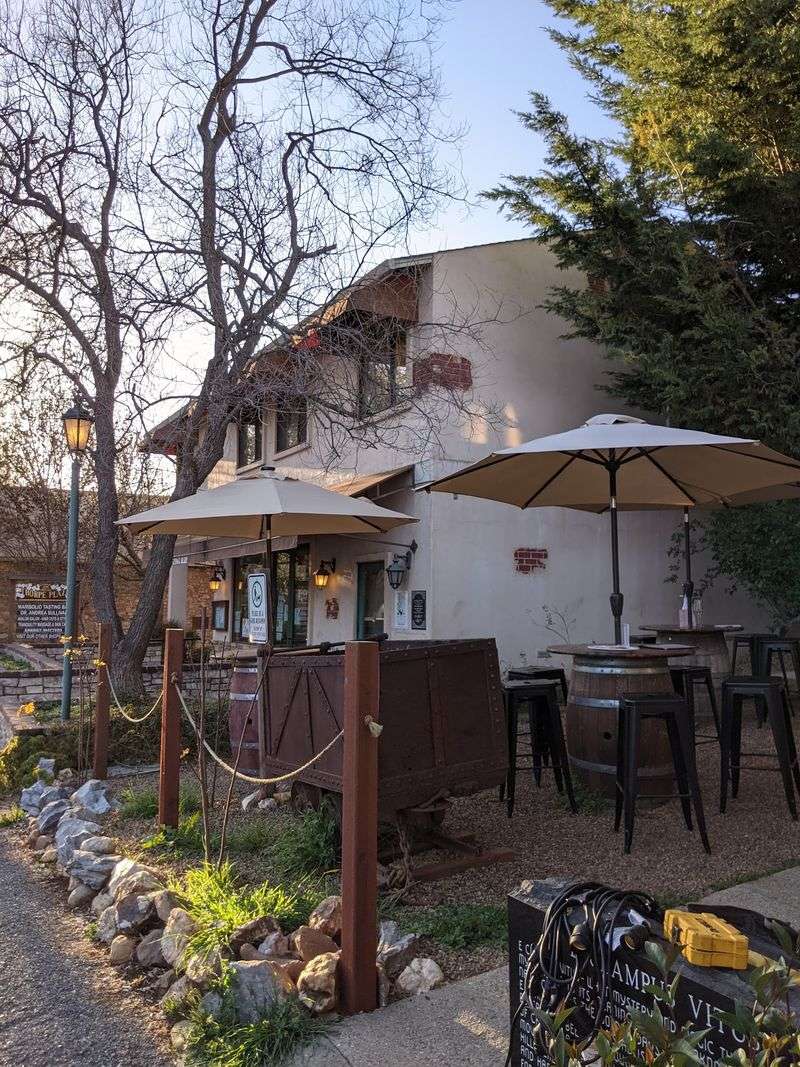
The story began in the summer of 1856, when James Sperry and John Perry opened what was then called the Sperry & Perry Hotel. Stage travelers heading toward the newly famous giant sequoias of Calaveras Big Trees made Murphys a natural stopping point.
The guest register eventually collected names that still make people pause. Mark Twain and former President Ulysses S. Grant are among the documented visitors, and copies of notable historic signatures can be viewed in the hotel lobby.
Nine guestrooms remain inside the original 1856 building, while additional accommodations are housed in an adjacent lodge. That gives travelers a useful choice between sleeping in the oldest portion of the property and choosing a more modern setup nearby.
Main Street makes the rest of the stay easy. Shops, galleries, restaurants, and historic buildings are close together.
tCalaveras Big Trees State Park is a short drive away when you want the landscape that helped draw nineteenth-century travelers through town in the first place.
If staying in an old room is the goal, check which building you are booking. “Historic hotel” and “historic room” are not automatically the same thing here, and that little distinction can make a big difference to the experience.
Address: 457 Main St, Murphys, CA 95247.
9. Glen Tavern Inn
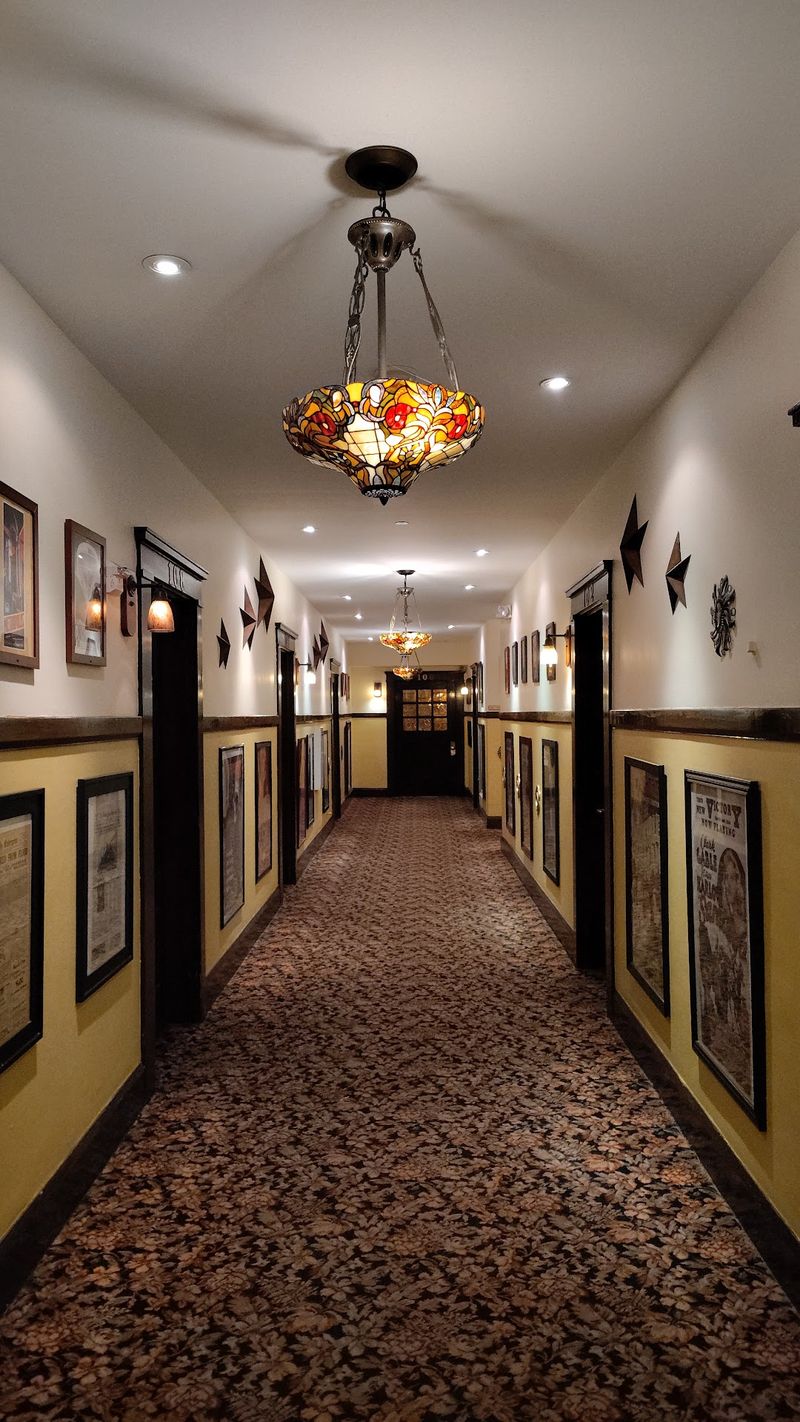
Santa Paula was growing quickly when this three-story inn opened in 1911. Agriculture, citrus production, and the local oil industry were bringing workers and travelers through town, creating a need for lodging near the railroad era’s busy routes.
Glen Tavern Inn still stands at its original North Mill Street address.
The building mixes Tudor Revival and Craftsman elements, with steep rooflines, half-timbered details, and substantial interior woodwork giving it a look that is immediately different from a modern roadside hotel.
The property is listed on the National Register of Historic Places, where 1911 is recorded as a significant year. Its current operation includes 35 rooms, allowing guests to stay in the historic building rather than simply photograph it from outside.
Santa Paula adds plenty to a short trip without requiring a complicated schedule. Downtown museums, historic architecture, shops, and the surrounding agricultural landscape all sit within easy reach of the inn.
The building also has a long paranormal reputation, but it is better treated as part of local storytelling than as a promise that anything unusual will happen. The architecture and documented history already give you enough to talk about over breakfast.
Address: 134 N Mill St, Santa Paula, CA 93060.
10. Chancellor Hotel On Union Square
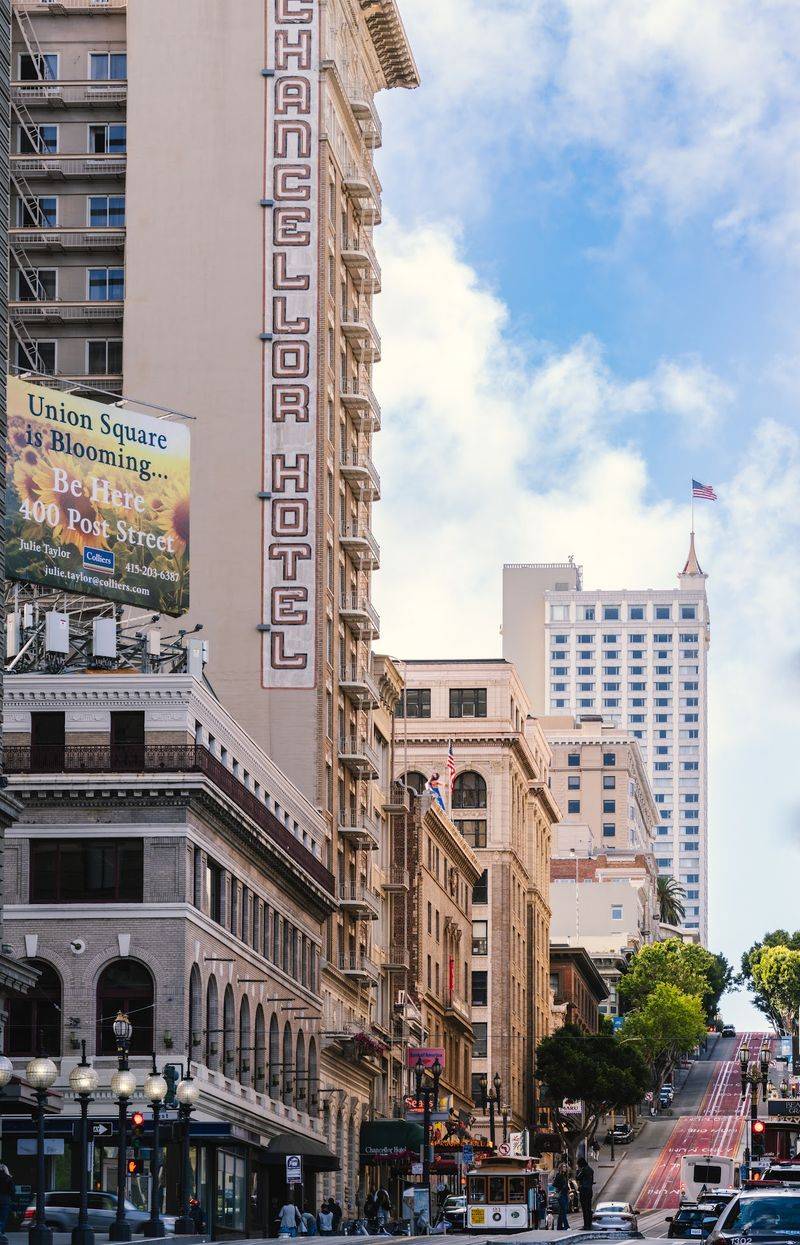
Cable cars still pass directly outside this Union Square hotel, which feels appropriate for a building that opened in 1914.
The Chancellor was constructed as San Francisco prepared for the Panama-Pacific International Exposition of 1915 and briefly held the distinction of being the city’s tallest hotel building.
Three years after opening, the property was purchased by Isador Rosenberg. His family still owns and operates the Chancellor today, making that continuity one of the most distinctive parts of its story.
The hotel currently has 137 guestrooms, including two suites. Its historic nature comes with a few practical details worth knowing before booking. Guestrooms do not have air conditioning, and bathrooms are generally compact.
That may matter more on a warm week than the building’s age does.
Location remains the easy sell. Union Square is outside the door, the Powell Street cable car line passes the hotel, and Chinatown, theaters, shopping, and downtown attractions are within walking distance.
This is the place to choose when you want historic character without making the whole trip revolve around the hotel. Drop the bags, listen for the cable car bell, and let San Francisco handle the rest of the itinerary.
Address: 433 Powell St, San Francisco, CA 94102.