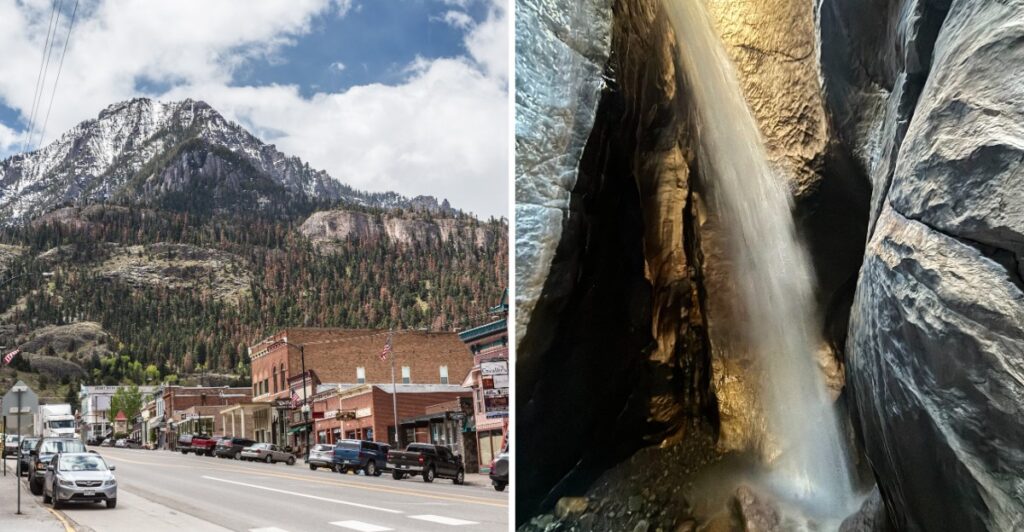
You are halfway to coffee when the mountain wins.
Not metaphorically.
One glance above the rooftops and whatever was happening at street level suddenly has competition.
That is everyday life in this compact Colorado town, where downtown sits high in the San Juan Mountains, and the slopes rise almost immediately around it.
Main Street handles the practical stuff. You can browse, eat, wander past historic buildings, and leave the car parked for much of the day.
But the scenery keeps interrupting.
Turn down a side street and the angle changes. Walk another block and a peak appears somewhere you were not looking. Even a nearby waterfall can tempt you away from downtown for a while.
So yes, the town is easy to walk.
Walking in a straight line without staring upward is another matter.
Main Street Makes Parking Once A Reasonable Plan
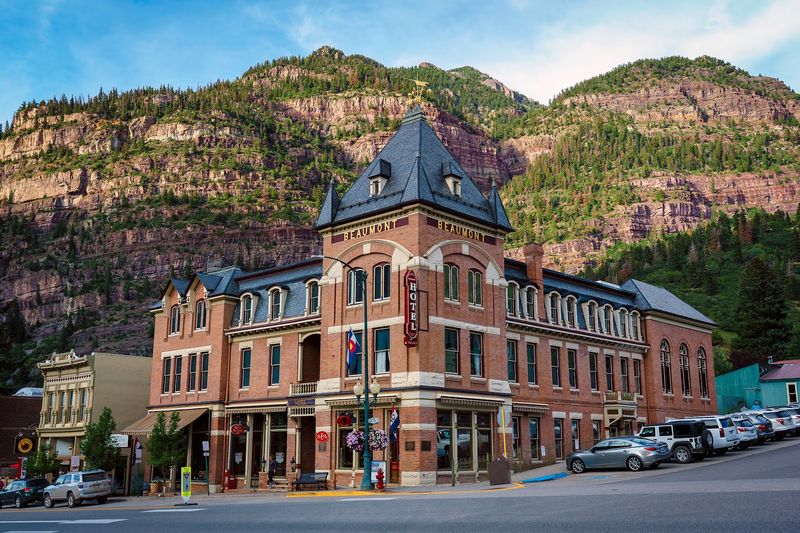
Downtown Ouray stretches along a compact section of Main Street, where shops, galleries, restaurants, historic buildings, and everyday businesses sit close enough together for walking to make sense. Park safely once, and several stops can land within the same few blocks.
Main Street does not feel flat in the visual sense, even when the sidewalk is cooperating. Cross streets reveal steep slopes, rock walls, and rooftops backed by the San Juans.
A short walk for coffee or a book can therefore turn into an accidental photo stop without adding anything to the route.
Side streets climb more sharply, so comfortable shoes still earn their place. Anyone staying mostly along the commercial corridor can keep the day fairly gentle, while those who wander uphill will notice the elevation more quickly.
From June through September, the free in-town shuttle offers another way to move around. It follows a roughly hourly loop and connects downtown with the Visitor Center, hot springs, Box Cañon Falls, trail access, and several other stops around town.
That is useful after a hike, but it also gives tired legs a perfectly respectable excuse to retire early. Walking may be the default downtown plan. It does not have to become a competition.
Historic Storefronts Reward Anyone Who Looks Above Eye Level
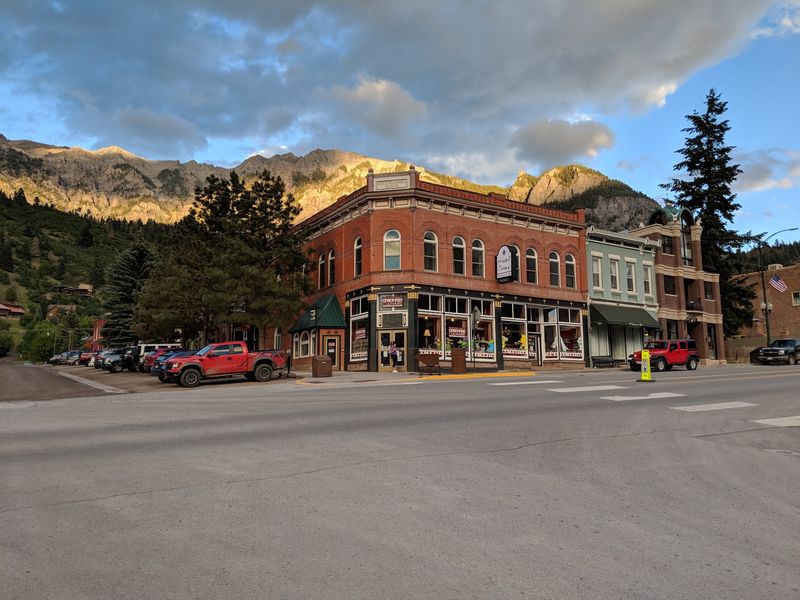
Ouray grew rapidly during the mining era, and much of that nineteenth-century character remains visible downtown.
The historic district covers most of the old townsite, where many significant buildings survived without the major fires that erased so much architecture in other mining communities.
One distinctive architectural detail appears repeatedly along Main Street. About 19 structures are believed to retain Mesker iron facades, decorative metal fronts that could be ordered from manufacturers during the late nineteenth century.
Columns, cornices, pressed-metal details, and patterned trim gave commercial buildings an ornate look without requiring each element to be carved locally.
The Wright Opera House is one of those examples. Its pressed-metal front and cast-iron elements came from Mesker Brothers Iron Works of St. Louis.
A self-guided historic walking tour connects many of these buildings with stories from Ouray’s mining years and early residents. It is an easy addition because the landmarks already sit along streets most visitors will be using.
Slow the pace and look above the shop signs. Downtown history is often hiding where nobody checking a menu board would think to look.
In 2026, those blocks carry another milestone: Ouray is marking 150 years since its incorporation in 1876.
Independent Shops Give The Middle Of Town Plenty Of Distractions
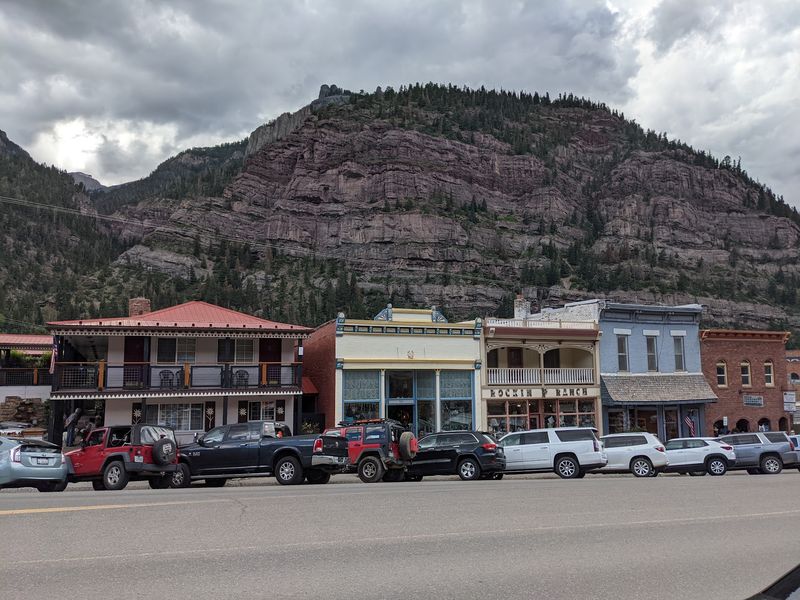
A walkable downtown becomes much more useful when there are reasons to keep stopping. Ouray’s independently owned shops cover art, jewelry, outdoor equipment, books, toys, clothing, minerals, pottery, home goods, regional foods, and locally made gifts.
Many businesses cluster in the 500, 600, 700, and 800 blocks of Main Street, so browsing tends to flow from one storefront into the next rather than requiring a drive between stops.
That makes the shopping portion of the day easy to improvise. Someone looking for trail gear can disappear into an outfitter while another person studies pottery or jewelry a few doors away.
A bookstore or gallery can also become excellent shelter when an afternoon mountain shower arrives with no interest in the original plan.
Independent businesses keep their own hours, especially outside the busiest seasons, so one specific must-see shop deserves a quick schedule check. Everything else can stay loose.
Leave room for one unplanned purchase. Mountain towns are very good at producing objects that seemed unnecessary at breakfast and completely logical by midafternoon.
The harder question is not whether there is space in the suitcase. It is whether anyone remembered how much space was already taken.
The Wright Opera House Still Gives Main Street A Stage
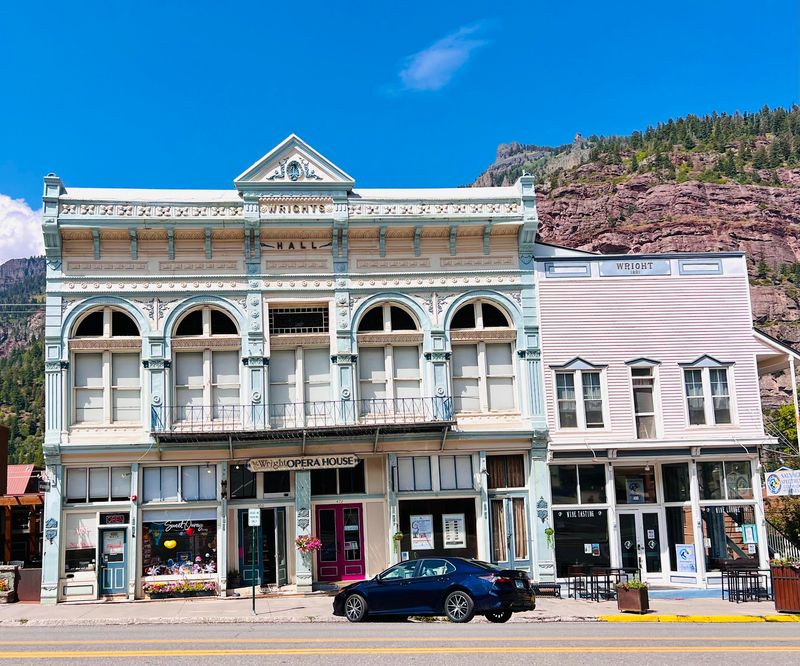
The Wright Opera House opened on December 4, 1888, after the Wright brothers built a venue intended to bring cultural and educational programs to the growing mining town. Its Main Street building remains a prominent part of Ouray’s nineteenth-century streetscape.
Its facade includes pressed metal, cast-iron piers, and other decorative details connected to the Mesker storefront story visible elsewhere downtown.
The building is not simply a preserved facade. It remains an active arts venue with theater, concerts, films, lectures, community events, and other programming.
That gives visitors a choice: admire it during a daytime walk or see what is happening inside during the dates of the trip.
Planning an evening around a performance requires a little more structure than browsing shops, so this is one place where checking the calendar first pays off.
Even without a ticket, the building adds something to the street. Main Street can shift from outdoor gear and galleries to a restored nineteenth-century performance hall in the space of a few steps.
That contrast keeps a compact downtown from feeling repetitive. One block handles errands and shopping. Another still has a stage.
Box Cañon Falls Brings The Wild Side Almost Into Downtown
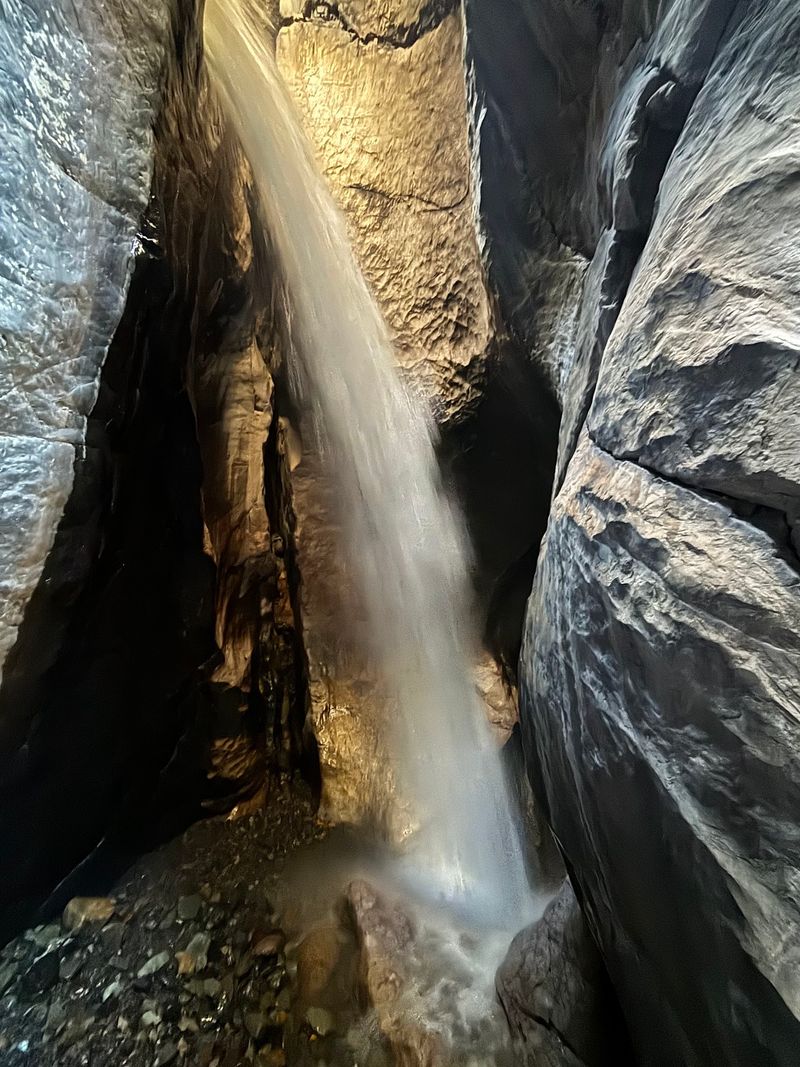
A waterfall roaring through a narrow quartzite gorge sounds like something that should require a long drive and a serious hike. Box Cañon Falls sits only a few blocks from central Ouray, and the main route into the gorge begins with an easy walk of about 500 feet.
Canyon Creek narrows before plunging through the box canyon, where rock walls, rushing water, and spray make the setting feel much farther from Main Street than it really is. The park also connects with a high bridge, nature center, and portions of the Perimeter Trail.
The attraction is seasonal rather than year-round. In 2026, regular visitor access continues through early November before the park closes for winter, with daily hours changing after Labor Day.
This is one of the easiest ways to split the day into two different halves. Browse downtown first, then trade storefront windows for canyon walls. Or reverse the order and let lunch become the reward for coming back from the falls.
Shoes with grip make more sense than anything precious, especially around damp surfaces. The gorge also tends to feel cooler than exposed downtown streets.
Nobody has to spend half the afternoon in the car getting there. The mountains already brought the dramatic part close.
The Visitor Center Makes A Useful Midday Reset
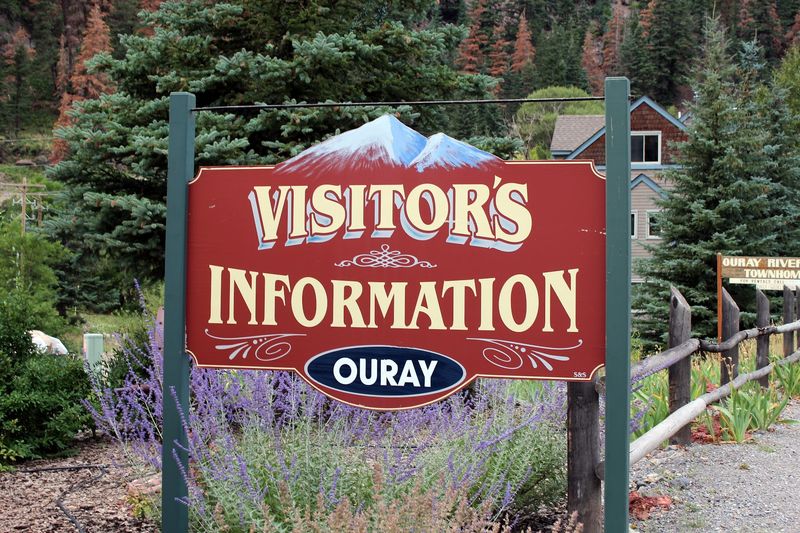
By the time shops, historic buildings, and a waterfall have competed for attention, a quick reset can help. The Ouray Visitor Center provides maps, local information, and a practical place to sort out the second half of the day.
It is open seven days a week. Current hours run from 9 a.m. to 4 p.m. from May through October, then 10 a.m. to 3 p.m. from November through April. The center is at 1230 Main Street, Ouray, CO 81427.
That location puts it at the north end of the central corridor near Fellin Park and the hot springs area, so it fits naturally into a walk rather than demanding another trip across town.
It is also a shuttle stop during the June-through-September season. From there, the free loop reaches Main Street intersections, Box Cañon Falls, the hot springs area, trail access, City Hall, and other points around Ouray.
Use the stop to sort out the next move, pick up a map, and check any trail or weather concerns. Decide whether the next stretch should involve another block downtown or something steeper.
There is no prize for making every decision before breakfast.
Mountain Views Keep Rearranging The Walk
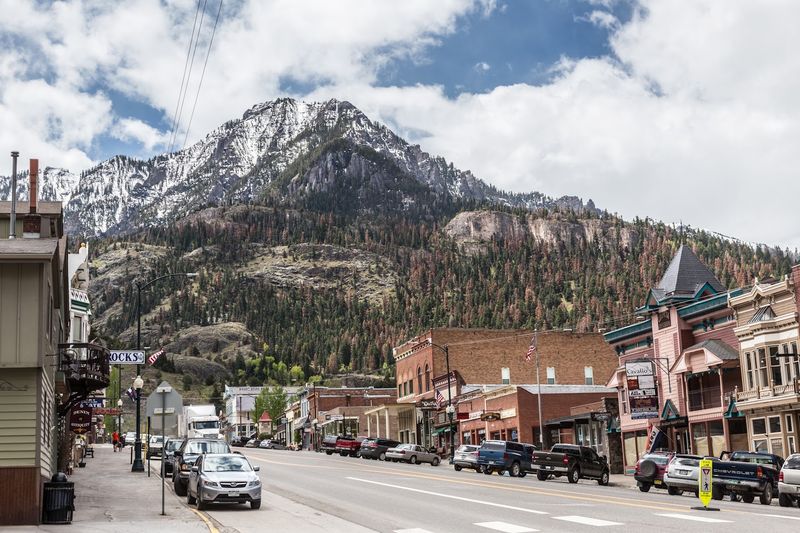
The mountain setting downtown does not have opening hours.
Ouray sits in a high mountain bowl where rugged slopes rise toward peaks between roughly 12,000 and 13,000 feet, putting the San Juan Mountains into view from streets, sidewalks, and gaps between buildings.
The effect changes block by block. A ridge appears behind a storefront, disappears at the next corner, then returns between rooftops from a different angle.
Morning light, afternoon cloud cover, and early shadows from the surrounding slopes keep changing the same pieces of rock.
Ouray has long carried the nickname “Switzerland of America,” a reference to its steep mountain setting.
Altitude deserves respect. At about 7,800 feet, Ouray can make an ordinary uphill walk feel less ordinary for someone arriving from lower elevations. Water, layers, sunscreen, and a slower pace are sensible companions.
The downtown plan can stay simple. Walk until a shop interrupts you. Keep going until a historic detail does the same.
Take the shuttle if the legs vote against another climb.
And when the peaks steal the conversation for a minute, let them. Main Street will still be there when everyone looks down again.