Some museums are easy to breeze through. This is not one of them.
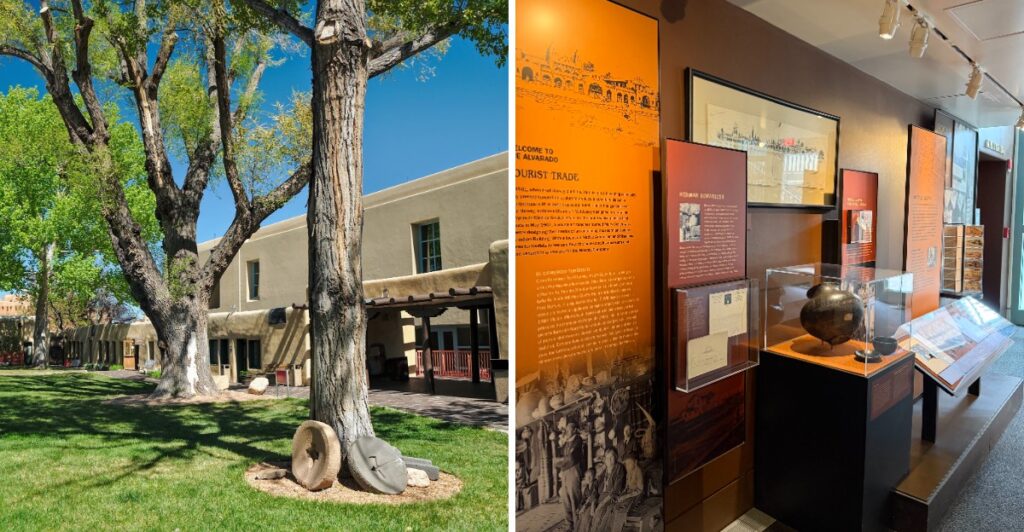
Near the Santa Fe Plaza, one doorway can lead to a completely different chapter of the past, and it does not take long before curiosity starts taking over. The experience feels bigger than a standard walk through display cases because the setting itself keeps changing around you.
Old spaces meet newer galleries, unexpected details appear around corners, and New Mexico history slowly starts filling in the bigger picture. You might stop for one exhibit and end up lingering much longer than planned.
That is part of the appeal here. There is always another room worth checking, another story that makes you slow down, or another detail you nearly missed the first time.
Give yourself some breathing room on the schedule. A quick museum stop can turn into the part of the day you talk about most.
Four Centuries Unfold Behind Adobe Walls
Picture a single city block where the story of a whole region sits stacked in layers of clay and timber. Ancient Puebloan heritage shares space here with early Spanish colonial life, Old West legends, and Atomic Age science.
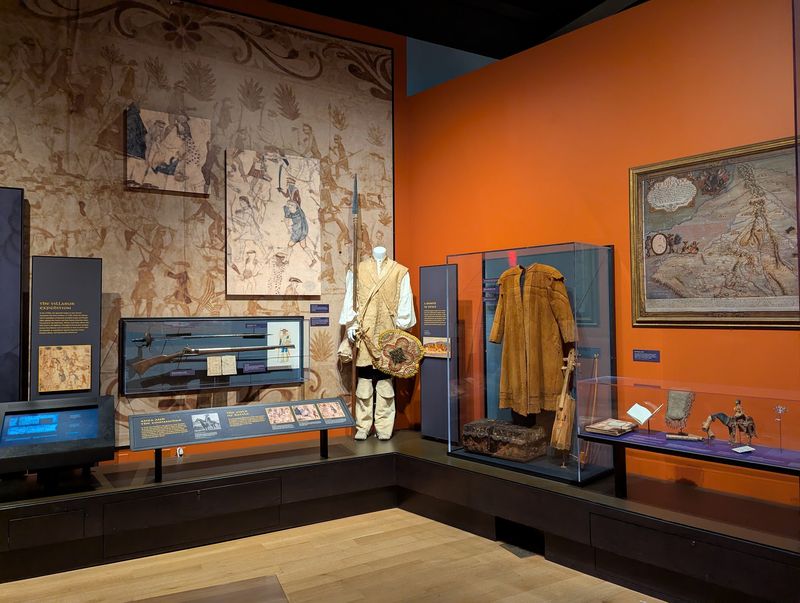
The main exhibit, known simply as the core, walks visitors through the timeline in chronological order. It starts with the earliest known people of the Clovis era and moves steadily toward statehood and the world wars.
Pottery and maps sit alongside military gear and railroad photographs across three floors of displays. Most people set aside two to three hours, and honestly, that estimate feels a little optimistic for anyone who reads every label.
The building next door is even older than many of the artifacts, since it dates to 1610. Together, the modern wing and the old adobe create a campus that feels much bigger inside than it looks from the street.
Hours run daily from 10 AM to 5 PM, with Friday stretching until 7 PM. That later Friday closing gives evening wanderers a relaxed window to explore after the midday rush fades.
Docent tours are included with admission, and they help set the stage for everything else in the building. All of these centuries live at the New Mexico History Museum – Santa Fe, 113 Lincoln Ave, Santa Fe, NM 87501.
The Palace Walls Carry Centuries Of Stories
Built in 1610, the Palace of the Governors ranks among the oldest continuously occupied public buildings in the United States. Its adobe walls have watched Spanish, Mexican, and American flags rise over the same square.
That long record makes the palace a star exhibit in its own right. The museum connects directly to it, so visitors can move from modern galleries into rooms that have hosted governors for generations.
Over the years, the building has been changed, patched, and remodeled many times. Those changes are part of the story, and I find it fascinating that the walls themselves act like a historical document.
The long covered porch, called the portal, faces the Plaza and stays busy with life. Native American artists have sold handmade jewelry and crafts there for decades through a long-running vendor program.
This mix of living culture and old architecture keeps the palace from feeling like a dusty relic. It still hums with conversation, trade, and daily activity right on its front steps.
Renovations have closed parts of the palace at times in the past, so checking the museum website before a visit makes sense. A building this old has certainly earned the occasional spa day.
Historic Rooms Feel Frozen In Another Era
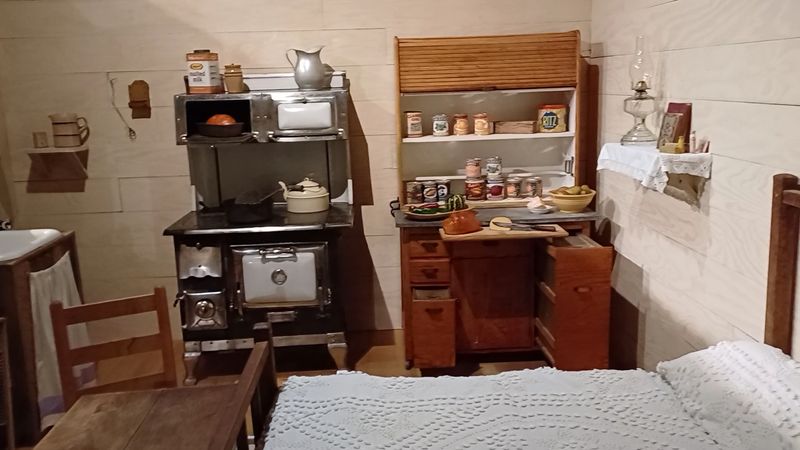
Step through a low doorway and the modern world seems to slip quietly out of the room. Thick adobe walls muffle outside noise, while heavy wooden beams stretch across the ceilings overhead.
Inside the palace, rooms hold many artifacts tied to the colonial and territorial periods. Each space gives a sense of how officials and families once worked and lived within these walls.
The scale of the rooms often surprises people who expect grand halls. Instead, the spaces feel practical and human, which makes the history feel closer and easier to picture.
Small details carry a lot of weight here, like worn doorframes and uneven plaster. I love that the imperfections tell stories just as clearly as the labels next to the displays do.
Guided tours help explain which parts of the building are original and which came later. Asking a docent about these layers can turn an ordinary doorway into a surprising history lesson.
Light filters in softly through deep window openings, adding to the calm mood. Time does not stand still here, but it certainly seems to slow down and take a seat.
A Quiet Courtyard Breaks Up The Galleries
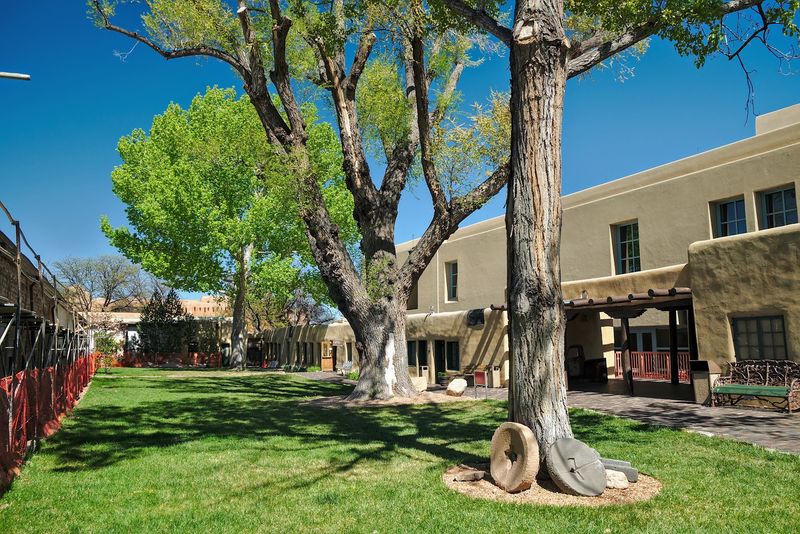
Museum legs are real, and the palace courtyard offers a welcome cure for them. After hours of maps and timelines, this open space lets visitors breathe fresh air under the high desert sky.
Adobe walls surround the courtyard and frame a patch of calm right in the middle of downtown. The noise of the Plaza fades here, replaced by quiet footsteps and the occasional rustle of leaves.
This pause matters more than it might seem at first. Absorbing four centuries of history takes serious brainpower, and a few minutes outdoors helps everything sink in.
The courtyard also shows off the building from a fresh angle. Seen from inside, the earthen walls reveal their texture and warm color in a way the street view cannot match.
Frankly, I think every museum should come with a built-in breather like this one. It turns a long visit into something that feels balanced instead of rushed.
Sunny afternoons bring gentle shade and soft light to the space. Even history needs a little recess now and then.
Modern Exhibits Reframe The State’s Past
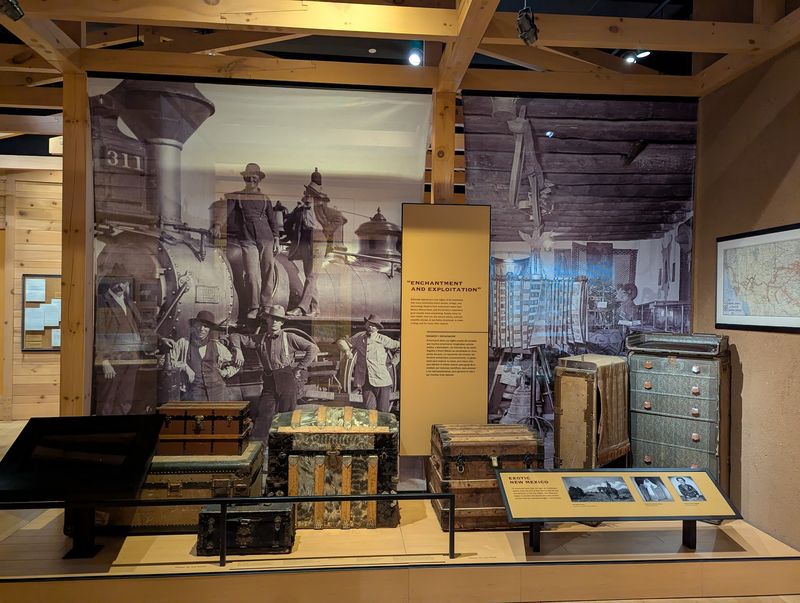
Opened in 2009, the museum wing adds about 96,000 square feet of space to the historic campus. That generous room lets the story expand well beyond what the old palace could hold alone.
A spacious atrium greets visitors near the entrance, with a large mural stretching across the main area. Multiple levels and wings branch out from there, each one tied to a different era.
Films and photographs share the spotlight with ancient artifacts. This mix of media helps visitors of all ages connect with the past in whatever way clicks for them.
Rotating exhibits keep things fresh for repeat visitors and locals. Past shows have focused on topics like Zozobra, the giant figure burned each year in Santa Fe, and the Manhattan Project era.
Wall texts explain events clearly and do not shy away from difficult chapters of colonial history. That honest approach earns respect, and I appreciate how it presents several perspectives side by side.
Families will also find displays aimed at younger visitors. Since exhibits change, calling ahead helps anyone hunting for a specific show.
Old Architecture Shapes The Entire Experience
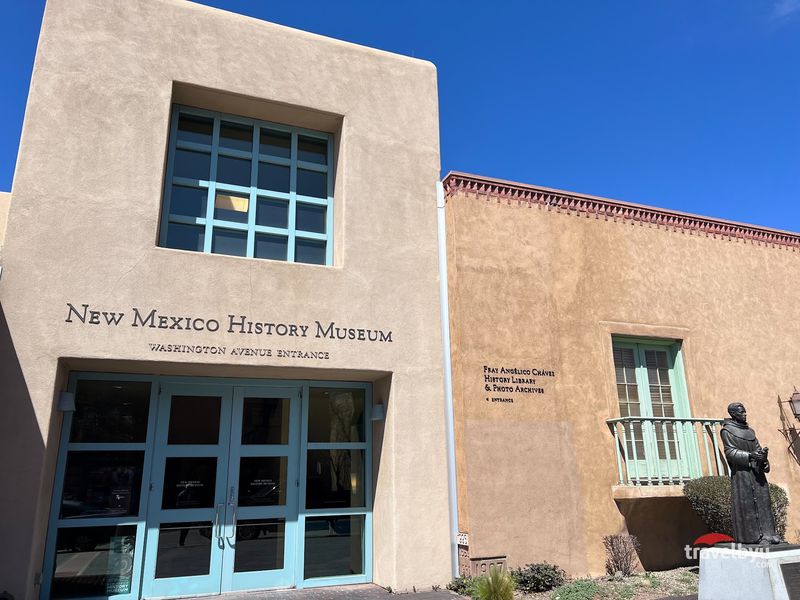
Adobe is basically mud with ambition, and here it proves how long humble materials can last. Earthen bricks and wooden beams have held the palace together for more than four hundred years.
The modern museum wing sits right beside this ancient structure without overpowering it. Its design keeps a low, respectful profile, so the older building still steals the show on the Plaza.
From the sidewalk, the museum looks smaller than it actually is. Once inside, visitors often realize the galleries stretch much deeper than the modest front suggests.
This contrast between old and new creates a kind of conversation between centuries. Walking from polished galleries into rough adobe rooms makes the timeline feel physical instead of abstract.
Santa Fe is famous for its earthy building style, and the palace is one of its oldest examples. Seeing the real thing up close explains why the look has shaped the city for so long.
The building changes appearance as the sun moves across the sky. Walls glow warm gold in the late afternoon, and that alone deserves a slow stroll.
A Working Press Keeps History Hands-On
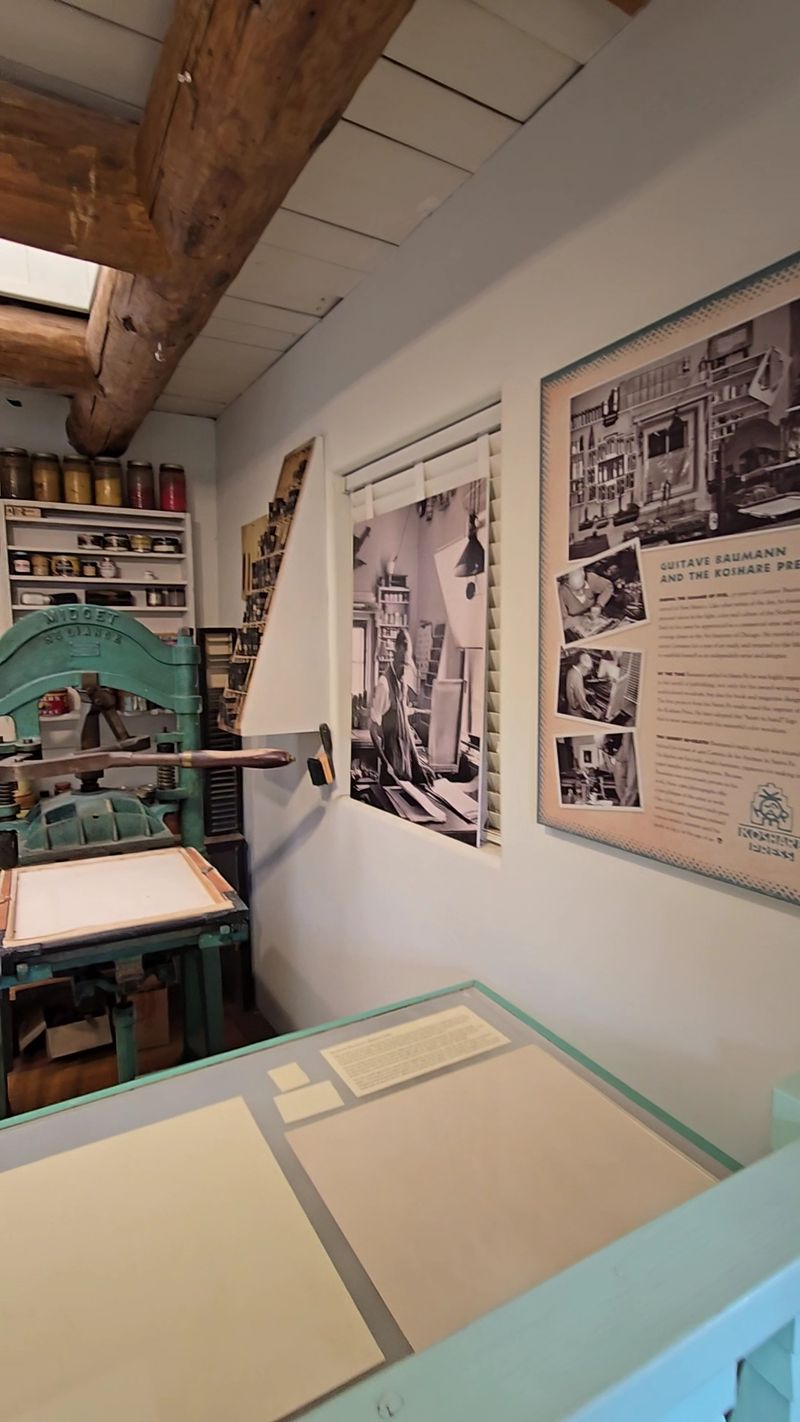
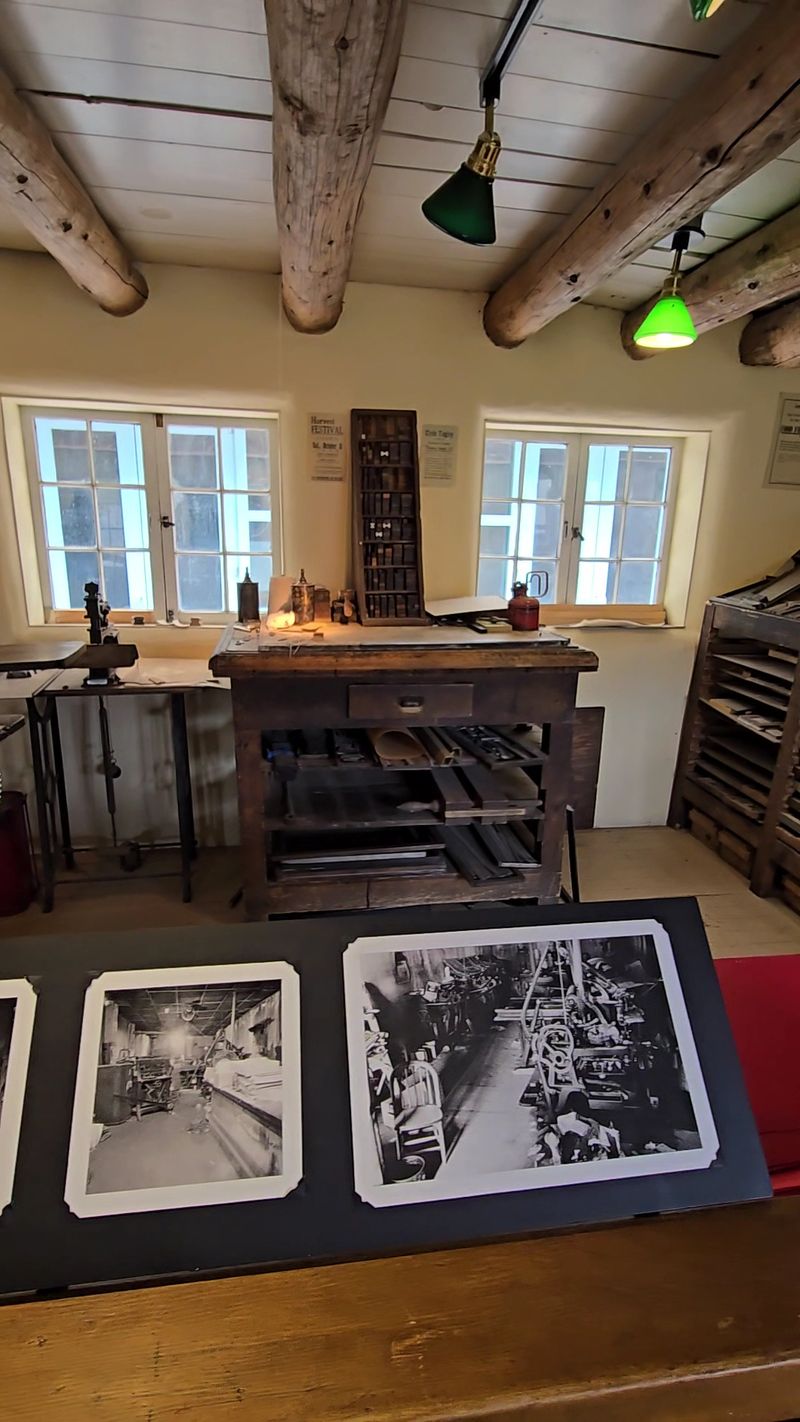
Ink, metal type, and old machines give the Palace Press a charm all its own. This working print shop is part of the museum campus and keeps traditional printing alive.
Historic presses here are more than props behind glass. The shop uses old methods to create printed pieces, showing how words once reached readers long before computers existed.
Watching letters set by hand reveals just how much patience early printers needed. Every page required careful spacing and pressure, which makes a simple poster feel like a small achievement.
I find it delightful that history here can actually smell like ink. It turns the idea of the past into something visitors can see and nearly touch.
The campus also includes the Fray Angélico Chávez History Library and the Photo Archives. The library honors a Franciscan priest who worked as an author, archivist, and artist.
These resources support researchers and curious minds alike. Few museums offer such a press-ing reason to linger near the printing room.
Each Gallery Opens Another Chapter Of The Past
Handwritten letters by Billy the Kid, addressed to the territorial governor, rank among the most talked-about treasures here. A display tied to the Lincoln County War even includes a pair of his spurs.
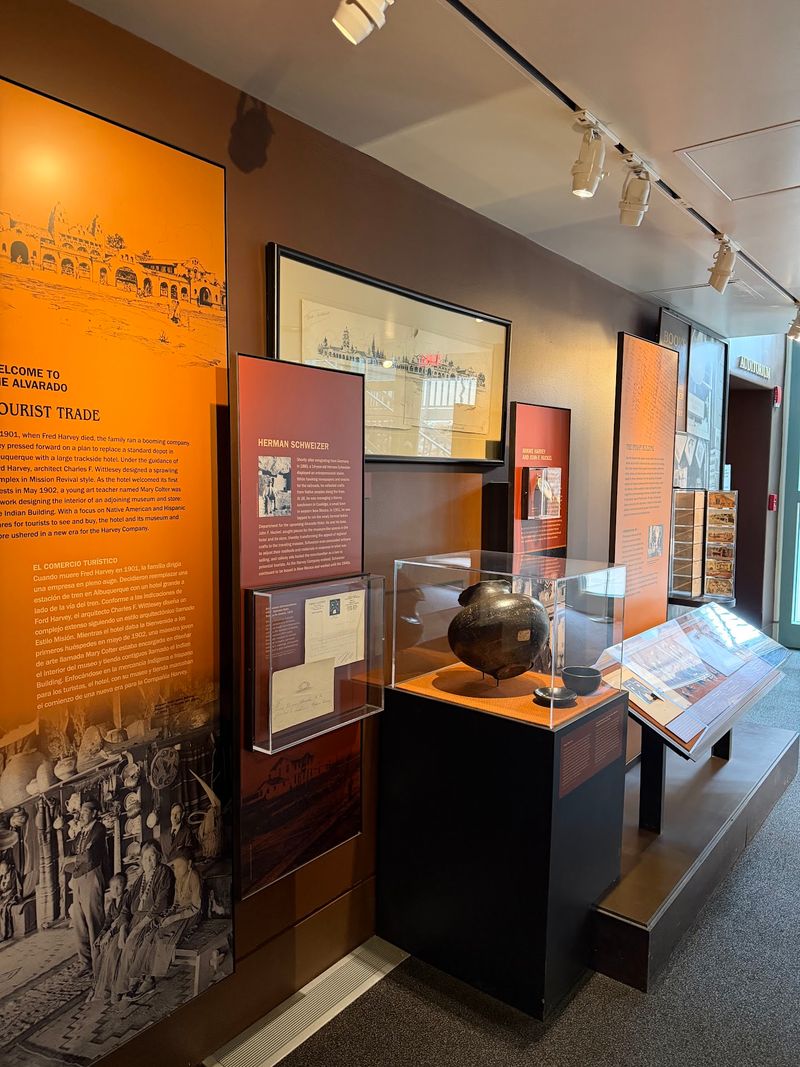
Railroad history gets plenty of attention as well. Photographs and exhibits explain how trains transformed the region and brought Fred Harvey restaurants to hungry travelers.
Later galleries shift toward the world wars and the Atomic Age. Stories about the Trinity site show how events in the desert changed the course of global history.
Following the timeline in order makes each chapter build on the last one. Skipping around works too, but the chronological path helps the bigger picture come together.
A roughly one-hour docent tour gives a general museum overview and answers questions along the way. Staff can also suggest books for anyone eager to learn more after leaving.
The gift shop near the entrance offers one more chance to take a piece of history home. Here, New Mexico reveals its story one gallery at a time, and every chapter earns its page.