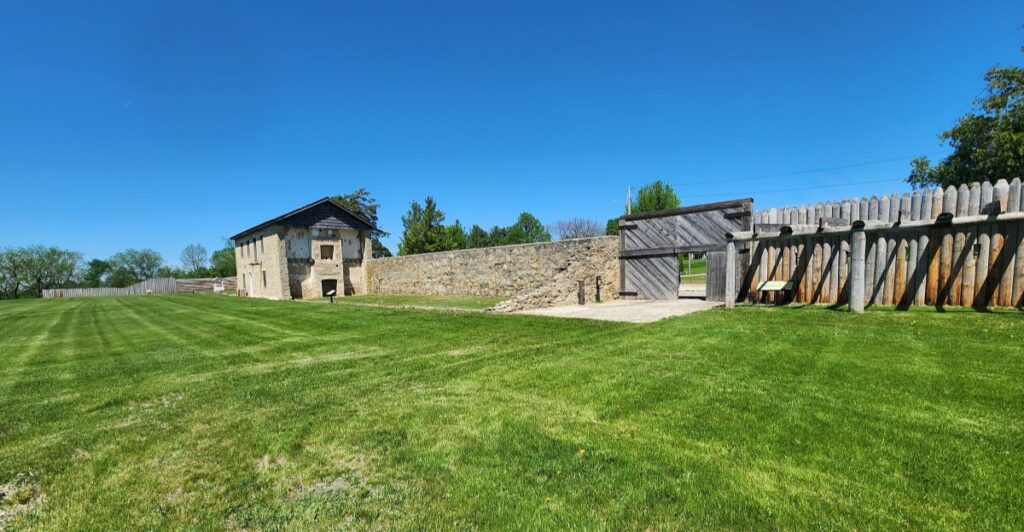
I thought this would be one of those ten-minute history stops. A few old walls, a couple of signs, one photo, and back to the car.
Instead, I was still wandering around the hill much later, peeking into blockhouses and trying to picture what this quiet corner of northeast Iowa looked like in the 1840s.
What kept me there was the story. This was not quite the frontier fort I expected, and its original purpose makes the history much more complicated and interesting than the stone walls first suggest.
Today, the grounds are peaceful enough that crickets sometimes provide most of the background noise.
Once you know what happened here, though, those old limestone walls become much harder to walk past quickly.
A Fort With An Unusual Mission
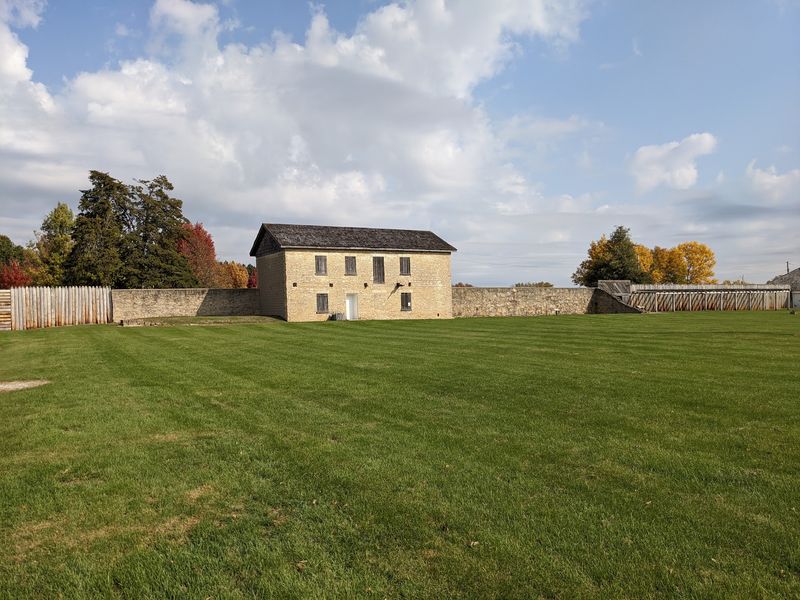
Most frontier forts were built with defense in mind, but the story here is more complicated.
The U.S. Army began building Fort Atkinson in 1840 after the federal government forced the Ho-Chunk, historically called the Winnebago in many records, from their Wisconsin homeland into northeast Iowa’s Neutral Ground.
The soldiers were expected to help keep peace between the Ho-Chunk, neighboring Native nations, and Euro-American settlers.
But protection was only part of the mission.
The military post also monitored the displaced Ho-Chunk, helped keep them within the Neutral Ground, discouraged their return to Wisconsin, and enforced the government’s broader removal policy.
That history changes the way the fort feels once you understand it.
Regular Army troops served here until 1846, when they were reassigned during the Mexican-American War.
Iowa volunteers and later another infantry company continued staffing the post until it was abandoned in 1849.
Nearby, the Turkey River Subagency handled government supplies and other parts of federal administration involving the Ho-Chunk.
Take time with the interpretive signs as you walk.
The old walls make more sense once you see Fort Atkinson not simply as a military outpost, but as part of a much larger and more difficult chapter in the forced removal of Native people.
Finding The Fort In Fort Atkinson
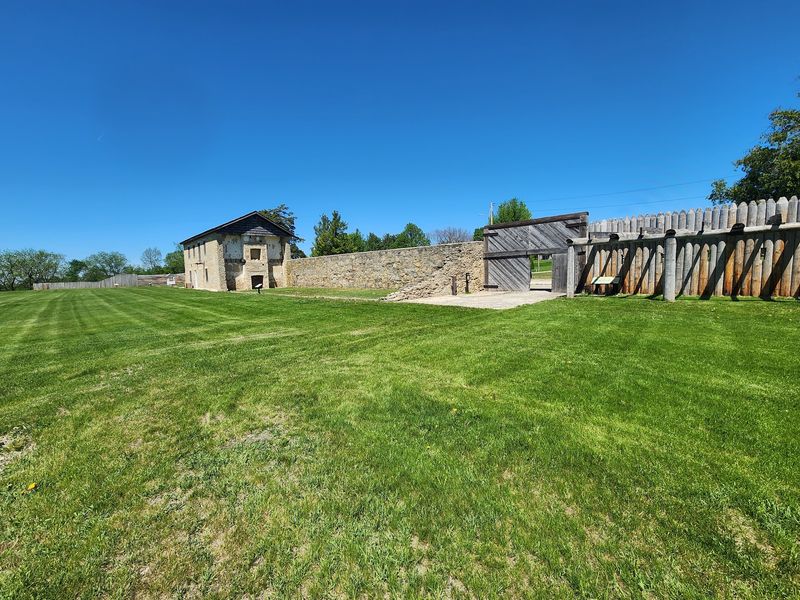
Here is the easy part: the fort sits right in the small town that carries its name. You will find Fort Atkinson State Preserve at 303 2nd St, Fort Atkinson, IA 52144, in northeast Iowa, United States.
The town is tiny, so the drive feels calm. Farm fields roll along the roads, and the fort appears without much fuss.
Parking is simple, and there is room to spread out.
The preserve keeps generous hours. The preserve is open year-round from 4:30 AM to 10:30 PM daily.
I liked that flexibility, since the light on the old stone changes so much.
The site is close to other northeast Iowa stops, so it fits well into a road trip. One visitor called it an interesting stop when passing through, and I agree.
Plan at least an hour, though I stayed much longer.
The Iowa DNR website lists updates on events and museum times.
Original Buildings And Walls Still Standing
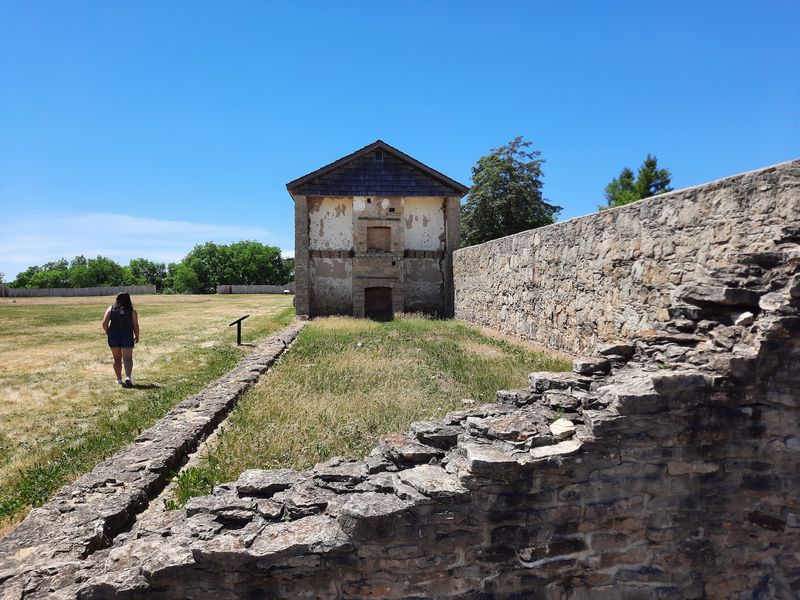
Some of what you see really does date to the 1840s, but Fort Atkinson is not a completely intact frontier fort.
Only a handful of the original buildings survive.
The Iowa DNR identifies the North Barracks, Northeast Cannon House, Southwest Cannon House, and Powder Magazine among the structures still standing.
Elsewhere, low stone foundations show where many of the fort’s other buildings once stood, while portions of the wooden stockade have been reconstructed to help visitors understand the original layout.
That mix of original fabric, archaeological remains, and careful restoration gives the site much of its character.
In 2024, a major preservation project stabilized several historic structures. Some stone walls were carefully taken apart, documented, and rebuilt with the stones returned to their original relative positions.
So this is not a modern reproduction pretending to be old.
It is a surviving archaeological and architectural site that has been repaired carefully enough to keep the remaining 1840s material standing.
Walk slowly around the foundations and watch your footing. The ground can be uneven, and those low walls are historical resources rather than climbing spots.
The gaps are part of the story too. They show just how much of the original military post has disappeared while a remarkable amount still remains.
Blockhouses And Barracks
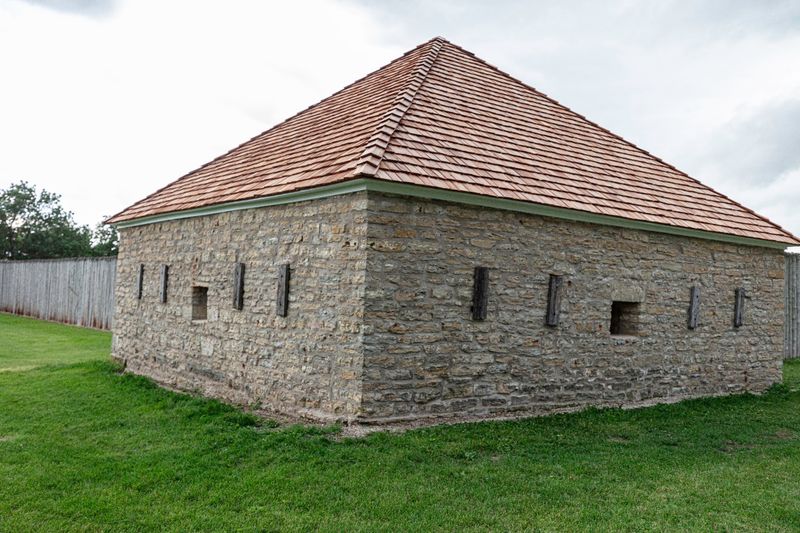
Two sturdy blockhouses guard the corners, and I could not resist peeking through the little openings. Soldiers once watched the horizon from spots like these.
The barracks show how simple daily life was. Bunks were plain, rooms were crowded, and warmth came from fires in the winter cold.
Each structure has its own sign, and I found them clear and easy to follow. One visitor called the whole experience very educational, and the signs are the reason.
Look for the different building types as you loop around. There are barracks, a powder magazine, and the spots where soldiers trained and worked.
My favorite moment came when I stood in a doorway and imagined the sounds of boots, orders, and tools. It made the century and a half between us feel small.
Give yourself room to wander. The self-guided setup means you can linger where you like and skip what you do not, which suits curious kids and history fans alike.
Self-Guided Wandering
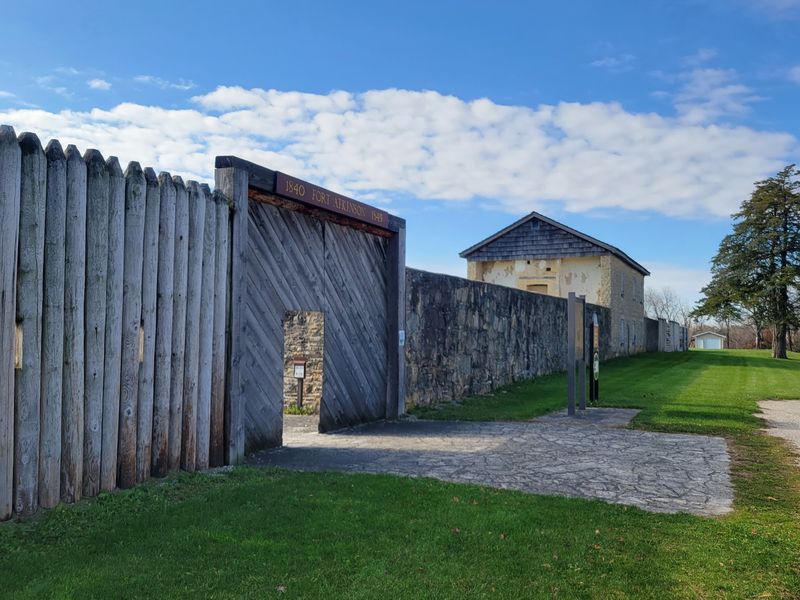
No tour group, no ticking clock. You set the pace, and that freedom is a big reason people rate this preserve so highly.
The paths lead around the fort and out onto the grounds. I started at the walls, drifted to the signs, and ended up in a grassy spot where I simply sat and looked around.
Visitors describe the preserve as well kept and spacious, and I found it just that. Lawns are trimmed, and the whole site feels cared for.
A few practical notes help. There are no public restrooms on site, so plan ahead before you arrive.
Pack water, a hat, and a camera. Shade is limited inside the fort, so sun protection matters in summer.
Fall might be the sweet spot. One visitor loved a late afternoon in autumn, and the golden light on the stone was a treat when I saw it too.
The Museum Stop
The outdoor fort tells plenty of the story, but the North Barracks museum adds another layer if you can arrange to see it.
The important thing to know is that the museum is currently open by appointment only, rather than following regular seasonal public hours.
Inside, the displays include period clothing, small tools, photographs, letters, maps, military objects, and other material connected to the fort’s history.
Life-size room displays help recreate parts of daily barracks life, while a scale model shows how the entire military post looked when all of its buildings were still standing.
That model is especially useful after you have walked past the foundations outside.
The museum occupies two levels of the surviving North Barracks, and stairs are required to reach the second floor.
If seeing the interior matters to your trip, call ahead and ask about arranging access.
If you cannot get an appointment, the visit is still worthwhile.
The surviving blockhouses, Powder Magazine, barracks exterior, foundations, stockade, and interpretive signs give you plenty to explore on your own.
Rendezvous Days Excitement
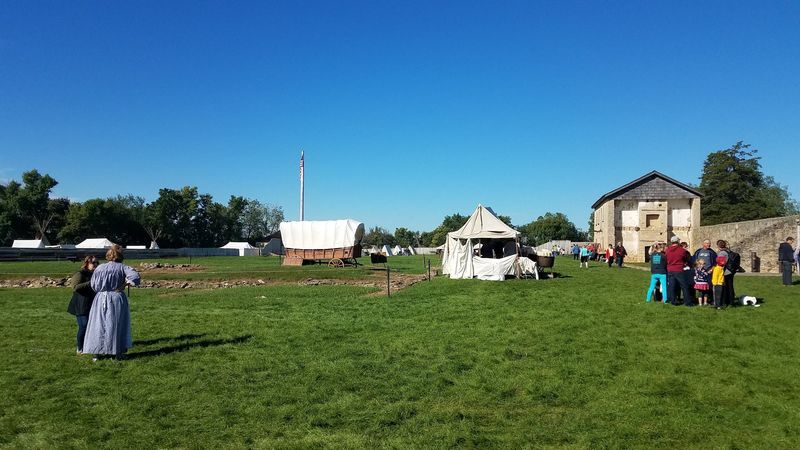
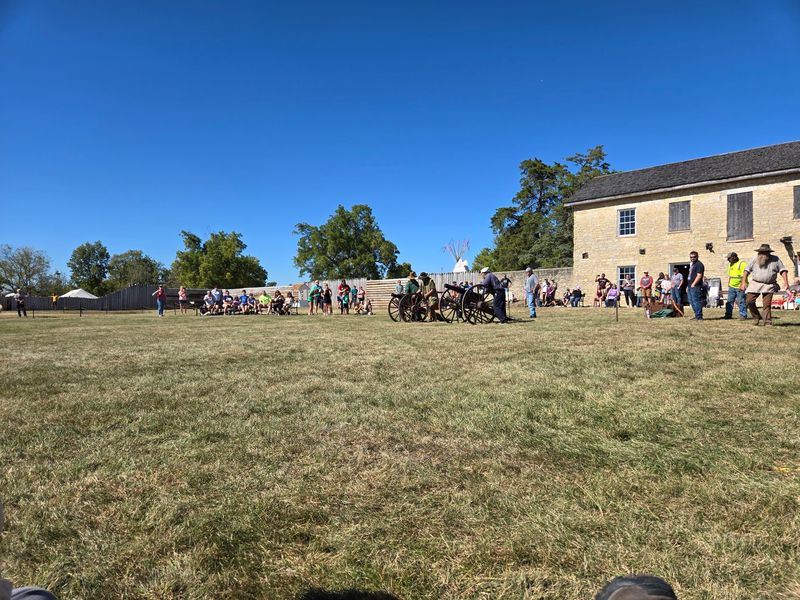
Once a year, the quiet hill fills with canvas tents, smoky campfires, and people in period clothing. Rendezvous Days is the big event, and the fort truly comes alive.
Reenactors set up camps, demonstrate crafts, and stage scenes throughout the day. Visitors say the reenactments are great family fun, and I could see why kids stayed glued to the action.
One participant shared that they have joined the event for over 40 years. That kind of loyalty says a lot about the weekend.
Talk with the people in costume. They often explain how tools worked and what clothes were made from, and they do it with real enthusiasm.
Arrive early for parking and a good view. Crowds build by midday, and popular demonstrations fill up quickly.
Bring cash for vendors, and check the DNR site for dates. It is one of the best times to see the fort as it might have looked in the 1840s.
Beyond The Walls And Geology
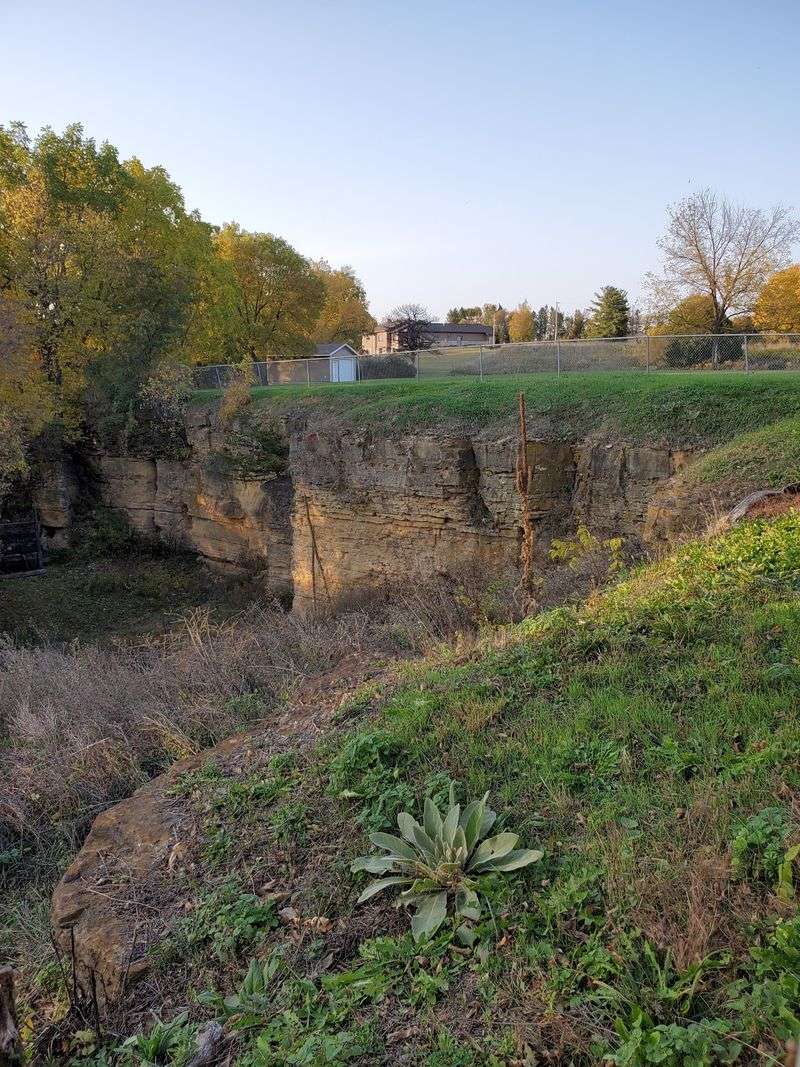
Many people finish inside the fort and head home, but there is more to see outside. A visitor advised exploring the south and west sides, and I am glad I listened.
Out there you will find extra discoveries, including a short geology lesson. Signs explain the rock and land beneath the fort, and they show why the site was chosen.
The open grounds are gentle to walk. I spotted birds, wildflowers, and long views over the town and countryside.
Kids can run off some energy here. There is space to toss a ball, spread a blanket, or simply lie back and watch clouds.
Photographers should visit near sunrise or sunset. The low light warms the stone and adds depth to every wall.
Take your time on this section. It rounds out the visit and links the history of the fort to the land it sits on.
Planning A Family Visit
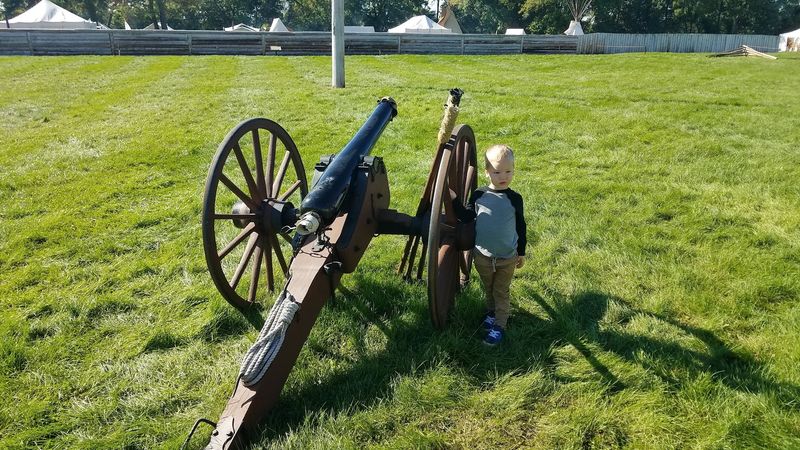
Kids and history can mix well, and this preserve proves it. Wide lawns, real buildings, and stories of soldiers keep young minds busy.
One reader shared childhood memories here and was excited to bring their own children. I could picture the same tradition forming for many families.
Start with a quick chat about the fort’s purpose, then let everyone explore. Ask kids to find the blockhouses and count the chimneys.
Safety matters, so watch little feet on uneven ground. Older visitors should go slowly, too.
Pack snacks, water, and sunscreen. Remember there are no public bathrooms on site, so make a stop in town first.
Plan for one to two hours on a regular day, or a full day during Rendezvous. Either way, you will leave with new facts, a few photos, and probably a plan to return next year.