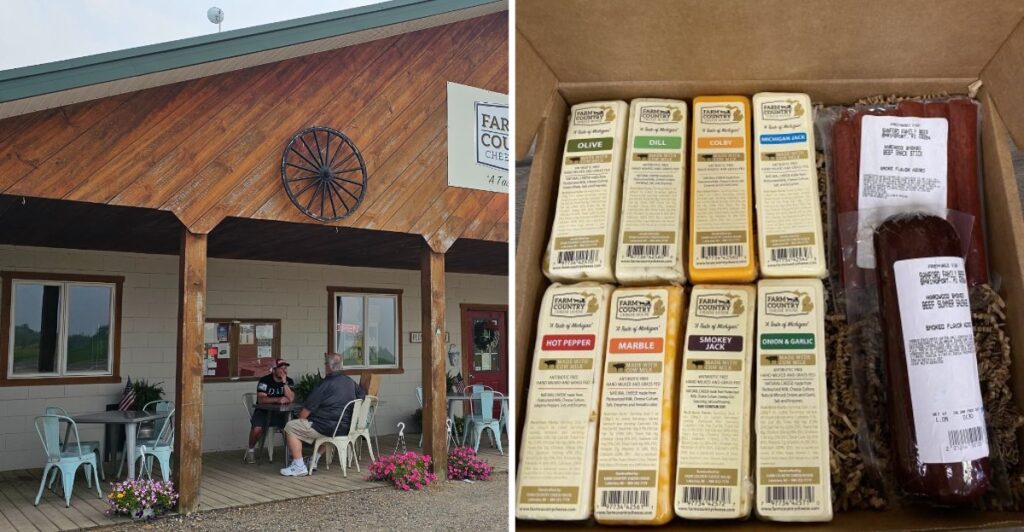
You can absolutely walk in planning to buy one cheese.
I just would not brag about that plan yet.
Twenty-seven flavors have a way of making confidence disappear quickly. Cheddar may feel like the sensible choice, right up until curds, smoked varieties, and something completely unfamiliar start asking for a little room in the bag.
This Michigan shop has been making cheese since 1984, using milk from family farms and keeping production centered on small batches and hands-on work.
Then there is the viewing window.
Catch the timing right, and you can watch part of the cheesemaking process happening on the other side of the glass.
Which feels mildly unfair when you are already trying to choose.
Take home the favorite you came for. Then let one wildcard into the lineup.
If you leave with exactly one cheese, I have questions.
Twenty Seven Flavors Give The Cheese Case Plenty Of Range
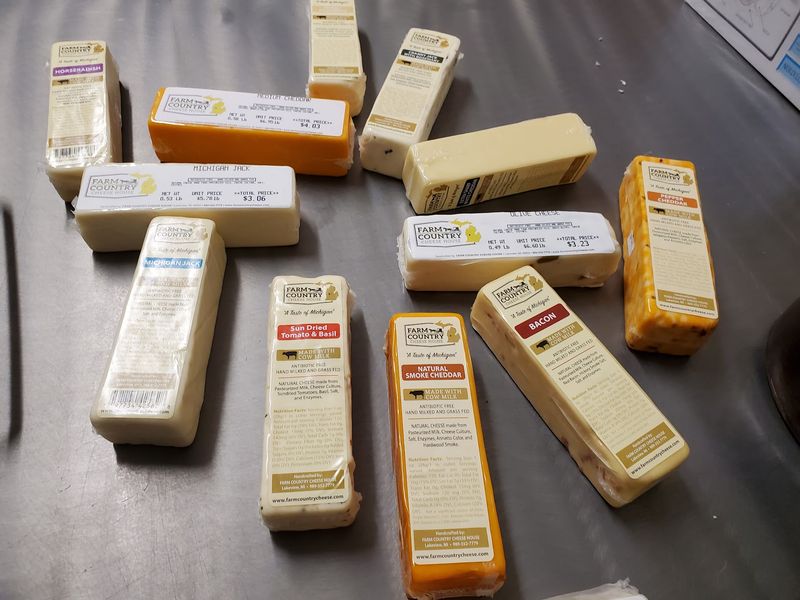
Farm Country Cheese House offers 27 cheese flavors and more than 20 traditional and distinctive varieties. That gives the case enough range to satisfy someone who wants a basic cheddar and someone who would rather leave with a flavor they have never tried before.
Yellow cheddar appears in medium, sharp, extra sharp, and aged versions. White cheddar follows a similar path, while smoked cheeses bring another layer to the selection.
Flavored varieties broaden things quickly. Dill, hot pepper, horseradish, onion and garlic, tomato basil, veggie, truffle, bacon, olive, habanero, smokey jack, and several seasonal or rotating cheeses have appeared in the lineup.
The easiest way to keep the choice manageable is to split the basket into roles. Pick one cheese for sandwiches or cooking, one for snacking, and perhaps one flavor that simply sounds interesting.
A sharper cheddar can handle grilled sandwiches or a cheese board. A medium cheddar can cover everyday lunches or cooking. A flavored jack may become the block that disappears first once crackers come out.
Not every flavor is guaranteed to be available every day, and some seasonal cheeses move in and out of stock. That makes a flexible list more useful than arriving determined to find one exact package.
Small Batch Cheesemaking Has Been Part Of The Business Since 1984
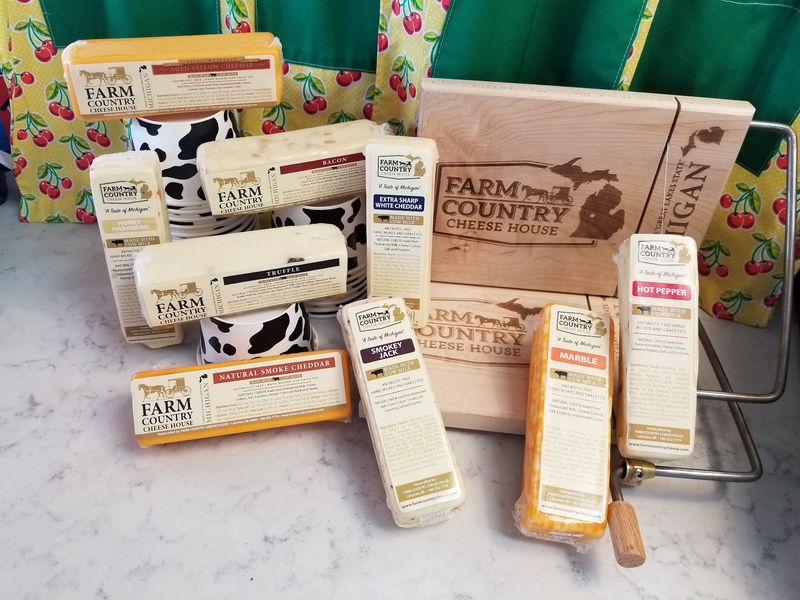
Farm Country Cheese broke ground in April 1983 and began production in July 1984. Four decades later, handcrafted, small-batch cheese remains central to the operation.
The process relies on hands-on cheesemaking rather than a heavily automated production line. Batches are made with an in-house starter, and the operation continues to focus on traditional methods while producing both familiar and specialty cheeses.
That background becomes easier to appreciate once you start comparing pieces in the shop. Handcrafted cheese does not need every block to look absolutely identical.
Natural variation in milk, moisture, aging, and the cheesemaking process can show up in texture and appearance.
For a shopper, the useful part is simpler: think about how the cheese will actually be used.
An aged cheddar may make more sense for slow snacking than for a lunchbox. A medium cheddar can handle sandwiches, burgers, or everyday cooking. A flavored cheese may be the one to cut into cubes when friends are coming over.
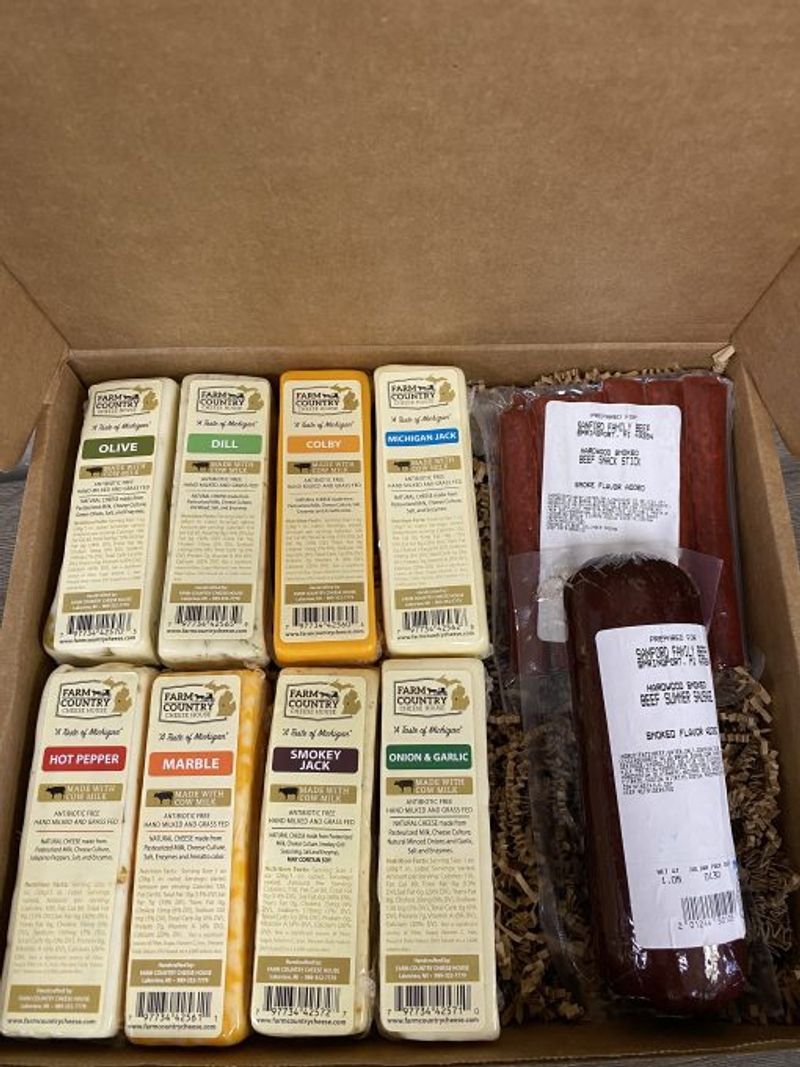
Gift boxes create another route when choosing individual pieces feels like too many decisions. They combine cheeses with other snack items, letting the assortment do some of the work.
The shop has changed ownership over the years, including a purchase by Andrew and Nicki Arens in 2018, while production has remained tied to Michigan agriculture and handcrafted cheese.
Michigan Family Farms Supply The Milk Behind The Cheese
Milk is the starting point for every batch, and Farm Country Cheese currently sources it from Michigan family farms, including milk connected with its own dairy operation and other farms within the state.
That keeps the main ingredient close to home without turning “local” into a vague label. The supply chain is tied directly to Michigan agriculture, which fits naturally with a creamery built around small-batch production.
The current operation uses milk from cows raised without artificial hormones and emphasizes straightforward recipes without unnecessary extras.
For the person standing in front of the cheese case, those production details become most useful when comparing styles rather than trying to memorize farming terminology.
A young cheese and an aged cheddar will behave differently on the tongue. A smoked cheese changes a sandwich more dramatically than a mild everyday variety.
Curds bring their own springy texture, while a flavored cheese can become the strongest ingredient on the plate.
That is why buying several completely similar cheeses rarely makes sense. Let the milk be the common starting point, then choose varieties that do different jobs once they reach the refrigerator.
One can handle lunch, another can sit beside crackers, and the boldest block can wait for the evening when somebody decides the cheese board deserves more ambition.
The Viewing Window Turns Shopping Into A Quick Cheesemaking Lesson
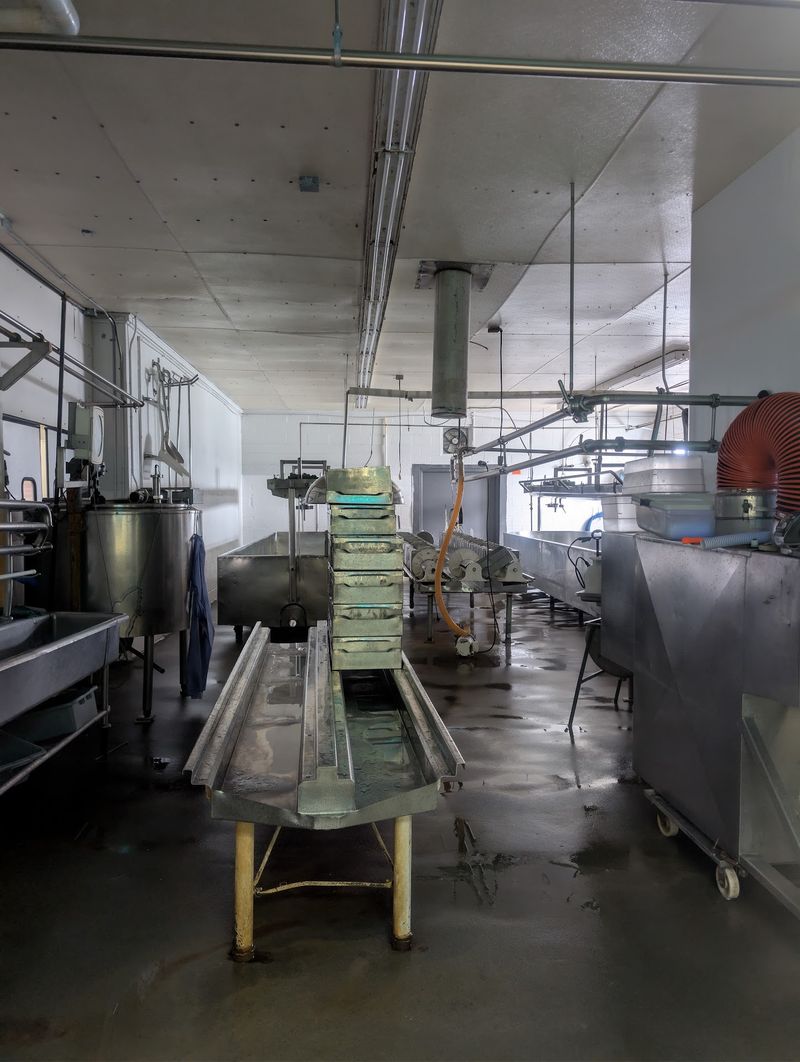
One of the more unusual features at Farm Country Cheese House is the large viewing window that looks into the cheesemaking area. When production is underway, visitors can watch part of the process instead of seeing only the finished blocks in the retail case.
Timing matters because cheesemaking does not happen continuously every minute the shop is open. A visit may line up with active production, or the room may be between stages.
Even a short look through the window can make the shop easier to understand.
Milk has to move through several steps before it becomes a cheddar block, flavored cheese, or bag of curds.
Seeing the work behind the case gives those finished products a little more context.
The store is located at 7263 W Kendaville Rd, Lakeview, MI 48850.
Current hours are Monday through Saturday from 10 a.m. to 5:30 p.m. That makes Saturday the main weekend option for anyone hoping to browse slowly, watch the production area, and leave enough time to decide between several cheeses.
A cooler in the car is useful too. Once the case starts winning arguments, the ride home suddenly feels longer.
Fresh Curds Add An Easy Snack To The Cooler
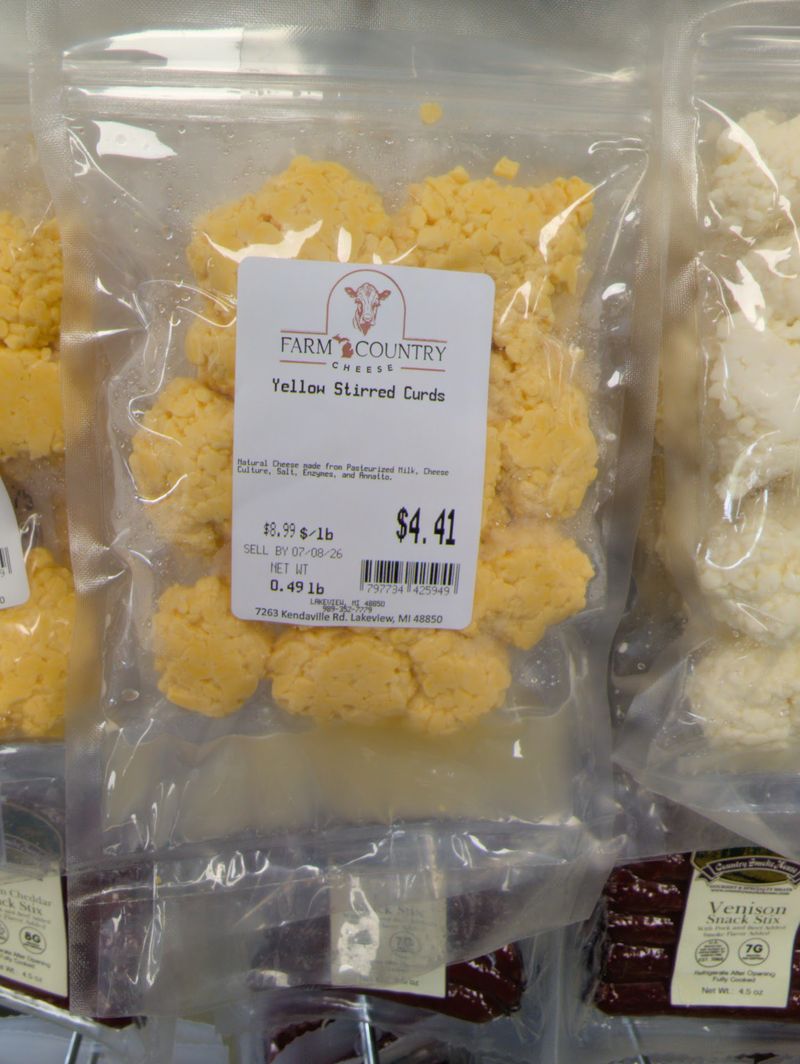
Fresh cheese curds are part of the shop’s regular identity and can be sampled when available. They are also sold in flavored versions, giving anyone who likes a quick snack an alternative to buying another full block.
Curds are young pieces of cheese that have not been pressed and aged into the familiar shapes found elsewhere in the case. Their texture is springier, and fresh curds are often known for the little squeak they can make when bitten.
That makes them an easy road-trip purchase, though they still belong in the cooler rather than sitting warm in the car for hours.
They are useful at home too. Curds can go onto a snack plate, join crackers and fruit, or disappear straight from the bag while dinner is still being figured out.
Flavored options make the decision slightly harder. A plain curd keeps the milk and cheese flavor straightforward, while seasoned versions add more personality without requiring anything else on the plate.
If the cooler already contains several blocks, curds can also be the practical choice that gets opened first. No knife, cutting board, or plan is required.
That is useful when the drive back includes another stop, and everyone has already started asking when the cheese can be opened.
Cheddar Is Only One Part Of The Current Selection
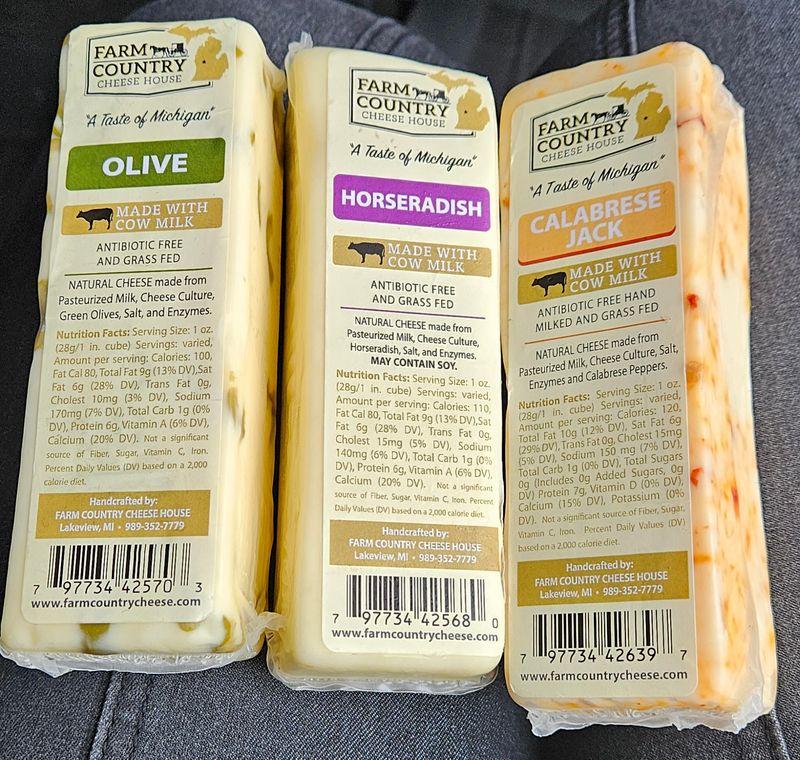
Cheddar remains a major part of Farm Country Cheese House, but stopping there would miss much of the case.
Current offerings include yellow and white cheddars at several ages, smoked cheddar, Michigan Jack, Colby, marble cheese, flavored cheeses, specialty seasonal products, and curds.
Some varieties lean mild and familiar, while others use ingredients such as dill, garlic, peppers, tomato, herbs, or smoke.
That makes comparison more useful than simply grabbing the first block labeled sharp.
Think about the food waiting at home. A mild cheese can slide easily into breakfast or lunch. Something smoked can carry more of a sandwich on its own.
Hot pepper or habanero varieties can add heat without requiring another sauce. Onion and garlic cheese can handle crackers with very little help.
For a cheese board, contrast usually works better than repetition. One mild option, one sharper or aged cheese, and one flavored piece give the table more range than three blocks that taste nearly the same.
Seasonal inventory can shift, so not every special flavor will be present on every visit. That is one reason the broad permanent selection matters.
There is almost always another direction to take the cooler, even when the cheese you originally had in mind is temporarily unavailable.
The Shop Gives A Rural Michigan Drive A Practical Finish
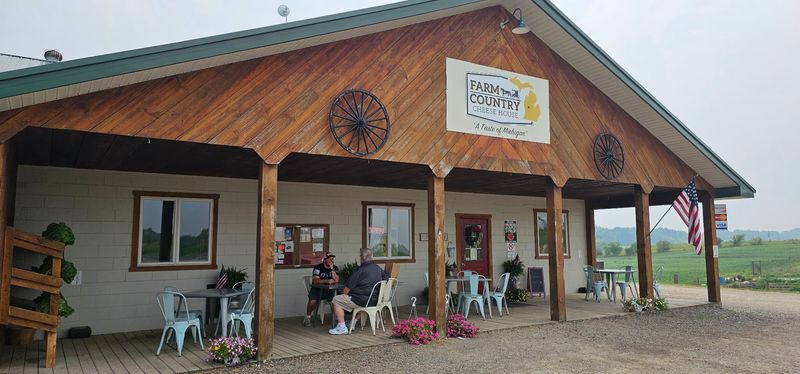
Farm Country Cheese House sits outside Lakeview in a rural part of Michigan where the drive quickly leaves the feel of a big commercial shopping district behind.
The shop makes the most sense when treated as a food stop rather than a sightseeing checklist. Browse the cheese case, look through the viewing window if production is active, check the curds, and decide how much refrigerated space is actually waiting in the car.
The selection also includes snack sticks, sausages, gift boxes, and Michigan-made items, so a visit does not have to end with cheese alone.
The better strategy is still to keep the basket focused. One everyday cheese, one bolder flavor, and a bag of curds already create plenty to unpack at home. Add more only when there is a real plan for it.
With Monday-through-Saturday hours running from 10 a.m. to 5:30 p.m., a little timing is all the planning the stop really needs.
Once the schedule is settled, the rest stays pleasantly simple: bring the cooler, leave enough room for one unexpected flavor, and give the cheesemaking window a look before heading back to the car.
By the time the lid closes, the hardest part is usually over. The only job left is getting everything home before somebody decides the curds count as the drive-back snack.