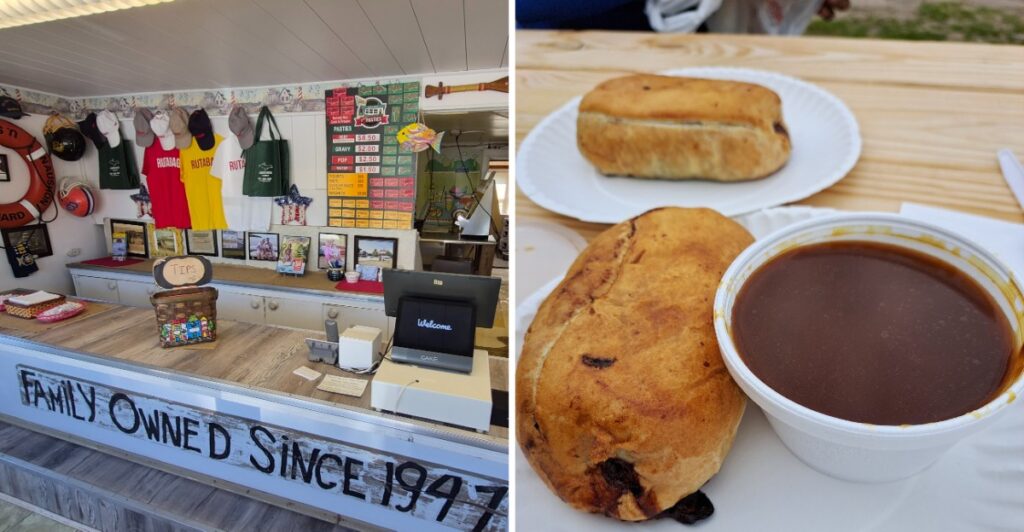
What do you eat after crossing into the Upper Peninsula when a sandwich suddenly feels too ordinary?
A hot beef pasty is a pretty good answer.
This roadside shop has been making them since 1947, long before the Mackinac Bridge changed the way travelers reached this part of Michigan.
The original location still keeps things wonderfully focused.
Beef pasties remain the main event, made from the same basic recipe the family business has relied on for decades.
You can eat one hot and get back on the road.
Or tuck a cold or frozen one into the cooler for later.
That simple folded crust carries a surprising amount of local history with it.
Honestly, the pasty may be the easiest decision you make all day.
The harder one is whether one is enough.
A Roadside Tradition Since 1947
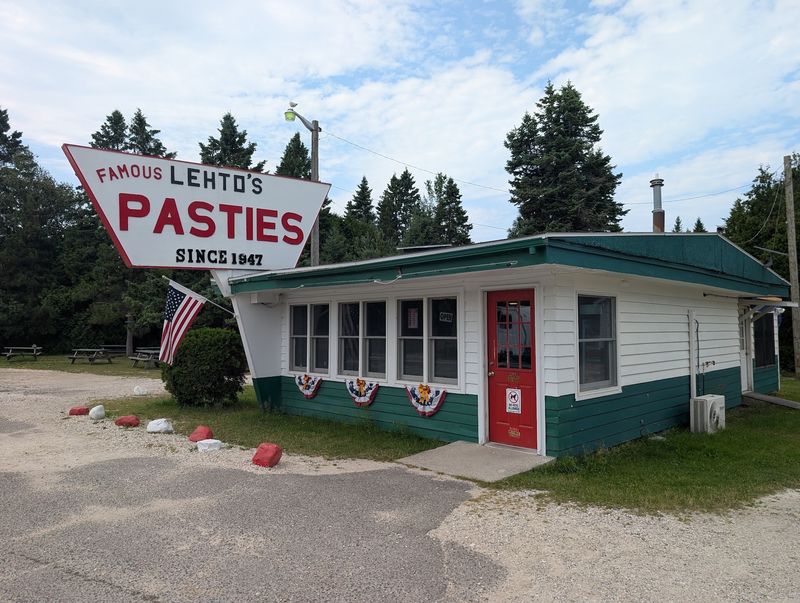
Lehto’s Pasties began in 1947, one year after Mr. Lehto received an honorable discharge from the U.S. Army. The original shop still operates along US-2 west of St. Ignace, keeping the business tied to the same stretch of road where it started.
When Lehto’s opened, drivers could not yet cross the Straits of Mackinac by bridge. The Mackinac Bridge opened in 1957, a full decade after the shop began serving pasties.
That timeline adds a little perspective to a lunch stop. Long before the bridge became the familiar gateway to the Upper Peninsula, this roadside shop was already feeding people heading through the region.
Lehto’s remains family owned and operated, and the recipe used for its pasties has remained unchanged since 1947.
The original location also keeps the menu notably narrow. Beef pasties are the only pasty variety sold there, which removes most of the usual lunch-counter indecision.
That simplicity works especially well on a road trip. A pasty is compact and easy to take along without turning the stop into a major break. Eat one soon after stopping, or save a cold or frozen pasty for later.
The Story Stays Close To The Highway
Mr. Lehto returned from Army service in 1946, and the business began the following year. The shop that followed became part of a much older food tradition already established across the Upper Peninsula.
The roadside location matters because it keeps Lehto’s directly connected to travelers passing through St. Ignace.
US-2 runs west from the city toward long stretches of Upper Peninsula highway, so the stop fits naturally before continuing deeper into northern Michigan.
The draw is the chance to pick up a regional food in the region where it became deeply rooted, then continue the drive without losing much time.
For anyone building the stop into a route, the original Lehto’s is at 1983 W US-2, St. Ignace, MI 49781. It sits west of town and a short drive from the Mackinac Bridge, making it easy to reach soon after crossing into the Upper Peninsula.
It is the kind of stop that can fit between bigger plans. Lunch does not need a reservation, a long detour, or a complicated order. If hunger has already shown up, the roadside location makes the decision fairly easy.
Why The Pasty Belongs In The Upper Peninsula
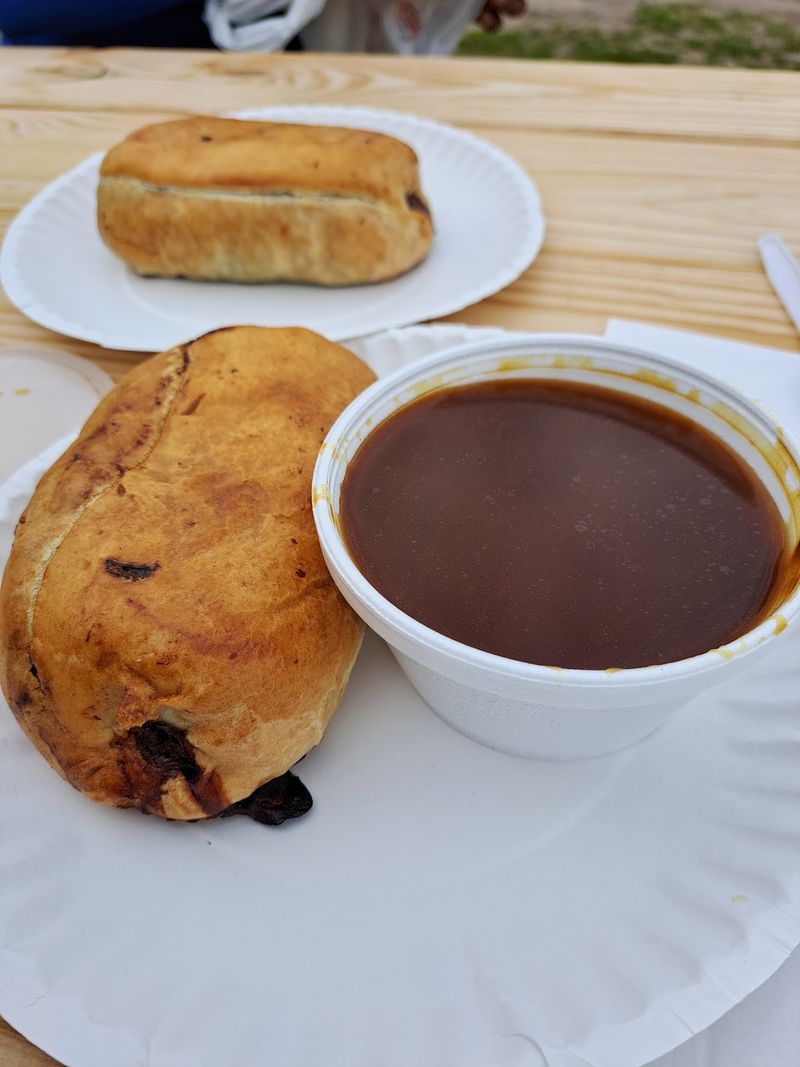
Pasties were part of Upper Peninsula life long before they became road-trip food. Cornish immigrants brought the dish to Michigan’s mining country during the nineteenth century, carrying with them a meal already associated with workers in Cornwall.
The shape was practical. Meat and vegetables could be enclosed inside pastry, creating a self-contained meal that was easier to carry than a plate of separate foods. In mining communities, that practicality mattered.
Over time, the dish spread beyond Cornish households. Other immigrant communities in the Upper Peninsula adopted pasties too, and variations developed as families adjusted fillings to their own tastes.
By the middle of the twentieth century, the pasty had become closely associated with the region rather than with only one immigrant group.
That is useful context when a hot one lands in front of you today. The food may look simple, but it carries a long local history without needing much ceremony.
When the Mackinac Bridge opened in 1957, Lehto’s had already been operating for ten years. The shop’s timeline therefore crosses two very different eras of Upper Peninsula travel.
That makes the pasty an easy choice when the goal is to eat something connected to the place rather than grab an interchangeable highway meal.
It was designed to travel long before road trips became part of its story, and that practicality still makes sense when US-2 is waiting outside.
Inside The Original US-2 Shop
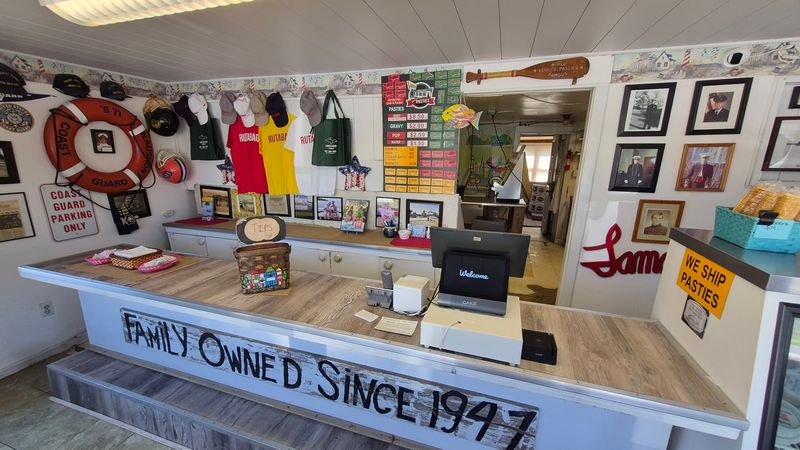
The original Lehto’s location keeps its food selection straightforward. Beef pasties are the only pasties available at this branch, while the downtown St. Ignace location carries additional varieties.
That makes the US-2 stop the place to focus on the classic version. Hot pasties work for an immediate meal, while cold and frozen options give travelers more flexibility. A frozen pasty can be carried home and reheated later.
Beef, potatoes, onions, and rutabaga fill the pastry, with sliced potatoes forming one of the details Lehto’s continues to use in its preparation.
Rutabaga is the ingredient most likely to make a newcomer pause. It is a root vegetable with a mild earthy sweetness, and it has a long place in traditional pasty recipes. Here, it sits alongside beef, onion, and potato rather than being treated as an optional addition.
Let the timing of the drive decide how to order. A hot pasty makes sense when lunch cannot wait another fifty miles. A cold or frozen one is easier when the next stop is already planned and the goal is to bring part of the Upper Peninsula home.
The original shop keeps the choice centered on the beef pasty and how soon you plan to eat it.
What Goes Into The Classic Beef Pasty
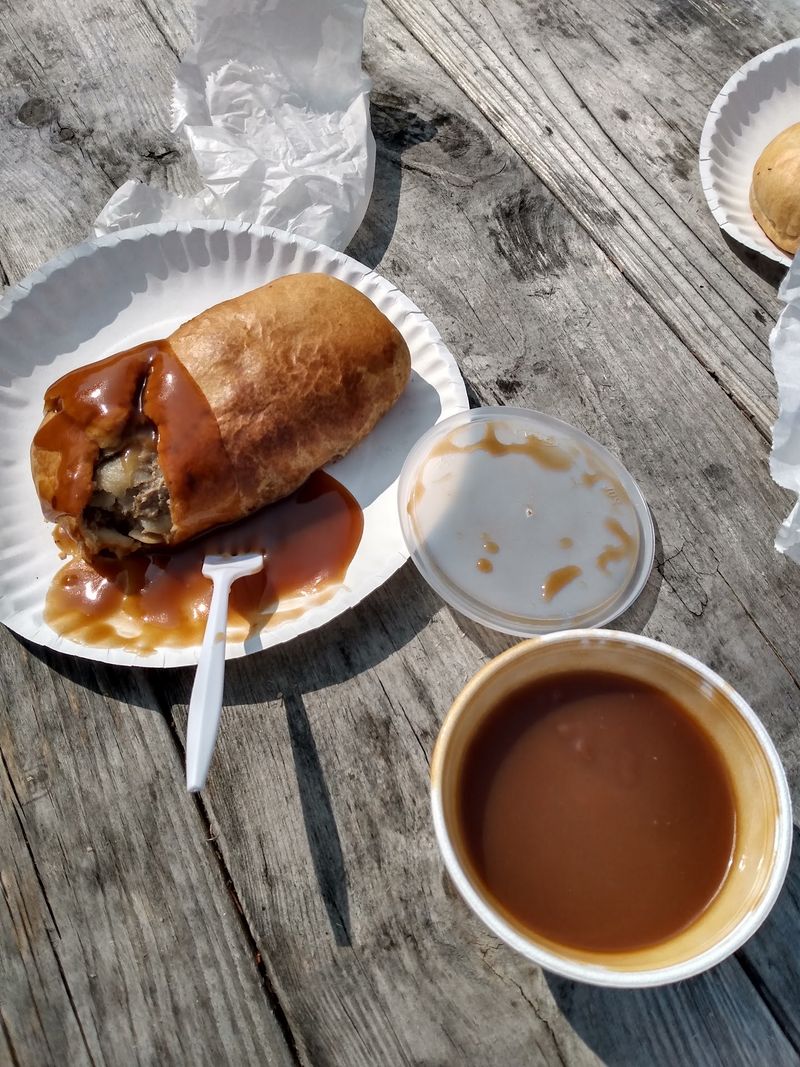
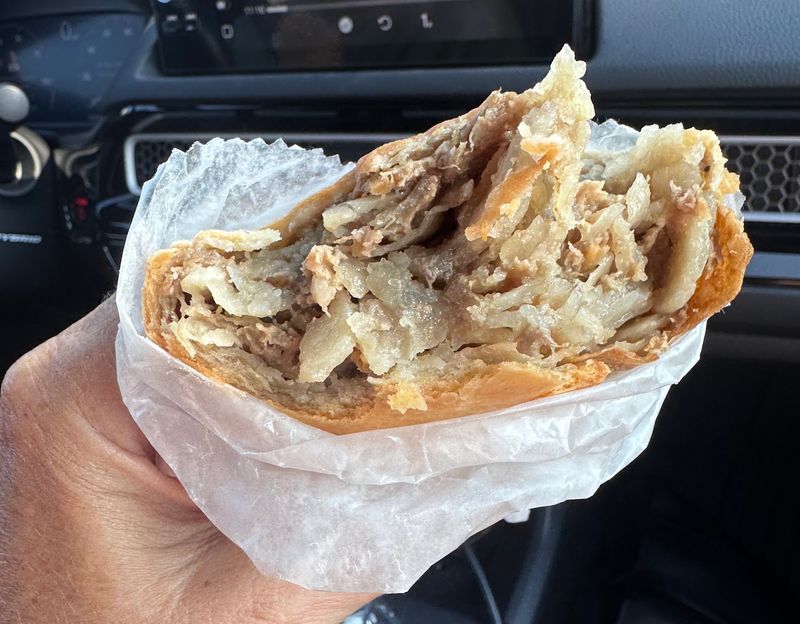
Break open a hot pasty and the structure becomes obvious. The pastry holds a compact filling of beef and vegetables, with potatoes, onions, and rutabaga sharing the crust.
The sliced potatoes help give the filling a different texture from mashed potato mixtures. Beef provides the richer center of the meal, while onion and rutabaga add sweetness and earthier notes around it.
The crust matters just as much as the filling. Lehto’s uses a flaky crust as part of its longtime preparation, and the pastry has practical work to do too. It keeps the filling together in a format built to be carried rather than arranged across a plate.
A first pasty does not require much strategy. Start with the beef version at the original shop and give the rutabaga a fair chance before forming strong opinions about root vegetables.
For travelers already familiar with the dish, the unchanged recipe may be the more interesting detail. Lehto’s has kept that recipe in place since 1947, connecting the current pasty to the shop’s earliest years without turning the meal into a history lesson.
The contrast is part of the fun. A food tied to nineteenth-century mining communities still works surprisingly well when the next task is getting back into the car and continuing west.
It is still lunch first. The history simply comes along with it.
Let The Time Of Day Decide Your Stop
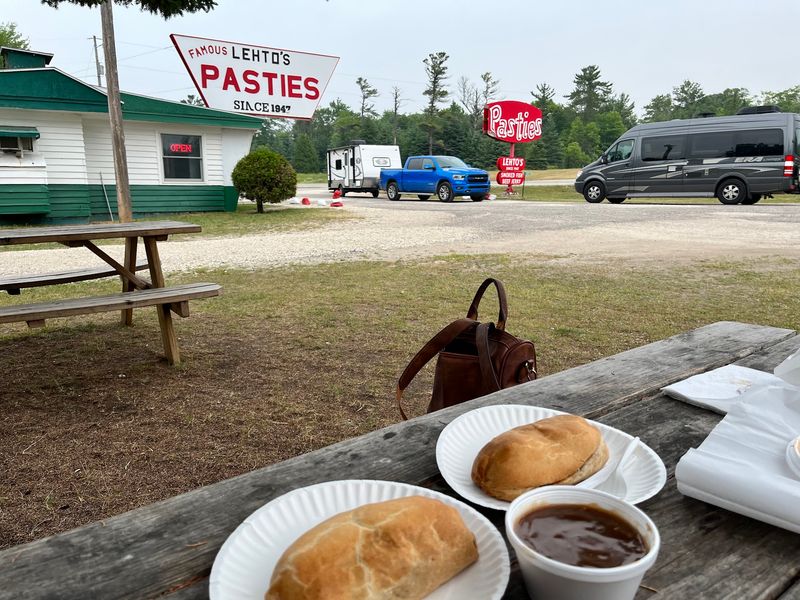
Road-trip meals get easier when the hours are simple. The original Lehto’s location currently operates from 10 a.m. to 6 p.m. daily, which puts the shop squarely in the lunch and early-dinner window.
An early start from below the bridge might put St. Ignace within reach around lunchtime. A later crossing can still leave enough time to pick up pasties before continuing west. The main thing is not to treat this as a late-night food stop.
Eat shortly after crossing the bridge, or pick up food before a longer run along US-2. Cold and frozen pasties add another option when the schedule does not line up neatly with mealtime.
There is also a second Lehto’s in downtown St. Ignace on North State Street. That location broadens the choice with chicken and vegetable pasties in addition to beef, while the original US-2 shop stays beef-only.
So the route can make the decision. Travelers who want the historic roadside location can head west on US-2. Those already spending time downtown have another Lehto’s option without retracing the drive.
A little timing is really all the planning required. Arrive during operating hours, decide whether lunch is happening now or later, and let the road take care of the rest.
Keeping An Upper Peninsula Food Tradition Going
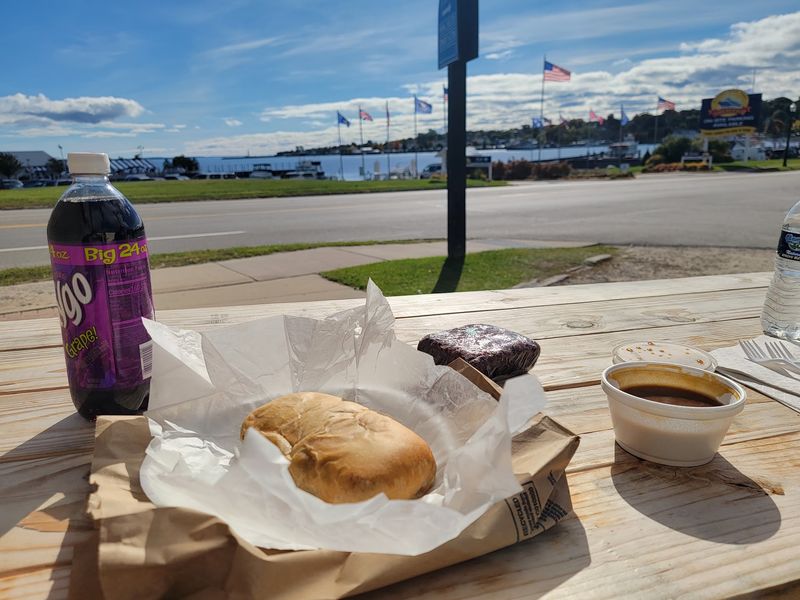
Lehto’s is not preserving pasties as a display piece from another era. It is still making them as food meant to be carried, eaten, packed for later, and worked into an ordinary drive.
That continuity gives the original shop its character. The business began in 1947, remains family owned and operated, and still uses its longstanding recipe. Meanwhile, the highway outside has changed from the pre-bridge era to modern Upper Peninsula road trips.
Beef pasties remain the focus at the US-2 location, with hot and cold options for the day and frozen ones available for later. The downtown branch gives travelers additional filling choices, but the original shop keeps things simple.
There is something fitting about eating a food designed for portability while traveling through the region that adopted it so strongly. No elaborate dining plan is necessary. Hunger, the clock, and the direction of the car can handle most of the decision-making.
That balance keeps the stop from feeling like a history assignment. The pasty comes first, while the family story, mining roots, and decades beside the highway give the meal a little more context.
So when US-2 opens ahead and lunch starts becoming difficult to ignore, Lehto’s offers a simple answer. Pull off, pick up a pasty, and continue west with one of the Upper Peninsula’s longstanding food traditions riding along.